Natural Melee vs Natural Loose Certified Diamonds: What's the Difference
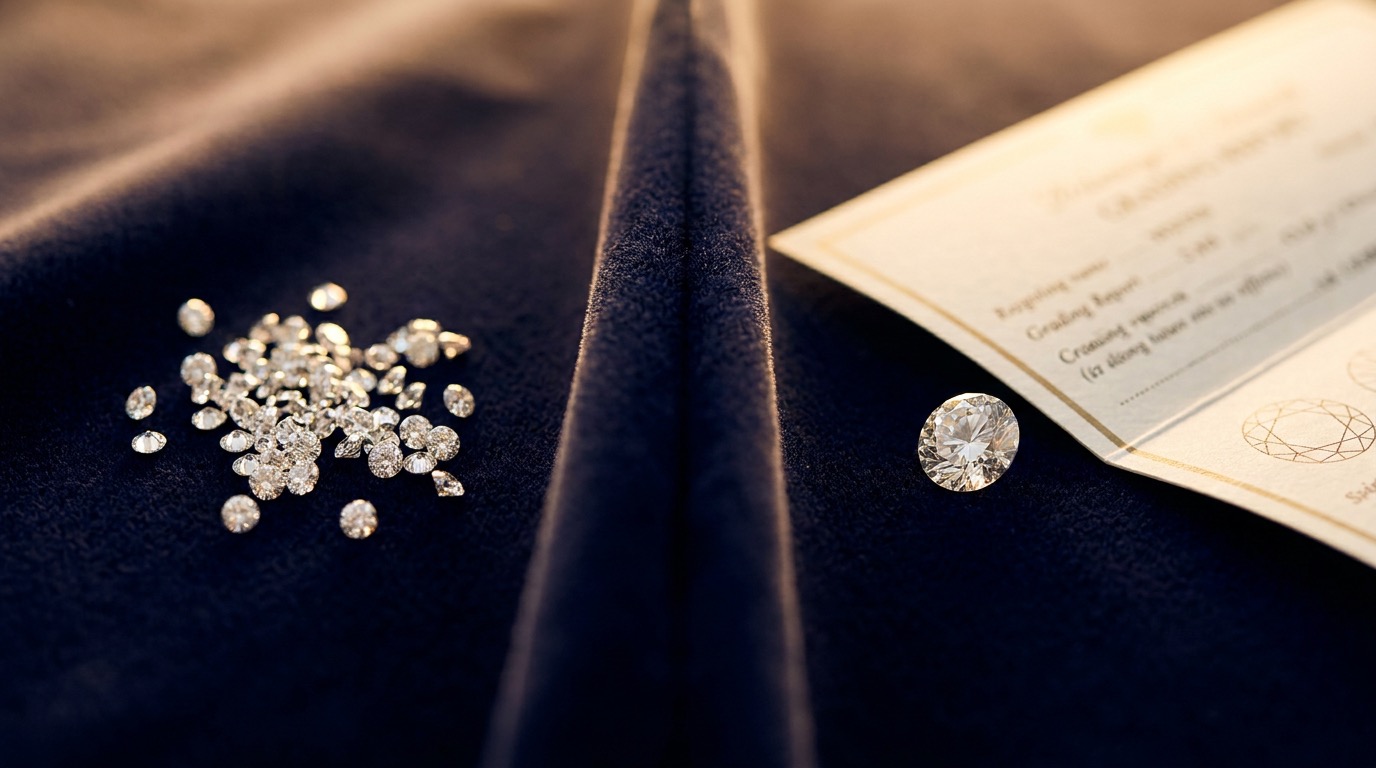
Natural melee and natural loose certified diamonds are two different tiers within Guru Diam's own natural diamond offering, split by size, paperwork, and how they're sold. Melee is sub-1ct, uncertified, sieve-graded parcel goods (0.8mm–4.0mm, priced per carat) built for accent work — pavé, halo, eternity, tennis. Loose certified diamonds are 0.30ct and up, IGI/GIA certified, and sold one stone at a time — built to be a center stone.
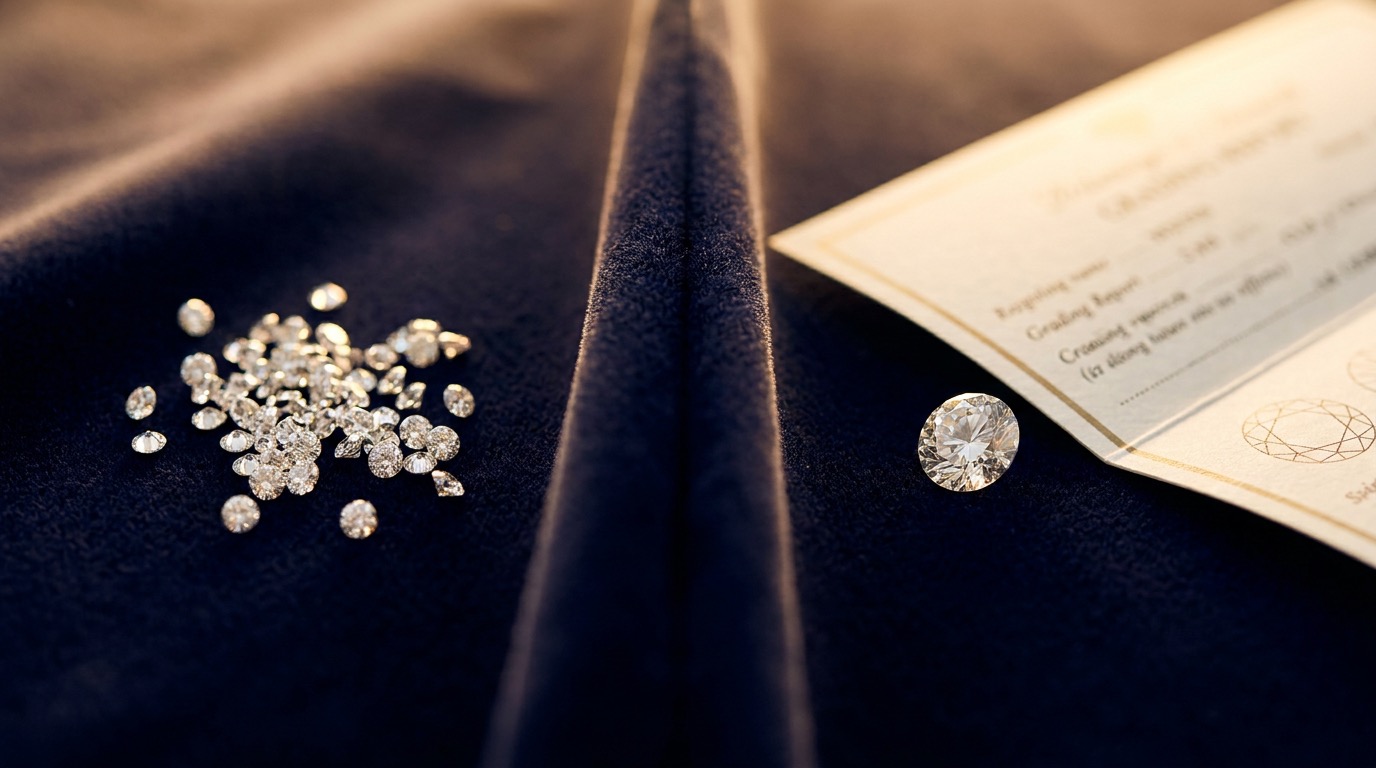
What Separates Melee From Loose Certified Diamonds at Guru Diam?
The two product tiers sit on either side of one dividing line: whether a stone is valuable enough, on its own, to justify grading and paperwork specific to that stone. Below that line, diamonds are sorted in bulk and sold as parcel goods. Above it, diamonds are graded, papered, and sold individually.
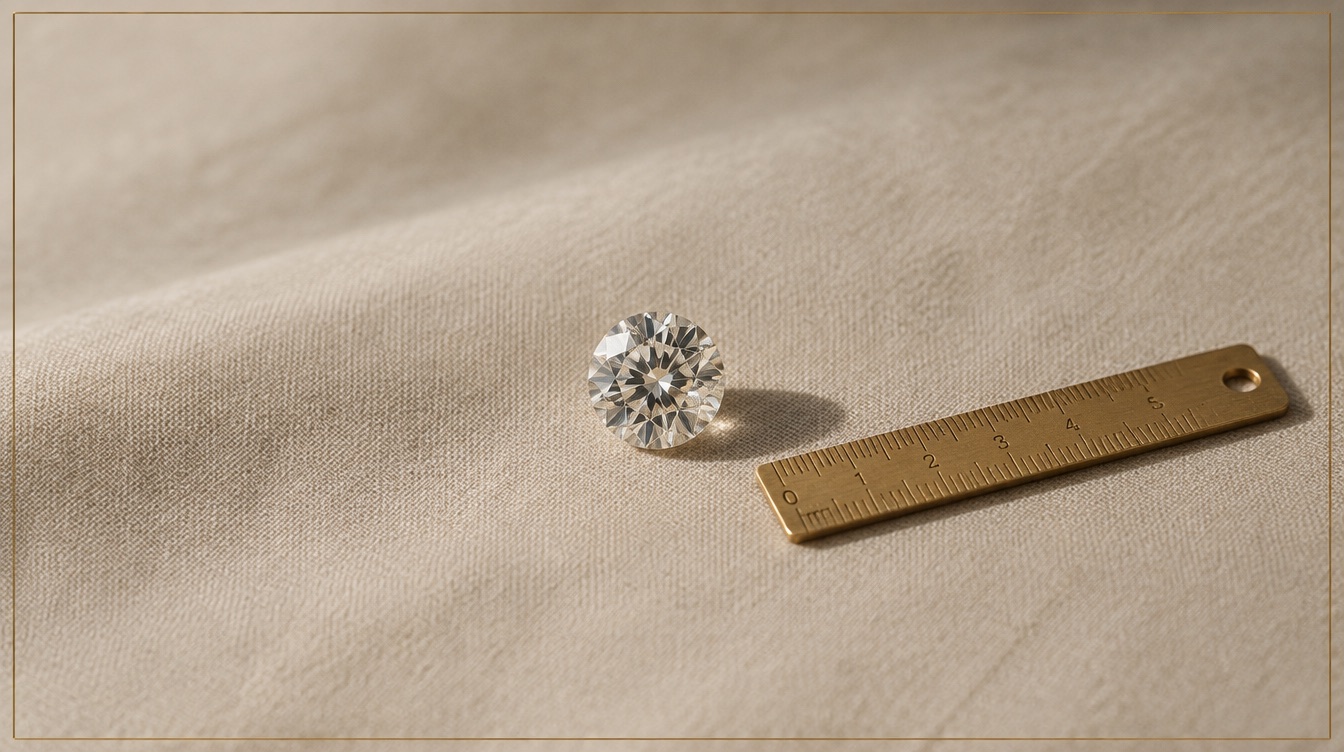
Natural melee at Guru Diam covers round natural diamonds from 0.8mm to 4.0mm, sorted into a 2-by-2 quality grid — EF (E–F color) and GH (G–H color), each in VS and SI clarity — and priced per carat, confirmed at quote. A melee order is a spec: size, grade, total carat weight. You're buying a parcel that matches that spec, not a hand-picked stone.
Loose certified natural diamonds start at 0.30ct and are sold individually, each with its own IGI or GIA certificate documenting that specific stone's cut, color, clarity, and carat weight. A loose certified order is a stone: you're buying the exact diamond described on the report, not a parcel that averages out to a grade.
Both tiers are natural, mined diamonds — the material doesn't change. What changes is scale of transaction. Melee is bought and sold by the carat, in bulk, as an input to a setting. Loose certified diamonds are bought and sold by the stone, individually, usually as the focal point of a piece.
Where Exactly Does Melee End and Loose Certified Begin?
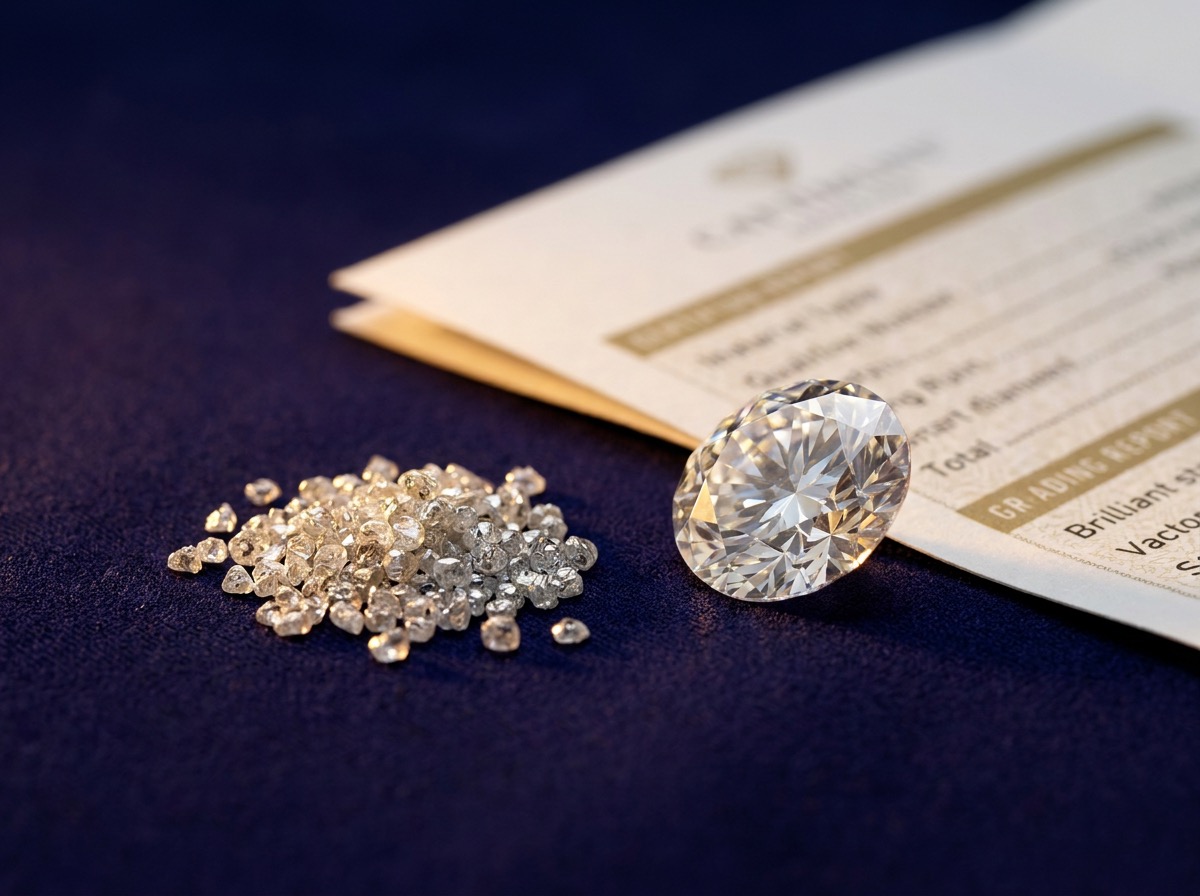
In carat terms, Guru Diam's natural melee is currently priced up to 4.0mm, which runs roughly 0.20ct for a well-cut round brilliant at that diameter. Loose certified natural diamonds start at 0.30ct. That leaves a narrow band — roughly 0.20ct to 0.30ct — that isn't the current published focus of either tier.
We'd rather say that plainly than paper over it. If your job calls for a stone that lands specifically in that window, don't assume which tier it falls under from a size chart alone — send us the spec on WhatsApp or through Contact and we'll confirm whether it's quoted as parcel melee or as an individual certified stone for your particular use case.
For everything below that window, the answer is straightforward: it's melee, quoted per carat against the size and grade grid. For everything above it, it's a loose certified stone, quoted individually against its own report. The boundary exists because certification cost stops making economic sense somewhere below 0.20ct — a fact that's true across the trade, not a Guru Diam-specific cutoff, and it's covered in more depth in the certification section below.
Worth noting too: Guru Diam's natural melee program currently covers round shapes only. Fancy natural melee shapes — oval, princess, pear, and the rest — aren't yet priced or sourced on this line. Loose certified inventory, by contrast, covers a broader range of shapes since each stone is sourced and graded individually rather than assembled as a matched parcel.
Why Aren't Melee Diamonds Individually Certified?
Certification has a real, fixed cost per stone — a lab has to physically examine, measure, and grade each diamond, then issue and track a report for it. That cost doesn't scale down with the stone. Grading a 1.5mm diamond individually would cost more than the diamond itself is worth, which is why certification labs and the wholesale trade generally draw the line at roughly 0.20ct: below that, the paperwork costs more than the goods.
This is true across the melee trade broadly — natural and lab-grown alike, at every supplier, not a shortcut specific to Guru Diam. Instead, melee ships as sieve/size-graded parcel goods: stones are sorted by millimeter diameter through graduated sieve plates and matched for color and clarity against a master stone, a reference diamond that anchors the grade call for that batch. A parcel graded GH VS is sorted to be consistently GH VS stone to stone — a comparative standard, not a certificate.
Above roughly 0.20–0.30ct, the math flips. A stone's individual value is high enough that a buyer reasonably wants — and can afford — a report specific to that exact diamond, not a comparative sort against a reference stone. That's the entire economic logic behind why melee is parcel goods and loose diamonds above that threshold are certified individually. It isn't a quality judgment on melee; it's a cost-to-value ratio that changes as stones get larger.
One clarification worth stating directly, because it's a common point of confusion: melee is never sold with a fabricated "parcel certificate" standing in for individual grading. If a supplier's melee listing claims parcel-level or per-stone certification, that claim is worth a second look — sieve/size-graded and master-stone-sorted is the honest, standard description, and it's what Guru Diam uses.
What Does Certification Actually Add on a Loose Diamond?
An IGI or GIA certificate is a third-party report on one specific stone — its exact carat weight, cut grade, color grade, clarity grade, measurements, and proportions, generated by a lab with no financial stake in the sale. It's the mechanism that lets a buyer verify a stone's quality independently of the seller's word.
That independence matters most when a stone is the focal point of a piece and the buyer — often the end retail customer, one step downstream from the jeweler — expects documentation they can hold onto, insure against, or resell against later. A center stone is usually the single most expensive component in a finished piece; a report scaled to that value is a reasonable and expected part of the purchase.
Melee doesn't carry this because no individual accent stone in a pavé or eternity setting is being evaluated, insured, or resold on its own. The parcel as a whole is sorted to a stated grade and tolerance, which is the right level of documentation for stones that will never again be handled individually once they're set. Applying a per-stone certification model to melee wouldn't add real information — it would just add cost with no corresponding buyer need.
How Does Pricing Differ Between Melee and Loose Certified?
Melee is priced per carat against a size and grade grid, and quoted per parcel — Guru Diam's natural melee pricing starts around $370–450/ct in the smallest sizes and rises with size and grade, treated as approximate and confirmed at quote rather than exact-to-the-cent, since melee is quoted per parcel against sieve bands in this trade. The full size-by-grade rate table lives in our natural melee pricing guide and the wholesale buying guide — this post won't repeat the full table.
Loose certified diamonds are priced per stone, against that specific stone's certified 4Cs — carat weight, cut, color, and clarity as documented on its IGI or GIA report. Two loose certified diamonds at the same carat weight can carry meaningfully different prices depending on their individual grades, in a way a melee parcel — sold as a blended-range grade across many stones — doesn't.
The two pricing models reflect the two buying models: melee pricing answers "what does this size and grade cost per carat, in bulk," while loose certified pricing answers "what does this exact stone cost." Neither is more or less transparent than the other — they're just structured for different jobs. A jeweler budgeting a pavé shank needs the per-carat rate; a jeweler sourcing a 1ct center stone needs the exact price on that exact report.
This same tiering logic — bulk parcel pricing below a certification threshold, per-stone pricing above it — also holds on Guru Diam's separate lab-grown melee line; see how melee parcel pricing compares to per-stone certified pricing for that line's version of the same boundary. The pricing structure carries across product lines even though the natural and lab-grown specs themselves don't blend.
When Does a Jeweler Need Loose Certified Diamonds Instead of Melee?
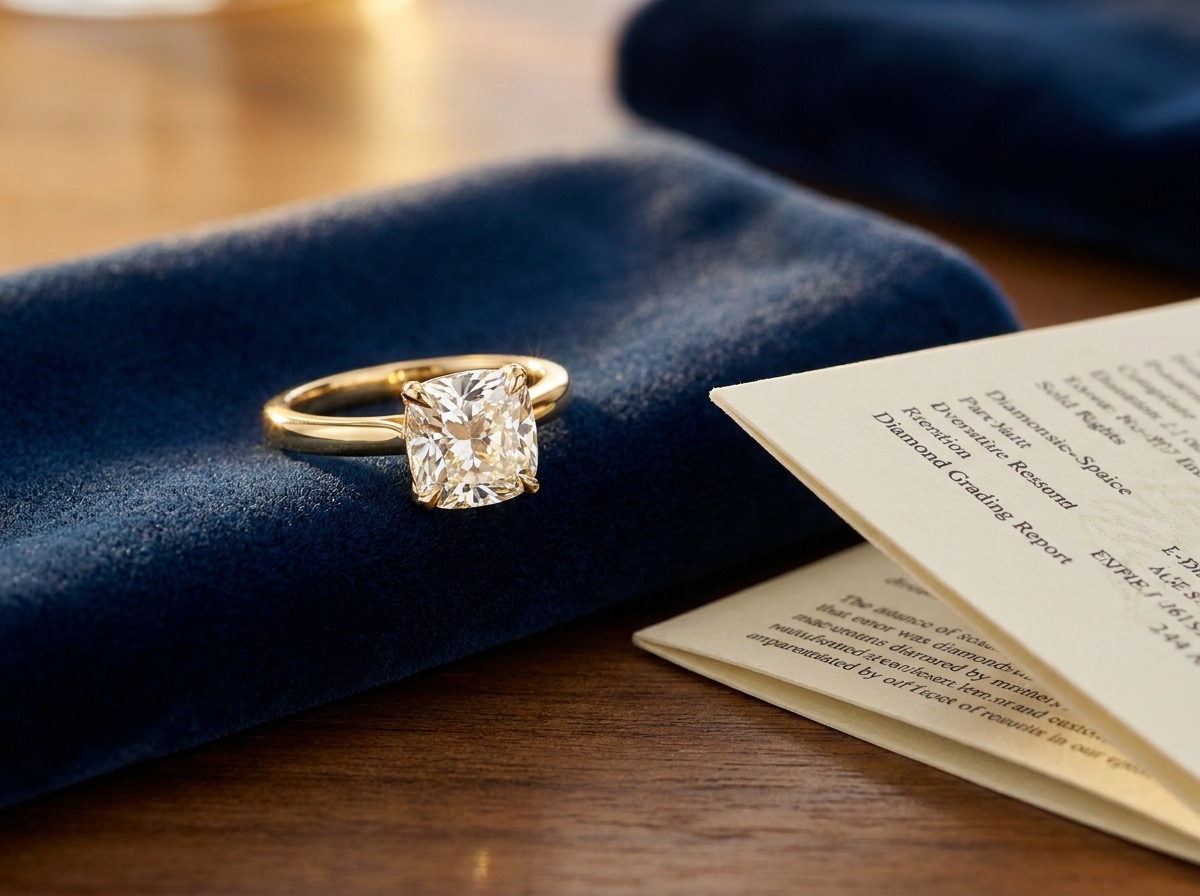
Reach for loose certified when the stone is the focal point of the piece — the center diamond in an engagement ring, a solitaire pendant, a single-stone earring pair where each earring's stone is evaluated on its own. Any application where a customer will reasonably ask "what is this diamond, specifically" calls for a certified stone with a report that answers that exact question.
Certified stones are also the right call whenever the finished piece needs to carry resale, insurance, or appraisal value tied to one identifiable diamond. An insurer or a future buyer wants the report that matches the stone in the setting — that's not something a parcel-graded melee stone is built to provide, because no individual melee stone is tracked or documented on its own once it's part of a parcel.
And reach for loose certified any time carat weight itself is the selling point — a 1ct, 2ct, or larger center stone where the exact weight on the label is part of what the customer is paying for. Melee's blended-range grading is fine for a setting where no single stone is scrutinized; it's the wrong tool when one stone's exact weight and grade need to be provable.
When Does a Jeweler Need Melee Instead of Loose Certified?
Reach for melee any time you need many small, consistent stones rather than one large, individually scrutinized stone — pavé surfaces, halo rings around a center stone, full or half eternity bands, and tennis bracelets all call for dozens to hundreds of stones that read as one continuous line of sparkle, not stones evaluated individually.
Melee is also the right call on cost grounds for any accent application: certifying each stone in a 200-stone pavé shank would multiply the cost of the piece for documentation nobody will ever read on an individual accent stone. The parcel-level grade — sorted and matched against a master stone — is the appropriate, trade-standard level of assurance for stones this small, and it's dramatically more cost-efficient than forcing a per-stone certification model onto accent work.
Repair and production restock work is squarely melee territory too: replacing a lost pavé stone, filling out a custom order, or keeping bench stock on hand for ongoing repair calls for parcel goods matched to an existing size and grade — not a search for one individually certified replacement stone.
As a rule of thumb: if the stone will be evaluated, appraised, or resold on its own, it's loose certified. If it's one of many stones contributing to an overall visual effect, it's melee.
Can You Combine Melee and Loose Certified Diamonds on the Same Piece?
Yes — this is in fact the most common real-world use case for both tiers together. A classic halo engagement ring pairs a loose certified center stone (the diamond the customer picks and gets a report for) with natural melee framing it (the halo, and often the shank if it's pavé-set). The two tiers aren't competing options; they're complementary inputs to the same finished piece.
When you're speccing a piece that uses both, order them as two separate line items with two separate specs: the center stone by its exact carat, cut, color, clarity, and certificate; the melee by millimeter size (or sieve), color/clarity grade, and total carat weight needed for the halo or pavé work. Treating them as one blended spec is a common source of confusion on a purchase order — keep the two requests distinct even when they're going into the same piece.
This is also where it's worth double-checking origin consistency: if the center stone is natural, natural melee is the matching accent choice for a piece being sold and disclosed as fully natural. Mixing a natural center stone with lab-grown accents (or the reverse) isn't wrong, but it needs to be disclosed accurately — that's a legal requirement in the US, not a stylistic choice.
How Does Grading Differ Between the Two Tiers?
Loose certified diamonds are graded individually by an independent lab — IGI or GIA — under standardized conditions, with the resulting report specific to that one stone's cut, color, clarity, and carat weight. The grading is absolute: a stone graded VS1 clarity is VS1 clarity, full stop, documented and verifiable by anyone who requests the report.
Melee is graded comparatively, in parcels, against a master stone — a reference diamond that anchors the color and clarity call for that batch — combined with physical size-sorting through graduated sieve plates for the millimeter dimension. The result is a blended-range grade across the whole parcel (for example, GH VS) rather than an exact single grade guaranteed stone by stone.
Calibration tolerance is what keeps a melee parcel usable despite that blended grading: Guru Diam holds natural melee to standard trade tolerances — ±0.10mm on dimension, ±0.10ct on weight, and a one-grade match on color and clarity within a parcel. That tolerance is what a jeweler is actually relying on when ordering melee sight-unseen against a spec, in place of the individual report a loose certified stone comes with.
Neither grading approach is more rigorous in absolute terms — they're matched to what each tier is used for. A center stone gets individual scrutiny because it's evaluated individually for the life of the piece. A parcel of 300 pavé stones gets comparative, tolerance-based sorting because no one — not the jeweler, not the end customer, not a future appraiser — will ever evaluate stone #247 in that pavé line on its own.
Does This Boundary Apply the Same Way on Guru Diam's Lab-Grown Line?
The same underlying logic — parcel-graded goods below a certification threshold, individually certified stones above it — holds on Guru Diam's separate CVD lab-grown melee line as well, and the same pricing-tier structure (per-carat parcel pricing vs. per-stone certified pricing) applies there too. See our breakdown of melee parcel pricing vs. per-stone certified pricing for how that plays out on the lab-grown side.
That said, don't carry the specific numbers across. Lab-grown melee runs its own size range and its own default quality band, entirely separate from this natural line's 0.8mm–4.0mm, EF/GH, VS/SI grid — the two are quoted, sourced, and specified independently, and Guru Diam never blends the two specs into one listing. If you're comparing the lines directly, see our natural vs. lab-grown melee comparison for the full side-by-side rather than assuming this post's natural-only numbers apply to CVD goods.
The takeaway: the melee-vs-certified boundary is a structural feature of how the diamond trade prices small goods versus large ones, not something unique to natural stones. It shows up on both of Guru Diam's melee lines, even though the natural and lab-grown specs themselves stay strictly separate.
How Do You Order Each Tier From Guru Diam?
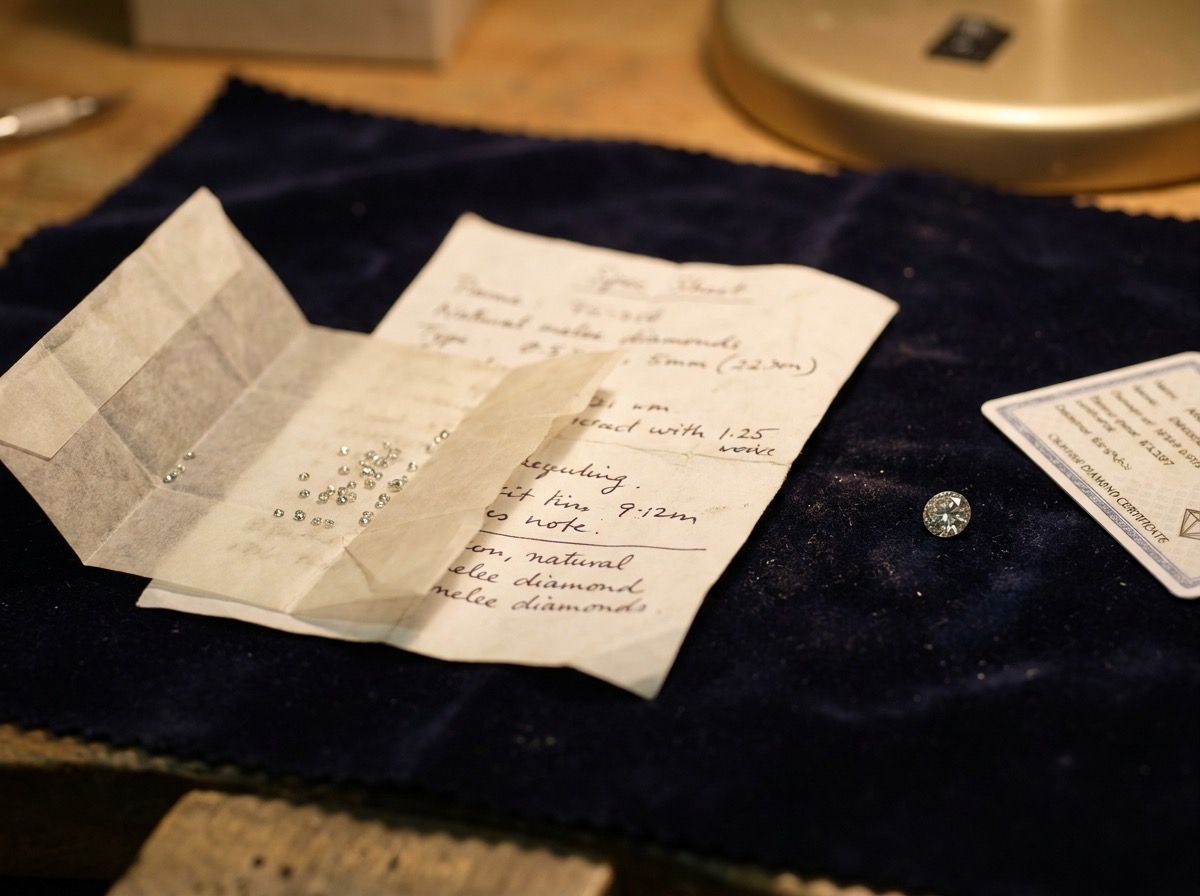
For melee, send Guru Diam the millimeter size (or sieve range), the color/clarity grade (EF VS, EF SI, GH VS, or GH SI), the total carat weight your job needs, and any tolerance tighter than the standard ±0.10mm/±0.10ct if your setting requires it. You'll get a confirmed per-carat price against real available parcel stock.
For a loose certified stone, tell us the carat weight, and your target cut, color, and clarity grade (or send a specific stone if you already have one in mind), and whether you need IGI or GIA paperwork. You'll get pricing and availability against that specific spec, not a table lookup.
Both order types route through the same two channels: message us on WhatsApp or reach out through Contact. Both tiers ship out of Guru Diam's New York (36 West 47th Street, Suite 601A, New York, NY 10036) and Los Angeles (607 S Hill Street, Suite 241, Los Angeles, CA 90014) trade desks — orders placed before 6pm EST out of New York ship same day, and orders placed before 4pm PST out of Los Angeles ship same day, subject to the item being in stock.
If you're not sure which tier your job needs — including anything that falls in that narrow 0.20ct–0.30ct window discussed above — say so when you reach out. We'd rather confirm the right tier before quoting than have you guess from a size chart and re-order.
Frequently Asked Questions
What's the main difference between natural melee and natural loose certified diamonds?
Melee is sub-1ct, uncertified diamonds sold in bulk carat weight as sieve/size-graded parcels (0.8mm–4.0mm at Guru Diam) for accent work. Loose certified diamonds are 0.30ct and up, individually IGI or GIA certified, and sold one stone at a time — typically as a center stone.
At what carat weight does a diamond stop being melee and become a loose certified stone?
There's no single hard cutoff, but the practical boundary sits between Guru Diam's melee ceiling (roughly 0.20ct, at the 4.0mm top of the currently priced range) and the loose certified floor of 0.30ct. Stones landing specifically in that narrow window should be confirmed directly with us rather than assumed from a size chart.
Why isn't melee individually certified like loose diamonds are?
Certification has a real per-stone cost, and below roughly 0.20ct that cost exceeds the value of the stone — true across the trade, natural or lab-grown, not a Guru Diam shortcut. Melee ships as sieve/size-graded parcel goods, sorted against a master stone, instead.
Can I use melee and a loose certified diamond in the same piece?
Yes — a certified center stone paired with natural melee accents (a halo, pavé shank, or both) is one of the most common combinations in the trade. Order them as two separate specs: the center stone by its certificate, the melee by size, grade, and total carat weight.
Is melee lower quality than loose certified diamonds?
No — both tiers are natural, mined diamond material. The difference is documentation and how they're sold, not intrinsic quality. Melee is comparatively graded in parcels against a master stone; loose certified stones are graded individually by IGI or GIA. Each grading approach is matched to how the stones are actually used.
Does Guru Diam's natural melee include fancy shapes, or only round?
Round shapes only, for now. Fancy natural melee (oval, princess, pear, and similar) isn't yet priced or sourced on this line. Loose certified inventory covers a broader range of shapes since each stone is sourced individually.