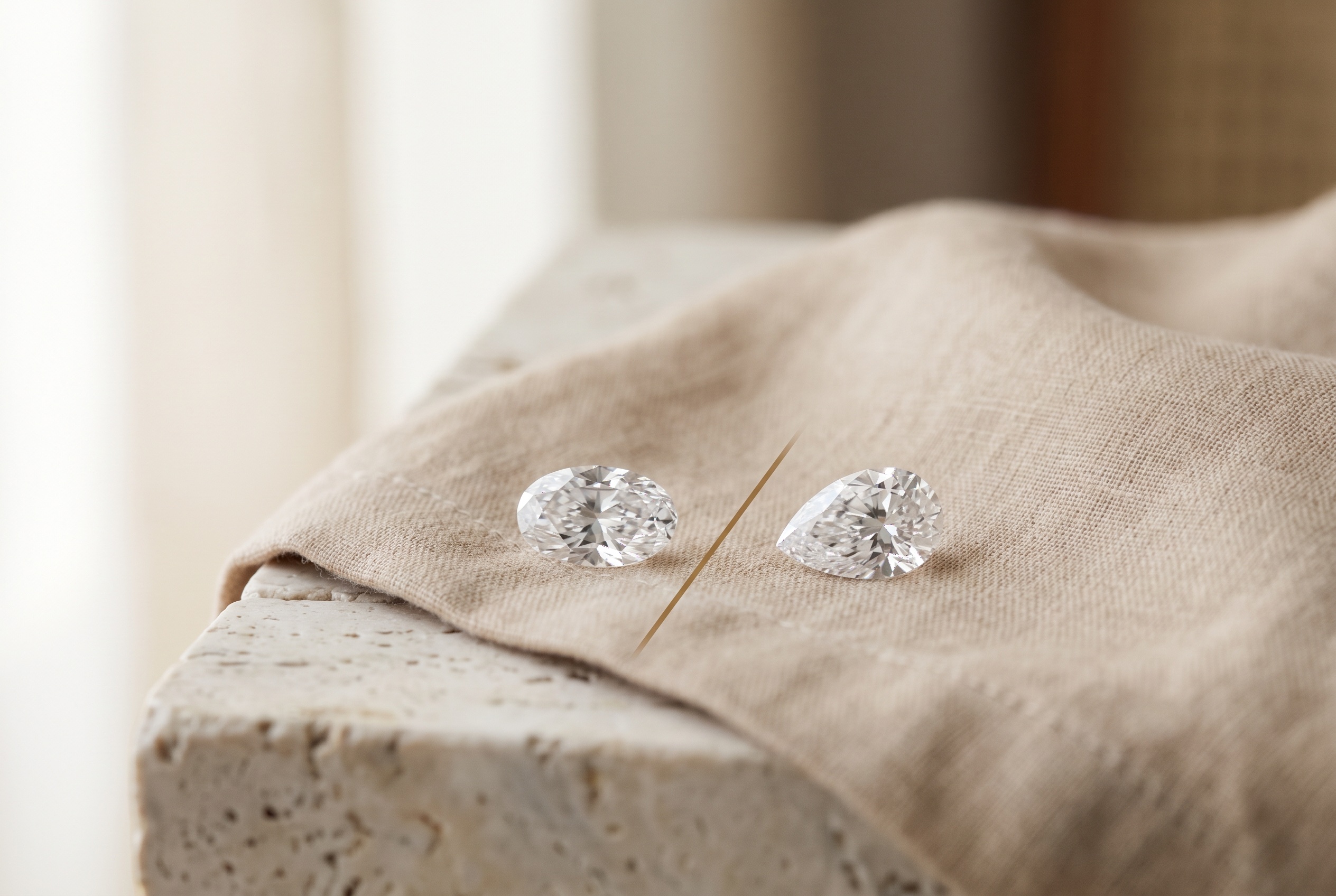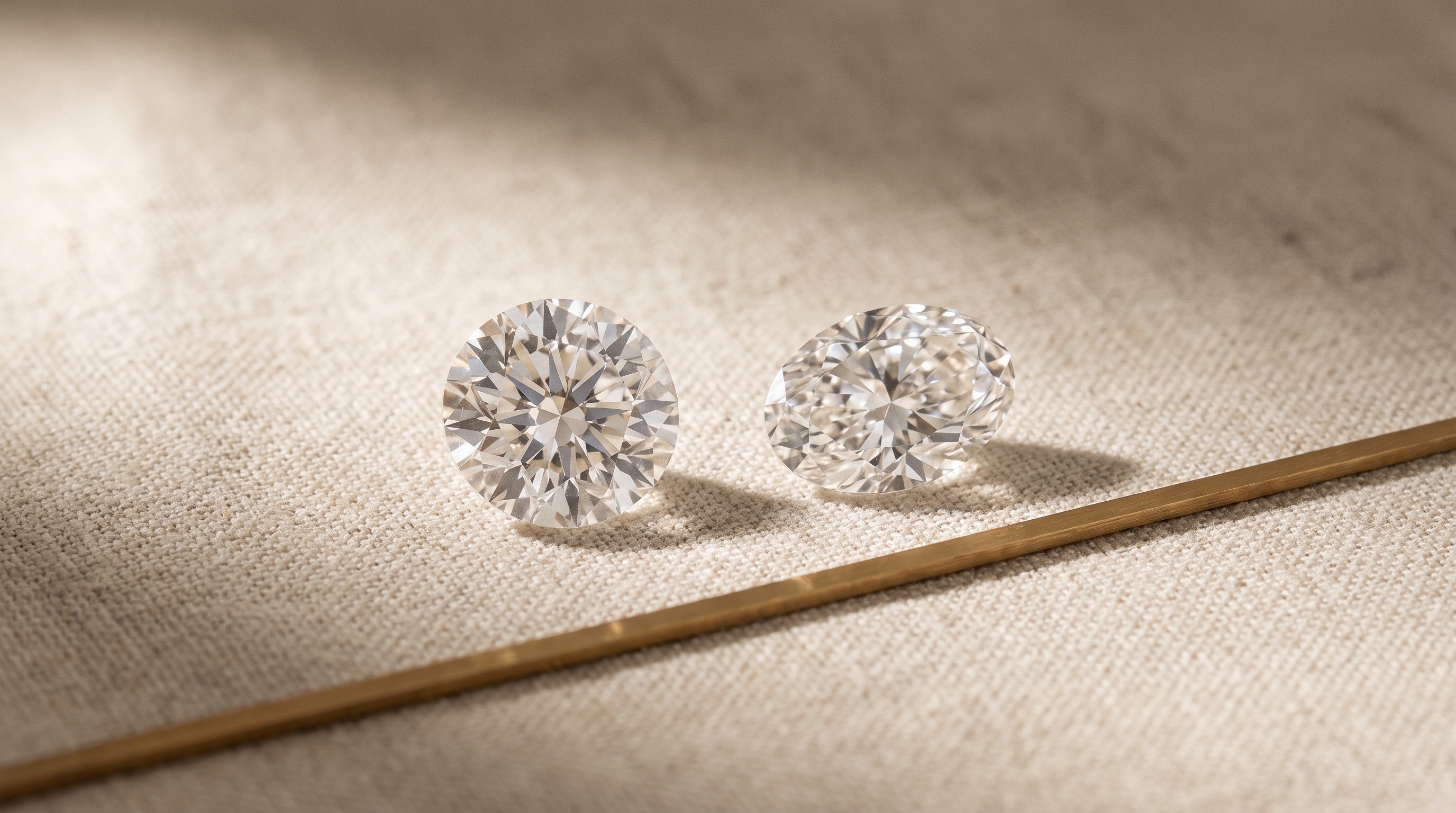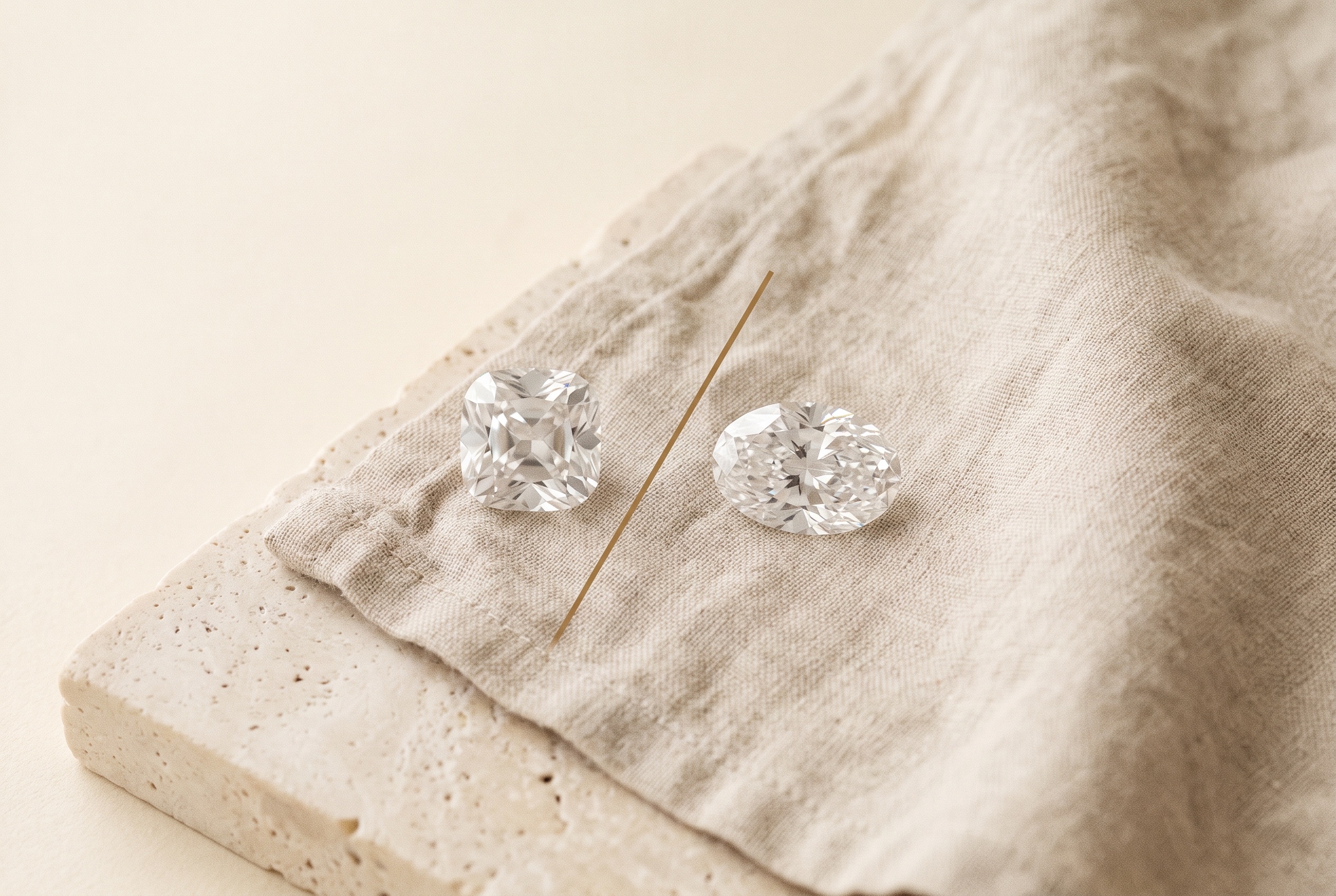

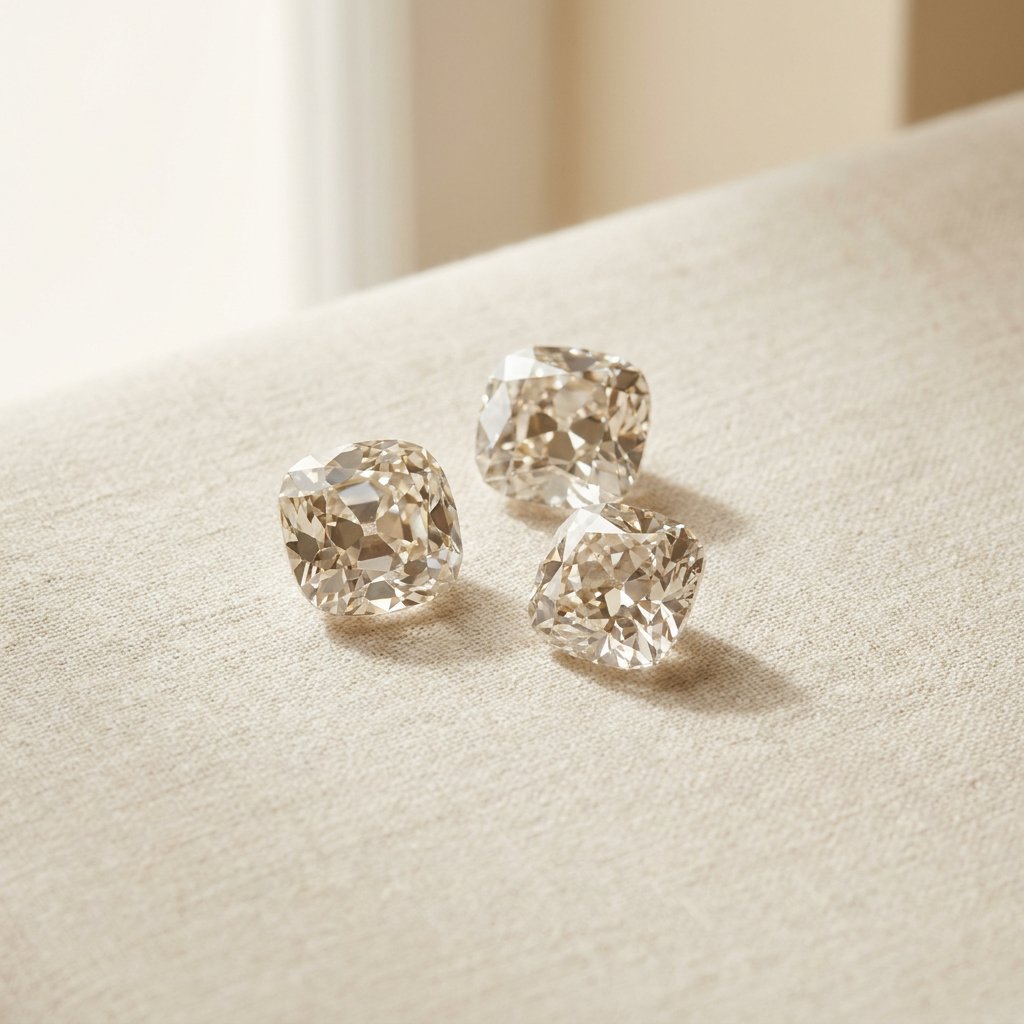
Matching Fancy Color Diamond Sets for Jewelers: Centers, Sides & Color Melee

Matching fancy color diamond sets for jewelers means aligning hue, tone, and saturation across every stone in a piece — the fancy center, the side stones, and the color melee — so the assembled jewel reads as one continuous color event rather than a patchwork of mismatched lots. Get the relationship between those three tiers right and the piece sells itself; get it wrong and the eye snags on every seam.
Why Does Color Matching Decide Whether a Fancy Piece Sells?
A white-diamond halo forgives a lot. The eye reads white as a single neutral, so a half-grade difference between center and accents disappears under bench lighting. Fancy color is unforgiving in exactly the opposite way. Place a Fancy Intense yellow center inside a ring of pale Fancy Light yellow melee and the contrast doesn't read as "graduated" — it reads as a mistake. The center looks like it's floating on a different stone entirely, and your retail client feels it before they can articulate it.
That patchwork effect is the single most common reason a built fancy piece dies on the showcase. The components can each be beautiful and correctly certified, and the finished jewel can still look wrong, because color matching is about relationships between stones, not the quality of any one stone in isolation. When you're matching fancy color diamond sets for jewelers, you are managing three variables — hue (the color itself), tone (how light or dark), and saturation (how pure versus grayed) — across three tiers of stone that are sourced, cut, and certified differently. The whole job is keeping those three variables coherent from the center out to the smallest pavé.
This is also where the margin lives. Per industry estimates, personalization and custom fancy work carry a meaningfully higher average order value than commodity white goods, and in the current K-shaped market — luxury fancy shapes strong, commodity lab-grown under price pressure — a cohesive fancy color piece is one of the few SKUs still commanding a clean premium. The matching is the value-add. It's worth doing deliberately.
What Are the Three Tiers You Have to Match?
Think of any fancy color piece as three sourcing tiers, each with its own tolerance:
- The center. This is the color anchor. Everything else is matched to it, never the reverse. The center's grading report — hue, intensity, and any modifying colors — is the spec sheet for the entire build.
- The sides / accents. Fancy-shape side stones (trapezoids, half-moons, shields, kites, bullets, epaulettes) or larger fancy-color accents. Here you're managing both color match and the geometric matched-pair tolerances at the same time.
- The color melee. The smallest accent stones — generally under ~0.18–0.20 ct (roughly under 3.8–4.0 mm) — set as pavé, halo, or channel. Sold by parcel, sieved by size, and the hardest tier to keep color-consistent because you're matching dozens of tiny stones at once.
The discipline that fails most builds is matching tier-to-tier without a documented anchor. Match the sides to the center, match the melee to the sides, and verify the whole stack together under one light source before anything goes to the bench.
How Do You Read Hue, Tone, and Saturation Off a Grading Report?
Start with the GIA fancy-color intensity scale, which runs nine levels: Faint, Very Light, Light, Fancy Light, Fancy, Fancy Intense, Fancy Vivid, Fancy Dark, and Fancy Deep. Fancy Vivid commands the top premium. Those grade names bundle tone and saturation together, which is exactly why two stones that share an intensity grade can still look different in the metal — the grade is a box, not a coordinate.
You also have to read the hue and any modifiers. A report describing "Fancy Yellow" is cleaner than "Fancy Brownish Yellow" or "Fancy Greenish Yellow," and a center with a brown modifier will fight melee that's a pure straw yellow. Match the modifier, not just the headline color.
A practical reference for what you're balancing across the three tiers:
| Variable | What it controls | Trade tolerance across a set | Where it bites |
|---|---|---|---|
| Hue | The base color + any modifier (e.g. brownish, greenish) | Same hue family and same modifier across all tiers | Modifier mismatch makes melee look "dirty" next to a clean center |
| Tone | Lightness/darkness | Within ~1 intensity step center-to-accent | Pale melee around a dark center reads as washed-out |
| Saturation | Purity vs. gray | As close as the parcel allows; verify in the metal | Grayed melee kills the "glow" of a vivid center |
One more reporting reality to plan around: a single stone can grade up to roughly one color grade differently between labs, so compare reports from the same lab when you're matching. IGI grades the large majority — about 95%-plus — of lab-grown diamonds with full 4Cs and is the practical trade default for lab-grown, while GIA moved lab-grown reports toward a two-tier "Premium"/"Standard" descriptive system in late 2025 rather than the full letter 4Cs. For a matched fancy color build, consistency of lab matters more than which lab — a mixed-lab set is matching apples to a slightly different apple. (For the chemistry behind how each color is grown, see how colored lab-grown diamonds are made.)
How Should the Color Origin Inform Your Matching?
In lab-grown, the color comes from how the stone was grown, and that origin affects how consistently you can match a tier. Nitrogen introduced during growth gives yellow; boron gives blue; pink is typically achieved through HPHT growth plus post-growth treatment and structural defects; green comes via irradiation. (Both CVD and HPHT growth methods produce diamonds with the same physical, chemical, and optical properties as mined diamond — origin is a matching consideration, not a quality concern.)
The practical takeaway: yellow and blue tend to match most predictably because the color mechanism is straightforward and the supply is deep, so you can pull a center, sides, and melee that genuinely agree. Pink is the hardest tier to match — because pink relies on treatment and structural defects, hue and saturation vary more stone-to-stone, and pink melee in particular drifts toward purplish or brownish modifiers. Plan for tighter sourcing windows and longer lead times on a pink set, and never assume two pink parcels bought weeks apart will agree. State the treatment nuance honestly to your client, too: pink lab-grown's color route is a legitimate disclosure point, and the trade convention (and FTC disclosure guidance) is to be transparent about treatment.

How Do You Pair Color Melee to a Fancy Center?
This is where most builds go sideways, so handle melee as a deliberate step. Pairing color melee to a fancy center is two problems at once — size and color — and you solve them in that order.
First, size and calibration. Color melee is calibrated and sized via sieve plates, with calibrated tolerance typically running +/-0.05 to 0.10 mm. Use the canonical round-brilliant reference so your halo or pavé seats cleanly the first time:
| MM | ~Carat | Common use |
|---|---|---|
| 0.8 mm | 0.0025 ct | Micro-pavé fill |
| 1.0 mm | 0.005 ct | Pavé (≈200 stones = 1 ct) |
| 1.25 mm | 0.01 ct | Pavé / fine halo |
| 1.5 mm | 0.015 ct | Halo |
| 1.75 mm | 0.02 ct | Halo / accent line |
| 2.0 mm | 0.03 ct | Accent / cluster |
| 2.5 mm | 0.06 ct | Larger accent |
| 2.75 mm | 0.08 ct | Larger accent |
| 3.0 mm | 0.10 ct | Pointer accent |
| 3.25 mm | 0.13 ct | Pointer accent |
| 3.5 mm | 0.17 ct | Pointer / small side |
| 3.8 mm | 0.20 ct | Top of the melee range |
Second, color. Because melee is parcel-sold and rarely individually certified, you match it as a group, against the center, under one controlled light. Lay the melee out next to the center stone and look for the parcel's range, not its average — a parcel can average a perfect match yet contain three outliers that will be the ones a client's eye lands on. Pull the outliers before they hit the bench.
A few field rules that prevent rework:
- Set the melee one notch deliberate, not one notch random. If your center is Fancy Intense yellow, melee that's a touch lighter and very clean reads as a halo of light around the center. Melee that's a touch grayer reads as dirty. Aim for the clean side.
- Match single-cut to single-cut, full-cut to full-cut. Single-cut melee (17–18 facets) and full-cut melee (57–58 facets) return light differently; mixing them in one halo creates a visible sparkle mismatch on top of any color difference.
- Screen the parcel. "Salting" — undisclosed lab-grown mixed into natural melee — is a real exposure on the color side too, and diamond-type detection instruments are how you protect a natural fancy build. Even on an all-lab build, screening confirms you're matching like to like. See melee screening 101 for the protocol, and calibrated melee tolerances for the spec discipline that keeps pavé and halo work from coming back.
For sourcing the parcels themselves, our fancy color melee inventory walks through stocking pink, yellow, and blue accent stones at wholesale.
How Do You Match Fancy-Shape Side Stones to the Center?
Side stones add a second layer of tolerance because you're matching geometry and color simultaneously. For the geometry, the industry "matched" standard is roughly +/-0.1–0.2 mm in diameter (or corresponding outline for fancy shapes), within about one color grade, comparable clarity, and matching cut and symmetry — and cut and symmetry matching matters most to the eye. Pairs should arrive with paired or individual certificates so the match is documented, not assumed.
For a fancy color set, layer the color discipline on top: the sides sit between the center and the melee in scale, so they're the bridge tier. Match them tightly to the center on hue and modifier, and let the melee step out from the sides. Fancy-shape side stones — trapezoids, half-moons, shields, kites, hexagons, bullets, epaulettes — are also where exotic geometry and color have to agree at once, so source them as true matched pairs rather than two singles that happen to be close.
Our deeper guides cover each half of this: how to source matched pairs for the tolerance spec, and matched pairs in fancy shapes for sourcing trapezoids, half-moons, shields, and kites as side stones.
What's the Build Sequence That Prevents the Patchwork Look?
Work center-out, verify together, then build:
- Lock the center first. It's the anchor and the spec. Record its hue, modifier, and intensity grade off the report.
- Match the sides to the center on hue/modifier and matched-pair geometry. Confirm same-lab reports.
- Match the melee to the sides on color, calibrated to your mm spec, single-cut to single-cut.
- Stage the full stack together under one neutral light source before any setting happens. This is the step that catches the patchwork before it's permanent.
- Pull outliers and approve. Only then to the bench.
This is exactly the kind of build that benefits from fast custom turnaround. Industry-typical CAD-to-finished runs about 9–19 days (CAD 1–5, casting 1–2, setting/finishing 2–4); Guru Diam delivers CAD-to-finished in 4–6 days, which means you can stage a fully color-matched fancy piece and still hit a client deadline. See CAD to finished ring in 4–6 days for how the fast track works, and custom without an in-house bench if you're outsourcing the setting.
You can source every tier of a matched fancy set from the fancy color certified diamond category — centers, fancy-shape sides, and calibrated color melee — which keeps the whole build under one supplier and one consistent grading lab.
Open a Wholesale Account
Matched fancy color sets are a coordination problem best solved with one supplier holding all three tiers in live US inventory. Open a verified wholesale account at /signup and book an appointment at /book-appointment to work a fancy build with our New York and Los Angeles desks — centers, matched fancy-shape sides, and calibrated color melee, All Under One Roof.
Frequently Asked Questions
How close in color do the center and accents need to be in a fancy color piece? Keep tone and saturation within about one intensity step from center to accent, and match the hue family and any modifier exactly. The intensity grade alone isn't enough — two stones can share a grade and still look different in the metal, so always verify the full stack together under one neutral light before setting.
Why does my color melee look "dirty" next to the fancy center? Almost always a saturation or modifier mismatch, not a tone problem. Grayed or modified melee reads as dirty against a clean, saturated center. Source melee on the clean side of the center's hue, pull the outliers from the parcel, and match the modifier (e.g. a greenish or brownish cast) to the center rather than just the base color.
Should the center and accents be certified by the same lab? For a matched set, yes. A single stone can grade up to roughly one color grade differently between labs, so mixing labs across tiers means you're matching to slightly different scales. IGI is the practical trade default for lab-grown with full 4Cs; consistency of lab across the set matters more than which lab you choose.
Which fancy colors are easiest and hardest to match? Yellow and blue match most predictably because their color mechanisms (nitrogen and boron during growth) are straightforward and supply is deep. Pink is the hardest — it relies on HPHT growth plus post-growth treatment and structural defects, so hue and saturation vary more stone-to-stone and pink melee drifts toward purplish or brownish modifiers. Plan tighter sourcing windows and longer lead times for pink sets.
Do matched fancy-color pairs and parcels come with certificates? Larger stones and matched fancy-shape pairs should come with paired or individual grading reports so the match is documented. Color melee is parcel-sold and typically not individually certified — it's calibrated by sieve and matched as a group against the center, which is why staging the full stack under controlled light is the verification step that matters.
Can a fully color-matched fancy piece be built fast enough for a client deadline? Yes. Industry-typical custom runs about 9–19 days CAD-to-finished. Guru Diam delivers CAD-to-finished in 4–6 days, so you can stage a fully matched center-sides-melee build, verify color together, and still hit a deadline. The matching discipline is the time-saver — getting the three tiers right up front prevents the rework that blows the timeline.