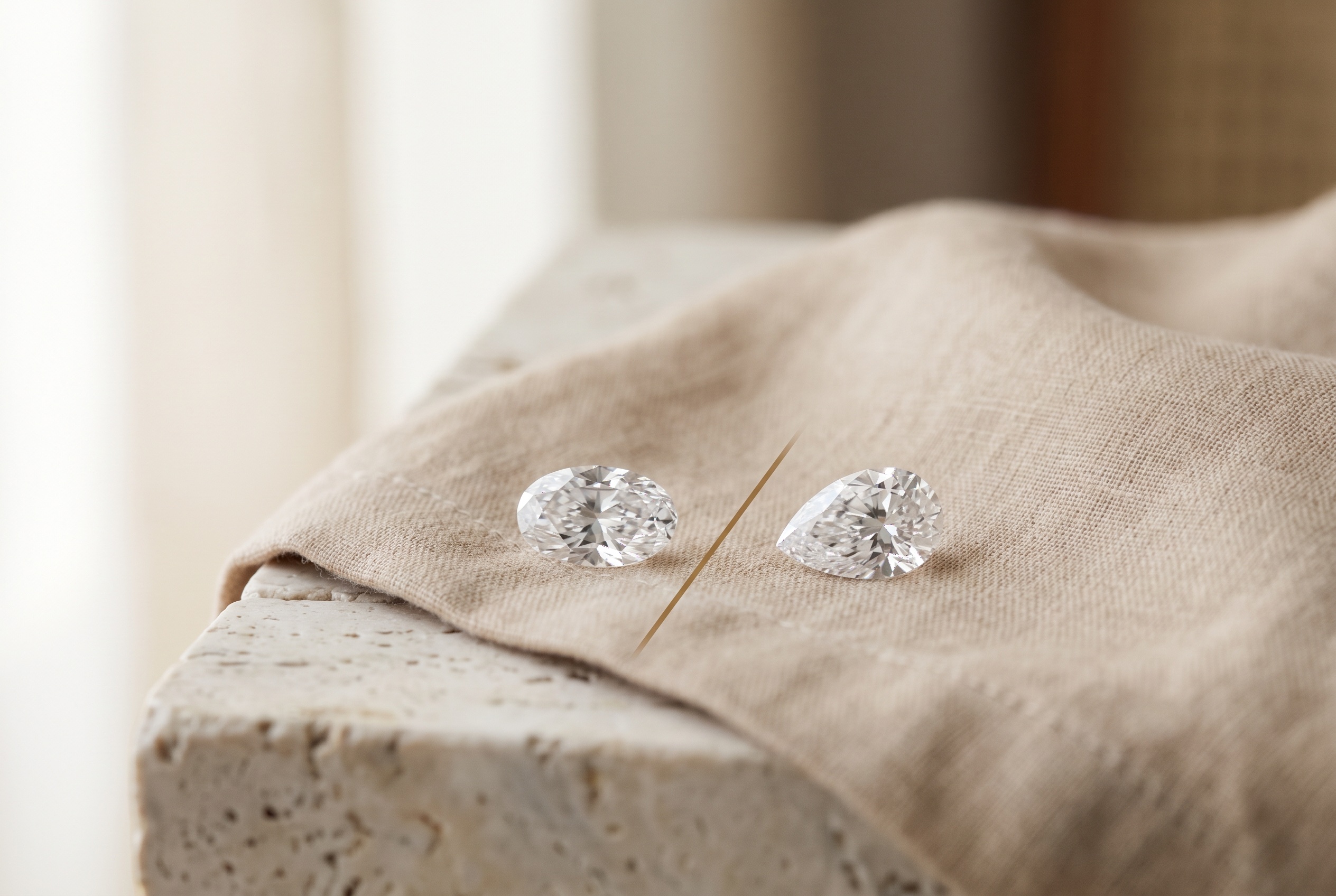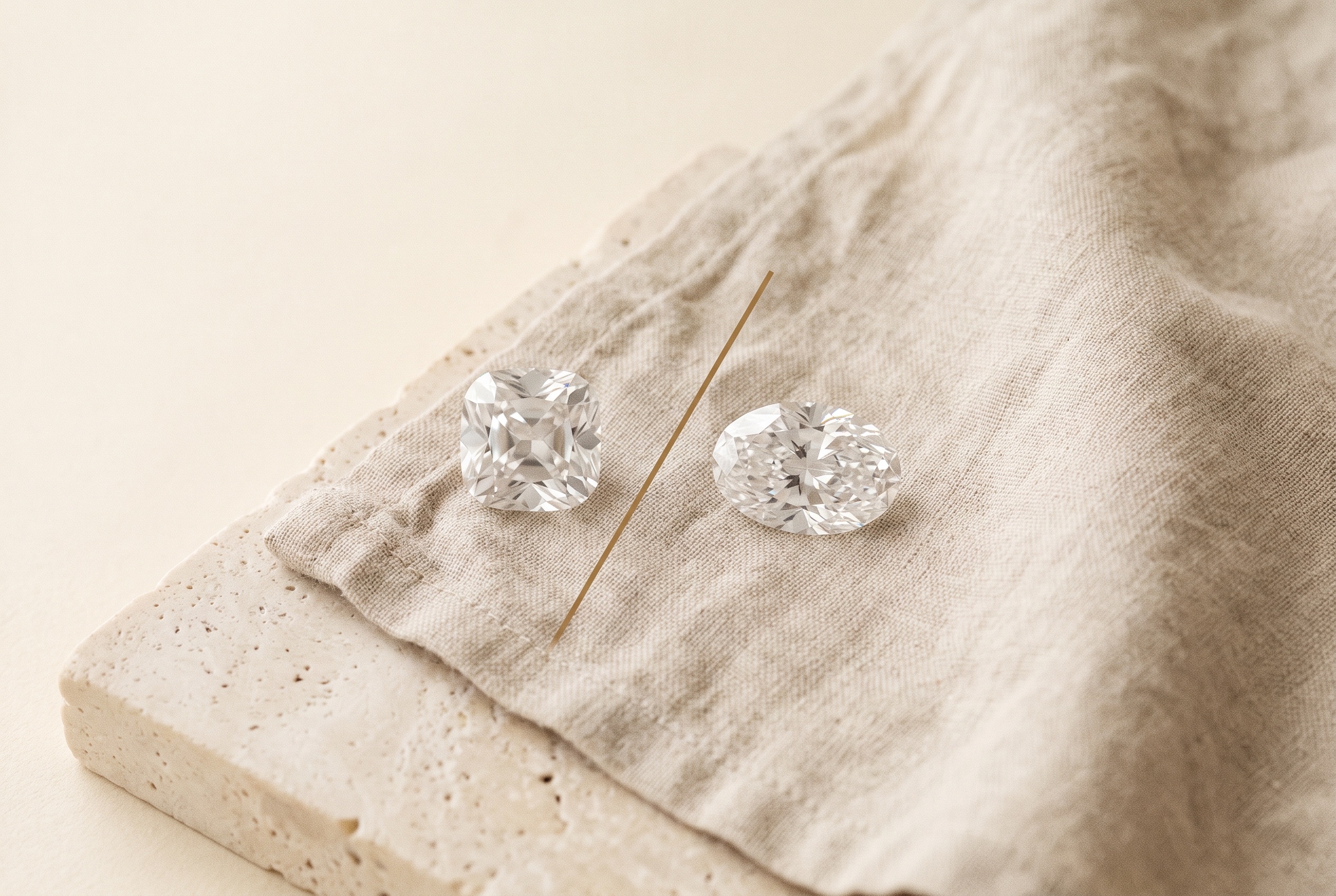

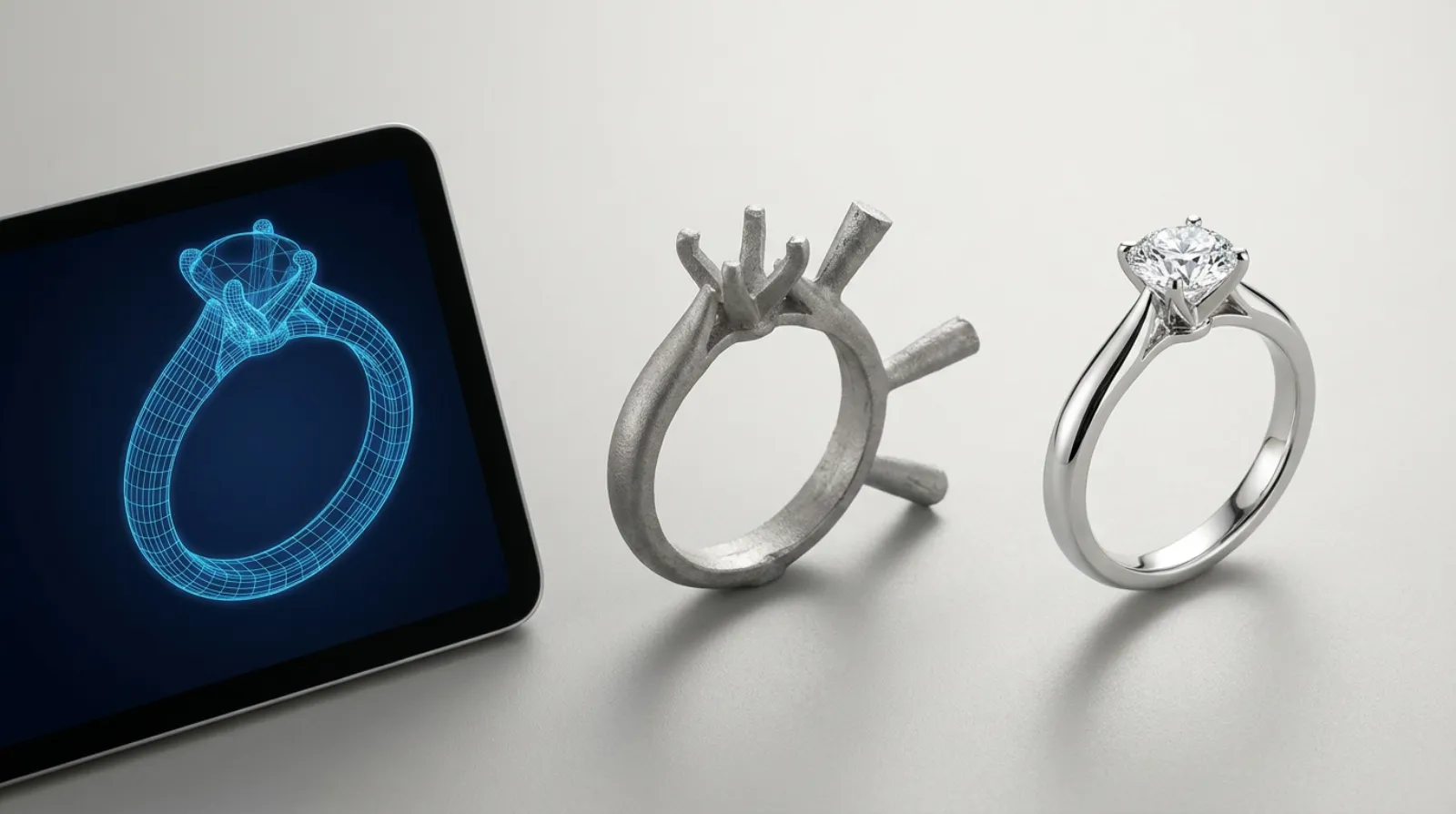

Fast turnaround custom jewelry manufacturing compresses the CAD-to-finished-ring cycle to 4-6 working days, versus the 9-19 days most trade suppliers quote. The speed comes from one roof: certified stones, CAD, casting, stone-setting, and finishing run as a single sequenced pipeline instead of a chain of outside vendors, each adding a handoff and a queue.
For an independent jeweler, designer, or manufacturer, turnaround is not a vanity metric. It is the difference between closing a custom sale and watching the client walk because "six to eight weeks" killed the proposal-week deadline. This guide breaks down exactly how a 4-6 day cycle is built, day by day, so you can quote it to your own clients with confidence and understand where the time actually goes.
Why does most custom diamond jewelry take 9-19 days (or longer)?
The conventional custom timeline is slow because it is fragmented. A typical independent jeweler doesn't own the full production stack, so a single ring touches three to five separate businesses before it ships:
- A loose stone is sourced from a diamond wholesaler — often on memo, with shipping and a return window.
- A CAD file goes to a freelance designer or a CAD bureau, with a revision round or two by email.
- The approved file goes to a casting house that batches work and casts on a schedule (frequently twice a week).
- The casting comes back, then goes out again to a bench setter or a setting house.
- Polishing, rhodium, and QC happen at yet another station.
Each arrow in that chain is a shipping leg, a queue, and a person waiting on someone else. Industry guides routinely cite two weeks of production after CAD approval, and full design-to-delivery timelines of 4-6 weeks are common. Even shops marketing "fast" CAD-and-3D-print workflows generally land at 7-14 days. The bottleneck is rarely the work itself — it's the dead time between handoffs.
When the entire pipeline lives under one roof, you delete the shipping legs and collapse the queues. That is the structural reason a 4-6 day cycle is achievable and a multi-vendor chain is not.
What does the day-by-day 4-6 day timeline actually look like?
Here is the realistic sequence for a single custom diamond ring when stone, CAD, casting, setting, and finishing are co-located and sequenced. Times assume a standard solitaire-to-three-stone complexity with a stone already in inventory.
| Day | Stage | What happens | Trade checkpoint |
|---|---|---|---|
| Day 0 | Spec & stone | Center stone selected from live inventory; metal, finger size, and design intent locked | You confirm IGI/GIA cert and HD video before anything moves |
| Day 1 | CAD | 3D model built; render sent for approval same day | One revision round budgeted; sign-off triggers production |
| Day 2 | Print & cast | Resin/wax printed, invested, and cast in the chosen metal | Metal and karat confirmed against the order |
| Day 3 | Pre-set & QC | Casting cleaned, sized, prongs/seats cut; melee and side stones prepped | Calibrated melee pulled to spec, no field-sourcing delay |
| Day 4 | Setting | Center and accent stones set; symmetry and security checked | Setter and stones in the same building — no shipping leg |
| Day 5 | Finish & ship | Polish, rhodium (if white gold), final QC, photography, same-day dispatch | Tracking and final images to you before it leaves |
Days 4 and 5 are where the buffer lives. A more intricate piece — a halo with French-cut side stones, a fully eternity-set shank, or a matched fancy-shape pair flanking the center — pushes you to the 6-day end. A clean solitaire can finish in 4. The point is that the worst case is still inside one business week, not one to two months.
The single variable that decides whether you hit 4 days or 6
Stone availability. If the center and the side stones are already certified and physically in inventory, the clock starts at CAD. If the stone has to be sourced, screened, and shipped in first, you've reintroduced exactly the delay the one-roof model exists to remove. This is why fast turnaround is really an inventory story wearing a manufacturing costume: 11,000-plus certified stones on the shelf, including calibrated melee and matched pairs, is what lets Day 0 happen the same day you get the order.
How does the all-under-one-roof model compress the timeline?
Three mechanics do the work:
No inter-vendor shipping. Every overnight or two-day leg you remove is a full calendar day (sometimes two) back in your pocket. A five-vendor chain can carry three or four shipping legs. Co-location deletes all of them.
No batch queues. Independent casting and setting houses batch work to run their equipment efficiently — your ring waits for the next cast day or the setter's open slot. An integrated pipeline sequences your specific job, so the work flows the moment the prior stage finishes.
Stones already in hand. Sourcing is usually the longest pole. When the certified loose stones and the melee are in the same inventory the CAD references, the procurement step is a pick, not a purchase order.
For the trade buyer, the practical translation: you can quote a proposal-week or even a same-week custom deadline and actually mean it. That changes which clients you can say yes to.
What can you realistically promise your client — a reusable talk track
Don't oversell. Speed has honest limits, and a jeweler who quotes 4 days on a piece that genuinely needs 6 burns trust. Use a framing like this with your own client:
"Once we lock the stone and you approve the rendering, we're looking at roughly four to six working days to a finished, set, and polished ring. Simple settings sit at the fast end; a halo or full eternity band with matched side stones runs to the longer end. I'll confirm the exact date the moment your CAD is signed off."
That talk track does three things: it sets a true expectation, it explains the variable (complexity), and it ties the clock to a concrete trigger (CAD sign-off) so the client understands their approval speed is part of the timeline. If you're building custom volume without your own bench, the no-in-house-bench production model is the companion read.

Does fast turnaround mean cutting corners on quality or certification?
No — and this is the objection a savvy retail client will raise, so be ready for it. Speed in this model comes from removing dead time between stages, not from skipping QC. The center stone still ships with its IGI or GIA grading report, and you should verify it before production starts.
A note on certification you should understand for 2025-2026: in October 2025 GIA changed its lab-grown approach, moving to a two-tier descriptive system that classifies stones as "premium" or "standard" rather than issuing the traditional full 4Cs grading report it still uses for natural diamonds. That shift reinforced IGI as the de facto cert leader for lab-grown — IGI grades the large majority of lab-grown stones (roughly 95%-plus of the category) with full 4Cs reports, which is why it is the trade default. Note that the same stone can grade up to about one color grade differently between labs, so spec consistency matters when you reorder. For melee, remember the trade definition — small accent stones under roughly 0.18-0.20 carat — and that calibrated melee runs to roughly plus or minus 0.05-0.10mm tolerance, which is what lets a fast pipeline drop stones into seats without hand-fitting each one.
The quality controls that matter — seat depth, prong security, symmetry, polish, rhodium coverage — all happen on Days 3 through 5. Faster sequencing doesn't shorten the QC; it shortens the waiting.
Building custom volume and want live wholesale pricing on the stones behind it? Request a Wholesale Account for verified trade access to 11,000-plus certified stones, real-time inventory, and 4-6 day custom.
How does fast custom change the economics for a jeweler?
Turnaround is a margin lever, not just a service feature. Three reasons it shows up on your P&L:
You close deadline-driven sales. Proposal weeks, anniversaries, and replacement-on-loss situations are won by whoever can deliver in time. A one-week capability lets you say yes to business a six-week shop has to decline.
Custom carries a higher ticket. Personalized and made-to-order pieces consistently command a higher average order value than off-the-case stock, because the client is buying exactly what they want and is less price-anchored to a comparable shopped online. Faster turnaround lets you run more custom orders through the same calendar.
Inventory turn improves. When you can build to order in days instead of weeks, you carry less finished goods and convert more of your capital into stones that move. Pair that with memo terms on the loose stones and your working capital stretches further.
There's also a demand tailwind. Vintage and antique-cut styles — Old Mine, Old European, rose, Portuguese — have surged in engagement-ring interest, with Pinterest and Etsy both reporting strong double-digit-and-up growth in vintage-style searches and sales through 2024-2025. Those looks are almost always custom builds, which means the fast-turnaround capability and the trend point at the same opportunity. If antique cuts are part of your book, the antique-cut trend guide for 2026 and the broader antique and rare cuts overview are worth a read.
How does the cost picture look right now?
Two macro forces are worth pricing into your custom quotes:
Lab-grown wholesale prices have largely stabilized. After years of steep decline, wholesale lab-grown prices fell about 26% in 2025 year on year — but the quarter-on-quarter drop narrowed to under 5%, the smallest since the category emerged, and smaller stones actually firmed 10-20% as Chinese HPHT producers halted price cuts. Translation: the freefall that made it hard to quote a stable price is easing. You can build a custom quote today with more confidence that the stone cost won't crater between deposit and delivery.
Tariffs are evolving and worth watching. A proposed 2026 US-India trade framework has been discussed that would set loose natural diamonds and gems at 0% while placing finished jewelry and lab-grown at a roughly 18% figure that has been circulated rather than enacted — it is not settled law, and implementation remains uncertain after a Supreme Court ruling on tariff authority. For a custom builder, the takeaway is that domestic, US-based manufacturing of the finished piece — versus importing a finished ring — may carry a structural landed-cost advantage if any such framework holds. We cover the planning angle in the 2026 tariffs inventory-hedge guide.
What should you confirm before you commit a custom order to a supplier?
Run this short checklist on any fast-turnaround claim before you quote your own client off it:
- Is the center stone physically in inventory and certified? If not, add sourcing time to the quote.
- Are CAD revisions included, and how many rounds? Endless free revisions sound generous but extend the clock; one budgeted round keeps the timeline real.
- Is setting in-house? A "fast" supplier that ships out for setting has reintroduced a delay.
- What's the same-day shipping cutoff? Day 5 only ships same-day if QC clears before the carrier deadline.
- Are melee and side stones calibrated to spec and in stock? Field-sourcing melee mid-build is a classic hidden delay.
If you want the full diligence framework for choosing a supplier, the 12 questions to vet a wholesale diamond supplier is the deeper version of this list.
Frequently Asked Questions
How fast can a custom diamond ring really go from CAD to finished?
With an all-under-one-roof pipeline and the stones already in inventory, a custom diamond ring can go from approved CAD to finished, set, and polished in 4-6 working days. Most trade suppliers quote 9-19 days because they route the work through separate sourcing, CAD, casting, and setting vendors, each adding a shipping leg and a queue.
What determines whether a custom ring takes 4 days or 6 days?
Two variables: stone availability and design complexity. If the center and side stones are already certified and in stock, the clock starts at CAD instead of at sourcing. A clean solitaire can finish at the 4-day end, while a halo, full eternity band, or matched fancy-shape side-stone setting pushes to the 6-day end because setting and finishing take longer.
Does a faster turnaround mean lower quality or no certification?
No. The speed comes from removing dead time between production stages, not from skipping quality control or certification. The center stone still ships with its IGI or GIA grading report, and seat depth, prong security, symmetry, polish, and rhodium coverage are all checked on the final QC days. Faster sequencing shortens waiting, not inspection.
Why is in-house manufacturing faster than using outside vendors?
A multi-vendor chain routes a single ring through three to five separate businesses, each adding an overnight shipping leg and a batch queue. Co-locating stone inventory, CAD, casting, setting, and finishing deletes the shipping legs and lets the job flow the moment each stage finishes, instead of waiting for the next vendor's cast day or open bench slot.
Can I quote a same-week custom deadline to my own client?
Yes, if your supplier runs an integrated 4-6 day pipeline and the stone is in inventory. The honest talk track is to tie the timeline to CAD sign-off: roughly four to six working days from the moment the rendering is approved, with simple settings at the fast end and complex pieces at the longer end. Always confirm the same-day shipping cutoff so Day 5 actually ships.
How have lab-grown diamond prices affected custom quoting in 2026?
Lab-grown wholesale prices fell about 26% in 2025 but the decline has sharply slowed — under 5% quarter on quarter — and smaller stones have firmed, signaling stabilization. For custom builders this means more reliable stone-cost quoting, with less risk that the price moves significantly between the client's deposit and the finished-ring delivery.
Ready to put a true one-week custom capability behind your bench? Request a Wholesale Account for verified trade access to live pricing and 11,000-plus certified stones, then book an appointment at our New York and Los Angeles desks — or contact the trade desk to scope your first fast-turnaround custom order.