
Natural Melee Screening: How to Confirm It's Not Lab-Grown
The only reliable way to confirm a natural melee parcel is genuinely natural — not lab-grown or simulant mixed in — is instrument-based diamond-type screening: infrared (FTIR) spectroscopy to sort stones by nitrogen-based diamond type, backed by photoluminescence spectroscopy on any stone that doesn't clear on type alone. Visual inspection, a loupe, and a standard thermal tester can't make this call — natural and lab-grown diamonds are chemically and optically identical, and thermal testers can't tell either apart from a good simulant.
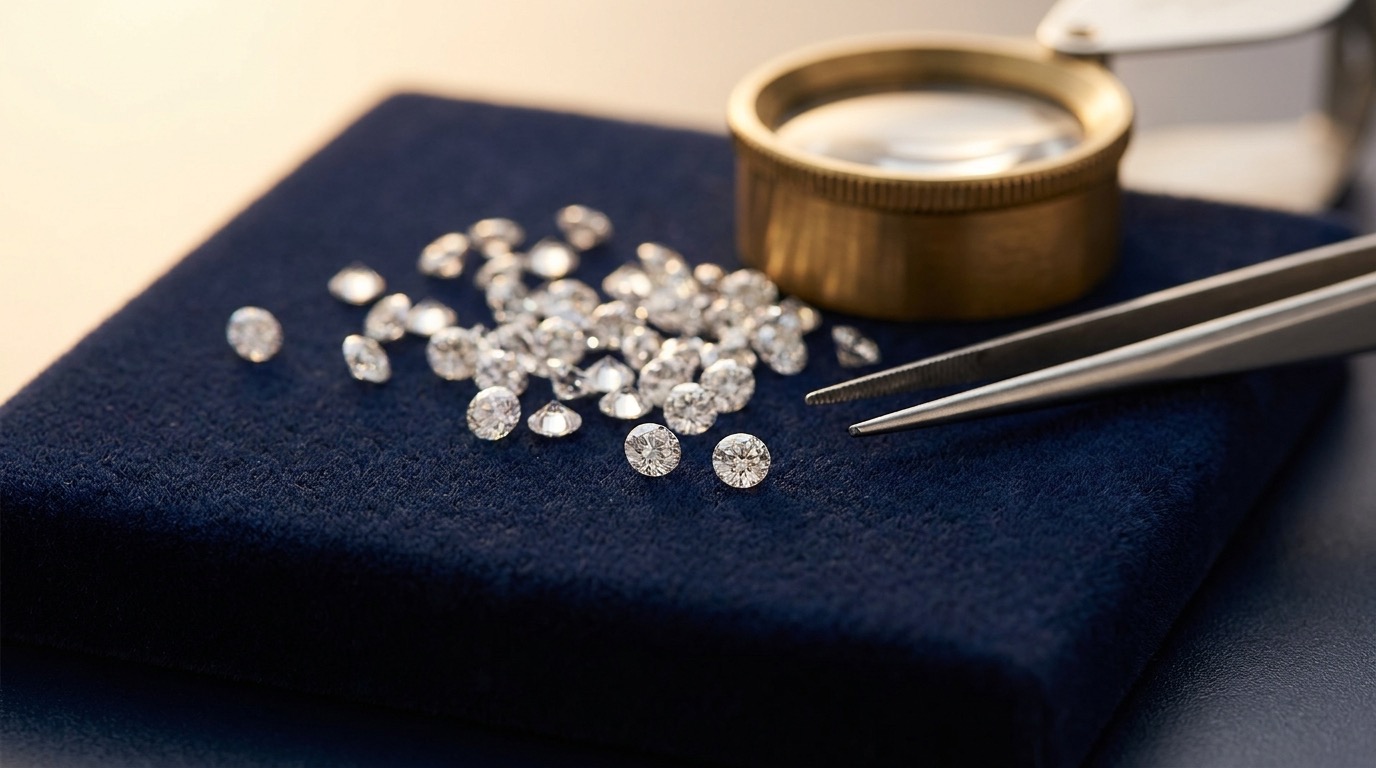
What Is Natural Melee Screening and Why Does It Matter?
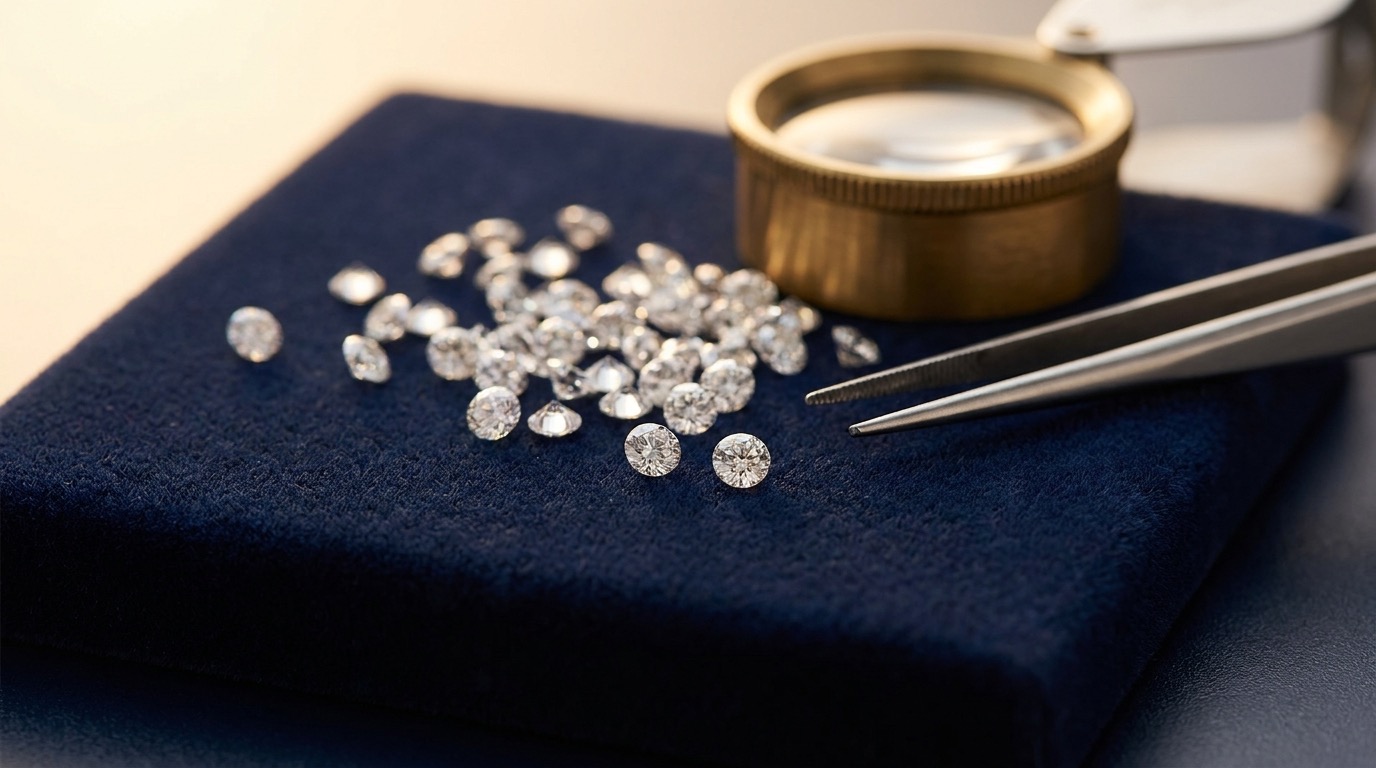
Natural melee screening is the instrument-based process of testing a parcel of small loose diamonds to confirm every stone in it is genuinely mined, natural diamond material — not a CVD or HPHT lab-grown diamond, and not a simulant like moissanite or cubic zirconia, mixed in accidentally or otherwise. It's the mirror image of the screening a lab-grown melee supplier runs to catch stray natural stones in a synthetic parcel: same instruments, same underlying physics, opposite direction of the check.
It matters because melee is bought and sold in bulk by size and grade, not stone by stone. A single center diamond gets its own certificate and its own scrutiny. A parcel of a thousand 1.5mm stones doesn't — melee is priced and moved too fast, in volumes too large, for anyone to certify each stone individually. That makes melee the exact spot in the diamond pipeline where an undisclosed lab-grown or simulant stone is most likely to slip through unnoticed, and where a buyer has the least practical ability to catch it without help from equipment built for the job.
For a wholesale supplier selling natural melee specifically, screening isn't optional diligence — it's the thing that makes the word "natural" on the invoice mean something. Anyone can print "natural" on a parcel paper. Only instrument-verified screening backs that claim up.
Why Can't You Tell Natural Melee from Lab-Grown by Eye or with a Thermal Tester?
Natural and lab-grown diamonds are the same material: carbon, crystallized into a diamond lattice, with identical hardness, refractive index, dispersion, and thermal conductivity. A lab-grown diamond isn't a fake or an imitation the way moissanite or cubic zirconia is — it's real diamond, grown by CVD or HPHT rather than formed underground over geologic time. That's precisely what makes it undetectable by eye, by loupe, or by any test that measures a property both materials share equally.
This is also why the handheld thermal and electrical testers common on a jeweler's bench are useless for this specific job. Those testers exist to separate diamond from non-diamond simulants — they read thermal conductivity or electrical conductivity, and a lab-grown diamond reads exactly like a natural one on both counts, because it is diamond. A thermal tester will happily pass a CVD stone as "diamond," which is true and also completely beside the point when the question is origin, not material.
Telling natural from lab-grown requires looking at something the two don't share: the internal growth signature left behind by how each stone actually formed. That signature lives at the atomic level — in nitrogen content and in trace defects in the crystal lattice — and reading it requires spectroscopy, not a loupe or a bench tester.
What Is Diamond "Type," and Why Is It the Starting Point for Screening?
Diamond type is a classification based on nitrogen content and how that nitrogen sits in the crystal lattice — it's a real, established gemological category (Type Ia, Ib, IIa, IIb), not a screening-specific invention. It's the fastest, first-pass filter every serious screening workflow runs.
The overwhelming majority of natural diamonds — well over 95% — are Type Ia, meaning they contain measurable nitrogen clustered in the lattice in patterns that only form over the geologic timescales natural diamonds take to grow. Type IIa diamonds, which contain little to no detectable nitrogen, make up a small minority of natural production. Colorless-to-near-colorless CVD lab-grown diamonds, by contrast, are almost always Type IIa, because the CVD growth process doesn't introduce nitrogen the way natural formation does.
That asymmetry is what makes type such a useful starting filter: a stone that reads as Type Ia, with a clear natural nitrogen signature, clears as natural on this pass alone. A stone that reads as Type IIa doesn't fail — it just can't be resolved on type alone, because a small share of genuinely natural diamonds are also Type IIa. Those stones get referred to a second, more sensitive test rather than rejected outright. Type classification narrows the field fast; it isn't the final word for every stone.
How Does Infrared (FTIR) Spectroscopy Screen a Melee Parcel?
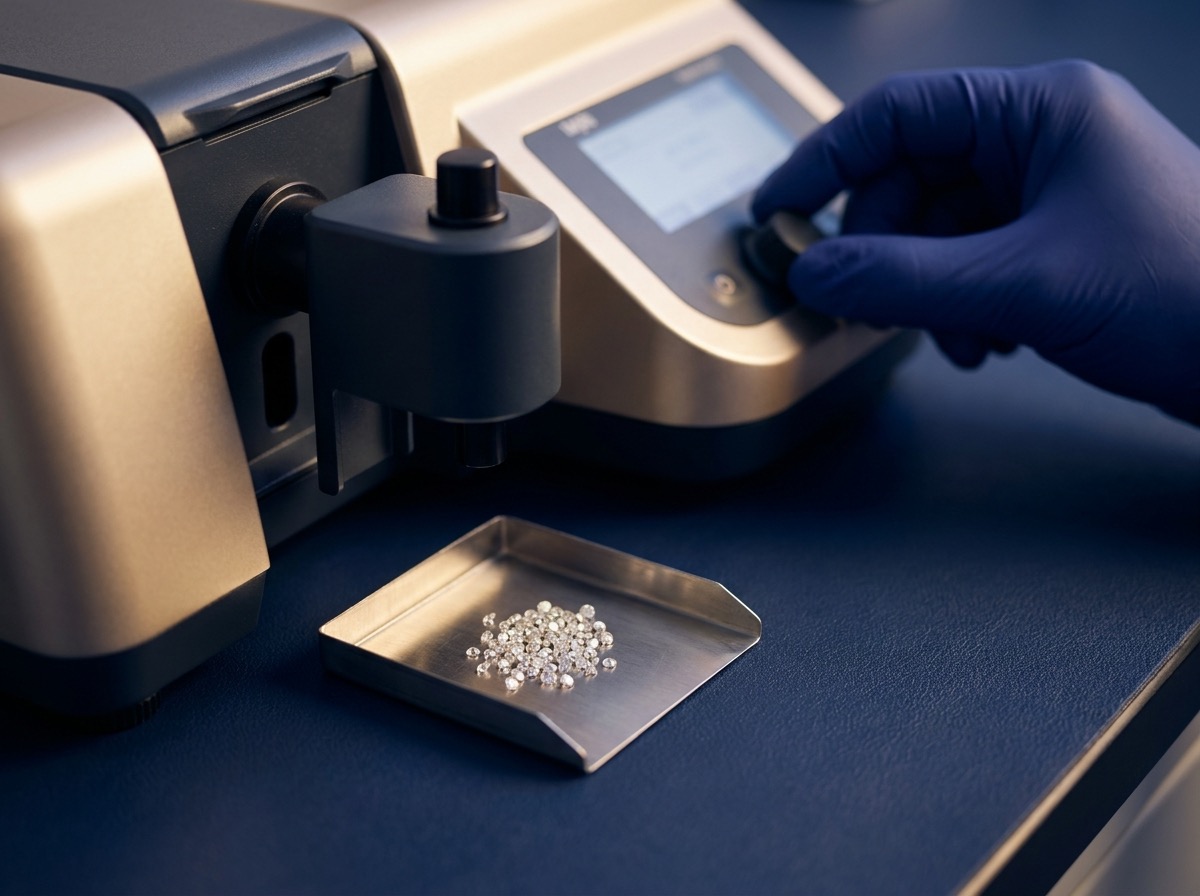
Fourier-transform infrared (FTIR) spectroscopy is the workhorse instrument behind diamond-type classification. It passes infrared light through a stone and reads the absorption pattern that comes out the other side — nitrogen impurities in the lattice absorb specific infrared wavelengths in specific patterns, and that pattern is what sorts a stone into its diamond type.
In a trade screening context, FTIR-based instruments are built to run this check fast and at volume: a stone (or a tray of stones) is exposed to infrared light, the instrument reads the absorption spectrum, classifies diamond type automatically, and sorts the result into a pass or a refer. This is the layer that clears the large majority of a natural melee parcel in one pass — the Type Ia stones with an unambiguous natural nitrogen signature.
FTIR screening is precise about what it does and doesn't confirm. It classifies diamond type reliably; it does not, by itself, distinguish a natural Type IIa stone from a lab-grown Type IIa stone, because both read the same way on nitrogen content alone. That's a known, accepted limitation of the method — not a gap that means the screening failed. It's exactly why a second layer of testing exists for the stones type alone can't resolve.
What Is Photoluminescence Spectroscopy, and When Does a Stone Need It?
Photoluminescence (PL) spectroscopy is the confirmatory test used on any stone that FTIR screening can't clear on diamond type alone — chiefly Type IIa stones, where natural and lab-grown material both show little to no nitrogen signature. PL spectroscopy works by exciting a stone with a specific laser wavelength and reading the light the stone emits back, which reveals trace lattice defects tied to how and where the stone actually formed — signatures that are far more specific than nitrogen content alone, and that do differ between natural growth, CVD growth, and HPHT growth or treatment.
This is a materially more sensitive test than FTIR type-screening, and it's typically run at low temperature — the stone is cooled, often with liquid nitrogen, because some of the diagnostic defect signatures only show up clearly once thermal vibration in the lattice is minimized. That's also why PL testing is slower and more resource-intensive than FTIR screening, and why it's used selectively on referred stones rather than as the front-line check on an entire parcel.
In practical terms: FTIR does the sorting, PL does the deciding on anything FTIR can't resolve. A parcel that's screened correctly runs every stone through type classification first, then routes only the ambiguous Type IIa fraction through PL confirmation — rather than either skipping PL entirely (which leaves natural-vs-lab-grown Type IIa stones unresolved) or running every stone through the slower, costlier PL step unnecessarily.
What Role Does UV Fluorescence and Phosphorescence Play?
Ultraviolet fluorescence and phosphorescence imaging is a secondary, supporting layer in most screening workflows — useful, but not a stand-alone answer the way FTIR or PL are. Under short-wave and long-wave UV light, natural and lab-grown diamonds can show different fluorescence colors and intensities, and CVD-grown stones in particular often show a distinctive phosphorescence — a glow that persists briefly after the UV source is switched off — that's uncommon in natural material.
The catch is that UV fluorescence behavior varies enough within both natural and lab-grown populations that it's a strong supporting indicator, not a definitive pass/fail test on its own. A stone showing CVD-typical phosphorescence is a strong flag for referral to spectroscopy; a stone showing no unusual phosphorescence isn't automatically cleared on that basis alone. Where UV imaging earns its place is as a fast, visual first look — the kind of check that can flag a suspicious stone for spectroscopic confirmation faster than running the whole parcel through FTIR and PL from the start.
Treat UV fluorescence the way you'd treat any single indicator in a diagnostic chain: informative, worth using, and not the layer you'd want a natural-origin claim to rest on by itself.
How Do Automated Melee Screening Instruments Handle Bulk Parcels?
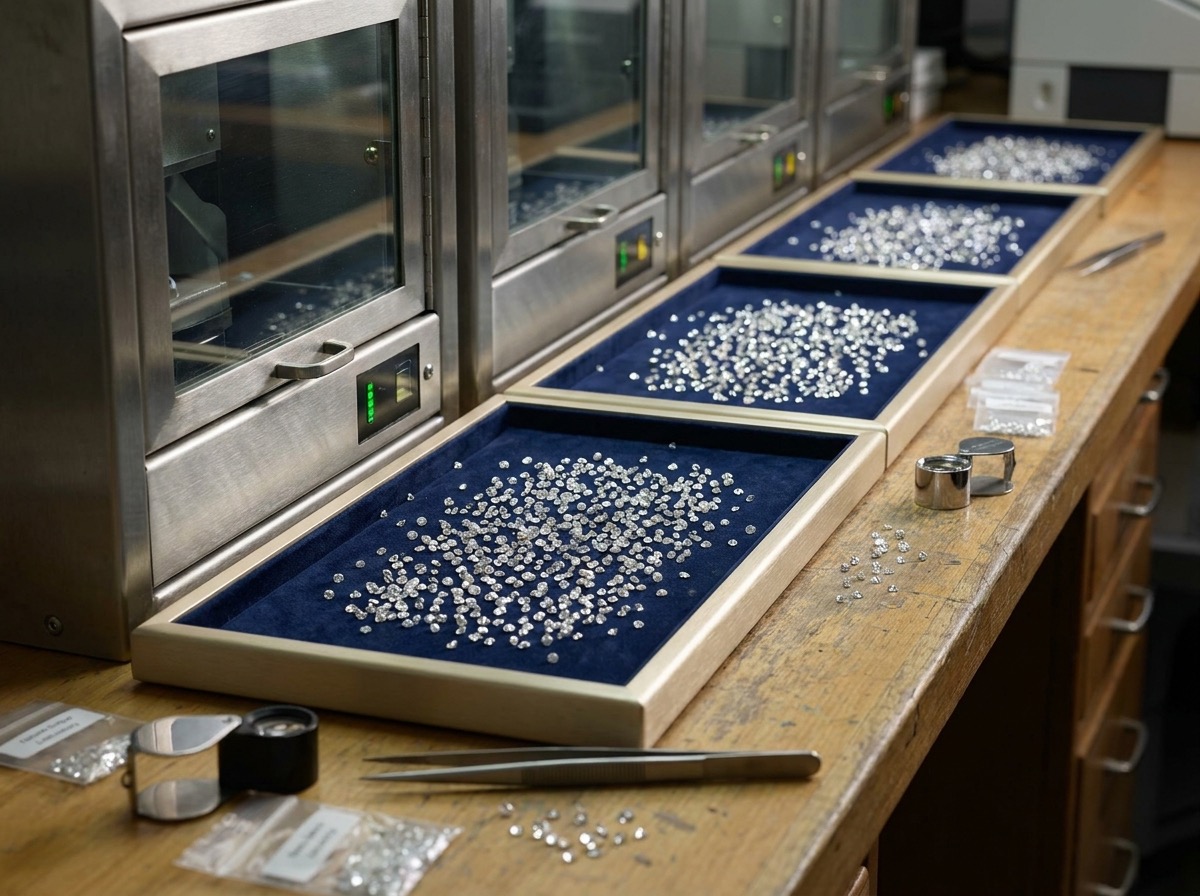
Melee's whole economic model runs on volume — a jeweler orders carats, not individual stones — and screening had to scale to match. That's why the equipment built for this job is automated: stones are fed into the instrument in bulk, typically loaded loose into a hopper or tray, and the machine handles singulation (separating stones one at a time internally), measurement, spectroscopic reading, and sorting without a technician handling each stone by hand.
The output of an automated pass is binary at the parcel level: each stone gets sorted into a pass bin (cleared as natural on the available data) or a refer bin (needs additional testing before a call can be made). For a parcel in the size range Guru Diam works in — roughly 0.8mm to 4.0mm — this kind of automated instrument is what makes it economically viable to screen every stone rather than a sample. Hand-testing a thousand-stone parcel one at a time with a bench spectrometer isn't a realistic option at melee volumes and melee prices; automated batch instruments are what closed that gap for the trade.
This is also the reason melee screening claims should specify a process, not just an outcome. "We screen our melee" means little without knowing whether that's an automated instrument pass on every stone, a sample check on part of the parcel, or a one-time check on the source rather than the specific goods in hand.
What Do GIA's and IGI's Melee Verification Services Actually Do?
Both GIA and IGI — the two certification labs most jewelers already work with for loose stone grading — run dedicated melee screening services separate from their loose-stone certification business, and they're worth knowing about because they define what a rigorous, third-party version of this process actually looks like.
GIA's melee analysis service is built specifically for this size range: it screens round and fancy-shape melee roughly 0.90mm to 4.00mm in diameter — a near-exact overlap with the 0.8mm–4.0mm range natural melee is sourced in industry-wide — separating natural diamonds from simulants, lab-grown diamonds, and HPHT-treated natural stones, with round goods eligible for an additional color-range sort. IGI runs comparable technology — combining spectroscopic methods with magnification — to separate natural from lab-grown material in loose parcels and in mounted jewelry.
The reason these services matter for a buyer, even one who never sends goods to GIA or IGI directly, is that they show what "properly screened" means at the reference standard: automated, spectroscopy-based, built for melee-scale volume, and run by a lab with no commercial stake in which way a given stone gets classified. A supplier's in-house screening should be measured against that bar, not against a looser standard invented for convenience.
What Does a "Pass" Result Really Mean — and What Does a "Refer" Mean?
A "pass" on melee screening means a stone's diamond-type and, where applicable, spectroscopic signature is consistent with natural origin and didn't trigger any of the markers associated with lab-grown or treated material. It's a strong, instrument-backed result — but it's worth being precise about what it is: a classification based on measurable physical signatures, not a guarantee with zero statistical exception, which is true of essentially every screening technology in any industry.
A "refer" result means the opposite of what buyers sometimes assume — it does not mean a stone is lab-grown. It means the fast screening pass couldn't resolve the stone's origin with confidence and it needs a more sensitive follow-up test (typically photoluminescence spectroscopy) before a call gets made. Most referred stones, once run through confirmatory testing, turn out to be natural — the referral rate is simply the cost of a screening method that would rather flag an ambiguous stone than risk a false pass.
This distinction matters when you're evaluating a supplier's claims. "100% pass rate, no exceptions" on a large natural melee parcel is a claim worth questioning, not trusting at face value — a small referral rate on Type IIa stones is the expected, honest output of a properly run screening process, not evidence of a problem.
How Is Screening a Natural Melee Parcel Different from Screening a Lab-Grown Parcel for Salting?
The instruments and the underlying physics are identical — FTIR for diamond type, photoluminescence for confirmatory analysis, UV fluorescence as a supporting layer. What flips is the expected result and what counts as a problem. Guru Diam covers the reverse case — screening a lab-grown melee parcel to catch accidentally mixed-in natural stones — in a companion piece, Melee Screening 101: How to Screen Melee for Lab-Grown Salting in Your Parcels, and reading the two together gives the full picture of why melee screening runs in both directions in this trade, not just one.
On a lab-grown parcel, the screening goal is to confirm every stone is CVD-grown as sold, and a natural stone turning up in the mix is the failure mode — sometimes accidental (natural and lab-grown rough or polished goods handled in the same facility without rigorous separation), sometimes closer to deliberate. On a natural parcel, the goal flips: confirm every stone is mined, and a lab-grown or simulant stone turning up is the failure mode, whether from an honest mix-up upstream or an intentional attempt to pass cheaper lab-grown material off as natural, which carries a meaningfully higher price premium at wholesale.
Either direction, the reason the check exists is the same: melee's bulk, unpapered nature makes it the weak point in the disclosure chain, and instrument screening is what closes that gap regardless of which way the mismatch would run.
Why Does Screening Matter for a Natural Melee Supplier's Credibility?
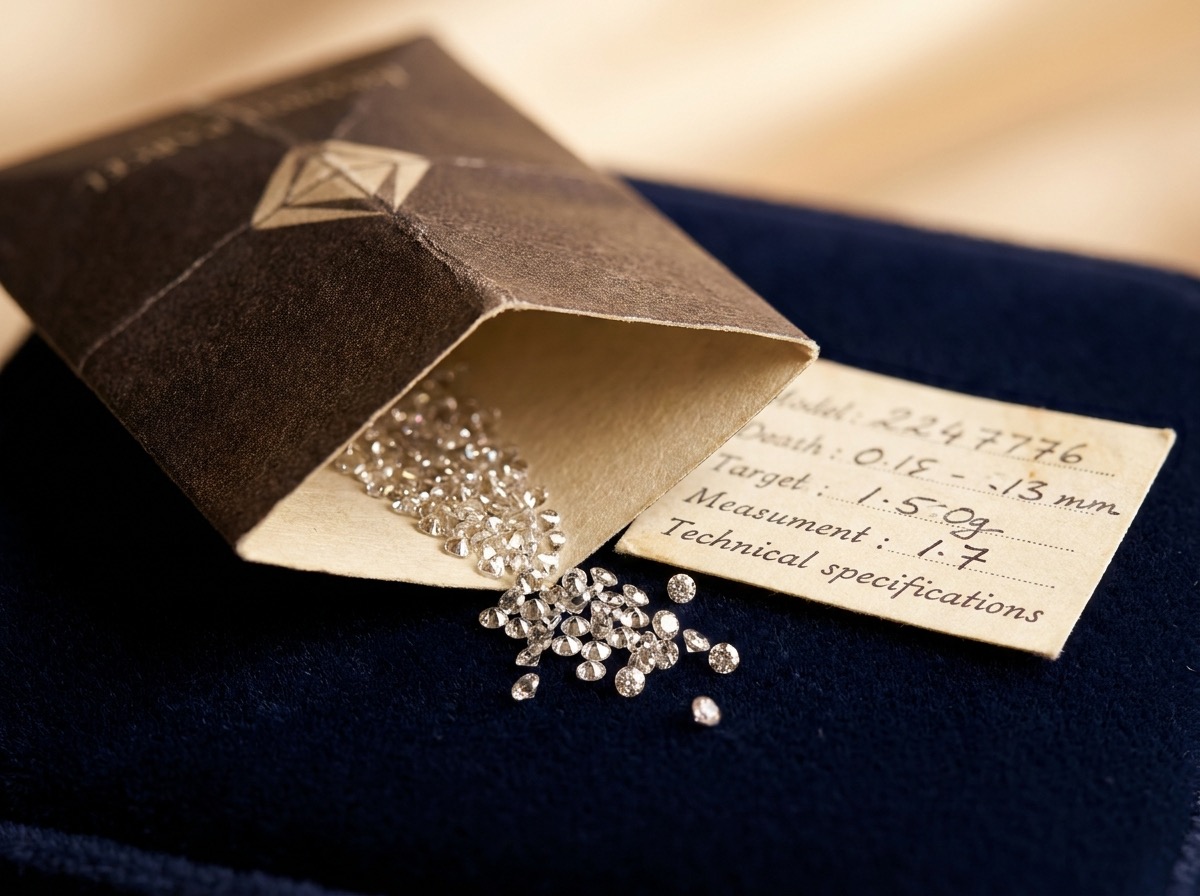
Natural melee carries a real price premium over lab-grown melee at the same size and grade — origin, not appearance, is what a buyer is paying for. That premium only makes economic sense if origin is actually verified rather than assumed, which is exactly why screening sits at the center of a natural melee supplier's credibility rather than being a nice-to-have add-on.
A supplier who can't speak specifically to how incoming natural melee is screened is asking a buyer to take origin on faith — in a market segment where undisclosed lab-grown material mixed into natural parcels has been a documented, real problem, not a hypothetical one. That risk sits with the buyer downstream too: a retailer who sets undisclosed lab-grown melee into a piece sold as natural is exposed to the same disclosure problem their supplier created, just one step removed and harder to trace back.
Screening claims are also one of the more effortless things for a supplier to overstate, because a buyer usually has no independent way to check them. That's precisely why specificity is the tell: a supplier who can describe the actual method (diamond-type screening, spectroscopic confirmation on referred stones, and so on) is speaking from a real process. A supplier who answers with a general assurance and nothing else is not necessarily lying — but they're also not giving you anything to verify.
How Should You Vet a Supplier's Screening Claims Before You Buy?
A few concrete questions separate a real screening process from a marketing line, and they're worth asking before you commit to a natural melee supplier or a specific parcel:
- What method is actually used? "We screen for lab-grown" should get you a specific answer — diamond-type classification, spectroscopic confirmation, or a named third-party service — not just a repeated assurance.
- Is every stone screened, or a sample? Automated instruments make full-parcel screening realistic at melee volumes. A supplier relying on spot-checking a sample of a large parcel is running a materially weaker check, and should say so plainly if that's the case.
- Is screening done in-house or through a third party? Both are legitimate — GIA's and IGI's melee services exist precisely because not every supplier runs its own spectroscopy lab — but you should know which one you're getting, since it affects how independently verifiable the result is.
- Does the supplier disclose referral outcomes honestly? A supplier who tells you their process occasionally refers a small share of Type IIa stones for further testing is describing a real screening workflow. A supplier claiming zero referrals, ever, on volume that should statistically produce some, is a claim worth a second look.
Guru Diam's natural melee is sourced and screened to confirm natural origin before it's sold under the natural-melee line — separate and distinct from Guru Diam's own CVD lab-grown melee line, never blended on the same order or the same parcel. For an exact quote against your size, grade, and total carat weight, reach out over WhatsApp or through Contact.
Frequently Asked Questions
Can a thermal or electrical diamond tester detect lab-grown melee?
No. Thermal and electrical testers confirm a stone is diamond (versus a simulant like moissanite or cubic zirconia) — they can't distinguish natural diamond from lab-grown diamond, because both are chemically identical diamond material and read the same way on those tests. Origin detection requires spectroscopy, not a bench tester.
What does it mean if a melee stone gets "referred" during screening?
It means the fast screening pass — typically infrared diamond-type classification — couldn't resolve the stone's origin with confidence, usually because it's a Type IIa stone, a category shared by a small share of natural diamonds and most colorless CVD lab-grown diamonds. It does not mean the stone is lab-grown; it means the stone needs a more sensitive confirmatory test, usually photoluminescence spectroscopy, before a call is made.
Is diamond type the same thing as color or clarity grade?
No. Diamond type is a physical classification based on nitrogen content in the crystal lattice (Type Ia, Ib, IIa, IIb) and is unrelated to the color or clarity grading scale. It's used in screening because natural and lab-grown diamond populations differ statistically in which type they fall into — not because type itself is a quality measure.
Does Guru Diam screen its natural melee for lab-grown mixing?
Yes — natural origin is confirmed before stones are sold under Guru Diam's natural melee line, which is sourced, priced, and verified separately from Guru Diam's own CVD lab-grown melee line. The two lines are never blended into the same parcel or order.
Can GIA or IGI screen a melee parcel directly?
Yes. Both labs run dedicated melee screening services separate from their loose-stone certification business. GIA's service covers roughly 0.90mm to 4.00mm round and fancy-shape melee, screening for simulants, lab-grown material, and HPHT-treated natural stones; IGI runs comparable spectroscopic screening on loose and mounted parcels.
Why does screening matter more for natural melee than for a loose certified diamond?
A loose certified diamond above roughly 0.30ct gets its own individual grading report, which already confirms origin stone by stone. Melee ships as sieve/size-graded parcel goods without individual certificates, because certification cost exceeds stone value at this size — so parcel-level screening is the only mechanism confirming origin across a batch of hundreds or thousands of stones.