

Price outsourced custom jewelry off landed cost — stone cost plus manufacturing plus CAD/design labor — then apply a markup that also recovers your overhead and the value of the consultation itself. Don’t price it off what a similar-looking stock piece sells for at retail. A workable starting point for one-off custom work is landed cost multiplied by roughly 2.2 to 2.8, adjusted up for complexity, rush timelines, and revision rounds, and adjusted down only if the client is buying in a small batch where your design labor amortizes across multiple pieces. Everything below walks through why that formula holds up, how to structure a quote around it, and where retailers usually leave margin on the table.
Why Custom Pricing Isn’t Stock Pricing
The most common markup mistake in custom jewelry is treating a custom build like inventory: looking at a finished ring, comparing it to something similar already sitting in the case, and pricing it the same. That logic works for stock because the cost structure is identical unit to unit — you bought it at a set wholesale price, you know the margin, done.
Custom work doesn’t have that cost structure. Even when the finished piece looks nearly identical to a stock item, the cost behind it isn’t the same, because a custom order carries labor a stock piece never touched:
- A CAD design session (sometimes several)
- Client-driven revision rounds before approval
- One-off manufacturing setup instead of a repeatable production run
- The sales time spent walking a customer through options, metals, and stone choices
- The risk that the piece can’t be resold to anyone else if the client backs out
If you price a custom band the same as a stock band because they photograph the same, you’re giving away the design and consultation labor for free. That labor is the actual product you’re selling on a custom order — the finished piece is just the deliverable.
This is a different problem from pricing loose stones. A loose diamond’s markup lives almost entirely in the stone line, and the loose-stone markup math stops there — no design labor attaches to a stone sitting in a parcel. Custom jewelry inherits that same stone-cost logic and stacks four more layers on top of it — metal, setting, CAD, and finishing — each needing its own line before a markup applies. Treat a custom quote like a loose-stone quote with extra zeros added, and the CAD and labor lines quietly disappear into “cost of goods” instead of getting priced.
What Actually Goes Into Landed Cost
Landed cost is what you pay your manufacturing partner, all-in, before you touch it. For outsourced custom jewelry, that breaks into several buckets, and each one needs its own line on your cost sheet rather than getting folded into a single “manufacturing” number.
Stone Cost
This is the diamond or diamonds, priced by shape, size, and quality. Cut tier matters here more than most retailers price for:
- Commodity tier — round brilliant. Widely available, competitively priced, easiest to source.
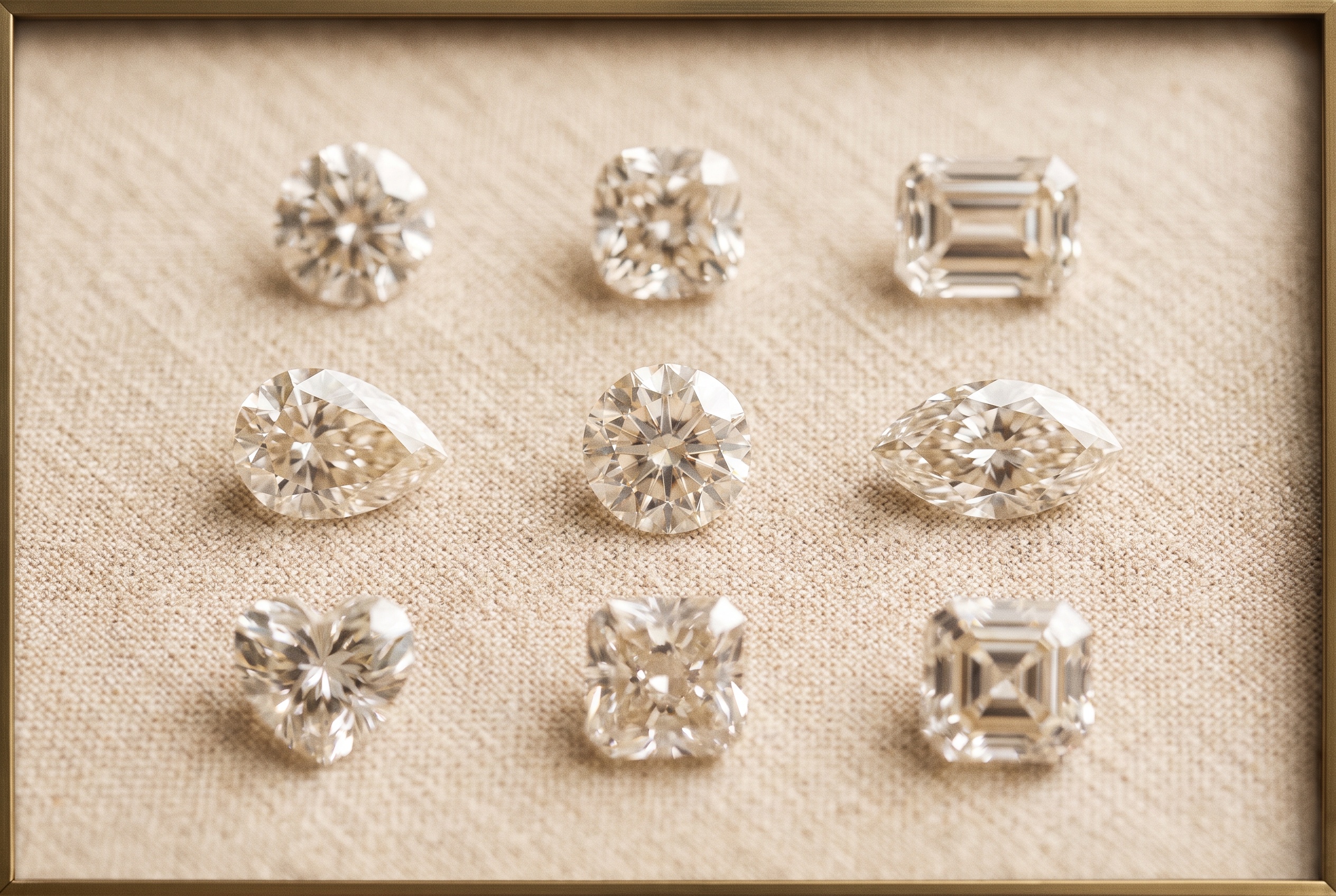
- Regular fancy tier — emerald, Asscher, cushion, oval, pear, marquise, radiant, princess, and heart cuts. These are modern fancy shapes and price a step above round.
- Antique/premium tier — Old Mine, Old European, hexagonal, moval, lozenge, kite, trillion, criss-cut, and Padparadscha-style cuts. These carry the highest per-carat cost of the three tiers and the longest sourcing lead time, because they’re cut to order far less often than commodity shapes.
If a client asks for a kite-cut side stone or an Old Mine center, that cost has to flow through to the quote — it can’t get absorbed into your standard markup, or the antique-cut orders will quietly bleed margin every time. For loose stones 0.30 carat and up, certified documentation (IGI or GIA, depending on what the client wants on file) is part of what you’re paying for and part of what you’re reselling — certification is a line item, not a freebie.
If the design uses melee for pavé or a halo, price that separately. Melee is uncertified, calibrated parcel goods sold against a color/clarity QC baseline rather than individually or parcel certified — it’s priced and costed differently than a certified center stone, and it should show up as its own line in your build sheet, not get folded into “diamond cost” as a single number.
Casting and Metal Cost
Metal cost is driven by karat, alloy, and finished weight — a 14K build and an 18K build on the same design land at different metal costs before labor is even added, and platinum shifts the number again. Casting waste is a real cost your manufacturing partner prices into their casting fee; what you need to confirm is whether your partner’s quote already includes casting or bills it separately, since assuming one when it’s actually the other is a fast way to underquote a build.
Setting Labor
Setting labor scales with the number of stones and the setting style, not just the center stone. A single prong-set solitaire is a fast setting job; a pavé halo with dozens of melee accents, or a hand-fabricated antique-style setting like a button-back collet, takes meaningfully longer at the bench and should carry a fee that reflects that time. One flat “setting” line applied to both a four-stone design and a forty-stone pavé design means one of those two jobs is being underpriced.
Finishing and Polish
Final polish, rhodium plating on white gold, and engraving happen last — exactly why they get forgotten in a rush quote. Confirm whether your manufacturing partner bundles them into the setting fee or bills separately, and price engraving as an explicit add-on.
CAD and Design Labor
The last bucket is CAD and design time — the render, the file, and the sales time walking a client through options. It belongs on the landed-cost sheet the same as stone and metal. Pricing the revision rounds that come after the first render is its own problem, covered below.

Building a Transparent Quote Structure Customers Can Understand
A landed-cost breakdown is an internal tool. A client-facing quote is a different document, and the retailers who get the fewest pricing disputes are the ones who show clients a structured, line-itemized quote rather than a single bottom-line number.
A workable custom quote template has five visible lines, in this order:
- Center stone (shape, tier, carat, certification)
- Accent stones, if any (melee or secondary stones, priced separately from the center)
- Metal (karat, estimated weight)
- Design and setting (CAD, included revisions, and bench labor combined into one “build” line, or split out if your shop prefers more visibility)
- Total price
Whether you show your markup as a visible line or fold it into the final number is a house-style decision — most retailers keep the markup embedded and show only the final price. What matters more is picking one approach and applying it consistently, since a client who gets an itemized quote on one order and a single number on the next will ask why.
The quote should also state, in writing, what’s included before the client signs: number of CAD revision rounds, estimated production timeline, deposit amount, and branding terms if the piece is going out unbranded for resale under the retailer’s own name. A verbal quote that skips these details is the single most common source of “but I thought that was included” disputes after the fact.
Pricing Revisions and Changes Mid-Project
A CAD render isn’t free to produce, and neither is the second or third revision after the client wants the halo lowered, the shank thinned, or the setting style changed. If your outsourced partner includes a set number of revision rounds in the base manufacturing quote, know that number — and price your first-round-approval jobs differently from the jobs that go back and forth five times. If revisions beyond the included count carry an additional charge from your manufacturer, that charge needs to reach the client’s price, not sit on your books as an unrecovered cost.
Not every client request is a revision in the pricing sense, and conflating the two is where retailers lose the most margin on mid-project changes. A revision adjusts the design already quoted — lower the halo, thin the shank, swap a prong style. A scope change replaces part of what was quoted — a different center stone shape, a bigger carat weight, a switch from pavé to a solid band. Revisions get priced against your included-rounds policy; scope changes need a new landed-cost calculation, because the underlying stone or metal cost has actually moved, not just the design file.
State the line in writing before work starts: “Quote includes two CAD revision rounds. Additional revisions are billed at [your rate] per round. Changes to stone, metal, or carat weight after CAD approval will be re-quoted.” That paragraph on a quote sheet protects margin on mid-project changes better than any case-by-case negotiation after a client has already seen two renders and asked for a third.
Timing matters too. A change requested before CAD approval is normal back-and-forth. A change requested after approval, once manufacturing has started and tooling may need to restart, is a different cost entirely and should carry a materially higher, separately disclosed fee.

Deposit and Payment-Schedule Structures Common in the Trade
Custom jewelry carries a risk stock inventory doesn’t: if a client walks away mid-build, the stone is already committed and the CAD hours are already spent, and neither is resellable to the next customer the way a stock piece is. A deposit exists to price that risk before it happens, not to recover it after.
The structure most retailers land on has two or three payment points rather than one invoice at delivery:
- Deposit at design approval — collected once the client signs off on the CAD render, before manufacturing begins. This deposit should be sized to cover at minimum the stone cost and the CAD labor already spent, since those are the two costs you can’t recover if the client cancels after this point.
- Progress payment at cast or setting (optional, more common on larger or antique-tier builds) — a milestone payment that reduces the balance outstanding at delivery.
- Balance due at delivery or before shipping — the remainder of the quoted price, collected before the finished piece leaves your hands.
Making the deposit non-refundable past CAD approval, rather than refundable up to delivery, is standard trade practice, and it should be stated on the quote itself — not left as an unwritten house policy the client discovers only if they try to cancel. For rush orders, collect the rush premium as part of the deposit rather than the balance, since a rushed build compresses your manufacturing partner’s queue immediately, not at delivery.
Where the Pricing Components Stack: Custom vs. Stock
The clearest way to see why custom pricing needs more structure than stock or loose-stone pricing is to line the components up side by side. Loose stones and finished stock inventory both collapse most of these costs into a single wholesale number; custom work can’t, because each line moves independently depending on the specific build.
| Pricing component | Loose-stone / stock pricing | Custom-jewelry pricing |
|---|---|---|
| Stone cost | Single wholesale line, priced off catalog and cut tier | Same tier-based cost, flagged separately by cut tier since antique and regular-fancy stones carry different lead times |
| Metal cost | Bundled into the finished SKU’s wholesale cost | Priced as its own casting line, driven by karat, alloy, and finished weight |
| Labor | Minimal — receiving and quality check only | Multiple lines: CAD design, bench setting, finishing and polish |
| CAD fee | Not applicable — no design step exists | Billable line; first-round render typically included, revisions priced separately |
| Setting fee | Bundled into the finished SKU cost | Priced separately, scaled to stone count and setting complexity |
| Markup | Keystone, roughly 2x landed cost | Keystone-plus, roughly 2.2x–2.8x, scaled to complexity, revisions, and rush timeline |
Loose-stone and stock pricing carry their own tradeoffs, covered in the loose-stone markup guide. Custom pricing needs a different tool: a build sheet with six live lines instead of one wholesale number, updated per order.
Building the Markup
Once landed cost is assembled — stone(s), manufacturing, and any billable CAD work — the markup needs to do four jobs at once:
- Recover your cost of goods
- Cover general overhead (rent, staff, insurance — the cost of running your business regardless of this one order)
- Price your design and consultation time explicitly, not as an afterthought
- Compensate for the risk that a one-off build can’t be resold if the deal falls through
| Markup driver | Why it matters | Typical adjustment |
|---|---|---|
| Standard build, first-round CAD approval | Baseline complexity, minimal back-and-forth | Base multiplier |
| Multiple revision rounds | Extra design labor, delayed timeline | Add a flat design fee or bump the multiplier |
| Antique-tier stone or hand-fabricated element | Higher landed cost, longer lead time | Multiplier applies to the higher stone cost, not a discount for volume |
| Rush timeline | Compresses your manufacturer’s queue | Add a rush premium — priced against the finished-piece turnaround your partner quotes you, not against loose stone delivery |
| Repeat client, similar build to a prior order | CAD largely reusable | Lower multiplier is defensible here |
A simple way to think about the multiplier: keystone (2x) barely covers COGS and basic overhead on stock goods that don’t require design labor. Custom work needs “keystone-plus” — enough above 2x to price the consultation and revision time as a real product, not a courtesy. Where exactly you land inside that 2.2–2.8 range should depend on how much CAD labor the piece actually consumed, not on a flat house rule applied to every custom order regardless of complexity.

Common Pricing Mistakes
- Pricing custom the same as look-alike stock. The visual similarity has nothing to do with the labor behind it.
- Giving away CAD revisions. Unlimited “free” revisions train clients to keep changing their mind and quietly convert your design time into an unpriced cost center.
- Quoting stone cost only. Manufacturing, setting, and finishing are real dollars — leaving them out of the quote means discovering the actual margin after the invoice from your manufacturing partner arrives.
- Flat markup regardless of complexity. A simple solitaire and a hand-fabricated antique-cut halo do not carry the same design risk or labor, and shouldn’t carry the same multiplier.
- Treating a rush request as free. If your manufacturing partner is compressing a production queue to hit a tighter timeline on a finished piece, that compression has a cost, and it belongs in the client’s price.
- Underquoting labor because it’s invisible on the invoice. Stone and metal show up as line items on your manufacturing partner’s bill; CAD hours and consultation time don’t generate a bill from anyone, which makes them easy to leave unpriced. Invisible cost is still cost.
- Letting scope creep ride on the original quote. A center-stone swap or carat bump requested mid-project is a new landed cost, not a footnote on the old one — re-quote it.
- Not separating the design fee from the piece price. When clients see one number, they assume it’s all “the ring.” Separating a design/consultation fee makes clear that revisions past the included round aren’t free, and it protects your margin if the client walks after approval but before the build starts.
How to Communicate Price to a Customer Without Sticker Shock
A $4,000 quote lands very differently depending on whether the client sees it as one number or as five line items that add up to a number they can trace. The itemized quote structure covered earlier in this guide isn’t just a margin-protection tool — it’s the single best tool for managing sticker shock, because it lets a client see what’s driving the price instead of just the price itself.
A few practices that make the number easier to hear:
- Lead with the stone, not the total. Walk the client through the center stone tier and why it costs what it costs before showing the full build price — by the time they see the bottom line, they already understand the biggest line item, and a rendered CAD preview does the same work for the design fee.
- Offer a lower-tier alternative before the client asks. A regular-fancy stone instead of antique-tier, a simpler setting instead of a full pavé halo — having a second option ready keeps the conversation moving instead of ending at “let me think about it.”
- Never present the markup as a mystery. A client doesn’t need your exact multiplier, but they should understand, in plain terms, that the price covers the stone, the build, and the design work — not just “the ring.” Clients who understand what they’re paying for negotiate less and cancel less.
None of this requires discounting. It requires sequencing — showing the cost structure in an order that builds understanding before it asks for a decision.
How Guru Diam’s Wholesale-to-Custom Pipeline Supports Retailer Margin
Every calculation in this guide assumes a retailer is pricing a build sourced from a single manufacturing partner rather than piecing a job together across a stone vendor, a separate CAD house, and a separate bench. That assumption holds because it’s how Guru Diam’s wholesale-to-custom pipeline is built: the same relationship that supplies loose stones — antique cuts, regular fancy shapes, fancy color and fancy color melee, and round goods, with IGI and GIA certification available depending on what the client wants on file — also runs the custom build, so the stone and the manufacturing land on one landed-cost invoice instead of two.
That matters for margin in a specific way: every reconciliation problem described earlier in this guide — a stone bill from one source not lining up with a manufacturing bill from another, a CAD fee nobody remembers being quoted — gets structurally harder to create when sourcing and building run through one relationship instead of several. Custom engagement rings built this way move through cutting, setting, and polishing all in-house on the manufacturing side, with the standard finished-piece turnaround running 4–6 days once a CAD render is approved, whether the order is placed through the NYC studio or the LA office.
Pieces are delivered unbranded by default, which is the point raised earlier about reselling custom work under your own name — the markup a retailer builds on top of landed cost is pricing that white-label flexibility as much as it’s pricing the physical piece.

Practical Custom-Quote-Building Checklist
Use this as a working checklist before a custom quote goes out the door:
- Confirm stone tier and certification — commodity, regular fancy, or antique — since that’s a cost line, not a freebie.
- Price accent and melee stones separately; melee is uncertified parcel goods, priced differently than a certified center stone.
- Log metal karat, alloy, and estimated finished weight, and confirm casting cost against your manufacturing partner’s current quote.
- Confirm how many CAD revision rounds are included, and the rate for additional rounds.
- Price setting labor against actual stone count and complexity, not a flat number copied from the last quote.
- Confirm whether finishing — polish, rhodium plating, engraving — is bundled into the setting fee or billed separately.
- Choose a markup inside the 2.2x–2.8x range based on complexity, revisions, and rush timeline.
- Set the deposit to cover stone and CAD cost at minimum, with non-refundable terms in writing.
- State branding terms if the piece is going out unbranded for resale under your name.
- Get the client’s signature on the itemized quote before manufacturing starts.
A quote built off this list takes a few extra minutes compared to eyeballing a number off a similar past order — cheaper than discovering, after the manufacturing invoice arrives, that a setting fee or a third CAD revision never made it into the client’s price.
Worked Example: Placeholder Ring Build
Below is an illustrative build — a 1.50ct center stone with pavé melee accents in 14K gold — to show how the pieces stack before markup. Treat every dollar figure as a placeholder for your own cost sheet, not a quoted price.
| Line item | Illustrative landed cost |
|---|---|
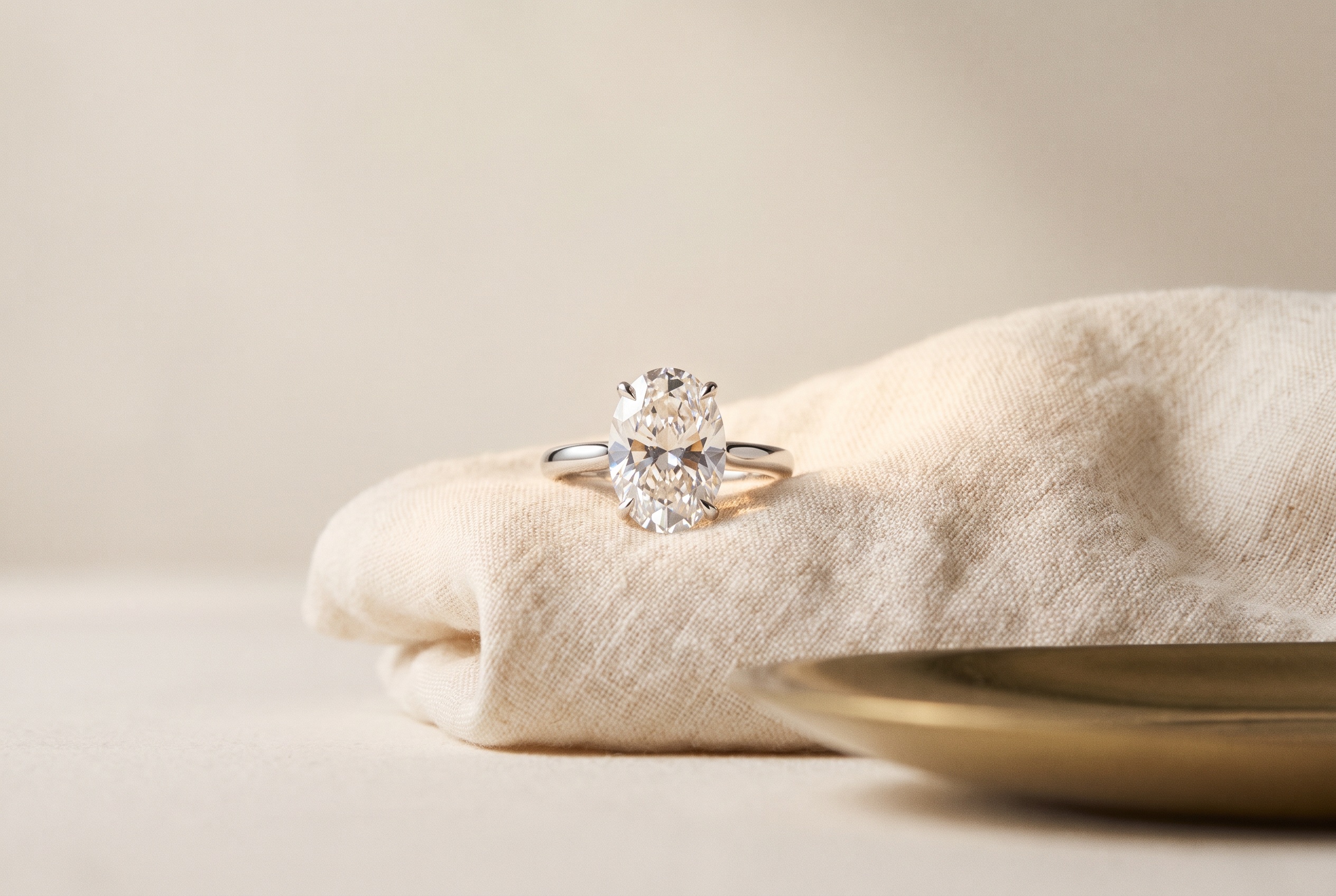
| 1.50ct oval, regular fancy tier, IGI certified | $1,200 |
| Melee accents, 0.30ctw, uncertified parcel goods | $150 |
| 14K gold, cast + polished, in-house | $220 |
| Setting labor (prong center, pavé accents) | $160 |
| CAD design, 2 revision rounds included | included |
| Total landed cost | $1,730 |
Apply a 2.4x multiplier for a standard build with one revision round used: retail price lands around $4,150. If the client burns all their included revisions and asks for a third round, add a flat design fee (say $150–$250) rather than absorbing it — and if the antique tier had been requested instead of the oval, the stone line alone would justify pushing toward the top of the multiplier range rather than the bottom.
This is also where the “one vendor, one shipment” structure pays off on the pricing side, not just the logistics side: when the stone and the manufacturing come from the same custom jewelry partner, you’re pricing off one landed-cost invoice instead of reconciling a stone bill from one source against a manufacturing bill from another — which is where a lot of retailers lose track of true cost on outsourced builds in the first place.
Run this build sheet through the quote structure above and the client sees five lines — stone, accent melee, metal, build, total — instead of one number. That’s the difference between a $4,150 quote a client accepts because they can see what it’s made of, and the same $4,150 quote that gets negotiated down because it reads as arbitrary.
Frequently Asked Questions
The questions retailers ask most often when they start pricing outsourced custom builds:
What’s a reasonable markup on outsourced custom jewelry?
Most retailers land somewhere between 2.2x and 2.8x landed cost for one-off custom builds, compared to closer to keystone (2x) on stock inventory. The higher end of that range is justified when the build required multiple CAD revisions, an antique-tier stone, hand-fabrication, or a rush timeline. The lower end fits simpler builds with first-round CAD approval and no unusual sourcing.
Should I price a custom piece the same as a similar-looking stock item?
No. Visual similarity doesn’t mean the cost behind the piece is the same. A custom order carries CAD design time, client revisions, and one-off manufacturing that a stock piece never incurred, and none of that labor gets recovered if you price off the stock comparison instead of off actual landed cost.
How do I price CAD revisions without training clients to expect unlimited free changes?
Set a fixed number of included revision rounds up front — one or two is standard — and quote any additional rounds as a separate, disclosed fee. Separating the design fee from the piece price also makes clear to the client that revisions have a cost, which reduces the number of open-ended back-and-forth rounds in the first place.
Does the 4-6 day custom jewelry turnaround change how I price rush orders?
The 4-6 day window applies to the CAD-approved-to-finished-piece stage of production, not to sourcing loose stones. If a client needs a finished piece faster than that standard window, treat the compression as a cost — check with your manufacturing partner on what a rush actually requires on their end, and price that premium into the client’s quote rather than eating it.
Is melee accent stone cost handled the same way as a certified center stone in a build sheet?
No. Melee is uncertified, calibrated parcel goods priced and costed against a color/clarity QC baseline, while stones 0.30 carat and up carry individual IGI or GIA certification. Keep them as separate line items on your cost sheet — melee pricing moves differently than certified stone pricing, and folding them into one “diamond cost” number makes it harder to catch where your margin actually sits.
Can I resell custom pieces under my own brand instead of the manufacturer’s?
Yes — custom pieces from an outsourced manufacturing partner are typically delivered unbranded by default specifically so retailers can present them as their own. That’s part of what the markup is paying for: not just the physical piece, but a build you can sell under your own name without disclosing who manufactured it. Confirm branding terms with your trade partner before the first order so it’s not a surprise on delivery.
Related Reading
- How to Price Lab-Grown Diamonds: A Markup & Margin Guide — the loose-stone counterpart to this guide.
- Private-Label Jewelry for Retailers: How White-Label Manufacturing Works
- How Wholesalers Add Finished Jewelry SKUs Without Holding Inventory
- “Can You Match This Ring?” A Jeweler’s Guide to Custom Replica and Inspiration-Piece Requests