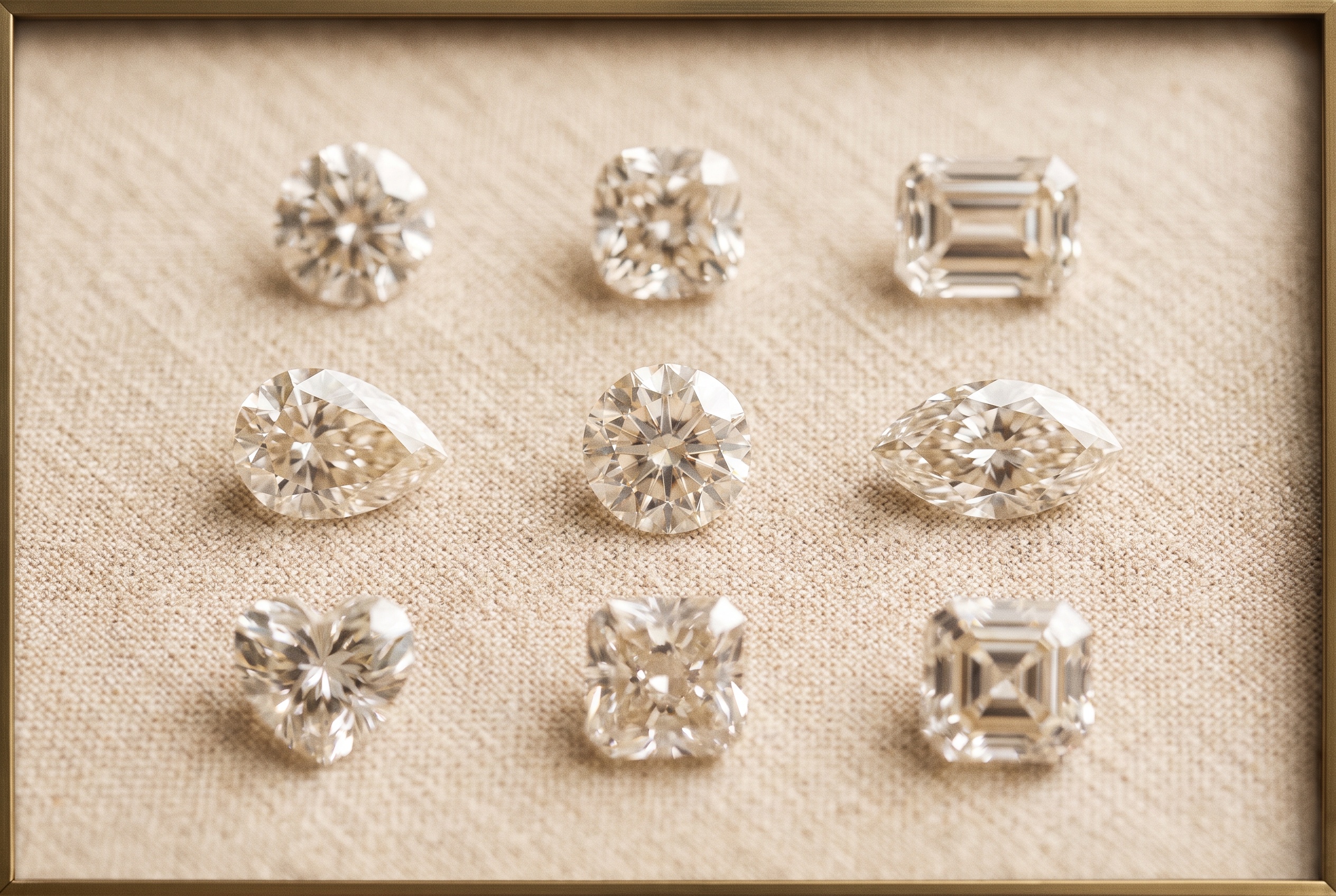

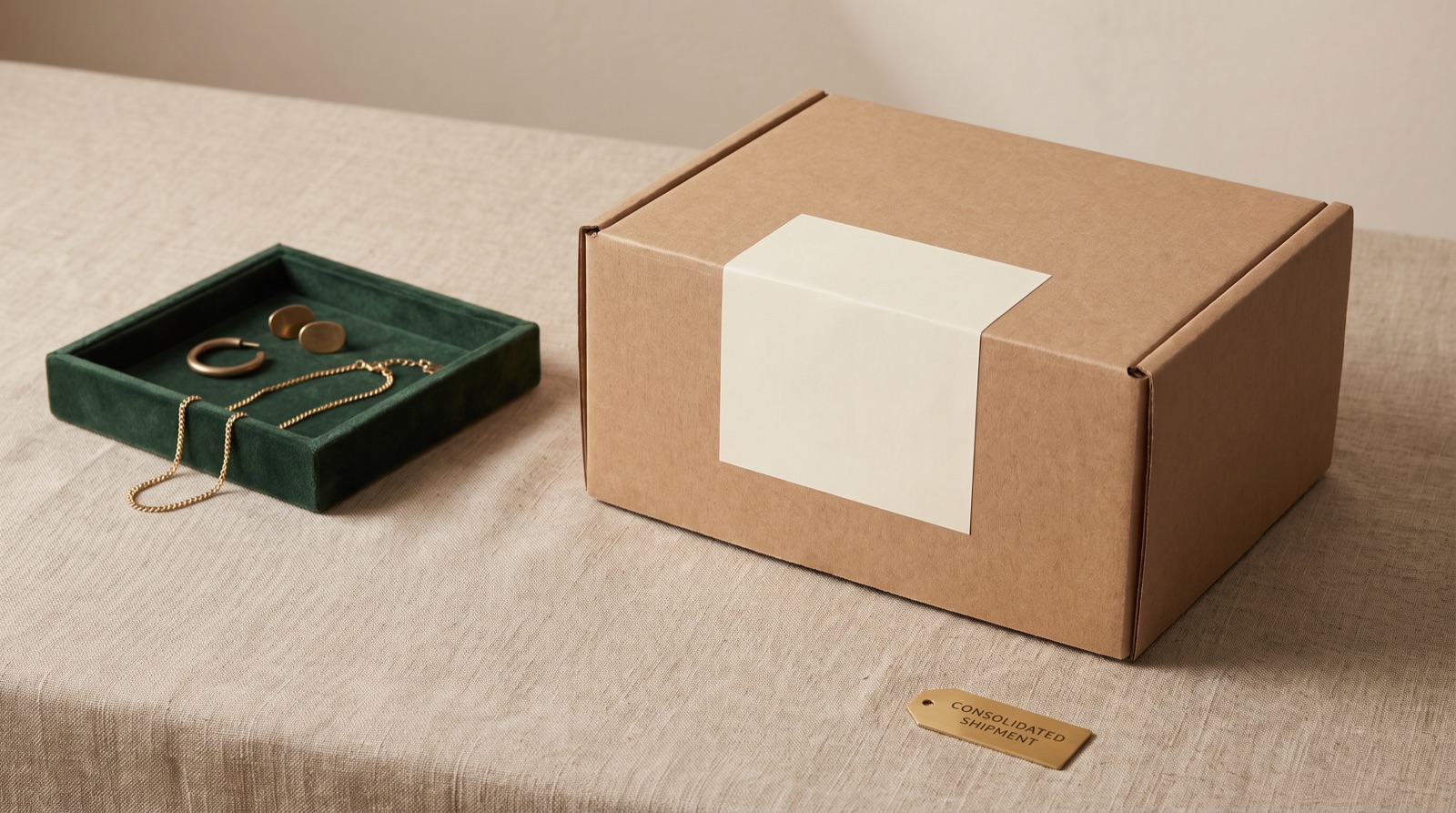
A diamond wholesaler can add finished jewelry as a real product line without ever buying, storing, or writing down a single finished piece. The order and the spec stay with you; the build gets routed to a manufacturing partner under your account; the piece ships once, either to your customer directly or through you for hand-off; and you keep the markup, the relationship, and none of the carrying cost. The part that actually determines whether this works isn't the concept — it's the handoff: how specs get captured, who signs off before a build starts, and what happens to certification and branding along the way.
This is a longer, more operational look at that handoff — what carrying finished inventory actually costs a wholesaler who doesn't need to carry it, how the made-to-order structure runs end to end, what to actually demand from a manufacturing partner before routing a customer relationship through them, and how to talk about "made to order" with a customer without it sounding like an excuse for not having stock.
The Blind Spot in a Loose-Stone-Only Book
If your book is loose diamonds — certified stones, melee, fancy shapes — you're already talking to jewelers, designers, and retailers who build finished pieces for a living. Some of those same accounts are asking their own customers for engagement rings, eternity bands, and custom pieces you never see, because you only sell them the stone. When they need the finished product, they either fabricate it themselves, send it to a separate manufacturing relationship you have no visibility into, or ask you directly and get told that's not something you do.
That last scenario is the expensive one. It's not a missed upsell — it's a missed order that was already going to happen with or without you, placed with whoever could say yes. The customer relationship, the trust, and the specs are already sitting in your account. The only thing missing is a way to fill the order without becoming a jewelry manufacturer yourself.
The pattern shows up in predictable places. A retail account that buys loose center stones from you every month for engagement season is also fielding requests for matching wedding bands, anniversary eternity bands, and resize-and-reset work on inherited stones — none of which touches your invoice today. A designer account that specs a fancy-shape center stone from your inventory is handing the setting work to whoever answers the phone fastest, and that vendor is now closer to the end customer than you are. Every one of those builds is a data point about demand you already have proof of, sitting in your own order history, that you're currently routing to somebody else by default rather than by decision.

The Made-to-Order Model, Defined
The operational fix is a made-to-order structure: you never hold finished-jewelry stock, and you never manufacture anything in-house. Instead, every finished piece is built against a specific order, with your account as the single point of contact on both ends. This is sometimes described loosely as "dropshipping" jewelry, which gets the shape roughly right — the piece never sits in your warehouse — but the mechanics differ from dropshipping a commodity product in one important way: nothing exists to ship until the order is placed and the spec is approved. There's no pre-built catalog sitting at a fulfillment center waiting for a buy button. Every unit is a one-off build against a signed spec, even when the design itself is a repeatable SKU you sell over and over.
What stays with you as the wholesaler:
- The customer relationship and the sale itself
- Spec intake — metal, stone selection or customer-supplied stone, sizing, engraving, delivery timeline
- Pricing and margin on the finished piece
- Invoicing and after-sale support
What routes to the manufacturing partner:
- CAD rendering and approval
- In-house cutting, setting, and polishing
- Quality control on the finished piece
- Packaging and shipping logistics
This only holds together if the manufacturing partner treats your account as the account — not your customer as a separate relationship they can go direct to later. A single wholesale hub that handles stone sourcing and routes custom jewelry builds under the same account is what keeps this to one vendor, one shipment, one relationship instead of a patchwork where you're coordinating between a stone source and a separate bench.
Worth being precise about what this isn't: it's not consignment (carrying someone else's finished stock and paying only when it sells), and it's not a marketplace drop-ship of an existing SKU with your label on someone else's box. The build itself doesn't start until your customer's specific order exists — that's the entire mechanism that removes carrying cost.
The Handoff, Step by Step
Every failure point in this model traces back to a step where the spec got fuzzy or nobody signed off before work started. The sequence that avoids that:
- Order intake. Customer places the order with you — center stone (from your existing stock or specified fresh), setting style, metal, ring size or dimensions, and any engraving.
- Spec sheet. You convert that into a written spec — not a verbal description — that goes to the manufacturing partner as the build brief. Ambiguity here is where rework and delays start.
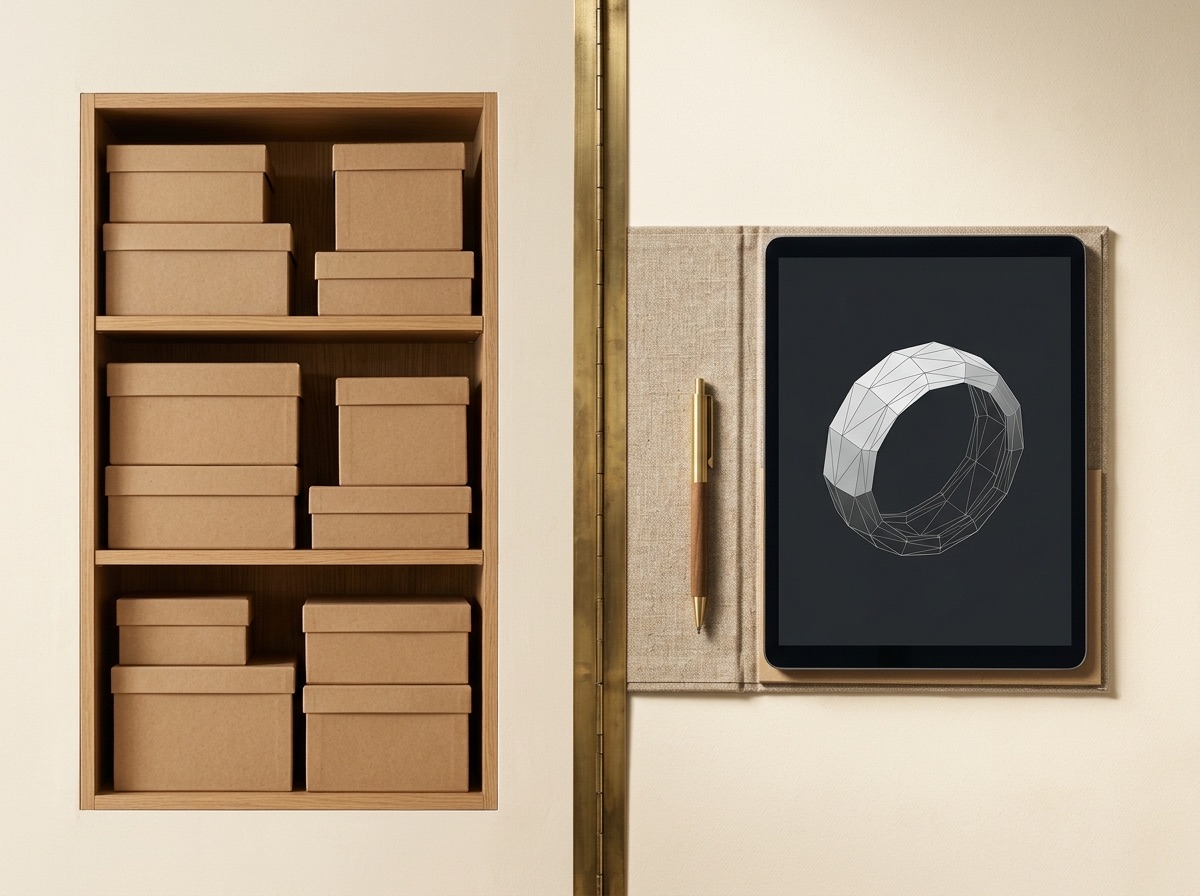
- CAD approval. The partner renders CAD before any metal or stone touches the build. You (and often the end customer) sign off on the render. No build starts without this step.
- Build. In-house cutting, setting, and polishing happens against the approved CAD. This is the stage you never see or touch operationally — you're not tooling up, you're not scheduling a bench, you're not carrying WIP.
- QC and finishing. The piece is checked against the spec sheet and the approved CAD before it ships.
- Ship and invoice. The finished piece ships once — to you for hand-off, or drop-shipped to your customer — and you invoice your customer on your own terms, independent of how the manufacturing partner bills you.
For finished custom pieces, that CAD-approval-to-finished window runs roughly 4-6 days. That clock starts at CAD sign-off, not at initial order intake, and it's specific to finished jewelry — it isn't a loose-diamond delivery timeline, so don't quote it for stone-only orders.
Two of those six steps deserve more attention than they usually get. The spec sheet is the single artifact that everything downstream refers back to if there's ever a dispute about what was ordered — treat it the way you'd treat a purchase order, not a scratch note. And CAD approval is the only point in the entire sequence where a mistake is still cheap to fix. Every step after CAD sign-off involves metal and a stone actually being touched; every step before it is just pixels on a screen. A wholesaler who lets CAD approval slide — rubber-stamping a render without actually reviewing proportions, prong count, and stone placement against the spec — is trading a five-minute correction now for a rebuild conversation with an unhappy customer later.
What a Retailer Needs From a Supplier to Make This Work
The made-to-order structure only functions if the manufacturing partner on the other end of it can actually support a retail-facing product line, not just fill custom orders one at a time. Before routing a customer relationship through a partner, there are four things worth confirming — and they're the difference between a partner you can build a catalog on and one you can only use for occasional one-offs.

Photography You Can Actually Sell With
You can't offer a SKU you can't show. If the plan includes any online or lookbook presentation of the pieces you offer — as opposed to one-off custom requests worked out entirely by phone or in person — the partner needs to supply photography you're allowed to use as your own: a clean hero shot per style on a neutral ground, a detail shot close enough to show prong work and stone setting without misrepresenting scale, and ideally a lifestyle or on-hand shot so the piece reads as real jewelry rather than a rendering. CAD renders are useful during the build-approval step, but they shouldn't be the image a customer sees on a product page — a render photographs like a render, and a retail buyer can tell the difference between a photo of a real piece and a 3D preview, even at a glance.
Confirm rights, not just delivery. A partner handing over photography that's also being used to sell the identical style through three other accounts undercuts the "your own line" positioning this whole model is built on. Ask directly whether the images are exclusive to your account or shared across the partner's customer base.
A SKU Catalog Structure You Control
Made-to-order removes the ceiling on how many SKUs you can list — you don't need to have physically built and stocked every metal and size combination to offer it — but that only works if the catalog is structured, not a running list of past custom orders. A workable approach is a base style (the setting design) with configurable options underneath it: metal, center stone size range, band width, and stone shape where the design supports it. That gives you a manageable number of base SKUs a customer can browse, each one expanding into effectively unlimited configured variants at order time. The alternative — trying to photograph, price, and list every metal-and-size permutation as a separate SKU — turns a catalog with real depth into a maintenance project that never gets finished.
Fulfillment Speed That Matches What You Quote
The build window is the one piece of information a customer actually needs to plan around, and it's the easiest thing to get wrong by quoting from memory instead of from what the manufacturing partner has actually confirmed. Get the CAD-approval-to-ship window in writing from the partner for the categories you plan to sell, and quote your customer from that number specifically — a plain wedding band, a heavily paved eternity band, and a from-scratch custom engagement ring don't necessarily move at the same pace even under the same partner. Build in a buffer for the front half of the process too: spec collection and CAD review take real calendar time before the manufacturing clock even starts, and a customer who was told "four to six days" without anyone mentioning the CAD round-trip first is going to measure your promise against the day they placed the order, not the day CAD was approved.
Quality Consistency Across Repeat Orders
A one-off custom piece can absorb small inconsistencies because there's nothing to compare it to. A repeatable SKU can't — if a customer orders the same style twice, or two retail accounts both sell the same base design, prong height, stone-to-band proportion, and finish need to match within a tolerance a trained eye won't catch as "off." That's a question worth asking a manufacturing partner directly before you build a catalog on top of them: what does QC check against, the CAD file or a physical reference sample, and who signs off before a piece ships. A partner that treats every build as a bespoke one-off, with QC judgment calls made fresh each time, is harder to build a consistent product line on than one with a documented QC pass against the approved CAD.
Managing Customer Expectations on Made-to-Order Timing
The single biggest experience risk in this model isn't quality — it's a customer who expected something to ship the way an in-stock item would and instead hit a build window they weren't prepared for. That's not a flaw in made-to-order as a model; it's a sales-conversation problem that shows up if the timing isn't set correctly at the point of sale.
A few things make that conversation go smoothly instead of becoming a source of friction:
- Say "made to order" before the customer has to ask why it's not shipping today. Framing it upfront as a deliberate choice — built specifically for them — reads very differently than the customer discovering partway through that the piece has to be built.
- Anchor the timeline to CAD approval, not order date. If a customer signs off on CAD on day three, the build clock starts on day three — say that explicitly rather than letting them count from the original order.
- Collect a deposit at order intake. Beyond the cash-flow benefit, it's a natural moment to walk through the spec once more before it goes to CAD — catching a misunderstanding here is free; catching it after the build starts isn't.
- Give a status update at CAD approval, not just at shipment. A short "your ring is in production now" the moment CAD is approved does more to manage the wait than any amount of front-loaded explanation.
- Don't offer a date you haven't confirmed with the manufacturing partner for that specific build. A heavily paved eternity band and a plain band don't move at the same pace, and quoting a generic window for both is how a wholesaler ends up apologizing for a timeline they invented rather than one the partner committed to.
None of this requires new infrastructure — it's a script, not a system. But it's the difference between made-to-order feeling like a premium, built-for-you process and feeling like an excuse for a wholesaler who doesn't keep stock.
Carrying Inventory vs. Made-to-Order: A Side-by-Side Comparison
The financial case for made-to-order isn't just "less hassle" — it changes the shape of your margin and your cash position compared to holding finished inventory.
| Factor | Holding Finished Inventory | Made-to-Order, No Inventory |
|---|---|---|
| Working capital | Tied up in finished pieces sitting on shelf before any sale | Committed only after an order and deposit are in hand |
| Dead stock risk | Real — a size, style, or metal combination that doesn't move | None — nothing is built until it's sold |
| SKU breadth | Limited to what you can afford to stock across sizes/metals | Effectively unlimited — any spec combination is a SKU |
| Cash conversion cycle | Cash out at purchase, cash in at eventual sale (if it sells) | Cash in from customer largely funds the build |
| Markdown exposure | Slow-moving pieces get discounted to move them | None — no piece exists until it's already sold |
| Margin per piece | Diluted by carrying cost and eventual markdowns on unsold stock | Full markup retained since nothing sits unsold |
| Speed to customer | Immediate if the exact size/style/metal is on the shelf | Bound to a build window that starts at CAD approval |
| Merchandising flexibility | What you can physically display is what you can sell | A catalog page or sample ring can represent SKUs you don't hold |
The trade-off is that made-to-order isn't a same-day, off-the-shelf sale — every piece has a build window. For a wholesaler whose existing loose-stone business is already quote-and-fulfill rather than walk-in retail, that's not a new constraint; it's the same cadence you already operate in, just extended to a finished piece instead of a parcel. Reading the table left to right, the pattern is consistent: inventory buys you immediacy and costs you flexibility and cash; made-to-order buys you flexibility and cash and costs you immediacy. Which side of that trade matters more depends entirely on whether your existing customer relationship already tolerates a quote-and-wait cadence — and if it's built on loose stones, it almost certainly already does.
Where the Handoff Actually Breaks
The model fails operationally in a handful of predictable places, and they're worth naming before you route your first order:
- Verbal specs instead of written ones. A phone-call description of "something like an oval halo, maybe two carats" is not a spec. If it isn't written down and CAD-approved, the disagreement happens after the piece is built, when it's expensive to fix.
- No CAD sign-off gate. If a build can start before the customer or the wholesaler has actually approved the render, every misunderstanding turns into rework instead of a five-minute correction.
- Certification getting lost in translation. If the customer supplies or specifies a certified center stone, that certification needs to travel with the piece through the entire build and ship cycle — it shouldn't require a follow-up email after delivery to confirm which stone actually got set. Both IGI and GIA certification should be available and trackable for stones 0.30ct and up.
- Confusing melee with certified stones. If a piece uses melee for pavé or an eternity setting, that melee is uncertified parcel goods checked against a color/clarity baseline — not individually or parcel certified the way a 0.30ct-plus stone is. Set that expectation with the customer before the order, not after, especially on eternity and wedding-band builds where melee usage is heaviest.
- Branded packaging showing up uninvited. If you're reselling a finished piece as your own, it needs to arrive unbranded by default — a manufacturing partner's box or hallmark showing up in front of your customer undercuts the exact relationship this model is supposed to protect.
- A manufacturing partner that also sells direct. If the partner you're routing builds to isn't restricted to verified trade accounts, you're one referral away from your own customer sourcing direct next time. Confirm the partner is trade-only before you build a product line on top of them.
- No resize or post-sale path defined upfront. A ring that needs sizing after delivery, or a stone reset into a different piece later, is a routine request — but if nobody decided in advance whether that goes back through the manufacturing partner or gets handled locally, it becomes a one-off negotiation every time it comes up.
How to Present Made-to-Order Pieces In-Store or Online
Selling something you don't physically have on hand changes how you merchandise it, whether the customer is standing in front of a counter or browsing a product page. The mechanics differ, but the goal is the same: make the piece feel real and specific, not hypothetical.
In-store or at a trade counter: a single sample or display ring in a common size, built once and kept as a reference piece rather than sold, does most of the work. It lets a customer see and handle the actual setting, finish, and stone placement rather than imagining it from a photo — and a ring sizer set covers the fact that the specific size they need doesn't exist yet. A printed or tablet-based catalog binder organized by base style, with the configurable options (metal, stone shape, size range) shown as swatches or side-by-side renders, lets a customer configure their own piece in the room rather than picking from whatever happens to be in the case that day.
Online: label the SKU as made to order plainly, rather than letting a customer assume it's in stock and find out otherwise at checkout. "Ships in X days" language that implies existing stock should be replaced with something that reflects the actual process — a build window that starts once the spec and any custom stone selection are confirmed. A configurator that lets a customer pick metal, stone, and size against a fixed base design communicates made to order more effectively than a paragraph of disclaimer text, because the customer experiences the customization directly instead of reading about it. Product photography should show the base style clearly enough that a customer trusts what they're ordering matches what they'll receive — this is where the photography requirement from the supplier side and the presentation requirement on your side meet directly.
In both settings, the through-line is the same: made-to-order should read as a feature — built specifically for this customer — not as an apology for a gap in your stock.

How Guru Diam Supports This Model
This is the operational structure a wholesale hub is built to run underneath a retail or trade account: one supplier for the loose stone and the finished build, so the piece never has to route through a separate manufacturing relationship you're coordinating by hand. Custom rings move through the CAD-approval-to-ship window in roughly 4-6 days, cutting, setting, and polishing happen in-house against the approved render, and both IGI and GIA certification are available and trackable for center stones 0.30ct and up. Custom jewelry builds ship unbranded by default, so a retailer presents and resells the finished piece as their own line rather than someone else's box showing up at hand-off.
It's the same one-vendor, one-shipment, one-relationship structure described throughout this piece: one account covers the stone, the setting, and the certification, with NYC and LA offices behind it, instead of a wholesaler stitching together a stone source and a separate bench on their own. The trade partner terms and how it works breakdown lay out that structure before any customer relationship gets committed to it, and a direct contact us conversation covers single-order handling rather than deferring to a volume conversation first.
A Practical Checklist Before You Route Your First Order
Most of the groundwork here is a one-time setup conversation with a manufacturing partner, not a per-order negotiation. Before committing a customer relationship to the model, confirm each of the following in writing:
- A written spec-sheet template you control, not a format the manufacturing partner dictates
- A hard CAD-approval gate before any build starts
- Clarity on whether shipping goes to you first or drop-ships to your customer, and who's named on the package
- Default unbranded delivery in writing, not assumed
- One invoice path from the partner to you, separate from your invoice to your customer
- Confirmation the partner is verified-trade-only, not open to end consumers
- Photography rights — exclusive to your account, or shared across other buyers of the same style
- A confirmed CAD-approval-to-ship window for each category you plan to sell, not a single number assumed to cover every style
- A defined path for resizing, reset, or post-sale service requests
- A QC reference — CAD file or physical sample — that repeat orders of the same style get checked against
Work through this list once, before the first order routes through, and every order after it becomes a known process instead of a fresh negotiation.
Frequently Asked Questions
Do I need any jewelry manufacturing experience to offer finished pieces this way?
No. Your role stays what it already is — order intake, spec, pricing, and the customer relationship. The CAD, cutting, setting, and polishing happen entirely on the manufacturing partner's side, in-house, against your approved spec. You're extending your product line, not adding a manufacturing operation.
How does certification travel with the stone through the build?
For center stones 0.30ct and up, IGI or GIA certification should stay attached to that specific stone through CAD approval, build, and QC, so what ships matches what was specced and approved — not just a same-grade substitute. Confirm with your manufacturing partner how certification is tracked and handed back to you at shipment before you rely on it for a customer who cares about paper matching stone.
Is melee used in a finished piece certified the same way?
No, and this is worth being explicit about with your customer. Melee set into a piece — pavé, an eternity band, a halo — is uncertified parcel goods checked against a color and clarity baseline, not individually or parcel certified the way a larger stone is. Certified center stones and uncertified melee accents commonly appear in the same finished piece; they're just held to different standards.
What's a realistic turnaround once an order is placed?
Once CAD is approved, a finished custom piece typically moves in roughly 4-6 days to completion. That window starts at CAD sign-off, not at initial order intake, so build in time for spec collection and CAD review before quoting a customer a delivery date.
Can this work for one-off custom requests, or only repeatable SKUs?
Both. A made-to-order structure doesn't distinguish between a one-off custom ring and a repeatable style you sell under a fixed SKU — the spec-to-CAD-to-build sequence is identical either way. The only difference is whether you reuse the same spec sheet for future orders.
Will the finished piece arrive with the manufacturing partner's branding on it?
It shouldn't. Custom pieces should be delivered unbranded by default specifically so you can present and resell them as your own line. Confirm this in writing with your manufacturing partner before your first order ships, rather than assuming it.