A diamond trade-in is a program where a jeweler accepts a client's existing diamond or diamond jewelry as partial credit toward a new purchase, typically an upgrade to a larger stone, a different shape, or a redesigned setting. Trade-in credit is usually based on the diamond's current wholesale or market value rather than its original retail purchase price, which is the single most important expectation to set with a client upfront, well before any specific stone is appraised. For jewelers, offering a trade-in program is both a genuine client-retention tool and a practical way to build repeat business around life milestones — anniversaries, upgrades, or changing taste — that would otherwise send a client shopping elsewhere, and it's one of the more underused levers in a wholesale relationship that many trade partners never formalize into a clear, standing offer.
How Diamond Trade-In Valuation Typically Works
A trade-in valuation starts with the stone's certification (GIA, IGI, or GCAL) confirming its exact cut, color, clarity, and carat weight, then applies current wholesale market pricing for a stone of that specification to arrive at a trade-in value. This value is almost always lower than the stone's original retail purchase price, since retail pricing includes markup, labor, and margin that don't carry over into a wholesale-basis trade-in — a gap that's worth explaining clearly to clients before the appraisal happens, since it's the most common source of disappointment in the trade-in process otherwise.
Trade-In Value vs. Original Purchase Price
| Factor | Original retail price basis | Trade-in value basis |
|---|---|---|
| Pricing reference | Retail price at time of original purchase, including markup and labor | Current wholesale market value for the stone's exact specifications today |
| Market movement | Fixed at time of original sale | Reflects current market pricing, which may be higher or lower than at original purchase |
| Setting/metal value | Included in original retail price | Typically valued separately and much lower, often based on melt value for the metal alone |
This table captures the core expectation-setting conversation every trade-in program needs to have with a client early: the diamond itself carries most of the trade-in value, while the original setting's labor and design premium generally does not carry forward, since a jeweler receiving a used setting typically can't resell it at anything close to its original retail price.
What Affects a Diamond's Trade-In Value
Several factors determine how much trade-in credit a stone earns: certification status (a certified stone with a GIA, IGI, or GCAL report is valued far more reliably and often more favorably than an uncertified stone, since the buyer isn't taking on regrading risk); current market demand for the stone's specific shape and carat weight (round brilliants and popular fancy shapes typically trade more predictably than unusual or dated cuts); condition (chips, significant wear, or old, non-ideal cut proportions can reduce value relative to a stone graded and cut to current standards); and overall market pricing trends at the time of trade-in, since diamond wholesale pricing, particularly for lab-grown stones, has shifted meaningfully over recent years and directly affects what a given stone is worth today versus at its original purchase.
Trade-In Programs: Cash vs. Upgrade-Only Credit
| Program structure | How it works | Consideration |
|---|---|---|
| Upgrade-only credit | Trade-in value applies only toward a new purchase, typically at a higher price point than the trade-in value itself | Most common structure; often offers a more favorable effective value than a cash-out option, since the jeweler is retaining the client for a new sale |
| Cash buyback | Jeweler pays cash for the stone with no purchase requirement | Less commonly offered; typically valued more conservatively than upgrade credit, since it doesn't come with a new sale attached |
| Store credit | Trade-in value issued as credit usable toward any future purchase, not limited to an immediate upgrade | More flexible than upgrade-only credit but similar value basis |
Most trade-in programs in the trade are structured as upgrade-only credit specifically because it aligns incentives well for both sides: the client gets a meaningfully better effective value than a cash-out would provide, and the jeweler secures a new, larger sale rather than simply buying back a stone with no further transaction attached.
Why Jewelers Offer Trade-In Programs
Beyond the immediate transaction, a trade-in program serves a longer-term relationship-building function that's easy to underweight when first setting one up. Clients who know their jeweler offers a fair, transparent trade-in path are more likely to return for an upgrade rather than shopping the transaction cold at a competitor, and are considerably more likely to refer friends and family based on a positive prior experience. For a jeweler building a client base around milestone purchases — engagements, anniversaries, and generational pieces — a trade-in program turns what could be a one-time transaction into an ongoing relationship spanning years or decades.
Setting Up a Trade-In Program: Practical Considerations
A workable trade-in program needs a few things in place before it's offered to clients: a clear, written policy stating the valuation basis (wholesale market value, not original retail price) so clients understand the framework before they bring a stone in; a reliable sourcing relationship for reselling or repurposing traded-in stones, since the jeweler now needs a place to move that inventory; and staff trained to have the expectation-setting conversation clearly upfront, since a client surprised by a lower-than-expected valuation at the point of trade-in is a worse outcome for the relationship than one who understood the basis going in.
What Happens to a Traded-In Diamond?
Once accepted, a traded-in stone typically follows one of a few paths: resale into the wholesale market at current pricing, recutting or repolishing if its original cut doesn't meet current proportions standards (worth doing when the improved cut grade justifies the cost), or repurposing into a different piece, such as a pendant or earrings, if the stone has characteristics — an antique cut, a fancy color, an unusual shape — that make it more valuable as a standalone feature than as wholesale inventory. Jewelers with strong wholesale sourcing relationships generally have more flexibility here than one working with limited outlets, which is part of why trade-in programs are easier to run profitably for a jeweler already active in wholesale sourcing and resale.
Trade-In for Lab-Grown vs. Natural Diamonds
Trade-in dynamics differ meaningfully between lab-grown and natural stones, and this is worth explaining clearly to clients considering a trade-in on either type. Natural diamonds have historically held value more predictably over time in the resale and trade-in market, given decades of established wholesale trading infrastructure. CVD lab-grown diamond pricing has declined significantly over recent years as production scale has increased, which means a lab-grown stone purchased several years ago will very likely trade in for meaningfully less than its original purchase price — a market-wide pricing shift, not a reflection of the stone's quality or condition. Clients trading in an older lab-grown purchase should understand this dynamic upfront, since it's the most common source of surprise in a lab-grown trade-in specifically, far more so than for a comparable natural stone purchased on the same timeline.
Trade-In Value by Diamond Type
| Diamond type | General trade-in value trend |
|---|---|
| Natural, certified, standard shapes (round, popular fancy shapes) | Relatively predictable, tracking current wholesale natural diamond pricing |
| Natural, antique cuts (Old Mine, Old European, and similar) | Can trade in favorably given genuine collector and trade demand for true antique cuts specifically |
| CVD lab-grown, standard shapes | Often trades in for meaningfully less than original purchase price, reflecting broader market price declines over recent years |
| Uncertified stones (any origin) | Valued more conservatively, since the buyer takes on regrading risk and cost |
Trade-In and the Upgrade Conversation
The most common trade-in scenario in practice pairs a trade-in with an upgrade — a larger center stone, a different shape, or a full redesign — rather than a straightforward like-for-like swap. Framing the conversation around the upgrade itself, rather than purely around the trade-in credit amount, generally produces a better client experience: a client focused on "here's the beautiful new piece this credit helps make possible" tends to feel better about the transaction than one focused narrowly on "how much is my old diamond worth," even when the underlying numbers are identical either way.
Common Reasons Clients Trade In a Diamond
Trade-in requests come from a handful of recurring scenarios worth recognizing, since each carries a slightly different conversation. An anniversary or milestone upgrade — moving from a modest starter stone to a larger or higher-grade center stone as finances allow — is the most common driver, and typically the easiest trade-in to structure since it naturally pairs with a new, larger purchase. A change in taste or design preference, where a client wants a different shape or setting style than their original piece, is the second most common scenario. Less commonly, a trade-in follows a life change — divorce, inheritance, or downsizing a collection — where the client's priority may be closer to a straightforward cash-out than an upgrade, which is worth identifying early in the conversation since it changes which program structure actually fits the client's need.
How Market Timing Affects Trade-In Value
Because trade-in valuation is pegged to current wholesale pricing rather than a fixed historical reference, the same stone can be worth meaningfully different amounts depending on when the trade-in happens relative to broader market conditions. Natural diamond wholesale pricing has historically moved in gradual cycles, while lab-grown wholesale pricing has moved more sharply downward over a shorter period as production capacity scaled up. This timing sensitivity is worth explaining to clients directly, particularly for a lab-grown stone purchased at a much higher price point several years ago — the gap between original purchase price and current trade-in value in that case reflects genuine market movement, not an unfair valuation by the jeweler handling the trade-in.
Trade-In and Antique or Fancy Cut Diamonds
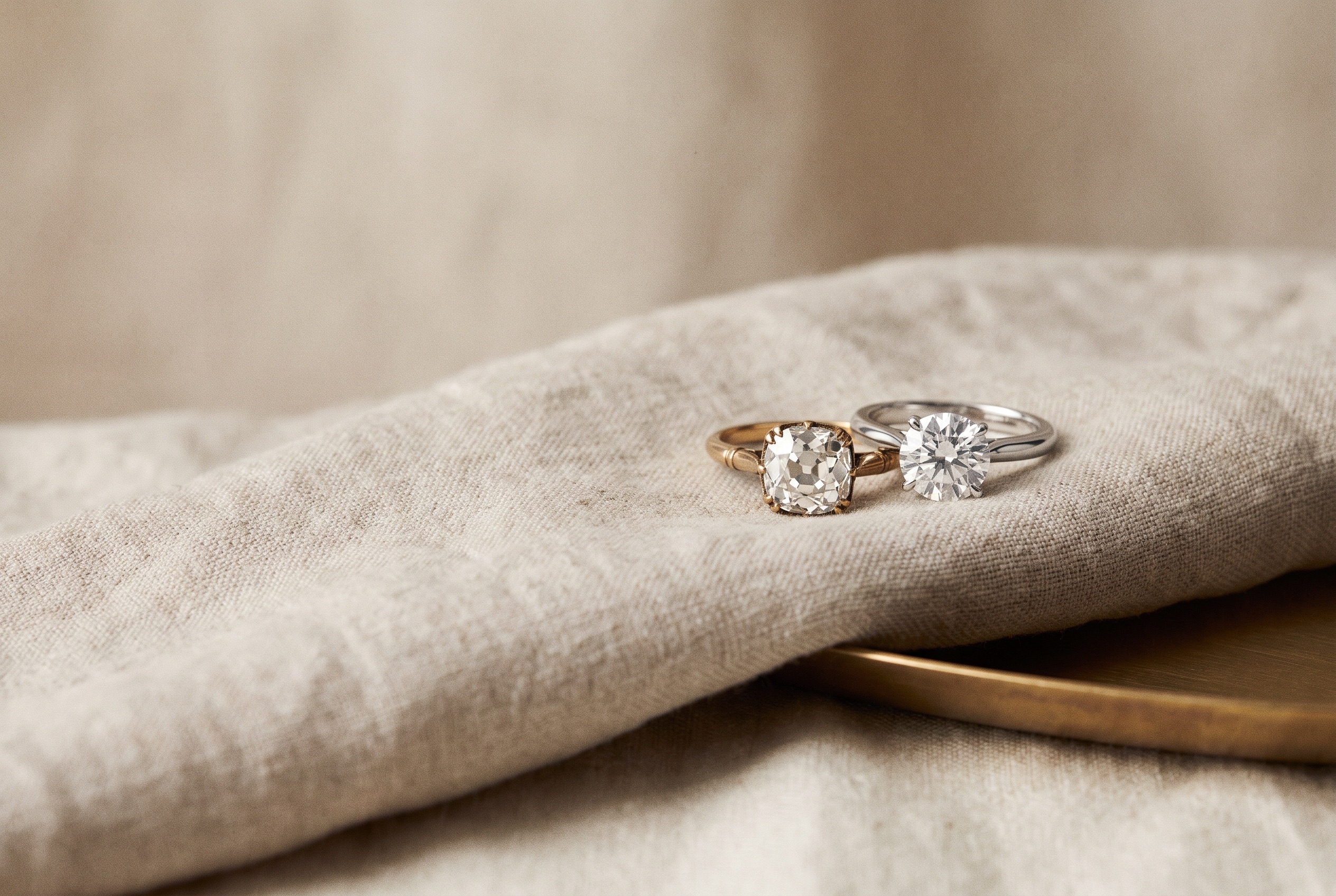
Antique and fancy-cut stones — old mine, old European, and other true antique-style cuts, along with genuinely rare fancy color stones — often trade in more favorably relative to their original purchase price than standard modern cuts, since genuine collector and trade demand for these specific characteristics has remained comparatively strong even as broader market pricing has shifted. A jeweler evaluating a trade-in stone that turns out to be a genuine antique cut, rather than simply an old-style modern round, should flag this distinction clearly to the client, since it can meaningfully change the trade-in value calculation compared to treating the stone as a generic older round brilliant.
How to Explain Trade-In Value Gaps to Clients
The single most delicate part of running a trade-in program well is the conversation about why a client's trade-in value is lower than what they originally paid. The most effective framing separates two genuinely different things: the retail markup, labor, and design premium included in the original purchase price (which doesn't carry forward into any resale or trade-in scenario, for any jeweler, on any stone), and current wholesale market movement (which can independently raise or lower value regardless of the retail-to-wholesale gap). Explaining both components separately, rather than presenting a single lower number without context, generally produces a client who understands and accepts the valuation rather than one who feels shortchanged by an opaque process.
Trade-In vs. Independent Appraisal and Resale
| Option | How it compares |
|---|---|
| Jeweler trade-in (upgrade credit) | Typically the most favorable effective value, since it's paired with a new sale; fastest and most convenient option |
| Jeweler cash buyback | Valued more conservatively than upgrade credit; useful when no upgrade is wanted |
| Independent resale (auction, private sale, online marketplace) | Can occasionally yield more for a distinctive or high-value stone, but involves more time, fees, and uncertainty |
| Pawn or quick-cash buyer | Fastest cash option but typically the lowest relative value; generally not recommended except for genuine urgency |
For most clients, a jeweler trade-in structured as upgrade credit remains the most efficient path, balancing convenience, speed, and effective value — independent resale only tends to outperform it for genuinely distinctive stones (rare fancy colors, significant antique cuts) where a specialized buyer might pay a premium a standard wholesale trade-in valuation wouldn't capture.
A Practical Checklist for Clients Considering a Diamond Trade-In
- Bring the original certification report (GIA, IGI, or GCAL) if available — an uncertified stone will be valued more conservatively.
- Understand upfront that trade-in value is based on current wholesale pricing, not the original retail purchase price.
- Ask whether the program offers upgrade-only credit, cash buyback, or flexible store credit, since the effective value can differ between structures.
- For a lab-grown stone purchased several years ago, expect trade-in value to reflect the significant market price shifts since the original purchase.
- Ask what happens to the traded-in stone and setting specifically, since setting/metal value is typically valued separately and much lower than the diamond itself.
Common Misconceptions About Diamond Trade-In
- "My diamond is worth what I paid for it, plus inflation." Trade-in value is based on current wholesale pricing for the stone's exact specifications, which moves independently of what the client originally paid at retail.
- "Uncertified diamonds trade in for the same value as certified ones." An uncertified stone carries regrading risk and cost for the jeweler, which is reflected in a more conservative trade-in valuation than an otherwise identical certified stone.
- "Trade-in and appraisal value are the same thing." An insurance appraisal reflects replacement cost at retail, generally for coverage purposes, while trade-in value reflects wholesale resale value — the two numbers can differ substantially for the identical stone.
- "All jewelers offer the same trade-in terms." Program structure (upgrade-only credit, cash buyback, or flexible store credit) and valuation approach vary meaningfully between jewelers, which is worth comparing before committing to a trade-in at any single location.
Building Client Trust Through a Transparent Trade-In Process
The jewelers who get the most long-term value out of offering trade-in programs are typically the ones who treat the valuation conversation as an opportunity to build trust rather than a transaction to move through quickly. Providing a clear, itemized breakdown of how a specific stone's trade-in value was calculated — certification status, current wholesale pricing reference, and any condition adjustments — gives a client a concrete basis to understand and accept the number, rather than a single figure presented without explanation. This transparency matters even more for a client trading in a lab-grown stone that has declined significantly in value since original purchase, since that client has the most reason to feel surprised or skeptical without a clear explanation of the underlying market shift.
Trade-In as Part of a Broader Client Retention Strategy
A well-run trade-in program works best as one part of a broader approach to keeping clients engaged over years, alongside services like appraisal updates, cleaning and maintenance, and proactive outreach around milestone anniversaries. Jewelers who combine these services — reaching out with an appraisal refresh reminder that naturally opens into an upgrade or trade-in conversation, for instance — tend to see meaningfully higher repeat business than those who treat trade-in purely as a reactive offer made only when a client asks about it directly. Positioning trade-in as a standing, well-understood option from the moment of a client's original purchase, rather than introducing it only years later, also sets more accurate expectations from the start.
Frequently Asked Questions
How much is my diamond worth for trade-in?
Trade-in value is based on the stone's current wholesale market value for its certified specifications, not its original retail purchase price. A certified stone with a GIA, IGI, or GCAL report will generally be valued more reliably than an uncertified one.
Will I get less for my diamond in a trade-in than I paid for it?
Usually yes, since trade-in valuation is based on wholesale pricing rather than the retail price that included markup and labor at original purchase. This gap is normal and worth understanding before the appraisal.
Can I trade in a lab-grown diamond?
Yes, though lab-grown trade-in values have generally declined more than natural diamond values in recent years due to significant lab-grown production and pricing shifts, which is worth factoring into expectations upfront.
Do I have to buy something new to trade in my diamond?
It depends on the program — many jewelers offer upgrade-only credit requiring a new purchase, while some offer cash buyback or flexible store credit with no purchase requirement, though cash buyback is typically valued more conservatively.
Does my diamond's setting count toward trade-in value?
Typically the setting and metal are valued separately from the diamond, often based on metal melt value, since a used setting generally can't be resold at anything close to its original retail price, unlike the diamond itself, which retains real wholesale value on its own.
What happens to a diamond after I trade it in?
It's typically resold into the wholesale market, recut or repolished if it doesn't meet current cut standards, or repurposed into a new piece if it has distinctive characteristics like an antique cut or fancy shape.
Supporting Diamond Trade-In Programs Through Guru Diam
Guru Diam supports independent jewelers running trade-in programs with reliable wholesale sourcing and resale relationships across our certified loose diamond range, CVD lab-grown with IGI, GIA, and GCAL certification available, plus natural stones and antique cuts. Our team can provide current wholesale market guidance for a specific traded-in stone's specifications, helping jewelers set client expectations accurately before a trade-in valuation is finalized, and can source the replacement or upgrade stone quickly once a trade-in transaction moves forward, keeping the upgrade conversation moving rather than stalling on sourcing delays. In-stock inventory ships same-day from New York or Los Angeles, and our custom jewelry program finishes upgrade pieces in 4-6 days from CAD approval.
Trade accounts can review our full inventory, including antique cuts and fancy colors that often trade in favorably given genuine collector demand, through the wholesale hub or a trade partner account — one supplier a jeweler can lean on for both sourcing the upgrade and understanding current market value for the stone coming in, whether the trade-in stone is a standard modern round or a genuine antique cut warranting closer evaluation.