Sourcing Natural Melee for Custom & Repair Work: A Jeweler's Guide
Sourcing natural melee for repair and custom work means buying to match, not buying to spec sheet: you're filling one missing stone, completing a small custom order, or restocking a bench — usually a handful of stones or a fraction of a carat, not a production-run parcel. Guru Diam quotes round natural melee (0.8mm–4.0mm, EF/GH color, VS/SI clarity) to the exact millimeter, grade, and quantity a repair or one-off job calls for, no production minimum required.
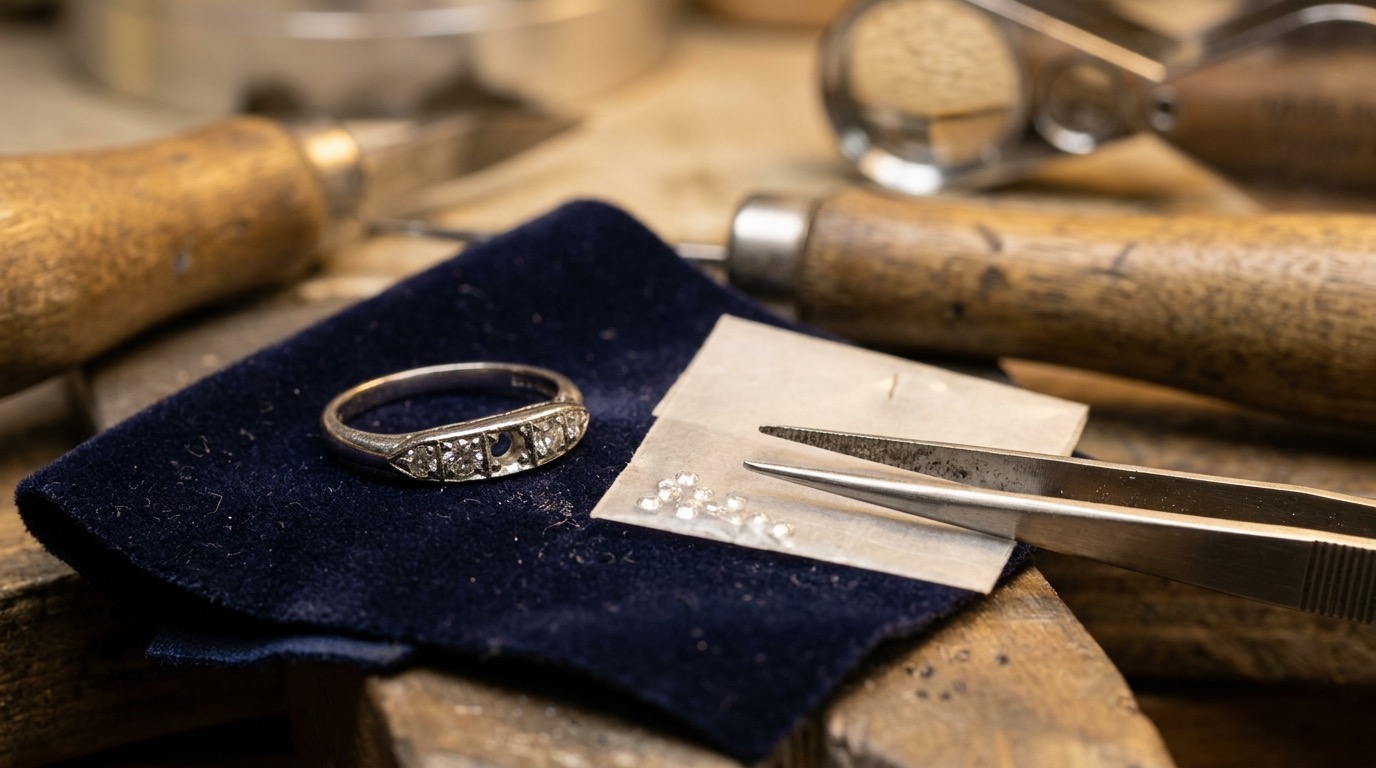
What Makes Sourcing Melee for Repair and Custom Work Different from Production Buying?
Most melee guides are written for the production side of the business: a manufacturer placing a standing order for hundreds of carats to feed a line of pavé bands or halo settings. Repair and custom work is a different job entirely. You're not filling a spec — you're matching one. A customer walks in with a ring that's missing a stone, or a client wants a one-off piece built around diamonds they already own, and the melee you source has to sit invisibly next to material that's already set, already worn, and already has a color and cut character of its own.
That changes what matters. On a production order, consistency across a large parcel is the whole point — every stone in a 5-carat lot needs to read the same. On a repair or custom order, the only thing that matters is whether the new stone or stones disappear next to the old ones. A perfect match to a supplier's own grading grid is worthless if it doesn't match the specific ring on your bench.
It also changes the buying motion. Production buying is planned — you know your quarterly volume and order ahead. Repair and custom work is reactive — a customer walks in, or a bench job surfaces a gap, and you need an answer that day or within the week, in a quantity that might be a single stone. Independent jewelers and retailers doing this kind of work need a supplier who'll quote a real, confirmed price on a small, specific order just as readily as a bulk one — not a minimum-order wall that makes repair work more trouble than it's worth.
Custom work sits alongside repair for the same reason: a one-off engagement ring, a redesigned family piece, or a small bridal order for a single client is still a matching exercise, not a production run. Whether you're filling one empty seat in an existing piece or sourcing melee to surround a customer's own center stone in a brand-new setting, the buying motion is the same — a specific size, a specific grade, and a quantity sized to one job rather than a season's inventory.
How Do You Match a Single Missing Stone from a Customer's Piece?
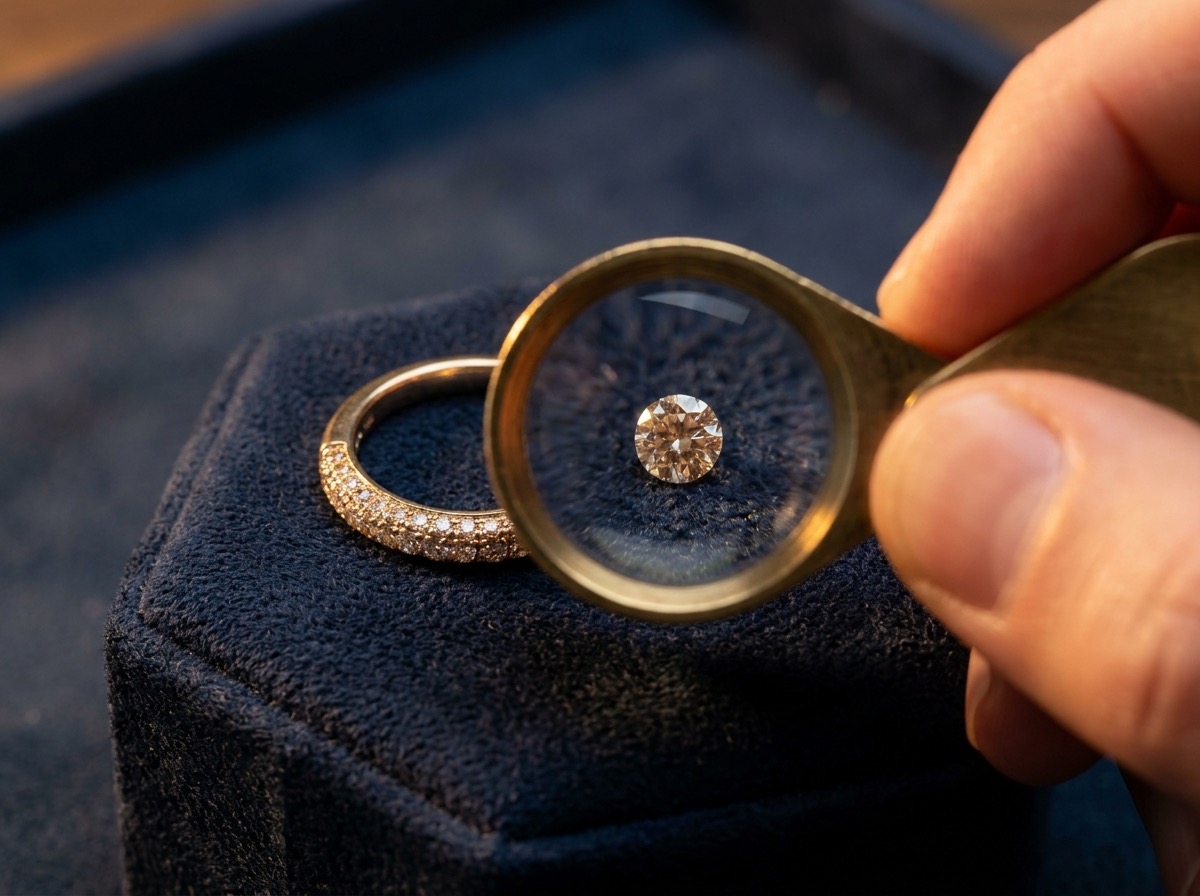
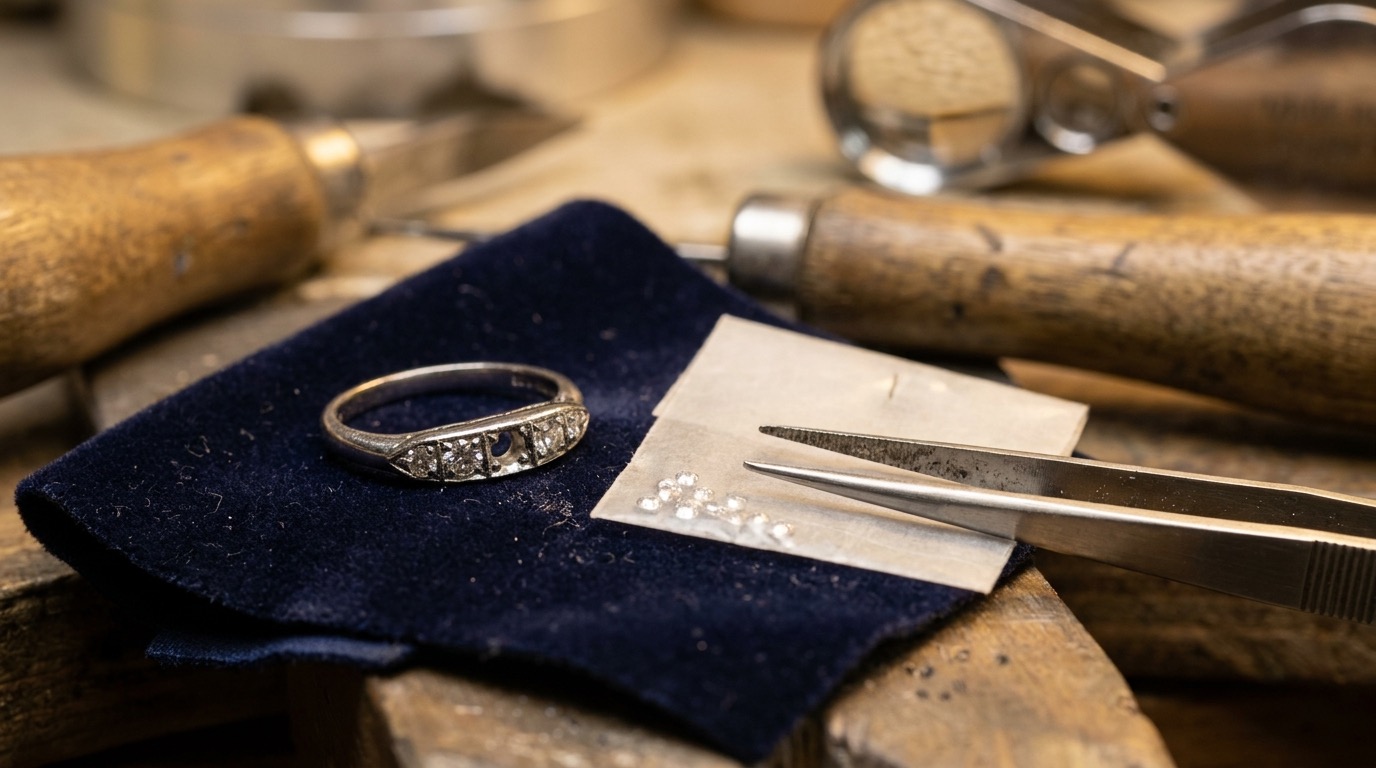
Start with the setting, not a catalog. An empty prong or bead seat tells you the actual millimeter size you need — measure it directly if you can, rather than guessing from the ring's overall look. If the stone fell out cleanly, the seat itself is close to an exact mold of the size that belongs there.
Next, grade the stones still sitting in the piece, not an average of the whole ring. Pull two or three neighboring stones under consistent, neutral light and call a color and clarity range against a grading reference — the same comparative method used to sort a wholesale parcel in the first place. A ring's overall face-up color can look whiter or warmer than any individual stone in it depending on the metal and finish around it, so grade off the stones themselves, not the ring's general impression.
Order slightly tight rather than loose on size. A replacement stone that's a hair under the seat's diameter can be reset with minimal adjustment; a stone that's oversized has to be either forced (risking damage to the mounting) or sent back. Standard trade calibration tolerance — roughly ±0.10mm on dimension, ±0.10ct on weight — is tight enough for a single-stone match in most cases, but if the setting is unusually precise or worn, ask your supplier to hand-pick toward the tighter end of that tolerance rather than the loose end.
Finally, order a couple of extra stones beyond the one you need, if the size and grade allow it. A single stone that doesn't quite read right under the loupe once it's actually next to the setting is a normal outcome, not a failure — having a second or third candidate on hand saves a second order and a second wait.
How Do You Match Melee to Vintage, Antique, or Old-Cut Diamonds?
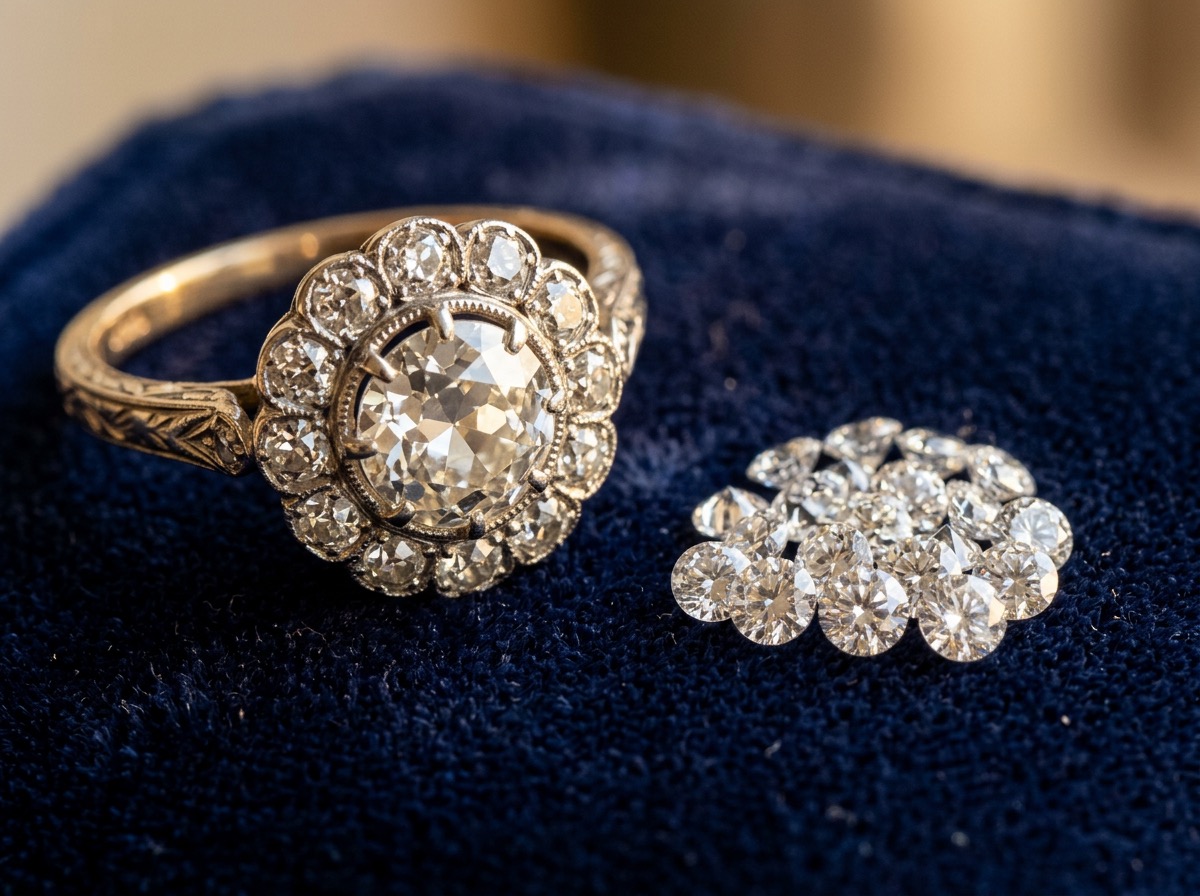
Older pieces frequently carry old European cut, old mine cut, rose cut, or single-cut diamonds rather than the modern round brilliant full cut most current wholesale melee is manufactured to. These older cuts have fewer or differently proportioned facets, a smaller table, and a warmer, softer flash than a modern brilliant — differences a trained eye catches immediately under a loupe, even at melee size.
Be honest with yourself and your customer about what's achievable. Guru Diam's natural melee, like most current wholesale melee, is modern round brilliant full-cut goods — it is not sourced or sold as antique-cut material. For a stone set prominently and visibly — a hero stone in a halo, a single accent on an open shank — an exact antique-cut match matters, and that's a specialized, hand-selected side of the trade separate from standard parcel goods. For a stone buried in a pavé line or set at an angle where it reads mostly as sparkle rather than a distinct shape, a well-matched modern brilliant in the right size and color is often the practical, and honest, choice — many benches make this call routinely rather than holding up a repair for a cut that may not be readily available at all.
Either way, this is a conversation to have with the customer before you order, not after the ring is back on their finger. Setting expectations up front — "the replacement will match size and color closely; the facet style may look very slightly different up close" — protects the relationship far more than a silent substitution the customer notices later.
Why Does Natural (Not Lab-Grown) Matter for Repair Work on Older Natural Pieces?
An older piece — an heirloom, an estate ring, anything set before lab-grown diamonds existed as a commercial category — is natural stone by definition. Every diamond already in that setting is mined. Introducing a lab-grown replacement stone into an otherwise all-natural piece creates a mixed-origin item, and that's a problem on more than one level.
The first is legal. Diamond origin disclosure — natural or lab-grown — is a requirement in the US, not an optional label. A repaired piece with an undisclosed lab-grown stone set among natural ones is a disclosure failure waiting to surface, whether at resale, at appraisal, or if the customer ever has the piece independently graded.
The second is value and trust. Appraisers and insurers assess an estate or heirloom piece as a whole. A single lab-grown stone quietly introduced during a repair — even one that's visually identical to the naked eye, since natural and lab-grown diamonds are optically indistinguishable without lab equipment — can undermine the appraised value and the customer's trust in your shop if it's ever discovered later and wasn't disclosed at the time of repair. Most customers bringing in a natural heirloom piece expect, reasonably, that a repair keeps the piece all-natural unless they're told otherwise and agree to the substitution.
That's the practical reason natural melee is the default sourcing choice for repair work on natural pieces specifically — it's not a claim that lab-grown melee is lower quality; it's chemically identical diamond material, just grown rather than mined. It's a matter of keeping the piece's origin consistent and the disclosure honest. For new custom work, that decision is the customer's to make from the outset, and either origin can be the right call depending on what they want the finished piece to be and disclose.
Can You Order Just a Few Stones for a One-Off Job?
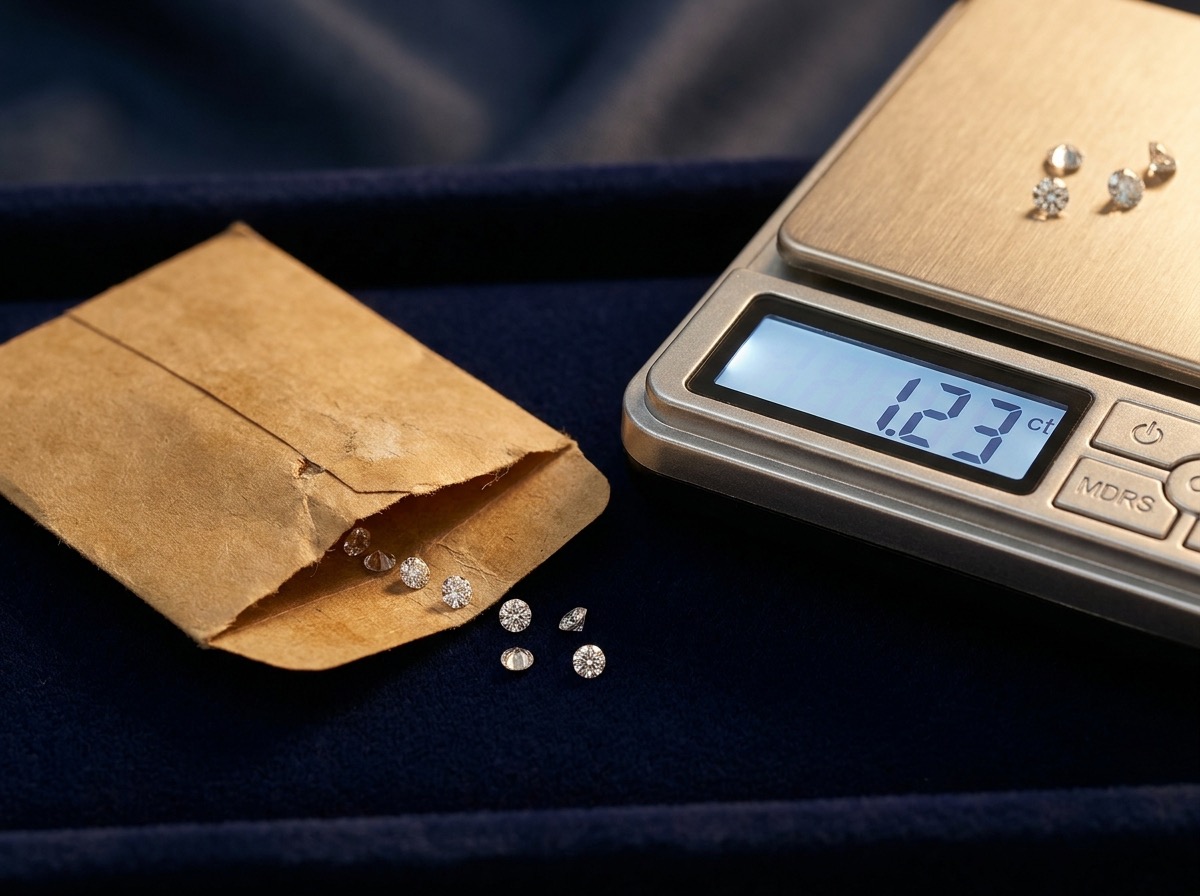
Yes. Melee is priced and quoted per carat industry-wide, which can make a single-stone or few-stone order feel like an awkward fit for a system built around bulk carat weight — but the per-carat rate applies the same whether the total order is 5 carats or a fraction of one. There's no need to round a repair job up to a production-scale quantity just to place an order.
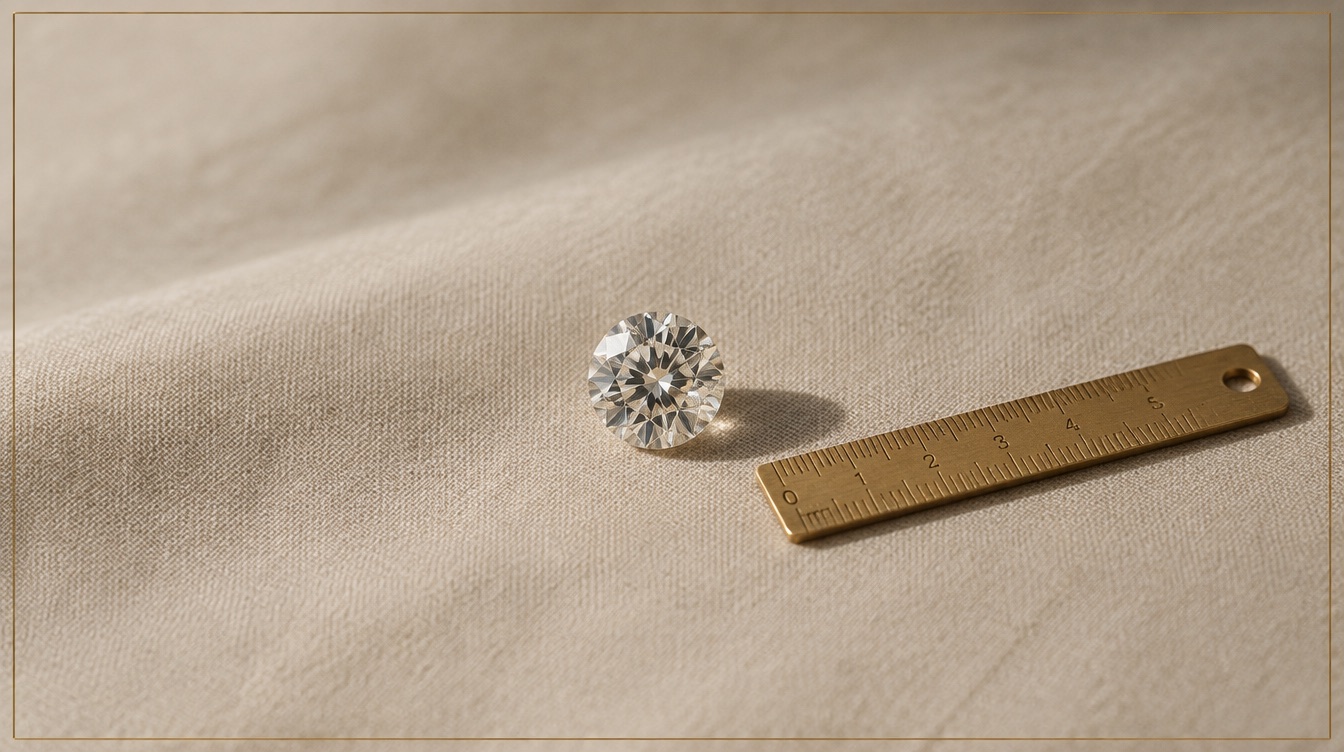
To translate a piece count into an approximate carat weight, work off the millimeter size: a 1.0mm round stone runs roughly 0.005ct, a 2.0mm stone roughly 0.03ct, and a 3.0mm stone roughly 0.10ct. A repair replacing one or two stones in the 1.5–2.5mm range is typically a few hundredths of a carat — a real order, priced off the same table used for a bulk parcel, just at a very small total.
Send Guru Diam the actual quantity you need — a single stone, a handful for a small custom piece, or a bulk parcel for production — over WhatsApp or through Contact, and you'll get a quote sized to that request. Confirm at the time you order, since the exact combination of size and grade you need for a repair match may be more or less readily on hand than a standard production size at any given moment.
What Should You Send a Supplier for a Repair-Match or Custom Quote?
A fast, accurate quote depends on giving your supplier a real spec, not a description. Before you reach out, have ready:
- Millimeter size — measured off the empty seat or the stones still in the piece, not estimated by eye.
- Color and clarity grade — EF VS, EF SI, GH VS, or GH SI, called against the neighboring stones under consistent light.
- Quantity — the actual number of stones or carat weight needed, even if that's a single stone.
- A photo of the piece, if possible — a clear macro shot of the setting and the stones around the gap helps a supplier sense-check your size and grade call, especially on an unusual or older mounting.
- Any deadline the customer is working against — flagged up front, so it can be weighed against current stock rather than assumed.
This is the same information a production buyer sends — size, grade, quantity — just scaled down to a repair-sized order. Send it to Guru Diam over WhatsApp or through Contact, and you'll get a confirmed price and stock check against that exact spec.
How Fast Should a Repair-Match Order Turn Around?
Guru Diam ships same day out of both trade desks when the matched parcel is confirmed and in stock — orders placed before 6pm EST out of New York (36 West 47th Street, Suite 601A, New York, NY 10036), and before 4pm PST out of Los Angeles (607 S Hill Street, Suite 241, Los Angeles, CA 90014). For a common size and grade combination, that same-day cutoff is realistic to plan around.
For an uncommon combination — an unusual size, an EF color call at the smaller end of the range, or a repair match that needs hand-selection against a photo of the piece — turnaround depends on what's actually in stock at the moment you order, and that's worth confirming plainly at quote time rather than assumed. A supplier who gives you a real, specific answer about stock and timing on your exact spec is more useful to a repair business than one who quotes a generic turnaround up front and adjusts it later.
The same honesty applies to what you promise your own customer. Committing to a pickup date before your own supplier has confirmed stock on the matched size and grade puts you in the position of walking back a promise you didn't need to make. Confirm sourcing first, then set the customer's expectation.
What Does Repair-Match Melee Cost for Small Quantities?
Natural melee pricing starts around $370–450/ct in the smallest sizes and rises with size and grade — the same per-carat rate applies whether you're ordering a bulk parcel or a single stone. Because a repair job usually calls for a fraction of a carat, the dollar total on a single-stone match is typically small: a 2.0mm stone at roughly 0.03ct, for example, works out to a few dollars off the per-carat rate for its size and grade, even though it's quoted off the identical table used for a production order.
Treat any number here as approximate and confirm-at-quote, the same as a bulk order — melee is quoted against sieve bands and current stock, not a fixed sticker price, regardless of order size. For the full per-carat pricing table across all sizes and grades, see our complete buying guide; for an exact quote on your repair or custom job, reach out over WhatsApp.
Do You Need a Certificate to Replace One Melee Stone?
No. Melee this small isn't individually certified anywhere in the trade, natural or lab-grown — certification cost exceeds stone value below roughly 0.20ct, so a single replacement stone for a repair ships the same way a bulk parcel does: sieve/size-graded and sorted comparatively against a master stone, not papered with an individual grading report. That's standard practice, not a shortcut specific to small orders.
This is worth knowing up front if a customer asks for paperwork on a replacement stone — it's a reasonable question, but not one melee at this size can answer with an individual certificate, for the same reason no supplier in the trade issues one. Guru Diam's loose stones at 0.30ct and above do ship IGI or GIA certified, a separate product tier from melee — if a repair job happens to call for a stone at that weight rather than true melee, that's a different conversation with your supplier.
What Mistakes Make a Repair Match Look Obviously Wrong?
A handful of avoidable errors account for most repair matches that don't hold up under a customer's own inspection later:
Grading off the wrong light. Color looks different under fluorescent bench light, daylight, and warm incandescent light. Grade the existing stones and check the new stone under the same light you'll present the finished piece in, ideally daylight-equivalent.
Consider these on top: Sizing to the ring's general look instead of the actual seat. A stone that's technically close in millimeter size can still sit visibly proud or sunken if it doesn't match the specific depth and angle of the empty seat — measure the seat, not the ring's overall proportions.
Ignoring cut-style differences on visible stones. A modern full-cut stone dropped next to an old European cut in a prominent position reads as an obvious mismatch under any real scrutiny — flag this to the customer before setting, not after.
Skipping the extra-stone buffer. Ordering the exact quantity needed with no margin means a stone that doesn't quite read right forces a second order and a second delay — a cost far smaller than the goodwill lost re-scheduling a customer's pickup.
Assuming a supplier's standard grade line covers a specific piece. A supplier's EF or GH grading is a blended range sorted against their own master stone — it's a starting point for a match, not a guarantee against any individual ring. Always compare the actual stone to the actual piece before setting.
Frequently Asked Questions
Can I order just one or two natural melee diamonds to fix a single missing stone?
Yes. Melee is quoted per carat, but that rate applies to any quantity — send the actual size, grade, and count you need, even if it's a single stone, and get a quote for that specific order. There's no production-scale minimum required.
Why does natural (not lab-grown) melee matter for repairing an older piece?
An older piece is natural by default — every stone already in it is mined. Introducing an undisclosed lab-grown replacement creates a mixed-origin item, which is both a disclosure requirement issue and a trust issue with the customer and any future appraiser. Natural melee keeps the piece's origin consistent.
How do I match melee to an old European-cut or antique diamond?
Current wholesale melee, including Guru Diam's, is modern round brilliant full-cut material — not antique-cut goods. For a prominently visible stone, an exact cut match is a specialized, hand-selected job outside standard parcel sourcing. For a stone buried in a pavé line, a well-matched modern brilliant in the right size and color is often the practical choice — set that expectation with the customer before you order.
Does a single replacement melee stone need a certificate?
No. Melee below roughly 0.20ct isn't individually certified anywhere in the trade, regardless of order size — it ships sieve/size-graded and sorted against a master stone, the same standard used for bulk parcels.
How fast can a repair-match order ship?
Same day, when the matched size and grade are confirmed in stock — orders placed before 6pm EST out of Guru Diam's New York desk, or before 4pm PST out of Los Angeles. Uncommon size or grade combinations depend on current stock; confirm at quote before promising a pickup date to your customer.
What if my repair needs a size or shape Guru Diam doesn't carry?
Natural melee is currently priced from 0.8mm to 4.0mm in round shapes only — sizes above 4.0mm and fancy shapes (oval, princess, pear, and others) aren't yet sourced on the natural line. For a job outside that range, ask about loose certified diamond inventory instead.