How to Vet a Natural Melee Diamond Supplier: Questions to Ask
Vetting a natural melee diamond supplier means confirming five things before you place an order: how they grade and sort parcels, whether that grading stays consistent parcel to parcel, how they screen for undisclosed synthetics, what minimum order and return terms apply, and what shipping cutoffs they'll actually hit. Ask each question directly — a supplier working to a real standard answers with specifics, not reassurance.
Why Does Vetting Matter More for Melee Than for a Loose Certified Diamond?
A loose certified diamond over 0.30ct ships with an independent lab report — GIA or IGI grades the stone, and you can check the paperwork against the stone yourself. Melee doesn't work that way. Stones this small aren't individually or parcel-certified anywhere in the trade, natural or lab-grown, because certification cost exceeds the value of a stone below roughly 0.20ct. That's a real, industry-wide economic fact, not a shortcut any one supplier is taking.
Which means the paperwork you'd normally lean on doesn't exist. What you're actually buying, when you buy melee, is a supplier's internal grading process — their master-stone comparison, their sieve sorting, their tolerance standard. If that process is sloppy, inconsistent, or undisclosed, nothing on the invoice will tell you until the parcel is already set into a piece and a client is looking at mismatched stones under a loupe.
That's why vetting a melee supplier is less about checking credentials and more about interrogating process. The questions below apply whether you're sourcing natural or lab-grown melee — the core standard a supplier should meet is the same either way, though certification and origin disclosure differ by product line, which is its own question worth asking directly (more on that below).
The cost of skipping this step doesn't show up on the invoice either — it shows up on the bench. A jeweler who sets an unvetted parcel into a pavé band or a tennis bracelet only discovers the mismatch when the finished piece comes back under a loupe: stones that read one grade in the parcel photo but fall visibly out of tolerance once they're side by side under a bright light. At that point the cost isn't the price of the diamonds, it's the rework, the delayed delivery, and the conversation with a client who's now looking at a piece that doesn't read as consistent. Vetting up front is cheaper than any of that, and it takes one honest conversation with a supplier rather than a finished-piece surprise.
What Grading Methodology Should a Melee Supplier Use?
Ask this directly: "How do you grade and sort a natural melee parcel?" The correct answer, from a supplier working to a real standard, is comparative sorting against a master stone — a fixed reference diamond that anchors the color and clarity call for that batch — combined with size sorting through graduated sieve plates that separate stones by millimeter diameter far more precisely than sorting by eye. That's the standard practice for melee-sized goods across the trade, natural or lab-grown, because individual grading isn't economically possible at this size.
A vague answer — "our stones are good quality," "we hand-pick everything," "trust our eye" — is not a grading methodology, it's a sales line. Push for specifics: does the same master stone anchor every batch in a given grade, or does the reference shift depending on who's sorting that day? Is size sorted through actual graduated sieves, or estimated visually? A supplier who can describe their process in concrete terms, and who states an actual color/clarity band (like EF or GH, VS or SI) rather than a marketing label like "premium" or "commercial," is working to something you can hold them to on the next order.
Also ask what the grade actually means. A parcel graded, say, GH color is a blended range — G-to-H color as sorted against the master stone — not a promise that every individual stone, graded out separately, would land at exactly G or exactly H. That's standard trade practice, and any supplier should be able to explain it plainly rather than letting you assume single-grade precision that doesn't exist at this scale.
How Do You Confirm Parcel-to-Parcel Consistency Before You Reorder?
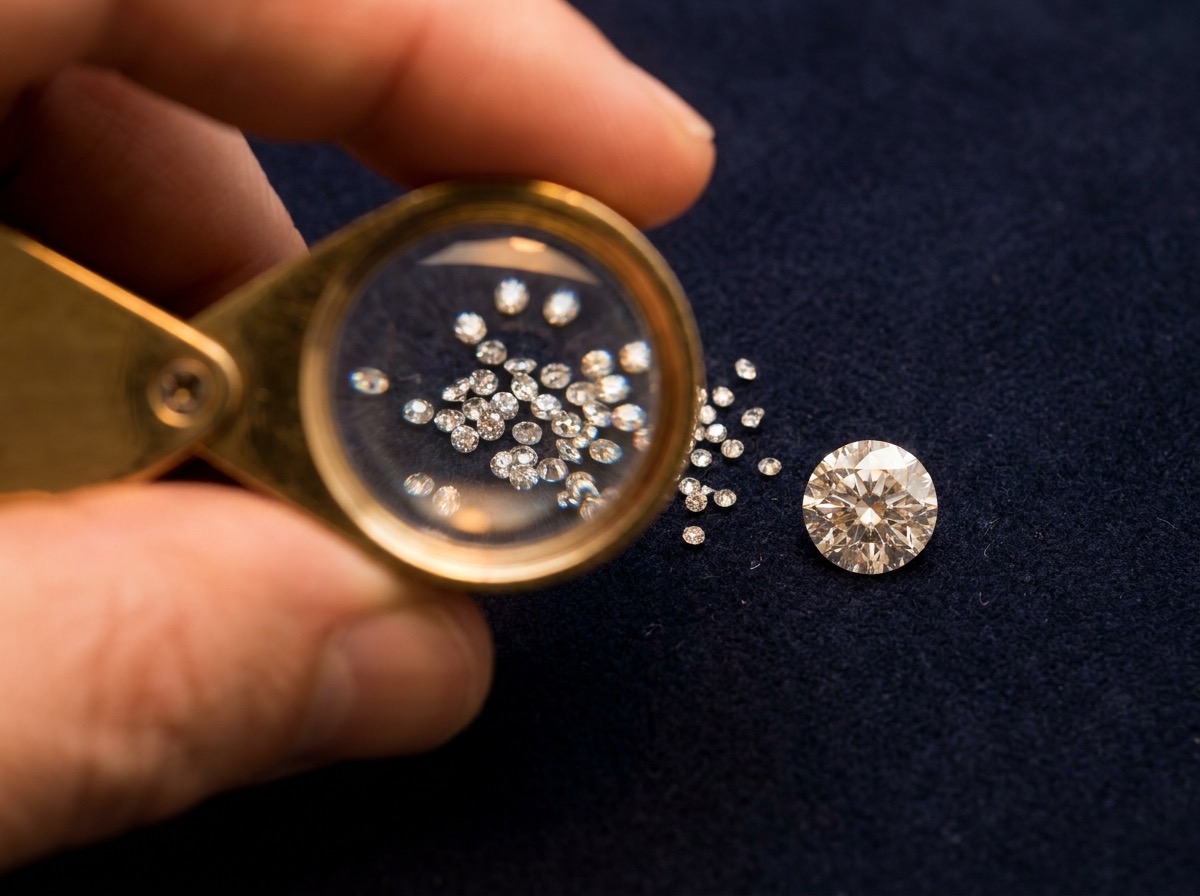
The first parcel you order from a new supplier tells you almost nothing about consistency — you only find out whether a supplier is reliable when you reorder and compare batch two against batch one. Ask directly: "Do you use the same master stone across every batch in this grade, or does it get re-set periodically?" A supplier who anchors every GH VS parcel to one consistent reference, batch after batch, is giving you a spec you can build a repeat order on. A supplier who resets that reference loosely, or who sorts "by feel" depending on staffing that week, is giving you a moving target.
Ask what calibration tolerance applies, and get it in a form you can check — not a verbal assurance. The trade-standard tolerance for calibrated goods is ±0.10mm on dimension, ±0.10ct on weight, and a 1-grade match on both color and clarity within a parcel. A supplier who states that number specifically, and can explain what happens when a batch drifts outside it, is operating to a real standard. A supplier who can't name a tolerance at all is asking you to discover their actual consistency the hard way, after a pavé job comes back from setting with visibly mismatched stones.
This matters more in melee than almost anywhere else in diamond sourcing, because pavé and eternity work sets dozens or hundreds of stones edge to edge. A handful of out-of-tolerance stones in a large parcel throws off the visual line of an entire piece — or doesn't fit the seats already cut into a mounting. Tennis bracelet work has even less tolerance for variation, since every stone sits in a direct visual line next to its neighbor.
What Screening Practices Confirm Natural Origin, Not Just Claimed Origin?

This is the question most buyers forget to ask, and it's the one that matters most if you're paying a natural-melee price and disclosing natural origin to your own customers. Natural and lab-grown diamonds are chemically and optically the same material — a lab-grown stone is not visually distinguishable from a natural one by eye, loupe, or standard jeweler's tools. Only specialized diamond-type verification instruments can reliably separate the two, especially at melee sizes where per-stone testing isn't practical and screening has to happen at the parcel level.
Ask directly: "How do you verify these stones are natural before you sell them as natural?" A supplier running a real natural melee program should be able to describe screening incoming parcels with verification technology before goods go out the door — not relying on where the rough was sourced as an unverified assumption. A supplier who answers with "we've worked with our sources for years, we trust them" hasn't actually screened anything; they've described a relationship, not a verification process.
This isn't a hypothetical risk. Lab-grown production has scaled fast enough that undisclosed or mixed-origin melee has become a real concern across the trade — small stones are exactly the size range where an unscreened supply chain is most likely to let something through unnoticed. Disclosure of origin, natural or lab-grown, is a legal requirement in the US, not optional marketing language, and it starts with the supplier actually knowing what they're selling you.
What Minimum Order Should You Expect from a Wholesale Melee Supplier?
Ask what minimum order size applies, in carats, and whether it's fixed regardless of your job or scaled to your actual need. Some wholesale suppliers set a flat per-parcel minimum that makes sense for large production runs but doesn't fit a smaller repair job or a one-off custom piece. Others quote against your stated carat need directly, whatever that number is.
The right question isn't "what's your minimum" in isolation — it's "does your minimum fit the size of job I actually have." A supplier who insists on a large flat minimum regardless of what you're placing an order for is optimizing for their own batching convenience, not your project. Ordering natural melee wholesale should be a quote-first process built around your millimeter size, grade, and total carat weight — not a fixed SKU with a one-size-fits-all order floor. If a supplier can't quote to your actual carat need, that's worth factoring into the decision.
This question matters most for two kinds of buyers: a shop doing repair and production work, where any single order might be a fraction of a carat to replace a lost pavé stone, and a shop testing a new supplier before committing to a larger reorder. Both need a supplier willing to quote small without penalizing the order on price or making you buy far more than the job calls for. Ask specifically whether a smaller order carries a different per-carat rate than a larger one, and if so, by how much — that's a fair question to put to any supplier before you commit.
What Should a Supplier's Return and Reorder Policy Actually Cover?
Ask what happens when a parcel arrives outside its stated tolerance — because it will, eventually, with any supplier, and how they handle that moment tells you more than anything in a sales conversation. The right answer: a supplier working to a real standard catches out-of-tolerance batches and recuts or resorts them before the parcel ships, rather than shipping whatever came off the last sorting pass and letting you catch the problem after it's already set into a piece. Ask what recourse exists if a mismatch does slip through after delivery — a real return or resort process, not a vague "call us and we'll figure it out."
Also ask specifically about reorders: will a parcel you order six months from now be graded against the same master stone and held to the same tolerance as the one you're ordering today? Consistency isn't just a claim about one parcel — it's a commitment across every future order in that grade. A supplier who can't speak to that continuity is asking you to re-vet them every time you reorder.
What Shipping Cutoffs Should a Melee Supplier Commit To?
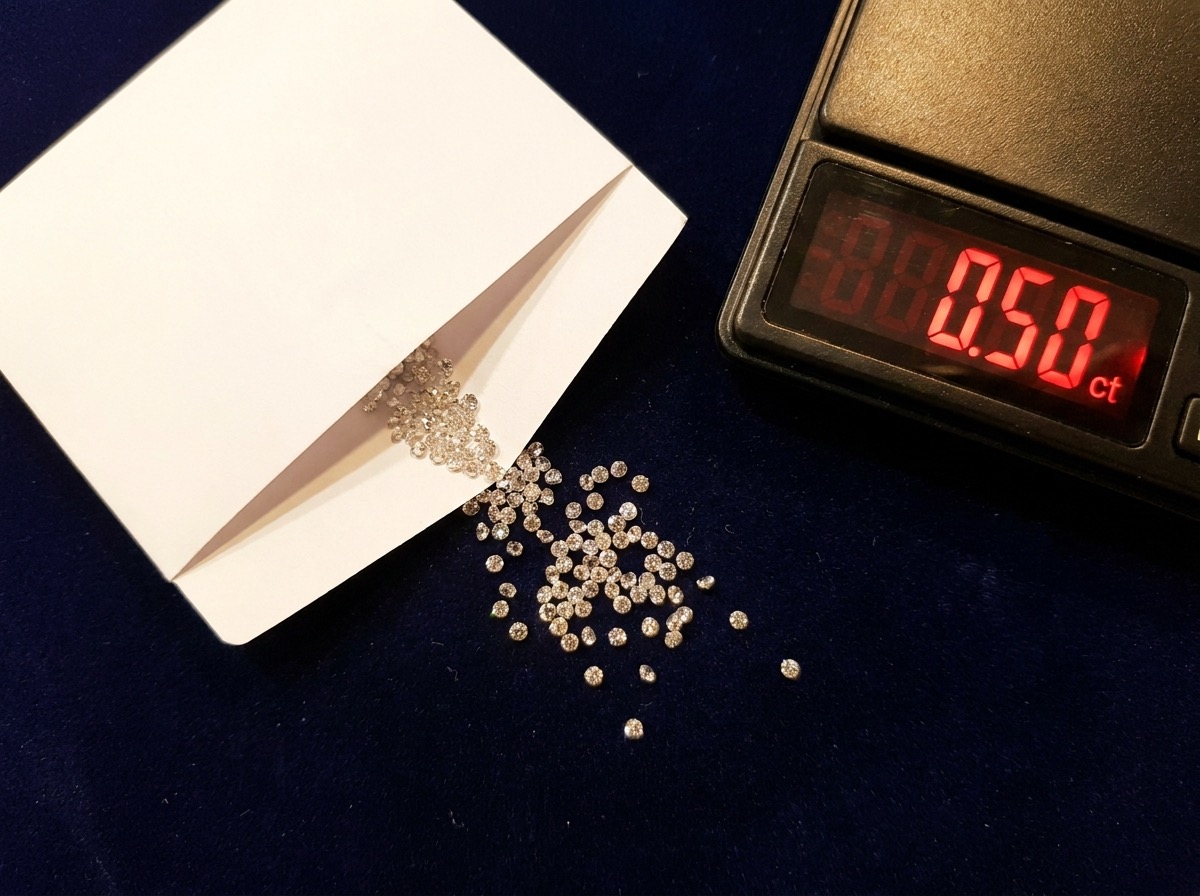
Ask for an actual cutoff time, not a general promise of speed. Guru Diam runs two wholesale trade desks — New York and Los Angeles — and holds to real, stated cutoffs: orders placed before 6pm EST out of New York ship same day, and orders placed before 4pm PST out of Los Angeles ship same day. A supplier who gives you a specific time zone and a specific hour is telling you something you can plan a job around. A supplier who says "usually fast" or "we'll do our best" is not.
One honest caveat worth asking about directly: same-day shipping on melee still depends on the parcel being in stock at the size and grade you need, since melee moves as parcel goods rather than pre-boxed SKUs. Ask how a supplier handles availability gaps — do they tell you upfront if a size/grade combination needs to be sourced before it ships, or do they let a same-day promise quietly slip without saying so?
How Should a Supplier Talk About Pricing?
How a supplier quotes price is itself a vetting signal. Melee is quoted per parcel against sieve bands in this trade — a supplier who gives you an exact-to-the-cent number sight unseen, before confirming your actual size, grade, and total carat weight, is giving you false precision, not a real quote. Guru Diam's own natural melee pricing runs roughly $370–450/ct in the smallest sizes and rises with size and grade from there, presented as approximate and confirmed at quote — that's the honest way this category prices, not a Guru Diam-specific caveat.
Ask whether pricing is public and consistent, or whether you have to negotiate blind every time with no reference point. A supplier who keeps their quality grid and general pricing range visible, rather than quote-only guesswork with no anchor, is easier to plan a budget against. For Guru Diam's full pricing table across every size and grade, see the complete natural melee buying guide — this post keeps the pricing discussion light on purpose, since it's covered in full there.
What Red Flags Signal a Melee Supplier Isn't Vetted-Ready?
A few patterns worth treating as warning signs, not minor friction:
- Vague quality language with no numbers. "Good quality," "premium melee," "commercial grade" without a stated color/clarity band or calibration tolerance means you're trusting an adjective, not a spec.
- No stated calibration tolerance. If a supplier can't name a dimension and weight tolerance, they either don't track one or won't commit to one — either way, you're the one who finds out where the real tolerance is when a batch doesn't fit.
- Can't explain the grading process. A supplier who can't describe master-stone sorting or sieve grading in specific terms probably isn't doing either consistently.
- Evasive about synthetic screening. "We trust our sources" is not a screening process. A supplier selling natural melee should be able to describe how they verify it.
- Claims full coverage with no gaps. Every real melee price list and size range has genuine holes in it — a supplier claiming zero gaps across every size and grade is either imprecise or padding a table, not being straight with you.
- No specific shipping cutoff. "We ship fast" with no stated hour or time zone is a marketing line, not a commitment you can build a rush order around.
The Full Vetting Checklist: Questions to Ask Before Your First Order
Before you commit to a natural melee supplier — or reorder from one you haven't fully vetted — run through this list:
- How do you grade and sort a parcel — master-stone comparison, sieve sizing, or something else?
- What's the exact color and clarity band on this parcel, stated as a real grade, not a marketing label?
- Do you use the same master stone across every batch in this grade, over time?
- What calibration tolerance applies — dimension, weight, and color/clarity match?
- How do you verify these stones are natural, not lab-grown, before selling them as natural?
- What's your minimum order size, and does it scale to my actual carat need?
- What happens if a parcel arrives outside its stated tolerance — do you recut or resort before shipping?
- Will a reorder six months from now match the parcel I'm approving today?
- What's your actual same-day shipping cutoff, by time zone?
- Is your pricing public and consistent, or quote-only with no reference point?
- What size range and grades do you honestly not cover — where are the real gaps?
Guru Diam answers every question on that list directly: comparative master-stone grading and sieve sizing on every natural melee parcel; a stated ±0.10mm/±0.10ct calibration tolerance with a 1-grade color/clarity match; a quote-first ordering process built around your actual millimeter size, grade, and total carat weight rather than a rigid minimum; public pricing that starts around $370–450/ct in the smallest sizes; real, stated shipping cutoffs out of both the New York and Los Angeles trade desks; and plain disclosure of the real gaps in the current line — round shapes only for now, no pricing above 4.0mm, and no EF color below 1.70mm. That's the bar this checklist is written to, and it's the same bar we'd want a supplier to meet if we were the ones buying.
Ready to put these questions to a real quote? Message Guru Diam on WhatsApp or reach out through Contact with your size, grade, and total carat need.
Frequently Asked Questions
What's the single most important question to ask a melee supplier?
How they grade and sort parcels. Everything else — consistency, tolerance, screening — flows from whether a supplier has a real, repeatable grading methodology (master-stone comparison and sieve sizing) or is working off "good quality" with no defined process behind it.
Do melee suppliers provide certification for natural melee diamonds?
No — and that's true across the trade for both natural and lab-grown melee, not a shortcoming specific to any one supplier. Certification cost exceeds stone value below roughly 0.20ct, so melee ships as sieve/size-graded parcel goods, sorted against a master stone rather than certified stone by stone. Loose diamonds at 0.30ct and above do ship IGI or GIA certified — a separate product tier with its own paperwork.
How can I tell if a melee supplier is actually screening for synthetic stones?
Ask them to describe the process specifically — what verification instrument they use and at what point in the supply chain screening happens. A vague answer about trusting their sources isn't a screening process; natural and lab-grown diamonds aren't distinguishable by eye, so verification has to come from instrumentation, not assumption.
What calibration tolerance should a reputable melee supplier hold to?
The trade standard is ±0.10mm on dimension, ±0.10ct on weight, and a 1-grade match on color and clarity within a parcel. A supplier should be able to state this number specifically, not just assure you the goods are "consistent."
Should I expect the same pricing every time I reorder melee?
No — treat published or quoted melee pricing as approximate and confirm the current rate before finalizing a job's cost. Melee is quoted per parcel against sieve bands, and pricing moves with market conditions; a supplier who insists on an exact-to-the-cent number sight unseen isn't giving you a real quote.
How fast can a wholesale melee order actually ship?
Ask for a specific cutoff time and time zone, not a general promise. Guru Diam ships same day on orders placed before 6pm EST out of New York or before 4pm PST out of Los Angeles, subject to the parcel being in stock at your size and grade.