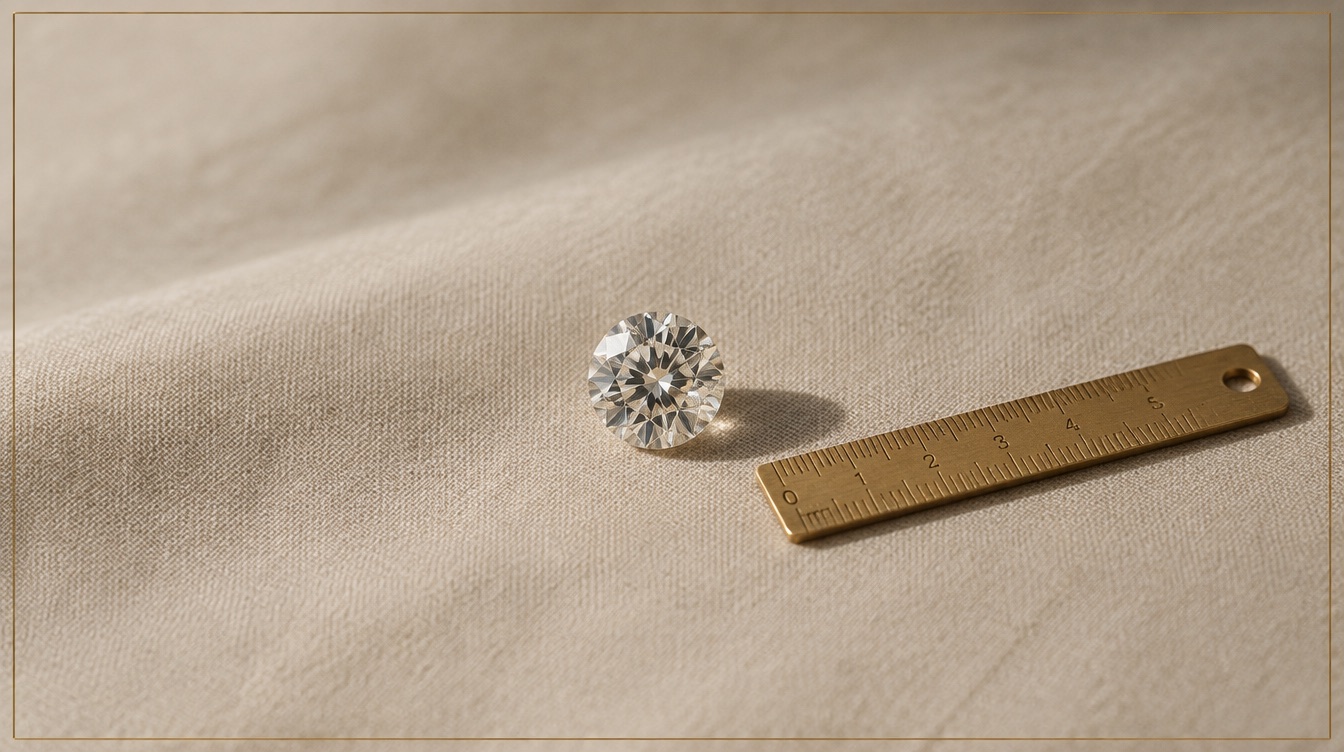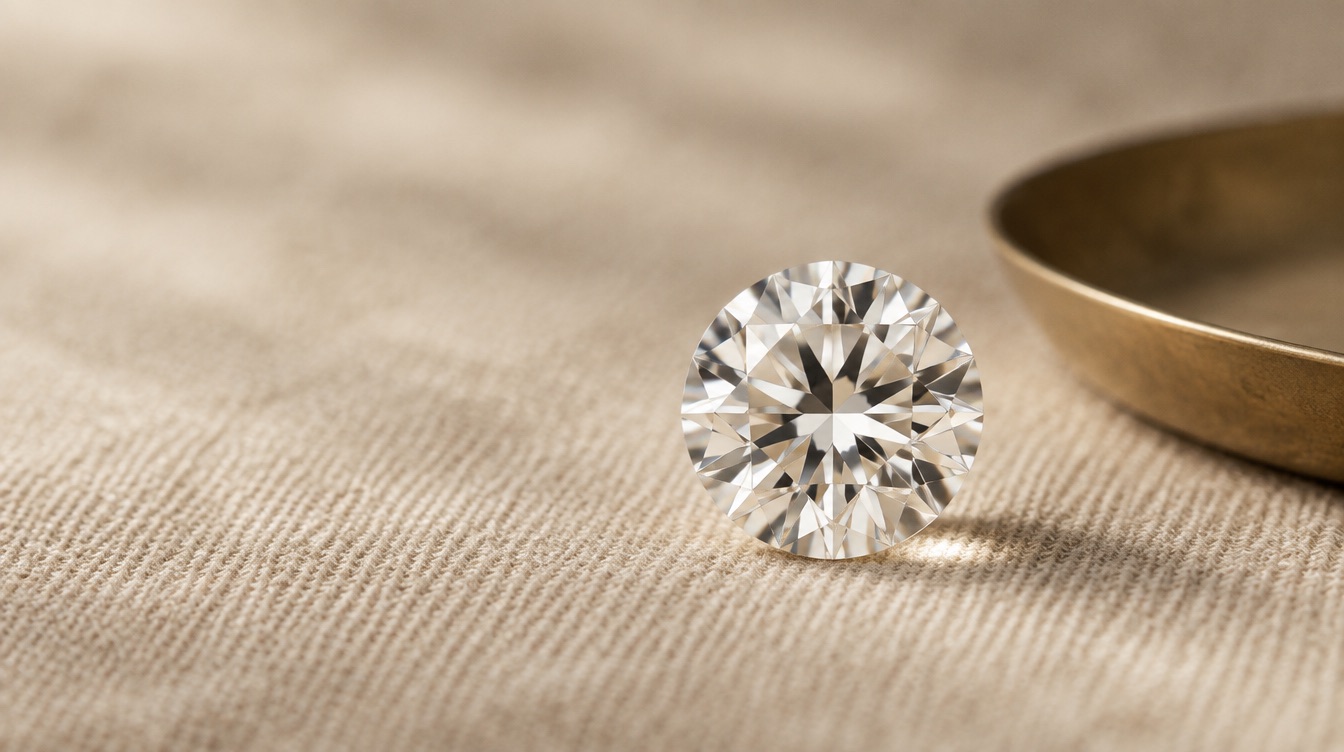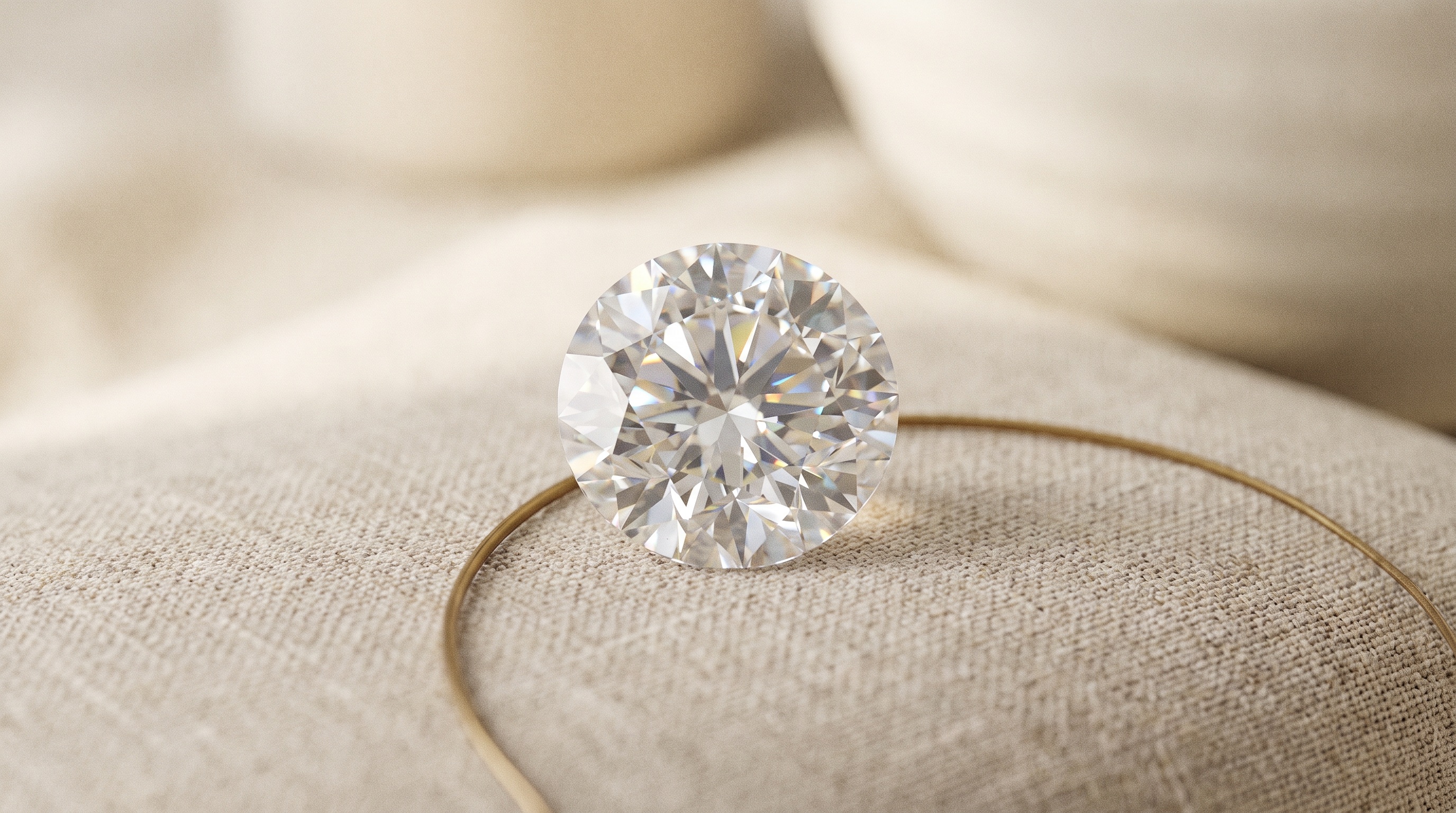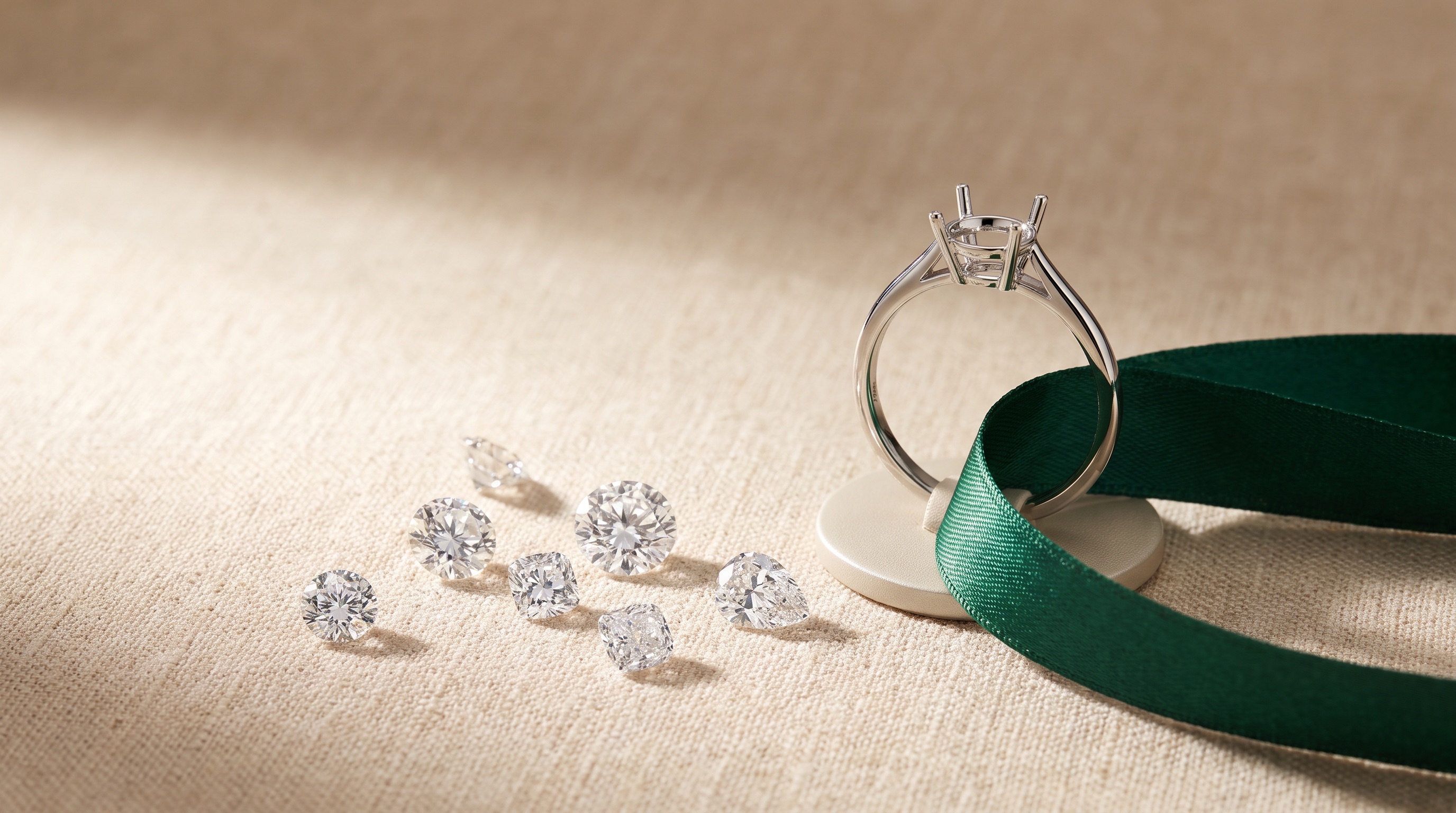
Choosing a ring setting for a loose stone means matching a mounting style to the diamond's specific shape, proportions, and carat weight so the finished ring both shows the stone well and holds it securely for daily wear. The right setting depends on three practical factors in order: the stone's shape (round versus fancy shapes have different structural needs), how much physical protection the wearer's lifestyle calls for, and the stylistic look the piece is meant to achieve. This guide walks through the major setting types, how to match one to a specific stone, and the practical tradeoffs that matter once a loose stone is ready to be set.
This guide is written for both jewelers sourcing and setting stones for customers and buyers who've purchased a loose diamond and need to choose how to have it mounted. It covers setting types by structural function, shape-specific setting considerations, carat-weight and proportion matching, metal choice, and what to confirm with a setter before committing a loose stone to a mounting.
Why Setting Choice Starts With the Stone, Not the Ring Style
A common mistake when working from a loose stone is picking a ring design first and assuming any stone will fit it — in practice, the stone's shape, depth, and girdle thickness determine which settings will actually hold it securely and show it well, and working backward from a chosen design to force-fit a stone that doesn't suit it typically produces a weaker or less flattering result than starting from the stone's actual proportions. A well-cut round brilliant has very different structural needs from an elongated marquise or a flat-profile emerald cut, and a setting that works beautifully for one can be a poor structural or visual fit for another. Getting this order right — stone first, setting second — is the single most useful piece of guidance for anyone approaching this decision with a loose stone already in hand.
Setting Types by Structural Function
| Setting Type | Stone Protection | Light Performance | Best Suited To |
|---|---|---|---|
| Prong (4 or 6-prong) | Moderate — exposed sides, secured at points | Maximum — light enters from all angles | Round, princess, most fancy shapes as a default |
| Bezel (full) | Highest — girdle fully enclosed | Reduced — less light enters from the sides | Active lifestyles, minimalist styling, less durable stone edges |
| Halo | Moderate on center stone, adds visual size | High — accent stones add overall sparkle | Buyers wanting a larger face-up look at a given carat weight |
| Channel | High for side stones — no exposed prongs | Moderate — light enters mainly from the top | Side-stone accents on a band, low-profile styling |
| Tension | Lower — relies on setting-arm pressure alone | Very high — stone appears to float | Well-cut, structurally sound center stones; modern styling |
| Cathedral | Moderate — center stone raised on arched shoulders | High — raised profile adds light entry | Traditional bridal styling, taller stone presentation |
Prong Settings: The Default for Most Loose Stones
A prong setting holds a stone with a small number of metal claws — typically four or six — gripping the stone at its girdle while leaving most of the stone's surface exposed to light from every angle. This is the most common setting choice for a loose diamond precisely because it maximizes brilliance without requiring a shape-specific frame: four prongs are standard for round and princess-cut stones, while six prongs are more common on larger round stones or shapes needing additional securing points along an elongated outline, like an oval or marquise. Prong settings expose more of the stone's edge to potential chipping or catching than a bezel does, which matters more for a stone with a delicate point (a pear or marquise's tips are the most vulnerable) or for a wearer with a physically active daily routine.
Matching Setting to Stone Shape
Round Brilliant
The most setting-flexible shape — round stones work well in prong, bezel, halo, tension, and cathedral settings without the fitting complications fancy shapes introduce, since a round setting doesn't need to be custom-fitted to a specific outline.
Elongated Shapes (Oval, Marquise, Pear, Emerald)
Elongated shapes need setting arms or a bezel fitted precisely to their outline, since a standard round-profile casting won't follow the stone's actual silhouette. Pear and marquise shapes in particular have vulnerable points at their tips that benefit from a v-shaped prong or protective tip guard, a structural detail worth confirming with a setter rather than assuming a generic prong setup will adequately protect a pointed stone.
Step Cuts (Emerald, Asscher)
Step-cut stones have large, open table facets and comparatively less light-return brilliance than a brilliant cut, which is why they're commonly set in a way that emphasizes their clarity and line rather than maximum sparkle — bezel and channel settings suit step cuts well for this reason, and any visible inclusion is harder to hide in a step cut's large open facets than in a brilliant cut's more broken-up light pattern, which is worth factoring into setting choice for a lower-clarity step-cut stone.
Antique Cuts (Old Mine, Old European, Rose)
Antique cuts typically have a higher crown and smaller table than modern cuts, and pairing them with a period-appropriate low-profile or cathedral setting tends to complement their proportions better than a modern high-set prong style designed around contemporary cut proportions. Buyers and jewelers sourcing an antique-cut stone specifically for a vintage-inspired piece should look for a setter experienced with these proportions, since a modern setting cut to contemporary depth-to-diameter ratios can sit awkwardly on an antique stone's different proportions.
Carat Weight and Setting Proportion
A setting's proportions should scale with the stone's actual diameter, not carat weight alone, since two stones of the same carat weight can have meaningfully different diameters depending on cut depth — a shallow-cut stone spreads wider for its weight than a deep-cut stone of the same carat. This matters most for halo and cathedral settings, where the frame is built around an assumed stone diameter; a setter working from a loose stone in hand should always measure the actual stone rather than relying on a generic size chart based on carat weight alone, since a setting built to a chart-average diameter can end up visibly too large or too small for a specific stone that runs shallow or deep for its weight.
Halo Settings: Adding Visual Size Without Adding Carat Weight
A halo setting surrounds the center stone with a ring of smaller accent diamonds, increasing the piece's overall face-up visual size and total sparkle without requiring a larger, more expensive center stone. This makes halo settings a common choice for buyers working with a specific center-stone budget who want a larger overall look than the center stone alone would provide. The tradeoff is added maintenance — more small stones means more individual setting points that can, over years of wear, need re-tightening or stone replacement — and a halo setting also adds a meaningful markup for the accent stones and additional labor versus a simple solitaire mount for the same center stone.
Protection Level and Lifestyle Fit
How a wearer actually uses their hands day to day should factor directly into setting choice, independent of the stone's shape or the overall design aesthetic. A bezel or half-bezel setting offers the most protection for someone whose daily routine involves frequent hand use — manual work, sports, regular exposure to hard surfaces — since the enclosed rim shields the stone's girdle from the chips and impacts that exposed prongs are more vulnerable to. A tension setting, by contrast, relies entirely on the setting arms' spring pressure to hold the stone and offers the least built-in physical protection of any common setting style, making it a better fit for a wearer whose daily routine involves less hand impact, and a setting that should only be used with a well-cut, structurally sound stone in the first place, since a tension mount puts direct pressure on the stone itself.
Metal Choice and Its Effect on Setting Durability
Platinum is the most commonly recommended metal for prong and tension settings specifically because of its density and resistance to metal fatigue — platinum prongs hold their shape and grip over years of wear better than gold prongs of the same thickness, which matters more for a setting style that depends entirely on a small number of contact points. 18k white or yellow gold is a common and durable alternative at a lower cost than platinum, though gold prongs are more prone to gradually thinning and requiring re-tipping over many years of wear than platinum prongs are. For bezel and channel settings, which distribute holding pressure across a continuous rim or rail rather than a few discrete points, the difference between platinum and gold durability is less pronounced, since neither metal is being asked to hold shape under concentrated stress at a small number of points the way a prong is.
Setting a Loose Stone: What to Confirm Before Committing
- Has the setter actually measured the stone's diameter and depth, rather than working from carat weight and a generic size chart alone?
- Is the setting style appropriate for the stone's specific vulnerabilities — pointed tips on a pear or marquise, a step cut's open facets, an antique cut's different proportions?
- What metal is being used for the prongs or bezel specifically, and does it suit the wearer's daily hand use?
- Is there a plan for periodic prong or bezel inspection as part of the piece's expected maintenance, particularly for a tension or prong setting that depends on ongoing structural integrity?
- Does the setting choice match the buyer's actual lifestyle, not just the look they responded to in a photo or showroom sample?
Lab-Grown vs. Natural Loose Stones: Does Setting Choice Change?
Setting selection depends on a stone's shape, cut, and proportions — not on whether it's a natural or CVD lab-grown diamond. A well-cut CVD lab-grown round brilliant has the same physical hardness and structural setting needs as a natural round brilliant of equivalent cut, and the same is true across every other shape. The origin decision affects price and, for some buyers, sourcing preference, but it has no bearing on which setting style is structurally appropriate for a given stone.
Custom vs. Semi-Mount Settings for a Loose Stone
A buyer or jeweler with a loose stone in hand has two general paths to a finished ring: a fully custom design built from scratch around the stone's exact measurements, or a semi-mount — a pre-designed setting sold without a center stone, sized to fit a standard range of stone diameters within a given carat range. A semi-mount is faster and less expensive, and works well for standard round and princess shapes that fit predictable size ranges; a fully custom setting is the more reliable path for an unusual shape, an antique cut with atypical proportions, or a stone that measures outside standard semi-mount size ranges, since a semi-mount not actually sized to the stone's real diameter can leave a visible gap or an insecure fit that a jeweler shouldn't sign off on regardless of how close the sizing initially looks.
Cathedral, Three-Stone, and Cluster Settings for a Center Stone
Beyond the core protection-versus-brilliance tradeoffs covered above, several setting styles are built around a specific design goal rather than a specific stone shape. A cathedral setting raises the center stone on arched shoulders that curve up from the band, giving the stone a taller, more prominent presentation than a flush or low-profile mount — a traditional bridal styling choice that works well with most shapes but adds a small amount of additional vertical exposure to catch on clothing or hair, worth flagging to a buyer with an active daily routine. A three-stone setting flanks a center stone with two side stones, commonly used to add symbolic meaning (past, present, future is the most common framing in bridal marketing) as well as visual width; the side stones' cut and size need to complement rather than compete with the center stone, and a jeweler working from a loose center stone should plan side-stone sourcing at the same time rather than as an afterthought, since matching color and clarity across center and side stones after the fact is harder than sourcing them together. A cluster setting groups several smaller stones together to form a larger visual mass at a lower cost than an equivalent single center stone, trading a single dominant stone's clean look for a denser, more textured sparkle — a legitimate design choice for a buyer prioritizing overall visual size and total sparkle over a single, more prominent center stone.
Re-Setting an Existing Stone: What Changes From a First-Time Setting
Buyers and jewelers occasionally need to re-set a loose stone that's been removed from a previous mounting — an inherited stone, a stone from a piece being redesigned, or one purchased secondhand as loose goods. Re-setting introduces a few considerations beyond a first-time setting: the stone should be inspected for any existing damage or wear at the girdle or culet before committing it to a new setting, since chips or abrasions from a prior mounting can affect which setting style is appropriate going forward (a stone with existing girdle chipping is a better fit for a protective bezel than an exposed prong setting). It's also worth having a re-set stone weighed and measured again rather than relying on old paperwork alone, since a stone can occasionally be re-cut or repaired between owners in ways that change its original certified measurements slightly.
How Setting Choice Affects Long-Term Maintenance
Every setting style requires some degree of periodic inspection over years of wear, but the maintenance burden differs meaningfully by type. Prong settings should be checked periodically for wear or bending, since a loosened or worn prong is one of the more common causes of a stone falling out of a ring unnoticed; a jeweler-recommended inspection interval of roughly once a year for a daily-worn prong-set ring is a reasonable standard to communicate to a buyer at the point of sale. Bezel settings require less frequent structural inspection since there are no individual prong tips to wear down, though the bezel rim itself should be checked for thinning if the ring sees decades of wear against hard surfaces. Halo and cluster settings, by virtue of having more individual stones and setting points, carry a proportionally higher chance that any single stone will need re-tightening or replacement over the piece's lifetime, simply due to having more points of potential wear than a solitaire setting. Communicating these maintenance expectations to a buyer at the time of sale — rather than leaving it as an unstated assumption — is good practice regardless of which setting style is ultimately chosen.
Sourcing Loose Stones and Custom Settings Wholesale
Guru Diam is a trade-only wholesale supplier carrying certified loose diamonds across standard, antique, and exotic shapes, alongside natural diamonds and finished jewelry, so a buyer isn't limited to sourcing a stone from one supplier and finding a setting partner elsewhere. Every certified stone ships with IGI, GIA, or GCAL documentation, and in-stock loose inventory ships same-day from Guru Diam's New York and Los Angeles locations. For buyers who've sourced a loose stone and need it mounted, Guru Diam's in-house custom jewelry service builds settings to a stone's exact measurements — cutting, setting, and polishing all handled directly — with custom rings finished in 4-6 days. Buyers can browse certified loose stones in the certified diamonds category, start a custom mounting through custom jewelry, or apply for a trade account at trade partner, with current terms available at the wholesale hub. Buyers working with an unusual antique-cut stone may also find our loose diamonds wholesale guide useful background before choosing a setting.
Frequently Asked Questions
What is the best setting for a loose diamond?
There's no single best setting — the right choice depends on the stone's shape, its structural vulnerabilities (like a pointed tip on a pear or marquise), and how much physical protection the wearer's lifestyle calls for. Prong settings are the most common default for maximizing brilliance, while bezel settings offer the most protection for active daily wear.
Do I need a different setting for a fancy-shaped diamond than a round one?
Yes, generally. Round stones work in almost any setting style without shape-specific fitting concerns, while elongated shapes like oval, marquise, and pear need setting arms or a bezel fitted precisely to their outline, and pointed shapes benefit from added protection at their tips.
How do I know what size setting to buy for my loose stone?
Setting size should be matched to the stone's actual measured diameter and depth, not to carat weight alone, since two stones of equal carat weight can have different diameters depending on cut depth. A setter should measure the physical stone directly rather than relying on a generic carat-to-size chart.
Is a bezel setting more secure than a prong setting?
Generally yes — a bezel's continuous metal rim fully encloses the stone's girdle, offering more protection against chips and impacts than a prong setting's smaller number of contact points, though prong settings allow more light into the stone and are far more common for buyers prioritizing maximum brilliance.
Can any loose diamond be set in a tension setting?
Not ideally. Tension settings rely on the setting arms' spring pressure alone to hold the stone, which puts direct pressure on the stone itself, so this style is best reserved for well-cut, structurally sound stones rather than stones with existing inclusions or weaknesses near the girdle.
Should I choose a semi-mount or a fully custom setting for my loose stone?
A semi-mount works well for standard round or princess shapes within typical carat-size ranges and is faster and less expensive. A fully custom setting is more reliable for an unusual shape, an antique cut, or a stone that measures outside standard semi-mount sizing, since it's built to the stone's exact measurements.
Does it matter if my loose stone is natural or lab-grown when choosing a setting?
No — setting choice depends on the stone's shape, cut, and physical proportions, which are identical between a natural and a CVD lab-grown diamond of the same specifications. Origin affects price, not which setting style is structurally appropriate.
Guru Diam is a trade-only wholesale diamond supplier with locations in New York and Los Angeles, carrying certified loose diamonds across standard, antique, and exotic shapes alongside natural diamonds and finished jewelry, plus in-house custom ring settings built to a stone's exact measurements. Browse certified inventory in the certified diamonds category or start a custom mounting through custom jewelry.