
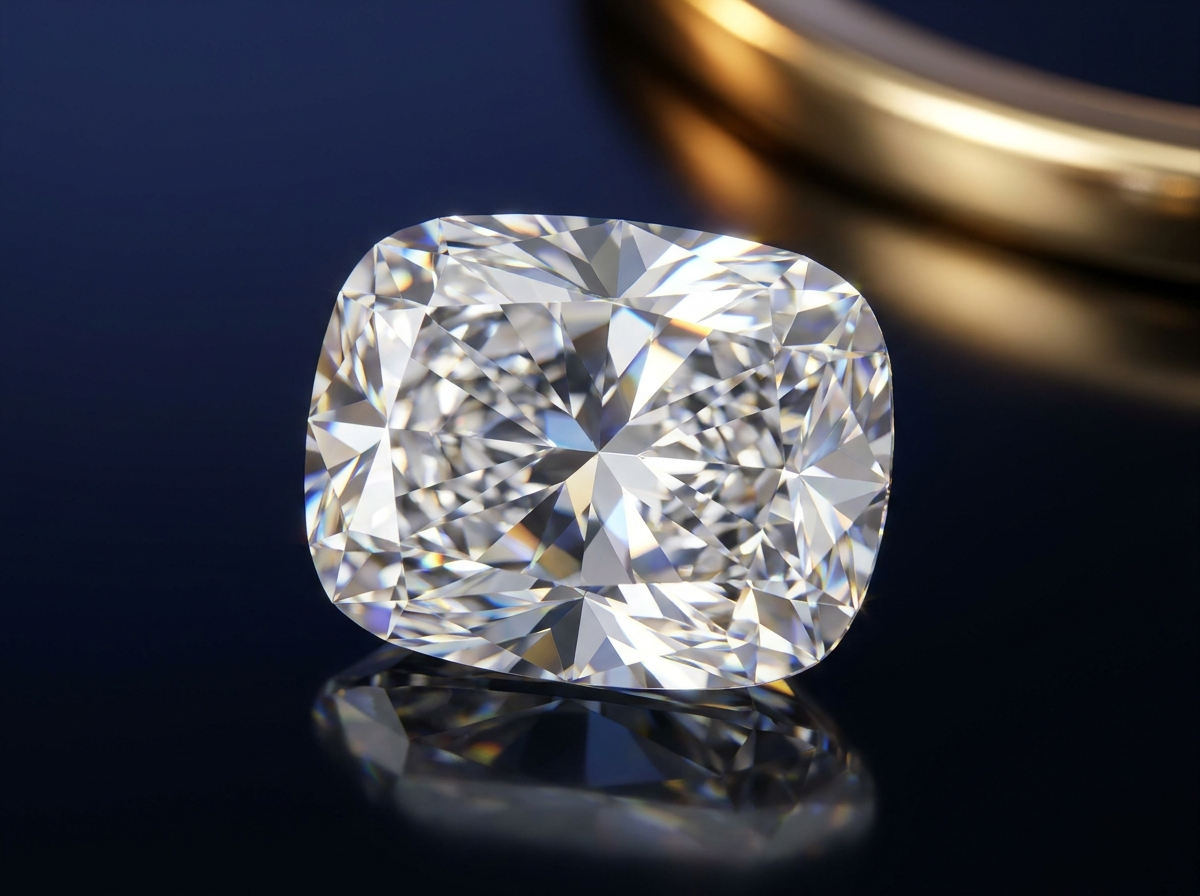
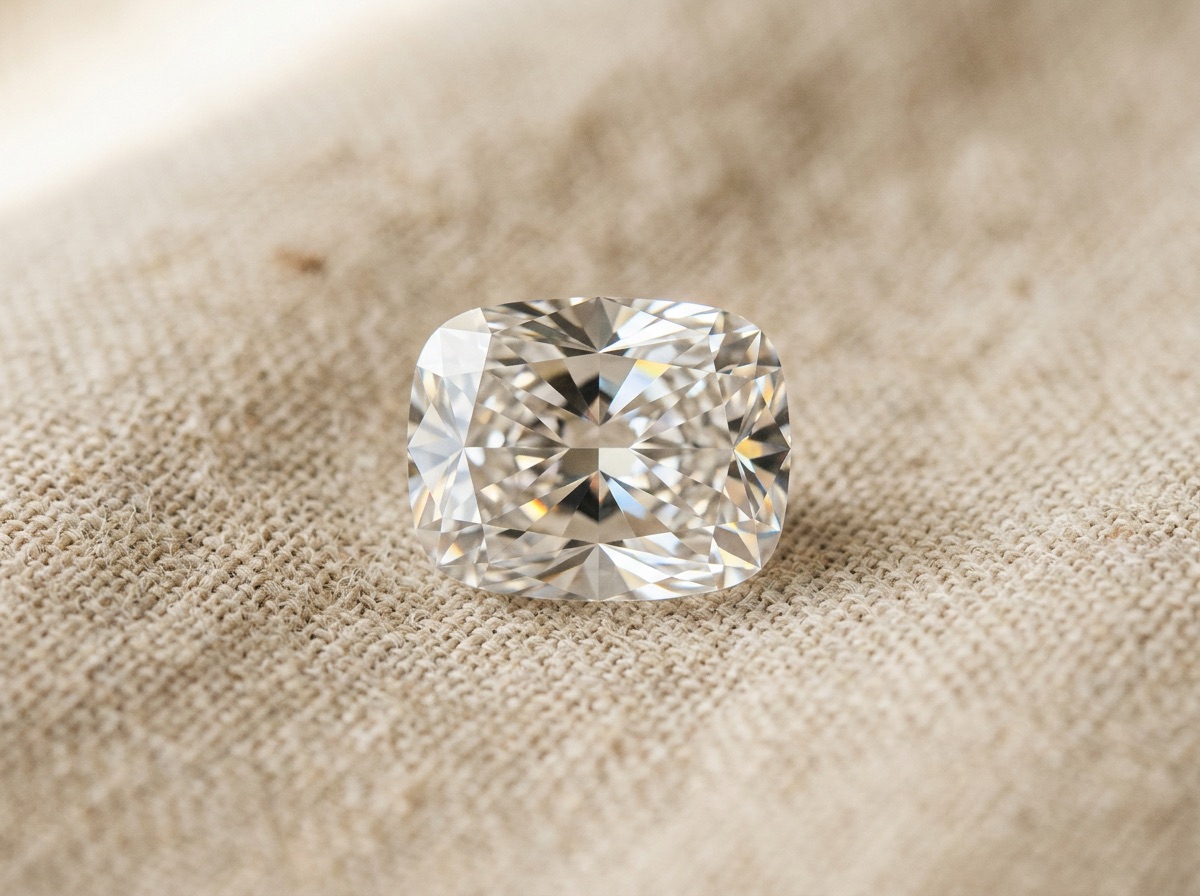
An elongated cushion is a cushion cut diamond with a noticeably rectangular outline rather than near-square proportions — typically a 1.15–1.50+ length-to-width ratio, against the 1.00–1.05 ratio of a classic square cushion. The elongation reads as a larger stone face-up for the same carat weight and produces a slimmer, more finger-lengthening silhouette than a square cushion delivers. Guru Diam maintains a 382-piece cushion inventory of CVD-grown, IGI-certified stones, spanning both square and elongated outlines, with GIA and GCAL certification available on request.
This guide goes deeper than a basic definition. It covers the ratio math buyers use to spec elongated cushion, how elongation and faceting combine as independent variables, what drives bowtie risk in this shape, how to think about grading and pricing for elongated goods specifically, where elongated cushion fits against a classic square cushion and against radiant cut, and how to place a wholesale order.
What Makes a Cushion “Elongated”: The L:W Ratio Breakdown
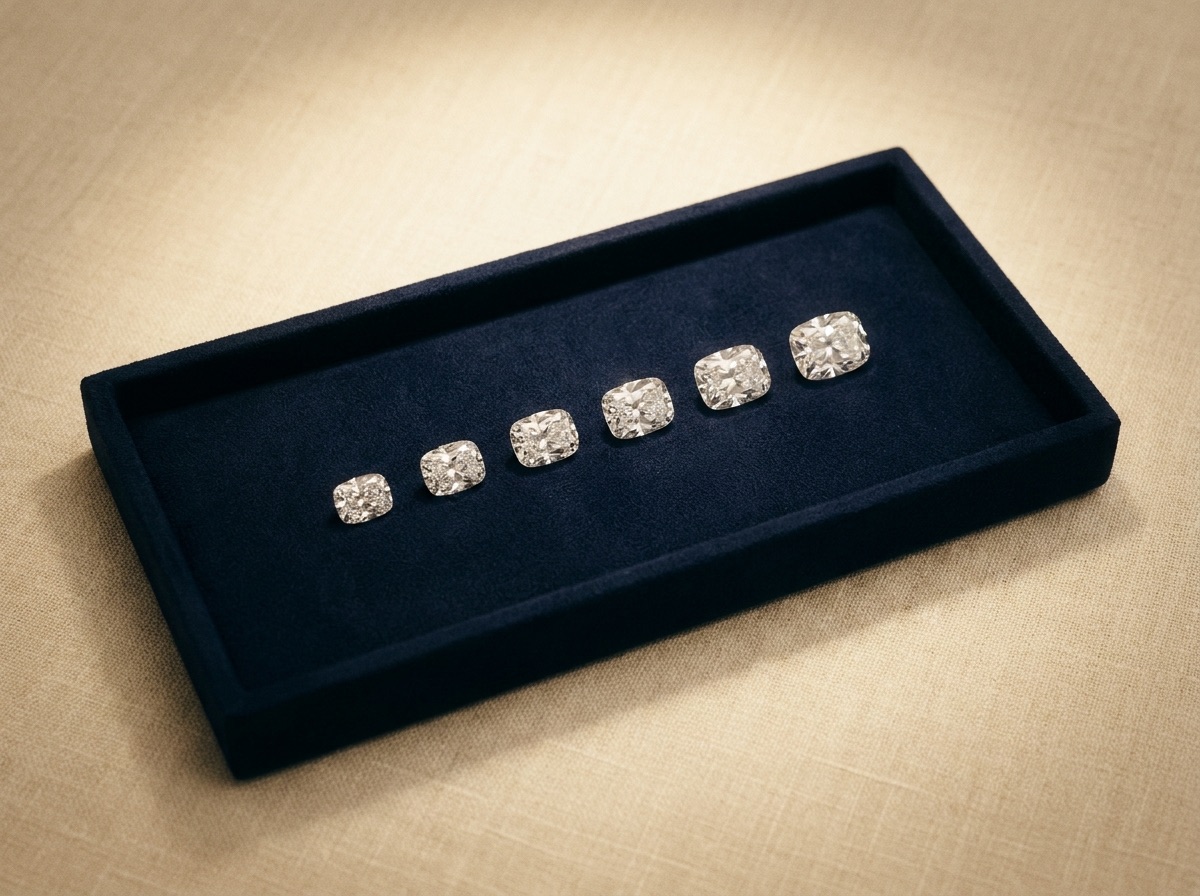
Length-to-width ratio (L:W) is the number that separates an elongated cushion from a classic one. It is a simple division — the stone’s measured length divided by its measured width, both taken in millimeters at the girdle. A cushion measuring 7.00mm x 7.00mm returns a 1.00 ratio: perfectly square. A cushion measuring 8.40mm x 6.50mm returns roughly a 1.29 ratio: visibly rectangular.
The trade generally breaks cushion L:W into three working bands:
- 1.00–1.05 — Square cushion. Reads as a soft square with rounded corners. No elongation.
- 1.15–1.30 — Elongated cushion, moderate. The band most trade buyers stock and most jewelry buyers request. Rectangular enough to read as elongated, restrained enough to keep cushion’s soft-cornered character intact.
- 1.35–1.50+ — Elongated cushion, pronounced. A narrower, more slipper-like outline. Closer in feel to an elongated radiant or a soft emerald cut. Lower and more sporadic demand, but a real niche among buyers chasing a distinctive silhouette.
Ratios between the bands (1.06–1.14, for instance) exist in rough goods and get planned around during cutting — a stone doesn’t have to land precisely on 1.15 to read as elongated once it’s set. But when buyers spec inventory or place a custom cutting order, they generally ask for one of the three bands above rather than an exact decimal, because ratio alone doesn’t fully describe how a given stone will look face-up. That’s the next distinction.
Elongation and Faceting Are Two Different Specs
A common misread among newer buyers is treating “elongated cushion” as a single fixed look. It isn’t. L:W ratio governs the outline. Facet pattern governs the light performance inside that outline. The two combine, they don’t come bundled.
Cushion cut is cut in two broad facet families:
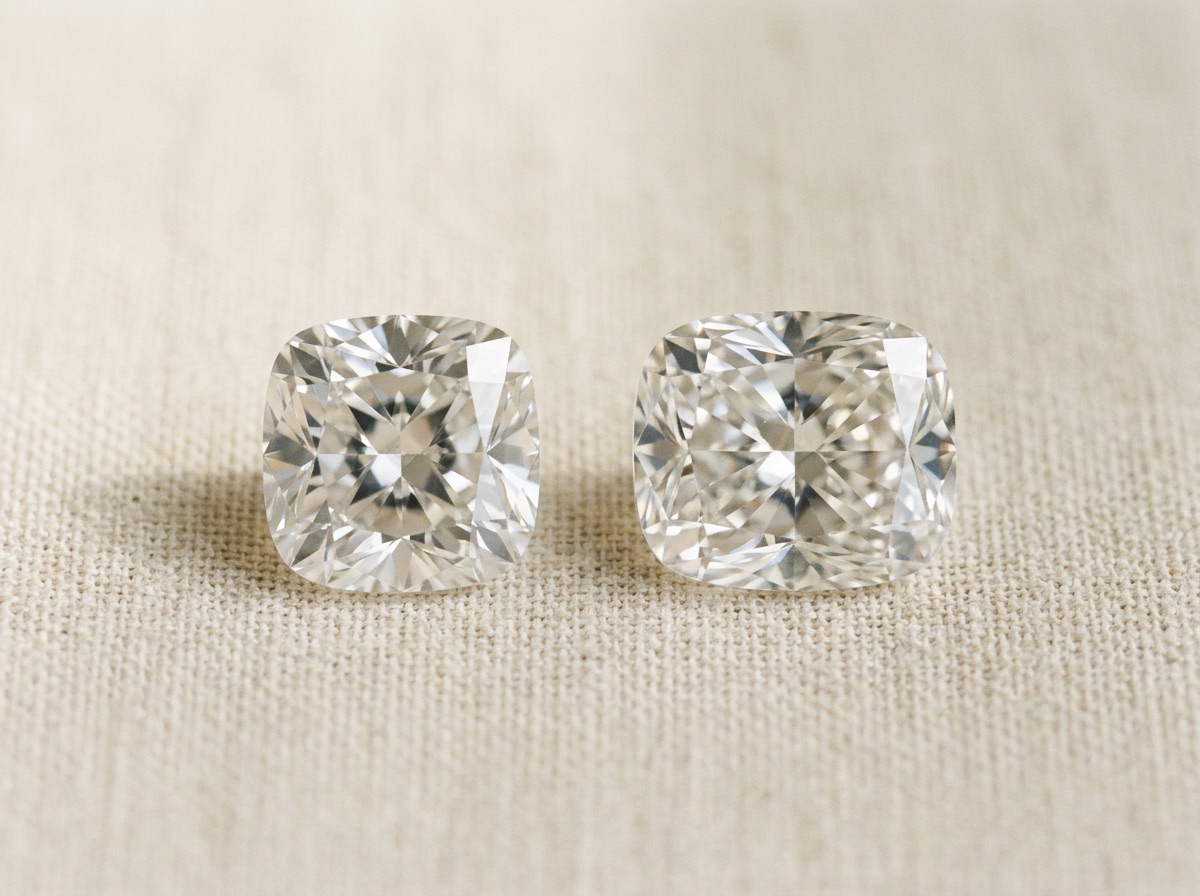
- Standard (chunky) brilliant cushion. Larger, fewer facets. Produces bigger, more visible flashes of light and a more traditional cushion look — sometimes described as having more visible “crushed ice” character at certain angles, though pattern varies stone to stone.
- Modified brilliant cushion. More facets, smaller and more numerous. Produces a tighter, more scintillating sparkle pattern and — relevant for elongated stones specifically — tends to break up bowtie shadow more effectively than a standard brilliant cut of the same outline.
Either facet pattern can be cut into either a square or an elongated outline. So a buyer speccing goods needs to communicate both variables: the L:W band they want and the facet family they want, rather than assuming “elongated” implies one particular facet style. Stones described only by ratio, with no facet spec, are the most common source of a buyer receiving goods that technically match the order but don’t match the look they had in mind.
Why Trade Buyers Are Stocking Elongated Cushion
Two mechanics drive demand for elongated over square cushion, and they compound rather than compete.
Face-up size per carat. Elongating a stone’s outline spreads the same carat weight over more visible surface area. An elongated cushion at a given carat weight typically presents a larger face-up footprint than a square cushion of identical weight, because more of the stone’s mass sits toward the outline rather than piled into depth. For a retail buyer working a carat-weight budget, that’s a meaningful selling point, and it’s one independent jewelers use directly at the counter.
Finger-elongating effect. A rectangular stone visually lengthens the finger the way an oval or emerald cut does, while keeping the rounded corners and softer geometry that square cushion buyers are drawn to in the first place. It gives jewelers a way to offer that elongating effect to a customer who wants cushion’s character specifically and isn’t interested in switching to oval or emerald.
Search demand backs up where this sits in the market: consumer search volume for elongated cushion terms runs meaningfully below general “cushion cut diamond” volume, but it’s a real and specific segment — buyers searching by carat weight (three-carat, four-carat, five-carat elongated cushion) and by setting style (bezel-set elongated cushion in particular) rather than generic cushion queries. That specificity is useful for wholesale buyers: a jeweler stocking or custom-ordering elongated cushion is generally responding to a customer who already knows the shape they want, not browsing broadly. It tends to be a considered purchase rather than an impulse one.
The Sweet Spot: Why Most Buyers Land in 1.15–1.30
Ratio and character trade off against each other, and that trade-off is what keeps most demand concentrated in the moderate band rather than pushing toward the most extreme ratios available.
As L:W climbs, weight distributes more toward the stone’s outline and length, which is exactly what produces the larger face-up look buyers want. But past roughly 1.50, a cushion starts giving up the attributes that made it a cushion in the first place — the soft, pillow-like corners compress into a narrower silhouette that reads closer to an elongated radiant or emerald than to cushion. For a buyer or end customer who specifically wants cushion’s rounded, romantic outline, an over-elongated stone can miss the brief even though it technically qualifies as “cushion” by facet arrangement.
The 1.15–1.30 band is where most trade demand sits because it delivers visible, unambiguous elongation — enough that a customer immediately sees the difference from a square cushion sitting next to it — while keeping the outline recognizably cushion. Above 1.30, the shape still sells, but it’s a more deliberate, specific-taste purchase rather than the default “I want elongated cushion” request. Buyers stocking a limited number of elongated cushion pieces are generally best served concentrating inventory in 1.15–1.30 and treating anything above that as special-order rather than shelf stock.
Bowtie Risk and Proportion Checks
Bowtie effect — a dark, bowtie-shaped shadow that crosses the center of certain fancy-shaped diamonds — shows up more often in elongated shapes than in round or square outlines, and cushion is no exception once it’s stretched past roughly 1.15. The shadow forms when light entering the stone at the center of an elongated outline doesn’t return to the eye the way light does nearer the pointed or rounded ends, a function of how facets are angled relative to the stone’s long axis.
Bowtie isn’t a certification-graded defect — it doesn’t appear as a line item on an IGI or GIA report — so it has to be checked visually, stone by stone, rather than assumed from the numbers on a cert. A few things buyers should know when evaluating elongated cushion for bowtie:
- Higher L:W ratios generally carry more bowtie risk than moderate ones, all else equal.
- Modified brilliant faceting tends to break up bowtie shadow more effectively than standard (chunky) brilliant faceting on the same outline, because the smaller facet pattern scatters light more evenly across the stone.
- Bowtie visibility shifts with lighting and viewing angle — a stone can look clean under one light source and show shadow under another, so a single static photo isn’t a full picture.
- Faint bowtie is common and often unnoticeable once a stone is set; the concern is stones with a pronounced, dark, easily visible shadow across the table.
The practical takeaway for wholesale buyers: check any elongated cushion for bowtie visibility before committing it to a specific customer order, particularly at ratios above 1.25 or for stones being sold as a center stone in a solitaire or east-west setting where the table is fully exposed.
Grading and Quality Considerations for Elongated Cushion
Cushion — elongated or square — is a fancy shape, which means cut quality isn’t graded on the same standardized scale labs use for round brilliant. IGI and GIA don’t assign an Excellent/Very Good/Good cut grade to cushion the way they do to round; instead, cut quality gets assessed through proportions, symmetry, and polish notations alongside the standard color and clarity grades, and a meaningful amount of the final judgment comes down to how the stone actually performs visually rather than a single number on the report.
A few specifics worth knowing when buying elongated cushion specifically:
- Symmetry matters more visibly in elongated outlines. A square cushion can hide minor symmetry deviation more easily than an elongated one — the eye reads a rectangle’s proportions more readily than a square’s, so an off-center culet or uneven corner rounding is more noticeable on an elongated stone.
- Clarity characteristics sit differently in cushion than in round. Cushion’s open facet structure, particularly in the standard brilliant cut, can make certain inclusions more visible than the same clarity grade would show in a round brilliant. This is more pronounced in elongated cushion because the larger open facets near the center of the elongated axis have less to break up light and mask small inclusions.
- Color reads slightly warmer toward the corners and ends in elongated cushion than it does in a round stone of the same grade, a function of how depth and facet angle change across a rectangular outline. Buyers sourcing for a color-sensitive customer should expect this and grade slightly conservative versus round-brilliant intuition when in doubt.
- Certification standard. Guru Diam’s cushion inventory, elongated and square, ships CVD-grown and IGI-certified as standard, with GIA and GCAL both available on request for buyers who need a specific lab for their market or customer base.
How Guru Diam Sources and Cuts Elongated Cushion
Elongated cushion isn’t simply a square cushion cut wider — planning the outline starts at the rough stage, where the cutter has to decide how much of the rough’s natural shape and weight retention to sacrifice for a specific target L:W ratio. A rough crystal that would yield a clean 1.5-carat square cushion at maximum weight retention might only yield a 1.3-carat stone once it’s planned for a 1.20 elongated ratio instead — the elongation decision has a real weight cost, which is part of why elongated cushion at a given carat weight commands a different price position than square cushion of the same weight.
Guru Diam cuts, sets, and polishes in-house, which means elongation ratio, facet family, and finish quality are controlled end to end rather than assembled from third-party parcels of mixed origin. That matters most for buyers who need consistency across a repeat order — a jeweler restocking elongated cushion melee or matched pairs for a collection wants the second batch to match the first in outline and light performance, not just in carat weight and grade on paper. In-house control is what makes that kind of consistency possible to guarantee rather than approximate.
For buyers who need a specific L:W ratio, facet family, or carat weight that isn’t currently sitting in on-hand inventory, Guru Diam also takes custom cutting requests against rough on hand — useful for a jeweler with a client who has a precise ratio in mind (a 1.25 versus a 1.35, for example) rather than whatever happens to be closest in stock.
Pricing Factors for Elongated Cushion Wholesale
Elongated cushion pricing follows the same fundamentals as any fancy-shape diamond — carat, color, clarity — with a few factors specific to the elongated silhouette layered on top:
- L:W ratio and rough yield. As noted above, hitting a specific elongation ratio typically costs weight retention versus cutting the same rough into a square outline. That yield loss is reflected in how elongated goods are priced relative to square cushion of the same carat weight and grade.
- Facet family. Modified brilliant cushion generally requires more precise cutting than standard brilliant, given the higher facet count, which factors into cutting cost.
- Symmetry and proportion quality. Because symmetry deviations show more visibly in elongated outlines, tightly symmetrical elongated cushion commands a premium over goods with looser proportions at the same carat/color/clarity combination.
- Ratio rarity. Stones in the 1.15–1.30 sweet spot are the most consistently available band. Pronounced elongation (1.35+) and matched-pair goods at a precise, identical ratio are comparatively scarcer and priced accordingly.
- Lab-grown cost basis. As CVD material, elongated cushion carries the standard lab-grown cost advantage over natural stones of comparable size and grade, which is part of why the shape has become an accessible option for jewelers building out fancy-shape inventory without the acquisition cost of natural fancy-cushion goods.
For exact current pricing on specific carat weights, grades, and ratios, wholesale accounts can pull live inventory pricing directly rather than working from general guidance — figures move with material cost and inventory position.
Elongated Cushion vs. Classic Square Cushion
| Spec | Elongated Cushion | Classic Square Cushion |
|---|---|---|
| Outline | Visibly rectangular, rounded corners | Near-square, rounded corners |
| Typical L:W ratio | 1.15–1.50+ | 1.00–1.05 |
| Face-up size per carat | Reads larger | Reads more compact |
| Finger effect | Elongating, slimming | Classic, substantial |
| Bowtie risk | Moderate to higher, ratio-dependent | Low |
| Facet pattern options | Brilliant or modified brilliant | Brilliant or modified brilliant |
| Best suited for | Buyers wanting oval/emerald elongation with cushion character | Buyers wanting a classic, symmetrical look |
The choice between the two rarely comes down to one being objectively better — it’s a fit question. A buyer restocking a bridal case that already leans classic and traditional generally does better sticking to square cushion in the 1.00–1.05 range. A buyer seeing repeat requests for something that looks like cushion but reads more modern and elongated — often from customers who’ve also asked about oval or emerald cut — is the buyer elongated cushion is built for. Many trade accounts carry both and let the specific customer conversation decide which one moves.
Elongated Cushion vs. Radiant Cut
Elongated cushion and elongated radiant get compared often because both deliver a rectangular silhouette with a brilliant-style facet pattern, and both sit in a similar L:W range. The difference that actually matters to a buyer comes down to corners and character:
- Corners. Cushion keeps soft, rounded corners regardless of elongation ratio. Radiant is cut with trimmed (cut) corners, giving it a more geometric, faceted outline reminiscent of an emerald cut crossed with a round brilliant.
- Overall character. Cushion, even elongated, reads softer and more romantic. Radiant reads sharper and more architectural — closer in feel to princess or emerald cut than to cushion’s pillow shape.
- Light performance. Both are brilliant-cut (rather than step-cut) at the facet level, so both produce more scintillation than a step-cut emerald. Radiant’s trimmed corners give it slightly more consistent light return along the full outline; elongated cushion’s rounded corners can show marginally more bowtie risk at comparable ratios.
- Customer fit. A customer drawn to cushion’s softness who wants an elongated silhouette is the elongated cushion buyer. A customer who likes the rectangular elongation but wants a crisper, more faceted look — or who’s coming from interest in princess or emerald cut — is more often the radiant buyer.
For trade accounts building out a fancy-shape assortment, the two shapes are complementary rather than substitutes — stocking both covers the soft-outline and crisp-outline ends of the elongated-rectangular preference range with a single additional shape each.
Styling and Use-Case Guidance for Elongated Cushion
Elongated cushion’s finger-lengthening effect and larger face-up presence make it a strong fit for a specific set of setting styles and customer profiles jewelers can lean on when presenting the shape:
- East-west settings. Setting the stone with its long axis running across the finger rather than down it is one of the more distinctive current uses of elongated cushion — it maximizes the visual width and reads as an intentional, modern styling choice rather than a default orientation.
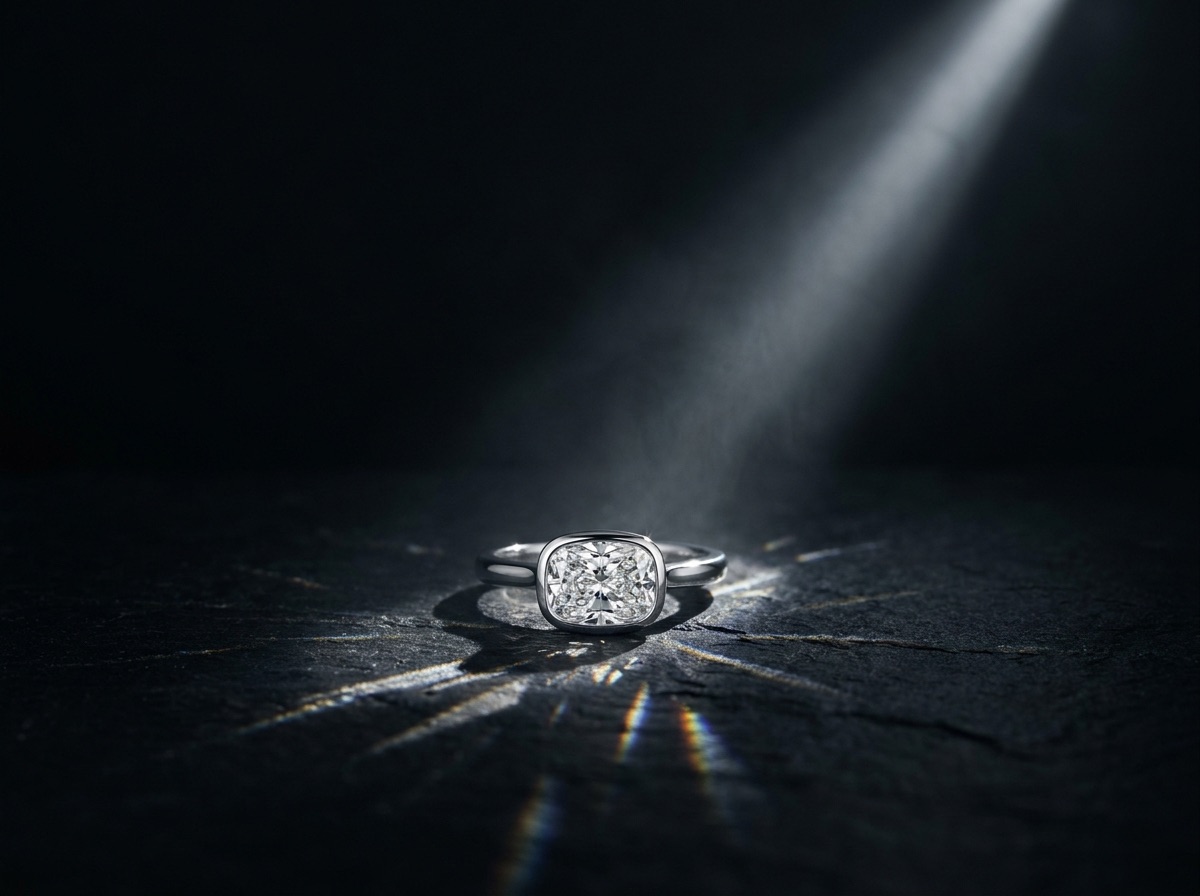
- Bezel settings. A full or half bezel around an elongated cushion frames the rounded corners cleanly and adds a protective, low-profile setting that appeals to customers with active lifestyles — search demand around “bezel elongated cushion” specifically confirms this is a real, recurring request rather than a niche one.
- Hidden-halo and pavé shank settings. A thin halo tucked under the crown, paired with a pavé or diamond-set shank, plays up the elongated outline’s size-per-carat advantage without adding visual bulk around it.
- Three-stone settings. Elongated cushion pairs well with tapered baguette or trapezoid side stones, which echo the rectangular line of the center stone rather than competing with it the way round side stones can.
- Matched pairs. For earrings and side-stone work, elongated cushion matched pairs — identical ratio, facet family, and grade — are a standing request from jewelers building drop earrings or halo-and-side-stone rings, and are worth stocking or sourcing proactively rather than only on request.
For custom build work, a completed engagement ring centered on an elongated cushion is generally finished in 4–6 days once the stone and setting are confirmed — loose stone selection happens against on-hand inventory, with the build clock starting once the order is placed.
How to Order Elongated Cushion Wholesale from Guru Diam
Ordering follows the same process as any other shape in the catalog, with a couple of specifics worth flagging for elongated cushion in particular:
- Open a verified wholesale account. Trade accounts get access to live inventory, including current elongated cushion stock by carat weight, L:W ratio, facet family, color, and clarity. Set up an account at
/signup. - Spec the ratio and facet family, not just “elongated.” As covered above, those are independent variables. Giving both up front — for example, “1.20–1.25 L:W, modified brilliant” rather than just “elongated cushion” — gets a buyer to the right stone faster and avoids a mismatch between what’s ordered and what’s expected.
- Book time with a gemologist for anything non-standard. Matched pairs at a precise ratio, custom cutting against rough on hand, or bowtie evaluation on a specific stone are all better handled with a direct conversation than a self-serve catalog filter. Book at
/book-appointment. - Confirm certification needs. IGI ships as standard on cushion inventory; GIA and GCAL are available on request. Flag the requirement before the order is finalized if a specific lab is needed for a particular market or customer.
- Loose stones ship from on-hand inventory — NYC orders placed before 6pm EST and LA orders before 4pm PST generally ship same day. Finished jewelry built around an elongated cushion center stone runs on the separate 4–6 day custom build timeline noted above.
Guru Diam works with more than 2,000 active wholesale accounts across certified diamonds, fancy color stones, melee, and custom jewelry — one vendor, one shipment, one relationship, rather than splitting a cushion order across multiple suppliers to cover ratio, facet, and certification preferences.
Frequently Asked Questions
What is an elongated cushion cut diamond?
A cushion cut with a rectangular outline — typically a 1.15–1.50+ length-to-width ratio — as opposed to the 1.00–1.05 ratio of a classic square cushion. It keeps cushion’s signature rounded corners while presenting a longer, narrower silhouette.
Why do buyers choose an elongated cushion instead of a classic square one?
Two reasons: it reads larger face-up for the same carat weight, since more of the stone’s mass sits toward the outline rather than in depth, and it visually elongates the finger the way an oval or emerald cut does — while keeping cushion’s softer, rounded-corner character.
What length-to-width ratio should I look for in an elongated cushion?
Most buyers land in the 1.15–1.30 range — enough elongation to be immediately visible next to a square cushion, while staying recognizably cushion-shaped. Ratios above 1.50 start reading closer to an elongated radiant or soft emerald cut than to classic cushion.
Does an elongated cushion have a bowtie effect?
It can. Elongated shapes generally carry more bowtie risk than square or round outlines, and risk increases somewhat with higher L:W ratios. Modified brilliant faceting tends to break up bowtie shadow more effectively than standard brilliant faceting on the same outline — worth checking stone by stone, since bowtie isn’t a line item on a certification report.
How does elongated cushion compare to radiant cut for wholesale buyers?
Both are rectangular, brilliant-faceted shapes in a similar L:W range, but cushion keeps rounded corners for a softer look while radiant has trimmed corners for a crisper, more geometric outline. Stocking both covers different ends of the same elongated-rectangular customer preference rather than duplicating one shape.
Is elongated cushion available lab-grown and certified?
Yes. Guru Diam’s cushion inventory — square and elongated — is CVD-grown and cut, set, and polished in-house, with IGI certification standard and GIA or GCAL available on request.