
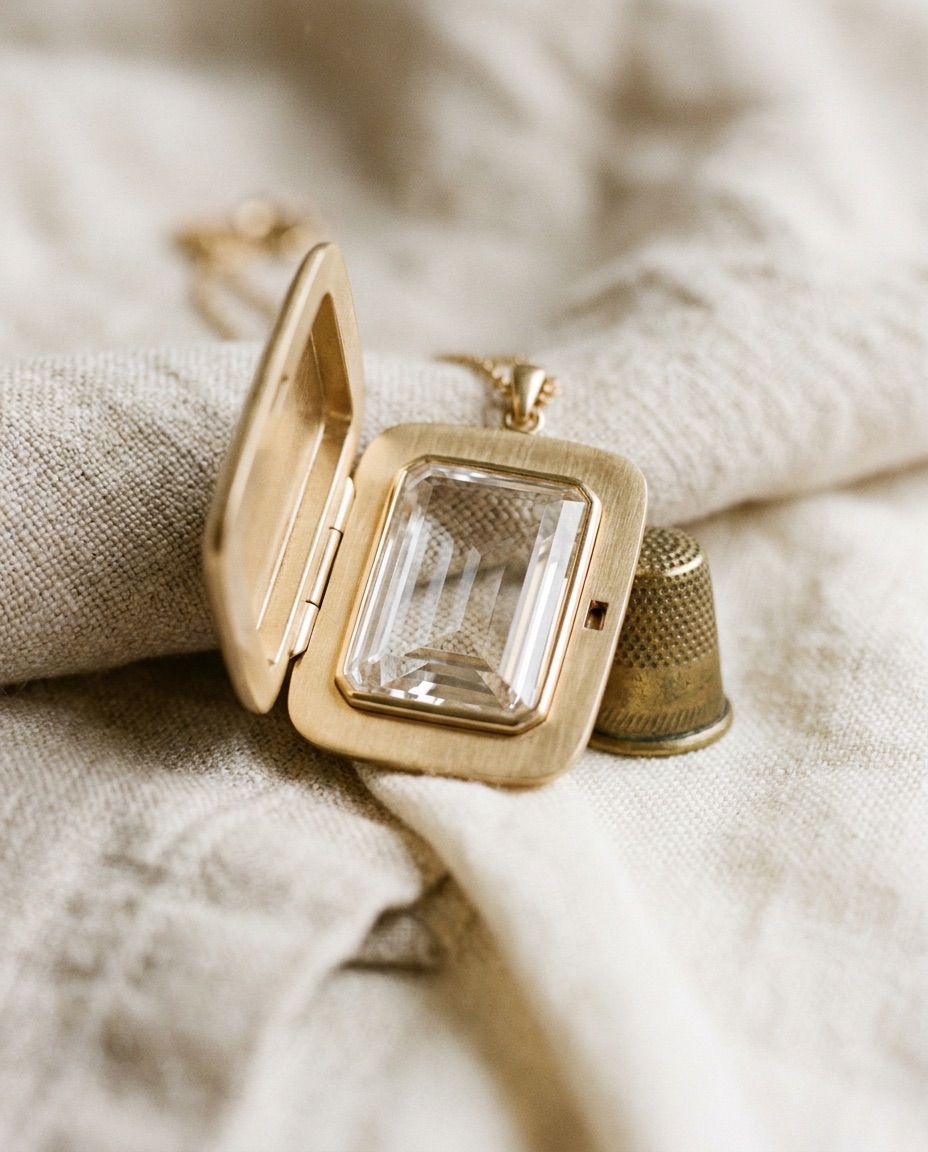
A portrait cut is a flat, extremely thin diamond slice with a broad table and almost no depth, historically set over a miniature portrait or a lock of woven hair so the image showed through the stone's transparency. It's an 18th-century faceting style, not a modern shape category — Guru Diam cuts portrait diamonds to order in-house, and none are held as standing stock.
Search "portrait cut diamond" and you mostly find museum catalog entries and estate-jewelry auction listings — almost nothing from a working wholesaler, because almost no one cuts this shape anymore. This page is written for the buyers who do need it: antique jewelry restorers rebuilding a Georgian mourning ring, custom houses recreating a hairwork locket, and jewelers who've been told "we don't do that" everywhere else they've called. It covers what a portrait cut actually is and where it came from, how the facet structure differs from every other cut in the catalog, how Guru Diam cuts one to order in-house, what quality and grading mean for a stone that isn't graded for brilliance, what drives price, how it compares to rose cut and antique cushion, and how to place a custom order.
What Is a Portrait Cut Diamond?
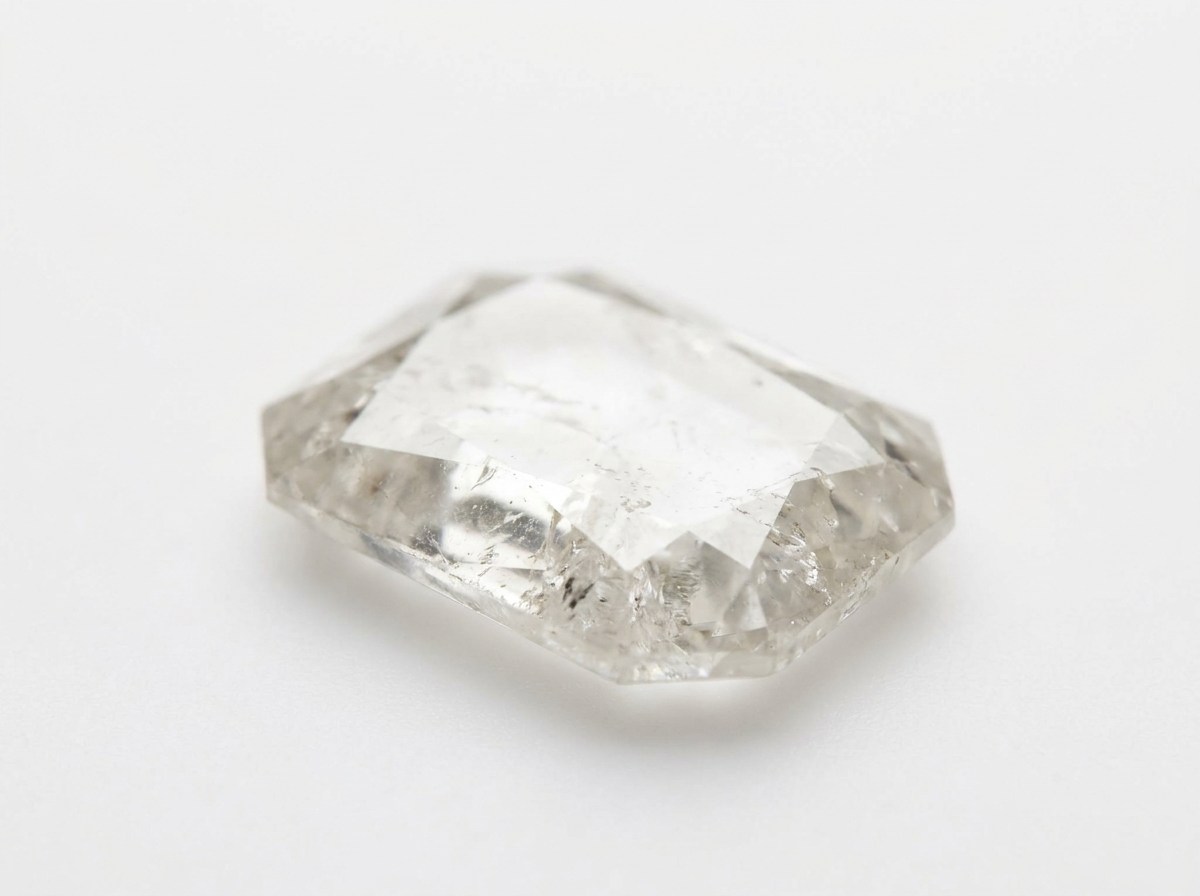
A portrait cut — sometimes called a portrait stone or portrait diamond — isn't defined by its outline the way most cuts are; it's defined by its depth, or the near-total lack of it. The stone is cut flat and thin, with a wide, minimally faceted table and shallow sides, sacrificing brilliance and fire almost entirely for optical clarity. That trade-off was the point. In Georgian and Victorian jewelry, a portrait cut diamond was set directly over a hand-painted miniature portrait or a woven lock of hair, and its transparency let the image underneath show through essentially undistorted. A standard brilliant-cut diamond would scatter that image into unreadable light and color; a portrait cut leaves it intact, because there's almost nothing between the viewer's eye and whatever sits underneath the stone.
The outline itself can be round, oval, or irregular, dictated by the setting it was made for — it was always secondary to the flatness. What made a stone a portrait cut was cutting technique, not silhouette, which is part of why buyers searching for one are usually looking for a function — transparency over an image or keepsake — more than a specific shape. That distinction matters when you're sourcing one: a jeweler who asks for "a portrait cut in oval" is really asking for a specific depth and table proportion cut to fit an oval opening, not an oval stone that happens to be called a portrait cut.
The Trade History of Portrait Cut Diamonds
Portrait cuts trace to the 18th century, when European jewelers began setting flat, table-heavy diamonds over hand-painted miniature portraits — a format popular for lockets, rings, and brooches exchanged between family members, lovers, and mourners. The diamond wasn't the subject of the piece; it was a protective, near-invisible window. A miniature portrait painted on ivory or vellum was fragile and needed a cover that wouldn't obscure it, and glass didn't carry the same status or durability as diamond. Cutting a diamond flat enough to serve that purpose was a specialized skill even then, because the entire point was to remove as much of the stone's natural light-scattering behavior as possible — the opposite instinct from every other style of diamond cutting being developed in the same period.
From Miniature Portraits to Hairwork Jewelry
By the late Georgian and into the Victorian era, the same cutting style migrated to hairwork jewelry — pieces that set a woven lock of a loved one's hair under glass or diamond as a sentimental or mourning keepsake. Queen Victoria's decades of mourning dress after Prince Albert's death popularized hairwork and memorial jewelry broadly across the British and European trade, and portrait-cut diamonds rode that wave as the premium cover material for the wealthiest commissions. A portrait cut over a woven hair pattern worked on the same principle as one over a painted miniature: flatten the stone until it stops behaving like a diamond and starts behaving like optical glass, so nothing about the cut distracts from what's underneath. The style faded through the 20th century as mourning and hairwork jewelry fell out of fashion and as modern faceting — engineered for brilliance and fire — became the entire commercial focus of the cutting trade. What's left today is a narrow, specific demand: restoring antique pieces that used the original technique, and building new sentimental pieces in that same historical register.
Facet Structure and Cutting Geometry: Why Portrait Cuts Are Built the Way They Are
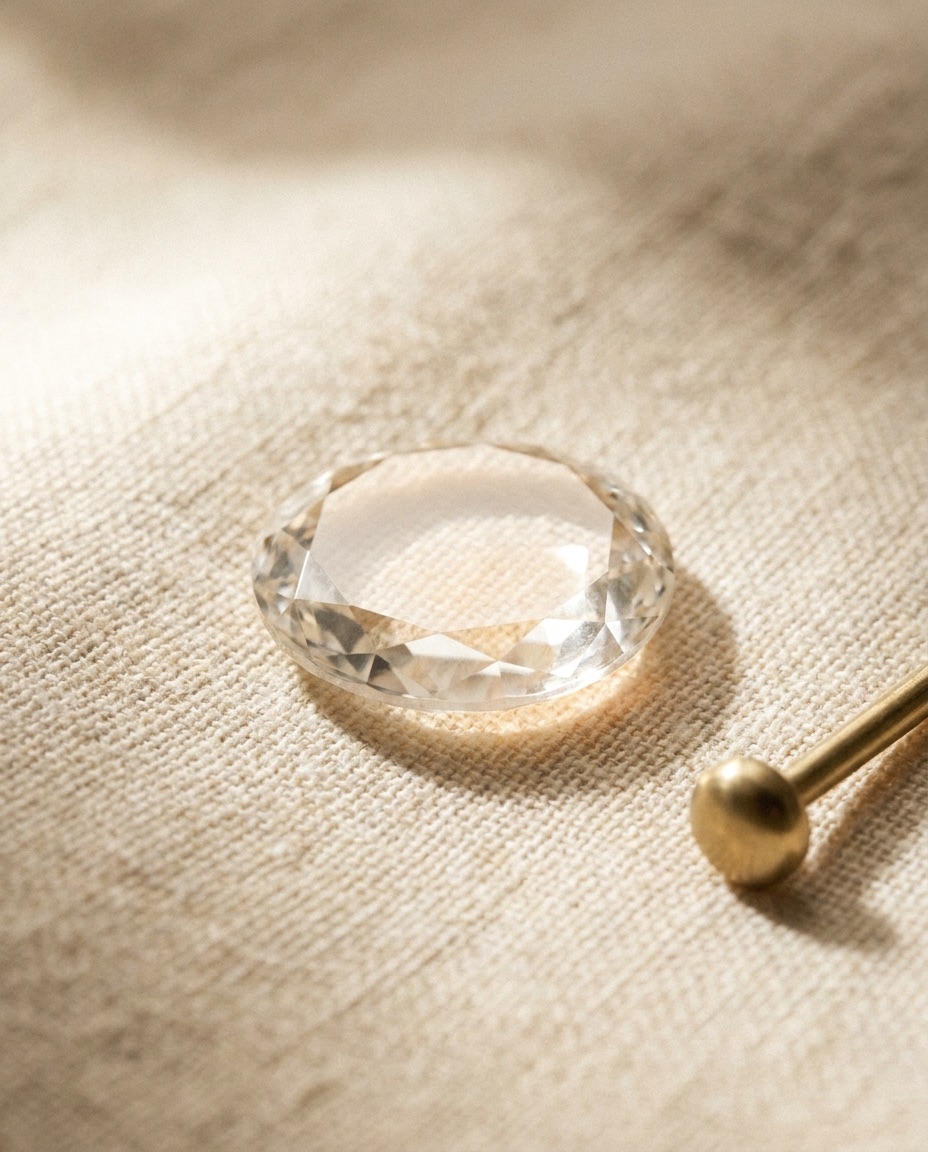
Every other cut in the trade is engineered to maximize light return — brilliance, fire, and scintillation are the entire design goal, achieved through precise crown and pavilion angles that bend and reflect light back through the table. A portrait cut inverts that engineering on purpose. The table is oversized relative to the stone's total diameter, often covering most of the face-up surface, and the crown and pavilion are cut as shallow as the stone's structural integrity allows — sometimes close to a single flat plane with a narrow girdle, rather than the stacked facet arrangement of a brilliant or step cut. Fewer facets, cut at shallower angles, mean less internal reflection and less light bending, which is exactly what lets an image sit underneath the stone without visible distortion.
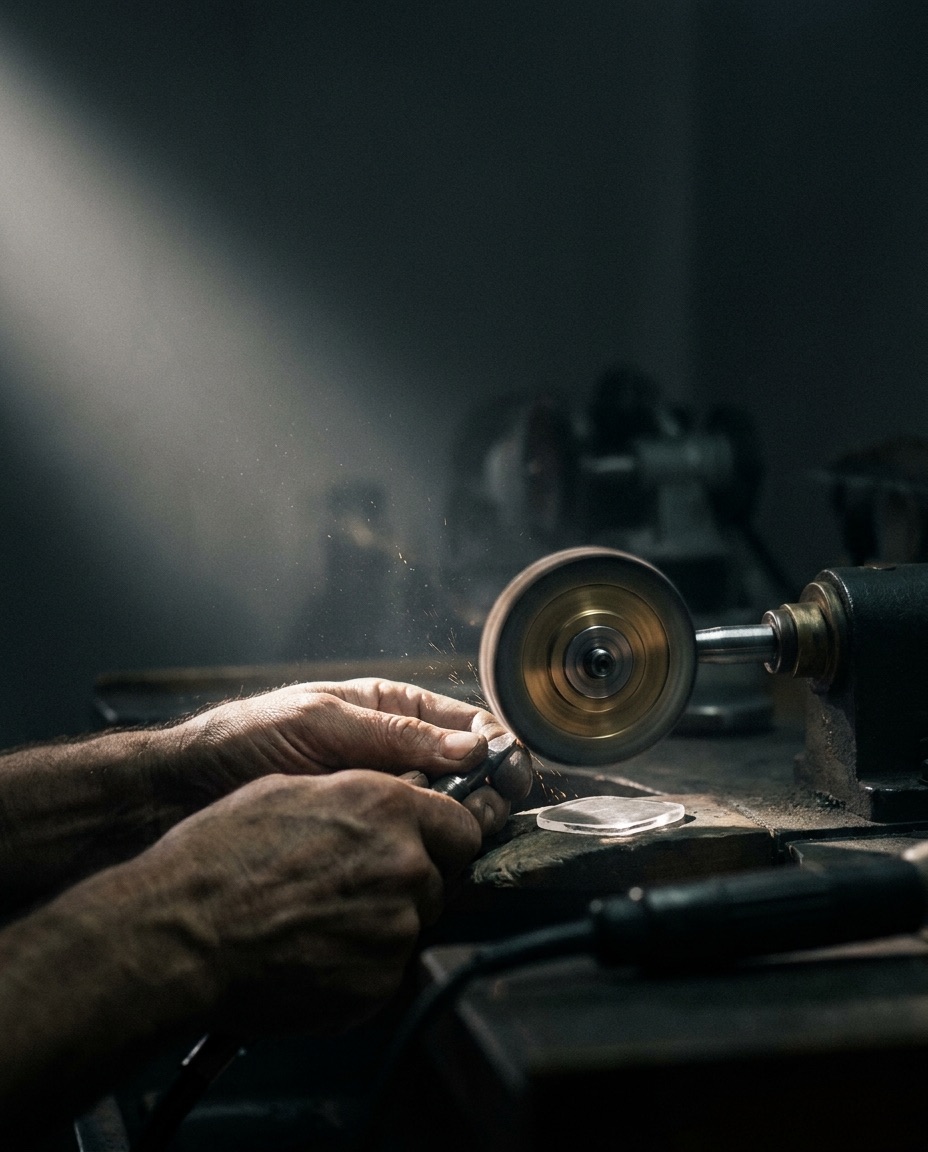
This is a genuinely different cutting discipline than faceting for brilliance, and it's part of why so few cutters still do it. A cutter trained to maximize fire is trained to think in terms of angle and proportion tables that optimize light return; a portrait cut asks the cutter to do close to the opposite, while still leaving enough material to survive polishing and setting. The tolerance for error is much tighter in one specific way — because there's so little depth to work with, there's very little room to correct a cutting mistake without losing the stone. A brilliant cut with an uneven facet can often be re-polished and saved; a portrait cut sliced too thin in one spot usually can't be.
Why Portrait Cut Diamonds Are Cut to Order, Not Stocked
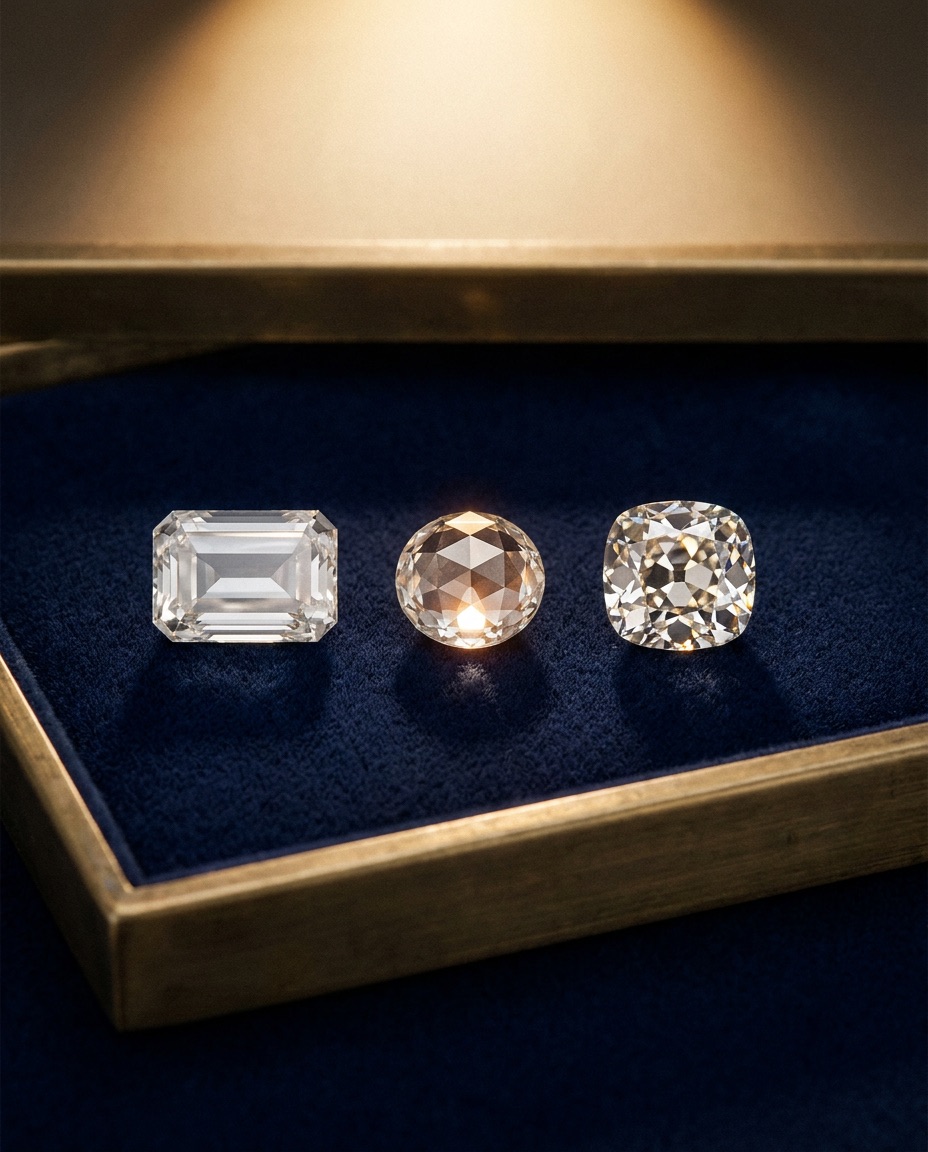
Nobody in the modern wholesale trade holds meaningful standing stock of portrait cut diamonds, Guru Diam included, and that's worth saying plainly rather than dressing it up. Two things drive that. Demand is genuinely narrow — almost entirely antique restoration and custom sentimental jewelry, not a shape anyone buys off a shelf the way they'd buy a round brilliant or a cushion. And cutting one is harder than the flatness suggests: a slice that thin is far more prone to cracking under the saw and polishing wheel, and there's very little material to work with if something goes wrong mid-cut. It's a shape that only makes sense to cut against a specific order, at a specific target thickness and diameter, for a specific piece — carrying speculative inventory in a cut this narrow and this fragile would mean absorbing breakage risk against demand that might never show up.
Lab-grown CVD production is what makes taking on that order practical at all. Because the rough is grown to be cut, not salvaged from an irregular natural crystal, a cutter can target the exact thin, wide-table geometry a portrait cut needs without fighting the rough's natural shape or grain — the same reason lab-grown production reopened other antique cuts, like true Old Mine and Old European proportions, that natural rough supply had effectively closed off for anything but the largest custom budgets.
How Guru Diam Cuts Portrait Diamonds In-House
A portrait cut order starts with the same conversation every custom cutting request starts with: what's the piece, and what does the diamond need to do inside it. For a restoration, that means the antique setting itself — its opening diameter, its depth allowance, and whatever's original that has to be preserved (a painted miniature, a hairwork pattern, an engraved backing visible through the stone). For a new sentimental piece, it means the same information built from scratch: target diameter, target thickness, and what's going underneath.
From there, cutting and matching both happen in-house against that spec. Rough is selected for size and clarity — clarity matters more here than in almost any other cut, since a portrait stone's entire job is transparency, and an inclusion that would be invisible in a brilliant-cut stone can sit directly in the sightline over whatever the diamond is protecting. The slicing and shaping work proceeds in small, deliberate passes rather than the faster material-removal approach used on thicker cuts, because the margin for error narrows as the stone gets closer to final thickness. Polishing follows the same logic — a portrait cut's surfaces need to be optically clean, since any haze or scratch pattern across that much exposed table is far more visible than the same imperfection would be on a small brilliant-cut facet. The finished stone is checked against the original spec — diameter, thickness, and clarity through the table — before it goes to the client or into the piece it was cut for.
Grading and Quality Considerations for a Portrait Cut
Standard cut-grading doesn't really apply to a portrait cut, and that surprises buyers who are used to ordering by cut grade on every other stone. Cut grade — the Excellent-to-Poor scale most labs use — measures how well a stone is proportioned to return light, and a portrait cut is deliberately proportioned to do the opposite. Grading it on that scale would be measuring the wrong thing entirely; it would penalize the exact geometry the order is asking for.
What actually matters on a portrait cut is different, and worth being specific about when placing an order. Clarity through the table is the primary quality variable — since the whole function of the stone is transparency, inclusions, clouds, or graining that would be a minor clarity note on a brilliant-cut stone become a visible defect sitting directly over the image or hairwork underneath. Evenness of thickness matters structurally, since a stone that's thinner in one area than another is both optically inconsistent and more fragile at its thin point. Color is a secondary consideration — a portrait cut is typically ordered in the same color range a buyer would want for any transparent cover application, near-colorless to colorless, so the diamond itself doesn't tint whatever's beneath it. Because standard cut grading doesn't apply, portrait cuts are sold by specification rather than by a graded report, though an IGI diamond type and color report can be arranged on request when a piece calls for documentation — useful for insurance purposes on a finished restoration, for example, even without a cut grade attached.
What Drives Portrait Cut Diamond Pricing
Size is the first and largest factor — both diameter and, less obviously, thickness. A wider portrait cut needs proportionally more flawless rough to survive the slicing process without cracking, and a thinner target thickness increases breakage risk during cutting, which factors into how a cutter prices the job. Clarity requirement is the second major factor, and it's a bigger swing here than on most cuts: because the whole stone has to read clean through the table, rough that would be perfectly acceptable for a brilliant cut may not clear the bar for a portrait cut, narrowing the usable rough pool and raising cost.
Cutting risk itself is priced in as a factor most buyers don't think about on other cuts — because a portrait cut can be lost partway through cutting in a way a more conventional cut rarely is, that risk gets reflected in the quote rather than absorbed silently. Outline complexity adds a smaller premium: a straightforward round or oval portrait cut is more direct to produce than an irregular outline built to match a specific antique setting's opening. Certification, where requested, is priced as a separate add-on rather than folded into the base cutting cost. None of this changes the underlying trade structure — pricing is wholesale throughout, quoted against the specific spec, with no retail markup layered on top. Because every portrait cut is a one-off cutting job rather than a stone pulled from stock, a written quote itemizing size, clarity target, outline, and certification is the fastest way to see where a given price is actually coming from.
Portrait Cut vs. Rose Cut vs. Antique Cushion vs. Standard Table Cut
Buyers new to antique and specialty cuts often lump portrait cut in with rose cut or assume it's just a flat cushion, and the differences matter enough to spell out before placing an order.
| Attribute | Portrait cut | Rose cut | Antique cushion | Standard table cut |
|---|---|---|---|---|
| Depth | Minimal — near-flat | Flat base, domed crown | Moderate-to-deep, faceted | Moderate, faceted depth |
| Table | Very wide, dominant | No table (faceted dome) | Standard proportions | Wide table, standard proportions |
| Primary goal | Transparency / see-through | Soft glow, low fire | Warm brilliance, large facets | Balanced brilliance |
| Historical use | Portrait miniatures, hairwork jewelry | Georgian/Victorian closed-back settings | Georgian/Victorian rings, general antique faceting | General-purpose antique faceting |
| Modern availability | Cut to order only | Occasionally stocked | Regularly stocked | Common |
Portrait Cut vs. Rose Cut
Both are flat-based, low-brilliance antique cuts, which is where the confusion usually starts. The difference is the crown. A rose cut has a domed, fully faceted crown — typically a ring of triangular facets rising to a point — and no table at all, producing a soft internal glow when set over foil or a closed back. A portrait cut has almost no crown to speak of: a wide, minimally faceted or unfaceted table sits close to flat against the stone's flat base, because the goal isn't glow, it's see-through clarity. A rose cut is built to catch and softly scatter light; a portrait cut is built to let light — and whatever's underneath it — pass through with as little interference as possible. Guru Diam cuts and stocks rose cut and Portuguese cut stones separately; see the rose cut and Portuguese cut wholesale guide for that comparison in full.
Portrait Cut vs. Antique Cushion
Antique cushion sits at the opposite end of the spectrum from a portrait cut, despite both falling under the broader "antique cut" umbrella. An antique cushion — think Old Mine Cut proportions — is cut with real depth, a high crown, and large, chunky facets designed to produce warm, candlelit brilliance under period lighting. It's a stone meant to be looked at, catching and throwing light in big, soft flashes. A portrait cut is meant to be looked through. Where antique cushion is regularly stocked and sold as a graded stone, portrait cut is cut to order and sold by specification because standard cut grading doesn't apply to it. A buyer restoring a piece that calls for an Old Mine or Old European cushion stone is shopping a completely different product than a buyer restoring a piece that needs a portrait cut — the full breakdown of antique cushion proportions and grading lives in the antique cushion vs. Old Mine Cut guide.
Styling and Use-Case Guidance
Antique restoration is the largest single use case: rebuilding or repairing a Georgian or Victorian hairwork ring, locket, or brooch where the original portrait-cut stone is damaged, missing, or was never replaced correctly in an earlier repair. Matching the replacement to the original opening — diameter, thickness, and often an irregular outline dictated by the antique bezel — is the core of that work, which is why a restoration order should always come with the setting itself or precise measurements from it, not an approximate size.
New sentimental commissions are the second use case, and they're built on the same historical logic rather than the original antique settings. A custom locket pendant or ring holding a woven lock of hair, a small photograph, or a fragment of fabric or handwriting can be built new in the portrait-cut tradition — search demand around "portrait cut diamond ring" and "portrait cut engagement ring" reflects real interest in this format for modern commissions, not just antique repair. Setting choice matters as much as the stone here: a portrait cut needs a closed-back or bezel setting that protects its thin, fragile edges and holds whatever's underneath securely in place, rather than an open-back prong setting built for a brilliant cut. For buyers building the full piece rather than sourcing the stone alone, Guru Diam sets and polishes finished jewelry in-house, and mounting work on a custom setting finishes in 4–6 days once the stone and mounting spec are confirmed — the loose portrait cut itself is a made-to-order cutting job, quoted and scheduled against the specific spec rather than shipped same-day from stock.
Sourcing a Portrait Cut Diamond: What to Expect
Because every portrait cut is made against a specific target — diameter, thickness, and the piece it's being set into — sourcing one starts with a conversation, not a catalog lookup. Bring the setting or restoration project, the target size, and how thin the finished stone needs to be to preserve the image or hairwork underneath; Guru Diam's cutting team will assess feasibility against available rough and quote from there. Expect the conversation to also cover clarity target and outline — round, oval, or an irregular shape matched to an antique bezel — since both affect what rough is usable and how the job is priced. Standard cut-grading doesn't apply, so these are typically sold by spec rather than as a graded stone, though an IGI diamond type and color report can be arranged on request if the piece calls for one.
How to Order a Custom Portrait Cut Diamond from Guru Diam
Start with the piece, not the stone. For a restoration, gather the antique setting's measurements — opening diameter, depth, and outline — along with anything original that needs to stay visible underneath. For a new commission, decide on target diameter and thickness and what's going under the stone. Send that spec to Guru Diam's cutting team, who will confirm feasibility against available rough, flag any clarity or thickness trade-offs, and return a wholesale quote covering the cutting job and, where requested, certification.
Guru Diam is trade-only, wholesale-only, with no retail markup — diamonds are cut in-house and sold from our New York and Los Angeles offices, with no minimum order tier separating a one-off portrait cut request from a standard reorder. Open a verified wholesale account at /signup, or book time directly with a gemologist at /book-appointment to walk through a restoration project or a new portrait-cut commission.
FAQ
What is a portrait cut diamond?
A portrait cut is a flat, extremely thin diamond with a wide table and minimal depth or faceting, historically set over a miniature painted portrait or a lock of woven hair so the image beneath showed through the stone's transparency. It's an 18th-century cutting style, most closely associated with Georgian and Victorian sentimental and mourning jewelry.
Does Guru Diam keep portrait cut diamonds in stock?
No — portrait cut diamonds are cut to order in-house against a specific project spec (target diameter and thickness), not held as standing inventory. Contact us for current availability and to start a made-to-order request.
Can a portrait cut diamond be certified?
Standard cut grading doesn't apply to a portrait cut, since it isn't faceted for brilliance the way a graded stone is. An IGI diamond type and color report can be arranged on request; these stones are otherwise sold by specification rather than as a graded cut.
How is a portrait cut different from a rose cut?
A rose cut has a domed, fully faceted crown with no table, built to catch and softly scatter light. A portrait cut has almost no crown — a wide, minimally faceted table sits close to flat — built for transparency rather than glow. They're both antique flat-based cuts but solve opposite problems.
What is a portrait cut diamond used for today?
Primarily antique jewelry restoration and custom sentimental pieces — recreating or repairing hairwork rings and lockets, or building a new piece in the same historical style, where a diamond needs to sit over an image or keepsake and stay transparent. Modern commissions for portrait-cut engagement rings and pendants use the same technique in a new setting.
How do I order a custom portrait cut diamond?
Bring your target diameter, thickness, clarity requirement, and the piece or setting it's going into. Guru Diam's cutting team will assess it against available rough and quote the cutting directly — contact us through /book-appointment.