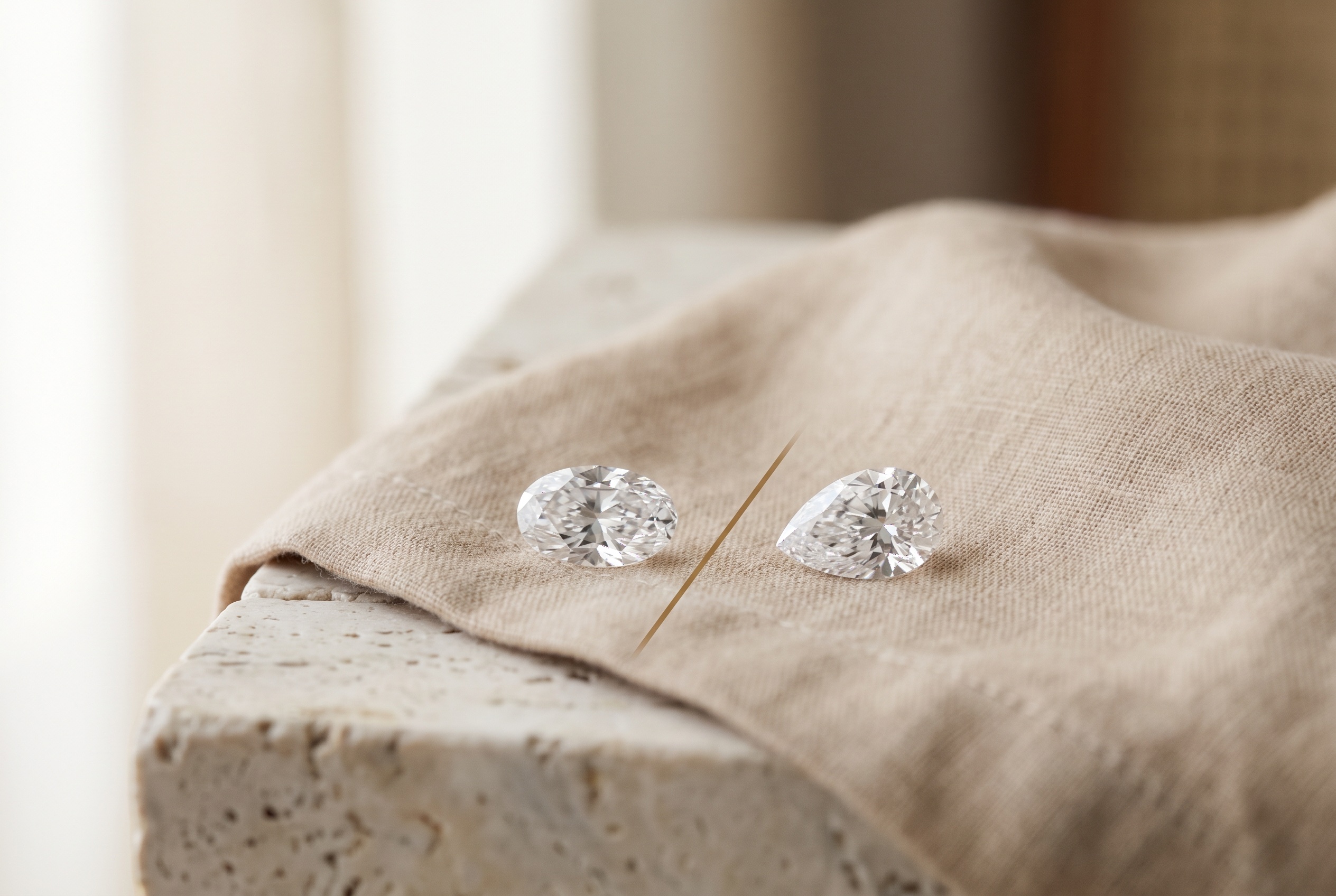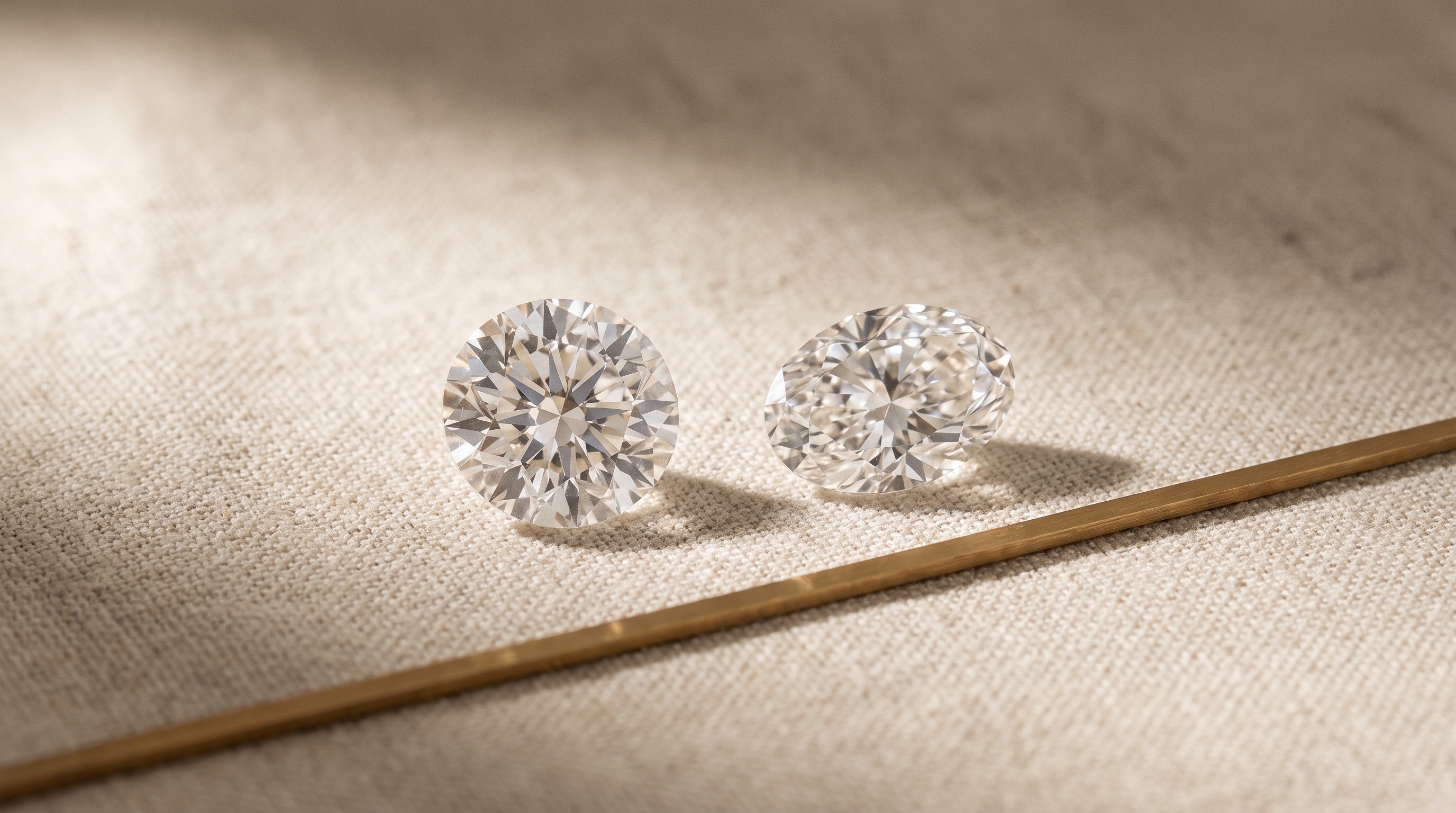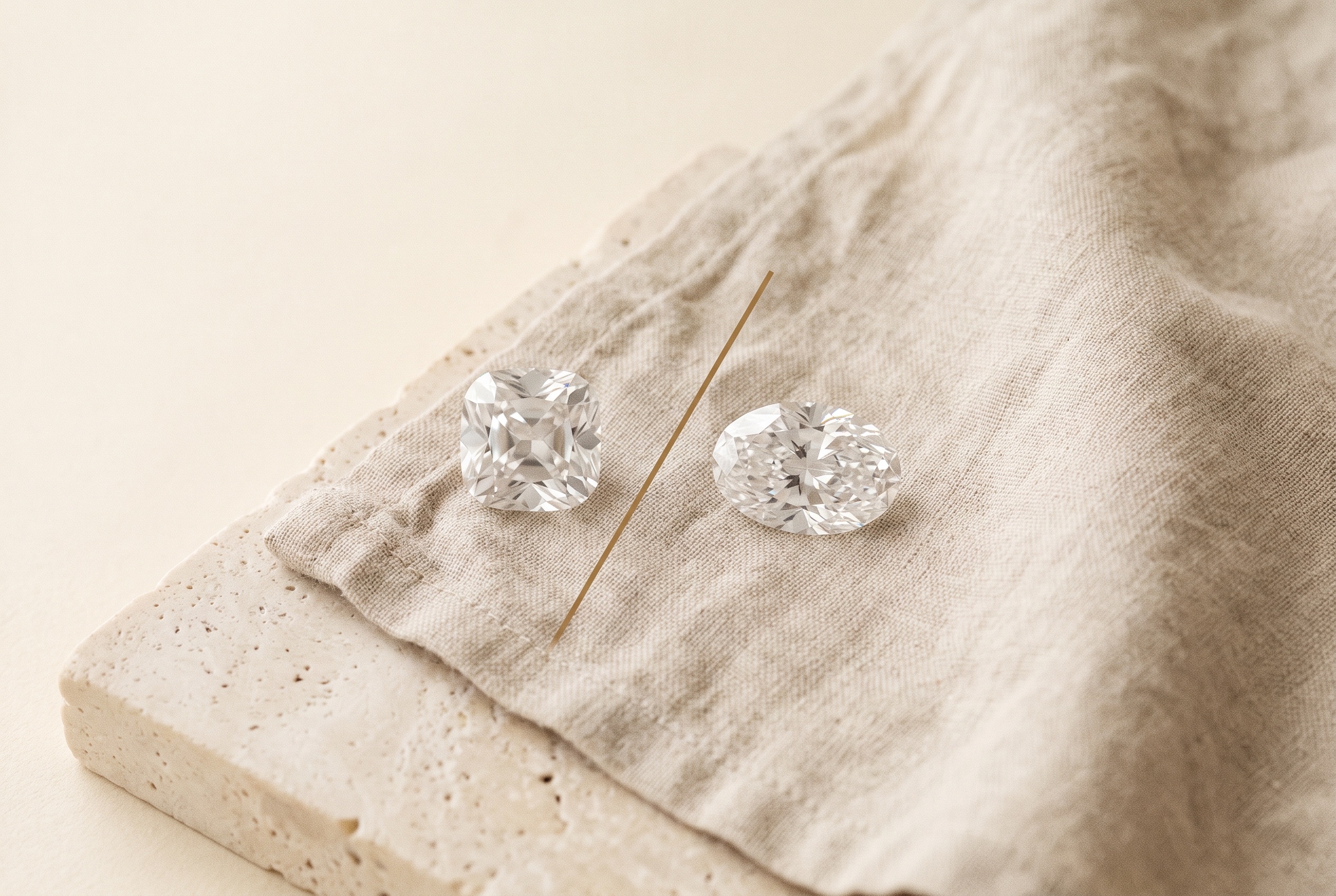

The rose cut lab grown diamond wholesale market is one of the few antique-cut categories where the SERP is near-empty and the margin is wide. A rose cut is a flat-bottomed, dome-topped diamond cut entirely in triangular facets with no pavilion or table, prized for soft candlelight glow over modern brilliance. Stocking rose and Portuguese cuts lets independent jewelers sell distinctive, hard-to-find stones the chains cannot match.
Rose Cut Lab Grown Diamond Wholesale: Selling Rose & Portuguese Cuts to the Vintage-Bridal Buyer

If you sell to vintage-bridal clients, you already know the problem: the customer walks in with a Pinterest board full of "old, glowy, not-too-sparkly" rings and you have a case full of modern round brilliants that scream 2015. Rose cuts and Portuguese cuts close that gap. They are two of the most under-stocked, under-marketed antique cuts in the trade, which is exactly why they convert — and why they carry the kind of margin a commodity round brilliant never will.
This guide is written for the desk that buys: what these cuts actually are, how they behave under different light, how to grade and source them at wholesale, and how to position them so a vintage-bridal client pays for distinction instead of haggling on carat weight.
What is a rose cut diamond, and why does it sell to vintage-bridal buyers?
A rose cut is one of the oldest faceting styles still in commercial use, dating to roughly the 16th century. It has a flat, unfaceted bottom and a domed crown covered in triangular facets that rise to a point — like an opening rosebud, hence the name. There is no pavilion, no culet, and usually no table. Facet counts vary by style, commonly running from a simple 3-facet to a full 24-facet "Dutch rose."
Because the stone is shallow and flat-backed, it reads completely differently from a brilliant cut:
- Lower, softer return. A rose cut does not throw fire and scintillation the way a round brilliant does. It glows. Under warm light it has a watery, almost luminous quality that vintage-bridal buyers describe as "antique" or "candlelit."
- Larger face-up spread per carat. With no deep pavilion hiding weight below the girdle, a rose cut spreads wide. A 1.00 ct rose cut faces up noticeably larger than a 1.00 ct round brilliant — a genuine selling point you can demonstrate side by side at the counter.
- A flat profile that sits low. This is a styling advantage for bezels, low-profile solitaires, and stacking, and a talking point for the client who finds a tall modern setting impractical.
For the trade, the commercial logic is simple: rose cuts are a recognizable, on-trend antique look, they are hard for the customer to comparison-shop online, and they let you sell on story and styling rather than on a price-per-carat race to the bottom.
What is a Portuguese cut diamond, and how is it different from a rose cut?
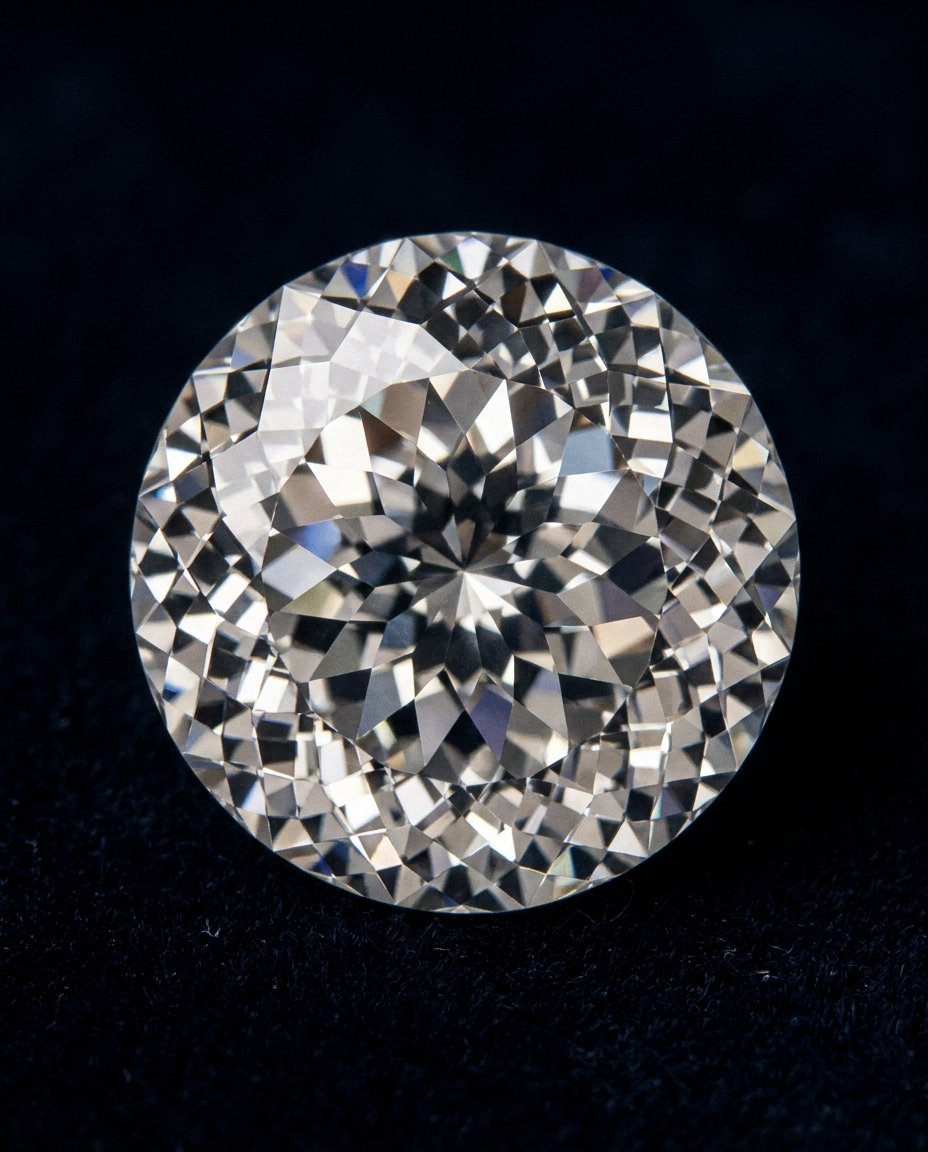
The portuguese cut lab grown diamond is the high-drama cousin of the rose cut. Where the rose cut is restrained, the Portuguese cut (sometimes called the candlelight cut in antique-style stones) is a faceting-intensive, multi-tiered cut with many rows of triangular and kite-shaped facets stacked above and below the girdle. The result is a dense, kaleidoscopic flash — the kind of "broken-glass" sparkle prized in Art Deco and Georgian-revival jewelry.
Two quick distinctions to keep your sales team straight:
| Attribute | Rose cut | Portuguese cut |
|---|---|---|
| Era / vibe | Georgian, organic, soft | Art Deco / revival, geometric, dramatic |
| Profile | Flat-bottomed dome, low | Faceted pavilion, higher relief |
| Facet density | Low (3–24 facets) | Very high, multi-tiered |
| Light behavior | Soft glow, watery | Dense, fragmented flash |
| Best client | "Antique, understated" | "Distinctive, statement, Deco" |
When you describe a Portuguese cut, lean on the art deco reproduction diamonds angle. The buyer chasing a 1920s-look ring rarely wants a clean modern round; they want geometry and old-world fire. The Portuguese cut delivers that without the sourcing nightmare of a genuine antique stone of unknown origin.
For the side-stone and fancy-shape side of an Art Deco commission, pair these centers with calibrated accents — see our guide on matched pairs in fancy shapes for side stones to build trapezoid, half-moon, and shield shoulders around a rose or Portuguese center.
Why do these facets read so differently in candlelight vs electric light?
This is the single most important thing to teach your sales floor, because it is the entire emotional pitch.
Modern round brilliants are optimized for the bright, point-source, blue-white light of a jewelry showroom and, increasingly, for camera flash. Their pavilion geometry maximizes scintillation — rapid, high-contrast flashes — under that hard light. Take a round brilliant to a candlelit dinner table and a lot of that fireworks display goes flat, because there is no longer a sharp point source bouncing through the pavilion.
Antique cuts were designed for the opposite world. The rose cut and Portuguese cut were faceted for diffuse, warm, low-intensity light — candle flame, oil lamp, early gaslight. Their broader, shallower facets gather soft ambient light and return it as a gentle, rolling glow rather than sharp pinpoint flashes:
- In electric showroom light, a rose cut can look quiet next to a round brilliant. Do not stage them head to head under a spotlight — that is a losing comparison you are setting up yourself.
- In warm, low light — restaurant, evening, sunset — the rose cut and Portuguese cut come alive with a romantic glow the modern brilliant cannot reproduce. This is the "it looks like a real heirloom" moment.
The practical merchandising move: show these stones under warm 2700K light, not 4000–5000K showroom white. A candle or a warm LED on the desk during the appointment does more selling than any spec sheet. Tell the vintage-bridal client plainly — "this cut was designed for candlelight, not a showroom spotlight" — and you have just turned the cut's "weakness" into the reason they want it.

How do you grade and spec rose & Portuguese cuts at wholesale?
Grading antique cuts is not the same exercise as grading a modern round, and pretending otherwise leads to disappointed clients and returns.
Cut grade does not apply the way it does for rounds. IGI and GIA do not assign a standard "Excellent/Very Good" cut grade to rose cuts and Portuguese cuts the way they do for round brilliants, because those grading systems are built around modern brilliant proportions. Expect the report to describe shape and cutting style, with color and clarity graded normally. Judge the cut with your own eye and loupe: symmetry of the dome, evenness of facet rows, and a clean, level girdle outline.
Color shows differently. Because there is no deep pavilion to mask body color, color can read more openly face-up in a rose cut — sometimes a higher color grade carries its weight better here than in a brilliant. Conversely, the open back means inclusions under the table area have nowhere to hide, so eye-clean matters.
Spec to capture on every stone you buy:
- Millimeter dimensions face-up (length × width) and total depth — antique cuts are bought on spread, so mm drives the sale more than carat weight.
- Color and clarity from a single lab (IGI or GIA) — and compare reports only from the same lab, since a stone can grade up to about one color grade differently between labs.
- Whether the certificate is paired or individual if you are buying for earrings or symmetrical settings.
For lab-grown specifically, IGI grades the large majority of lab-grown diamonds — roughly 95%+ — and is the practical trade default, so most rose and Portuguese cut lab-grown you source will carry IGI documentation. Note that as of late 2025 GIA moved its lab-grown reports toward a two-tier descriptive system rather than the full letter-grade 4Cs, another reason to standardize on one lab per matched purchase. For the full reasoning on why lab-grown reopened this entire category for independents, see why lab-grown reopened the antique-cut category. For grading authority and the 4Cs framework, refer to IGI and GIA's 4Cs.
Why source rose & Portuguese cuts as lab-grown?
For antique cuts, lab-grown is not a compromise — it is the better trade play, and here is the operator logic.
A lab-grown diamond is produced by CVD (chemical vapor deposition) or HPHT (high pressure / high temperature) and has the same physical, chemical, and optical properties as a mined diamond. The faceting determines the look entirely; a rose cut glows like a rose cut regardless of growth origin.
The advantages for this specific category:
- Supply you can actually find. Natural rose and Portuguese cuts in the sizes and qualities a vintage-bridal client wants are genuinely scarce, often estate stones of unknown grading. Lab-grown gives you a deep, certified, repeatable supply you can re-order — critical when a client wants a matched pair or a re-make.
- Margin headroom. Trade commentary has described a "K-shaped" split in the 2026 lab-grown market — luxury fancy and antique shapes holding value while commodity round lab-grown faces price pressure. Either way, the operator takeaway holds: specialty cuts are where the lab-grown margin still lives, because they are not sold on a price-per-carat basis.
- A clean story. "A diamond, identically structured, faceted in a centuries-old style, fully certified, traceable origin." That narrative lands with the exact client who is drawn to vintage character but uneasy about provenance.
On how the trade should disclose lab-grown clearly and accurately, the FTC Jewelry Guides are the reference point, and the trade press at National Jeweler tracks the category shifts worth watching.
How do you position these cuts to upsell the vintage-bridal client?
The goal is to move the conversation off carat-and-price and onto cut-and-character — where these stones win.
Lead with the look, not the spec. Open the appointment by asking what draws them to vintage rings. Nearly always the answer is "it looks soft" or "it doesn't look like everyone else's." That is the rose cut / Portuguese cut pitch, handed to you.
Demonstrate the candlelight difference live. Have warm light ready. Let them see the glow shift as you move the stone from showroom white to warm light. This is the single highest-converting demo for these cuts.
Sell the spread. Put a rose cut next to a same-carat round brilliant and show how much larger it faces up. Vintage-bridal buyers love that they are "getting more ring" for the carat.
Anchor the rarity. "This is not a stone you'll find at a mall jeweler." Scarcity is real here, and it justifies the premium that protects your margin. This ties directly into the broader antique-cut engagement ring trend for 2026, a category being driven hard by celebrity vintage-style rings.
Build the full ring. Rose and Portuguese centers pair beautifully with antique-style halos and side stones. Cross-sell calibrated melee and fancy-shape sides, and if the client wants something fully bespoke, your custom bench can take a CAD to a finished ring fast — more on that below.
Frequently Asked Questions
What is the difference between a rose cut and a Portuguese cut diamond?
A rose cut has a flat bottom and a low domed crown with a small number of triangular facets (roughly 3 to 24), giving a soft, candlelit glow. A Portuguese cut has a faceted pavilion and many stacked rows of facets, producing dense, dramatic, Art Deco-style flash. Rose cuts suit understated antique looks; Portuguese cuts suit statement, Deco-revival pieces.
Do rose cut and Portuguese cut diamonds come with IGI or GIA certificates?
Yes. Most lab-grown rose and Portuguese cuts carry IGI reports, since IGI grades roughly 95%+ of lab-grown diamonds and is the trade default. Standard cut grades (Excellent/Very Good) generally do not apply to these antique cuts the way they do for round brilliants; reports describe shape and cutting style with normal color and clarity grading. Always compare reports from the same lab, since a stone can grade up to about one color grade differently between labs.
Why do antique cuts look less sparkly in my showroom?
They were faceted for diffuse, warm, low-intensity light — candle and lamplight — not for bright point-source showroom spotlights. Under hard white showroom light a rose cut can look quiet next to a round brilliant, but under warm 2700K light it produces the soft glow vintage-bridal buyers want. Stage these stones under warm light, not cool showroom white.
Are lab-grown rose cuts the same as mined rose cuts?
Optically and structurally, yes. Lab-grown diamonds (CVD or HPHT) have the same physical, chemical, and optical properties as mined diamonds, and the rose cut faceting behaves identically regardless of origin. The practical difference for the trade is supply: lab-grown offers a deep, certified, re-orderable inventory in sizes and qualities that natural antique cuts rarely match.
What sizes and specs should I order rose cuts in?
Buy on millimeter spread, not just carat weight, because antique cuts face up larger and are sold on their wide, flat appearance. Capture face-up length × width and total depth, color and clarity from a single lab, and note whether certificates are paired or individual for earrings and symmetrical settings. Eye-clean matters more here because the open back hides fewer inclusions.
Can I get matched pairs of rose cuts for earrings?
Yes, and lab-grown makes it far more achievable than natural. Industry matched tolerance runs roughly +/-0.1 to 0.2 mm in diameter, within about one color grade, with comparable clarity and matching cut and symmetry — and cut/symmetry matching matters most to the eye. Insist on paired or individual certificates. See our wholesale matched-pairs tolerance guide for the full spec.
Open a wholesale account and source the cuts the chains can't
Guru Diam is a trade-only wholesale supplier with 11,000+ IGI and GIA certified stones live and real-time online inventory, including antique and rare cuts, matched pairs, fancy color, calibrated melee, and exotic fancy shapes — all backed by in-house custom that takes a CAD to a finished ring in 4 to 6 days (versus the industry-typical 9 to 19). Everything is held in US inventory at our New York and Los Angeles desks. All Under One Roof.
Browse the full antique & rare-cut diamond inventory, then open a verified wholesale account at /signup and book an appointment at /book-appointment to see rose and Portuguese cuts under warm light at our New York or Los Angeles desk. Questions first? Reach our team at /contact-us.
For related sourcing playbooks, see how to source matched pairs of diamonds and a jeweler's guide to exotic diamond shapes.