Natural Melee Diamond Tolerances and Calibration Explained
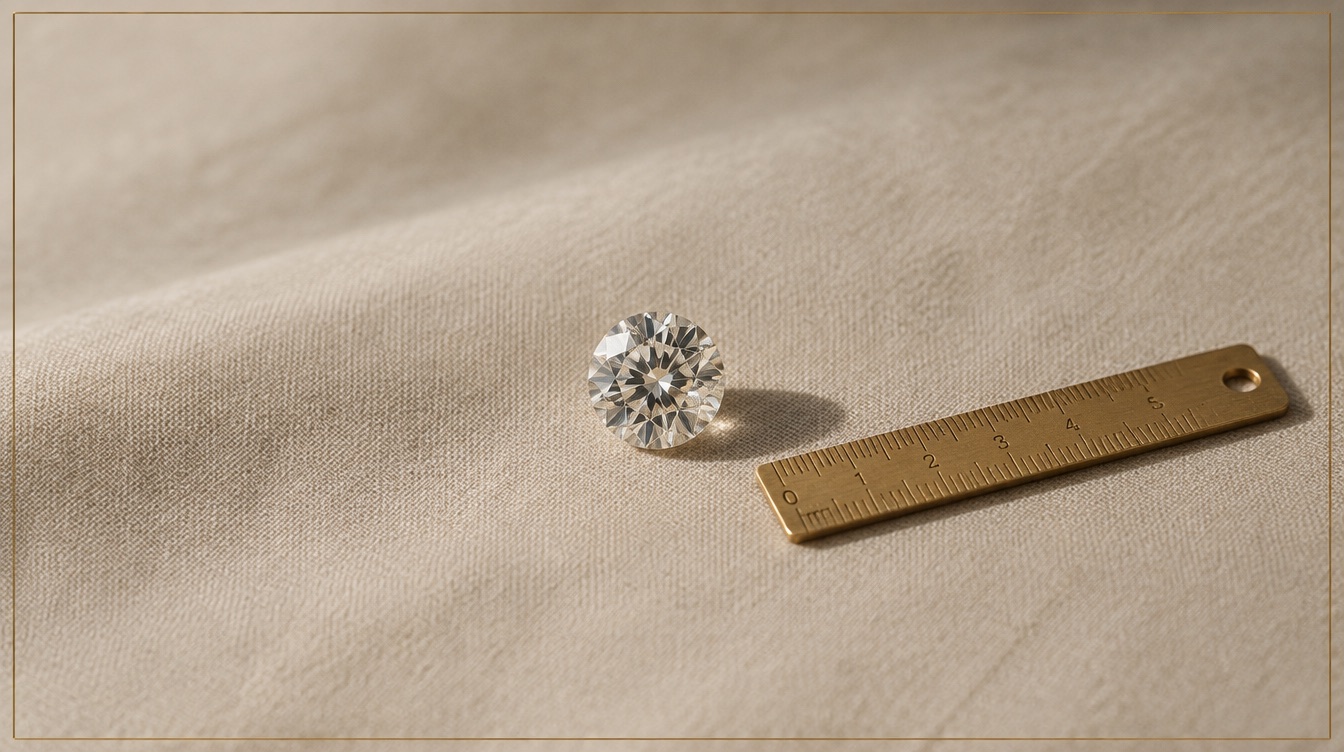
Natural melee diamond calibration tolerance is the margin a parcel is allowed to vary within its stated size and grade: ±0.10mm on stone diameter, ±0.10ct on weight, and no more than a one-grade spread in color and clarity. It's the standard that lets a jeweler order "2.0mm GH VS" and trust every stone in that parcel actually sits inside that band — tight enough to drop into a pre-cut channel seat or sit flush in a pavé line without hand-sorting on the bench.
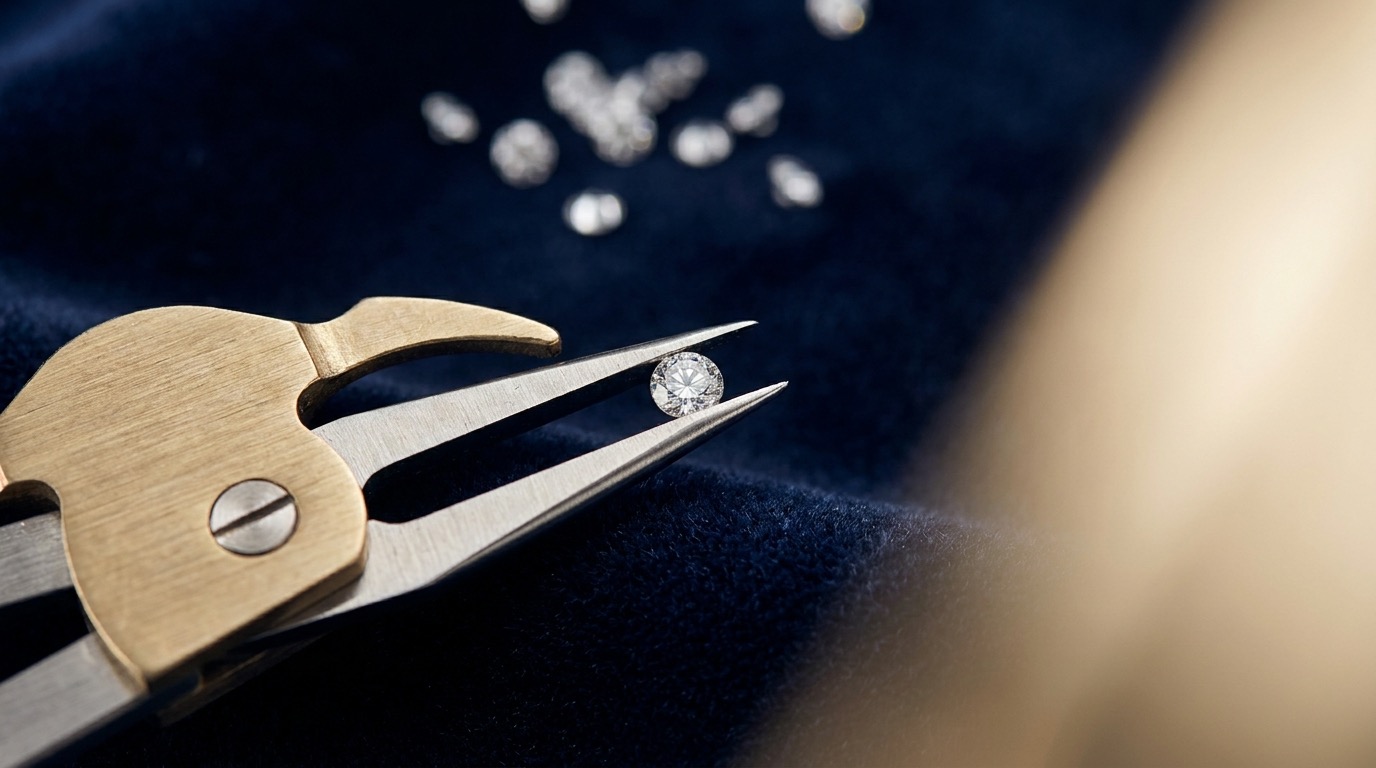
What Is Calibration Tolerance in Natural Melee Diamonds?
"Calibration" in the melee trade means a parcel of stones has been sorted and verified to fall within a stated numeric range, not just eyeballed into a rough size bucket. Tolerance is the width of that range — how far any single stone in the parcel is allowed to drift from the parcel's stated spec before it no longer counts as matching.
For natural melee, Guru Diam holds every parcel to the standard trade tolerance used across calibrated goods generally: ±0.10mm on dimension, ±0.10ct on weight, and a one-grade match on both color and clarity within the parcel. Order 2.0mm GH VS, and every stone in that parcel measures within roughly a tenth of a millimeter of 2.0mm, weighs within ±0.10ct of the parcel's stated per-stone weight, and grades within one color and one clarity step of the parcel's GH VS call — not scattered anywhere from F to I or VS to SI2.
That's three separate numbers doing three separate jobs. The millimeter tolerance is about physical fit — whether a stone drops into a pre-cut seat. The carat tolerance is about total weight math, so the carats you're quoted and billed for are the carats that actually show up. The color/clarity tolerance is about visual consistency, so a parcel graded GH VS doesn't quietly include stones that would grade out two full steps darker or more included if pulled and checked individually.
This isn't a lab-grown-specific convention borrowed for natural melee — it's a general trade standard applied to calibrated goods regardless of origin. The same three numbers show up wherever melee is sold as calibrated parcel goods, natural or lab-grown.
It's also worth separating tolerance from the size sort itself. A sieve sort tells you which broad band a stone falls into to begin with — the parcel is being built as, say, "2.0mm." Tolerance is the check that runs after that sort, confirming the stones actually assembled into that parcel sit close enough together to be treated as one uniform size, rather than a loose scatter that technically all fit through the same sieve opening but vary more than a setter can work with.
Why Does Calibration Tolerance Matter When Setting Diamonds?
Tolerance sounds like a paperwork detail until you're the one setting the stones. A channel or pavé seat is cut to a specific millimeter width before the stone ever arrives — the setter isn't sizing the seat to the stone, the mounting was already made to spec. A stone that comes in oversize by more than the stated tolerance won't seat flush; it sits proud, catches on fabric and skin, and is usually the first stone to chip or pop loose. A stone that comes in undersize leaves a visible gap or a seat with nothing to grip, and it falls out.
Multiply that across a full eternity band or a tennis bracelet — dozens or hundreds of stones set edge to edge in a single visible line — and the tolerance on any one stone stops being a rounding error and becomes the thing that decides whether the finished piece reads as one continuous, even sparkle or a row with visible high spots and gaps. A halo works the same way on a smaller scale: a ring of melee framing a center stone needs every stone in that ring close enough in size and color that the eye reads it as uniform, not as a scatter of slightly different stones.
Color and clarity tolerance matters for the same reason, just visually instead of physically. A pavé line with one stone two color grades darker than its neighbors doesn't fail structurally — it just looks wrong, and it looks wrong in a way that's obvious to a customer even if they can't say why.
What's the Difference Between Calibrated and Non-Calibrated Melee?
"Calibrated" and "non-calibrated" describe two different sorting standards for the same category of stone, and the difference is whether a numeric tolerance was actually checked and held.
Calibrated melee is sorted and measured against a stated millimeter size and grade, with a defined tolerance the parcel has to sit inside — that's what ±0.10mm, ±0.10ct, one-grade match describes, and it's the standard Guru Diam sells natural melee to. Non-calibrated melee is sorted more loosely — by eye, into broad size buckets, without a stated tolerance the supplier is holding the goods to.
Non-calibrated goods aren't automatically bad material, but there's no guarantee that the stone you get at the small end of a size bucket is close enough to the stone at the large end to set consistently. For scattered, independent accent work where each stone sits in its own setting with some room to adjust, that variance might not matter much. For pavé, channel, eternity, or tennis work — anywhere stones sit edge to edge against a pre-cut spec — non-calibrated goods create exactly the seating and consistency problems described above.
Guru Diam sells natural melee as calibrated goods only, at the standard tolerance described in this guide. If a size range or tolerance isn't stated anywhere on a melee listing, that's worth asking about directly before you order — an unstated tolerance usually means one wasn't held.
How Is Calibration Tolerance Measured and Verified?
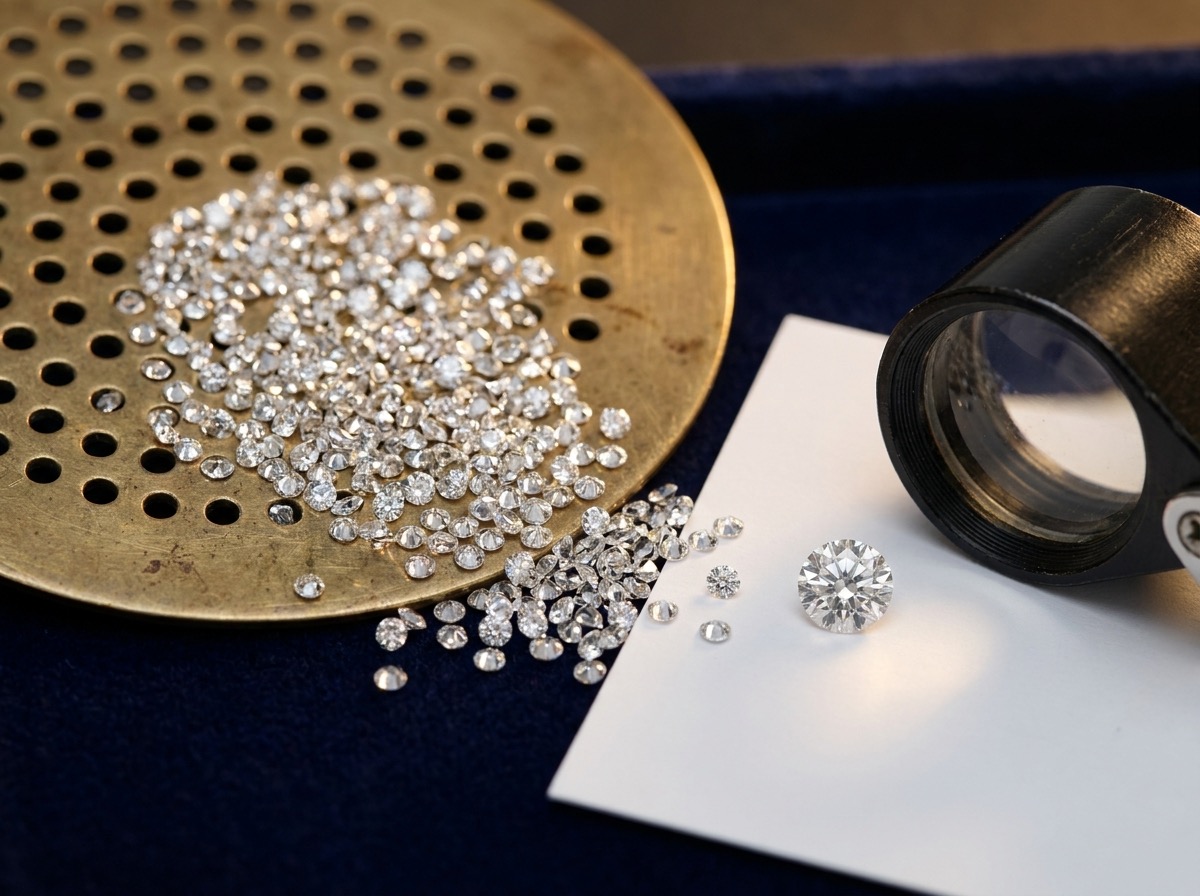
Natural melee tolerance gets verified at two separate points: size, and color/clarity.
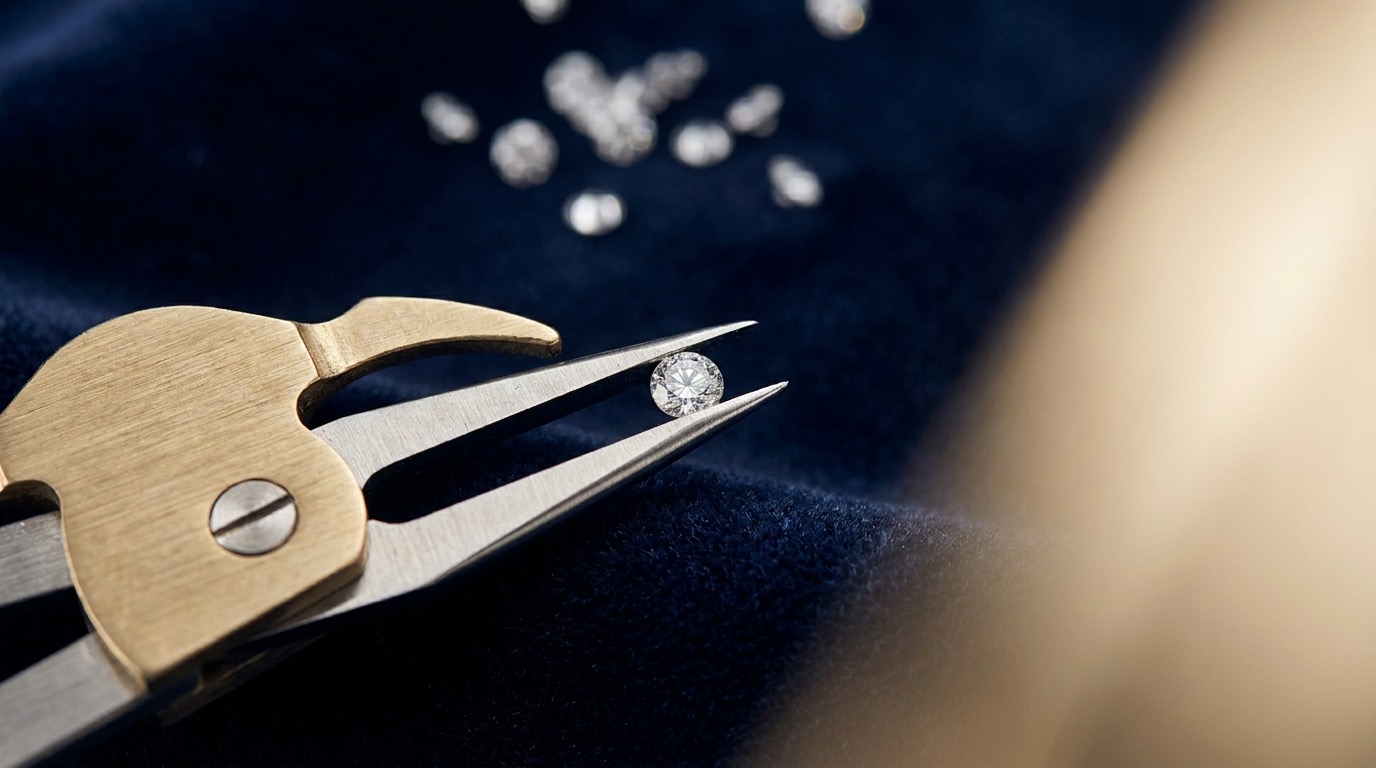
Size verification runs through graduated sieve plates and gauges — physical tools with a series of precisely cut openings that separate stones by millimeter diameter far more accurately than sorting by eye. A stone either passes through a given opening or it doesn't, which is a more reliable check than trying to eyeball a difference of a tenth of a millimeter under a loupe.
Color and clarity verification runs against a master stone — a reference diamond that anchors the grading call for that batch. Every stone entering a parcel gets compared side by side against the master stone rather than graded in isolation, which is what keeps a parcel graded GH VS consistent stone to stone instead of an average that happens to land on GH VS with individual stones scattered wider.
Weight tolerance gets checked on a carat scale, both as per-stone spot checks and against the parcel's total stated weight — a parcel that's light on total carats is as much a tolerance miss as a parcel with oversize stones mixed in.
This is the same infrastructure used to grade and match natural melee at scale generally — sieve plates, master stones, and scales are the tools, and tolerance is the number those tools are checking the goods against. For more on how a full parcel gets graded and matched from raw sort to finished parcel, see our guide on how natural melee diamonds are graded and matched at scale.
Does Calibration Tolerance Cover Color and Clarity, or Just Size and Weight?
All three. It's easy to think of "calibration" as a purely physical, millimeter concept, but the tolerance that applies to natural melee covers color and clarity too — a one-grade match within the parcel, on top of the ±0.10mm and ±0.10ct numbers on size and weight.
That matters because Guru Diam's natural melee grades are already blended-range grades, not single exact grades — EF (E–F color) and GH (G–H color), each in VS and SI clarity. A parcel graded EF VS is sorted comparatively against a master stone to fall within that E-to-F, VS range; the one-grade tolerance is what keeps that range from drifting — it stops a parcel labeled EF VS from quietly including stones that would grade out at G color or SI2 clarity if checked individually.
For the full breakdown of what EF, GH, VS, and SI actually mean and which grade fits which job, see our guide to natural melee color and clarity grades.
How Tight a Tolerance Does Each Setting Style Actually Need?
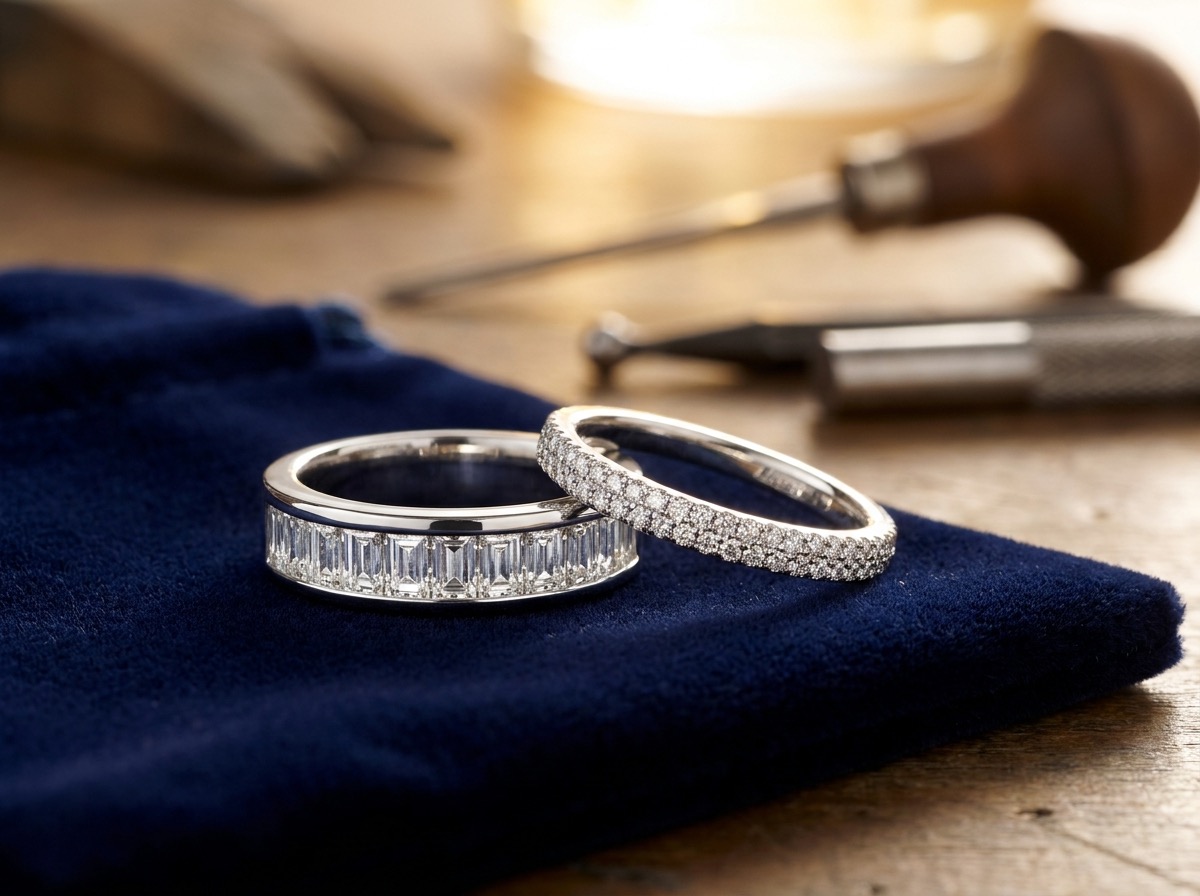
The standard ±0.10mm / ±0.10ct / one-grade tolerance covers the great majority of pavé, halo, eternity, tennis, and repair work without issue, but how much that tolerance matters shifts by setting style.
Pavé and channel work are the most calibration-sensitive use cases. Seats are cut into the metal before the stones arrive, and every stone has to drop into its own pre-cut opening — there's no adjusting the seat to the stone on this style of work, so a stone at the edge of tolerance is more likely to sit high, sit low, or need extra bench time to force a fit.
Eternity bands and tennis bracelets are less about any single seat and more about the visual line across dozens of stones — consistency stone to stone across the whole run matters as much as any individual stone's exact measurement against the mounting.
Halo settings sit in between: one visible ring of stones where uniformity is what makes the halo read as a clean frame rather than a mismatched scatter.
Repair and production restock work is its own case — sometimes the job is matching new stones into an existing piece rather than a fresh mounting, which can call for a tighter match than the standard tolerance provides. If a job needs tighter than the standard ±0.10mm/±0.10ct spec, flag it when you request a quote — state it up front rather than after a parcel ships, since not every request can be met on every size and grade.
It helps to think in stone count, not just millimeters, when you're weighing how much tolerance a job can absorb. A single halo of a few dozen stones has room to hand-pick the closest matches from a parcel if a handful run near the edge of tolerance. A full eternity band or a tennis line using several hundred stones doesn't have that luxury — there's no picking around a handful of outliers when nearly every stone in the parcel has to go into the piece. The larger and more continuous the run, the less slack there is to work around a stone that's drifted to the edge of spec.
What Happens When a Melee Parcel Misses Its Calibration Tolerance?
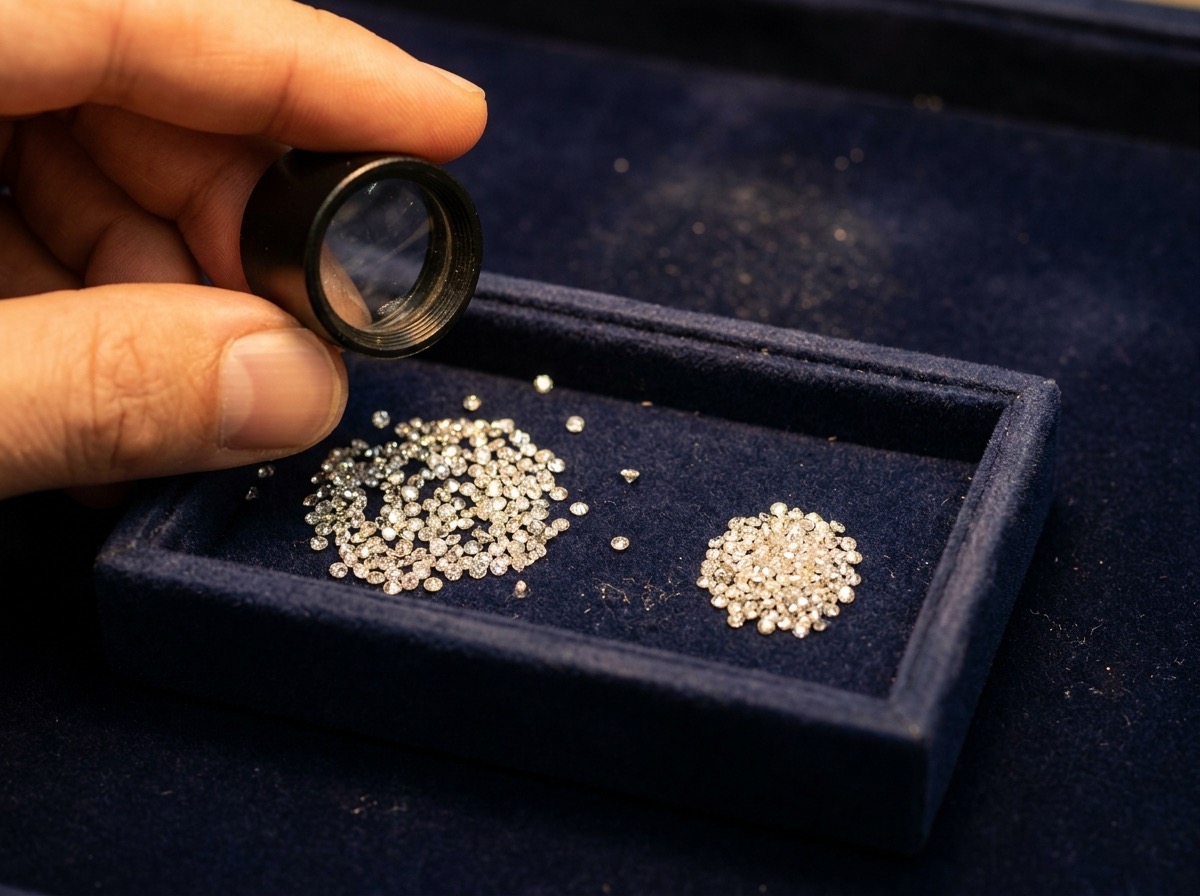
A parcel gets checked against its stated tolerance before it ships — that check is what separates a calibrated parcel from a bag of stones with a size range written on the outside. When stones in a batch fall outside the stated tolerance, they don't ship anyway; they get pulled and either recut to bring the dimension back within spec, or resorted into a different size or grade band where they do fit correctly. Off-spec goods never leave as if they matched — that's the standard this guide describes, not an aspirational one.
This matters because the alternative — shipping a parcel with a handful of out-of-tolerance stones mixed in and letting the buyer sort it out — pushes the sorting problem downstream, onto a jeweler's bench, after the goods have already been paid for and are sitting under a loupe mid-job. Catching a size or grade miss before a piece is half-set is a bench delay. Catching it after is a re-do.
It's also worth knowing that a genuine miss on a parcel is different from a genuine gap in what's offered. Guru Diam states its real size range (0.8mm–4.0mm) and its real grade gaps (no EF pricing below 1.70mm) plainly rather than quietly padding a table — a stated gap isn't the same thing as an out-of-tolerance parcel, and a supplier should never confuse the two by shipping something that doesn't match just to avoid saying no.
How Do You Specify Calibration Tolerance When Ordering Natural Melee?
Because natural melee is quoted per parcel against your exact spec, tolerance is one more line in that spec, not a separate negotiation. Have these ready when you request a quote:
- Millimeter size (or a tight range) — the number your mounting or repair job actually calls for.
- Color and clarity grade — EF VS, EF SI, GH VS, or GH SI.
- Total carat weight needed — how many carats the job requires.
- Tolerance need — state plainly if standard (±0.10mm / ±0.10ct / one-grade) works for the job, or if it needs to run tighter, and why (pre-cut seats, matching existing work, and so on). That context helps a supplier tell you quickly whether a tighter ask is realistic for your size and grade.
Send that spec to Guru Diam over WhatsApp or through Contact, and you'll get a parcel quoted and checked against the tolerance you actually need — not a generic "melee" bag with a size range guessed at.
Does Calibration Tolerance Affect Natural Melee Pricing?
Standard calibration is built into Guru Diam's natural melee pricing — it isn't a separate line item or an upcharge on top of the per-carat rate. Pricing starts around $370–450/ct in the smallest sizes and rises with size and grade, all at the standard ±0.10mm/±0.10ct/one-grade tolerance described in this guide; see the full pricing table and quality grid in our complete wholesale buying guide, or message us on WhatsApp for a quote against your exact spec.
A tolerance tighter than the standard spec is a different conversation — pulling and recutting more stones to hit a tighter number takes more of a parcel's yield, which can affect what's realistic on a given size and grade. Ask at quote time rather than assuming a tighter number is available at the standard rate.
Is Calibration Tolerance the Same for Natural and Lab-Grown Melee?
The tolerance concept is the same general trade convention across both of Guru Diam's melee lines — it's not something specific to lab-grown that got borrowed for natural, or the other way around. Calibrated goods, natural or lab-grown, get held to a stated millimeter, weight, and grade tolerance and verified before they ship.
The exact numbers can vary by setting style rather than by origin: Guru Diam's lab-grown melee spec, for instance, runs a tolerance as tight as ±0.05mm for the most calibration-sensitive work — micro-pavé, channel, and eternity — with ±0.10mm as the standard for less demanding, scattered-accent work. See the melee diamond size chart for the lab-grown line's full mm-to-carat-to-sieve conversion and tolerance detail.
What doesn't carry over is the rest of the spec. Natural and lab-grown melee are run as two separate product lines at Guru Diam with different size ranges and quality grids — natural currently covers 0.8mm–4.0mm in EF/GH and VS/SI; the lab-grown line has its own range and default grade, quoted separately. Calibration tolerance is a shared concept across both lines; size range, grading, and pricing are not.
What Should You Ask a Supplier About Calibration Before You Order?
A few questions separate a supplier working to a real, checked tolerance from one selling melee off a vague size description:
Does the tolerance get stated in writing? A supplier who states a numeric tolerance on the quote or invoice — not just "calibrated," unqualified — is working to a spec you can hold them to on a reorder.
Is the parcel checked before it ships, or after a complaint? Ask directly whether goods get measured against tolerance as a normal part of packing a parcel, or only get re-examined if a buyer flags a problem afterward.
What happens to stones that miss? A supplier who recuts or resorts out-of-tolerance stones before shipping is working the way this guide describes. A supplier who can't answer that question clearly is worth a second look.
Does the same tolerance hold parcel to parcel? Reorders should match the parcel you originally approved — ask whether tolerance is a consistent standard applied every time, or something that varies by who's sorting that day.
Guru Diam holds every natural melee parcel to the ±0.10mm / ±0.10ct / one-grade standard described throughout this guide, out of its New York and Los Angeles trade desks, and states real size and grade gaps plainly rather than shipping around them.
Frequently Asked Questions
What is the standard calibration tolerance for natural melee diamonds?
±0.10mm on stone dimension, ±0.10ct on weight, and a one-grade match on color and clarity within the parcel. That's the general trade standard Guru Diam applies to natural melee — the same convention used across calibrated melee goods regardless of origin.
Why does calibration tolerance matter for pavé and channel settings?
Pavé and channel seats are cut into the metal before the stones arrive, so every stone has to drop into a pre-cut opening at a fixed size. A stone outside tolerance sits proud, sits low, or leaves a visible gap — pavé and channel work is the most calibration-sensitive use case in melee.
What happens if a melee parcel doesn't meet its calibration tolerance?
It doesn't ship. Out-of-tolerance stones get pulled and either recut to bring them within the stated size, or resorted into a size or grade band where they genuinely fit — never shipped as if they matched the original spec.
What's the difference between calibrated and non-calibrated melee diamonds?
Calibrated melee is measured and verified against a stated tolerance before it ships; non-calibrated melee is sorted more loosely, by eye, without a guaranteed tolerance. Guru Diam sells natural melee as calibrated goods only.
Does calibration tolerance apply to color and clarity, or just size?
All three — size, weight, and color/clarity all carry a tolerance. The one-grade color/clarity match keeps a parcel graded, for example, GH VS from including stones that would grade out two full steps away if checked individually.
Does asking for a tighter tolerance cost more?
It can. Holding a parcel to a tighter-than-standard tolerance takes more of a parcel's yield to pull and recut, which can affect price and availability depending on size and grade. Flag a tighter need at quote time so it's priced against the actual spec, not the standard rate.