EF vs GH Color Melee: Which Grade Fits Which Job
EF (E–F color) melee earns its premium in platinum and white gold settings — halos, shoulders, and any piece where the mounting sits close enough to a colorless center stone that warmth would show. GH (G–H color) is the practical default everywhere else: yellow and rose gold settings that mask color by design, larger multi-stone pieces where per-stone grading barely registers, and cost-sensitive production runs. The dollar-per-carat gap between them is real but it moves with size — it's not a flat percentage you can apply across the board.
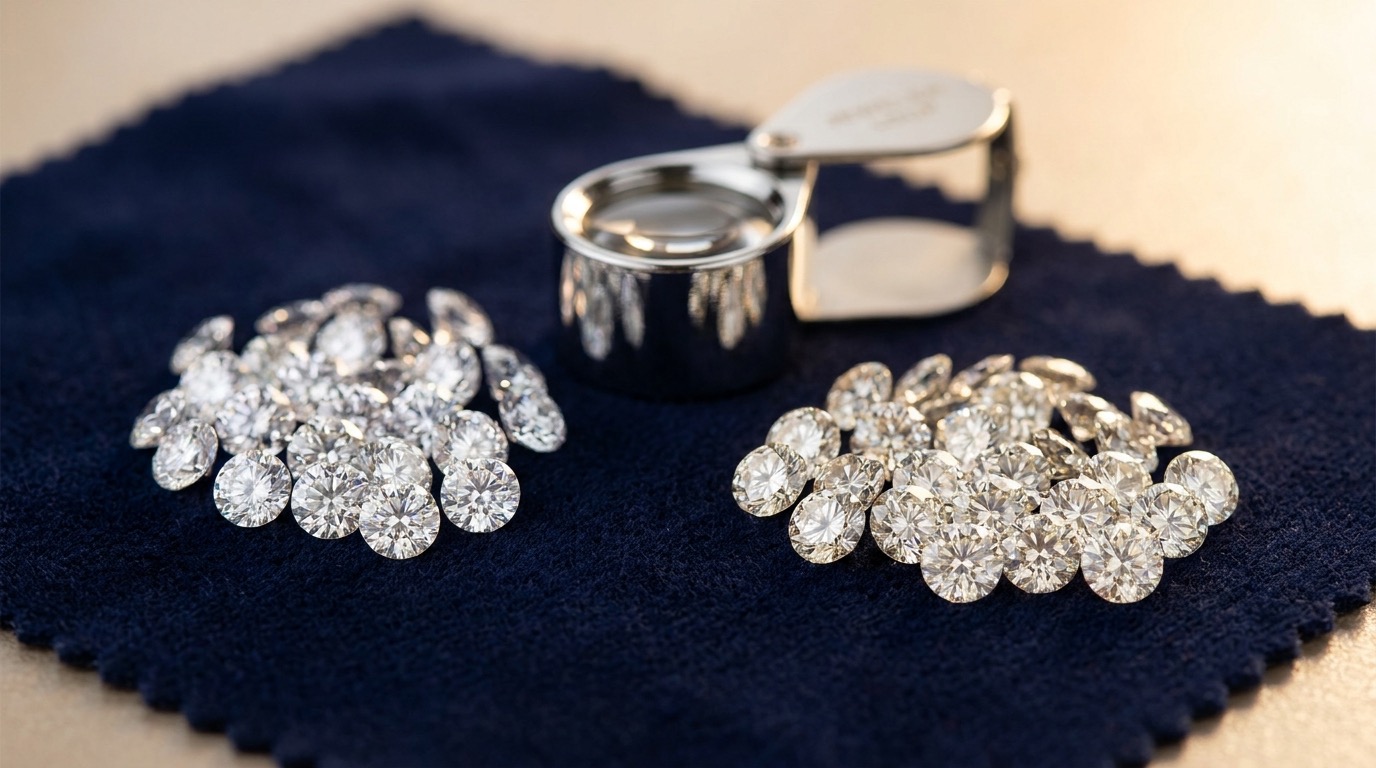
What Do EF and GH Actually Mean in Natural Melee?
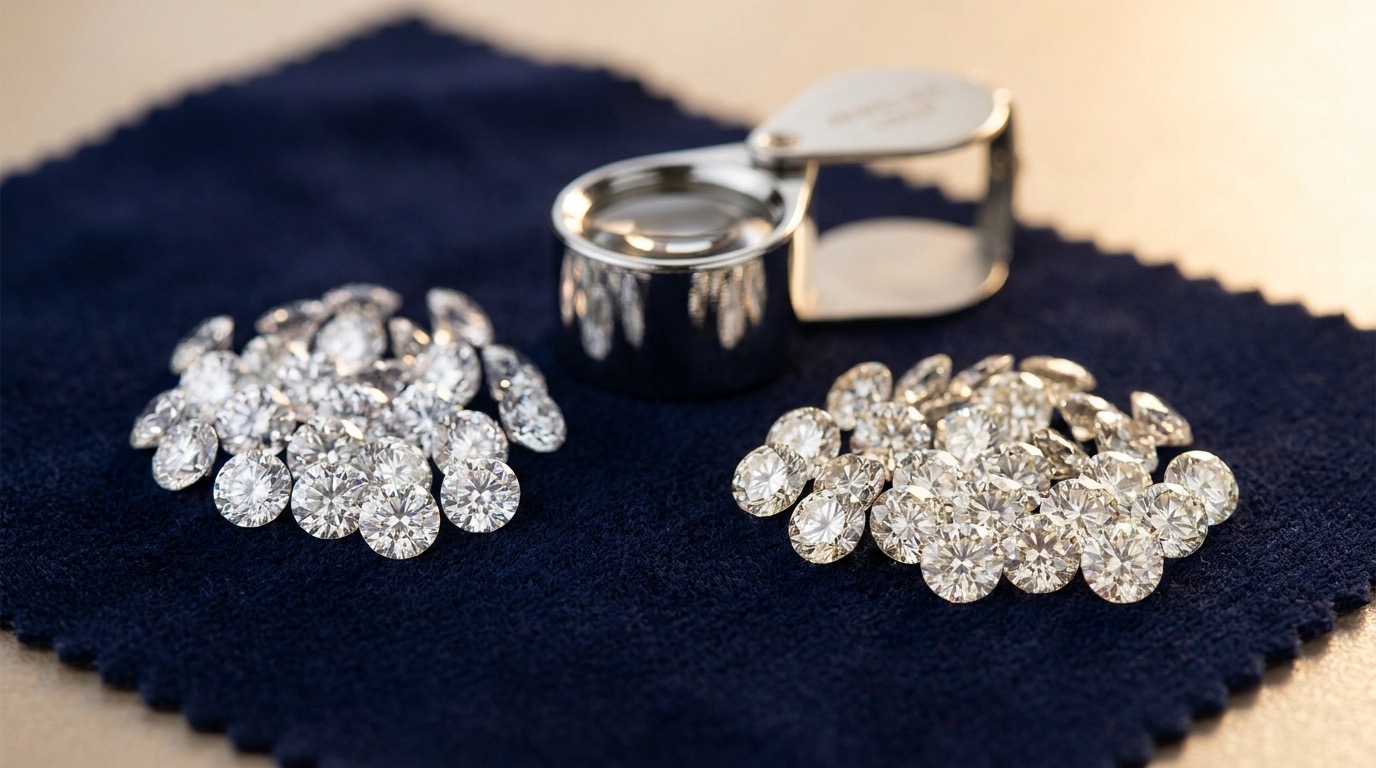
Guru Diam's natural melee runs on a 2-by-2 quality grid: two color bands, EF and GH, each available in VS or SI clarity. EF covers the E–F portion of the industry's D-to-Z color scale — the top of the "colorless" range, one step below a flawless D. GH covers the G–H portion, sitting at the top of the "near-colorless" range, one to two steps warmer than EF.
Both are blended-range grades, not a single exact grade guaranteed stone by stone. A parcel graded EF falls within the E-to-F range as sorted comparatively against a master stone; it isn't a claim that every individual stone, graded out separately, would land at exactly E or exactly F. That's standard trade practice for melee-sized parcel goods, not a shortcut specific to Guru Diam — melee this small isn't individually certified, so grading runs on a comparative standard rather than a per-stone report. (More on why in the certification and grading posts linked at the end.)
This post is a deep dive on the color axis specifically. If you also need the clarity side of the grid — VS vs SI — or want the full picture of how both axes interact, start with our natural melee color and clarity grades guide, which covers both broadly. This one goes deeper on color alone: when EF is worth paying for, when it isn't, and what it actually costs to move up a color band.
Why Does Color Read Differently in Melee Than in a Center Stone?
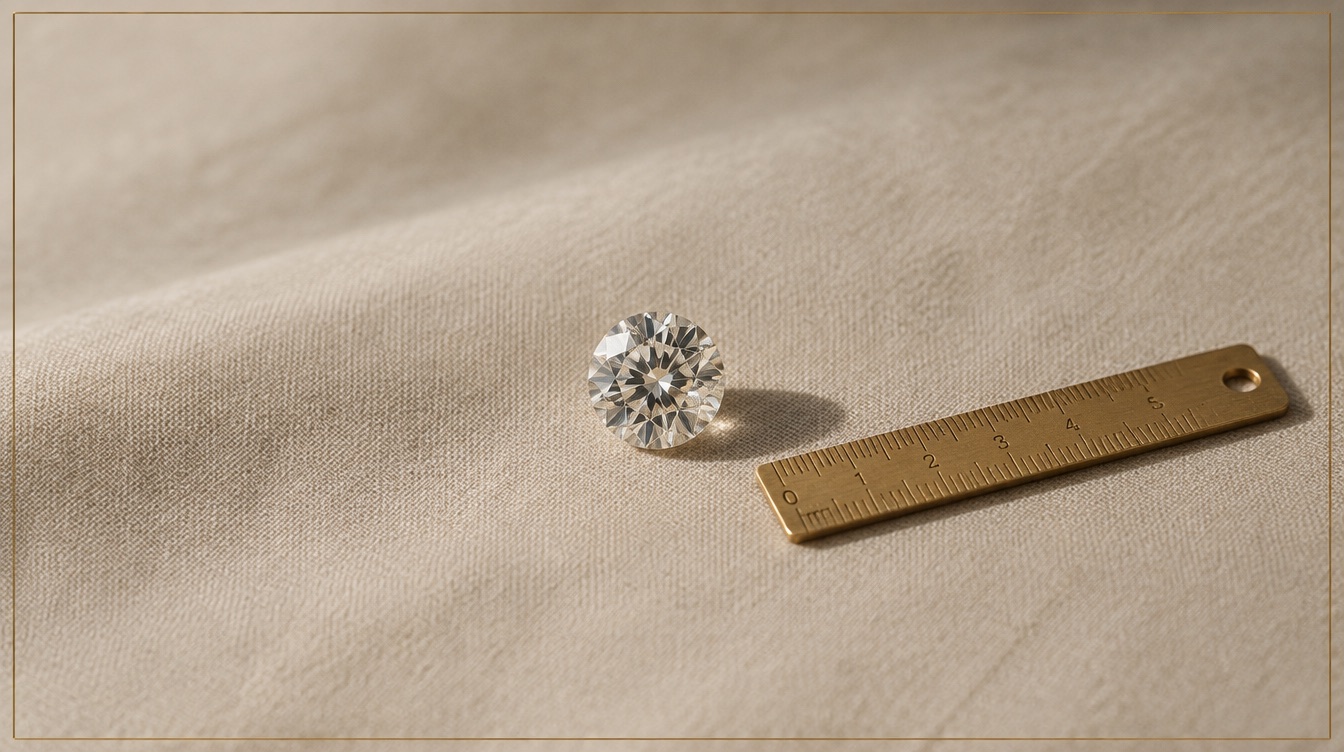
Color grading exists because a diamond's body color absorbs some of the light passing through it, and that absorption shows up most in larger stones viewed face-up against a white background. A 1-carat center stone has enough surface area and depth for a trained eye — or an untrained one, at two color grades apart — to pick up a tint. A 0.02-carat melee stone doesn't have that surface area. Less material means less body color to see, and the human eye is working with a target a fraction of the size.
That's the core reason color grades that would matter enormously on a center stone often don't register the same way at melee size. It's not that the color difference between EF and GH stops existing — sorted side by side under magnification, a trained grader can still call it. It's that the difference stops being visible to the eye it actually needs to fool: a customer looking at a finished ring across a counter, not a loupe pressed to a single stone.
This is exactly why melee is graded on a blended range instead of the single-grade precision used on loose certified stones — the market has already priced in that melee-size color differences matter less per stone than they do on a center stone, while still mattering enough, in aggregate across dozens of stones, to justify two separate color bands.
When Does EF's Premium Actually Pay Off?
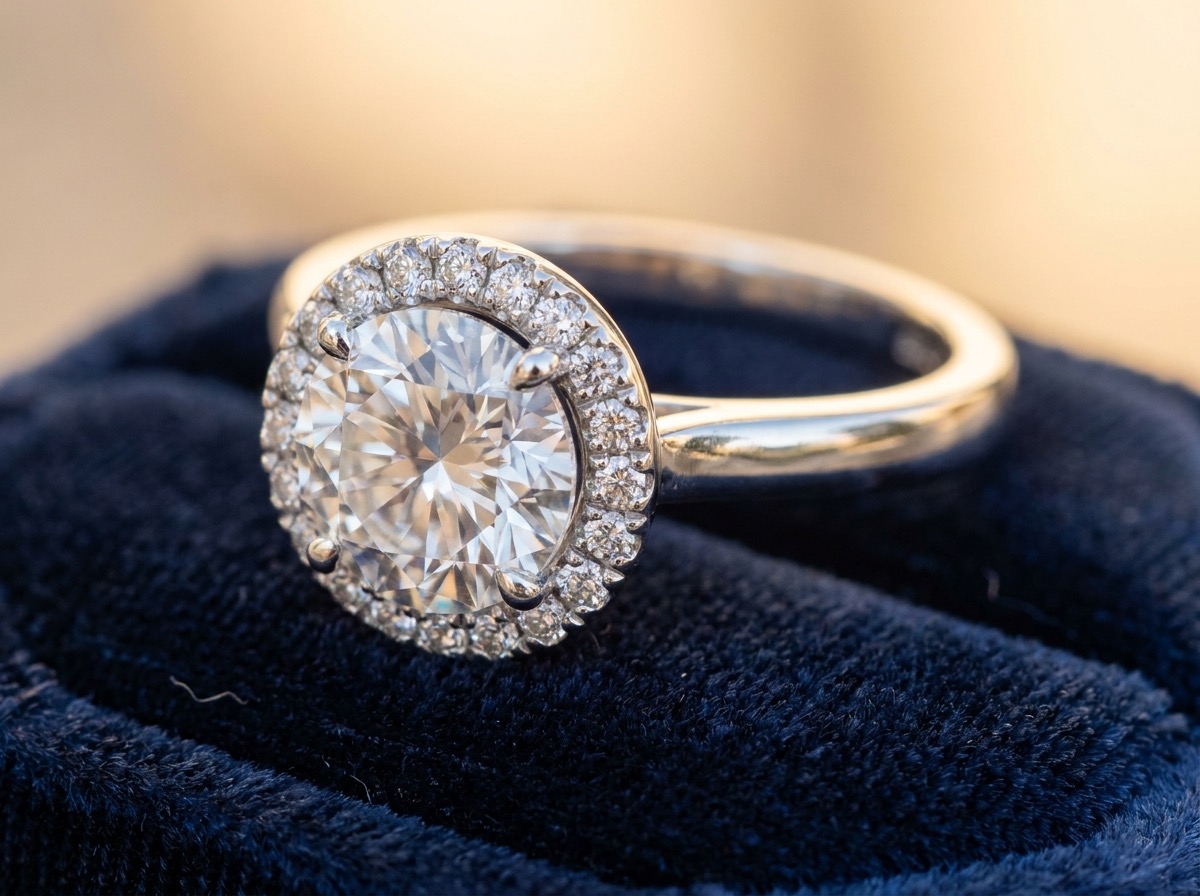
Platinum and white gold halos and shoulders. This is the clearest case for EF. A halo of melee circling a colorless (D-F) center stone is doing one job: extending the appearance of that center stone's color and brilliance without a visible seam. Set GH stones around a D-color center in white metal, and the melee can read warmer than the stone it's supposed to be framing — the eye catches the mismatch at the boundary even if it can't grade either stone individually.
Bezels, cathedral shoulders, and any setting that puts melee in direct visual proximity to a colorless main stone. The tighter the spatial relationship between melee and center stone, the more a color gap shows.
White metal generally. Platinum and white gold don't have their own body color to compete with — a warm-toned stone has nothing to hide behind. That's the mechanical reason EF is worth paying for in white metal settings and often isn't in yellow gold, covered below.
Bridal lines sold on a "matches your center stone" promise. If the piece's value proposition is coordinated color across every stone on the ring, EF is the grade that keeps that promise; GH is the grade that risks breaking it.
Outside of those cases — pieces where melee sits at a distance from any colorless center stone, or where there's no colorless center stone at all — EF's premium is buying a difference that's real on paper and very hard to see on the finished piece.
When Is GH the Practical Choice?
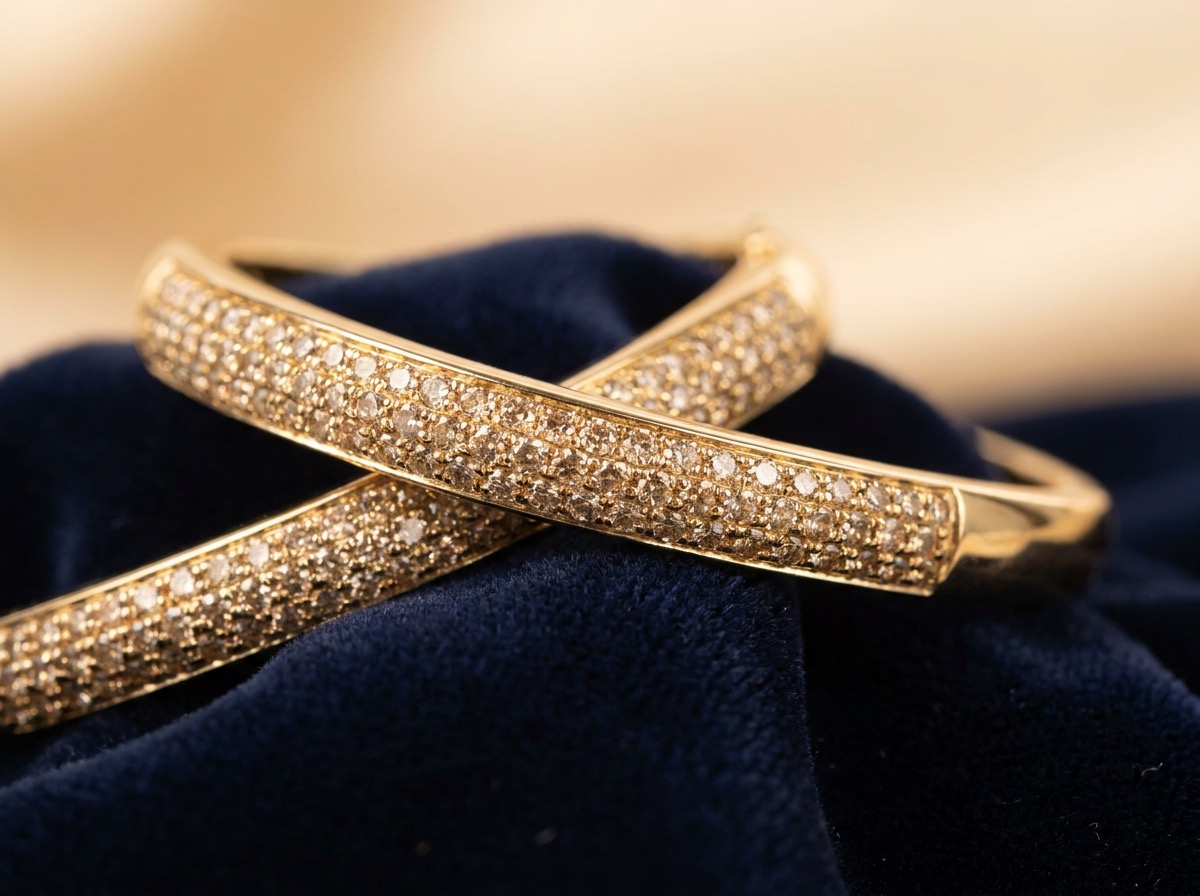
Yellow gold and rose gold settings. Colored metal does the opposite job of white metal: it warms the entire visual field around each stone, so a G-H stone's slight warmth blends into the setting instead of standing out against it. Paying an EF premium in yellow gold is, in most cases, paying for a color difference the metal itself is already masking.
Larger, multi-stone pieces where per-stone grading barely registers. A wide pavé field, a full-coverage eternity band, or a tennis bracelet with dozens or hundreds of stones reads as a continuous line of sparkle, not as individually inspected diamonds. At that scale, consistency across the parcel matters more than the absolute color grade — and GH, sorted consistently against a master stone, delivers that just as reliably as EF does.
Cost-sensitive production runs. Fashion jewelry, entry-price bridal, and any line where margin depends on keeping per-piece material cost down. Since GH sits below EF at every size where both are priced, it's the grade that keeps a production run's cost structure intact without a visible quality trade-off in the finished piece.
Repair and restock work. Replacing a lost pavé stone or filling out bench stock for ongoing repair jobs rarely calls for a color upgrade over what's already set in the piece — matching the existing grade (usually GH, since it's the more common commercial default) is the goal, not exceeding it.
No colorless center stone in the piece. If there's nothing on the mounting for melee color to be compared against, the premium case for EF weakens considerably.
How Much More Does EF Cost Than GH? (Real $/ct Deltas by Size)
Guru Diam's current natural melee sell prices, per carat, at three representative sizes (full 8-row table and pricing methodology in our complete buying guide):
| Size (mm) | EF VS | GH VS | $/ct delta (VS) | EF SI | GH SI | $/ct delta (SI) |
|---|---|---|---|---|---|---|
| 1.70–2.20 | $450 | $417.50 | ~$32.50 (~8%) | $420 | $400 | ~$20 (~5%) |
| 2.90–3.00 | $680 | $592.50 | ~$87.50 (~15%) | $650 | $575 | ~$75 (~13%) |
| 4.00 | $900 | $855 | ~$45 (~5%) | $870 | $840 | ~$30 (~4%) |
Two things worth noticing. First, the EF premium is real money on a full parcel — on a 5-carat order at 2.90–3.00mm, choosing EF VS over GH VS adds roughly $437.50 to the invoice. Second, the premium doesn't move in a straight line with size: it's proportionally smaller at 1.70–2.20mm and 4.00mm than it is at 2.90–3.00mm, because EF availability and pricing shift with the supply of whiter rough at each size band, not on a fixed formula. Budget against the actual quote for your size and grade, not a flat percentage rule of thumb — and remember EF isn't priced at all below 1.70mm; GH is the only color option at the smallest sizes. Treat every figure here as approximate, per carat, and confirmed at quote, the way melee is priced across the trade.
Also worth factoring: EF's per-carat premium compounds across an entire parcel, while its visual payoff is concentrated in the handful of stones sitting closest to a colorless center stone. On a large halo or pavé job, some jewelers split the order — EF for the innermost row or the stones directly framing the center stone, GH for the rest of the field. That's a legitimate way to capture EF's visual benefit where it actually shows without paying the premium on every stone in the piece; confirm with your supplier whether split-grade parcels are available for your job before assuming it.
Does Metal Color Change Which Grade You Should Buy?
Yes, more than almost any other single variable. Metal color sets the background every stone in the piece is judged against, and that background either competes with a stone's warmth or amplifies it.
Platinum and white gold have no body color of their own. A warm-toned G-H stone has nothing to blend into, so any tint reads more clearly — this is where EF's whiter face-up color earns the price difference.
Yellow gold reflects a warm cast onto every stone set in it, which is precisely why yellow gold has historically been the traditional setting for warmer color grades going back decades in the trade — the metal was doing color-correction work before color-correction was a marketing term. GH color in yellow gold looks, for practical purposes, indistinguishable from EF in the same setting.
Rose gold sits closer to yellow gold than to platinum on this question — its warm tone similarly softens the visibility of a G-H stone's color.
The practical rule: match your color grade decision to your metal, not to a blanket "always buy the best grade" instinct. Buying EF for a yellow gold piece is spending money on a difference the setting itself is already hiding.
Does Setting Density and Stone Size Change the Color Call?
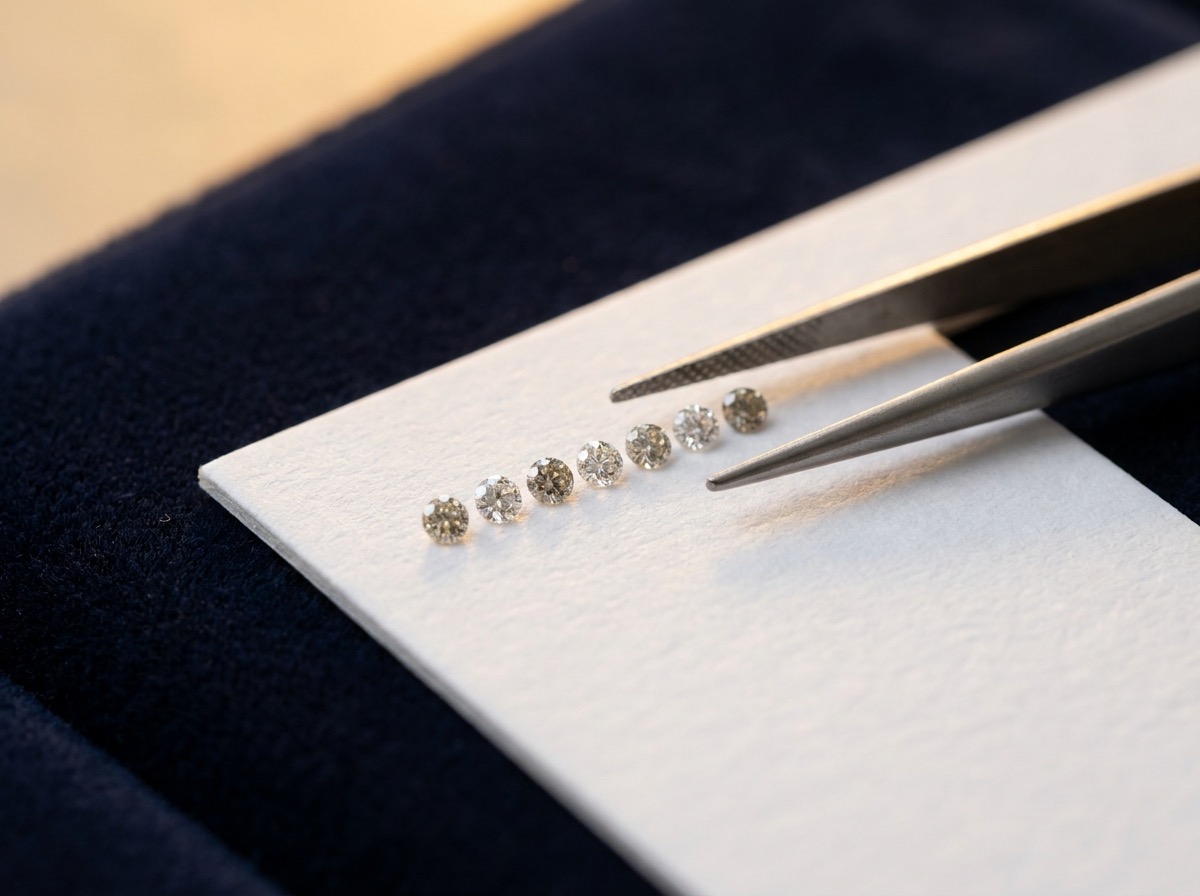
Setting density works alongside stone size to change how visible color actually is on a finished piece. A wide pavé field or a full eternity band, made up of dozens of very small stones set close together, blends into a single visual texture — the eye reads it as "sparkle," not as forty individually gradable diamonds. A handful of larger, more widely spaced accent stones (say, near the top of the priced range at 3.50–4.00mm) sit further apart and closer to being viewed as individual stones, which is closer to how a center stone gets judged.
The practical takeaway: the denser and smaller the setting, the more GH can substitute for EF without a visible difference on the finished piece. The sparser and larger the accent stones, the more each one starts to behave, visually, like a small center stone — and that's where color grade starts to matter again even outside a halo.
Can Buyers Actually Tell EF from GH at Melee Size?
In a side-by-side comparison under a loupe, yes — a trained eye can call the difference between EF and GH reliably; that's the whole reason the grades exist as separate SKUs. Set into a finished piece and viewed at normal wear distance, the honest answer is: rarely, and almost never on an individual stone. This is a widely shared observation in trade circles — plenty of jewelers report that customers, and even other jewelers, can't reliably pick GH VS or SI melee out from EF once it's set and photographed under normal light.
Where the difference does show up is in aggregate, at the edges, and under specific lighting: a GH halo directly bordering a D-color center stone in white metal, under strong direct light, is the scenario most likely to reveal a color gap. A GH pavé field on a yellow gold band under ambient light is the scenario least likely to reveal anything at all. Most real-world jobs fall somewhere between those two extremes — which is exactly why this decision should be made setting by setting, not defaulted to "always buy EF" or "always buy GH."
How Does Clarity (VS vs SI) Factor Into the Color Decision?
Color and clarity are separate axes on the same 2-by-2 grid — EF and GH each come in VS and SI — and the two decisions don't have to move together. It's entirely normal to order EF SI (whiter, more included) for a white metal halo where color is the priority, or GH VS (warmer, cleaner) for a piece where inclusions would be the more visible flaw. Clarity, like color, tends to matter less at melee size than it does on a center stone; at typical mounting viewing distance, SI clarity usually reads eye-clean, with visible inclusions being the exception rather than the rule.
For the full breakdown of when VS is worth the premium over SI and when it isn't, see our companion post, VS vs SI Clarity Melee: When the Difference Actually Matters. The short version: run the color decision and the clarity decision independently against your setting, your metal, and your budget, rather than assuming a "good" parcel has to be both EF and VS.
How Do You Decide Which Grade to Order for a Specific Job?
Run through these four questions before placing an order:
- What metal is the piece set in? White metal (platinum, white gold) leans toward EF where melee sits near a colorless center stone. Yellow or rose gold leans toward GH almost everywhere.
- How close is the melee to a colorless center stone? Directly bordering a D-F center stone in white metal is the strongest case for EF. No center stone, or a center stone that isn't colorless itself, weakens the case.
- How dense is the setting? A tight, wide field of very small stones can carry GH with little to no visible trade-off. A handful of larger, more widely spaced accent stones behaves more like individual small center stones.
- What's the piece's price point and margin target? On a cost-sensitive production run, GH's lower per-carat price protects margin without a visible quality hit in most settings. On a premium bridal piece marketed on matched color, EF protects the promise being sold.
If two or more answers point toward EF — white metal, close proximity to a colorless center stone, sparse setting, premium price point — it's worth paying the premium. If most answers point toward GH, the extra cost is buying a difference the piece was never going to show.
How Do You Order EF or GH Natural Melee from Guru Diam?
Ordering natural melee is a quote-first process — melee is priced per parcel against your exact size and grade spec, not sold off a fixed SKU. Have this ready before you reach out:
- Millimeter size (or a tight range) for the job.
- Color grade — EF or GH — and whether it's a full-parcel or split-grade order.
- Clarity grade — VS or SI.
- Total carat weight needed for the job.
Pricing for Guru Diam's round natural melee currently starts around $370–450/ct in the smallest sizes and rises with size and grade from there, confirmed at quote. Send your spec over WhatsApp or through Contact for a current price against real available stock — and if you're unsure which grade fits your job, describe the setting and metal and we'll help you land on EF, GH, or a split order.
Frequently Asked Questions
What's the actual visual difference between EF and GH color melee?
EF is whiter and closer to colorless; GH carries slightly more warmth. The difference is reliably visible to a trained eye under a loupe, but at melee size it's rarely visible on a finished, worn piece unless the stone sits directly against a colorless center stone in white metal.
Is EF worth the extra cost in a yellow gold setting?
Usually not. Yellow gold reflects a warm cast onto every stone it holds, which masks the color difference EF is priced to deliver. GH is the more cost-efficient choice in yellow and rose gold settings for most jobs.
How much more does EF cost than GH per carat?
It varies by size rather than following a flat percentage — roughly 5-15% more per carat across Guru Diam's currently priced sizes, with the gap widening or narrowing depending on the size band. EF isn't priced at all below 1.70mm; GH is the only option at the smallest sizes. Confirm the exact delta at quote for your size and grade.
Should halo melee always match the center stone's color grade exactly?
It doesn't have to match exactly, but it should be close enough that the boundary doesn't read as a seam. A D-F colorless center stone in white metal generally calls for EF melee; a warmer center stone, or a yellow/rose gold setting, gives more room to use GH without a visible mismatch.
Does clarity matter more or less than color at melee size?
Both matter less at melee size than on a center stone, and they're independent decisions — you can order EF SI or GH VS depending on which flaw (color or inclusions) would actually be more visible in your specific setting. See our VS vs SI clarity post for the clarity-specific breakdown.
What color grade should I default to for production and repair work?
GH is the more common commercial default for fashion, production, and repair work, since it keeps material cost down without a visible quality trade-off in most settings. Reserve EF for pieces where melee sits close to a colorless center stone in white metal, or where the piece is specifically marketed on matched color.