VS vs SI Clarity Melee: When the Difference Actually Matters
In melee sizes, VS and SI clarity read almost identically to the naked eye at typical viewing distance — the gap between them rarely shows below about 2.5mm. The VS premium (roughly $15–$30 per carat at Guru Diam's current pricing) is worth paying on larger melee, 3mm and up, and in high-visibility settings like halo edge stones or a tennis bracelet's main line. Below that — dense pavé, small closely-set stones, cost-sensitive production runs — SI is the smarter buy: it looks the same set and costs less.
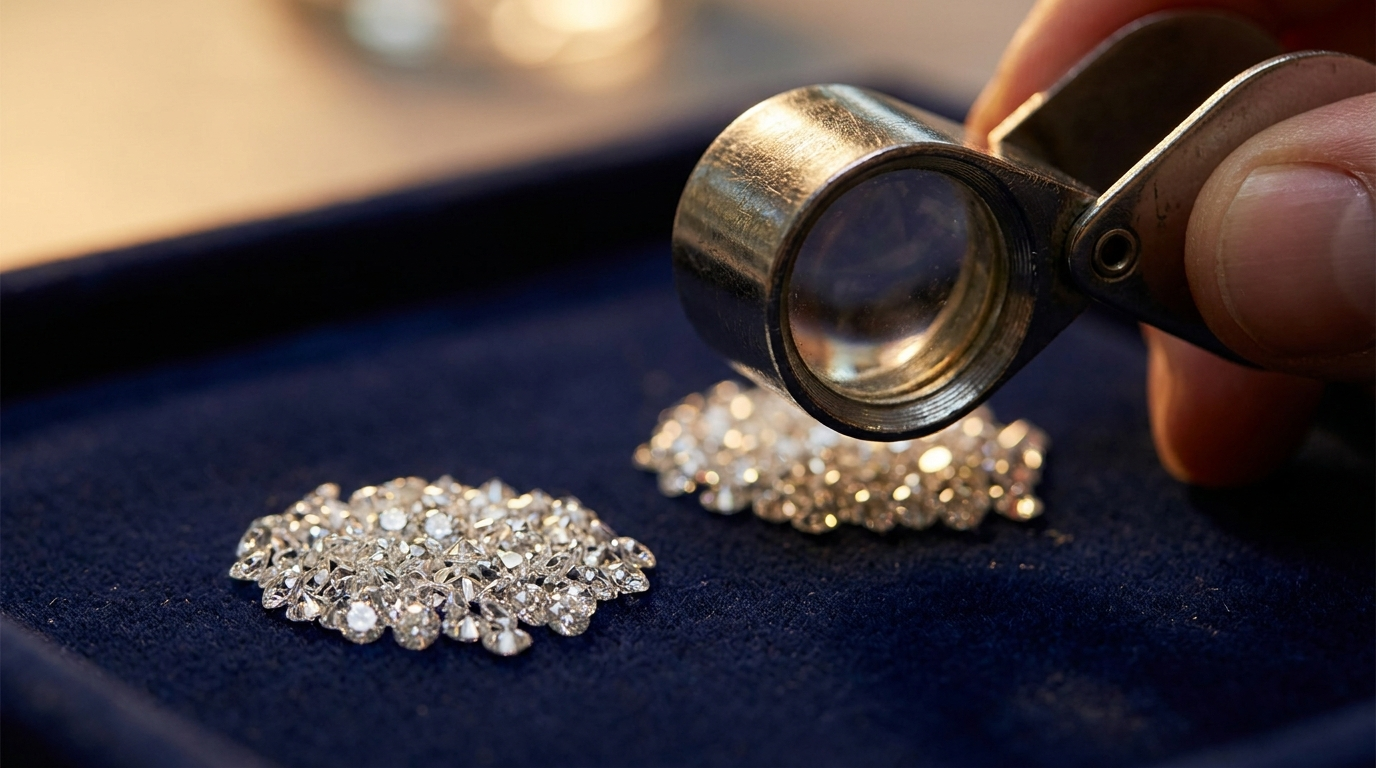
What Does "VS vs SI" Actually Mean on a Stone This Small?
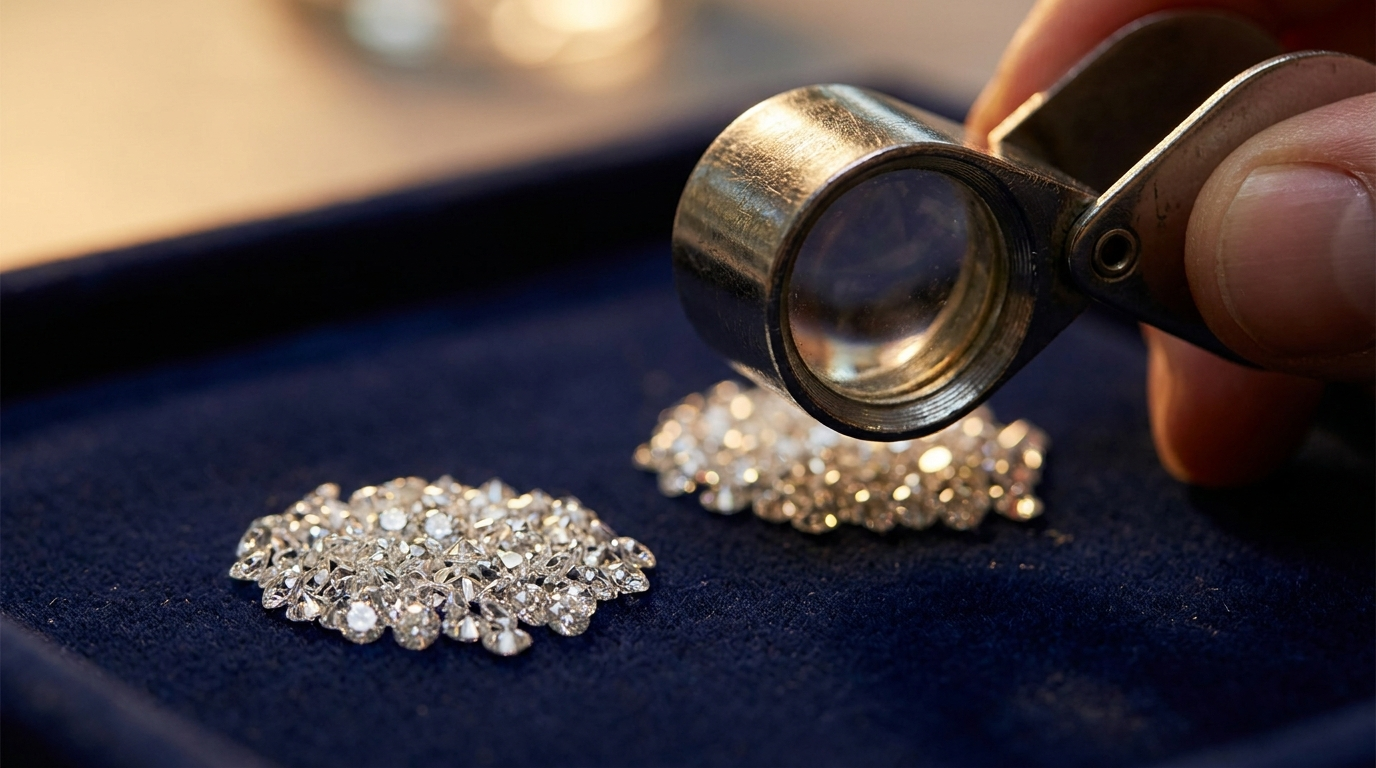
VS (Very Slightly Included) and SI (Slightly Included) are two adjacent bands on the standard diamond clarity scale, which runs from Flawless down through VVS, VS, SI, and I. VS clarity means any inclusions present are small and hard to find even under 10x magnification; SI means inclusions are a step more visible under magnification but still typically not visible to the unaided eye on a well-cut stone. On a full-size center diamond, a trained grader can usually spot the difference between a VS2 and an SI1 under a loupe without much trouble.
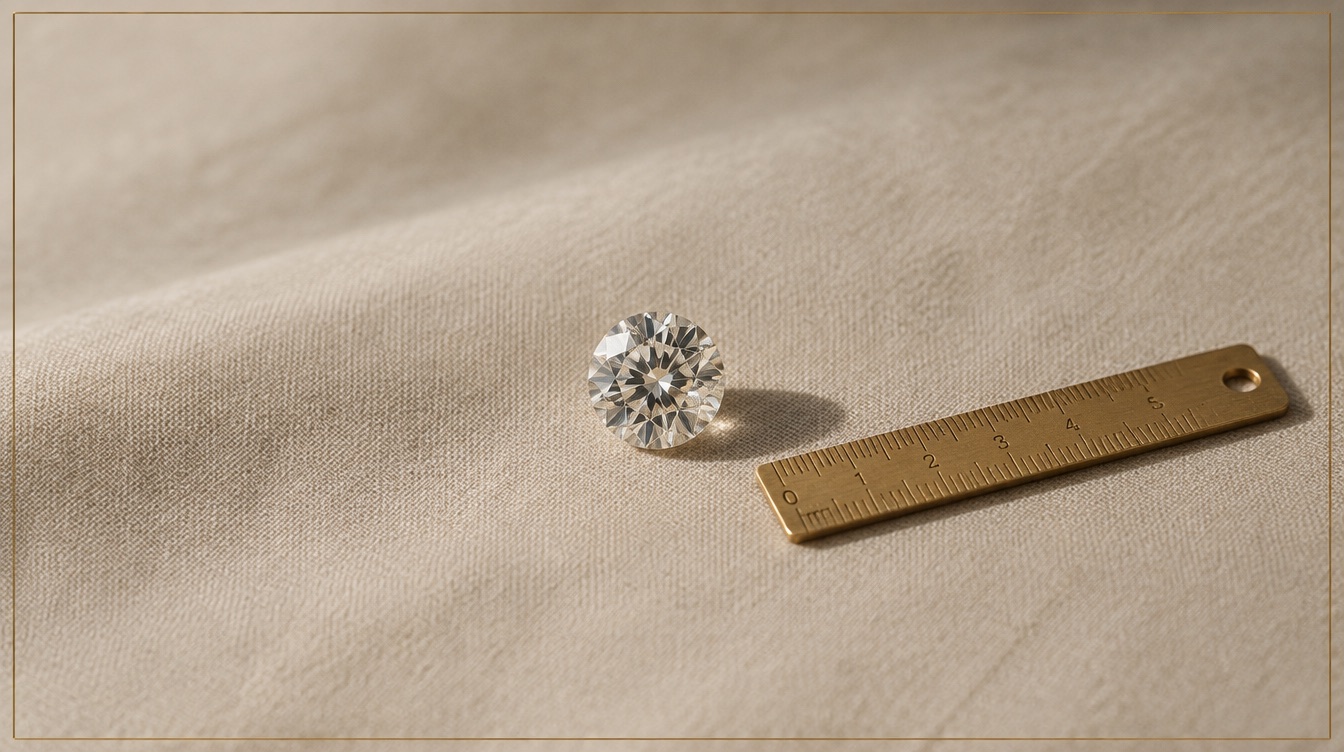
On a 1.5mm or 2mm melee stone, that same distinction gets a lot harder to hold onto. Guru Diam's natural melee is graded and sorted as a blended range against a master reference stone rather than plotted and graded individually — a parcel called "VS" falls within the VS band as sorted comparatively, the same way EF and GH color are blended ranges rather than single exact grades. That's standard trade practice for parcel goods at this size, not a shortcut specific to Guru Diam. The natural melee grid offers two clarity bands, VS and SI — Guru Diam doesn't currently price or sort a VVS tier at melee sizes, because the visual return on a grade that fine doesn't hold up once a stone gets this small.
How Visible Are Inclusions in a Diamond Under 4mm, Really?
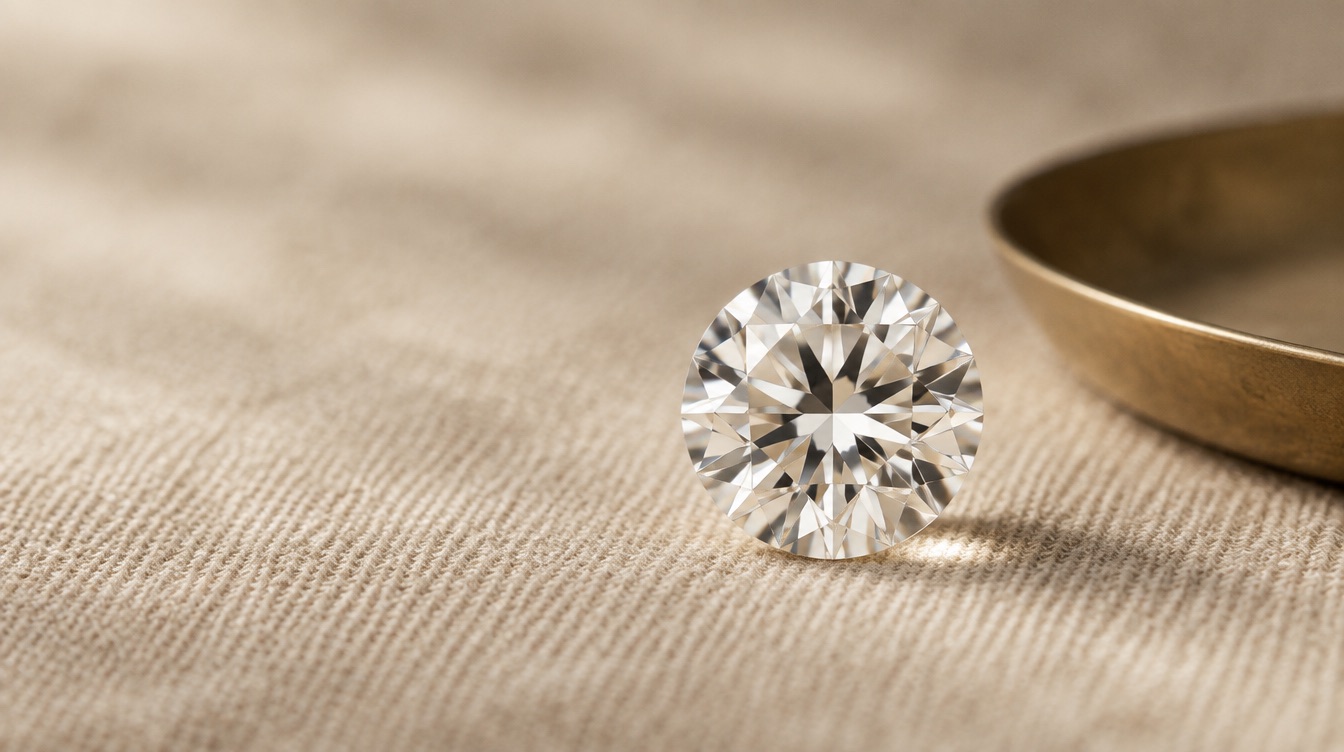
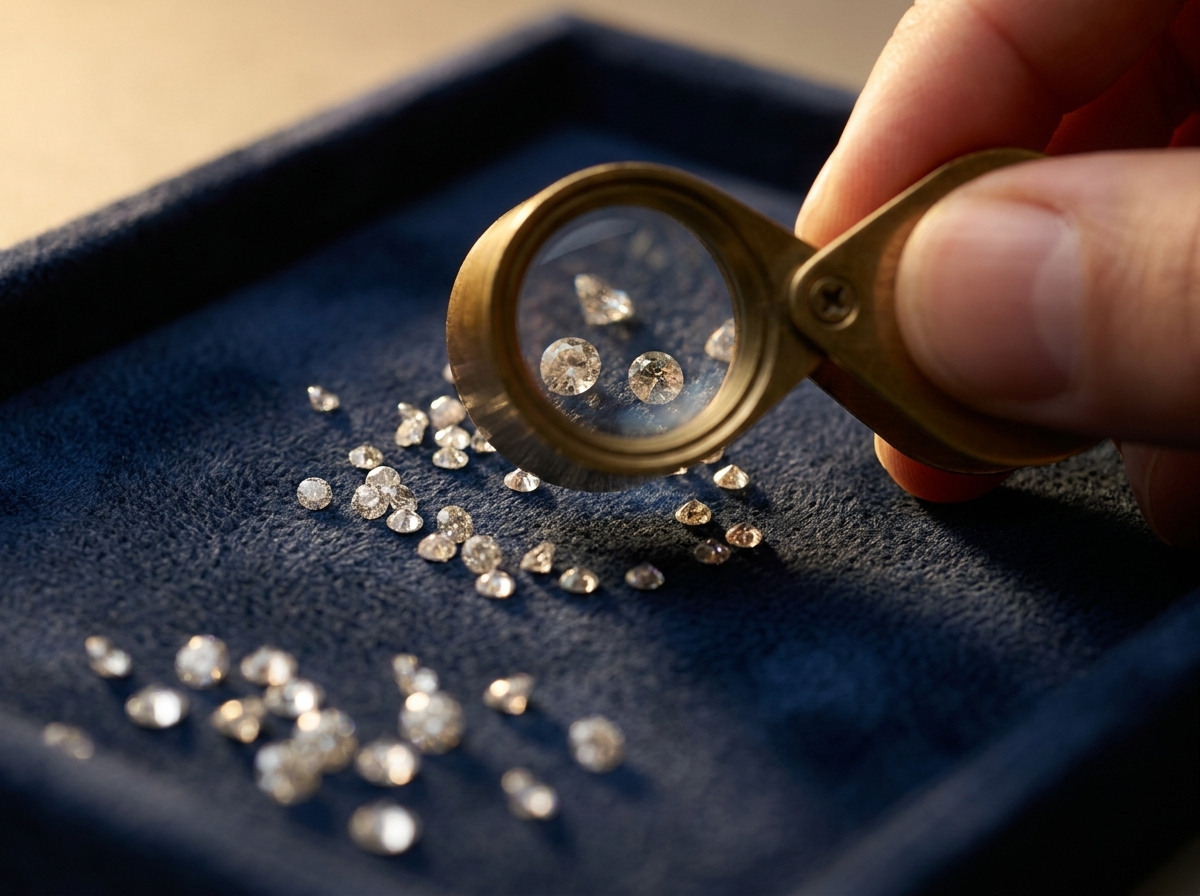
Visibility of an inclusion is a function of its size relative to the stone, and the stone's size relative to a viewer's eye. A feather or pinpoint that would be an obvious flaw in a 1-carat center stone can be smaller than the resolving power of the naked eye once it's scaled down inside a 1.5mm melee stone. That's the physical reason SI clarity reads eye-clean in melee far more often than it does in larger goods — most of what separates VS from SI at this scale simply falls below the threshold of what a customer, or even a jeweler without a loupe, can see face-up under normal lighting.
That threshold isn't fixed, though — it moves with stone size. At 1mm–2mm, the facet surfaces are so small that almost any SI-clarity feature is invisible without magnification, full stop. By 3mm–4mm, individual facets are large enough that an inclusion sitting in the crown or table area has real surface area to be seen in — under the right light angle, at close range, a fleck or feather that would've disappeared at 1.5mm can be visible at 4mm. This is the honest core of the VS-vs-SI decision: it's not about which grade is "better" in the abstract, it's about whether the stone is physically large enough for the difference to show.
What's the Real Price Difference Between VS and SI Melee?
Here's the actual dollar delta between VS and SI at a few representative sizes, from Guru Diam's current per-carat pricing:
| Size (mm) | Color | VS ($/ct) | SI ($/ct) | Delta ($/ct) | Delta (%) |
|---|---|---|---|---|---|
| up to 1.20 | GH | $480 | $450 | $30 | ~6.7% |
| 1.70–2.20 | EF | $450 | $420 | $30 | ~7.1% |
| 1.70–2.20 | GH | $417.50 | $400 | $17.50 | ~4.4% |
| 4.00 | EF | $900 | $870 | $30 | ~3.4% |
| 4.00 | GH | $855 | $840 | $15 | ~1.8% |
Two things worth noticing in that table. First, the dollar premium for VS stays in a fairly tight band — roughly $15 to $30 per carat — across sizes; it doesn't scale up dramatically as stones get bigger. Second, because the base price per carat rises faster with size than the VS/SI delta does, the percentage premium for VS actually shrinks at larger sizes, from around 7% at 1.70–2.20mm down to under 2% at 4.00mm on GH. Put plainly: the visual case for paying the VS premium gets stronger as stones get bigger (per the visibility discussion above), right around the same point where the price case for paying it gets relatively weaker. That's a real, useful fact for a buyer, not a reason to default to VS everywhere. Treat every number above as approximate and per carat, confirmed at quote — for the full 8-row pricing grid across all sizes and both colors, see the complete buying guide, and message WhatsApp for a quote against your exact spec.
When Is Paying the VS Premium Actually Worth It?
There are real, specific situations where the VS upgrade earns its cost:
- Larger melee, 3mm and up. Once stones cross roughly 2.7mm–3mm, facets are large enough that clarity differences have somewhere to show. This is where the visibility argument for VS is strongest.
- Prominent, high-visibility positions. The largest stones flanking a center diamond in a graduated halo, the corner or shoulder stones on a statement ring, or any melee sitting close enough to a hero stone that a customer's eye naturally lands on it — these are worth grading up even if the rest of the piece runs SI.
- Tennis bracelet main lines. A single continuous row of matched stones, usually run at 2.5mm and larger, held at arm's length under direct scrutiny. This is one of the least forgiving use cases in the trade for clarity, because every stone sits in a straight visual line with nothing to distract the eye.
- Bridal work sold under magnified photography. If a piece is going to be sold online with macro product shots, or is the kind of purchase where a customer brings a loupe to the counter, VS clarity is protecting against a level of scrutiny the piece will actually receive.
- Matching an EF color tier. When a job is already spec'd EF for color because the piece sits close to a colorless center stone, pairing it with VS clarity keeps the whole quality story consistent — an EF stone with an obviously included face doesn't read as premium goods.
When Is SI Clearly the Smarter Buy?
And there are just as many real situations where SI is the honest, correct call — not a compromise, just the right spec for the job:
- Small melee, under roughly 2mm. This is the size range where SI clarity is essentially eye-clean as a rule, not an exception — the physical size of the stone is doing more work to hide inclusions than the clarity grade is.
- Dense pavé, stones set edge to edge. When dozens or hundreds of tiny stones sit shoulder to shoulder, the eye reads the row as one continuous field of sparkle, not as individual stones under review. Clarity consistency across the row matters more here than the absolute grade.
- Cost-sensitive production runs. Fashion lines, repair stock, and volume production where margin matters — SI clarity delivers the same finished look at a lower carat cost, and that savings compounds across a large order.
- GH color pieces generally. If a job is already spec'd GH for color because it's not sitting next to a colorless hero stone, there's rarely a reason to pair it with VS clarity — the piece isn't being built to survive close inspection in the first place.
- Any setting where individual stones aren't independently visible. Bead-set, channel-set, or micro-pavé work where each stone is mostly hidden behind metal and only contributes to overall sparkle, not an individually readable face.
Being straight about this matters more than it might seem: recommending VS across the board because it sounds like the safer or more premium answer isn't good advice — it's an upsell dressed as caution, and a buyer who later realizes SI would've looked identical on their pavé job won't come back for the next quote.
Does Setting Type Change the Clarity Decision?
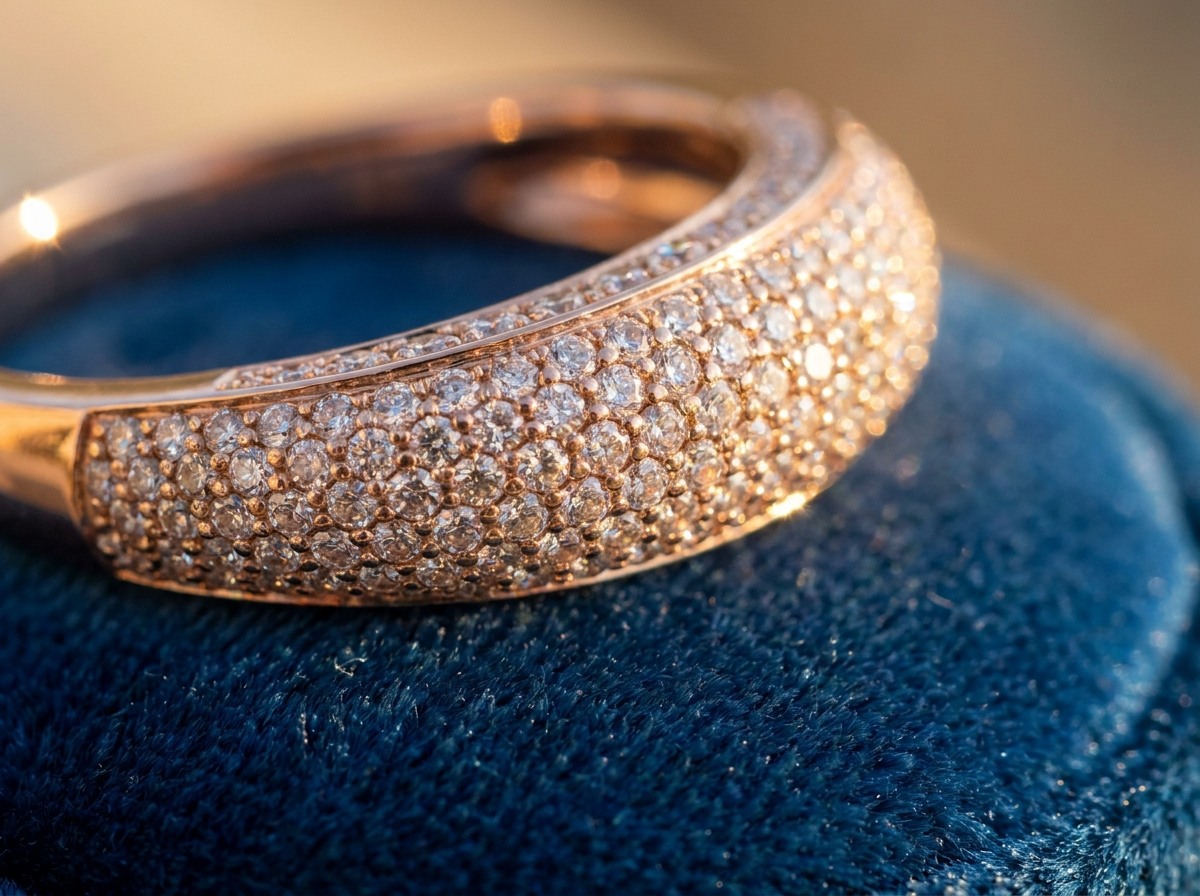
Pavé settings. Small stones packed edge to edge across a surface. This is the strongest case for SI clarity: stones are typically small, densely spaced, and read collectively rather than individually. The exception is a wide, prominent pavé shoulder on a statement piece meant to be examined up close — that's a case where grading up is worth discussing.
Halo settings. A ring of melee framing a center stone. The stones nearest the center — the ones a customer's eye naturally travels to first — are the ones worth spec'ing VS if the budget allows it; the outer ring of a double or triple halo is a reasonable place to run SI.
Eternity bands. Continuous or half-eternity rows of matched melee. Consistency across the row is the priority here — a band where every stone is a uniform SI reads better than one mixing VS and SI unevenly. If the band runs larger stones (2.7mm+), lean toward VS; if it's a fine, small-stone eternity line, SI is standard and appropriate.
Tennis bracelets. As covered above, this is one of the more clarity-sensitive use cases in the trade, because the stones are usually larger, run in a single unbroken line, and are viewed at close range and arm's length simultaneously. VS is the more common spec here once stones cross into the 2.5mm-plus range.
Repair and production restock. Matching the clarity already used in the piece being repaired is the actual rule — not defaulting to either grade. Check what's already set before quoting a replacement stone.
Does Stone Size Change How Much Clarity Matters?
Yes, and it's worth stating plainly because it's the single biggest variable in this whole decision. Below roughly 2mm, clarity grade has the least practical effect on appearance — the stone is small enough that SI reads clean essentially across the board, and the VS premium is buying reassurance more than it's buying a visible difference. Between 2mm and 2.7mm, it's a genuine judgment call that depends on setting prominence. Above 2.7mm–3mm, the facets are large enough that inclusion visibility becomes a real factor, and this is where VS clarity starts earning its price premium in a way a customer could plausibly notice without a loupe.
This tracks with Guru Diam's own pricing bands: the sizes where the price jumps get steeper (2.70mm and up) are also the sizes where the visual argument for the higher clarity grade gets stronger. That's not a coincidence — pricing in this trade follows scarcity and visual impact together, and both point the same direction as stones get larger.
How Does Single-Cut vs Full-Cut Faceting Affect Inclusion Visibility?
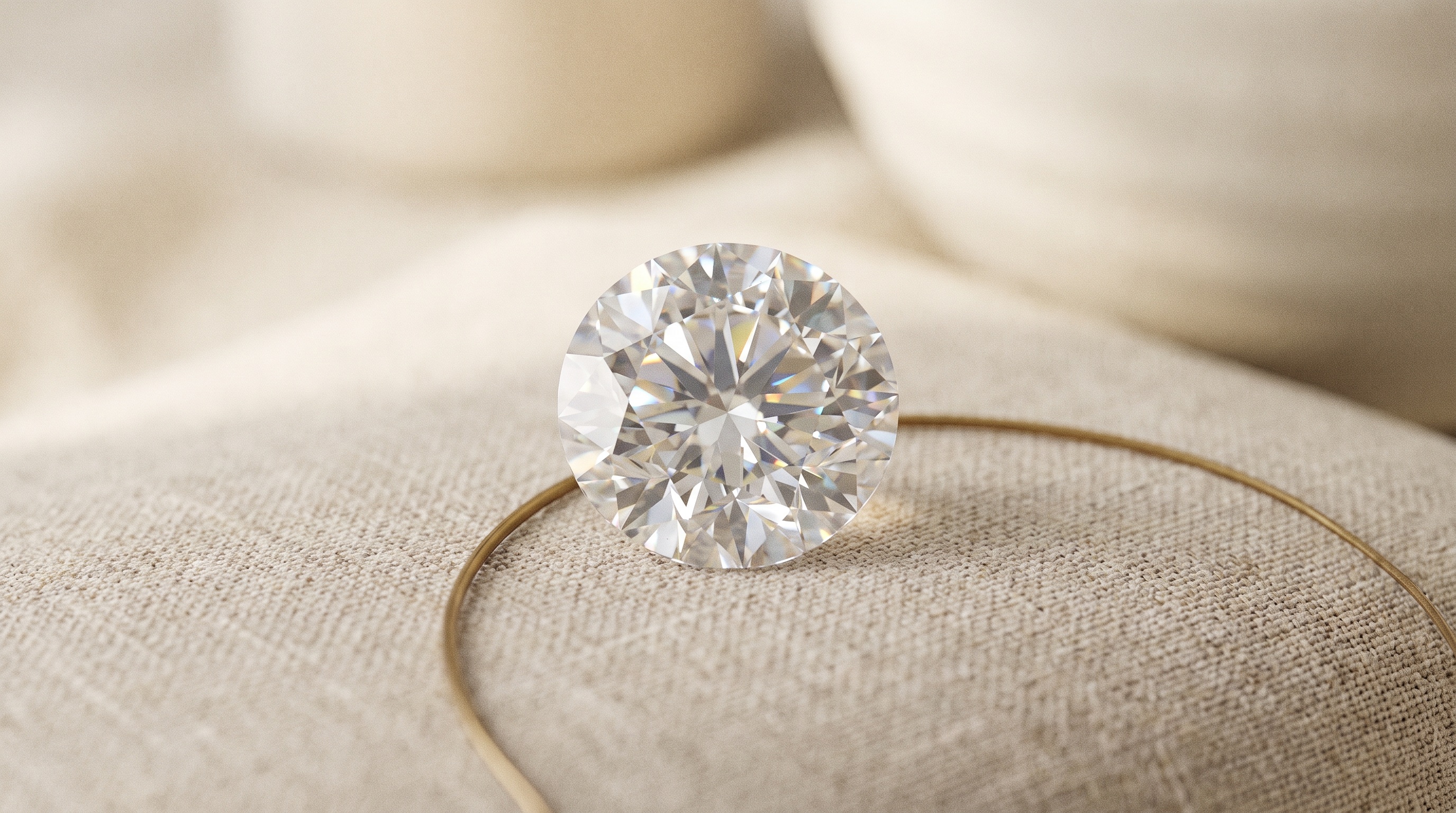
Melee below roughly 1.2mm is commonly cut as single-cut — a simplified 17-18 facet arrangement — while larger melee is typically full-cut, with the standard 57-58 facet round brilliant arrangement. This matters for the clarity conversation because facet count affects how much scintillation a stone throws off, and heavy scintillation genuinely helps mask small inclusions — the same reason a well-cut diamond of a given clarity grade can look cleaner than a poorly-cut stone of the identical grade. A full-cut melee stone breaks light into more, smaller flashes, which gives the eye less time to rest on any one facet long enough to register an inclusion.
Practically: on the smallest single-cut goods, clarity grade matters even less than the size alone would suggest, because the simpler facet pattern is already doing a lot of the work of making the stone read clean. On full-cut melee at 2mm and up, the cut is helping, but it's not doing as much heavy lifting — which is part of why the clarity decision starts to matter more at those sizes regardless of faceting style.
Does Clarity Consistency Across a Parcel Matter More Than the Grade Itself?
In a lot of real jobs, yes. A parcel that's consistently SI, sorted stone to stone against a master reference, reads better set in a row than a mixed parcel that technically averages out to VS but includes some stones noticeably cleaner than others. The eye is far more sensitive to inconsistency across a visible row than it is to the absolute clarity level of any single stone — a mismatched row draws attention exactly where a jeweler doesn't want it.
This is why Guru Diam sorts every natural melee parcel against a master stone rather than pooling loosely-graded goods that happen to average to a target grade, and why calibration tolerance includes a 1-grade match on clarity within a parcel, the same standard trade convention used for color. If a job is unusually sensitive to consistency — a long tennis bracelet line, a wide statement pavé shoulder — it's worth flagging that at quote time so the parcel gets sorted with extra attention to matching, not just to hitting the target grade on average.
How Should You Decide Between VS and SI for Your Next Job?
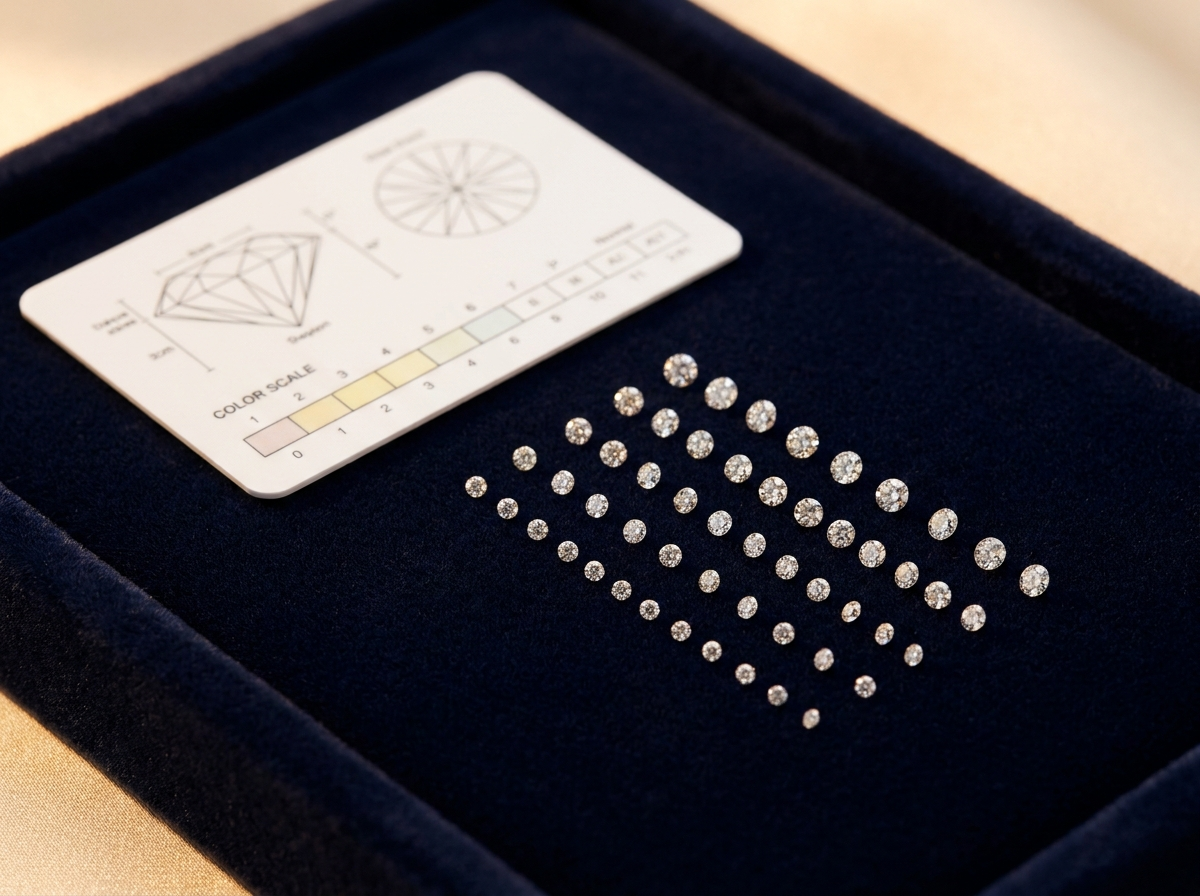
A practical framework, in order of how much each factor actually moves the decision:
- What size are the stones? Under 2mm, default to SI unless there's a specific reason not to. Over 3mm, take VS seriously.
- How prominent is the position? A stone the customer's eye lands on first (center-adjacent, hero row, main tennis line) deserves a higher grade than a stone that's part of a collective field of sparkle.
- How will the piece actually be viewed? Loupe scrutiny at a counter, macro product photography, and casual wear at arm's length are three very different visibility standards — spec to the one that applies.
- What's the total carat weight involved? The VS/SI delta is a per-carat number — multiply it by the actual carats a job needs, not the stone count, to see the real dollar impact. A small pavé accent job might see a few dollars of difference; a full tennis bracelet's main line can see a meaningfully larger swing.
- What does the rest of the piece call for? Match clarity tier to the color tier and to the price point of the finished piece — an EF-color, premium-positioned piece pairs naturally with VS; a GH-color, value-positioned piece rarely needs it.
None of these questions has a universally correct answer, which is the honest point of this whole guide — the right clarity call depends on the job, not on which grade sounds better on a spec sheet.
How Do You Order the Right Clarity Grade from Guru Diam?
Natural melee at Guru Diam is quoted per parcel against your exact spec, not sold off a fixed price list. When you reach out, have ready: the millimeter size (or range), the color/clarity grade you want (EF VS, EF SI, GH VS, or GH SI), and the total carat weight the job needs. If you're not sure whether a specific position in the piece calls for VS or SI, say so — that's a normal question to bring to a quote, not something you need to have pre-decided.
Send that spec over WhatsApp or through Contact for a confirmed price per carat against real available stock. For the full color story that pairs with this clarity decision, see EF vs GH Color Melee: Which Grade Fits Which Job, and for the complete quality grid — how EF/GH and VS/SI combine across all four working grades — see Natural Melee Color & Clarity Grades Explained.
Frequently Asked Questions
Does clarity really matter in melee-sized diamonds?
Less than it does in larger stones, but it's not irrelevant. Below about 2mm, SI clarity is effectively eye-clean and the VS-vs-SI difference rarely shows face-up. Above roughly 3mm, especially in prominent settings, the difference becomes visible enough to matter.
What's the actual price difference between VS and SI melee at Guru Diam?
Roughly $15 to $30 per carat, depending on size and color — a fairly consistent dollar delta that shrinks as a percentage of total price at larger sizes. See the comparison table above for specific size bands; full pricing is confirmed at quote.
When should I upgrade to VS clarity melee instead of SI?
On larger melee (roughly 3mm and up), in prominent positions like halo edge stones or a tennis bracelet's main line, and on pieces that will be examined under a loupe or magnified product photography. Below 2mm, or in dense pavé where stones read as a collective field, SI is usually the smarter spec.
Is SI clarity melee actually eye-clean?
In most sizes Guru Diam sells, yes — particularly below 2mm, where the stone's small size does more to hide inclusions than the clarity grade does. At larger sizes, SI is still generally clean at typical viewing distance, but the margin for a visible inclusion grows.
Does the setting type change which clarity grade I should order?
Yes. Dense pavé and channel-set work favor SI, since individual stones aren't independently scrutinized. Halo edge stones, wide statement pavé shoulders, and tennis bracelet main lines favor VS, since those stones sit in direct visual lines that draw the eye.
Can I mix VS and SI clarity in the same piece?
Yes, and it's common practice — grading the most visible positions (center-adjacent stones, a hero row) VS while running the rest of the piece SI is a standard way to control cost without compromising on the parts of the piece that actually get looked at closely.