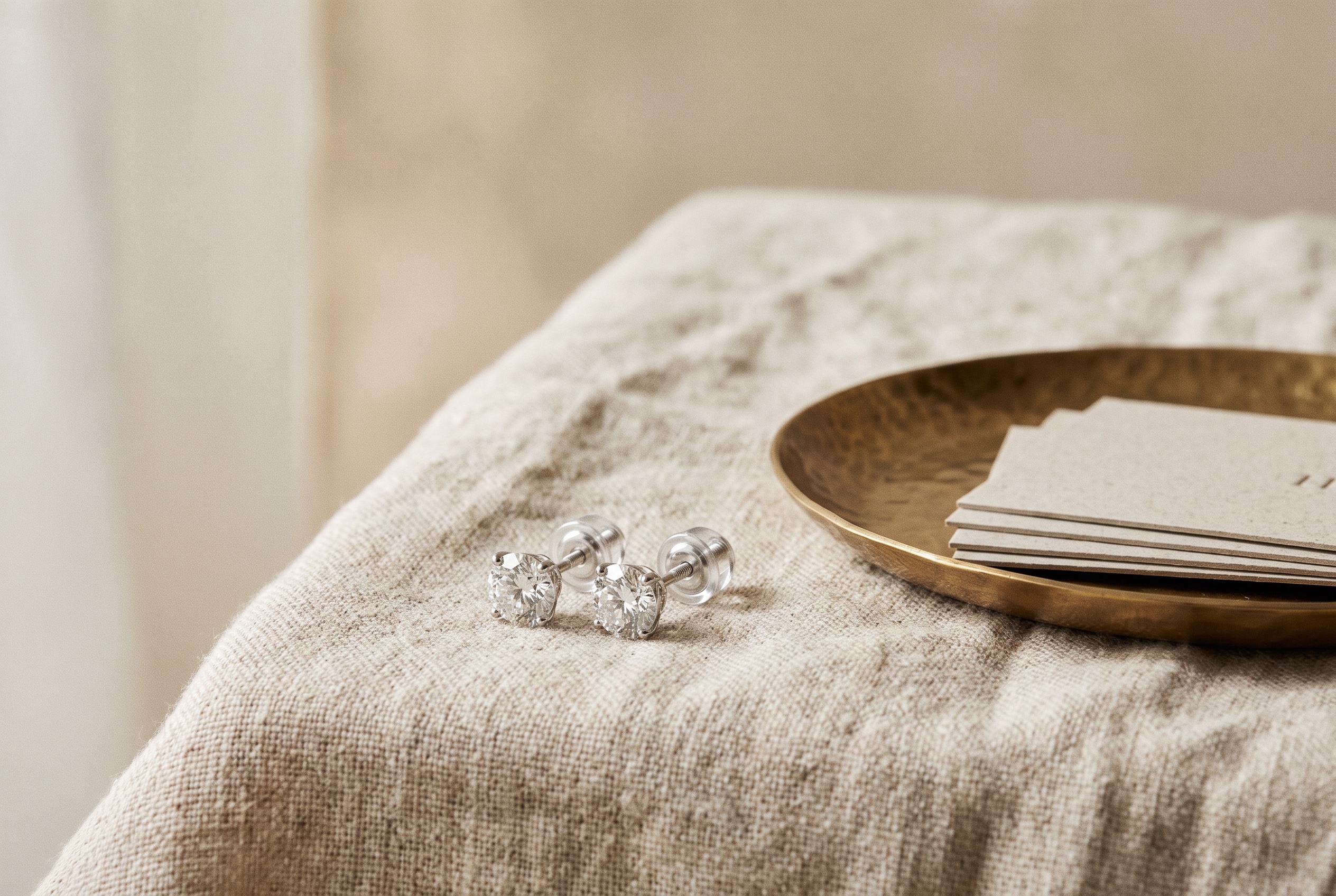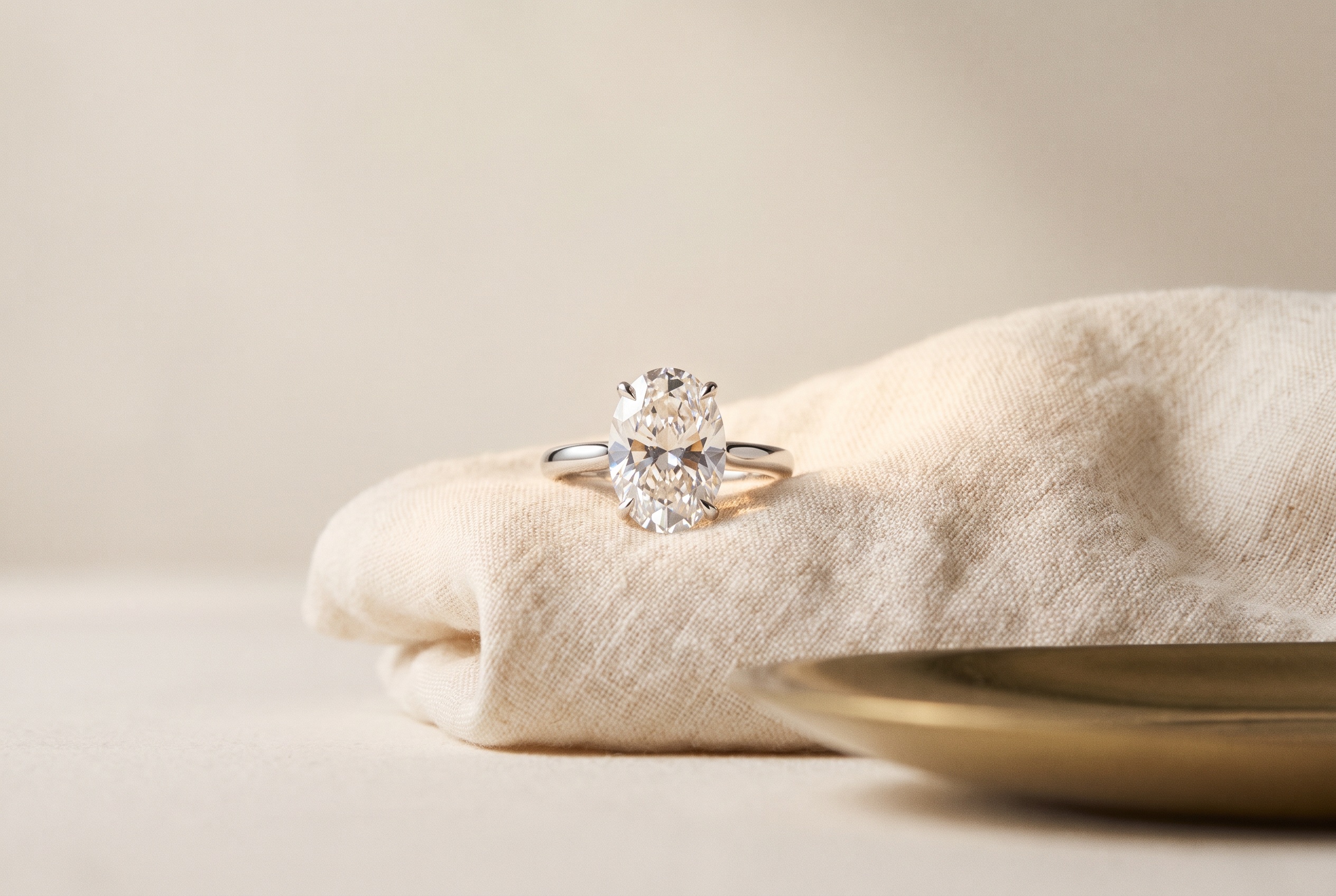

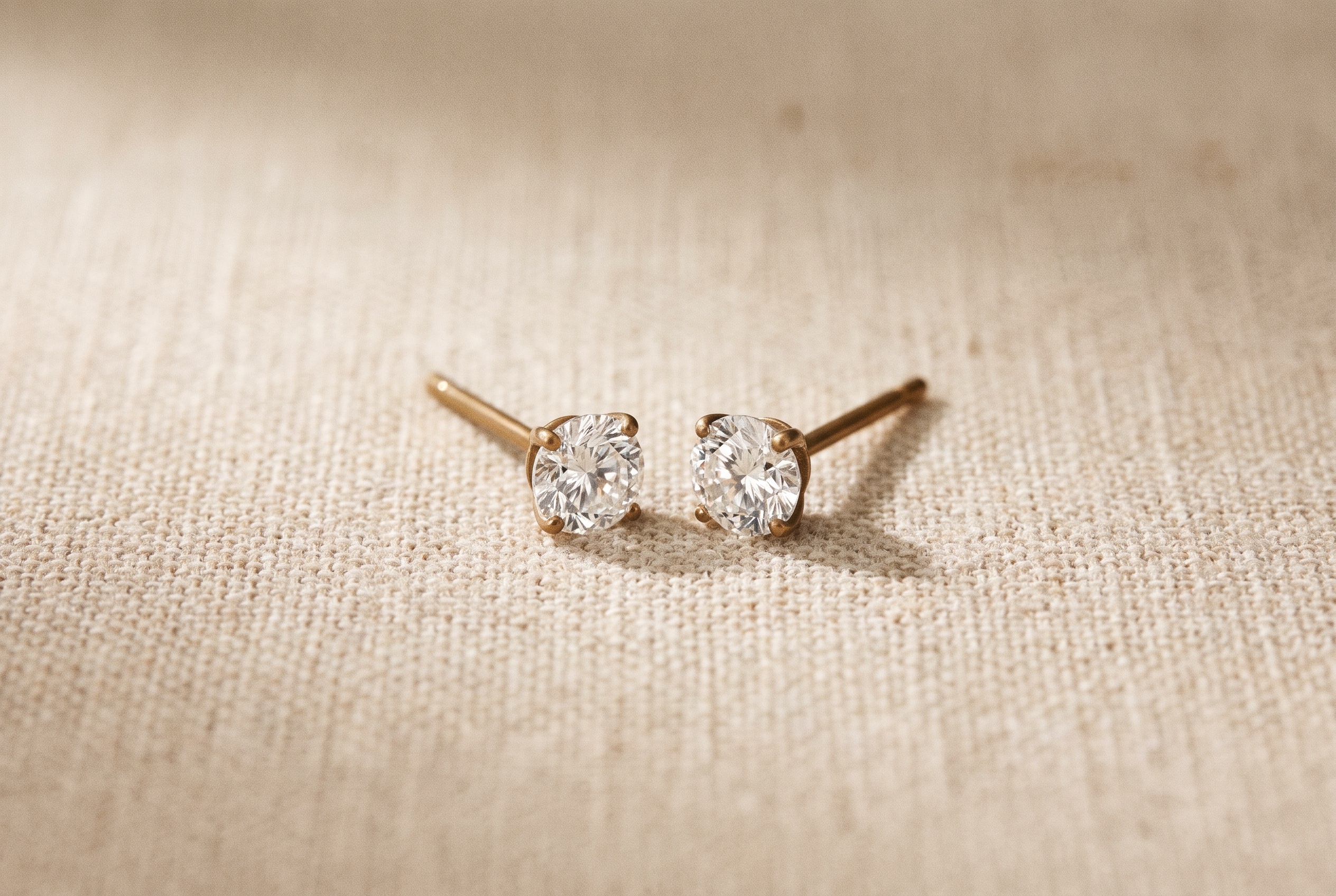
Lab-grown diamond earrings are stud, drop, or hoop earrings set with CVD lab-grown diamonds — chemically and optically identical to natural diamonds, certified by the same major labs, at a meaningfully lower cost per carat than natural material of equivalent quality. For jewelers and designers, building or sourcing earrings around lab-grown diamonds comes down to a specific set of sourcing decisions that don't apply the same way to a single center stone: matched-pair consistency, shape and clarity choices suited to close side-by-side comparison, and setting styles that hold up to the more exposed, frequently-touched wear pattern earrings see.
This guide is written for the trade — jewelers and designers sourcing loose lab-grown diamonds and matched pairs to set into earrings, rather than a consumer shopping for a finished piece. It covers what makes earring sourcing genuinely different from sourcing a single center stone, how to evaluate and source a true matched pair, shape and clarity considerations specific to earrings, setting styles worth stocking, and what to ask a wholesale supplier before placing an order.
Why Earring Sourcing Is Different From Sourcing a Single Stone
Sourcing diamonds for a ring or pendant is fundamentally a single-stone decision — cut, color, clarity, and carat weight for one center stone, evaluated on its own. Earrings introduce a second variable that changes the sourcing process entirely: match quality. Two diamonds can each individually grade as excellent cut, near-identical color, and matching clarity on paper, and still look visibly mismatched once mounted side by side, because grading reports describe a stone's characteristics within a grade range rather than pinpointing an exact value — two "G color" stones can sit at opposite ends of the G range and still both correctly be labeled G. For a single stone, that range tolerance doesn't matter. For a pair worn a few inches apart on the same person's ears, it does.
What Makes a Genuinely Matched Pair
A well-matched earring pair requires alignment across several dimensions simultaneously, not just a shared grade on the certificate:
- Carat weight — ideally identical or within a very tight tolerance; a visibly different size between two studs reads as a sourcing error, not a design choice.
- Shape and proportions — matching outline, depth, and table size, particularly important for fancy shapes like oval, pear, or cushion where proportion variation is more visually obvious than in round brilliants.
- Color — matching not just the letter grade but the position within that grade's range, since two stones at opposite ends of the same grade can show a visible warmth difference side by side.
- Clarity character — matching grade is a starting point, but inclusion type and position ideally shouldn't create a visibly different face-up appearance between the two stones.
- Cut quality and light performance — two stones with different cut proportions can throw noticeably different amounts of brilliance even at the same numeric cut grade, which is especially visible in earrings since both catch light simultaneously.
The only reliable way to guarantee this level of match is direct side-by-side comparison of physical candidate stones before an order ships — comparing two stones pulled from separate lots based on certificate specs alone is a common source of mismatched pairs that only becomes obvious once the earrings are mounted.
Shapes Best Suited to Earrings
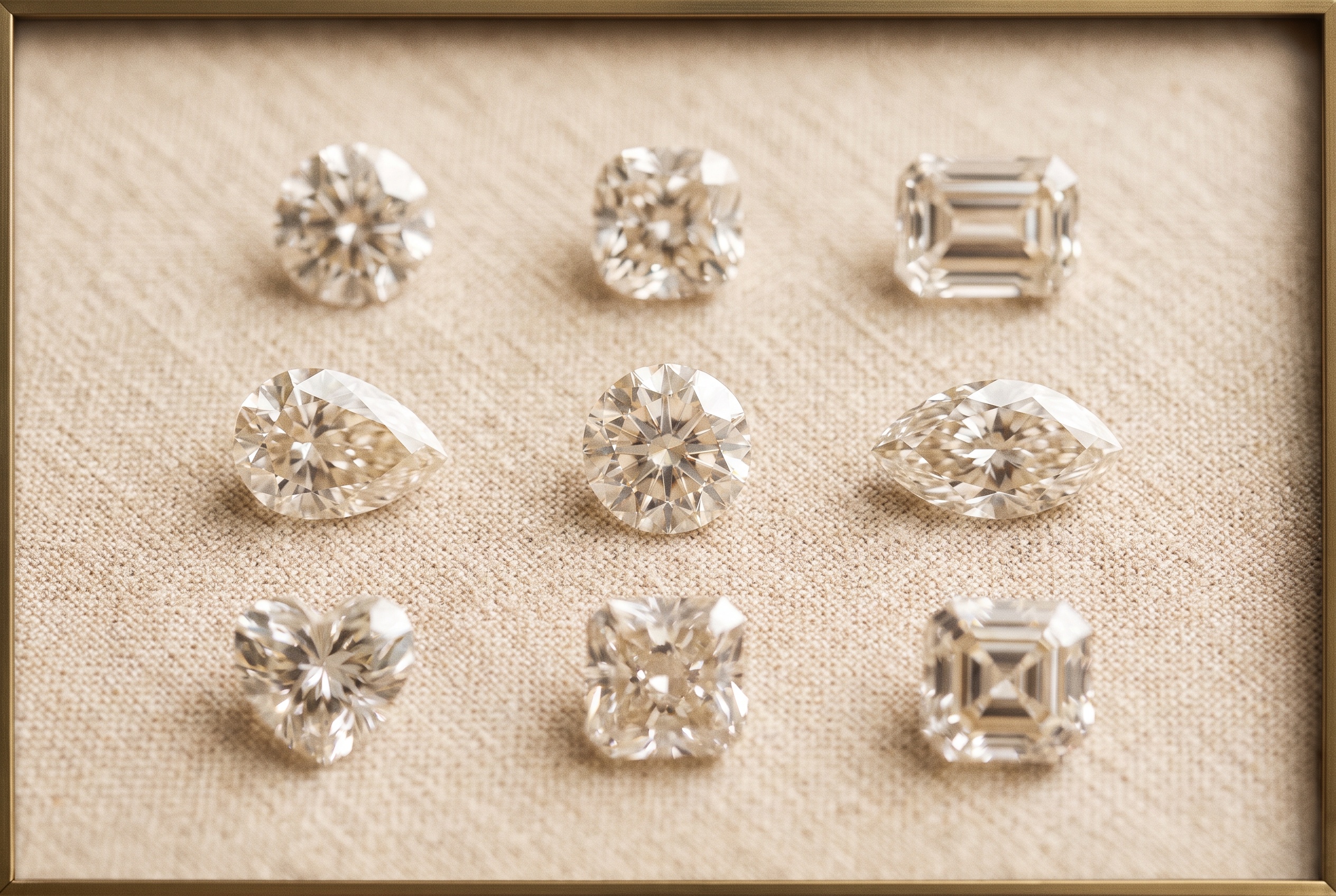
| Shape | Why It Works Well for Earrings | Matching Difficulty |
|---|---|---|
| Round brilliant | Maximum brilliance from any angle; most forgiving shape for achieving a visually seamless match | Lowest — consistent machine-cut proportions make matching straightforward |
| Princess | Sharp, modern lines; reads well in both stud and halo earring styles | Low-moderate |
| Oval | Elongating, flattering silhouette; strong brilliance similar to round | Moderate — orientation and length-to-width ratio must match closely |
| Cushion | Soft, romantic outline; pairs well with halo settings | Moderate-high — corner rounding and proportion vary more between stones |
| Emerald / Asscher | Clean, architectural look; increasingly popular for drop and huggie styles | High — step-cut symmetry differences are more visually obvious than in brilliant cuts |
| Antique cuts (old mine, old European) | Warm, individual character; strong fit for vintage-inspired collections | Highest — hand-cut variation means true matching requires direct comparison, not spec matching |
Clarity Considerations Specific to Earrings
Clarity grade selection for earring stones follows the same general logic as for a center stone — VS clarity is eye-clean for the overwhelming majority of buyers, and VVS is rarely necessary purely for visibility — but earrings add one practical consideration: both stones are viewed simultaneously and are typically smaller than an average engagement ring center stone, which generally makes clarity grade less visually critical than it would be for a large solitaire. Where earring-specific clarity attention does matter is match consistency, covered above — two VS2 stones with very differently positioned inclusions are a bigger problem for a matched pair than either stone's individual clarity grade.
Color Considerations Specific to Earrings
Because earrings sit close to the face and are viewed under a wide range of lighting throughout the day, color consistency between the pair often matters more than the specific grade chosen. A well-matched G/H pair will generally look more cohesive and premium than a mismatched pair where one stone is a strong G and the other sits at the bottom of the same grade range. For buyers prioritizing budget, moving both stones down together to a slightly lower matched grade typically produces a better result than keeping one stone at a higher grade and settling for a less precise match at a lower one.
Settings That Hold Up to Earring Wear
Earrings see more incidental contact than most rings or pendants — catching on hair, clothing, and being handled during daily removal and wear — which makes setting security and durability a bigger practical factor than in other jewelry categories:
- Prong (basket) settings — the standard for stud earrings, maximizing light exposure to the stone; four-prong is more secure for daily wear, six-prong offers a more delicate look with a slightly higher security margin for larger stones.
- Bezel settings — fully or partially encircle the stone in metal, offering the highest security and the most protection against chips or snags, a strong choice for earrings intended for frequent, low-maintenance daily wear.
- Halo settings — a center stone surrounded by melee, adding perceived size and brilliance without increasing center stone carat weight, a popular choice for buyers wanting a bigger look at a lower cost.
- Cluster and drop designs — combine a center stone with articulated drop elements or additional melee, requiring more complex matched-pair coordination across multiple stones per earring rather than just one.
Backing hardware matters as much as the front-facing setting: push backs are standard for daily studs, screw backs add security for larger or heavier stones, and lever backs suit drop and dangle styles where the earring needs to stay properly oriented throughout the day.
Matched Pairs vs. Full Suites
Beyond a simple two-stone pair, some earring designs call for a full matched suite — three-stone drop earrings, cluster designs with multiple graduated stones, or earrings designed to coordinate visually with a matching pendant or ring. Sourcing a full suite multiplies the matching challenge, since every additional stone has to align with all the others on carat weight, color, and cut character simultaneously, not just with one counterpart. This is where sourcing through a supplier carrying enough matched-pair and antique-cut inventory to compare multiple candidates directly matters most — piecing together a suite from separately sourced single stones rarely produces a result that reads as intentional.
Hoop and Drop Earrings: Additional Sourcing Considerations
Stud earrings are the simplest matched-pair case, but hoop and drop styles introduce their own sourcing questions. Diamond-set hoops, where melee or small calibrated stones run along the metal band, require consistent stone size and color across a full run per earring, not just a two-stone match — meaning the sourcing challenge scales with how many stones the design calls for rather than staying fixed at two. Drop and dangle earrings that combine a smaller top stone with a larger bottom stone (or an articulated chain of stones) need matching within each tier separately — both top stones matched to each other, both bottom stones matched to each other — since a mismatch within either tier is more visually obvious than a difference between the top and bottom elements themselves, which are already differentiated by size and position. For jewelers designing these more complex styles, discussing the full stone count and matching structure with the supplier before sourcing begins avoids piecing together a design from stones that were never evaluated against each other as a full set. This is also where lead time expectations should be set explicitly with the client — a five-stone hoop with a tight color and size match across every stone takes meaningfully longer to source well than a simple two-stone stud pair, and quoting the same turnaround for both sets an unrealistic expectation from the outset. Building a small buffer into quoted delivery windows for multi-stone designs, rather than promising the same speed across every earring style, keeps client expectations aligned with what genuine matching actually requires, and is generally easier for a client to accept upfront than a delay explained after the fact, especially on a piece the client has already been shown a design rendering for and is expecting on a specific timeline.
Certification for Earring Stones
Individual loose stones at 0.30ct and above intended for earrings should carry standard IGI, GIA, or GCAL certification the same as any other loose diamond, confirming cut, color, clarity, carat weight, and lab-grown status with growth method (CVD) disclosed. Smaller calibrated melee used in halo or cluster earring designs typically ships as uncertified parcel goods against a DEF+/VS+ quality baseline rather than individually certified — standard practice for melee generally, not specific to earrings, and worth confirming with the supplier so certification expectations are set correctly before ordering.
Sourcing Considerations for Jewelers Building an Earring Program
- Order in pairs from a single lot when possible, rather than combining two separately sourced stones, to reduce the risk of a match that looks acceptable on paper but not in person.
- Ask for side-by-side photos or video of the actual candidate pair before finalizing an order, not just the individual certificates.
- Build in a slightly wider carat-weight tolerance for larger stones, since even a very tight percentage tolerance represents more absolute weight difference at larger sizes.
- Confirm setting security specs match the intended wear pattern — a piece marketed for daily wear needs a more secure setting and backing than an occasional-wear design.
- Consider antique-cut earrings as a differentiated offering — genuinely matched antique-cut pairs are harder to source than modern round brilliants, which makes them a stronger point of differentiation for a jeweler's own retail customers.
Why Lab-Grown Material Fits Earring Programs Especially Well
The cost gap between lab-grown and natural diamonds compounds for earrings specifically, because a jeweler is sourcing two (or more) stones of matching quality rather than one. A pair of natural VS-clarity, G-color round brilliants at a given carat weight can represent a meaningfully higher cost basis than an equivalent CVD lab-grown pair, and that gap widens further for larger stones or fancy shapes. That cost advantage does more than make earring programs more accessible at a given price point — it also widens the realistic carat-weight range a jeweler can stock in matched pairs, since sourcing two well-matched larger stones is both harder and more expensive in natural material, making lab-grown a practical way to offer bigger, more dramatic earring options without the natural-material cost of doing so. This is part of why lab-grown has become the default recommendation specifically for multi-stone pieces — the per-stone savings scale directly with how many matched stones a design requires.
Building an Earring Assortment: Stocking Strategy
For a jeweler stocking lab-grown diamond earring components rather than sourcing one pair at a time per order, a few practical patterns tend to work well:
- Stock round brilliant matched pairs across a spread of common carat weights (roughly 0.25ct to 1.5ct in practical increments) as the reliable, easy-to-match backbone of an earring program.
- Add a smaller selection of fancy shapes — oval, cushion, princess — in the sizes that see the most consistent demand, accepting a longer sourcing lead time for these given the tighter matching tolerance they require.
- Reserve antique-cut and step-cut matched pairs for made-to-order rather than open stock, since the matching difficulty and lower unit volume make holding speculative inventory in these categories less efficient than sourcing them per client request.
- Keep melee on hand in DEF+/VS+ CVD stock for halo and cluster designs, since these get used across ring, pendant, and earring programs alike rather than being earring-specific inventory.
This kind of tiered approach — deep stock in the easiest-to-match, highest-demand category, made-to-order for the harder matching tiers — tends to balance inventory efficiency against the reality that true match quality can't be rushed for the categories where it matters most.
Common Mistakes When Sourcing Earring Diamonds
- Matching by certificate spec alone. Two stones with identical grades on paper can still look mismatched once mounted — always compare actual photos or physical stones before finalizing a pair.
- Underestimating setting wear. Earrings undergo more daily handling than most jewelry categories; choosing a setting based purely on appearance without considering security for the intended wear frequency leads to avoidable repairs and customer complaints.
- Overpaying for clarity that won't be visible. As with single stones, clarity above VS grade rarely improves visible appearance in earring-sized stones — budget is often better spent on match quality and cut.
- Assuming melee is individually certified. Melee used in halo or cluster designs ships as parcel goods against a quality baseline, not individual certificates — confirm this expectation with the supplier up front.
Pricing an Earring Program: What Drives Cost Beyond the Stones
Quoting an earring program accurately means accounting for more than the two (or more) stones themselves. Matching effort itself carries a cost — sourcing a genuinely well-matched pair, especially in a fancy shape or antique cut, takes more supplier time than pulling two stones that merely share a certificate grade, and that effort is reflected in how matched-pair pricing is typically structured relative to buying two unmatched stones of the same specs separately. Setting labor also scales differently than for a single-stone piece: two settings must be fabricated to match each other precisely, not just to hold a stone securely, and any custom element — a halo, a drop, a specific prong style — gets built twice rather than once. Jewelers quoting client work should factor both of these into pricing conversations up front, rather than treating an earring quote as simply double the cost of a comparable single-stone piece.
Sourcing Lab-Grown Diamond Earring Stones
Guru Diam sources matched pairs and full suites specifically for jewelers building earring and multi-stone pieces, comparing candidate stones directly against each other before an order ships rather than matching purely by certificate spec. The catalog spans CVD lab-grown and natural diamonds across standard, antique, and exotic cuts, plus calibrated melee for halo and cluster work, with IGI, GIA, and GCAL certification available on loose stones. Certified matched pairs ship same-day on in-stock inventory from both the New York and Los Angeles locations, and custom earring settings are finished in 4–6 days. For jewelers also sourcing a coordinating center stone, our round brilliant cut guide covers the most commonly requested shape for both rings and earring pairs in more depth.
Frequently Asked Questions
Are lab-grown diamond earrings the same quality as natural diamond earrings?
Yes — CVD lab-grown diamonds are chemically, optically, and physically identical to natural diamonds, graded on the same cut, color, and clarity scales by the same labs (IGI, GIA, GCAL). The certificate discloses growth method, but the diamond itself meets the same quality standards regardless of origin.
How do you match diamonds for a pair of earrings?
True matching requires aligning carat weight, shape and proportions, color position within grade, clarity character, and cut quality across both stones — and ideally comparing physical candidate stones or photos side by side rather than relying on certificate specs alone, since two stones can carry identical grades and still look visibly different mounted together.
What diamond shape is easiest to match for earrings?
Round brilliant is the easiest to match reliably, because consistent machine-cut proportions make two stones from the same quality tier likely to look nearly identical. Step cuts like emerald and Asscher, and hand-cut antique styles like old mine and old European, are considerably harder to match and require closer direct comparison.
Should earring diamonds be individually certified?
Loose stones at 0.30ct and above intended as the primary stones in an earring design should carry individual IGI, GIA, or GCAL certification. Smaller calibrated melee used in halo or cluster designs typically ships as uncertified parcel goods against a quality baseline instead, which is standard practice for melee generally.
What setting is most secure for daily-wear diamond earrings?
Bezel settings offer the highest security and the most protection against chips or snags, making them a strong choice for earrings intended for frequent daily wear. Prong settings maximize light exposure and brilliance but require slightly more care, particularly for larger stones.
Can antique-cut diamonds be matched for earrings?
Yes, but matching is harder than with modern round brilliants because every antique-cut stone is individually hand-proportioned, meaning no two are naturally identical. A genuinely matched antique-cut pair requires direct side-by-side comparison of candidate stones rather than matching by certificate spec alone.
Guru Diam is a trade-only wholesale diamond supplier with locations in New York and Los Angeles, sourcing matched pairs and full suites in CVD lab-grown and natural diamonds across standard, antique, and exotic cuts, plus calibrated melee, certified loose stones, and finished jewelry. Source matched pairs through matching pairs, browse certified inventory in the certified diamonds category, or build a custom setting through custom jewelry. Trade accounts can review current inventory and terms at the wholesale hub or apply through trade partner.