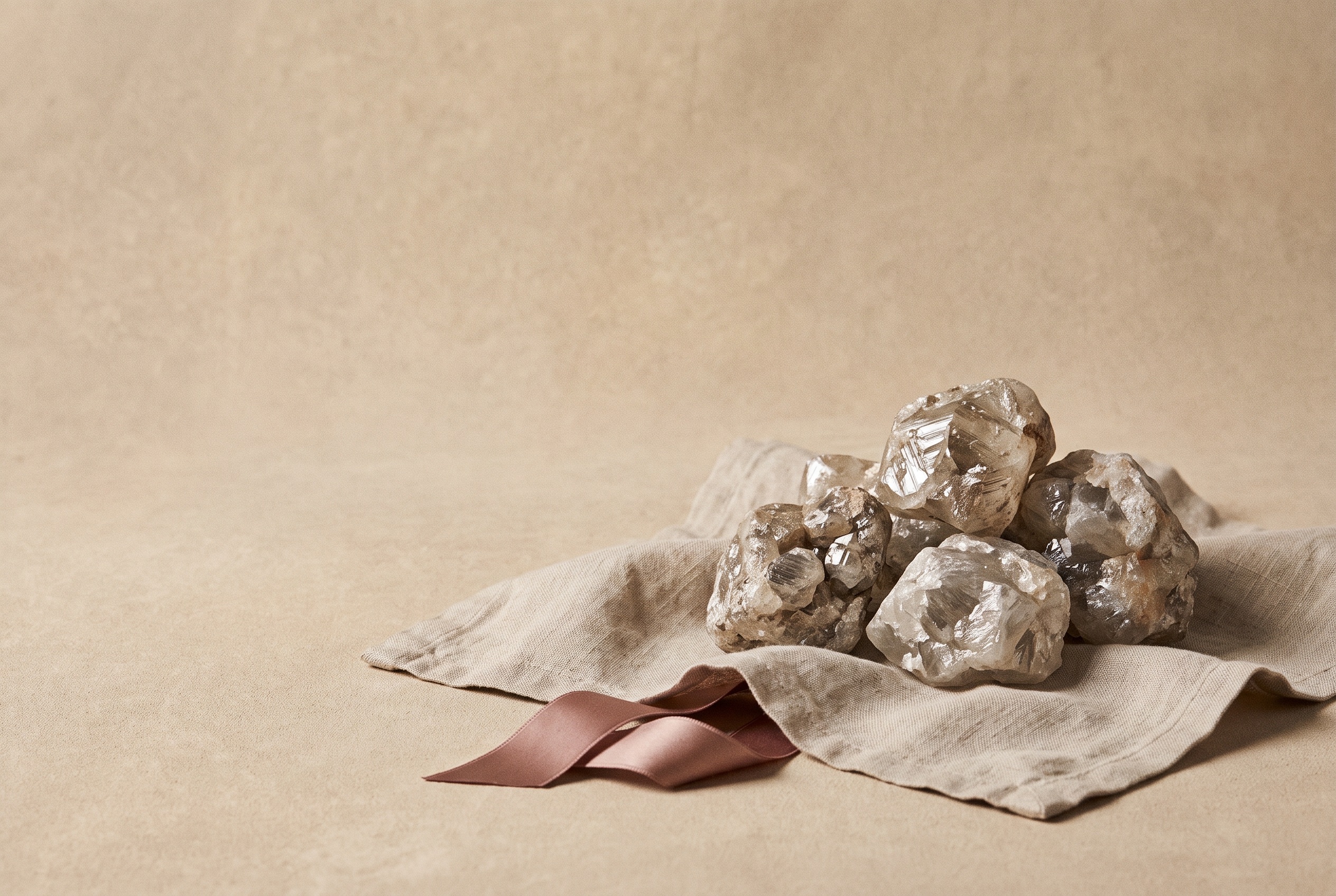
Lesotho diamond mining is a small but globally disproportionate producer by value, driven almost entirely by the Letšeng mine — the world's highest-altitude diamond mine, and one of the most consistent sources of large, exceptional-quality rough diamonds anywhere, despite processing relatively modest ore volumes compared to major producers. Lesotho's diamond industry is a clear example of a country punching well above its volume weight in the global trade because of the specific character of its rough rather than the scale of its output.
This guide covers Lesotho's diamond geology and mine history, the Letšeng mine's unusual production profile and record-setting rough diamond finds, the smaller Kao and Liqhobong mines, how mining revenue is structured between operators and the Lesotho government, Lesotho's Kimberley Process standing, how the country compares to other African producers, the broader economic and employment role mining plays in the country's highland regions, and what wholesale buyers should understand about sourcing Lesotho-origin diamonds in practice.
Lesotho's Diamond Geology
Lesotho's diamond deposits are hosted in kimberlite pipes located at unusually high altitude within the country's mountainous terrain, a geological setting that has made mining logistically more demanding than in lower-altitude kimberlite regions elsewhere in southern Africa. The country's kimberlite pipes are relatively few in number compared to major producing countries, but several — Letšeng chief among them — have proven exceptionally productive in terms of stone size and quality relative to the volume of ore processed.
The Letšeng Mine: The World's Highest-Altitude Diamond Mine
Letšeng, operated by Gem Diamonds in partnership with the Lesotho government, sits at an elevation of roughly 3,100 meters (about 10,000 feet), making it the highest-altitude diamond mine in the world — a distinction that shapes nearly every aspect of the operation, from equipment logistics to workforce conditions to the extreme weather the mine regularly operates through. Despite processing a comparatively low ore grade (meaning relatively few carats recovered per ton of ore), Letšeng has become globally significant for something else entirely: the exceptional average size and quality of the stones it does recover.
Why Letšeng Produces Disproportionately Large Stones
Letšeng has one of the highest average rough diamond values per carat of any diamond mine in the world, driven by a production profile skewed toward unusually large, high-quality rough — including a series of stones exceeding 100 carats and several exceeding 200 carats recovered over the mine's operating history. This pattern, where a mine's economic value comes overwhelmingly from a small number of exceptional stones rather than consistent high-volume output, is relatively unusual among major diamond mines and is the central fact that defines Letšeng's global reputation.
Record-Setting Rough Diamonds From Letšeng
Letšeng has produced several of the largest and most valuable rough diamonds recovered anywhere in the world in recent decades, including the Lesotho Promise (603 carats, recovered in 2006) and the Letšeng Legacy (910 carats, recovered in 2018), among the largest rough diamonds found globally this century. These finds, each generating significant international trade attention and substantial sale prices at auction, have repeatedly reinforced Letšeng's reputation as one of the world's most reliable sources of exceptional large rough — a track record few other active mines can match.
Smaller Lesotho Mines: Kao and Liqhobong
Beyond Letšeng, Lesotho's diamond sector includes the smaller Kao and Liqhobong mines, both also kimberlite operations though with less pronounced large-stone production profiles than Letšeng. Kao, operated by Storm Mountain Diamonds, and Liqhobong, developed by Firestone Diamonds, both add meaningfully to Lesotho's total production volume and export revenue even though neither has achieved Letšeng's specific reputation for exceptional individual stones.
How Mining Revenue Is Structured
Lesotho's major diamond mines operate under partnership structures between the mining companies and the Lesotho government, which typically holds a minority equity stake (commonly cited around 30% for Letšeng) alongside royalty and tax revenue from production. This structure gives the government a direct financial stake in mine performance beyond standard taxation, a model that has become relatively common across several African diamond-producing countries seeking to capture more of the value generated by mining activity within their borders.
Diamond Revenue's Role in Lesotho's Economy
Diamond mining represents one of Lesotho's most significant formal export sectors, generating substantial foreign currency revenue and government income relative to the country's small overall economy, even though Lesotho's total diamond production volume is modest compared to major global producers. Given Lesotho's limited other major export industries, diamond mining revenue plays an outsized role in national economic planning relative to what its global production ranking by carat volume alone would suggest.
Lesotho's Kimberley Process Standing
Lesotho has been a full, unrestricted Kimberley Process participant since the scheme's inception, with no history of suspension or conflict-financing concerns affecting its diamond exports — a straightforward compliance profile that stands in contrast to several other producing countries in the region with more complicated certification histories. This clean compliance record supports Lesotho-origin stones moving through standard international trade channels without the additional documentation scrutiny that applies to diamonds from countries with active Kimberley Process restrictions.
Lesotho Compared to Other Diamond-Producing African Countries
| Country | Production Profile | Notable Distinction |
|---|---|---|
| Lesotho | Low volume, exceptionally high average value per carat | World's highest-altitude diamond mine (Letšeng); record large-stone finds |
| Botswana | High volume and high value | Leading producer by value globally, Jwaneng and Orapa mines |
| South Africa | Moderate volume, historic industry origin | Birthplace of large-scale industrial diamond mining |
| Namibia | Moderate volume, high average quality | Marine and coastal alluvial mining specialty |
| Sierra Leone | Lower volume, mixed artisanal/industrial | History of large rough finds, including the Star of Sierra Leone |
Lesotho's closest comparison point among this group is arguably Namibia, another country whose diamond reputation rests significantly on above-average stone quality rather than sheer volume — though Namibia's marine alluvial mining model is geologically and operationally distinct from Lesotho's high-altitude kimberlite operations.
Operational Challenges of High-Altitude Mining
Mining at Letšeng's altitude presents operational challenges rare among major diamond mines: extreme weather including heavy snowfall and freezing temperatures for significant parts of the year, logistical difficulty transporting equipment and personnel to and from the site, and the general engineering complexity of running continuous industrial operations at close to 10,000 feet elevation. These conditions have shaped Letšeng's infrastructure and operating costs meaningfully, and they're part of why replicating a Letšeng-style operation isn't simply a matter of finding another similarly diamond-rich kimberlite pipe elsewhere.
How Large Rough Stones From Letšeng Are Typically Sold
Exceptional large rough diamonds recovered at Letšeng are frequently sold through dedicated tender processes rather than standard bulk wholesale channels, given their individual significance and value — a sales approach similar in spirit to how other mines with occasional exceptional finds (Argyle's pink diamond tender, for instance) have handled their rarest individual stones rather than folding them into routine production sales. This tender approach allows manufacturers and specialist buyers to bid specifically on stones whose cutting and manufacturing decisions require significant individual planning given their size and value.
What Happens to Letšeng's Record Stones After Sale
Record-setting Letšeng rough stones typically go on to extensive individual cutting and polishing planning given their exceptional starting size — a single large rough stone can sometimes yield multiple significant finished polished diamonds, with manufacturers making careful yield-optimization decisions about how to divide (or whether to keep intact as a single large polished stone) each exceptional find. This planning process for a single major rough stone can take months, reflecting how much value is at stake in getting the cutting decision right for material this rare.
Environmental and Community Considerations
Lesotho's diamond mining operations, Letšeng included, operate under environmental management obligations covering water use, land rehabilitation, and community engagement typical of modern industrial mining regulation, with particular attention to water resources given Lesotho's broader economic reliance on water exports to South Africa through the Lesotho Highlands Water Project — a context that makes water-management practices at high-altitude mining operations a matter of particular national interest beyond the diamond sector alone.
Natural vs. Lab-Grown From a Lesotho Sourcing Perspective
Lesotho's specific value proposition — exceptional large natural rough with a documented individual-stone story — has no direct lab-grown equivalent, since lab-grown CVD diamonds are manufactured to specification rather than recovered as naturally occurring exceptional finds with an inherent rarity and provenance narrative. For buyers specifically seeking the kind of large, natural, investment-grade stone Letšeng is known for, lab-grown isn't a substitute category; for buyers seeking standard bridal or fashion-grade diamonds without a specific origin story requirement, lab-grown remains a separate, price-competitive option regardless of Lesotho's specific reputation.
What Buyers Sometimes Get Wrong About Lesotho Diamonds
- Assuming Lesotho is a high-volume producer. Lesotho's global significance comes from exceptional average stone value, not overall production volume, which remains modest compared to major producers like Botswana or Russia.
- Assuming all Lesotho production matches Letšeng's profile. The smaller Kao and Liqhobong mines contribute meaningfully to total volume but don't share Letšeng's specific large-stone production pattern.
- Confusing Letšeng's altitude distinction with its value distinction. Letšeng's fame rests on both being the world's highest-altitude diamond mine and having an exceptional record for large stones — two separate, if related, claims to significance.
- Assuming large rough stones sell through standard wholesale channels. Letšeng's most exceptional finds typically move through dedicated tender sales given their individual significance and value.
Lesotho's Position in Global Rough Diamond Value Rankings
While Lesotho ranks well outside the top tier of global diamond producers by carat volume, its average value per carat recovered — driven overwhelmingly by Letšeng's production profile — places it among the highest-value-per-carat producing countries globally, a ranking measured in dollars rather than carats that tells a meaningfully different story than a simple volume-based producer list would suggest.
Recent Developments in Lesotho's Diamond Sector
Lesotho's diamond mining sector has continued to see periodic exceptional finds at Letšeng in recent years, reinforcing the mine's long-running reputation, alongside ongoing operational and ownership developments at the smaller Kao and Liqhobong operations as the companies involved manage the typical cost, grade, and market-price pressures common to mid-sized diamond mining operations globally. Lesotho's overall diamond sector trajectory has remained relatively stable rather than experiencing the dramatic closures or expansions seen in some other producing countries, a consistency that itself has become part of the country's trade reputation.
Sourcing Through a Wholesale Supplier
Guru Diam is a trade-only wholesale supplier carrying certified CVD lab-grown diamonds, natural diamonds, certified loose stones, and finished and custom jewelry — antique cuts, standard fancy shapes, and round brilliant all included, with IGI, GIA, and GCAL certification available. While large individual finds like Letšeng's record stones move through specialist tender channels rather than standard wholesale inventory, buyers sourcing certified natural or lab-grown stones for everyday bridal and fashion jewelry can work through standard wholesale channels regardless of a specific mine-of-origin story. In-stock inventory ships same-day nationwide from New York (before 6pm EST) and Los Angeles (before 4pm PST).
Buyers can browse certified loose diamond inventory through the certified diamonds category, review fancy color stones through fancy color loose diamonds, and source matched pairs through matching pairs. Trade accounts can review terms at the wholesale hub or apply through trade partner, and jewelers building a full piece can work through custom jewelry for a setting finished in 4-6 days, whether the center stone carries a specific mine-of-origin story or not.
How Letšeng's Ore Grade Compares to Other Major Mines
Letšeng's ore grade — the number of carats recovered per ton of processed kimberlite — is notably lower than higher-grade operations like Jwaneng in Botswana, meaning Letšeng processes substantial ore volume relative to the number of carats it ultimately recovers. This low-grade, high-value profile is precisely why Letšeng's economics work: a small number of exceptional stones generate enough revenue to justify processing large ore volumes at a grade that would be uneconomical for a mine without Letšeng's specific track record of periodic exceptional finds.
Why Exceptional-Stone Mines Are Valued Differently Than Volume Producers
Financial analysts and trade observers evaluate mines like Letšeng using different metrics than volume-driven operations — average price per carat and the statistical likelihood of exceptional finds matter more than total annual carat output, which is the reverse of how a high-volume, more consistent producer like Orapa or Jwaneng would typically be assessed. This distinction matters for understanding why a relatively small operation by global carat-volume standards can nonetheless generate outsized trade attention and revenue relative to its size.
Comparing Letšeng's Auction Results to Other Exceptional Stones
Letšeng's major finds have repeatedly commanded sale prices that rank among the highest ever achieved for rough diamonds, competing in trade attention with the most significant finds from other historically important sources like South Africa's Cullinan mine or Sierra Leone's Star of Sierra Leone. What distinguishes Letšeng from most other sources of historically famous large stones is consistency — rather than a single defining exceptional find decades ago, Letšeng has continued producing multiple record-scale stones across a sustained operating period, reinforcing rather than resting on its reputation.
How Gem Diamonds Manages a Low-Grade, High-Value Operation
Operating a mine where economic viability depends on periodic exceptional finds rather than predictable steady output requires a different operational and financial approach than running a conventional high-grade mine: Gem Diamonds manages Letšeng with production planning, cost control, and investor communication built around the statistical expectation of occasional outsized finds rather than assuming smooth, consistent quarter-over-quarter output. This has meant Letšeng's reported financial results can show more variability between periods than a higher-grade, higher-volume mine would typically show, a pattern investors and trade analysts following the operation have come to expect as characteristic of its production profile.
Lesotho's Broader Mineral and Natural Resource Context
Diamonds are Lesotho's most significant mineral export, but the country's economy also relies heavily on water exports to South Africa and on remittances from Basotho workers employed in South African industries, particularly mining — meaning Lesotho's own diamond sector exists within a broader regional economic relationship with South Africa that shapes much of the country's overall economic structure beyond diamonds specifically. This context is useful for understanding why diamond revenue, while significant, is one part of a more complex small-economy picture rather than Lesotho's singular economic driver.
What a Buyer Should Know Before Sourcing Lesotho-Origin Material
A buyer interested specifically in Lesotho-origin diamonds should understand that routine wholesale availability of Lesotho-origin stones is limited relative to countries with higher-volume, more consistent production — most Lesotho-origin material a typical wholesale buyer encounters will have moved through standard international cutting and trading channels without a marketed country-of-origin distinction, since Lesotho's clean Kimberley Process standing means there's little compliance reason to track origin at that level of detail once a stone has been cut and certified. Buyers specifically seeking a Letšeng-traceable large stone, by contrast, would need to engage with the tender and specialist-dealer channels those exceptional finds move through directly.
How Lesotho's Story Fits the Broader "Rare Large Stone" Narrative in the Trade
Letšeng's periodic record finds contribute to a broader trade narrative around exceptional large rough diamonds — a category that also includes historically significant stones from South Africa's Premier (now Cullinan) mine, Sierra Leone, and occasional finds from Canadian and Russian operations. This narrative matters commercially because exceptional large-stone stories generate outsized media and collector attention relative to their actual share of global production, helping sustain public and trade interest in natural diamond mining generally even as routine bridal-category production increasingly shifts toward lab-grown alternatives. Letšeng functions, in effect, as one of the natural diamond trade's most reliable ongoing sources of this kind of attention-generating exceptional find.
Employment and Local Economic Impact in Lesotho's Mining Regions
Lesotho's diamond mines, Letšeng included, are significant employers in the country's mountainous, otherwise sparsely economically developed highland regions, providing formal wage employment in areas with comparatively few other major industrial employment options. This regional economic role gives Lesotho's diamond sector significance beyond its direct export revenue contribution, since formal mining employment in these highland districts represents a meaningfully different economic opportunity than the subsistence agriculture and remittance-dependent livelihoods that dominate much of rural Lesotho's economy otherwise.
Frequently Asked Questions
Why is Lesotho significant in the global diamond trade despite its small size?
Lesotho's Letšeng mine has one of the highest average rough diamond values per carat of any mine in the world, driven by a track record of recovering exceptionally large, high-quality stones, including several exceeding 200 carats. This gives Lesotho outsized trade significance relative to its modest total production volume.
What makes Letšeng the world's highest-altitude diamond mine?
Letšeng sits at roughly 3,100 meters (about 10,000 feet) elevation in Lesotho's mountainous terrain, higher than any other active diamond mine globally, which shapes the mine's logistics, equipment, and operating conditions significantly.
What are some of Letšeng's most famous diamond finds?
The Lesotho Promise (603 carats, recovered 2006) and the Letšeng Legacy (910 carats, recovered 2018) are among the mine's most notable finds, ranking among the largest rough diamonds recovered globally this century.
Does Lesotho have any Kimberley Process compliance issues?
No. Lesotho has been a full, unrestricted Kimberley Process participant since the scheme's inception, with no history of suspension or conflict-financing concerns affecting its exports.
Are there other diamond mines in Lesotho besides Letšeng?
Yes. The smaller Kao and Liqhobong mines also operate in Lesotho, contributing meaningfully to total production volume, though neither shares Letšeng's specific reputation for exceptionally large individual stones.
How are Letšeng's largest rough diamonds typically sold?
Exceptional large rough stones are frequently sold through dedicated tender processes rather than standard bulk wholesale channels, given the significant individual value and cutting-planning decisions involved in stones of that size.
Does the Lesotho government have a financial stake in the country's diamond mines?
Yes. Lesotho's major mines, including Letšeng, operate under partnership structures where the government typically holds a minority equity stake (commonly cited around 30% for Letšeng) alongside standard royalty and tax revenue, giving the state a direct financial interest in mine performance beyond taxation alone.
Is Lesotho a reliable, low-risk country to source natural diamonds from?
Yes, from a compliance standpoint. Lesotho has maintained a clean, unrestricted Kimberley Process record since the scheme began, with no history of suspension or conflict-financing concerns, making it a comparatively straightforward origin country from a documentation and sourcing-risk perspective.