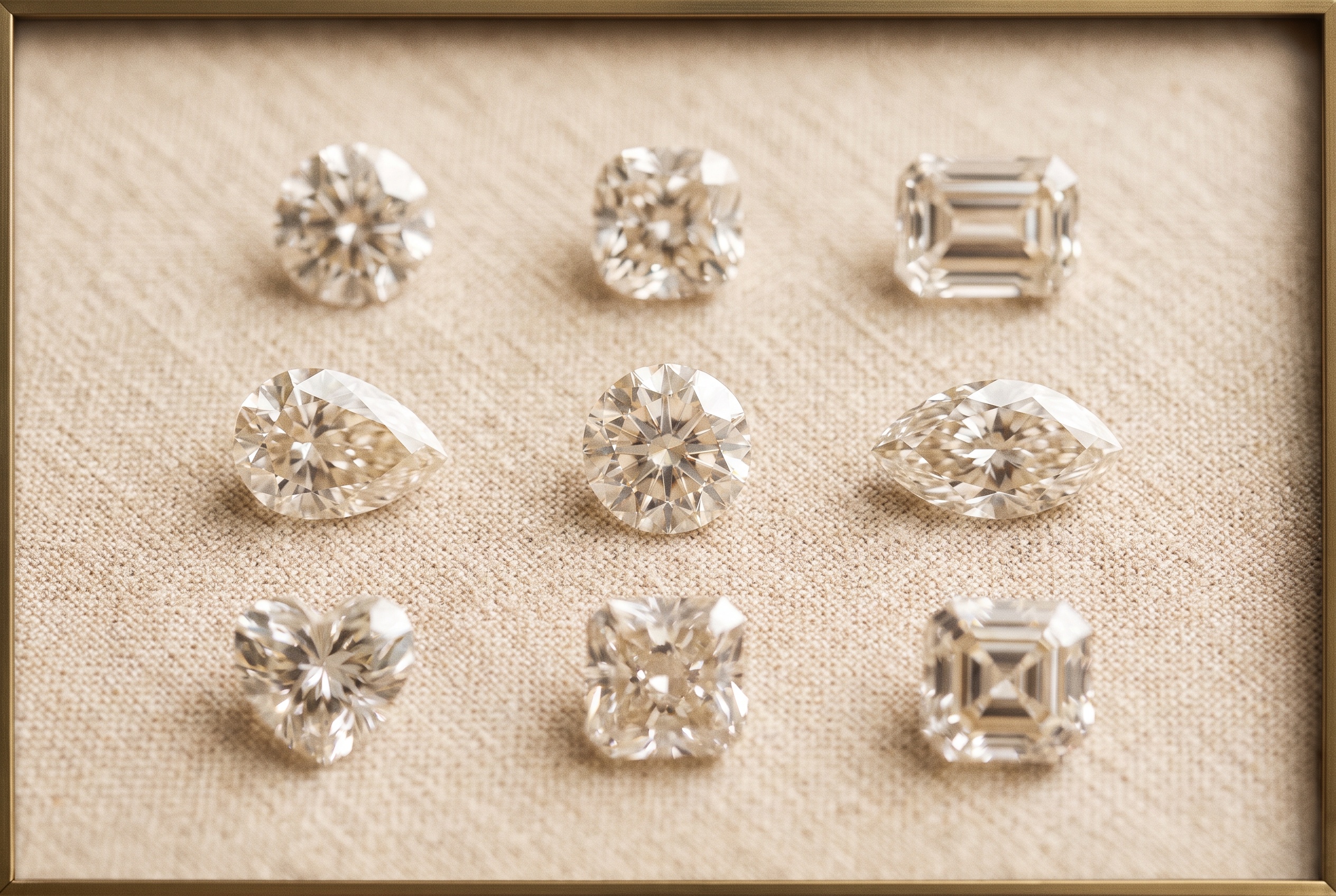

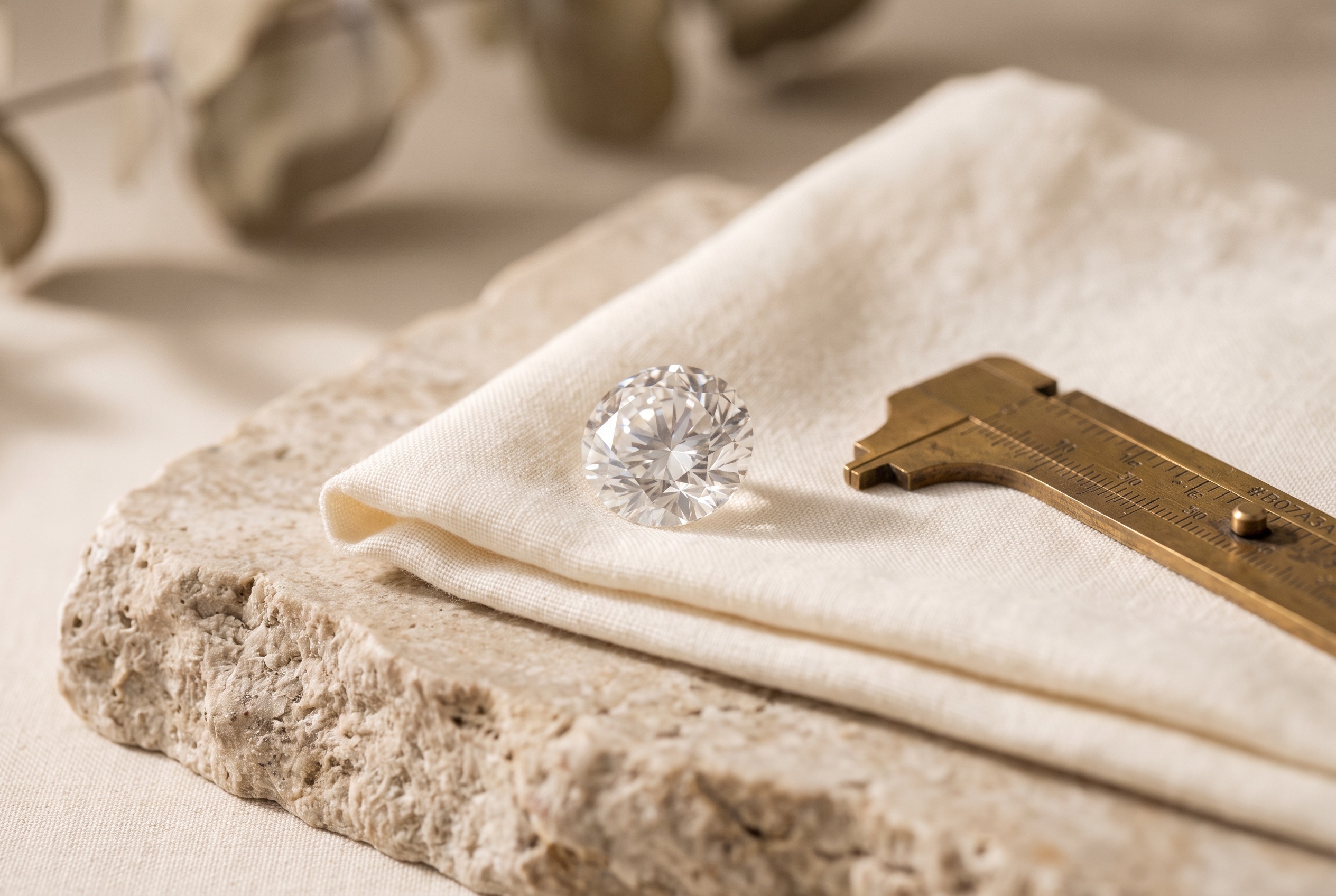
Ethically sourced diamonds are stones whose origin and production can be verified as free from the human rights abuses, conflict financing, and undisclosed environmental harm historically associated with parts of the diamond trade — verified either through a documented, certified supply chain for natural stones or through a lab-grown production process that removes mining from the equation entirely. For jewelers and designers fielding sourcing questions from their own retail customers, "ethically sourced" isn't a single checkbox; it's a combination of traceability, certification, and supplier transparency that has to be demonstrable, not just claimed.
The phrase gets used loosely across the diamond industry, often as a marketing label with little behind it. That's a real problem for trade buyers, because "ethically sourced" is increasingly a question retail customers ask directly, and a jeweler repeating a vague supplier claim without being able to back it up is a liability, not a selling point. This guide breaks down what ethical sourcing actually requires for both natural and lab-grown diamonds, how the two categories differ in what they can verify, what traceability and certification genuinely cover, and what questions a buyer should be asking a wholesale supplier before repeating any ethical claim to a customer.
Why "Ethically Sourced" Became a Diamond Industry Question
The modern conversation around diamond ethics traces back to the conflict, or "blood," diamond crisis of the 1990s and early 2000s, when diamonds mined in war zones — particularly in parts of West and Central Africa — were sold to finance armed conflict, often under conditions involving forced labor and violence. That crisis produced the Kimberley Process Certification Scheme in 2003, an international agreement requiring participating countries to certify that rough diamond exports are conflict-free as narrowly defined by the scheme.
Since then, the scope of "ethical" has broadened well beyond the original conflict-financing definition to include labor conditions at mining and cutting operations, environmental impact of large-scale mining, community displacement, and fair compensation for artisanal miners. That broader definition is also where a lot of confusion creeps in, because a diamond can be fully Kimberley Process compliant — genuinely conflict-free under the scheme's own terms — while still coming from an operation with labor or environmental practices a buyer might not consider "ethical" in the fuller sense.
The Kimberley Process: What It Covers and Where It Falls Short
The Kimberley Process remains the primary international framework for certifying natural rough diamonds as conflict-free, and it has meaningfully reduced the flow of diamonds financing armed conflict since its introduction. It's a legitimate and important standard. But it has well-documented limitations that any buyer relying on it should understand:
- Narrow definition of "conflict." The scheme only addresses diamonds financing rebel movements against recognized governments — it does not certify against labor conditions, environmental practices, or violence carried out by a government itself against its own population.
- Self-reporting by participating countries. Certification relies heavily on national governments reporting their own compliance, with uneven independent verification across member states.
- No chain-of-custody tracking to the individual stone. Kimberley Process certificates apply to shipments of rough diamonds at the export stage, not to an individual polished stone all the way through cutting, polishing, and final sale — meaning a Kimberley Process certificate alone doesn't tell a buyer where or under what conditions a specific finished diamond was cut and polished.
None of this means natural diamonds can't be responsibly sourced — many are, through supply chains with real transparency built in beyond the Kimberley Process minimum. It means the Kimberley Process alone isn't sufficient evidence of full ethical sourcing, and a buyer or jeweler repeating "Kimberley Process certified" as a complete ethical guarantee is overstating what that certification actually verifies.
Lab-Grown Diamonds: Removing Mining From the Question Entirely
CVD (chemical vapor deposition) lab-grown diamonds sidestep the mining-related ethics questions by design — they're grown in a controlled lab environment from a diamond seed crystal, using a carbon-rich gas mixture and heat rather than being extracted from the earth. There's no rough-diamond mining, no artisanal mining labor question, and no Kimberley Process applicability, because the Kimberley Process specifically governs rough diamonds extracted from the ground.
That doesn't make lab-grown diamonds automatically "more ethical" in every dimension — lab growth is energy-intensive, and the environmental footprint of a CVD facility depends heavily on its energy source, a point covered in more detail below. But on the specific human rights and conflict-financing concerns that originally drove the ethical sourcing conversation, lab-grown material removes the underlying supply chain risk rather than managing it, which is why it's increasingly the default recommendation for retail customers whose primary concern is mining-related harm specifically.
Natural Diamonds: What Real Ethical Sourcing Looks Like Beyond Kimberley Process
For buyers and end customers who specifically want a natural stone, ethical sourcing is achievable — it just requires looking past the Kimberley Process baseline to additional layers of verification:
- Single-country or single-mine origin documentation, where a supplier can trace a stone to a specific, known mining operation rather than a mixed shipment from multiple undisclosed sources.
- Third-party responsible-sourcing certifications that go beyond Kimberley Process minimums, auditing labor conditions, environmental practices, and community impact at the mine level.
- Documented chain of custody from mine through cutting and polishing to final certification, rather than a single point-of-export certificate with no further tracking.
- Supplier transparency about where in the process documentation gaps exist — a supplier willing to say plainly what it can and can't verify is a stronger signal than one claiming full traceability without evidence.
The honest reality is that fully documented, mine-to-market traceability is still the exception rather than the norm across the broader natural diamond trade, which is precisely why so many retail buyers have shifted toward lab-grown material specifically to avoid the verification gap.
Lab-Grown vs. Natural: Ethical Sourcing Considerations Compared
| Consideration | Lab-Grown (CVD) | Natural |
|---|---|---|
| Conflict-financing risk | Not applicable — no mining involved | Addressed by Kimberley Process, with known scope limits |
| Mining labor conditions | Not applicable | Varies significantly by origin and operation; requires supplier verification beyond Kimberley Process |
| Land/community displacement risk | Not applicable | A documented concern at some large-scale mining operations; origin-specific |
| Environmental footprint | Energy-intensive growth process; footprint depends on the facility's energy source | Land disturbance and water use from extraction; footprint depends on mine type and scale |
| Traceability to source | Traceable to a growing facility, though facility-level disclosure varies by supplier | Traceable to export country reliably; traceable to specific mine only with additional documentation |
| Certification available | IGI, GIA, GCAL | IGI, GIA, GCAL, plus Kimberley Process at the rough stage |
Neither category is a blanket "more ethical" answer — the honest framing for a retail customer is that lab-grown removes an entire category of sourcing risk by design, while natural sourcing can be made genuinely responsible but depends much more heavily on which specific supplier and documentation trail is behind a given stone.
What Traceability Actually Requires
"Traceable" gets used as loosely as "ethical" in diamond marketing, so it's worth being precise about what real traceability involves at each stage:
- Origin documentation — for lab-grown, the specific growing method (confirmed CVD) and facility; for natural, country of origin at minimum, ideally mine-specific.
- Chain-of-custody records connecting the rough material through cutting, polishing, and grading, so the certificate issued at the end genuinely corresponds to a documented path rather than a stone that entered the supply chain at an unverified midpoint.
- Independent certification from a recognized grading lab, which verifies the stone's characteristics and, for lab-grown material, confirms the growth method on the certificate itself.
- Supplier willingness to answer specific questions — origin, growth method, certification body — directly and consistently, rather than defaulting to generic reassurance language.
A useful test for any jeweler evaluating a wholesale supplier's ethical claims: ask a specific, narrow question — which lab certifies the stones, whether growth method is disclosed on the certificate, what country natural stock originates from — and see whether the answer is specific or deflects to a general statement about being "committed to ethical sourcing."
Certification and What Each Lab Actually Verifies
IGI, GIA, and GCAL are the three certification bodies most relevant to the trade, and each grades the same core characteristics — cut, color, clarity, carat weight — while also confirming, for lab-grown stones specifically, that the diamond is lab-grown and by which method (CVD versus the increasingly less common HPHT process). A certificate is not itself an ethics audit; it verifies the physical stone and, for lab-grown material, the production method. Ethical sourcing claims sit on top of certification, not inside it — a buyer should treat "certified" and "ethically sourced" as two separate questions, both of which need answering.
Environmental Considerations Beyond the Conflict Question
Ethical sourcing conversations increasingly extend past human rights and conflict financing into environmental impact, and here the picture is more nuanced than either side of the natural-versus-lab-grown debate tends to present:
- Natural diamond mining disturbs land at the mine site, requires significant water use in processing, and — depending on the operation — can involve tailings management and habitat disruption that vary widely by mine type and regulatory environment.
- Lab-grown diamond production avoids land disturbance and mining-related water use, but the CVD growing process is energy-intensive, running specialized reactors at high temperature for days to weeks per batch — meaning its environmental footprint is closely tied to the carbon intensity of the electricity powering the facility.
Neither category has a universal, verifiable environmental footprint number that applies industry-wide, and buyers should treat specific environmental impact statistics from any supplier — natural or lab-grown — with the same scrutiny applied to ethical sourcing claims generally: ask what the number is based on and whether it's independently verified.
How Trade Buyers Can Talk to Their Own Customers About This
For jewelers and designers fielding ethical sourcing questions at the counter, the strongest position isn't a blanket claim — it's being able to answer specifically:
- What material is this stone (lab-grown or natural), and what does that mean for sourcing risk specifically?
- Who certified it, and does the certificate confirm growth method for lab-grown stones?
- What can the supplier document about origin, and what can't they document?
Retail customers increasingly respond better to a specific, honest answer — including "here's what we can verify and here's what we can't" — than to a generic ethical-sourcing tagline. That makes a wholesale supplier's own transparency directly useful as retail-facing material, not just a compliance detail.
Fancy Color Diamonds and Melee: A Separate Sourcing Question
Ethical sourcing questions don't just apply to center stones — they come up for fancy color diamonds and melee just as often, and the sourcing considerations shift slightly for each. Fancy color loose stones (available in yellow, pink, blue, and green) carry the same certification and origin-documentation questions as any other loose diamond, and buyers should apply the same checklist regardless of color. Melee is a different case: because melee ships as uncertified parcel goods against a quality baseline rather than individually or parcel-certified, origin and growth-method documentation typically applies at the supplier and production-batch level rather than stone by stone. A jeweler sourcing calibrated melee for pavé or accent work should ask the same origin and growth-method questions of the supplier, understanding the answer will describe the batch and supply relationship rather than a single certificate number. For matched pairs specifically — stud earrings or side stones built to flank a center diamond — the same origin and growth-method documentation should apply consistently across both stones in the pair, since a mismatch in sourcing transparency between two supposedly matched stones is itself a signal worth asking about.
Common Misconceptions About Ethical Sourcing
- "Kimberley Process certified" means fully ethical. It means conflict-free under a specific, narrower definition — a meaningful standard, but not a complete ethics guarantee.
- "Lab-grown" automatically means zero environmental impact. It removes mining-related land and labor concerns, but the growing process itself has a real energy footprint.
- All natural diamonds have the same sourcing risk profile. Origin and specific supply chain vary enormously — a diamond from a well-documented, audited mining operation is a very different proposition from an untraceable mixed-lot stone, even though both might carry the same baseline certification.
- Ethical sourcing is a one-time claim rather than an ongoing verification process. Supply chains change; a supplier's sourcing practices are worth revisiting periodically, not assumed permanent from a single past conversation.
Red Flags When Evaluating a Supplier's Ethical Claims
- Vague language ("committed to responsible sourcing") with no specific certification, origin documentation, or traceable process behind it.
- Inability or reluctance to name the certification lab or confirm growth method disclosure for lab-grown stock.
- No distinction made between natural and lab-grown sourcing risk — treating both categories as interchangeable on ethics is itself a sign of a supplier not thinking carefully about the question.
- Unverifiable environmental statistics presented without a source or methodology.
Documentation Checklist Before Placing an Order
For a jeweler or designer sourcing on behalf of an ethics-conscious client, it helps to have a concrete checklist rather than relying on a supplier's general assurances in the moment. Before placing an order, it's worth confirming:
- Material type stated plainly — lab-grown or natural, with no ambiguity, and never blended language that implies one when the stone is the other.
- Growth method confirmed for lab-grown stock — CVD specifically, since HPHT and CVD are produced through different processes and some buyers or end customers specifically ask which method was used.
- Certification lab named — IGI, GIA, or GCAL — with a certificate number that can be independently looked up through the lab's own verification tool, not just a PDF attached to an invoice.
- Country of origin for natural stones, even if mine-level detail isn't available for every piece of inventory; a supplier who can at least narrow origin to a country or region is offering more than a supplier who can't answer the question at all.
- A direct answer on what isn't verifiable — a supplier who acknowledges the limits of what they can document is generally more trustworthy on the claims they do make than one who presents everything as fully guaranteed.
This kind of checklist matters most for larger or higher-value orders, where a client is more likely to ask follow-up questions, but it's a habit worth building into sourcing conversations generally rather than reserving for special cases.
How the Ethical Sourcing Conversation Has Shifted
A decade ago, "ethically sourced" in the diamond trade meant almost exclusively "Kimberley Process compliant" — a conflict-free guarantee for natural rough. That conversation has broadened considerably as lab-grown diamonds have moved from a novelty into a mainstream, widely available category, and as retail customers have become more informed about the gap between Kimberley Process compliance and genuine end-to-end traceability. The practical effect for trade buyers is that "ethically sourced" questions now come up more often, from more customers, and with more specific follow-up questions than they did even a few years ago — which is exactly why having documented, specific answers on hand (rather than a general commitment statement) has become a genuine competitive factor at the retail counter, not just a compliance checkbox.
Sourcing Ethically Documented Diamonds
Guru Diam carries both CVD lab-grown and natural diamonds across standard, antique, and exotic cuts, along with certified loose stones and finished jewelry — buyers aren't limited to a single material category when sourcing for ethics-conscious clients. Every lab-grown stone is confirmed CVD-only, with growth method disclosed on certification from IGI, GIA, or GCAL, so a jeweler reselling to a retail customer can point to a specific, verifiable certificate rather than a general claim. Certified loose diamonds ship same-day on in-stock inventory from both the New York and Los Angeles locations, and custom pieces built around a documented stone are finished in 4–6 days. For buyers who also need clarity-specific sourcing guidance for a client evaluating a center stone, our VVS clarity diamond guide covers how to evaluate and source that grade tier alongside the same certification questions raised here.
Frequently Asked Questions
What does "ethically sourced" mean for diamonds?
Ethically sourced means a diamond's origin and production can be verified as free from conflict financing, exploitative labor conditions, and undisclosed environmental harm — established through a documented, certified supply chain for natural stones, or through a lab-grown process that removes mining from the equation entirely.
Are lab-grown diamonds more ethical than natural diamonds?
Lab-grown diamonds remove mining-related conflict, labor, and land-use concerns by design, since they're grown in a lab rather than extracted from the ground. Natural diamonds can be responsibly sourced too, but that depends heavily on the specific mine, supplier, and documentation trail rather than being guaranteed industry-wide.
Does the Kimberley Process guarantee a diamond is ethically sourced?
No. The Kimberley Process certifies rough diamonds as conflict-free under a specific, narrower definition tied to financing armed conflict against recognized governments — it doesn't audit labor conditions, environmental practices, or track a stone's full chain of custody through cutting and polishing.
How can I verify a diamond's origin?
Ask the supplier directly for origin documentation — country of origin at minimum for natural stones, growing facility and method for lab-grown — and check whether the grading certificate (IGI, GIA, or GCAL) confirms growth method for lab-grown material. A supplier who answers specifically, rather than with general reassurance, is the stronger signal.
Do lab-grown diamonds have an environmental impact?
Yes — the CVD growing process is energy-intensive, and its environmental footprint depends on the energy source powering the facility. It avoids the land disturbance and water use associated with mining, but "lab-grown" doesn't mean zero environmental impact.
What certification confirms a diamond is lab-grown?
IGI, GIA, and GCAL certificates for lab-grown diamonds explicitly state the stone is laboratory-grown and identify the growth method (CVD). This distinguishes them clearly from natural diamond certificates from the same labs.
Guru Diam is a trade-only wholesale diamond supplier with locations in New York and Los Angeles, carrying CVD lab-grown and natural diamonds across standard, antique, and exotic cuts, certified loose stones, and finished jewelry. Review certified inventory in the certified diamonds category, source matched stones through matching pairs, or build a custom piece through custom jewelry. Trade accounts can review current inventory and terms at the wholesale hub or apply through trade partner.