
Diamond wholesale is the trade-only market where jewelers, designers, retailers, and manufacturers buy diamonds — loose stones, melee, or finished jewelry — directly from a supplier at trade pricing, rather than at retail, for resale or use in their own production. This guide is a plain-language overview of how the diamond wholesale market actually works: how pricing is structured, what "wholesale" does and doesn't mean, how to evaluate a supplier, and what a buyer should understand before placing a first order.
Most content on diamond wholesale is written narrowly — a specific shape, a specific price point, a specific city. This piece is deliberately the opposite: a single pillar explanation of the wholesale diamond category itself, for anyone trying to understand the market before diving into any one specialized angle. If you're looking for shape-specific, price-tier-specific, or sourcing-process content instead, links throughout point to our more focused guides.
What "Diamond Wholesale" Actually Means
Wholesale, in the diamond trade, means buying at trade pricing — closer to a stone's underlying cost — because the buyer is a business (a jeweler, designer, retailer, or manufacturer) purchasing for resale or for use in producing finished goods, rather than an individual consumer buying a single piece for personal use. Wholesale suppliers typically require some form of trade verification (a resale certificate, business license, or established trade account) before extending wholesale pricing and terms, precisely because wholesale access is meant for the trade, not the general public.
This is distinct from "discount retail," which is sometimes marketed using wholesale-sounding language but is still fundamentally a consumer-facing retail transaction at retail margins, just discounted. True wholesale involves a genuine trade relationship — recurring orders, trade account terms, and pricing structured around business-to-business volume rather than one-off consumer sales.
Who Buys Diamonds Wholesale
- Independent jewelers sourcing loose stones and melee for custom work and in-store inventory.
- Jewelry designers building original pieces around specific stones, shapes, or color requirements.
- Manufacturers producing finished jewelry at scale, needing consistent, repeatable inventory.
- Retailers stocking cases with loose diamonds or finished pieces for direct customer sale.
- Appraisers and resellers occasionally sourcing specific stones for a client need or resale opportunity.
What unites all of these buyer types is that they're purchasing to resell, incorporate into a finished product, or fulfill a recurring business need — not buying a single stone for personal use, which is the dividing line wholesale suppliers use to gate access to trade pricing.
What Diamond Wholesale Actually Includes
"Diamond wholesale" covers several distinct product categories, and a full-service wholesaler typically carries more than one:
| Category | What It Covers | Typical Buyer |
|---|---|---|
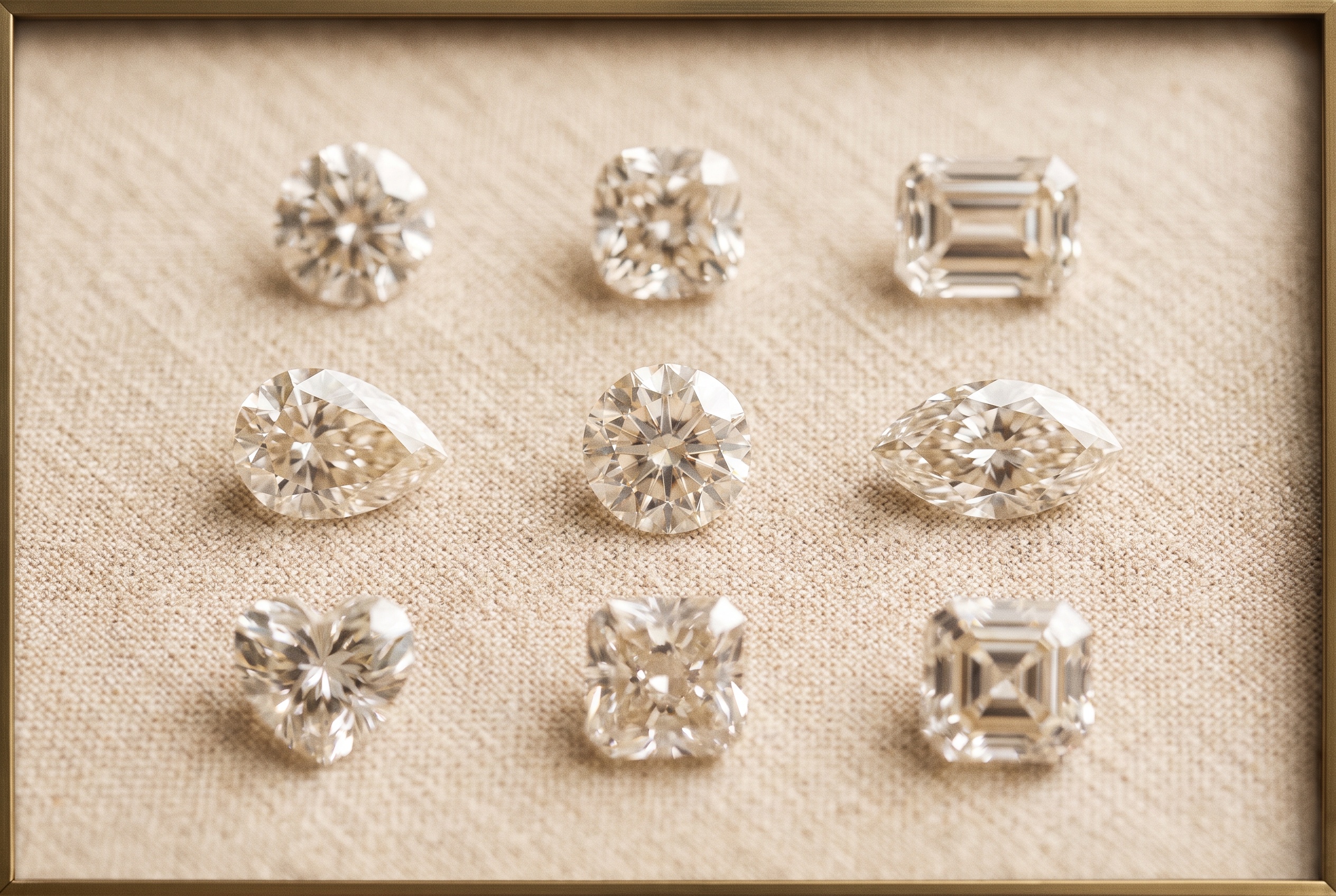
| Loose center stones | Individually certified diamonds, 0.30ct and up, natural or CVD lab-grown | Jewelers/designers building custom pieces; retailers stocking loose inventory |
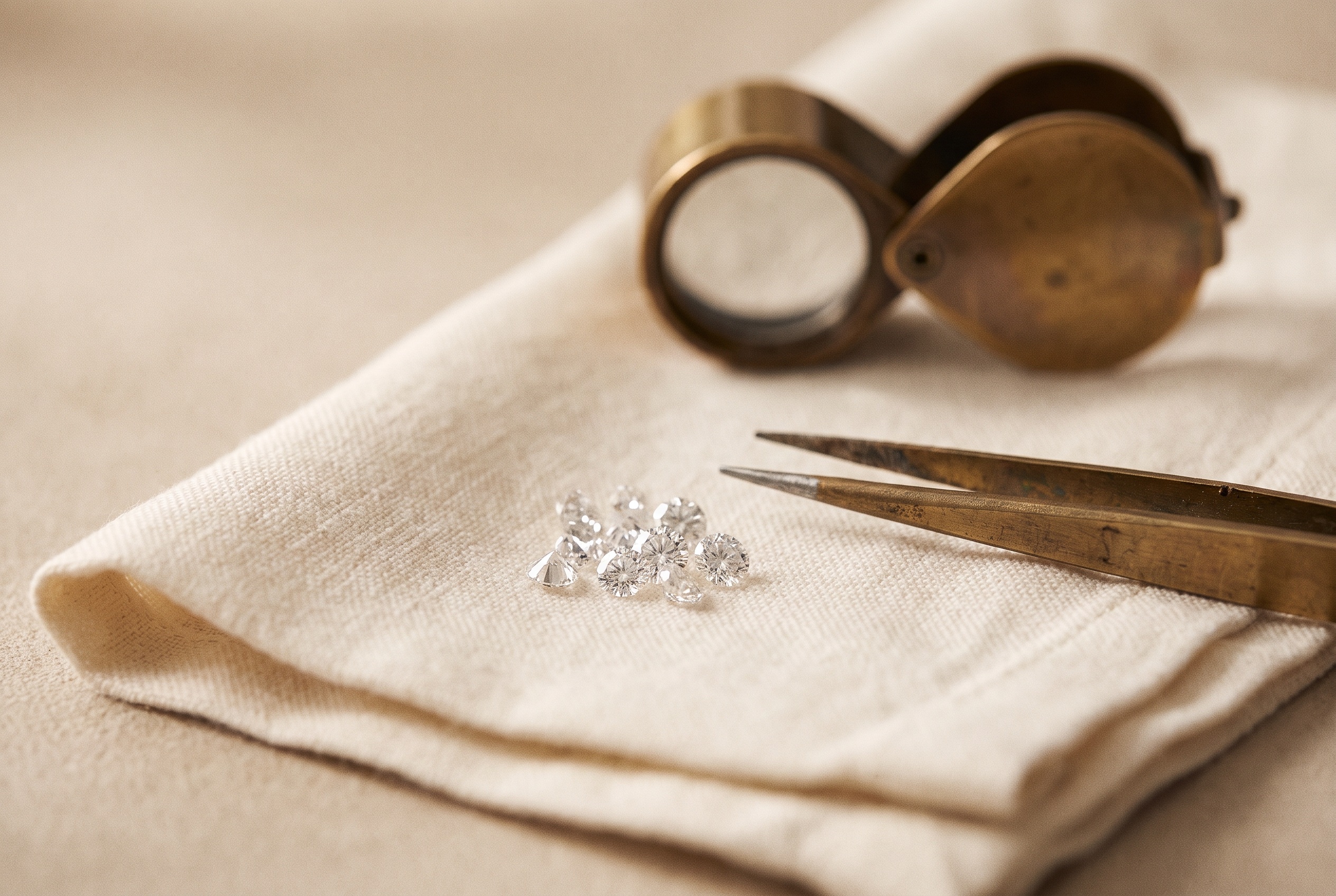
| Melee | Small stones, 0.8mm–9.0mm, sold as uncertified parcels against a quality baseline | Manufacturers doing pavé, halo, and accent-stone production |
| Antique and exotic cuts | Old Mine, Old European, Kite, Rose, and other antique-style shapes | Designers and retailers specializing in vintage-inspired or period pieces |
| Fancy color diamonds | Yellow, pink, blue, and green stones, loose and melee | Retailers and designers building fancy-color inventory or bespoke color pieces |
| Finished jewelry | Custom or ready-made rings, earrings, and other set pieces | Retailers stocking finished cases; jewelers offering custom design services |
A buyer whose needs span more than one of these categories generally benefits from consolidating with a single wholesale relationship that carries the full range, rather than managing separate vendor relationships for each category.
How Diamond Wholesale Pricing Works
Wholesale diamond pricing is driven by the same fundamentals as any diamond price — carat weight, cut, color, clarity, and shape — but structured around trade margins rather than retail markup. A wholesale buyer is paying closer to the supplier's actual cost basis plus a business margin, rather than the full retail markup an end consumer would pay through a retail storefront. For lab-grown material specifically, wholesale pricing also reflects the category's meaningfully lower production cost curve relative to natural stones, an advantage that generally passes through more directly at the wholesale level than it does after retail markup.
Pricing also varies by certification lab, quantity, and whether a buyer is purchasing individual stones versus placing a larger recurring order — larger, consistent buyers typically have more room to negotiate terms than one-off purchasers. For a deeper look at how the 4Cs specifically drive price, see our 4Cs of diamonds guide.
Certification in the Wholesale Market
Certified inventory — graded by a recognized independent lab such as GIA, IGI, or GCAL — is the standard for loose center stones at the wholesale level, since certification is what lets a buyer resell a stone with confidence and lets the next buyer down the chain trust the specifications without re-verifying them independently. Melee, by contrast, typically ships as uncertified parcel goods against a documented quality baseline rather than individually certified, since certifying each small stone individually isn't practical at that scale. For more on how the major labs compare, see our diamond graders guide.
Natural vs. Lab-Grown in the Wholesale Market
Today's wholesale diamond market spans both natural and CVD lab-grown inventory, and most serious wholesale buyers carry both rather than committing exclusively to one. Lab-grown offers a lower cost per carat at any given quality tier and generally deeper availability at high color and clarity grades; natural carries an established resale market and the premium tied to natural scarcity. A supplier who stocks both gives a buyer the flexibility to match inventory to whatever an individual client or project actually calls for, rather than forcing a single-origin decision across an entire book of business.
Common Diamond Wholesale Pricing Models
Wholesale diamond pricing is structured a few different ways depending on the supplier and the product category:
- Percentage-off-list pricing. Common for certified loose stones, where price is quoted as a discount off a published market pricing reference for a given specification, adjusted for the supplier's own cost basis and margin.
- Per-carat pricing tiers. Common for melee, where price is quoted per carat within a defined quality baseline (such as DEF+/VS+) rather than stone by stone, since individual melee stones aren't typically priced or certified one at a time.
- Flat per-piece pricing. Common for finished jewelry, where the diamond, metal, and labor are bundled into a single quoted price for the completed piece.
- Volume-tiered pricing. Larger, recurring buyers often unlock better per-unit pricing at defined order-volume thresholds, incentivizing consolidation with fewer, larger orders rather than many small ones.
Buyers new to wholesale sourcing should ask a prospective supplier directly which model applies to the category they're buying, since comparing a percentage-off-list quote against a flat per-piece quote from a different supplier isn't a true apples-to-apples comparison without understanding what's actually bundled into each number.
Domestic vs. International Wholesale Sourcing
Trade buyers in the U.S. generally have two broad sourcing paths: domestic wholesale suppliers with U.S.-based inventory and support, or sourcing more directly from international markets and trade shows. Domestic sourcing typically means faster shipping, easier returns and exchanges, and support in the buyer's own time zone and language — all of which matter more to a smaller or mid-sized buyer than shaving a small amount off per-carat cost. International sourcing can offer price advantages at very high volume, but usually comes with longer lead times, more complex logistics and customs handling, and less flexibility on returns. Most independent jewelers, designers, and smaller manufacturers find that a domestic wholesale relationship offers a better balance of cost, speed, and service than managing international sourcing directly, reserving direct international buying for very large, sophisticated operations with the infrastructure to manage it.
Trade Shows and In-Person Wholesale Sourcing
Alongside standing wholesale accounts, industry trade shows remain an important part of how the diamond and jewelry trade sources inventory and builds supplier relationships — buyers can examine stones in person, meet suppliers face to face, and often negotiate terms that carry into an ongoing account relationship afterward. Trade shows are also where many buyers first encounter suppliers they later work with year-round through a standing wholesale account, making show attendance a useful complement to, rather than a replacement for, an established online or phone-based ordering relationship.
What to Look for in a Diamond Wholesale Supplier
- Breadth of catalog. A supplier carrying standard, antique, and exotic shapes, natural and lab-grown, loose stones and finished jewelry, reduces the number of separate vendor relationships a buyer needs to manage.
- Certification flexibility. Access to multiple recognized labs (GIA, IGI, GCAL) lets a buyer match certification to whatever their specific resale context requires.
- Inventory depth and consistency. A supplier who can match the same specification reliably across repeat orders is more valuable long-term than one offering a lower one-time price on a single stone.
- Shipping speed and reliability. Fast, dependable turnaround on in-stock inventory matters directly to a buyer's own ability to serve their clients on schedule.
- Transparent trade terms. Clear account requirements, pricing structure, and return/exchange policy up front, rather than terms that surface only after a first order.
How Diamond Wholesale Differs From Consumer-Direct "Wholesale Pricing" Marketing
Because "wholesale" carries positive connotations to consumers (implying a discount, a closer-to-cost price), the term gets used loosely in consumer-facing marketing by retailers and even some direct-to-consumer brands who aren't actually selling at trade prices to trade buyers — they're simply using "wholesale" as a marketing word for a retail discount. True B2B diamond wholesale is defined by who's buying and why, not by the word appearing in a product name or a store's tagline. A genuine wholesale transaction involves a verified trade buyer purchasing for resale or production use, at pricing and terms structured for that relationship — not a one-time consumer purchase marketed with wholesale-adjacent language. Buyers new to the trade should learn to distinguish the two quickly, since a "wholesale" storefront aimed at consumers won't offer the account structure, certification consistency, or volume pricing an actual trade buyer needs.
Returns, Exchanges, and Quality Guarantees in Wholesale Transactions
Because wholesale orders are often placed sight-unseen against a written specification (shape, carat, color, clarity, certification lab), a clear returns and exchange policy is one of the more operationally important parts of a wholesale relationship — more so than in a typical retail transaction where the buyer physically inspects the item before paying. Reputable wholesale suppliers define upfront what happens if a delivered stone doesn't match its stated certification, what the return window looks like, and how exchanges for a different specification are handled if a buyer's project needs change after ordering. A buyer evaluating a new supplier should ask about this policy explicitly before placing a first order rather than assuming standard consumer-retail return norms apply to a B2B wholesale transaction, since the two aren't automatically the same.
How to Start a Wholesale Diamond Trade Account
Opening a wholesale account typically requires verifying trade status — a resale certificate, business license, or equivalent documentation showing the buyer is purchasing for business purposes rather than personal use. Once verified, most suppliers grant access to trade pricing and, over time, extended terms as the relationship and order history develop. New buyers should expect to start with a smaller initial order or a more limited credit arrangement, with terms typically expanding as a track record builds between the two businesses.
Common Mistakes First-Time Wholesale Buyers Make
- Chasing the lowest price on a single stone instead of evaluating the supplier relationship as a whole — consistency and reliability matter more over a series of orders than winning one transaction on price.
- Not confirming certification lab before ordering, then discovering the stone doesn't match the resale context a client expected.
- Underestimating lead time on special-order or non-stock specifications — in-stock inventory ships fast, but an unusual shape or quality combination can take meaningfully longer.
- Splitting purchases across too many suppliers early on, which slows the development of the kind of trade relationship (better terms, priority access, more flexible service) that comes with a track record at a single primary source.
Sourcing Diamonds Wholesale from Guru Diam
Guru Diam is a trade-only wholesale diamond supplier carrying natural and CVD lab-grown diamonds across the full range of standard, antique, and exotic shapes, alongside certified loose stones and finished jewelry — one vendor, one shipment, one relationship, rather than a narrow single-category source. IGI, GIA, and GCAL certification are all available, and in-stock inventory ships same-day from our New York (before 6pm EST) and Los Angeles (before 4pm PST) locations; custom engagement rings finish in 4–6 days. Browse certified inventory in the certified diamonds category, source matched pairs through matching pairs, or explore fancy color stones in fancy color loose diamonds. Apply for a trade account through trade partner or review current terms at the wholesale hub; custom pieces can start at custom jewelry.
Diamond Wholesale for Manufacturers vs. Retailers
Manufacturers and retailers approach wholesale sourcing with somewhat different priorities, even though both are trade buyers purchasing at wholesale pricing. A manufacturer producing finished jewelry at scale generally prioritizes consistent melee quality and supply reliability above nearly everything else, since a production run depends on matching color and clarity character across potentially thousands of small stones — a single inconsistent parcel can disrupt an entire batch's visual uniformity. A retailer, by contrast, typically prioritizes loose center-stone variety and finished-piece availability, since their business is built more around presenting individual stones or pieces to end customers than running a high-volume production line. A wholesale supplier serving both buyer types well generally needs strength in both areas — deep, consistent melee supply and broad loose-stone and finished-jewelry variety — rather than specializing narrowly in just one.
Building Long-Term Value in a Wholesale Supplier Relationship
The most successful wholesale buyer-supplier relationships tend to develop over multiple orders rather than being optimized transaction by transaction. As a buyer builds order history with a supplier, they typically gain access to better pricing tiers, faster communication and quoting, priority access to newly available or unusual inventory, and more flexible payment terms — none of which is available to a first-time or purely opportunistic buyer regardless of order size. This is one of the more underappreciated arguments for consolidating wholesale sourcing with fewer, trusted suppliers rather than spreading purchases thin across many vendors chasing the lowest price on each individual order: the compounding relationship value, over time, frequently outweighs small per-transaction price differences.
Communicating Specifications Clearly When Placing a Wholesale Order
A large share of wholesale ordering friction comes down to imprecise specification — a buyer requesting "a nice round stone around a carat" gives a supplier far less to work with than a buyer specifying exact shape, carat range, minimum color and clarity grade, preferred certification lab, and budget ceiling. Clear, complete specifications up front reduce back-and-forth, speed up quoting, and reduce the chance of receiving a stone that technically matches a vague request but doesn't actually suit the intended use. Buyers newer to wholesale ordering benefit from treating a purchase request the way they'd treat any other business procurement specification — precise, written, and unambiguous — rather than describing what they want in the more casual language that might work fine in a retail conversation with an end consumer.
How Market Conditions Affect Wholesale Diamond Pricing Over Time
Wholesale diamond pricing isn't fixed — it shifts with underlying market conditions, and those conditions move somewhat differently for natural versus lab-grown stones. Natural diamond pricing tends to track supply constraints from mining output and broader macroeconomic demand cycles. Lab-grown pricing has moved primarily in response to production capacity scaling up across the industry, which has generally put downward pressure on lab-grown cost per carat over time as more growers have entered the market and production efficiency has improved. Buyers placing recurring wholesale orders benefit from working with a supplier who communicates pricing changes proactively rather than buyers discovering shifts only when a new quote comes back meaningfully different from the last one — consistent, transparent pricing communication is itself part of what separates a strong long-term wholesale relationship from a purely transactional one.
A Final Note on Evaluating Wholesale Quotes
When comparing quotes from more than one supplier, resist the temptation to rank them purely by headline price. Confirm each quote reflects the same shape, carat range, minimum color and clarity, and certification lab before treating the numbers as comparable — a lower quote on a different certification lab, or a slightly lower minimum clarity, isn't actually the cheaper option once specifications are matched apples to apples. Buyers who take the extra few minutes to normalize quotes to identical specifications before comparing consistently make better sourcing decisions than buyers comparing headline numbers alone.
Frequently Asked Questions
What does diamond wholesale mean?
Diamond wholesale means buying diamonds at trade pricing directly from a supplier, as a business (jeweler, designer, retailer, or manufacturer) purchasing for resale or production use — rather than buying at retail as an individual consumer.
Do I need a business license to buy diamonds wholesale?
Most wholesale suppliers require some form of trade verification — a resale certificate, business license, or established trade account — before extending wholesale pricing, since wholesale access is intended for trade buyers, not the general public.
Is lab-grown or natural diamond wholesale cheaper?
Lab-grown diamonds are meaningfully lower cost per carat than comparable-grade natural stones at the wholesale level, reflecting lab-grown's production cost curve versus natural scarcity-driven pricing. Most serious wholesale buyers carry both to match different client needs.
What's the difference between wholesale and discount retail?
Wholesale involves a genuine trade relationship — verified business status, trade account terms, and pricing structured around business-to-business volume. Discount retail is still a consumer-facing transaction at retail margins, just marked down, even when marketed using wholesale-sounding language.
What certification should I ask for when buying diamonds wholesale?
It depends on resale context — GIA for maximum resale liquidity and trust, IGI for speed and broad market acceptance (especially common for lab-grown), and GCAL where verified cut and light-performance documentation matters most. A supplier offering all three gives the most flexibility.
How do I start a wholesale diamond account?
Most suppliers require trade verification (a resale certificate or business license) before granting wholesale access. New accounts typically start with a smaller order or more limited terms, with access expanding as an order history and relationship develop.
Guru Diam is a trade-only wholesale diamond supplier with locations in New York and Los Angeles, carrying natural and CVD lab-grown diamonds with IGI, GIA, and GCAL certification available across standard, antique, and fancy color shapes, alongside finished jewelry. Apply for a trade account through trade partner.