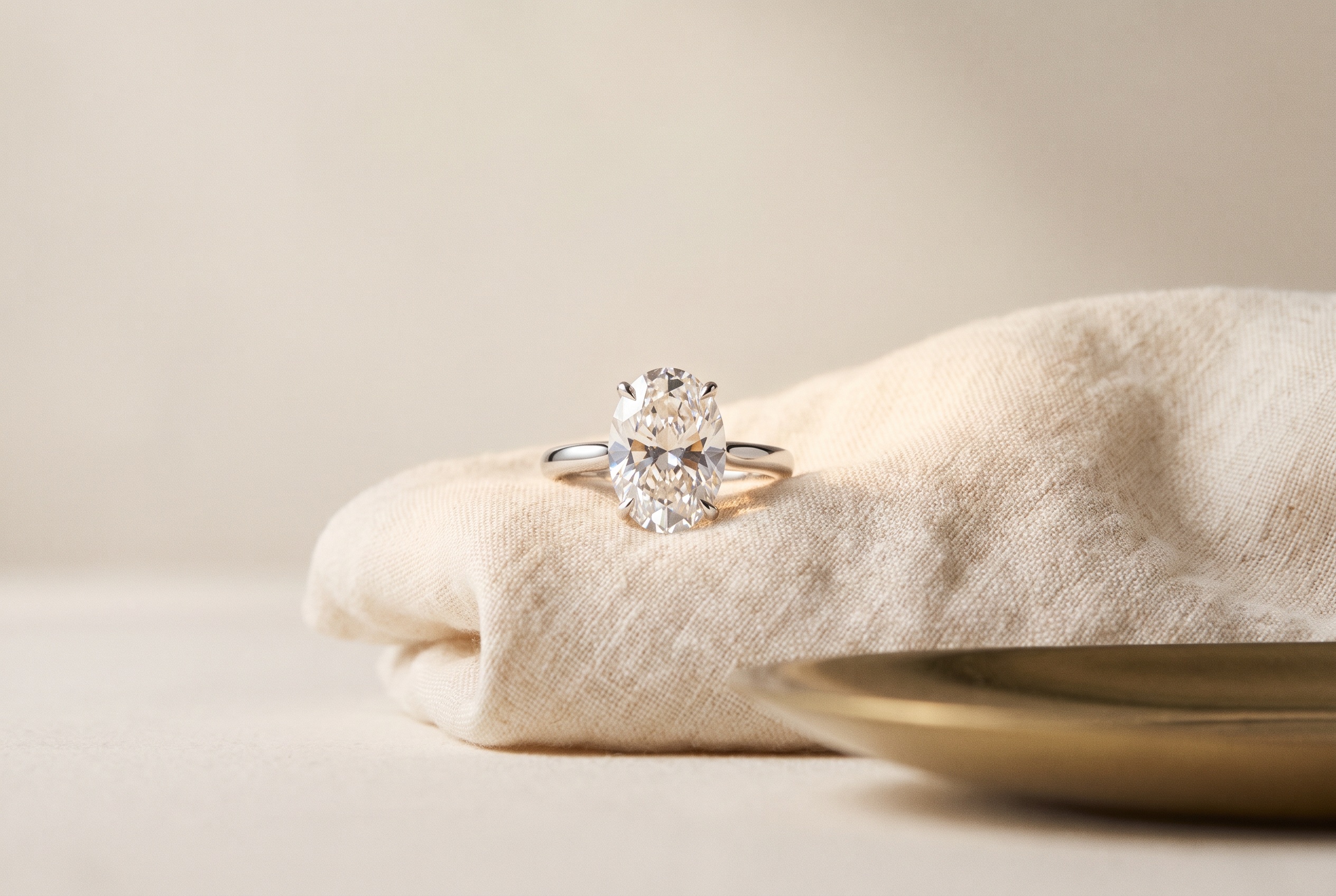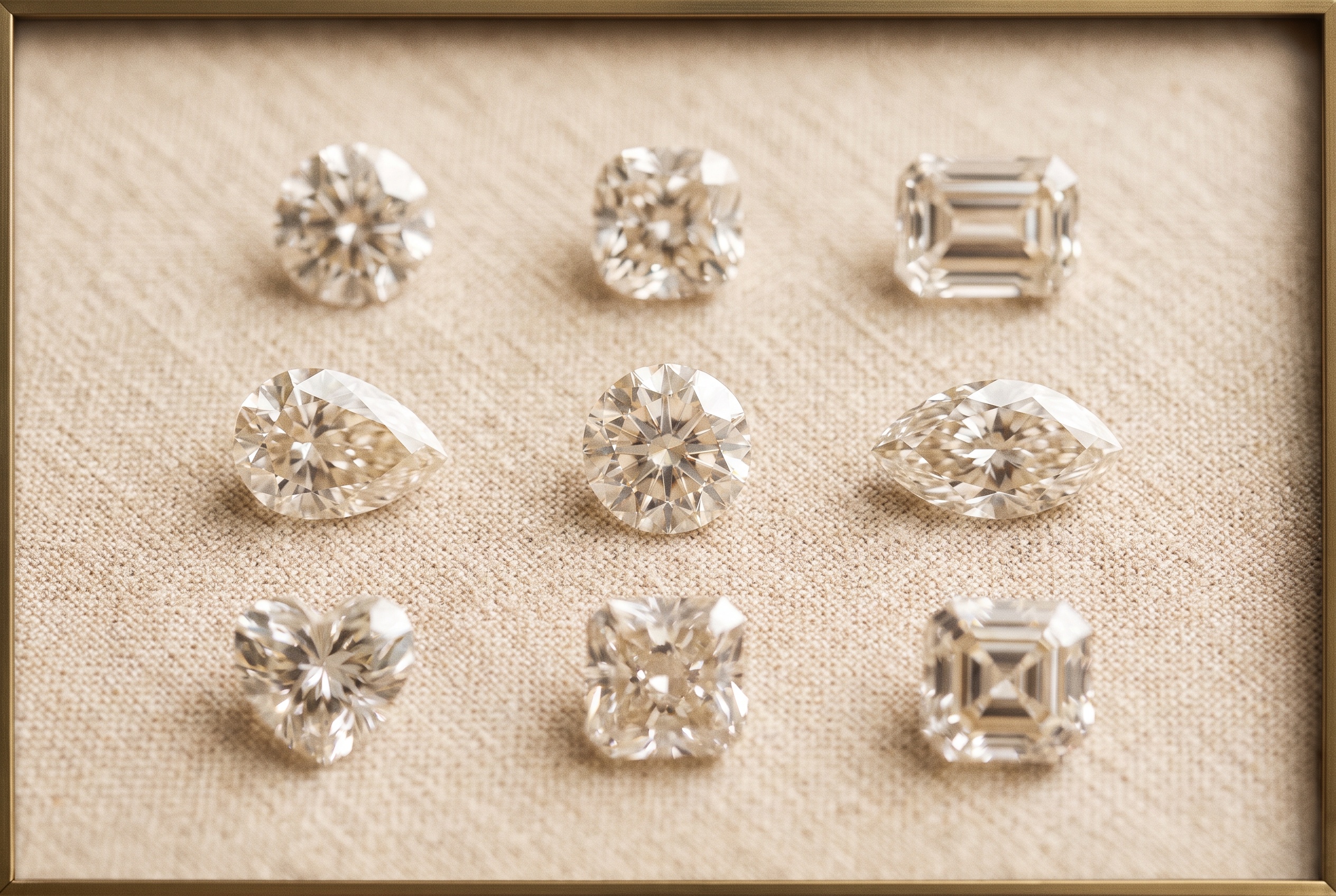


A diamond lot is a defined group of diamonds — anywhere from a handful of stones to several hundred — sold and priced together as a single unit rather than stone by stone, typically assembled around a shared characteristic such as similar size, shape, quality range, or intended end use. This guide explains what a diamond lot actually is, how the term differs from a related but distinct concept like a melee parcel, and what a trade buyer should check before purchasing one wholesale.
What Defines a Diamond Lot
A lot is defined primarily by being priced and sold as a single grouped transaction rather than by any single fixed characteristic of the stones themselves — a lot can be highly uniform (a matched set of similarly sized melee) or deliberately mixed (an assortment lot spanning a range of shapes, sizes, or qualities sold together at one blended price). What unites the concept is the transaction structure: a buyer purchases the entire defined group as one unit, at one agreed price, rather than negotiating and purchasing each stone individually.
Diamond Lot vs. Diamond Parcel: Where the Terms Overlap
"Lot" and "parcel" are used somewhat interchangeably in casual trade conversation, but there's a useful distinction worth understanding. A parcel most commonly refers specifically to a quantity of melee — small, uncertified stones sorted and sold in bulk against a documented quality baseline (such as DEF+/VS+) rather than graded individually. A lot is a broader term that can describe a parcel of melee, but can equally describe a grouped sale of larger, individually certified loose stones, rough diamonds, or even a mixed assortment spanning multiple categories. In practice, "parcel" tends to signal melee specifically, while "lot" is the more general term for any grouped sale.
| Term | Typical Meaning | Typical Stone Type |
|---|---|---|
| Lot | Any grouped sale, priced as one unit | Melee, loose stones, rough, or mixed |
| Parcel | A quantity of melee sold in bulk | Small, uncertified stones specifically |
| Individual stone purchase | Single stone, priced and certified on its own | Loose center stones, 0.30ct and up |
Types of Diamond Lots in the Wholesale Trade
Calibrated Melee Lots
A lot of small stones sorted to a consistent size range (measured in millimeters) and quality baseline, intended for pavé, halo, or accent-stone jewelry production where visual uniformity across many stones matters more than any individual stone's specific grade. This is the most common lot type in day-to-day wholesale jewelry manufacturing.
Mixed Assortment Lots
A lot combining stones of varying sizes, shapes, or quality grades sold together at a single blended price, often used to move a supplier's more varied or leftover inventory efficiently, or to give a buyer a cost-effective way to acquire a diverse working stock without negotiating each individual stone.
Rough Diamond Lots
A grouped sale of uncut rough diamonds, typically purchased by cutting operations or manufacturers positioned upstream in the supply chain rather than by retailers or jewelers, who generally buy finished, cut and polished stones.
Certified Stone Lots
Less common than melee lots, but occurring when a buyer purchases a group of individually certified loose stones together as a single transaction — each stone in the lot still carries its own individual certification, but the group is priced and negotiated as one combined deal rather than stone by stone.
How Diamond Lots Are Priced
Lot pricing is typically quoted per carat for the group as a whole (common for melee and mixed assortment lots) or as a single flat price for the entire defined group (more common for smaller, more curated lots). Per-carat lot pricing reflects the average quality and characteristics across the full lot rather than any single stone's individual value, which means a lot's effective per-stone value can vary — a buyer is paying for the group's overall composition, not negotiating each stone's price individually. This pricing structure is part of what makes lots efficient for both buyer and seller: it avoids the transaction cost of individually pricing and negotiating potentially hundreds of small stones one at a time.
Why Buyers Purchase Diamonds in Lots Rather Than Individually
For manufacturers and jewelers needing consistent quantities of similar stones — melee for a pavé setting, matched accent stones for a production run — buying by the lot is dramatically more efficient than negotiating and certifying each individual stone, both in transaction time and in achieving the visual consistency a finished piece requires. For a supplier, selling by the lot allows moving larger inventory volumes efficiently and passing some of that efficiency through to the buyer in the form of better per-carat pricing than would typically be available purchasing the equivalent stones individually. This mutual efficiency is the core commercial logic behind lot-based trading throughout the wholesale diamond market.
What to Check Before Buying a Diamond Lot
- Confirm the quality baseline. For melee and mixed lots without individual certification, understand exactly what quality standard (such as DEF+/VS+) the lot is sorted and represented against, and from a supplier with a track record of representing that standard accurately.
- Request a representative sample or documentation. For larger lots, ask to inspect a genuinely representative sample rather than relying solely on a supplier's summary description, particularly for a new supplier relationship.
- Understand size and shape distribution. Even within a stated size range, confirm how tightly calibrated the lot actually is — a lot described broadly as "melee" without a specific millimeter range can vary considerably in usability for precise production work.
- Clarify return and exchange terms. Since a lot is purchased sight-largely-unseen relative to individual stone inspection, understand upfront what recourse exists if the delivered lot doesn't match its stated specification.
- Match the lot type to the actual production need. A calibrated lot suits precision pavé work; a mixed assortment lot suits more varied, less uniformity-dependent projects — buying the wrong lot type for the intended use is a common, avoidable mistake.
Lots and Certification: What's Actually Documented
Melee and mixed lots are typically sold as uncertified goods against a documented quality baseline rather than individually graded — certifying each small stone in a lot of hundreds isn't practical or commercially sensible at that scale. This is standard, expected practice for melee-scale lots and isn't itself a red flag; the safeguard for the buyer is the supplier's own reputation and track record for accurately representing the quality baseline they sell against, not individual stone certification. Certified stone lots, by contrast, do carry individual certification per stone within the group, since those lots typically involve larger, higher-value individual stones where individual certification remains standard practice regardless of the grouped sale structure.
Natural vs. Lab-Grown Diamond Lots
Both natural and CVD lab-grown melee are commonly sold in lot form, and the underlying lot-trading mechanics work the same way regardless of origin — sorted to a size range and quality baseline, priced per carat for the group. Lab-grown lots generally offer a meaningfully lower per-carat cost than natural lots of comparable size and quality baseline, reflecting lab-grown's broader production cost advantage, which has made lab-grown lots an increasingly common choice for manufacturers producing melee-heavy jewelry at volume, such as fully paved pieces requiring substantial total carat weight.
Auction and Bid-Based Lot Sales
Alongside standard negotiated wholesale transactions, diamond lots — particularly rough lots and some larger melee or mixed assortment lots — are also traded through auction and sealed-bid processes, where multiple buyers submit competing offers for a defined lot rather than negotiating a single price directly with the seller. This trading structure is more common further upstream in the supply chain (rough lot sales from mining operations, for instance) than in the finished-melee lots most jewelers and manufacturers buy, but it does occur at the finished-goods level too, particularly for larger or more unusual lots a supplier wants to move efficiently to the highest available bidder rather than through a fixed-price listing. Buyers participating in bid-based lot sales should have a clear internal valuation for the lot before bidding, since competitive bid dynamics can push pricing above what a directly negotiated transaction for the same lot might have achieved.
Inspecting a Lot Before Purchase
Physical or detailed digital inspection before finalizing a lot purchase remains an important safeguard, particularly for a new supplier relationship or an unusually large commitment. For melee lots, this typically means requesting a representative sample poured out and viewed under proper lighting and magnification — checking for consistency in size, color, and clarity across the sample, and confirming it genuinely reflects what the full lot description promises rather than representing only the best stones in the group. For mixed assortment or certified stone lots, reviewing the actual documentation for each significant stone, and where practical, examining higher-value individual stones within the lot directly, is standard due diligence. Buyers who skip this step in favor of moving quickly on an attractive quoted price are the ones most likely to encounter a lot that technically matches its stated baseline on paper but disappoints in actual usability once it's in production.
Common Mistakes When Buying Diamond Lots
A frequent mistake is treating a lot's average or headline size and quality description as a guarantee of uniform consistency across every stone in the group, rather than understanding it as a description of the group's overall composition, which can include some natural variation even within a well-sorted lot. A second common mistake is buying a lot sized larger than an actual near-term production need simply because the per-carat pricing improves at higher lot volumes, tying up capital in inventory that sits unused longer than the pricing advantage justifies. A third is failing to establish clear return recourse before purchase, then having limited options if a delivered lot doesn't match expectations — a conversation that's much easier to have proactively before a transaction than reactively after receiving unsatisfactory goods.
Diamond Lots vs. Purchasing Individual Certified Stones
| Factor | Diamond Lot | Individual Certified Stone |
|---|---|---|
| Typical use | Melee, accent stones, volume production | Center stones, engagement rings, focal pieces |
| Certification | Usually a baseline standard, not per-stone | Individually graded and documented |
| Pricing | Per carat for the group, or flat for the lot | Per stone, based on its specific 4Cs |
| Buyer priority | Consistency and total volume | Specific stone characteristics |
Lot Terminology Buyers Encounter in Practice
A few related terms come up frequently alongside "lot" in day-to-day trade conversation and are worth distinguishing. A "run" typically refers to a lot sourced or sorted specifically for one production batch, sized to match that batch's exact needs. A "job lot" is trade language, sometimes used more loosely, for a mixed or leftover assortment sold as a single group, often at a discount reflecting its less curated composition. "Melee mix" describes a lot spanning multiple sizes within a broader range rather than a single tightly calibrated size, useful for projects needing size variety rather than uniformity. None of these terms carry a single universally standardized definition across every supplier, which is exactly why confirming the actual specification of any given lot — regardless of what it's called — matters more than relying on the label alone.
How Lot Size Affects Pricing and Terms
Larger lots generally command better per-carat pricing than smaller ones, since a supplier moving a larger volume in a single transaction benefits from reduced per-unit handling and transaction cost, an efficiency that's typically passed through at least partially to the buyer. This creates a genuine tradeoff for buyers to weigh: a larger lot purchase improves per-carat economics but requires more upfront capital and inventory carrying commitment than buying smaller, more frequent lots matched more tightly to near-term production needs. Buyers with predictable, steady-volume production needs generally benefit from negotiating standing lot-supply arrangements at favorable recurring terms, rather than either overbuying single large lots or underbuying small, frequent ones at less favorable per-carat pricing.
Building a Recurring Lot-Sourcing Relationship
For manufacturers with ongoing melee or accent-stone needs, a one-time lot purchase is less valuable long-term than establishing a recurring sourcing relationship with a supplier who can consistently deliver lots matching the same size range and quality baseline order after order. Consistency across repeat lot purchases matters enormously for a manufacturer running standardized production — a jewelry line's visual character depends on melee looking consistent from one production batch to the next, which requires a supplier capable of genuinely repeatable sorting standards, not just a one-time favorable lot. Buyers evaluating a lot supplier for recurring needs should ask specifically about batch-to-batch consistency and request to compare stones from separate historical lot purchases if possible, rather than judging a supplier purely on the quality of a single sample lot.
Managing Inventory From a Bulk Lot Purchase
Once a lot arrives, how a manufacturer or retailer manages that inventory internally has a real effect on how efficiently it actually gets used. Melee lots benefit from being re-sorted and organized by the buyer's own internal size and application categories on receipt — separating stones intended for a specific upcoming production run from general working stock, for instance — rather than treating the lot as one undifferentiated pool drawn from as needed, which tends to lead to inconsistent stone selection across different pieces made from the same original lot. Tracking usage against a lot over time also helps a buyer understand their actual consumption rate for a given size and quality baseline, informing more accurate future lot-purchase sizing rather than guessing at the right volume for the next order based on incomplete information about how quickly the previous lot was actually used.
Lots in Rough Diamond Trading
Further upstream in the supply chain, rough diamond lots are traded among mining operations, sight holders, and cutting businesses, generally in much larger transactions and at a different point in the value chain than the finished melee and stone lots most jewelers and retailers interact with. This segment of lot trading operates with its own distinct conventions, valuation methods, and buyer base — largely cutting operations and large manufacturers rather than retail-facing jewelers — and generally isn't directly relevant to a retailer or designer sourcing finished, cut and polished stones for jewelry production.
Lots as Part of a Broader Diamond Sourcing Strategy
For most jewelers and manufacturers, lot purchasing is one component of a broader sourcing strategy rather than the sole sourcing method — larger center stones and focal pieces are typically sourced individually against specific certified specifications, while melee and accent-stone needs are met through lot purchasing for the efficiency it offers at that scale. Understanding when each approach fits — lots for volume, consistency-driven needs; individual sourcing for specific, high-value, or highly particular stone requirements — helps a buyer avoid two common opposite mistakes: trying to source individual melee stones one at a time at a volume where lot purchasing would be dramatically more efficient, or trying to fill a specific, particular center-stone need from a mixed lot poorly suited to guaranteeing that exact specification. A supplier who offers both models under one relationship — lot-based melee sourcing and individually certified center-stone sourcing — lets a buyer move fluidly between the two approaches as a given project requires, rather than managing separate supplier relationships for each sourcing method.
Sourcing Diamond Lots Wholesale
Guru Diam supplies calibrated CVD lab-grown and natural melee in lot and parcel form, sorted to a consistent DEF+/VS+ quality baseline across the 0.8mm–9.0mm range, alongside individually certified loose stones for buyers needing larger center-stone quantities. Trade buyers can review current melee and certified inventory through matching pairs and certified diamonds. In-stock inventory ships same-day from Guru Diam's New York and Los Angeles locations. New trade accounts can apply through trade partner, with current terms available at the wholesale hub. For related trade-mechanics guides, see our diamond dealers guide and diamond wholesale guide.
How Market Conditions Affect Lot Availability and Pricing
Lot availability and pricing shift with the same broader supply and demand conditions that affect the diamond market generally, though lot-scale trading — melee especially — tends to respond somewhat differently than individual center-stone pricing. Melee lot pricing is more directly tied to production capacity and processing volume than to the scarcity dynamics that drive individual large-stone pricing, which means lab-grown melee lot pricing in particular has trended downward over time as growing capacity across the lab-grown production industry has increased overall supply. Buyers planning larger, less time-sensitive lot purchases sometimes benefit from monitoring these broader trends rather than purchasing reactively only when an immediate production need arises, since timing a larger lot purchase during a period of favorable supply conditions can meaningfully improve overall sourcing economics for a buyer with the inventory capacity to plan ahead.
Frequently Asked Questions
What is a diamond lot?
A diamond lot is a defined group of diamonds sold and priced together as a single unit rather than stone by stone, typically assembled around a shared characteristic like similar size, shape, or quality range.
What is the difference between a diamond lot and a parcel?
"Parcel" most commonly refers specifically to a quantity of melee sold in bulk against a quality baseline. "Lot" is the broader term, which can describe a melee parcel but can also describe a grouped sale of larger certified stones or rough diamonds.
Are diamonds in a lot individually certified?
Melee and mixed assortment lots are typically sold uncertified against a documented quality baseline, since certifying each small stone isn't practical at that scale. Certified stone lots, involving larger individual stones, do carry per-stone certification.
How is a diamond lot priced?
Lot pricing is typically quoted per carat for the group as a whole, or as a single flat price for the entire defined group, reflecting the average quality and characteristics across the lot rather than any one stone's individual value.
Should I buy a lab-grown or natural diamond lot?
Lab-grown lots generally offer meaningfully lower per-carat cost than comparable natural lots, making them a common choice for volume production needing substantial total carat weight, like fully paved jewelry pieces.
What should I check before buying a diamond lot?
Confirm the quality baseline, request a representative sample where possible, understand the size and shape distribution, clarify return terms, and make sure the lot type actually matches your intended production use.
Guru Diam is a trade-only wholesale diamond supplier with locations in New York and Los Angeles, supplying calibrated CVD lab-grown and natural melee lots alongside individually certified loose diamonds. Browse current inventory in matching pairs or apply for a trade account through trade partner.