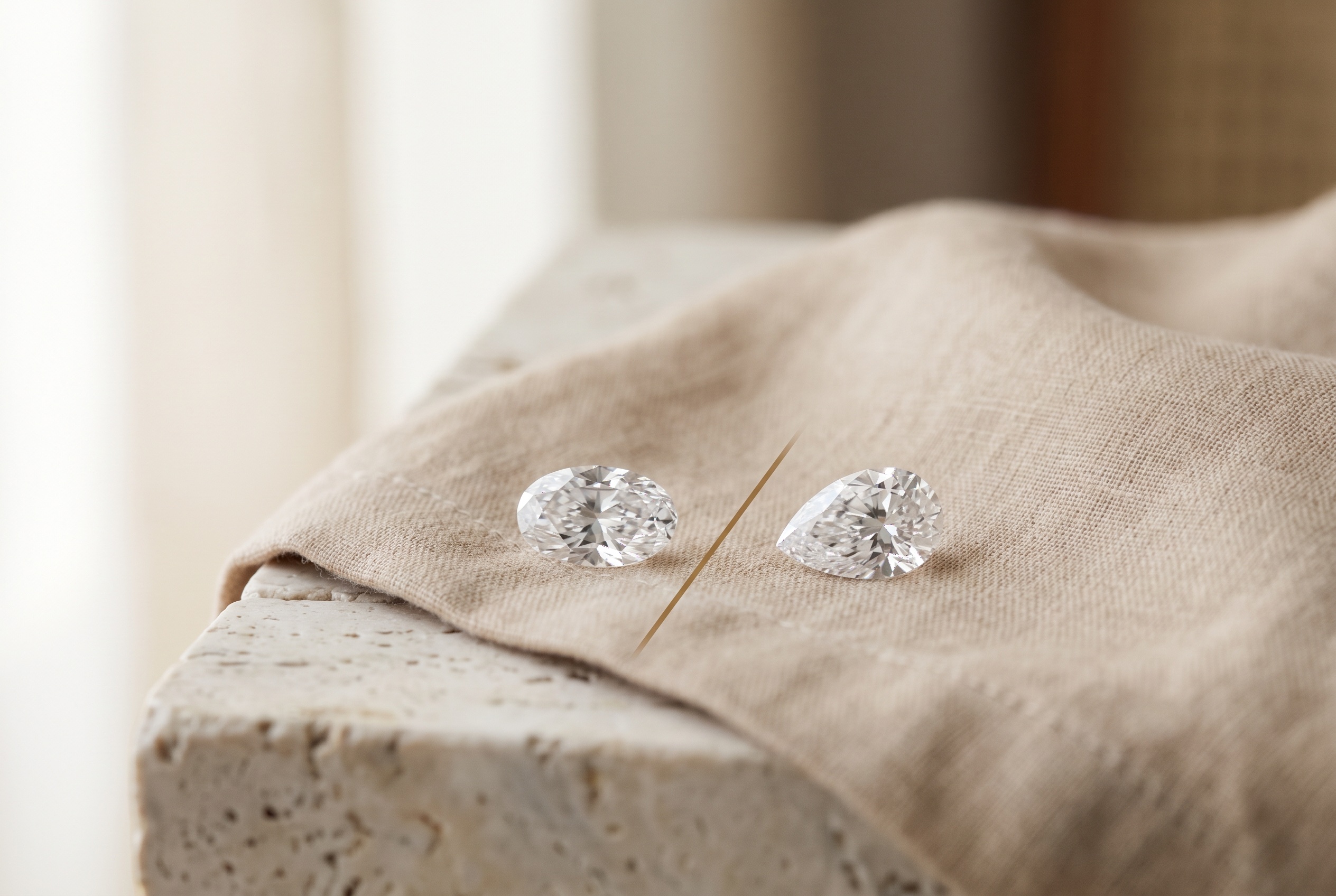
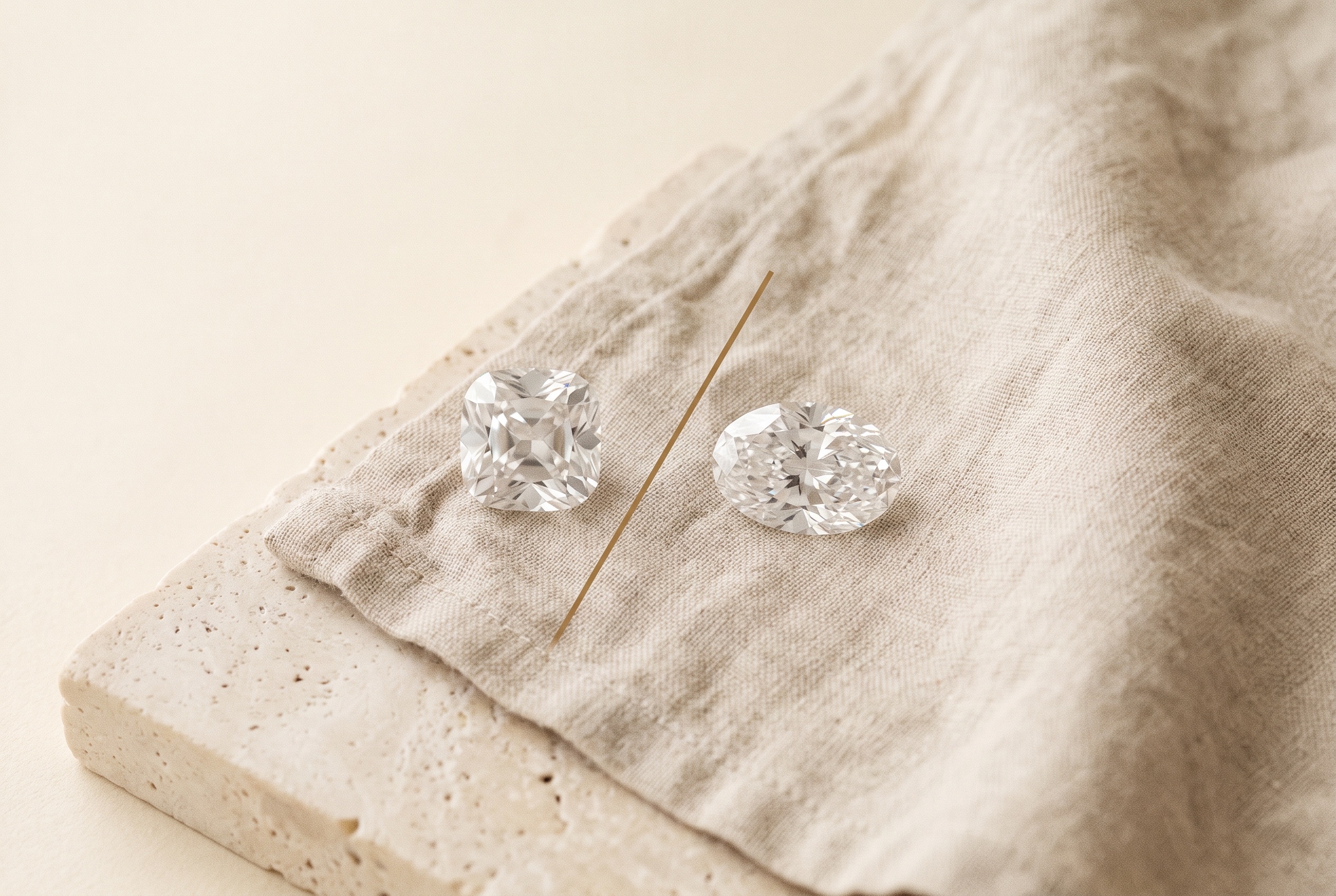
A wholesale quote on a certified lab-grown diamond is never just "the price of the stone" â it's the stone's cost plus whatever markup layers sit between the grower and your invoice: a broker's introduction fee, an overseas freight-and-duty pass-through, a special-order premium, or the overhead of coordinating a fourth vendor for a single certified stone. Competitive pricing on certified goods usually isn't about finding a cheaper stone. It's about finding a quote with fewer of those layers built into it.
That distinction matters because "our pricing is competitive" is one of the easiest claims for any wholesale supplier to make and one of the hardest for a buyer to verify from a spec sheet alone. This guide isn't a claim that any one number beats the market â per-carat prices move weekly and a fair comparison always has to be stone-for-stone, not headline-to-headline. It's a breakdown of the specific, structural reasons a certified quote can come in lower without any compromise on the stone itself, so a buyer evaluating Guru Diam's list â or any supplier's â knows exactly what to check for before assuming a price is fair or assuming it isn't.
## What "Competitive Pricing" Actually Means on Certified Stones
Two suppliers can quote the same carat, color, clarity, cut, and certifying lab and land at meaningfully different numbers without either one being dishonest. The gap almost never lives in the stone â it lives in what got added on top of the stone's actual production cost before it reached the quote.
Our own
2026 wholesale price outlook covers what drives price *within* a single stone â carat, color, clarity, cut, and certifying lab. This piece is about a different layer entirely: what gets added *around* the stone's baseline cost by the time it reaches a buyer, and which of those additions are avoidable structurally rather than negotiable order to order.
It's also worth being direct about what this piece is not arguing. Our own guide on
why "cheap" isn't the same as "cost-efficient" makes the case that chasing the single lowest quote, vendor to vendor, is usually a false economy once remake rates and coordination overhead are counted. That's still true here. This isn't an invitation to price-shop a certified stone the way you'd price-shop a commodity input â it's an explanation of why a *fair, direct* quote looks the way it does, so a buyer can tell the difference between a price that's low because a markup layer was never added, and one that's low because something else was cut instead.
## The Markup Layers a Certified Quote Can Carry
Before comparing what removes cost, it helps to see what typically adds it. None of these layers show up as a line item on an invoice â they're baked into the per-carat number before a buyer ever sees it.
| Layer | What it is | When it applies |
|---|---|---|
| Broker or reseller markup | A middleman's fee for arranging a deal between a buyer and whoever actually holds or grows the stone | Any purchase from a source that doesn't hold or produce its own inventory |
| Overseas freight and duty pass-through | Shipping, insurance, and import duty on a stone still in transit from an overseas grower | Any quote on goods not yet landed and cleared in the US |
| Special-order premium | The cost of sourcing a specific stone to spec rather than pulling it from existing stock | Any stone that isn't currently in the supplier's physical inventory |
| Multi-vendor coordination overhead | The buyer's own time and risk cost of running separate certified-stone, melee, and finished-jewelry vendors | Any sourcing plan split across several suppliers by category |
| Certification mismatch cost | Paying for a lab's report that doesn't match what the piece or the customer actually needs | Any supplier defaulting to one certifying lab regardless of the order |
A quote that's structurally free of one or more of these layers isn't necessarily the cheapest stone available that week â spot pricing still moves with inventory and market conditions â but it's a quote with less to explain if a buyer asks "why is this number what it is."
## Direct-to-Trade CVD Manufacturing: Removing the Reseller Layer
The single biggest structural lever on a certified quote is where a supplier sits in the supply chain. A reseller buying finished goods from a grower and marking them up is adding a layer that a vertically integrated producer never has to add in the first place.
Guru Diam runs its own CVD lab-grown production â the diamonds on the certified list aren't purchased finished from a third-party grower and marked up for resale. That doesn't mean every stone is free; growing, cutting, polishing, and certifying a diamond still costs real money, and that cost is reflected in the list price. What it means is that the price a buyer sees doesn't carry an additional reseller's margin stacked on top of the production cost, the way it would if the same stone changed hands one extra time before reaching a wholesale buyer.
This is also why certification and cutting decisions stay in-house rather than depending on whichever grower happened to have inventory that week. A vertically integrated supplier controls cut quality and lab selection directly, instead of inheriting whatever a third-party source already decided. For more on how that ownership plays out on the quality side specifically â not just price â see
curated inventory vs. commodity dumping.
## Certification Flexibility: Letting the Buyer Choose the Cost Fit, Not the Supplier
Certification choice is a real, verifiable price lever, and it's one most buyers don't realize they can control until they're told they can. IGI and GIA calibrate differently â GIA generally grades stricter on color and clarity, and IGI has historically been the higher-volume standard for lab-grown material, which affects what's available and at what price point in a given grade. Neither is "better." They're two different cost-and-positioning profiles for the same underlying stone quality, covered in more depth in our
GIA & IGI wholesale sourcing guide.
A supplier that only carries one lab's certification isn't giving a buyer a choice â it's giving them whatever that lab's premium happens to be that week, whether or not it matches what a given order actually needs. Guru Diam carries IGI, GIA, and GCAL, which means a buyer can match the certifying lab to the order instead of paying for a report tier the piece doesn't require. A retail customer asking specifically for GIA paperwork gets it; a trade order where IGI is the standard and expected report doesn't carry an unnecessary premium for a lab nobody asked for.
The pricing implication is straightforward: certification flexibility isn't a service add-on, it's a way to avoid paying for documentation that doesn't match the transaction. A buyer who can specify the lab per order is, in effect, avoiding a cost that a single-lab supplier would otherwise force onto every order regardless of fit.
## In-Stock Inventory: Why On-Hand Goods Don't Carry a Special-Order Premium
A stone that already exists, in the US, certified and ready to ship, costs a supplier less to sell than a stone that has to be sourced, grown to spec, or imported after the order is placed. That difference in operational cost is real, and it shows up in pricing whether or not a supplier itemizes it.
Sourcing to order carries several costs a buyer doesn't always see: the lead time risk of a stone that isn't finished yet, the coordination cost of confirming availability with a third party, and â on imported goods specifically â exposure to currency and duty movement between the day a price is quoted and the day the stone actually lands. Our
same-day US-inventory guide covers the operational side of this in detail; the pricing side is the same mechanism working in reverse. A stone sitting in a US vault, already landed and already cleared, was priced once, at a known cost, and that price doesn't move again before it ships.
Guru Diam's certified catalog â filterable by shape, carat, color, clarity, cut, and lab â reflects goods that are genuinely in that position: on-hand in New York or Los Angeles, not a catalog listing that still needs to be sourced after a buyer commits. That's a meaningful part of why the quoted price holds through a normal sales cycle instead of requiring a buyer to hedge against a landed-cost surprise weeks later. Browse the current in-stock range in the
certified diamonds category.
## Bi-Coastal Logistics: How NY + LA Reduce Freight and Duty Pass-Through
Every mile a stone travels after it's already landed in the US is a mile a buyer's freight cost doesn't have to cover twice. Running certified inventory out of two US locations â New York and Los Angeles â rather than a single warehouse means a shorter final-mile distance for a larger share of trade accounts, and it means duty and import handling happen once, at the point the goods enter the country, rather than being re-triggered by a domestic transfer.
This matters more in 2026 than it did a few years ago, because landed cost has become a larger share of the final wholesale number as lab-grown goods increasingly cross international borders before reaching a US buyer â a dynamic covered in our
wholesale price outlook. A quote that's already landed and tariff-paid, out of domestic stock, isn't exposed to a duty change or a currency swing between the day it's quoted and the day it ships. A quote on goods still in transit is. That exposure is a real cost that a fully domestic, bi-coastal inventory model removes rather than manages.
Same-day shipping cutoffs â before 6pm EST out of New York, before 4pm PST out of Los Angeles â are the operational expression of that inventory position: the goods are already where they need to be, so getting them to a buyer is a shipping task, not a sourcing project.
## One-Vendor Consolidation: The Coordination Tax Hidden in Multi-Vendor Sourcing
Splitting certified sourcing across several vendors â one for round commodity stock, another for fancy shapes, a third for antique cuts, a fourth for melee â doesn't just add coordination overhead. It removes a buyer's leverage to negotiate as a single, larger account, and it means paying full retail-facing markup to each vendor individually instead of a blended rate that reflects total volume across categories.
Consolidating certified stones, melee, fancy color, and finished custom builds through one supplier collapses that into a single relationship and, practically, a single pricing conversation instead of four separate ones. It's the same logic covered from the vendor-selection side in our
best wholesale suppliers guide: a buyer running one account instead of several isn't just saving time on invoices and shipments, they're consolidating enough volume with a single supplier to matter to that supplier's own pricing decisions â something that's structurally impossible to unlock when the same total spend is split thin across four vendors chasing the best per-item number on each category separately.
This is also where standing trade accounts see the clearest pricing benefit over time. Guru Diam offers volume-based account pricing to qualifying trade relationships â the specifics are set per account based on category mix and order history rather than published as a flat public rate, since a buyer consolidating certified stones, melee, and custom builds through one account is in a genuinely different pricing conversation than a first-time, single-category order. A trade desk conversation is the fastest way to know where a specific account lands.
## Where "Competitive" Doesn't Mean "Cheapest" â Antique Cuts, Fancy Color, and Real Scarcity
None of the structural advantages above erase genuine scarcity, and a fair guide to pricing has to say so plainly. Antique-style cuts â Old Mine, Old European, Kite, Lozenge, Moval, and similar shapes â cost more to produce than round or standard fancy shapes because fewer suppliers cut them at all, the cutting itself demands more skill and time per stone, and the rough yield is lower. Fancy color stones carry their own separate supply and pricing dynamics distinct from white goods, driven by real production complexity, not an arbitrary markup.
That's not a contradiction of anything above â it's the honest edge of it. Removing broker markup, special-order premiums, and multi-vendor overhead brings a certified quote closer to what a stone actually costs to produce and deliver. It doesn't change what a stone actually costs to produce in the first place, and a genuinely rare cut or color is going to reflect that regardless of how direct the supply chain is. A buyer comparing an antique-cut quote against a round commodity quote and expecting the same per-carat number is comparing two different scarcity profiles, not two different pricing philosophies.
The practical takeaway: expect the structural advantages in this guide to show up most clearly on round and standard fancy-shape certified stones â the categories where supply is deep and the cost gap between a direct, in-stock quote and a layered, sourced-to-order quote is largest. On antique cuts and fancy color, expect a fair price to still carry a real premium, and treat a quote that seems too far below that premium as a reason to ask questions, not a reason to celebrate.
## How to Sanity-Check a Certified Wholesale Quote Against These Factors
A buyer doesn't need to take any supplier's word for which of these structural advantages actually apply to a given quote. A short set of direct questions settles it:
- **Is this stone in your own inventory right now, or does it still need to be sourced?** A supplier holding physical stock can confirm this immediately; one who needs to check with a third party is quoting a sourced-to-order price, not an on-hand one.
- **Is the price landed and duty-paid, or FOB from an overseas source?** These are not the same offer, and the gap between them can be significant once duties and freight are added after the fact.
- **Which certifying lab is this quote built around, and can I choose a different one?** A supplier offering IGI, GIA, and GCAL by request is answering this correctly; one defaulting to a single lab regardless of the order isn't giving a buyer the choice that actually affects price fit.
- **How many separate vendors will this order touch before it's complete?** Count shipments and invoices, not just supplier names, when comparing a consolidated quote against a split one.
- **Does account history or category mix affect the number?** Ask directly whether a standing, multi-category trade relationship unlocks pricing that a one-off single-category order doesn't.
A quote that answers all five cleanly is one where the structural advantages in this guide are actually present, not just implied by marketing language. For the retail side of this â how a jeweler should mark up a wholesale quote once it's in hand â see our
markup and margin guide.
## How This Shows Up on Guru Diam's Certified List
Put together, the structural picture is this: certified stones are produced in-house rather than purchased finished and marked up, IGI, GIA, and GCAL certification are all available so a buyer isn't paying for a report tier that doesn't fit the order, on-hand inventory in New York and Los Angeles means a quote isn't carrying a special-order or in-transit premium, and certified stones, melee, and custom builds run through one account rather than several. None of that is a promise that any single stone will be the lowest number a buyer finds that week â spot pricing on any given stone still moves with market conditions, and a genuinely rare antique cut or fancy color stone reflects genuine scarcity, not an inflated markup.
What it does mean is that a Guru Diam quote on an in-stock certified stone isn't carrying the layers covered earlier in this guide â no broker fee, no in-transit duty exposure, no forced single-lab premium, no multi-vendor coordination tax passed back to the buyer. That's the actual, verifiable basis for calling the pricing competitive: not a claim about beating any specific competitor's number, but a structural account of what isn't built into the price in the first place.
## Sourcing Certified Lab-Grown Diamonds Wholesale
Guru Diam is a B2B wholesale supplier, trade-only, running its own CVD lab-grown production across New York and Los Angeles. Every certified stone in the catalog â round, regular fancy shapes, and antique cuts alike â is available with IGI, GIA, or GCAL certification depending on what a given order calls for, and in-stock goods ship same-day: before 6pm EST from New York, before 4pm PST from Los Angeles.
For matched-pair requests â two certified stones sourced together for earrings or a symmetrical setting â browse the
matching pairs category. For color rather than white goods, certified fancy color inventory runs Yellow, Pink, Blue, and Green in the
fancy color loose diamonds category. Buyers moving a certified stone into a finished piece can route the build through the same account via
custom jewelry, with cutting, setting, and polishing handled in-house.
New trade accounts can start at the
wholesale hub, and the
trade partner page covers what's required to open an account and receive the current certified list.
Frequently Asked Questions
Is Guru Diam's certified diamond pricing the cheapest in the wholesale market?
Not necessarily on any single stone â spot pricing moves weekly and a fair comparison has to be stone-for-stone. What's structurally true is that an in-stock certified quote isn't carrying a broker markup, an in-transit duty exposure, or a special-order premium, because the stones are produced in-house and held on-hand in US inventory. That removes cost layers other quotes may carry, which is a different claim than being the lowest number available that week.
Why do some certified diamond quotes vary so much for the same specs?
The gap is rarely the stone itself â it's usually the markup layers around it: a broker's fee, overseas freight and duty still owed, a special-order premium for a stone that isn't currently in stock, or the overhead of a supplier passing along the cost of coordinating multiple vendors. Comparing two quotes on paper-identical stones means asking what's built into each number, not just reading the total.
Does certification lab choice actually change the price of a certified stone?
Yes. IGI and GIA calibrate differently, and GIA's tighter lab-grown grading standards have created a modest premium on some top-tier GIA-graded stock due to relative scarcity, not a difference in the diamond itself. A supplier offering IGI, GIA, and GCAL lets a buyer match the certification to what the order actually needs instead of paying for whichever lab the supplier defaults to.
Does buying in-stock certified inventory actually cost less than sourcing to order?
Generally, yes, structurally. A stone already landed, cleared, and certified in US inventory was priced once at a known cost. A stone sourced to order carries lead-time risk and, on imported goods, exposure to currency and duty movement between the quote date and the ship date â costs that get built into the price whether or not a supplier itemizes them separately.
Are antique cuts and fancy color diamonds priced the same way as round certified stones?
No. Antique-style cuts and fancy color stones carry a real premium tied to genuine scarcity â fewer suppliers cut or hold them, and production complexity is higher. Removing markup layers brings a quote closer to true cost; it doesn't erase the cost difference between a commodity round and a genuinely rare cut or color.
How do I know if a low certified diamond quote is a fair price or a red flag?
Ask whether the stone is currently in the supplier's own inventory, whether the price is landed and duty-paid rather than FOB, which certifying lab the quote assumes, and how many separate vendors the order will touch before it's complete. A quote significantly below the market on a stone that also can't answer those questions clearly is more likely a substitution somewhere than a genuine structural discount.