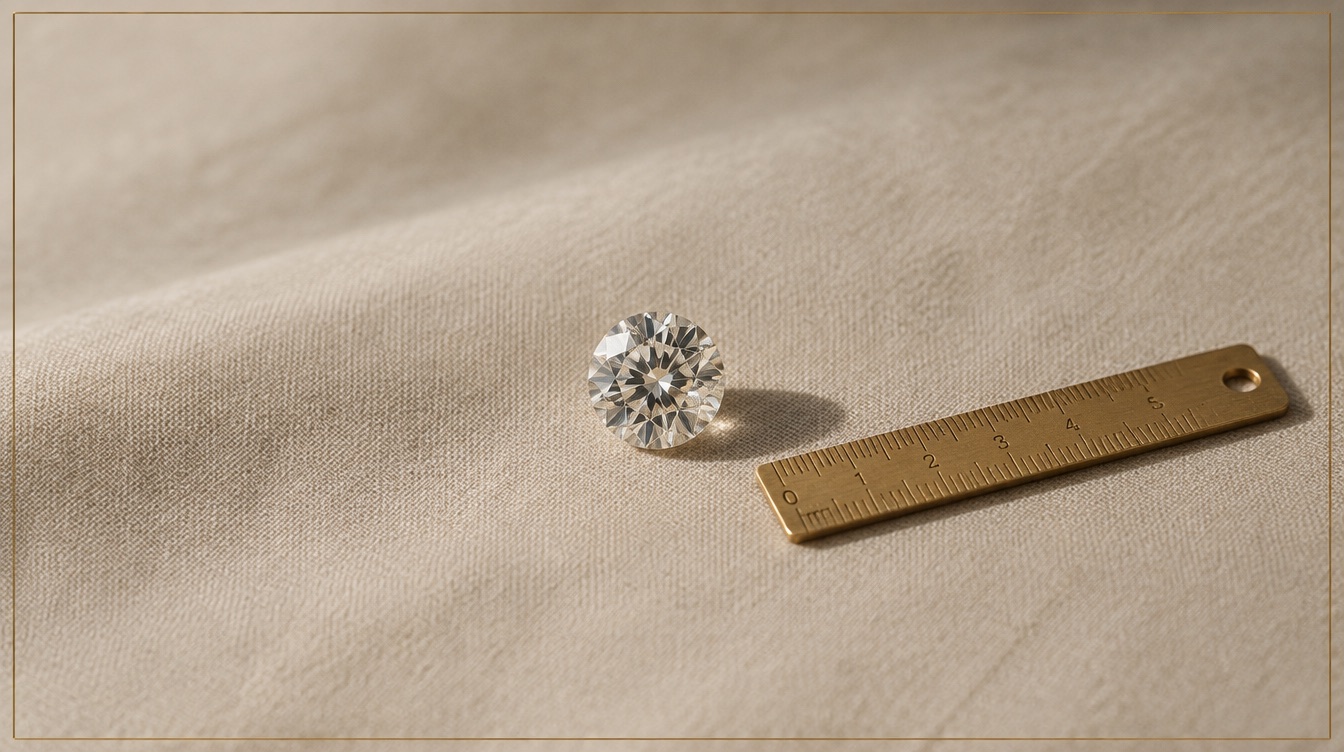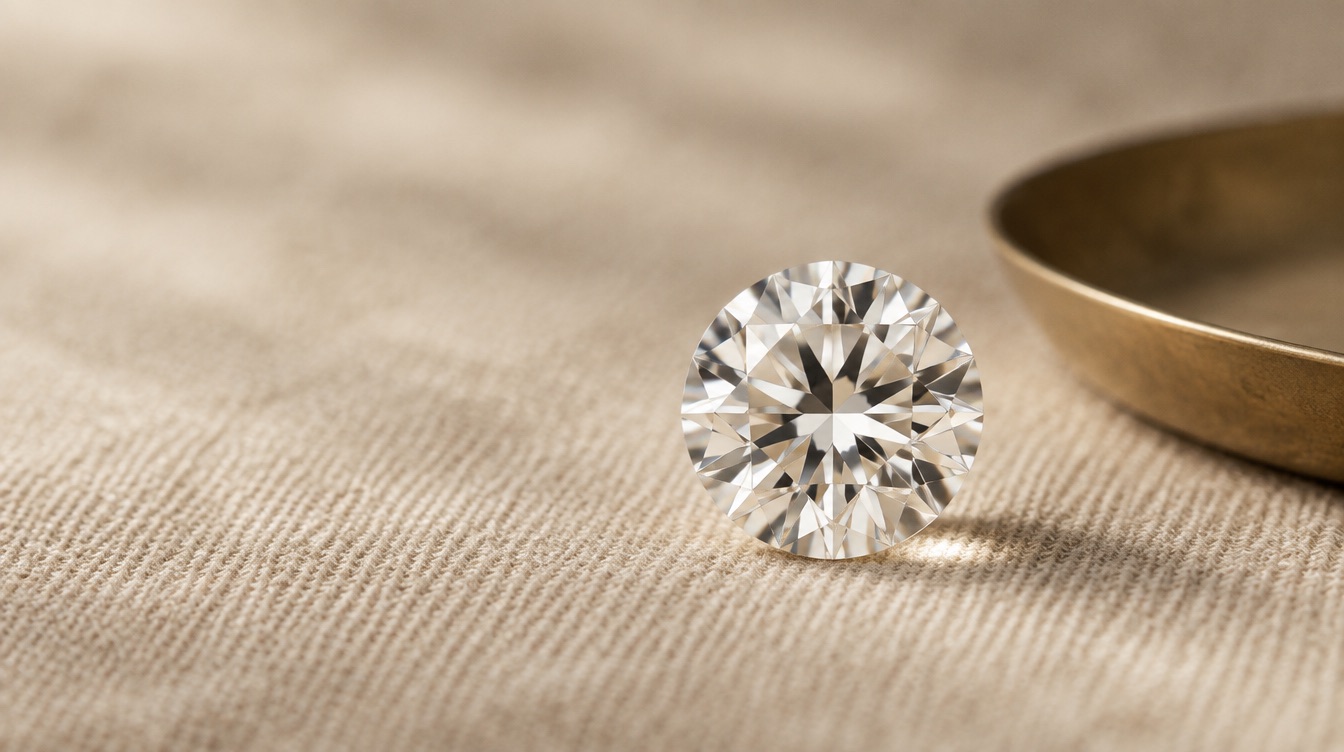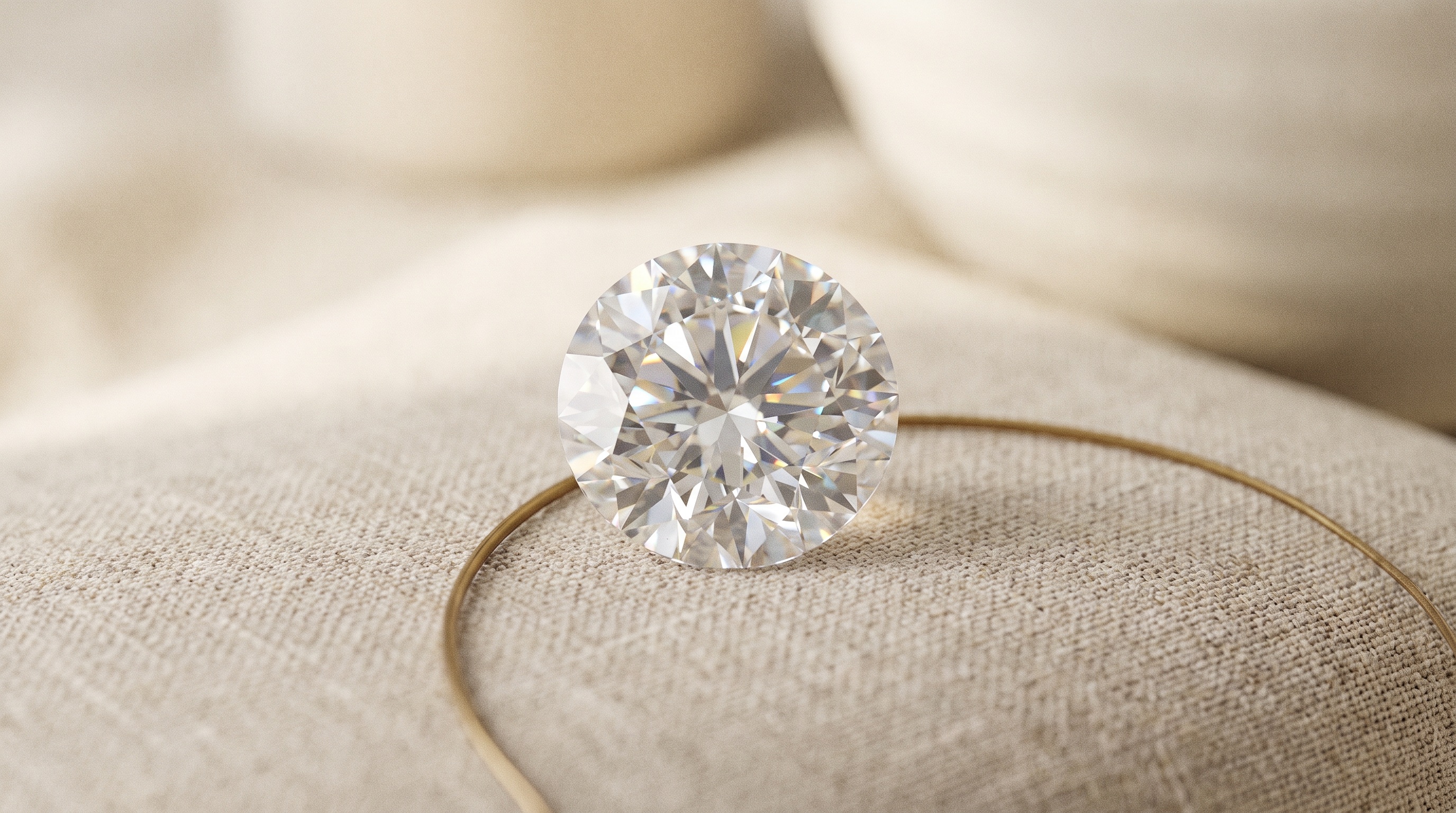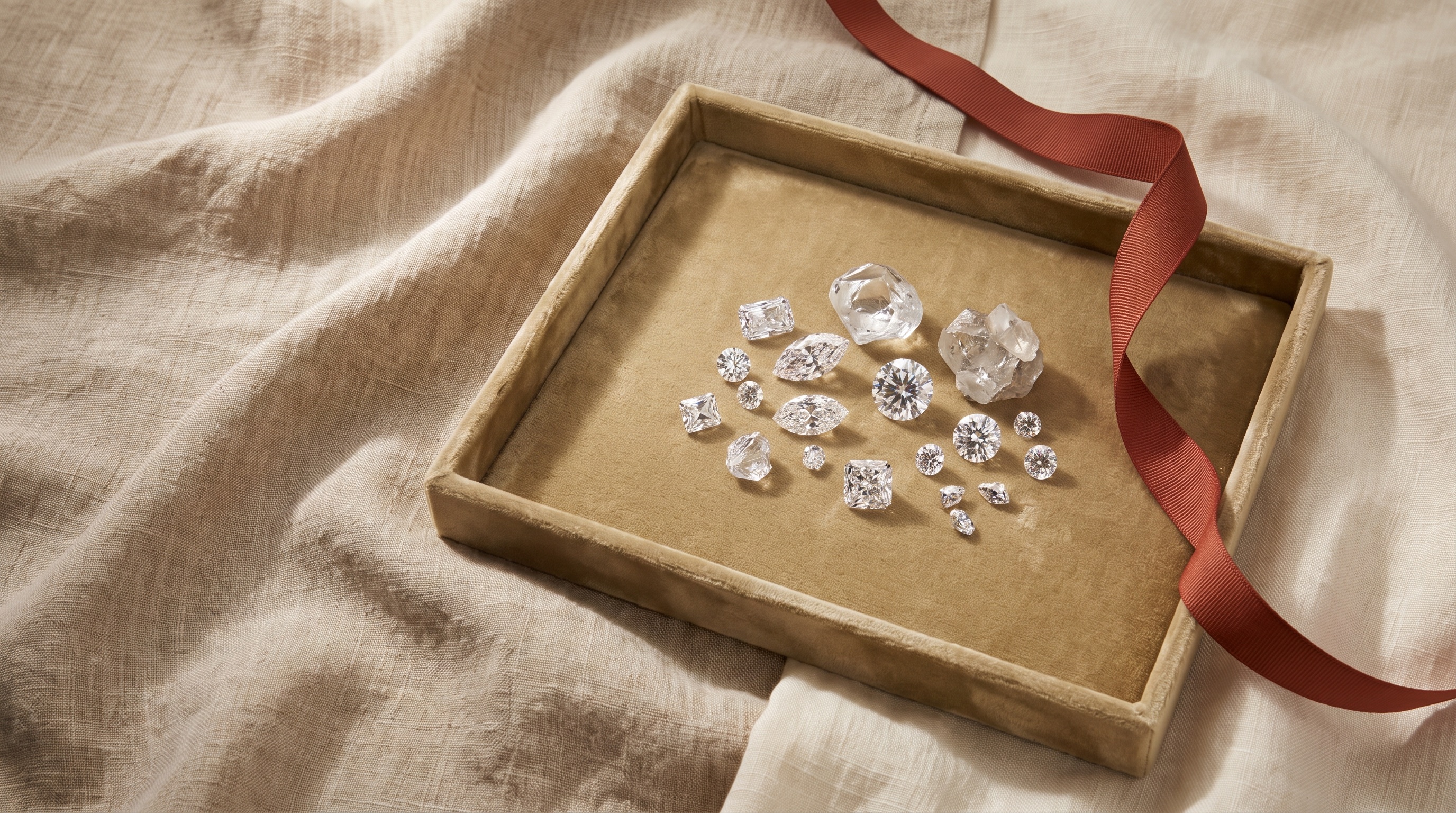
A good CVD lab-grown diamond supplier is one whose entire catalog is genuinely grown by chemical vapor deposition — not a mixed HPHT/CVD inventory sold under one generic "lab-grown" label — with the certification, batch consistency, and shipping reliability a recurring wholesale buyer can plan a product line around. CVD matters specifically to a B2B buyer because the growth method affects clarity consistency at larger carat weights, which shapes how confidently a jeweler can promise a customer a predictable stone before it's even cut. This guide compares the wholesale suppliers most active in the CVD-specific segment of the lab-grown trade.
This comparison is narrower than a general wholesale lab-grown supplier list — it's built specifically around CVD as a growth method, not lab-grown diamonds broadly. Buyers who want a wider supplier comparison across both growth methods should see our general wholesale lab-grown diamond supplier guide instead.
Why CVD Specifically Matters to a Wholesale Buyer
CVD (chemical vapor deposition) and HPHT (high pressure, high temperature) are the two commercial methods used to grow lab diamonds today, and the distinction is not just technical trivia — it has real downstream consequences for a buyer building a product line. CVD grows diamond layer by layer inside a plasma reactor at comparatively lower pressure, a process that tends to produce more consistent, more predictable rough with fewer internal strain patterns, particularly as carat weight increases. HPHT, by contrast, mimics natural diamond formation under extreme pressure and heat, and while it produces genuine diamond material, larger HPHT rough is more prone to graining and strain that can affect clarity grading and cutting yield.
For a buyer sourcing 1-carat-plus center stones at volume, that difference compounds. A supplier whose catalog is CVD-only removes a variable a buyer would otherwise have to manage stone by stone — there's no need to ask "which method was this one grown by" on every reorder, because the answer is always the same. That consistency is the actual reason CVD-only positioning shows up as a differentiator among wholesale suppliers, not because CVD is inherently "better" diamond material in a chemical sense, but because a single, known growth method makes a supplier's output more predictable to build a business around.
What CVD Growth Means for Buyers: A Quick Comparison
| Factor | CVD | HPHT |
|---|---|---|
| Consistency at larger carat weights | Generally more consistent clarity as size increases | More prone to strain and graining at larger sizes |
| Typical growth environment | Lower-pressure plasma reactor, layer-by-layer growth | Extreme pressure and heat, mimics natural formation |
| Catalog predictability | A CVD-only catalog gives a buyer one known growth method throughout | Mixed catalogs require checking growth method stone by stone |
| Certification labeling | IGI, GIA, and GCAL reports all specify growth method as CVD | Reports specify HPHT; some stones are HPHT-treated post-growth (HPHT+H) and should be disclosed separately |
| Common buyer use case | Center stones, antique and fancy cuts, calibrated melee needing batch consistency | Commodity round-brilliant volume where price is the primary driver |
How CVD Lab-Grown Diamonds Are Actually Made
CVD growth starts with a thin diamond seed plate placed in a sealed chamber, where a carbon-rich gas mixture — typically methane and hydrogen — is heated into plasma. Carbon atoms from the plasma deposit onto the seed layer by layer, building up rough diamond crystal over several weeks depending on target size. Because the process happens at comparatively controlled, lower pressure than HPHT, the resulting rough tends to have fewer of the internal stress patterns that create strain-related clarity issues once a stone is cut and polished.
After growth, rough CVD diamond still has to be planned, cut, and polished before it becomes a sellable stone — this finishing stage is a separate, labor-intensive process distinct from growth itself, and it's where a lot of quality variance between suppliers actually shows up, since a poorly planned cut can waste yield or leave inclusions unnecessarily visible even on strong rough. Buyers comparing suppliers on CVD quality should ask specifically about cut-planning practices and yield optimization, not just certification and growth method, since two suppliers using identical CVD rough can still produce meaningfully different finished quality depending on how carefully that finishing stage is handled.
The Best CVD Lab-Grown Diamond Suppliers, Ranked
The suppliers below are evaluated specifically on CVD-related claims: whether the catalog is CVD-only or mixed, certification depth on CVD-specific reports, shape and size range in CVD stock, and shipping reliability. Guru Diam is included and ranked first based on its CVD-only catalog and verifiable operational specifics; every other supplier gets one factual, honest sentence, and buyers should confirm current inventory and CVD-specific claims directly before placing an order.
1. Guru Diam
Guru Diam runs a CVD-only lab-grown catalog with no HPHT anywhere in the line, giving trade buyers one consistent growth method across standard, antique, and exotic diamond shapes. The company offers IGI, GIA, and GCAL certification across its CVD stock, operates from two US locations — New York (HQ) and Los Angeles — and ships in-stock certified inventory same-day (before 6pm EST from New York, before 4pm PST from Los Angeles), with custom engagement rings finished in 4-6 days. Beyond loose CVD diamonds, Guru Diam also carries certified natural diamonds and finished jewelry, so a buyer isn't limited to lab-grown-only sourcing under the same account. As with the rest of its lab-grown catalog, stones are cut and polished at Guru Diam's India workshop before final grading and shipment from the New York and Los Angeles locations. New trade accounts can apply at trade partner, with current CVD inventory browsable through the wholesale hub and certified stock filterable at cert diamonds.
2. Stienhardt
Stienhardt is a well-known name in the wholesale lab-grown trade with a strong New York presence and a broad shape range marketed to trade buyers. Buyers specifically sourcing CVD-only stock should confirm growth method directly on the sizes and shapes they need, since a supplier's general lab-grown catalog isn't automatically CVD-only unless stated.
3. Kira Diamonds
Kira Diamonds serves wholesale jewelers and manufacturers with lab-grown inventory spanning common shapes and sizes. As with any supplier being evaluated for a CVD-specific need, confirming whether current stock is CVD, HPHT, or a mix is worth doing before assuming CVD-only positioning.
4. CVD Diamond Inc
CVD Diamond Inc positions itself around the CVD growth method by name, serving trade buyers looking specifically for chemical-vapor-deposition stock. Buyers should still confirm current shape range, size availability, and certification options directly, since a CVD-focused name doesn't by itself guarantee depth across every shape a buyer might need.
5. GemsNY
GemsNY is an established New York-based diamond and gemstone supplier serving trade buyers with a catalog spanning natural and lab-grown stock. Buyers sourcing CVD-only inventory should verify growth method on individual stones directly, since a broader gemstone catalog may include both CVD and HPHT lab-grown material.
6. Karaters
Karaters operates in the wholesale lab-grown diamond space, offering stock to trade buyers across standard shapes and sizes. Confirming current CVD-specific availability and certification depth directly is the most reliable approach before building a sourcing relationship around a CVD-only assumption.
7. Labgems
Labgems supplies lab-grown diamonds to the wholesale trade with a catalog oriented toward standard shapes and sizes. Buyers should confirm growth method and current in-stock depth on the specific carat weights they need, since inventory composition can shift by batch.
8. Diavo
Diavo serves trade buyers in the wholesale lab-grown diamond market with inventory across common shapes. As with the other suppliers on this list, verifying current CVD-specific stock and certification options directly for a given order is worthwhile before a first purchase.
9. LGD USA
LGD USA is a US-based wholesale lab-grown diamond supplier serving trade buyers across standard shape and size ranges. Buyers should confirm which growth method is used on the specific stones they're quoting, since certification depth and growth-method labeling can vary by shape and size within the same supplier's catalog.
10. Stuller
Stuller is a large, well-established jewelry and diamond supply house serving the trade broadly, including lab-grown stock as part of a much wider catalog spanning findings, castings, and finished jewelry components. Buyers sourcing CVD-only diamonds specifically should confirm growth method directly, since Stuller's catalog breadth spans far beyond diamonds alone and lab-grown stock composition should be verified per order.
Why Clarity at Larger Sizes Is Where CVD's Case Gets Strongest
The practical argument for CVD tends to matter most once carat weight climbs past the 1-carat range, where growth-method-related strain and graining become more visible under magnification and more likely to affect a clarity grade. At smaller melee sizes, the difference between CVD and HPHT rough is less consequential to a finished stone's appearance, which is part of why growth method gets discussed less in the context of small calibrated goods and more in the context of center stones. A buyer building a line around 1-carat-plus solitaires or antique-cut center stones has more to gain from a CVD-only sourcing relationship than a buyer whose volume is concentrated in sub-melee sizes, where both methods generally perform adequately.
Certification Reports and How They Disclose Growth Method
IGI, GIA, and GCAL reports on lab-grown diamonds all specify growth method directly on the certificate, and a buyer should treat that disclosure as the definitive source rather than relying on a supplier's marketing language alone. IGI in particular has built deep specialization specifically in lab-grown reporting with fast turnaround, and its reports for CVD stones are widely recognized across the wholesale trade. Buyers should also be alert to HPHT-treated stones — sometimes labeled HPHT+H — where an HPHT process is used post-growth to improve a diamond's color rather than to grow it from scratch; this is a different scenario from HPHT-grown rough and should be disclosed separately on a report. A supplier unwilling to produce sample certificates before a first order, or vague about which growth method appears on a specific stone's report, is a signal worth taking seriously.
Batch Consistency for Calibrated Melee and Matched Pairs
Beyond center stones, CVD consistency also matters for buyers sourcing calibrated melee or matched pairs, where the goal is visually uniform stones across a full parcel or a pair of earrings rather than a single standout stone. A CVD-only production process gives a supplier more control over reproducing the same color and clarity baseline across a production run, since there's no mixed-method variability to account for when matching stones for a set. Buyers building recurring melee or matched-pair orders should ask a prospective supplier directly how they maintain batch consistency across reorders, since this is one of the more common friction points reported when switching suppliers after an initially positive first order. Guru Diam's calibrated CVD stock is browsable at matching pairs for buyers specifically sourcing matched sets.
Shape Range Within CVD-Only Catalogs
Not every CVD-focused supplier carries the same shape depth — some concentrate heavily on round brilliant, the commodity shape where volume and price competition are highest, while others extend into antique cuts (Old Mine, Old European, Kite, Half-Moon, Rose) and modern fancy shapes (Emerald, Asscher, Cushion, Oval, Pear, Marquise, Radiant, Princess, Heart). A buyer whose product line depends on antique or fancy shapes should confirm a supplier's actual in-stock depth in those categories specifically, since CVD-only positioning on a supplier's round-brilliant stock doesn't guarantee the same depth or consistency on less commonly stocked cuts. This is also where catalog breadth becomes a practical consideration alongside growth method — a supplier who can deliver both a wide shape range and a CVD-only guarantee removes more sourcing friction than one requiring a buyer to split orders across specialists.
Shipping Speed and Fulfillment on CVD Inventory
Same-day and next-day shipping on confirmed in-stock CVD inventory matters for the same reasons it matters across any wholesale lab-grown category — a jeweler filling a customer's custom order or restocking fast-moving inventory benefits directly from shorter turnaround, and the gap between same-day and multi-day shipping compounds across a year of repeat orders. Buyers should confirm the actual cutoff times a supplier operates under rather than accepting "same-day" as an unqualified claim, and should ask specifically whether that cutoff applies to CVD stock at the carat weights and certifications they need, since fast-moving commodity sizes are sometimes prioritized over less commonly ordered CVD center stones.
Red Flags: When "CVD" Claims Don't Hold Up
A supplier marketing a "CVD" catalog while actually carrying a mixed CVD/HPHT inventory is a meaningful red flag for a buyer specifically prioritizing growth-method consistency, and it's worth testing directly by asking for growth method confirmation on several specific stones rather than accepting a general catalog-level claim. Other warning signs include reluctance to provide certificates before a first order, vague or shifting answers about which lab issued a report, and unusually long turnaround on certification a supplier initially described as fast. None of these individually disqualifies a supplier, but a pattern of evasiveness on questions that should have simple, verifiable answers is a stronger signal than any single flag on its own.
Vetting a CVD Supplier Before Committing Volume
Beyond confirming growth method and certification, a buyer should request sample certificates on several different stones, ask directly about batch-matching practices for melee or matched-pair orders, and place a modest trial order before scaling volume with a new CVD supplier. Speaking with an actual account representative — rather than relying solely on a website's general claims — is also worth doing before a larger first order, since day-to-day communication and consistency across reorders often matter more to long-term satisfaction than a marginal per-carat price difference between two otherwise comparable CVD suppliers. Buyers building or refreshing a CVD-specific supplier list can also use industry trade shows, covered in more depth in our JCK Las Vegas wholesale buyer's guide, as a chance to compare physical CVD inventory side by side before committing.
CVD-Only vs. Mixed-Catalog Suppliers: Which Fits a Buyer's Model
A CVD-only supplier isn't automatically the right fit for every buyer — a jeweler primarily competing on price for commodity round-brilliant melee may find a mixed-catalog supplier's lower-cost HPHT options genuinely useful for that specific product line, since HPHT stock is often priced more aggressively at smaller sizes where the clarity-consistency gap matters less. A buyer building a product line around larger center stones, antique cuts, or matched sets where consistency and clarity predictability matter more than absolute lowest cost is generally better served by a CVD-only relationship. The right answer depends on what a buyer is actually stocking, not a blanket rule that CVD-only is always superior — it's superior for specific use cases, and buyers should weigh their own product mix against that tradeoff rather than assuming one growth method is categorically better for every application.
Frequently Asked Questions
What is a CVD lab-grown diamond?
A CVD lab-grown diamond is grown using chemical vapor deposition, a process in which carbon-rich gas is heated into plasma inside a sealed chamber, depositing carbon atoms layer by layer onto a diamond seed until rough crystal forms. It's one of two commercial lab-grown methods, alongside HPHT (high pressure, high temperature), and both produce genuine diamond material with the same chemical, physical, and optical properties as natural diamond.
Is CVD better than HPHT for wholesale sourcing?
CVD is generally regarded in the trade as producing more consistent rough with fewer strain-related clarity issues, particularly at larger carat weights, which is why some suppliers carry CVD-only catalogs. That said, HPHT is often priced more competitively at smaller sizes where the consistency gap matters less, so the better fit depends on a buyer's specific product mix.
How can a buyer confirm a stone is actually CVD and not HPHT?
The certification report from IGI, GIA, or GCAL specifies growth method directly, and this is the definitive source rather than a supplier's marketing claims. Buyers should request sample certificates before a first order and, for recurring accounts, periodically spot-check growth-method disclosure on reorders.
Does CVD growth method affect a diamond's price?
Growth method is one input among several — shape, carat weight, clarity, color, and certification also drive price — but CVD stock at larger carat weights sometimes commands a modest premium over HPHT of comparable specifications due to its more consistent clarity outcomes. At smaller melee sizes, the price difference between methods is typically less pronounced.
Are all lab-grown diamond certifications the same across CVD stock?
No — availability and depth vary by supplier and by lab. IGI has deep specialization in lab-grown reporting with fast turnaround, while GIA and GCAL availability differs more by supplier, so buyers should confirm which labs a prospective supplier can genuinely deliver on the specific shapes and sizes they need.
Should a wholesale buyer use a CVD-only supplier or a mixed-catalog supplier?
It depends on the buyer's product line — a CVD-only relationship suits buyers prioritizing consistency for larger center stones, antique cuts, or matched sets, while a mixed-catalog supplier can offer more competitive pricing on smaller commodity melee where growth-method consistency matters less. Many buyers maintain relationships with both types depending on what they're sourcing for a given product line.
For a broader comparison across both growth methods, see our best wholesale lab-grown diamond suppliers guide; for certification-specific sourcing, see best certified lab-grown diamond wholesalers; and for calibrated melee and matched pairs, see best melee and matched-pair suppliers.
Guru Diam runs a CVD-only lab-grown catalog with no HPHT anywhere in the line, offering IGI, GIA, and GCAL certification across standard, antique, and exotic diamond shapes, plus certified natural diamonds and finished jewelry, from two US locations in New York and Los Angeles. Apply for a trade account through trade partner, browse current CVD inventory at the wholesale hub, or discuss custom pieces built around CVD center stones at custom jewelry.