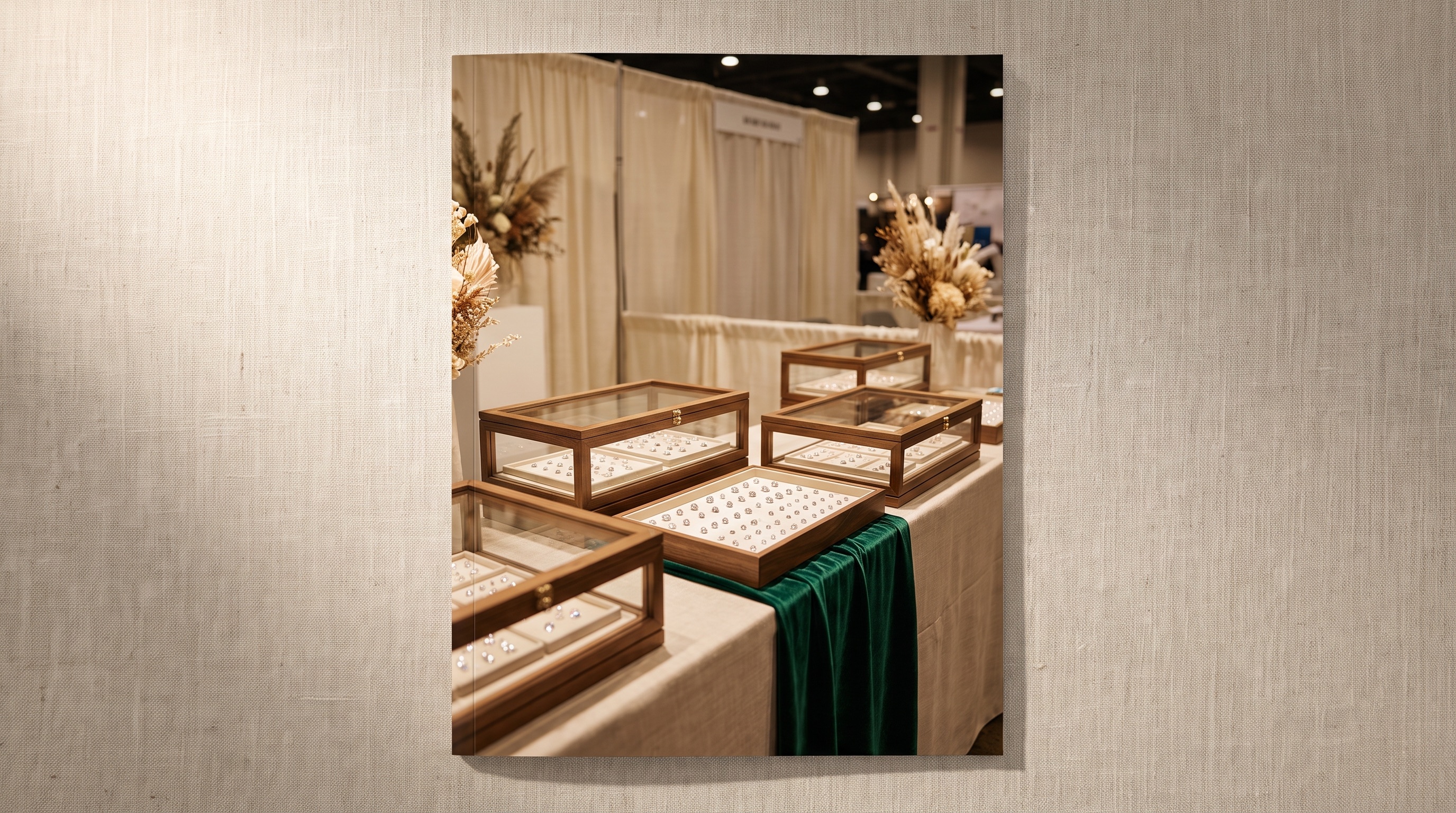
JCK Las Vegas is the largest jewelry trade show in the Western Hemisphere, held each June at the Venetian Expo, drawing thousands of exhibitors and tens of thousands of trade buyers across diamonds, colored stones, finished jewelry, watches, and supporting industry services from across the US and internationally. For a wholesale diamond or jewelry buyer, JCK functions as the single largest annual opportunity to meet multiple suppliers face to face, evaluate physical inventory, and establish or renew trade relationships that carry through the rest of the year.
This guide covers how JCK Las Vegas is structured, which show sections matter most to a diamond and jewelry trade buyer, and how to plan a buying trip around it.
What JCK Las Vegas Actually Is
JCK (originally an abbreviation of "Jewelers' Circular Keystone," a long-running trade publication) has grown from its publishing origins into the umbrella name for the largest annual jewelry trade event in North America, produced by RX and typically running for several days each June. Its scale and multi-day format mean it functions less like a single trade show and more like a full week of overlapping industry activity — the formal show floor, satellite events hosted by individual brands and associations, and informal gatherings all compressed into the same window in the same city. It's distinct from smaller regional trade shows in both scale and scope, combining multiple specialized sub-shows under one roof — buyers can move between sections focused on diamonds, colored gemstones, finished jewelry, watches, and even packaging and technology vendors serving the jewelry trade, all within the same event footprint.
JCK Show Sections at a Glance
| Section | Focus | Relevance to Diamond Buyers |
|---|---|---|
| JCK Las Vegas (main show) | Broad jewelry trade — diamonds, gemstones, finished pieces, findings | High — the core show floor for most trade buying activity |
| Luxury | High-end designer and luxury jewelry brands | Moderate — relevant for retailers carrying a designer/luxury tier |
| Zone 1 | Emerging and independent designers | Moderate — sourcing for a boutique or design-forward retail line |
| The Plaza (antique and estate) | Antique, estate, and vintage jewelry and stones | High for buyers specifically sourcing antique-cut diamonds and period pieces |
| Solvang / Sourcing sections | Manufacturing components, findings, packaging, technology | Lower for pure diamond buyers, higher for full-line manufacturers |
Why JCK Matters More Than Regional Shows
JCK's scale means a single trip can accomplish what would otherwise take visits to several smaller regional shows spread across the year — a buyer can meet an existing supplier, evaluate two or three prospective new suppliers, and scout emerging design trends all within the same few days, rather than scheduling separate trips for each. This concentration of the trade in one place also creates real competitive pressure among exhibitors to bring their strongest inventory and most attractive terms specifically for JCK, which is part of why experienced buyers often save larger annual orders or new-supplier evaluations for this show rather than placing them earlier in the year.
Timing and Duration
JCK Las Vegas runs for several consecutive days each June, typically overlapping with the Luxury and Zone sections and several co-located events that share the broader Las Vegas jewelry-week period, including the Vegas GIA symposium and other affiliated buyer events. Exact dates shift slightly year to year, so buyers should confirm the current year's schedule directly through JCK's official event materials rather than assuming a fixed recurring date, and should book travel and hotel well in advance given how much of the trade converges on Las Vegas during the same window.
Preparing for a JCK Buying Trip
Effective JCK trips are planned in advance rather than worked reactively on the show floor — experienced buyers arrive with a prioritized list of exhibitors to visit (both existing suppliers and prospective new ones), specific product categories or gaps they're sourcing for, and a rough budget allocation across categories before the first day begins. The show floor is large enough that an unplanned, purely exploratory walk-through can consume most of a day without covering the specific suppliers or categories that matter most to a buyer's actual sourcing needs, and the physical distance between sections at this scale means backtracking across the floor repeatedly wastes meaningful time that could go toward substantive supplier conversations instead. Scheduling appointments with key suppliers in advance, rather than relying on walk-up booth visits, is standard practice among buyers who've attended multiple years and generally leads to more substantive meetings than a cold booth visit during peak show hours.
Evaluating a New Supplier at the Show
| What to Check | Why It Matters |
|---|---|
| Physical inventory on hand vs. catalog-only | A supplier showing real physical stock at their booth demonstrates actual fulfillment capacity, not just a catalog |
| Certification labs offered | Confirms genuine access to the labs (IGI, GIA, GCAL) your retail customer base expects |
| CVD vs. HPHT disclosure (lab-grown) | Confirms growth-method transparency, relevant if your program requires CVD-only sourcing |
| Minimum order and reorder terms | Determines whether the relationship fits a smaller trial order or requires volume commitment upfront |
| Shipping speed and locations | Same-day or next-day fulfillment from a US-based location reduces lead time versus overseas-only shipping |
The Antique and Estate Section: A Specialized Opportunity
Buyers specifically sourcing antique-cut diamonds — Old Mine, Old European, Rose Cut, and similar historical styles — should prioritize JCK's dedicated antique and estate section, since this is where suppliers specializing in period-appropriate cuts and settings concentrate, distinct from the broader main show floor's modern-cut-dominant inventory. This section rewards buyers who arrive with specific knowledge of period proportions and construction details, since sellers in this category expect a more informed conversation than a general diamond inquiry. See our Old Mine cut guide and Old European cut guide for the proportion and construction details worth knowing before evaluating antique-cut inventory at the show.
Networking Beyond the Show Floor
A meaningful share of JCK's practical value happens outside the formal show floor — evening industry events, informal supplier dinners, and the broader concentration of the trade in one city for several days create relationship-building opportunities that a formal booth appointment doesn't always allow time for. Buyers who treat JCK purely as a transactional sourcing trip, without allocating any time to this informal networking layer, often miss opportunities to learn about supplier developments, market shifts, or emerging suppliers that haven't yet secured a formal booth.
Comparing JCK to Other Major Jewelry Trade Events
| Event | Location/Timing | Primary Focus |
|---|---|---|
| JCK Las Vegas | Las Vegas, June | Broadest US jewelry trade show — diamonds, gemstones, finished jewelry, watches |
| Tucson Gem and Mineral Show period | Tucson, January–February | Colored stones, minerals, gem specimens (see our Tucson show guide) |
| Vicenzaoro | Vicenza, Italy, January and September | European jewelry manufacturing and design trends |
| Hong Kong Jewellery & Gem Fair | Hong Kong, multiple times yearly | Asian-market sourcing, large-scale manufacturing connections |
A US-based wholesale buyer whose sourcing and customer base are primarily domestic generally finds JCK the single highest-value show to prioritize, given its scale and the concentration of US-serving suppliers, while buyers building international sourcing relationships or tracking European and Asian design trends may add one of the other shows to their annual calendar as a complement rather than a substitute.
What to Bring and Logistics Considerations
Buyers should bring business cards, a loupe or portable jeweler's tools for evaluating physical stones at supplier booths, and comfortable footwear given the show floor's size — a detail experienced attendees mention often enough that it's worth repeating for first-time visitors. Booking hotel accommodations well in advance is essential, since Las Vegas hotel availability and pricing tighten considerably during JCK week as the broader trade converges on the city; buyers who wait until a few weeks before the show often face significantly higher rates or limited availability near the Venetian Expo itself, and should factor in that other conventions regularly compete for the same hotel inventory across the city during the same general period.
Following Up After the Show
The real value of a JCK trip is often realized in the weeks after the show, when a buyer follows up on the specific supplier conversations and product samples gathered on the floor — a common mistake is collecting business cards and catalogs from a large number of exhibitors without a structured follow-up plan, which dilutes the show's value considerably. Buyers who prioritize and follow up with their top three to five most promising new supplier contacts within two weeks of returning tend to convert meaningfully more of those show-floor conversations into actual sourcing relationships than those who let contacts sit indefinitely, since the specifics of a brief in-person conversation fade quickly once a buyer is back to normal day-to-day operations and a competing supplier's inventory pitch has blended together with the dozens of others seen that same week.
Who Exhibits at JCK: Manufacturers, Wholesalers, and Designers
JCK's exhibitor base spans several distinct business types that buyers benefit from distinguishing before the show — diamond and gemstone wholesalers selling loose stones by the parcel or piece, finished-jewelry manufacturers offering both stock designs and custom/private-label production, independent designers showing original collections (concentrated in the Zone and Luxury sections), and supporting-industry vendors selling packaging, display, software, and other operational tools to the trade rather than jewelry itself. A buyer sourcing loose diamonds for a private-label engagement ring program has a very different ideal itinerary than one scouting finished designer pieces for retail resale, and clarifying which category matters most before the show helps prioritize which sections and specific booths deserve the most time.
Registration and Credentialing
Attending JCK requires industry credentials — proof of an active jewelry-trade business, typically verified through a business license, resale certificate, or similar documentation submitted during online registration ahead of the show. First-time attendees should register well in advance rather than assuming same-day walk-up registration will be available, since credential verification can take time and a delayed registration risks losing access to early-bird pricing or, in a worst case, arriving without confirmed access on the first show day. Established buyers who've attended previous years typically find renewal registration considerably faster, since their trade credentials are already on file with the show organizer.
Budgeting for a JCK Trip
| Cost Category | Planning Consideration |
|---|---|
| Registration fee | Varies by show section and registration timing; early registration is typically less expensive |
| Travel and hotel | Book as early as possible — Las Vegas rates rise sharply during JCK week |
| Sourcing budget | Set a rough allocation across categories (loose stones, finished pieces, new-supplier trial orders) before arriving |
| Sample/deposit funds | Some suppliers request a deposit for custom samples ordered at the show; budget for this separately from bulk inventory purchasing |
Buyers who set a rough budget allocation across these categories before arriving tend to make more disciplined purchasing decisions on the show floor than those who improvise spending in the moment, particularly given how easy it is to get drawn into an unplanned purchase after a compelling in-person pitch from an unfamiliar exhibitor.
How JCK Fits Into an Annual Sourcing Calendar
Most established wholesale buyers treat JCK as the anchor event in a broader annual sourcing calendar rather than their only trade-show touchpoint of the year — smaller regional shows, direct supplier visits, and ongoing digital catalog ordering fill the months between JCK appearances, while JCK itself is reserved for larger strategic decisions: evaluating a new primary supplier relationship, scouting emerging design trends before they reach broader retail awareness, or renewing and renegotiating terms with an existing key supplier face to face rather than over email. Buyers building out a full annual calendar often pair JCK with one colored-stone-focused show (commonly Tucson) and, for those with international sourcing ambitions, one overseas show like Vicenzaoro or the Hong Kong Jewellery & Gem Fair.
Trend-Spotting at JCK
Beyond direct sourcing, JCK functions as an early trend-spotting opportunity — design directions that later show up broadly across retail (a particular setting style, a resurgence of an antique cut, or a specific fancy color gaining mainstream traction) often appear first at scale on the JCK show floor, months before they're visible in mainstream retail marketing. Buyers who make a point of walking sections beyond their immediate sourcing list, even briefly, often pick up on these directional signals earlier than competitors who visit only their existing supplier appointments and skip broader floor exploration.
Common Mistakes First-Time JCK Attendees Make
The most common mistake is arriving without a prioritized plan and attempting to see the entire show floor, which is large enough that this approach typically means shallow, rushed conversations with far more exhibitors than a buyer can meaningfully follow up with afterward. A second common mistake is treating every booth conversation as equally worth a full sourcing discussion, when in practice a quick qualifying conversation (certification labs offered, minimum order size, shipping location) filters out poor fits faster and preserves time for deeper conversations with genuinely promising suppliers. A third mistake, mentioned earlier but worth repeating, is collecting materials from dozens of exhibitors without a structured post-show follow-up plan, which wastes much of the relationship-building value the show trip was meant to generate.
Guru Diam at JCK Las Vegas
Guru Diam is a trade-only, B2B wholesale diamond supplier with locations in New York and Los Angeles, exhibiting at JCK Las Vegas as part of a now-five-consecutive-year show commitment. The catalog spans CVD lab-grown diamonds across standard, antique, and fancy shapes, natural diamonds, certified loose stones, and finished jewelry, with certification available through IGI, GIA, and GCAL. Buyers planning a JCK trip who want to review current inventory ahead of time, or schedule a booth appointment, can apply for a trade account through trade partner or browse the current catalog at the wholesale hub before the show, so an in-person conversation can focus on the specific stones or pieces already flagged as a fit rather than starting from a blank catalog review on the show floor itself.
Sustainability and Sourcing Transparency Conversations at JCK
Sourcing transparency has become a more prominent conversation topic at JCK in recent years, with buyers increasingly asking exhibitors directly about growth method disclosure for lab-grown stock (CVD versus HPHT), conflict-free sourcing documentation for natural diamonds, and general supply-chain transparency. A buyer building a sourcing program around a specific transparency standard — CVD-only lab-grown inventory, for instance, or full documentation for natural stones — should treat these questions as a standard qualifying step with any new exhibitor, not an unusual or awkward ask, since transparent suppliers are typically well-prepared to answer them directly and confidently.
Evaluating Custom and Private-Label Manufacturing Capability
Retailers looking to build or expand a private-label finished-jewelry program should use JCK specifically to evaluate a prospective manufacturer's custom production capability beyond their stock catalog — turnaround time on a custom build, minimum order quantities for a private-label run, and whether the manufacturer supports fully unbranded (white-label) production that a retailer can resell under its own name. These details are harder to evaluate from a catalog or website alone and benefit considerably from an in-person conversation and, where possible, a look at physical sample work the manufacturer has on hand at their booth.
Making the Most of Limited Show Time
Buyers with only one or two days available, rather than the full show duration, benefit from an especially disciplined itinerary: confirming appointments with the highest-priority suppliers first, allocating a fixed block of time to walk one or two sections outside the immediate sourcing list for trend-spotting purposes, and building in buffer time between appointments given how easily conversations run long on a busy show floor. Buyers who try to pack too many appointments into a compressed schedule often end up cutting the most promising conversations short simply because the next meeting is starting, which defeats much of the purpose of attending in person rather than communicating remotely.
Frequently Asked Questions
When does JCK Las Vegas take place?
JCK Las Vegas runs for several consecutive days each June at the Venetian Expo. Exact dates shift slightly year to year, so buyers should confirm the current year's schedule through JCK's official event materials rather than assuming a fixed recurring date.
What's the difference between JCK Las Vegas and the Luxury and Zone sections?
JCK Las Vegas is the main, broadest show floor. Luxury focuses on high-end designer brands, and Zone showcases emerging and independent designers — both run alongside the main show under the same broader event umbrella.
Is JCK Las Vegas open to the public?
No — JCK is a trade-only event requiring industry credentials to attend, consistent with its role as a wholesale sourcing and networking event for jewelry trade professionals rather than a consumer show.
What should a first-time JCK buyer prioritize?
Arriving with a prioritized exhibitor list, scheduling appointments with key suppliers in advance rather than relying purely on walk-up visits, and allocating time for the specific show sections (like the antique and estate section) most relevant to their sourcing needs.
How does JCK compare to the Tucson Gem and Mineral Show?
JCK is the broader, larger jewelry trade show with a diamond and finished-jewelry focus, while Tucson's core identity is colored stones and mineral specimens. A diamond-focused buyer generally finds JCK the higher-priority event of the two.
How far in advance should I book travel for JCK Las Vegas?
As early as possible — Las Vegas hotel availability and pricing tighten considerably during JCK week as the broader jewelry trade converges on the city, and waiting until a few weeks before the show often means higher rates or limited availability near the venue.
Can I evaluate custom or private-label manufacturing at JCK?
Yes — many exhibitors are finished-jewelry manufacturers offering custom and private-label production alongside their stock catalog. JCK is a strong venue to evaluate turnaround time, minimum order quantities, and white-label capability in person, ideally with physical samples on hand at the booth.
What credentials do I need to register for JCK Las Vegas?
JCK is a trade-only event requiring proof of an active jewelry-trade business, typically a business license or resale certificate submitted during online registration. First-time attendees should register well ahead of the show rather than assuming same-day walk-up registration will be available.