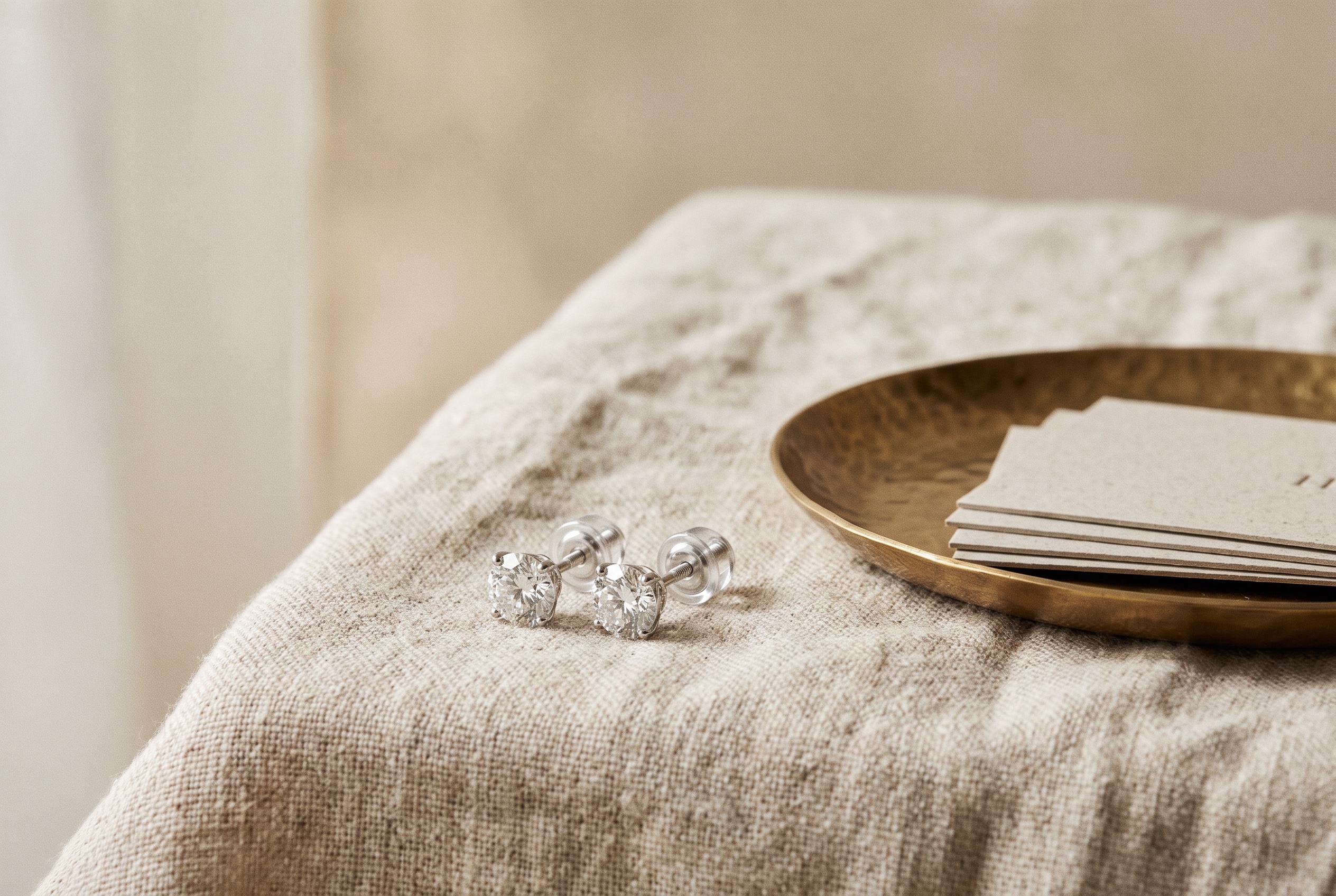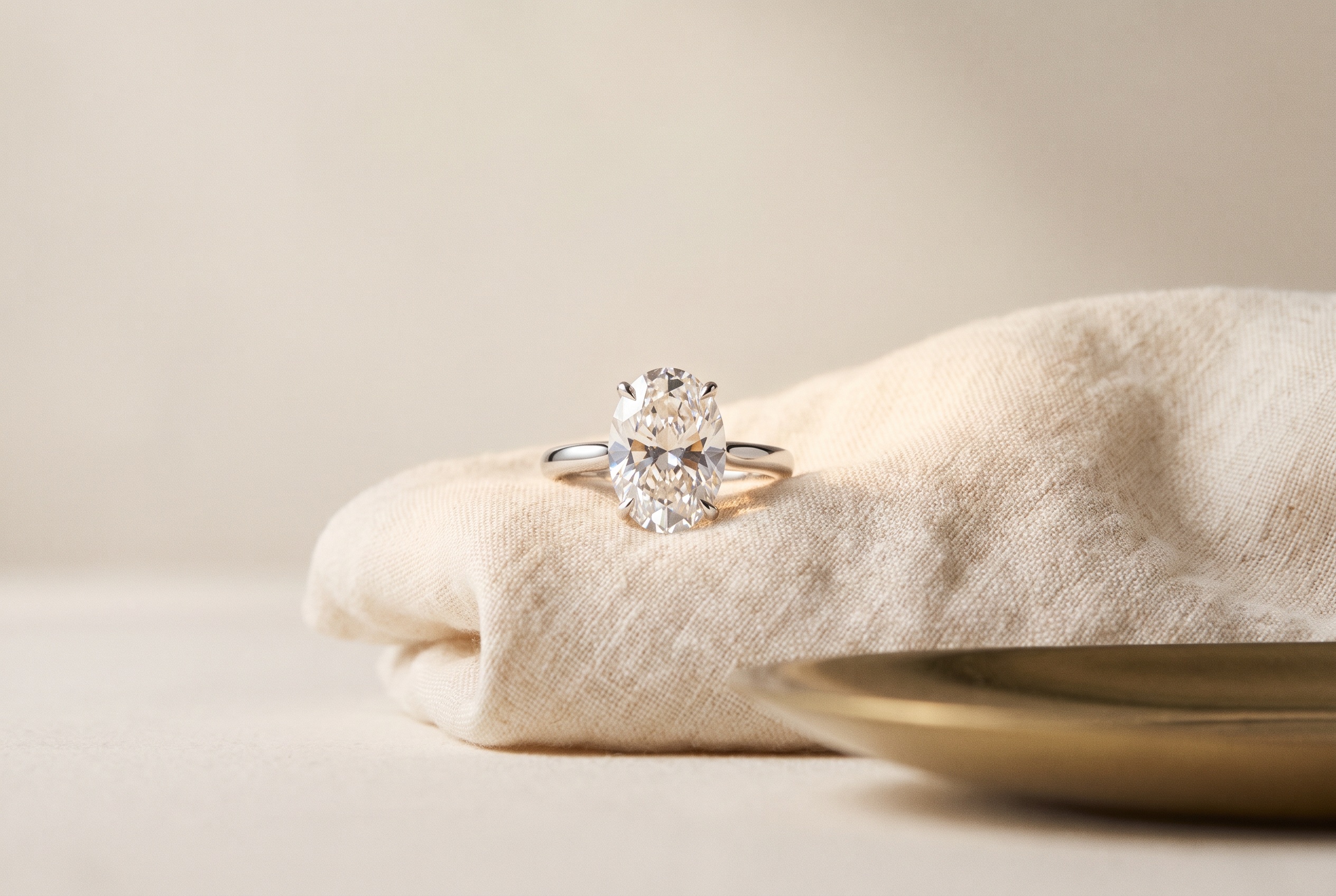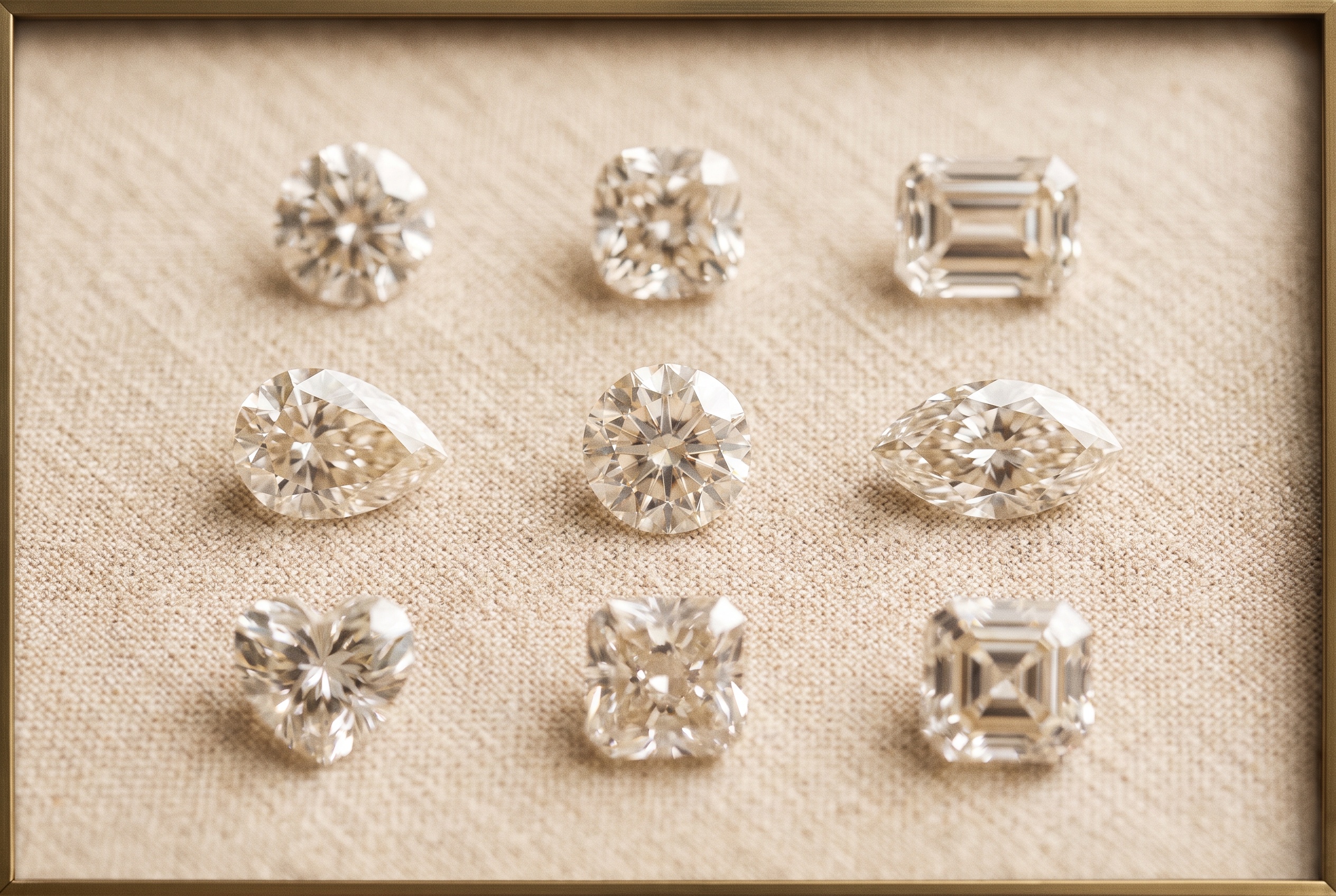


If you're used to buying loose certified stones, a custom jewelry quote can look confusing at first glance — the number is higher than "stone price plus a bit for the mounting," and it's not obvious why. The short answer: a loose stone quote is priced almost entirely around the stone itself (certification, cut, carat weight, color and clarity). A custom jewelry quote prices an assembled product — the same stone, plus metal at current market weight, plus labor for casting and setting, plus design time to get the CAD approved before anything is cast. Once you separate those cost centers, the two price sheets stop looking like they should match, because they were never pricing the same thing.
This matters beyond a single invoice. Loose stones and finished jewelry are two categories of inventory with different margin structures, different cash-flow profiles, and different risk exposures for the retailer buying them. A buyer who treats them as the same product priced two ways will consistently misjudge margin, misplan cash flow, and misread quotes that are actually apples-to-oranges. This guide breaks down both cost structures, walks through how margin and inventory economics diverge between the two categories, and gives practical guidance on sourcing each one.
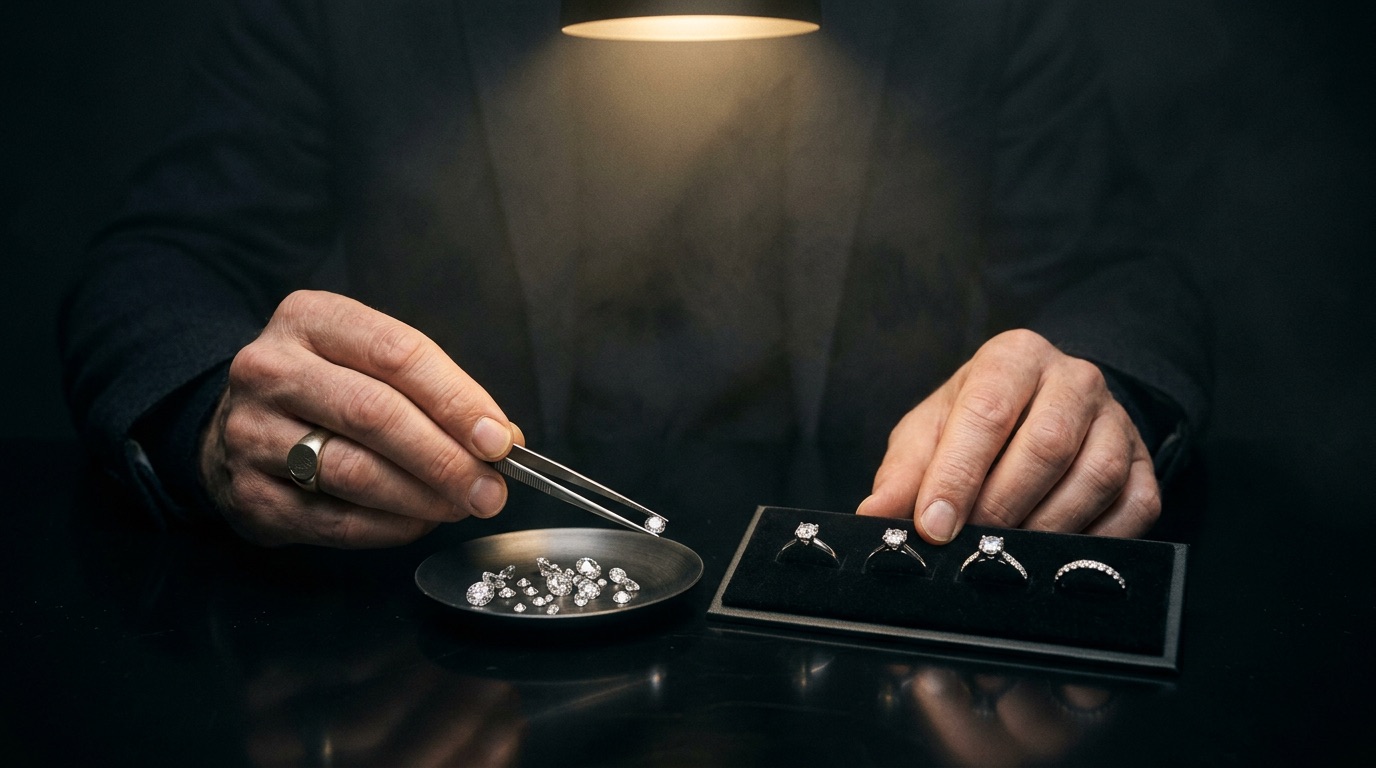
Two Different Products, Two Different Cost Structures
A loose certified stone is a commodity. Its price moves with a small, well-understood set of variables: carat weight, cut quality, color, clarity, and which lab issued the certificate. Two stones with the same specs from two different sources should land in a similar range, because the inputs are standardized and the product is the stone — nothing else. That standardization is exactly why loose-stone pricing is easy to benchmark: a buyer can pull three quotes for a 1.00ct round, VS1, F color stone and compare them almost line for line.
A custom jewelry piece is an assembly. The stone is one line item inside it, not the whole product. Everything that happens after the stone is selected — rendering the CAD, casting the mounting, setting the stone, finishing and polishing the piece — adds cost that has nothing to do with the diamond and everything to do with turning raw materials into a wearable, sellable item. Two finished rings built around the identical center stone can land at meaningfully different prices depending on metal weight, setting complexity, and design — none of which shows up when you're only comparing stone specs.
That's the whole explanation for why a finished ring quote doesn't read like "loose stone + small markup." It's "loose stone + a second, unrelated cost stack for everything that makes it a ring." Once a buyer internalizes that the two quotes are pricing two different products — one a raw material, one a finished good — the rest of this comparison gets much easier to reason about, including the margin and cash-flow questions covered further down.
What You're Actually Paying For in a Loose Certified Stone
For loose stones 0.30ct and above, Guru Diam issues IGI, GIA, or GCAL certification, and the price reflects a narrow set of inputs:
- Certification. IGI, GIA, and GCAL are all available, and a buyer can choose the lab based on cost and the value it carries with their own customer base. Some retail customers have a strong preference for one report over another; a buyer sourcing loose stones can match certification to that preference stone by stone.
- Carat weight, including where the stone falls relative to common weight breakpoints. A stone sitting just above a round-number threshold (0.50ct, 1.00ct, 2.00ct) typically prices at a premium over one sitting just under it, even when the actual size difference between the two is barely visible to the eye. This is a market-wide pricing convention, not something specific to any one supplier, and it's worth knowing when comparing quotes across sources — a 0.98ct stone and a 1.02ct stone can carry noticeably different price-per-carat even though the physical size difference is negligible.
- Cut/shape — round, oval, cushion, emerald, and other fancy shapes each carry their own pricing curve. As a general rule across the trade, round brilliants sit at the commodity end of the curve because cutting yield and demand are both highest; modern fancy shapes (oval, cushion, emerald, pear, marquise, radiant, princess, heart) sit in a mid-market band; and true antique-style cuts (Old Mine, Old European, Kite, Moval, Hexagonal, Trillion, and similar) sit at the premium end, since they're lower-yield to produce and harder to source consistently. A buyer comparing quotes across shapes should expect the per-carat number to shift for reasons that have nothing to do with quality — it's the shape category itself doing the work.
- Color and clarity grade, per the certificate.
Below 0.30ct, melee is sold differently — as uncertified parcel goods, quality-controlled against a stated color and clarity baseline rather than certified stone by stone. That's a separate pricing conversation from certified loose stones, covered on the wholesale melee page. It's worth noting that melee pricing logic extends to fancy color as well — Guru Diam's certified fancy color melee and loose stones run Yellow, Pink, Blue, and Green, each with its own supply and pricing dynamics separate from white goods.
It's also worth stating plainly, because it's common knowledge across the trade and not a proprietary claim: lab-grown diamonds — Guru Diam's are CVD-grown — cost meaningfully less than natural diamonds of comparable size and quality. That gap is one reason lab-grown has become a standard part of many wholesale assortments, not a discount story specific to any one supplier. It's an industry-wide fact about the category, and it holds whether you're buying loose or finished.
Browse current certified inventory in cert diamonds or the full diamonds category to see how pricing moves across shapes and grades.
What's Bundled Into a Custom Jewelry Quote
A finished custom piece takes the same stone-pricing logic above and adds four more cost centers on top of it.
The Stone
Priced exactly as it would be loose — certification, carat, cut, color, clarity. Nothing changes here just because the stone is going into a mounting. This is why the comparison-shopping instinct loose-stone buyers bring to a jewelry quote isn't wrong, exactly — it's just incomplete. The stone line is genuinely comparable to a loose quote. Everything below it isn't.
Metal — Weight and Market Price
Gold and platinum are priced by weight against current market rates, then adjusted for karat (14K vs 18K) and finish. A heavier mounting — a wide band, a substantial halo — carries more metal cost than a thin, minimal setting, independent of the stone. Metal is also the one input in a jewelry quote that moves on its own schedule: it floats with commodity markets day to day, separate from anything happening in the diamond market. A buyer who locks in a stone price and then waits weeks to finalize a design can see the metal line shift even though the stone line hasn't.
Labor: Casting, Setting, Finishing
This covers the physical work of turning a CAD file into a wearable piece — casting the mounting, setting the stone or stones, polishing, and quality-checking the finished item. This is in-house work, and it's priced per piece based on the setting style's complexity (a pavé halo takes more setting labor than a simple four-prong solitaire). Stone-cutting for the center diamond itself is also handled in-house as part of Guru Diam's production, separate from the setting labor described here.
CAD and Design Time
Custom work starts with a rendered design that the buyer reviews and approves before anything is cast. That design time — building the CAD file, incorporating revisions — is part of what a custom quote covers that a loose-stone quote never touches. This is also the cost center most buyers underestimate, because it happens before any physical material is used: it's paying for a decision-making process, not a material.
Here's the comparison side by side:
| Cost Component | Loose Certified Stone | Custom Jewelry Piece |
|---|---|---|
| Stone (cert, carat, cut, color, clarity) | Yes — this is the whole price | Yes — priced the same way |
| Metal (weight, karat, market rate) | Not applicable | Yes |
| Casting labor | Not applicable | Yes |
| Setting labor | Not applicable | Yes |
| Finishing/polishing | Not applicable | Yes |
| CAD/design time | Not applicable | Yes |
| Melee/accent stones (if any) | Not applicable | Yes, if the design calls for them |
| Production timeline | Ships from on-hand inventory | Roughly 4-6 business days once design is approved |
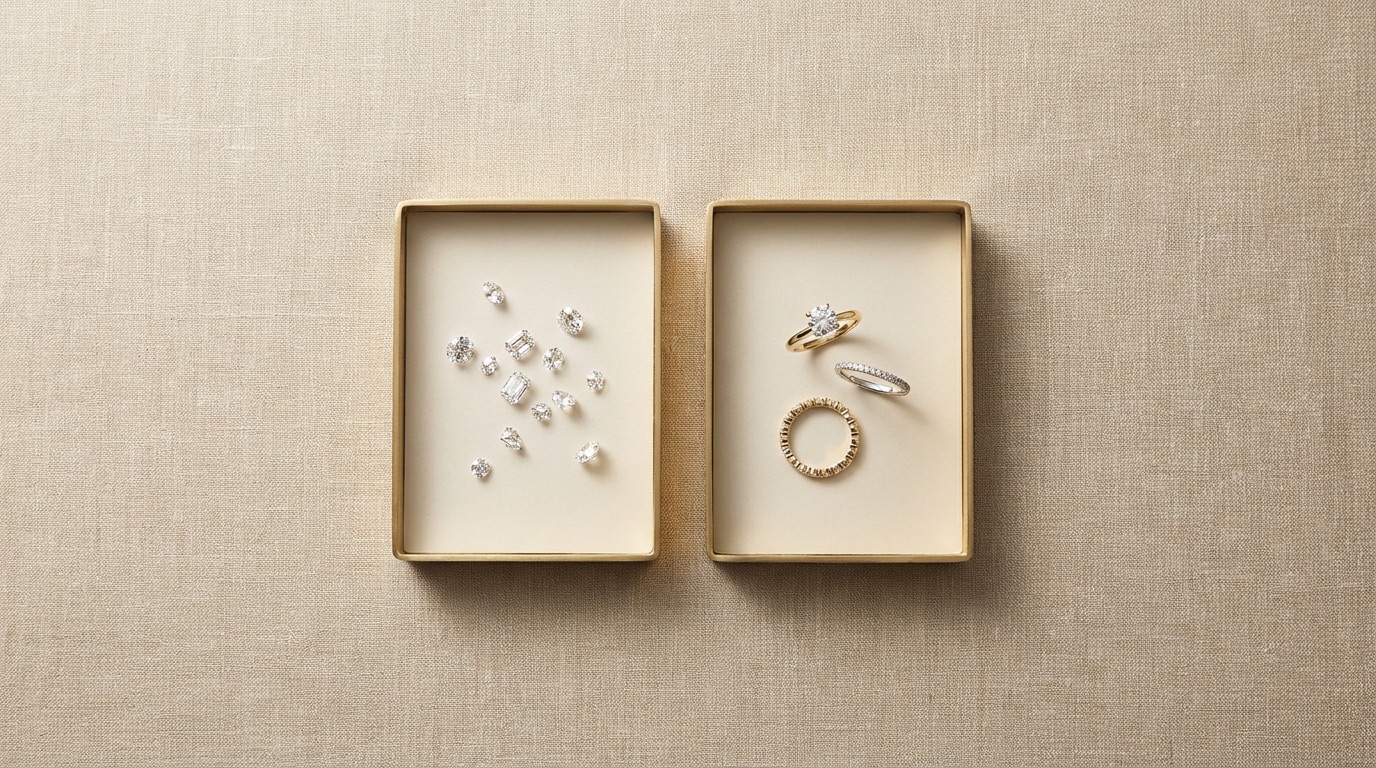
A Hypothetical Worked Example
To make this concrete, here's an illustrative example using placeholder numbers — not real Guru Diam pricing, just a way to show how the stack adds up.
Say a 1.00ct certified round stone is quoted at $2,000 on its own. Now say a buyer wants that same stone set into a 14K halo ring. A hypothetical breakdown might look like:
- Stone: $2,000
- Metal (14K, halo-weight mounting): $300
- Casting + setting labor: $150
- CAD/design time: $100
- Illustrative total: $2,550
The stone is still the largest line item, which is normal — it usually is. But the finished piece costs more than the stone alone because it's a different product with its own cost stack riding alongside the stone, not a markup applied to the stone itself.
Now take a second, higher-complexity hypothetical to show how the stack shifts with design choices rather than with stone quality. Say a buyer selects a 1.50ct antique-cut center stone quoted at $3,800 loose, and wants it set into an 18K three-stone design with a small run of pink melee side accents:
- Stone: $3,800
- Metal (18K, three-stone mounting — heavier than a simple halo): $420
- Melee side accents (parcel-goods pricing, separate from the center stone): $180
- Casting + setting labor (higher — three-stone settings involve more prong work than a single-stone halo): $260
- CAD/design time (more revisions typical on a multi-stone layout): $150
- Illustrative total: $4,810
Compare the two examples and the pattern holds: the stone is still the anchor of the price, but the gap between "stone alone" and "finished piece" grows or shrinks based on metal weight, setting complexity, and whether accent stones are involved — not based on the certification or grading of the center stone. Again: both sets of numbers are for illustration only and don't reflect actual current pricing.
Why a Custom Piece Isn't Just "Stone Price Plus a Little"
A few structural things widen the gap between a loose stone quote and a finished piece quote, and none of them are about undercutting anyone on price:
- Certification flexibility. Choosing IGI, GIA, or GCAL on the stone lets a retailer manage cost and perceived value on the same piece, whether it ships loose or finished.
- One-vendor consolidation. Sourcing the stone, the mounting, and the labor from a single wholesale relationship means fewer shipments, fewer vendor accounts to manage, and less coordination overhead than sourcing stones and mountings separately and assembling them elsewhere. One vendor, one shipment, one relationship — that's the practical benefit trade buyers describe most often when they consolidate.
- Made-to-order production. Custom pieces are built after the order is placed, not pulled from speculative finished-goods inventory. That avoids carrying cost on finished pieces that might not sell in that exact combination of shape, metal, and setting — cost that would otherwise get built into the price.
None of this means a finished piece will land at the same number as a loose stone plus a token fee. It means the additional cost is tied to real inputs — metal, labor, design time — not an arbitrary markup layered on top of the diamond.
How Margin Structures Differ Between Loose Stones and Finished Jewelry
Beyond the cost breakdown itself, the two categories behave differently once they're sitting on a retailer's own price sheet, and that's worth understanding before deciding how heavily to lean on each one.
Loose certified stones are, by design, easy to comparison-shop. A retailer's customer — or the retailer themselves, sourcing from multiple wholesalers — can put two certificates with matching specs side by side and see almost immediately whether one quote is out of line. That transparency keeps pricing honest, but it also means margin on loose stones tends to get won or lost on sourcing efficiency: how tightly a buyer can source against the market, how fast inventory turns, and how much carrying cost gets absorbed before a stone sells. There's comparatively little room to build margin around "you can't get this anywhere else," because a certified stone with a given spec is, definitionally, available from more than one source.
Finished jewelry margin works differently because the product itself resists direct comparison. Once a stone is set into a specific CAD design with a specific metal weight and setting style, there's no clean apples-to-apples quote to hold it against — nobody else has that exact combination of stone, mounting, and design. That's part of why the cost stack described above isn't just overhead to minimize; it's also what makes the finished product differentiated enough that margin isn't purely a function of who can source the cheapest stone. A retailer selling finished pieces is selling a design and a finished-goods experience alongside the stone, and margin reflects that.
The practical takeaway for a trade buyer: think of loose-stone purchasing as trading a commodity, where the win condition is sourcing discipline and turn speed. Think of finished-jewelry purchasing as buying a value-added product, where the win condition is design differentiation and reduced direct comparison shopping. Neither is inherently the higher-margin category — it depends on how a given retailer sells — but the two require different sourcing instincts, and conflating them leads to misjudging what's actually driving a quote.
Inventory and Cash-Flow Tradeoffs Retailers Should Weigh
The cost-structure and margin differences above translate directly into different cash-flow profiles — often the part that gets missed when a buyer is only looking at a single invoice.
Loose certified stones held as inventory tie up working capital in a fungible asset. That's not necessarily a bad thing — a certified stone is relatively liquid compared to a lot of retail inventory, since it can be sold, traded, or repurposed into a custom design later without losing its core value. But capital sits in the stone until it moves, and the retailer carries that exposure — to market price movement, to simply not selling as fast as planned — for as long as it's on the shelf.
Made-to-order finished jewelry has close to the opposite profile. Because nothing is cast until an order is placed, a retailer routing custom work through a wholesale partner isn't carrying finished-goods inventory risk on speculative combinations of shape, metal, and setting that might not sell exactly as built. The tradeoff is availability: a made-to-order piece isn't ready to hand over same-day the way an off-the-shelf item can be — finished custom jewelry runs on its own production timeline, roughly 4-6 business days once a design is approved, and that needs to be planned around rather than treated as instant.
For a retailer building a purchasing plan, this argues for treating the two categories as different tools rather than substitutes. Loose-stone inventory suits fast-moving, walk-in-friendly demand where a customer wants to see and touch a certified stone immediately. Made-to-order finished jewelry suits design-forward or higher-ticket work where the customer expects to wait slightly longer in exchange for a piece built specifically for them — and where the retailer would rather not carry the finished-goods risk of guessing which exact combination of metal and setting will sell.
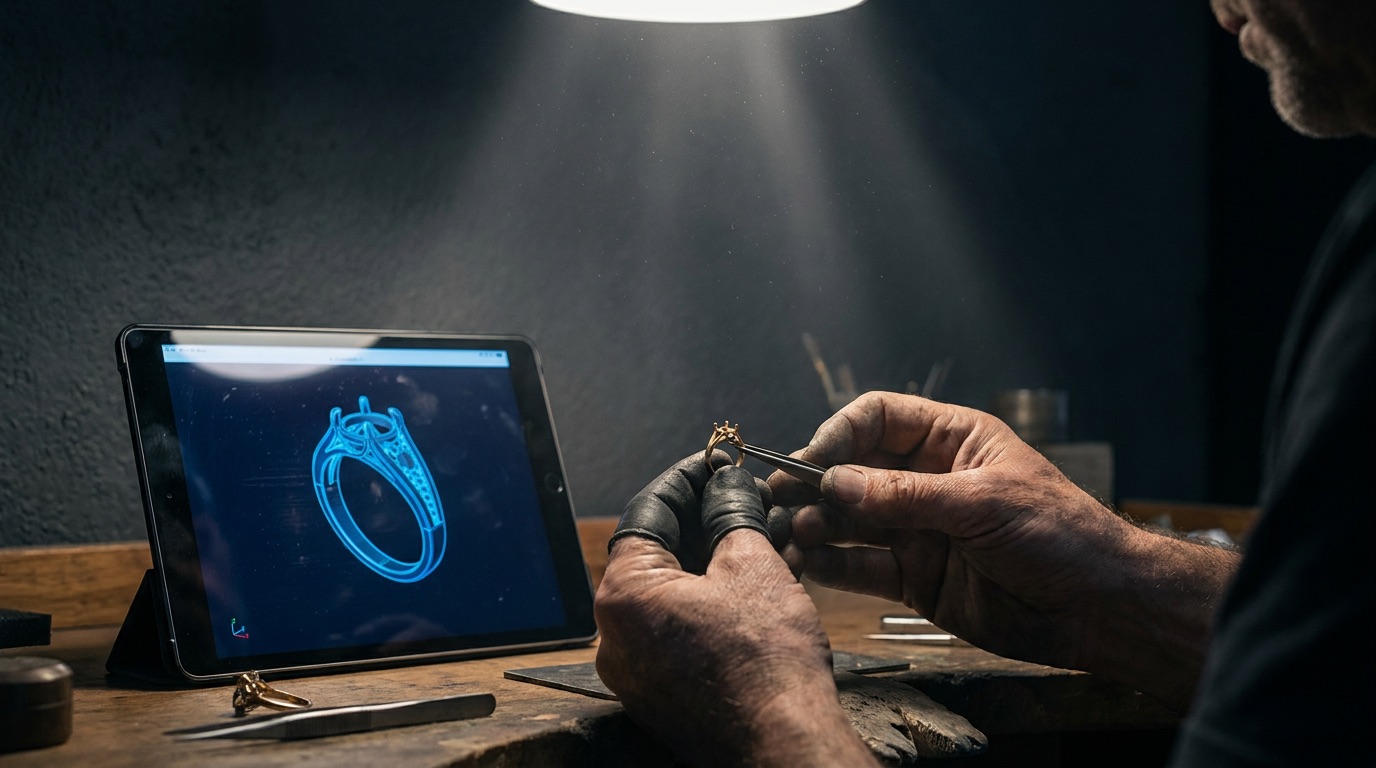
How to Read a Custom Jewelry Quote Without Comparing It to a Loose Stone Invoice
A few habits make this easier for buyers who mostly deal in loose stones — and avoid the comparison mistakes that come up most often when the two invoice types get read side by side:
- Ask for an itemized breakdown. A quote broken into stone, metal, labor, and CAD lets you isolate the stone cost and compare that piece against your loose-stone pricing directly. A lump-sum quote with no line items is the single biggest reason buyers assume they're being marked up when they're actually looking at a fair price for a more complex product.
- Separate one-time design cost from per-piece cost. CAD time is typically tied to the design, not repeated per identical unit on reorder. Treating a first-order quote as the baseline for every future reorder makes reorders look artificially expensive by comparison — they're usually cheaper.
- Price metal separately from stone. Metal cost moves with market rates and karat choice; it isn't fixed the way a certificate-backed stone price is. A higher-than-expected reorder quote might simply reflect a metal-market move, not a change on the stone or labor side.
- Remember accent/melee stones are a separate line. If a design calls for pavé or a halo of small stones, that's parcel-goods cost added on top, distinct from the center stone's certified price — don't fold it into a per-carat comparison against the center stone.
- Treat turnaround expectations separately for each product. Finished custom jewelry typically moves through in-house production in roughly 4-6 business days once a design is approved — that timeline applies to the finished piece, not to loose stone sourcing, which ships from on-hand certified inventory on its own schedule.
If you're new to ordering finished pieces, how it works walks through the CAD-to-cast process end to end, and custom jewelry has current examples of finished work across settings and metals.
When to Buy Loose vs When to Buy Finished
Buy loose certified stones when you have in-house or local setting capability and just need certified inventory to work with, or when a customer wants to choose their own mounting separately. This path suits retailers and manufacturers with their own bench or a reliable local setter, since it puts full control over the mounting and design in the buyer's hands.
Buy finished custom jewelry when you want a ready-to-sell SKU without managing casting and setting yourself, or when you're building a piece around a specific design that needs CAD approval before production. This path suits retailers without bench capability, or ones who'd rather focus their operational effort on selling and customer relationships than on production logistics.
In practice, most active trade accounts blend both, and the split usually maps to how a given piece is going to sell. Fast-moving, familiar styles — classic solitaires, simple wedding bands, straightforward stud pairs from matching pairs inventory — are often built more efficiently around loose-stone stock plus in-house or local setting, since design work is minimal and speed matters more than customization. Higher-ticket, design-forward pieces — a bespoke halo, a custom three-stone layout, anything built around an antique-cut center stone — tend to move more efficiently through the made-to-order finished-jewelry path, since the value sits in the design itself rather than in competing purely on stone price.
Either path runs through the same certified-stone sourcing underneath — the difference is how much of the finished-product cost stack you want Guru Diam to carry versus handling in-house yourself. A buyer unsure where a specific piece falls can test it against one question: is the value proposition "this exact stone at this exact price," or "this exact design, built around a stone sourced for it"? The first points toward loose; the second points toward finished.
Frequently Asked Questions
Why is a custom jewelry quote higher than the loose stone price plus a small fee?
Because a custom piece isn't the stone with a markup — it's a separate product with its own cost centers layered alongside it: metal priced by weight and karat, casting and setting labor, and CAD/design time. The stone portion is priced the same way it would be sold loose; everything above that reflects real inputs required to turn a stone into a finished, wearable piece.
Does choosing IGI, GIA, or GCAL certification change the price of a custom piece?
Yes, the same way it changes the price of a loose stone. Certification choice is made at the stone level, and that cost carries through into a custom quote just as it would on its own. Buyers can choose the certification lab that fits their price point and how their own customers value each report.
Is melee priced and quoted the same way as a 1ct certified center stone?
No. Melee below 0.30ct is sold as uncertified parcel goods against a stated color and clarity baseline, not certified stone by stone, so it's priced and quoted differently from a certified center stone. When melee is used as accent stones in a custom piece, that cost is a separate line from the center stone's certified pricing.
Does the 4-6 day turnaround apply to loose stone orders too?
No. The 4-6 business day production window applies specifically to finished custom jewelry moving through in-house design, casting, and setting. Loose certified stone orders don't go through that production process — they ship from on-hand inventory and run on their own separate timeline.
If I reorder the same custom design, do I pay for CAD time again?
Typically no. CAD/design time is tied to creating and approving the design itself. Once a design file exists and has been approved, reordering the same piece generally carries the stone, metal, and labor cost without repeating the design fee, though it's worth confirming per order through your trade contact.
Are eternity bands priced differently from other wedding bands?
No. Eternity bands are part of the wedding band product family, not a separate pricing category, so the same stone-plus-metal-plus-labor structure described here applies to them as it does to any other wedding band design.
For a full breakdown of how orders move from quote to finished piece, see how it works, or reach out directly through contact us or become a trade partner to get quoted on a specific design.