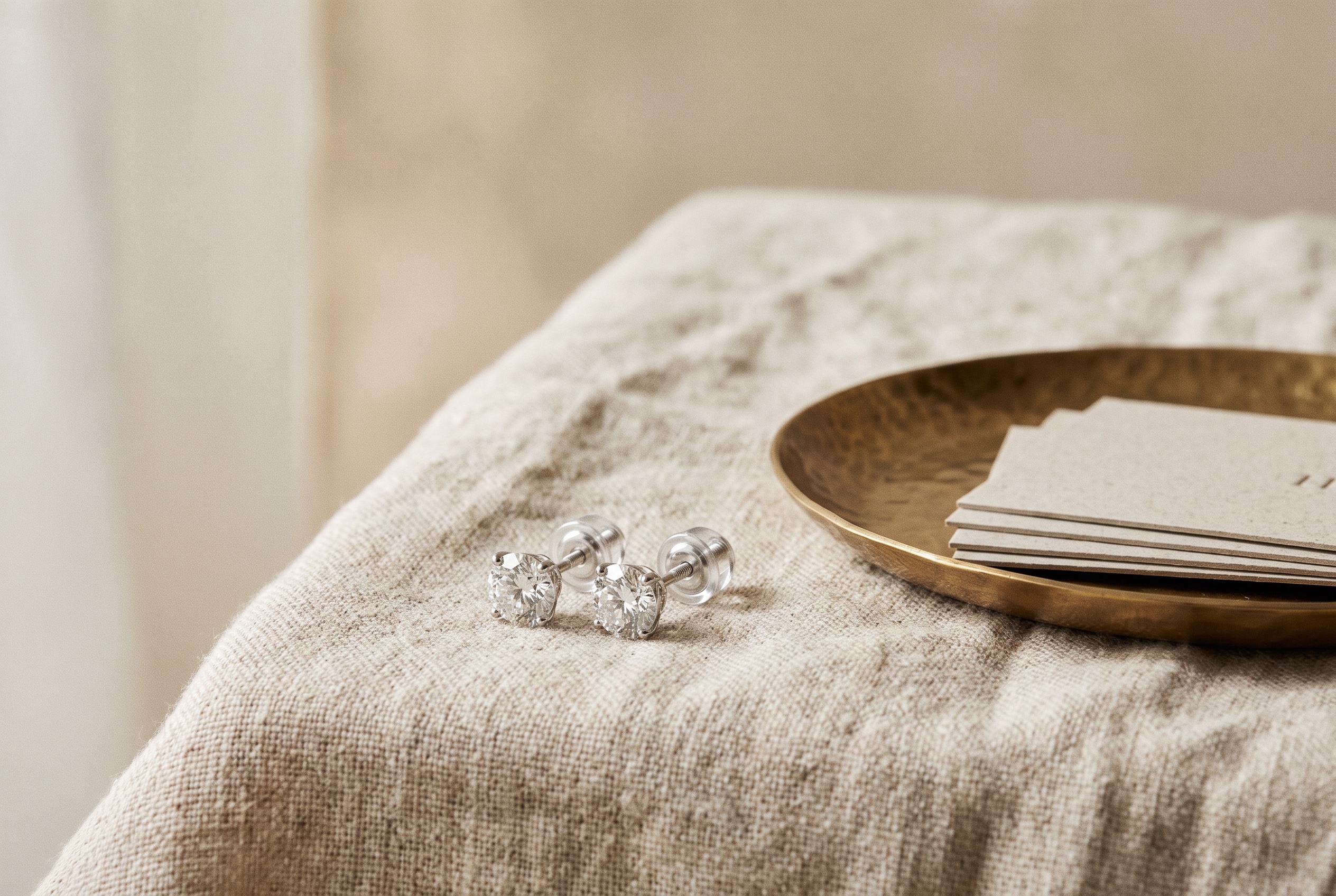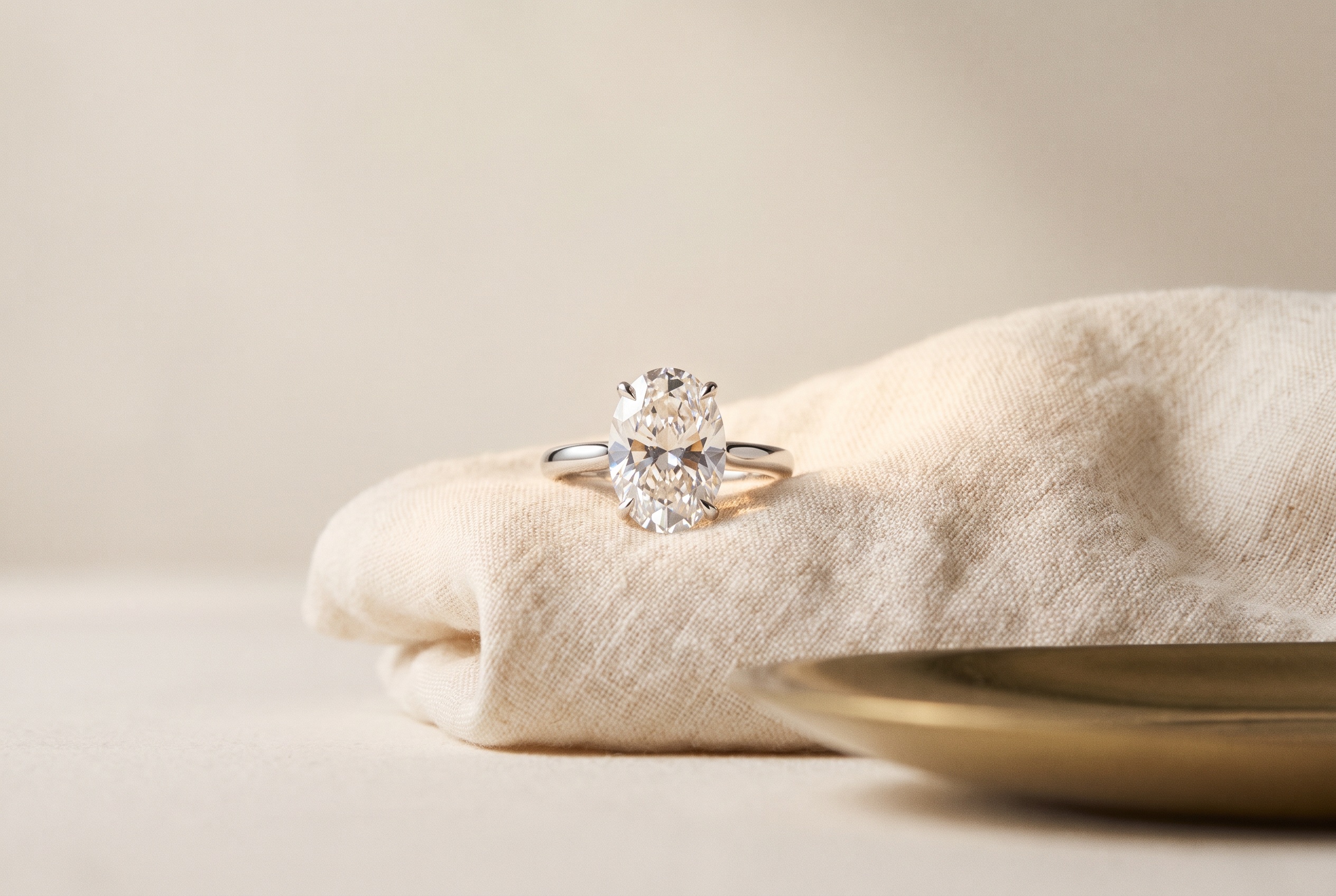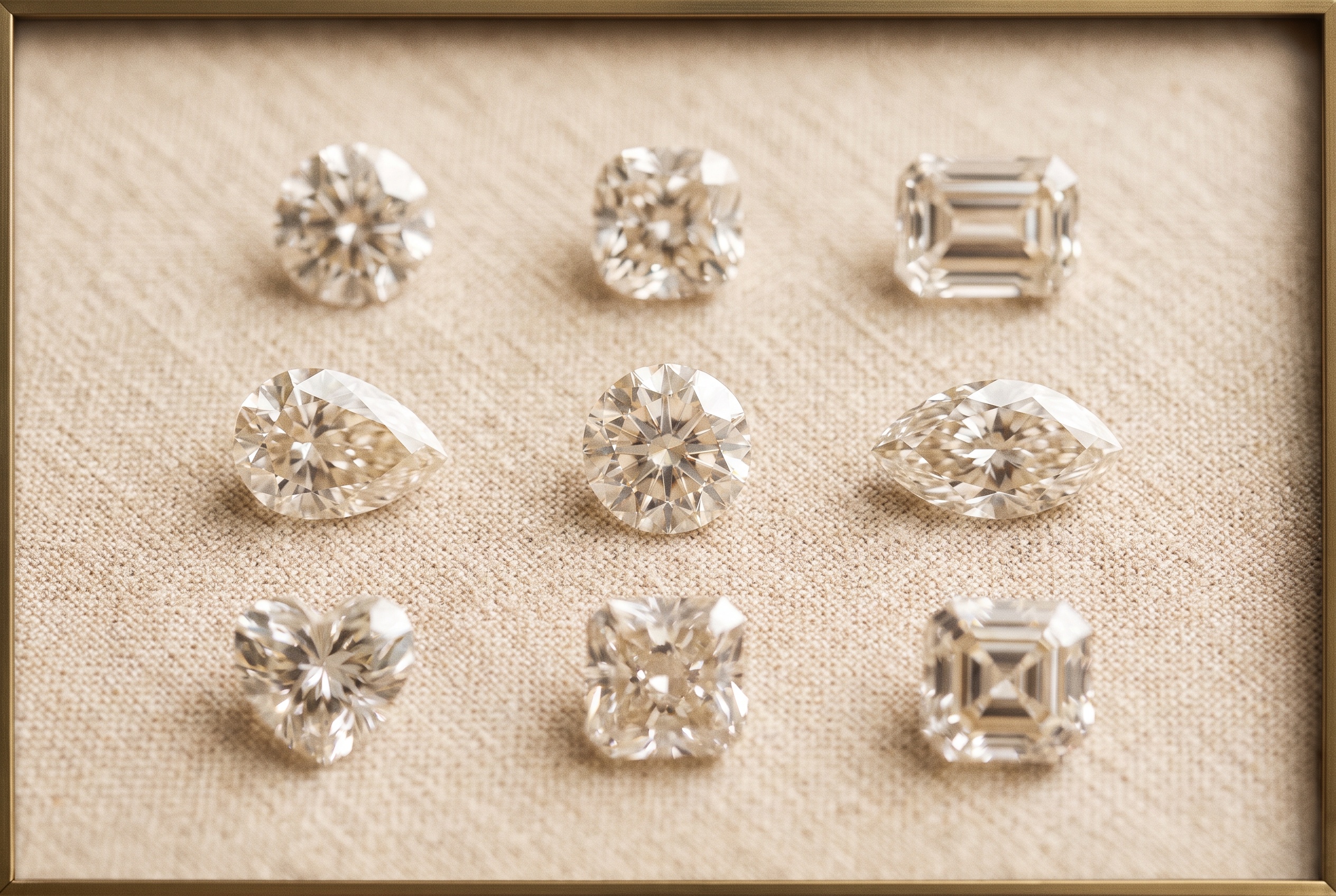

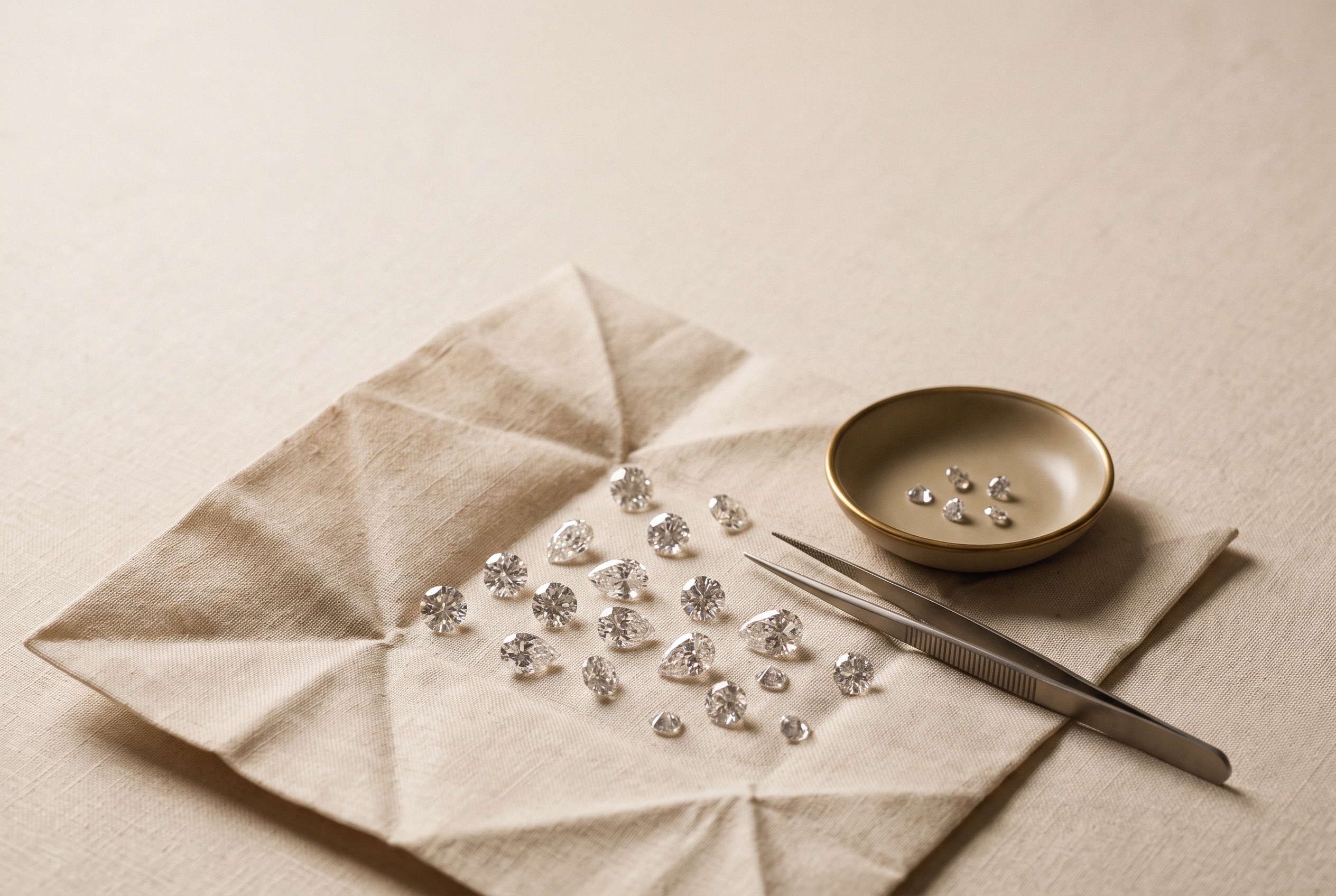
Wholesale lab-grown diamonds are CVD or HPHT-grown stones sold to jewelers, designers, and manufacturers at trade pricing rather than retail — typically requiring a verified business account, minimum order structures that vary by supplier, and certification (IGI, GIA, or GCAL) on stones above roughly 0.30ct. This guide covers how the wholesale lab-grown market is structured, how pricing actually works, what separates a reliable supplier from a risky one, and what to check before opening a trade account.
Lab-grown diamond has moved from a niche category to a mainstream share of the trade in a few short years, and the wholesale side of that market has grown just as fast — which means the number of suppliers claiming to sell "wholesale lab-grown diamonds" has grown too, with wildly inconsistent quality, certification practices, and pricing transparency behind that claim. This guide is a practical map for a jeweler or designer sourcing lab-grown inventory at the wholesale level: how the growth process affects what you're buying, how wholesale pricing is actually built, what certification should and shouldn't cost, how to spot a supplier worth building a relationship with, and how the finished-jewelry side of a lab-grown program works alongside loose stone sourcing.
What "Wholesale" Actually Means for Lab-Grown Diamonds
Wholesale pricing exists because a trade buyer is purchasing for resale rather than personal use, and suppliers structure their business around that buyer differently than they would a retail consumer: verified trade accounts, pricing that reflects volume and repeat purchasing rather than one-off markup, and access to inventory tiers (large parcels, matched pairs, bulk melee) that retail storefronts don't carry. A legitimate wholesale relationship typically requires proof of business status (a resale certificate, business license, or equivalent depending on jurisdiction), and in exchange gives the buyer access to per-stone or per-carat pricing that reflects cost plus a trade margin rather than a full retail markup. Buyers new to sourcing should treat "wholesale" claims skeptically when a seller markets directly to consumers under the same banner — a real wholesale operation is structured around trade accounts, not open retail sales dressed up with wholesale language.
CVD vs. HPHT: Why the Growth Method Matters for Sourcing
Lab-grown diamonds are produced by one of two methods, and the difference matters for sourcing decisions even though both produce genuine diamond, chemically and structurally identical to natural stones:
- CVD (Chemical Vapor Deposition) — grows a diamond by depositing carbon atoms from a heated gas onto a diamond seed inside a controlled chamber, layer by layer. CVD is the dominant method for the jewelry-grade lab-grown market today and produces consistently high clarity across a wide range of carat weights.
- HPHT (High Pressure, High Temperature) — replicates the pressure and heat conditions under which natural diamonds form, compressing carbon into diamond crystal structure. HPHT was the earlier commercial method and is still used, including as a post-growth treatment to improve color in some CVD stones, but is less common as the primary growth method for the current wholesale jewelry market.
A buyer sourcing wholesale lab-grown inventory should always ask which method produced the stones on offer, since suppliers vary in which they carry, and CVD-only sourcing (as opposed to a mixed CVD/HPHT catalog, or HPHT-treated CVD stones sold without disclosure) is a meaningful differentiator some trade buyers specifically look for when building a program.
How Wholesale Lab-Grown Pricing Is Built
Lab-grown diamond pricing is built from three layers, and understanding each helps a buyer sanity-check a quote rather than just comparing bottom-line numbers across suppliers:
- Production cost — the base cost of growing and cutting the rough into a polished stone, which varies by carat weight, color, and clarity target and has fallen steadily as growth technology has scaled, which is the core reason lab-grown pricing sits well below natural at the same specs.
- Certification cost — IGI, GIA, or GCAL grading adds a per-stone fee that's roughly fixed regardless of the stone's own price, so it represents a proportionally larger cost on smaller, lower-value stones than on larger ones.
- Trade margin — the supplier's markup over production and certification cost, which is where wholesale pricing actually differentiates between suppliers; a legitimate wholesale margin should be transparent and roughly consistent across a supplier's catalog rather than opaque or wildly inconsistent stone to stone.
Because lab-grown production cost has fallen faster than most buyers' price expectations have adjusted, quotes that look "too good" relative to a year-old price reference aren't necessarily a red flag on their own — but a quote with no visible certification, or certification from a lab a buyer doesn't recognize, is worth independently verifying before committing.
Wholesale Lab-Grown Diamond Pricing by Carat Tier (Illustrative)
| Carat Range | Relative Price Tier | Typical Buyer | Certification Norm |
|---|---|---|---|
| Under 0.30ct (melee) | Lowest per-stone, parcel-priced | Setting programs, pavé, accent stones | Uncertified, QC'd against a DEF+/VS+ parcel baseline |
| 0.30ct - 0.99ct | Entry certified tier | Side stones, smaller center stones, accent pieces | IGI/GIA/GCAL individually certified |
| 1.00ct - 1.99ct | Core bridal/center-stone tier | Engagement ring centers, standalone studs | IGI/GIA/GCAL individually certified |
| 2.00ct - 4.99ct | Premium tier, price scales faster per carat | Statement pieces, upgrade purchases | IGI/GIA/GCAL individually certified |
| 5ct+ | Specialty tier, sourced to order more often than stocked | Investment-grade and showcase pieces | IGI/GIA/GCAL individually certified |
Certification: What to Expect and What to Verify
IGI, GIA, and GCAL are the three certification labs that matter in the current wholesale lab-grown market, and a legitimate supplier should offer at least IGI (the highest-volume lab grading lab-grown diamonds today) with GIA and GCAL available depending on the stone. Every certified stone should ship with a report that can be independently verified through the issuing lab's own report-check tool using the report number — a step worth actually doing on a new supplier relationship rather than assuming the paperwork is legitimate on trust. A report that doesn't verify, or a supplier reluctant to provide the report number ahead of purchase, is a clear reason to walk away from that specific transaction regardless of how attractive the price looks.
Loose Stones vs. Finished Jewelry: Two Different Wholesale Tracks
"Wholesale lab-grown diamonds" covers two distinct sourcing tracks that a buyer typically needs both of, but from suppliers with genuinely different capabilities:
- Loose stones — certified individual stones and melee parcels a jeweler sets into their own mountings or resells directly. See our loose lab-grown diamonds guide for the sourcing specifics on this side.
- Finished jewelry — complete pieces (rings, earrings, bracelets) built with lab-grown stones already set, either as stock SKUs or custom/private-label builds. This requires bench capability (casting, setting, polishing) that a pure stone dealer may not have in-house.
A supplier who can genuinely cover both tracks under one account — rather than a buyer piecing together loose-stone sourcing from one vendor and finished-jewelry manufacturing from another — simplifies a program considerably, particularly for a jeweler building a private-label line where consistency between the loose stones used for one-off sales and the stones used in a finished program actually matters to brand quality.
Red Flags When Evaluating a Wholesale Lab-Grown Supplier
- No verifiable certification, or certification from an unrecognized lab. Stick to IGI, GIA, and GCAL, and verify report numbers independently.
- Pricing with no visible logic across the catalog. Wildly inconsistent per-carat pricing between similar stones, with no explanation, suggests either poor inventory control or a pricing strategy built around whatever a given buyer will pay rather than a consistent trade margin.
- No physical business presence or verifiable trade history. A legitimate wholesale supplier in this category typically has a verifiable office, trade show presence, or industry reputation a new buyer can check.
- Reluctance to disclose growth method (CVD vs. HPHT) or treatment history. A stone whose color has been HPHT-treated after CVD growth should be disclosed as such on the certificate; a supplier evasive about this is a risk.
- Minimum order requirements that don't match the buyer's actual need. Some wholesale suppliers set minimums structured around bulk melee or large parcels that don't fit a smaller jeweler's actual purchasing pattern — worth clarifying account minimums before assuming a "wholesale" label fits your order size.
Common Wholesale Order Structures
Wholesale lab-grown diamond purchases are structured a few different ways depending on the supplier and the size of the relationship, and it's worth understanding the options before assuming one is standard:
- Direct purchase — the buyer pays for stones outright at time of order, the most common structure for smaller and newer trade accounts and for standard catalog inventory.
- Net terms — established accounts with a purchasing history may negotiate net-30 or similar payment terms, letting a jeweler receive inventory ahead of payment due date, which helps cash flow on larger orders tied to a specific customer commitment.
- Memo — stones sent on consignment for a set period so a jeweler can show them to a specific customer before committing to purchase, common for higher-value individual stones (larger carat weights, fancy colors) rather than standard catalog melee or mid-tier certified stones.
- Custom/made-to-order — for specifications outside standard stock (unusual shapes, exact carat targets, specific color/clarity combinations), the supplier grows or sources to order rather than shipping from existing inventory, which adds lead time compared to in-stock purchases.
A buyer new to wholesale sourcing should ask directly which of these structures a given supplier actually supports rather than assuming memo or net terms are automatically available — many suppliers reserve those structures for accounts with an established purchase history rather than offering them from the first order.
Melee Parcels vs. Individually Certified Stones
A meaningful share of wholesale lab-grown volume moves as melee — small stones, typically under 0.30ct, sold as uncertified parcels against a quality-control baseline (commonly DEF+ color, VS+ clarity) rather than individually graded. This is standard, accepted practice for the category and keeps cost workable for pavé, accent, and setting work where individual certification on every stone would be economically impractical. It's a genuinely different sourcing decision from certified loose stones at 0.30ct and above, which are graded and papered individually. A buyer building a program that spans both — melee for accent work, individually certified stones for center and standalone pieces — needs a supplier who's transparent about which tier a given stone or parcel falls into and doesn't blur the two; melee should never be represented as individually certified, and a supplier who does so is a clear warning sign.
Evaluating Supplier Reputation and Trade Presence
Beyond certification and pricing, a supplier's standing in the trade itself is a practical signal worth weighing, particularly for a buyer about to commit to a repeat relationship rather than a one-off order. Consistent presence at major trade shows (JCK and similar industry events) over multiple years signals an operation built for the long term rather than a short-lived arbitrage play riding a price cycle. References from other trade buyers, a verifiable physical office a buyer can visit or call, and a track record of consistent — not just occasionally good — pricing and fulfillment all matter more at the wholesale level than they would for a single retail purchase, since a wholesale relationship is meant to be repeat business rather than a one-time transaction.
Shipping and Fulfillment Considerations
Turnaround matters disproportionately in wholesale sourcing because a jeweler is frequently filling a specific customer commitment against a deadline, not just restocking a case at leisure. Same-day shipping on in-stock inventory — with a clear, published cutoff time rather than a vague "usually ships fast" promise — is one of the more practically useful things to confirm before committing to a supplier relationship. For custom or made-to-order specifications, a realistic, clearly communicated lead time matters more than a supplier's speed on in-stock items, since custom orders are where timeline slippage most often causes real problems for a jeweler who has already committed a date to their own customer.
Opening a Wholesale Trade Account: What to Expect
Opening an account with a legitimate wholesale lab-grown supplier typically involves verifying business status (resale certificate or equivalent), an initial conversation about the buyer's typical order pattern (loose stones vs. finished jewelry, carat ranges, volume expectations), and access to either an online catalog or a direct sales contact for quote-based ordering on larger or custom requests. Same-day or fast shipping on in-stock inventory is a meaningful differentiator at this stage — a jeweler filling a specific customer order under time pressure benefits considerably from a supplier who can ship same day on in-stock pieces rather than one running everything to special order.
How Lab-Grown Fits Alongside Natural in a Wholesale Program
Most jewelers running a modern wholesale-sourced program carry both lab-grown and natural inventory rather than choosing one exclusively, since the two serve different customer segments and price points within the same shop. Sourcing both from a single supplier — rather than a lab-grown specialist for one line and a separate natural-diamond dealer for the other — reduces the operational overhead of managing two certification standards, two reorder relationships, and two shipping accounts. See our lab-grown diamond guide for the fundamentals buyers new to the category should understand before building a mixed program.
Building a First Wholesale Order
A jeweler placing a first wholesale lab-grown order benefits from starting narrower than they might expect — a focused selection across the carat range and shapes that actually match current customer demand, rather than a broad speculative buy across the full catalog. This lets a buyer evaluate a new supplier's actual fulfillment, certification accuracy, and stone quality against a manageable order before scaling up spend. Requesting a small sample across a couple of carat tiers and shapes, checking certification against the issuing lab's own verification tool, and confirming the physical stones match their reports (color, clarity, and cut as described) before placing a larger reorder is standard, sensible practice — not a sign of distrust a legitimate supplier should push back on. A supplier's willingness to support a modest, evaluative first order rather than pushing a large minimum on a brand-new account is itself a reasonable signal of how the relationship is likely to go at scale.
Where Wholesale Lab-Grown Fits in a Broader Sourcing Strategy
For most jewelers, wholesale lab-grown sourcing isn't a standalone decision but one part of a broader inventory strategy that also includes natural diamonds, finished jewelry, and increasingly fancy color and antique-cut stones as differentiators against competitors selling only standard round and princess cuts. A supplier who covers that full breadth — rather than being a narrow lab-grown-only manufacturer — gives a buyer room to expand a program over time (adding natural stones, antique cuts, or a custom jewelry line) without adding a new vendor relationship for every category extension. This breadth is worth weighing against a marginally lower price from a narrower specialist, since the operational cost of managing multiple supplier relationships, certification standards, and shipping accounts is real even when it doesn't show up on a per-stone invoice.
Sourcing Wholesale Lab-Grown Diamonds Through Guru Diam
Guru Diam is a B2B wholesale supplier of CVD-only lab-grown diamonds — no HPHT anywhere in the catalog — alongside natural diamonds, certified loose stones, and finished jewelry, with IGI, GIA, and GCAL certification all available. The catalog spans standard, antique, and exotic shapes rather than a narrow manufacturer-only lineup, with same-day shipping on in-stock inventory out of both the New York (before 6pm EST) and Los Angeles (before 4pm PST) offices, and custom jewelry orders cut, set, and polished in-house rather than outsourced. Trade accounts get one supplier across loose stones, matched pairs, and finished jewelry instead of piecing a program together across multiple vendors — one vendor, one shipment, one relationship, at the bi-coastal NYC and LA offices. Browse certified diamonds and the full wholesale hub, review terms at the trade partner page, or start a build at custom jewelry.
Frequently Asked Questions
What's the difference between wholesale and retail lab-grown diamond pricing?
Wholesale pricing is offered to verified trade buyers purchasing for resale and reflects production and certification cost plus a trade margin, typically well below retail markup. Retail pricing includes the additional margin a storefront or DTC brand adds for the end consumer.
Do I need a business license to buy wholesale lab-grown diamonds?
Most legitimate wholesale suppliers require some form of verified business status — a resale certificate, business license, or equivalent depending on jurisdiction — before extending trade pricing and account access.
Is CVD or HPHT better for wholesale sourcing?
Both produce genuine diamond, but CVD is the dominant method for today's jewelry-grade wholesale market and offers more consistent clarity outcomes across carat weights. Some trade buyers specifically seek CVD-only suppliers for catalog consistency and to avoid undisclosed HPHT color treatment.
How do I verify a wholesale lab-grown diamond's certification is real?
Every legitimate IGI, GIA, or GCAL report includes a report number that can be checked directly through the issuing lab's own online report-check tool. Always verify a new supplier's paperwork this way before completing a purchase.
Can I source both loose lab-grown stones and finished jewelry from the same wholesale supplier?
Yes, from a supplier with both stone sourcing and in-house bench capability. This is generally preferable to splitting the two across separate vendors, since it keeps certification standards and stone quality consistent across a program.
Why has wholesale lab-grown diamond pricing dropped over the past few years?
Production cost has fallen as CVD growth technology has scaled and matured, which has moved through to wholesale pricing faster than most buyers' price expectations have adjusted — a genuine cost decline, not a sign of lower quality.
What order structures should I expect when opening a wholesale account?
Direct purchase is standard for new accounts; net terms and memo (consignment) arrangements are typically reserved for established accounts with a purchase history, so confirm with a supplier directly which structures they support before assuming one is available.
Should a first wholesale order be small or large?
Start narrow — a focused selection matching actual current demand rather than a broad speculative buy — so you can evaluate a new supplier's fulfillment, certification accuracy, and stone quality before committing to larger reorders.