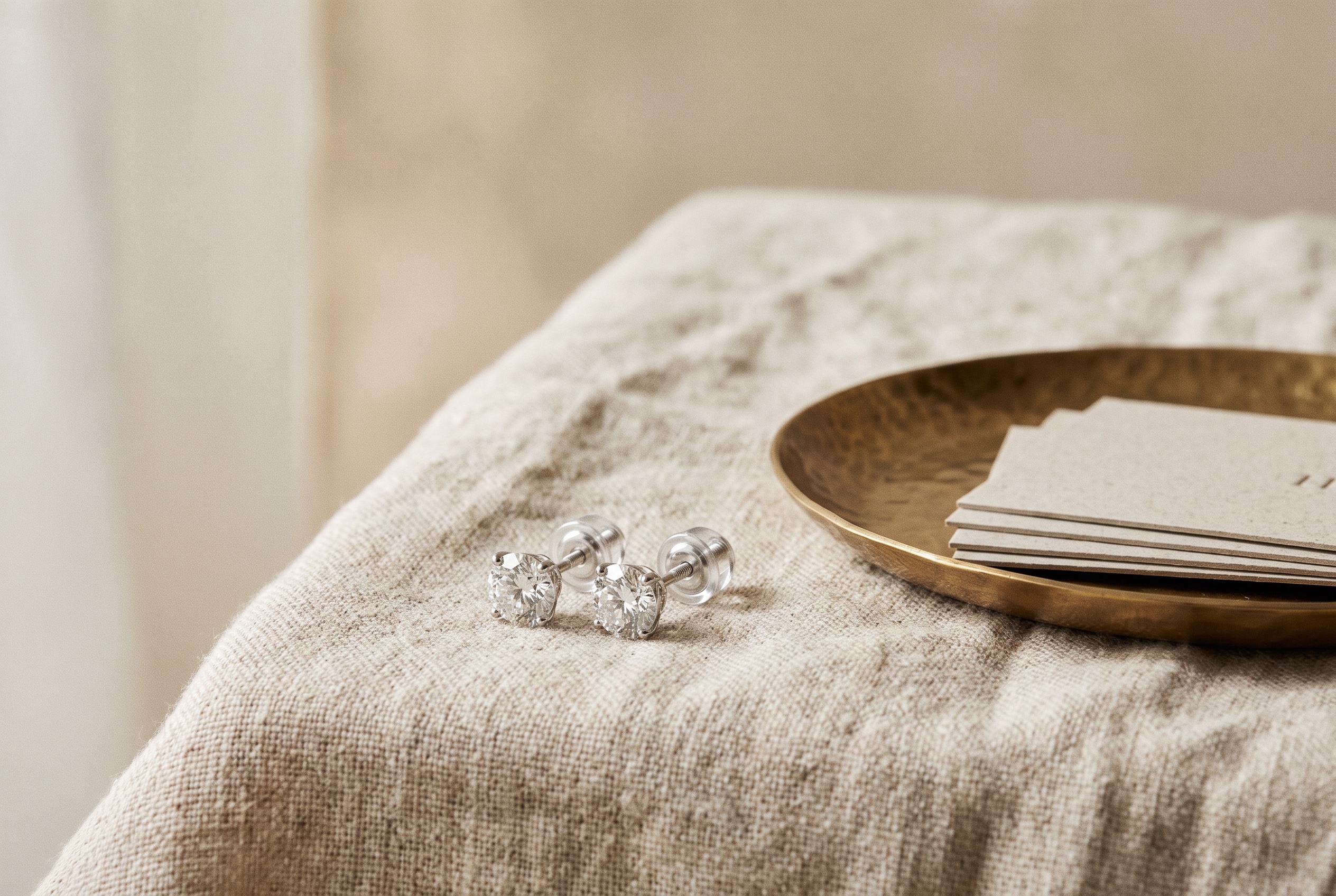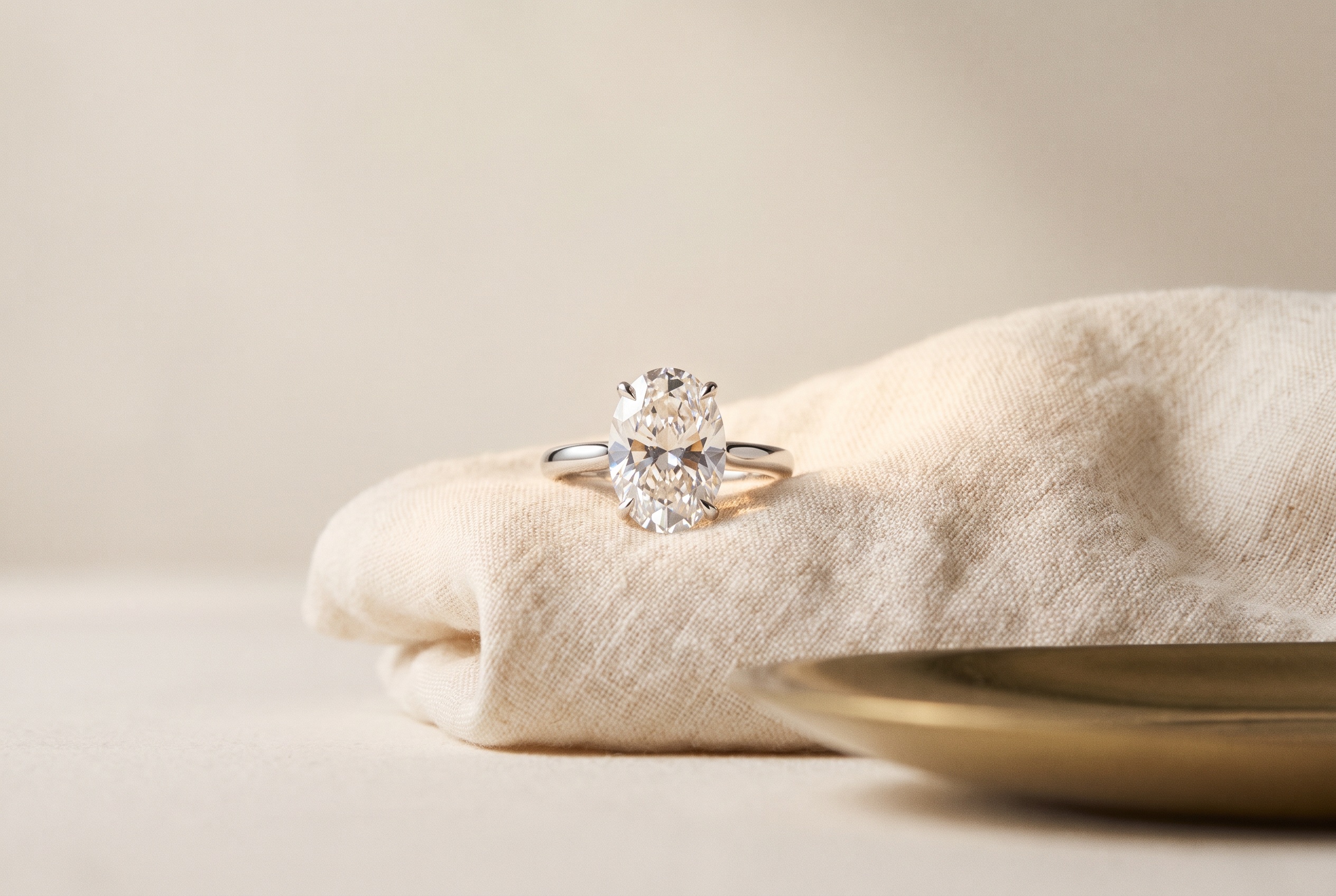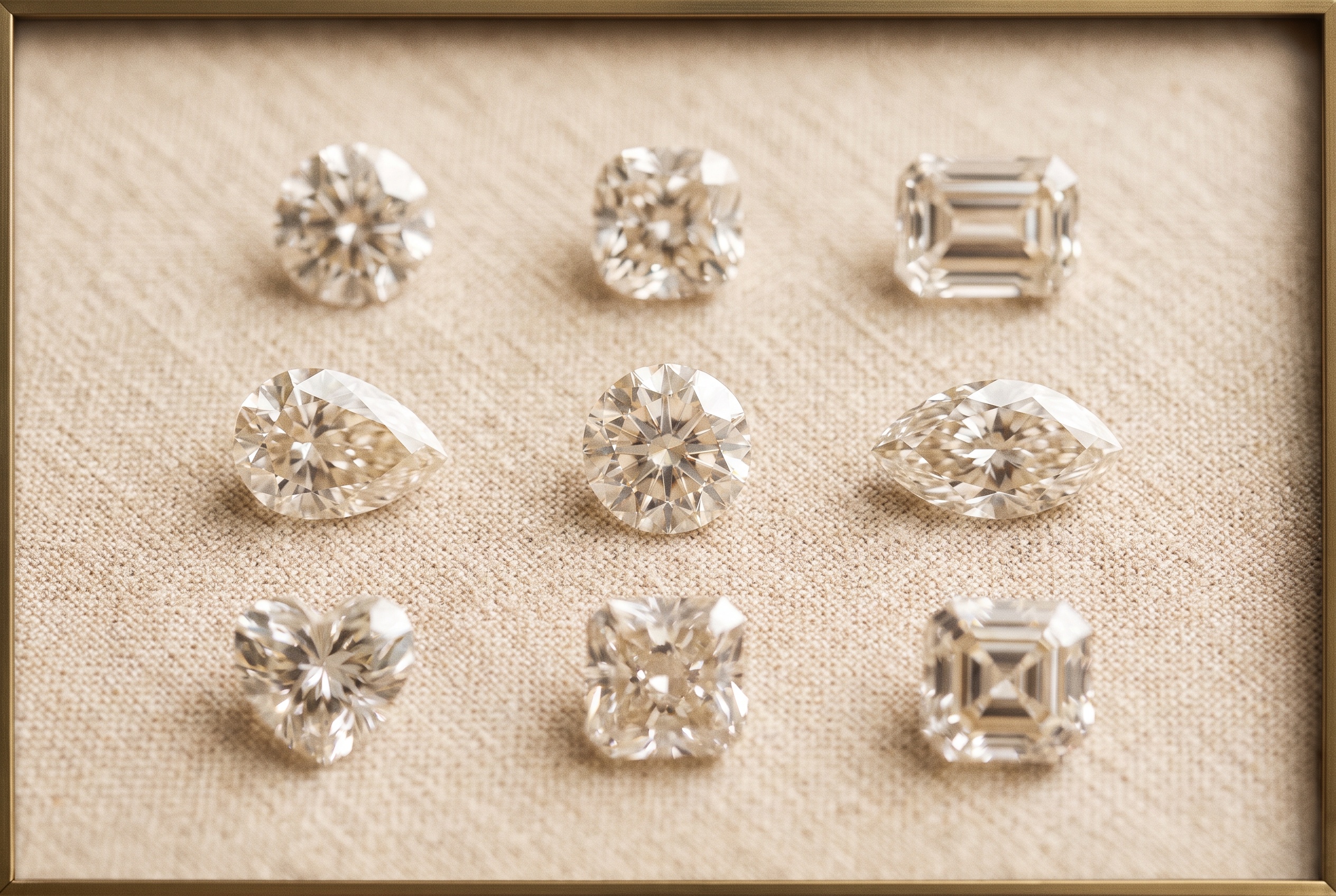

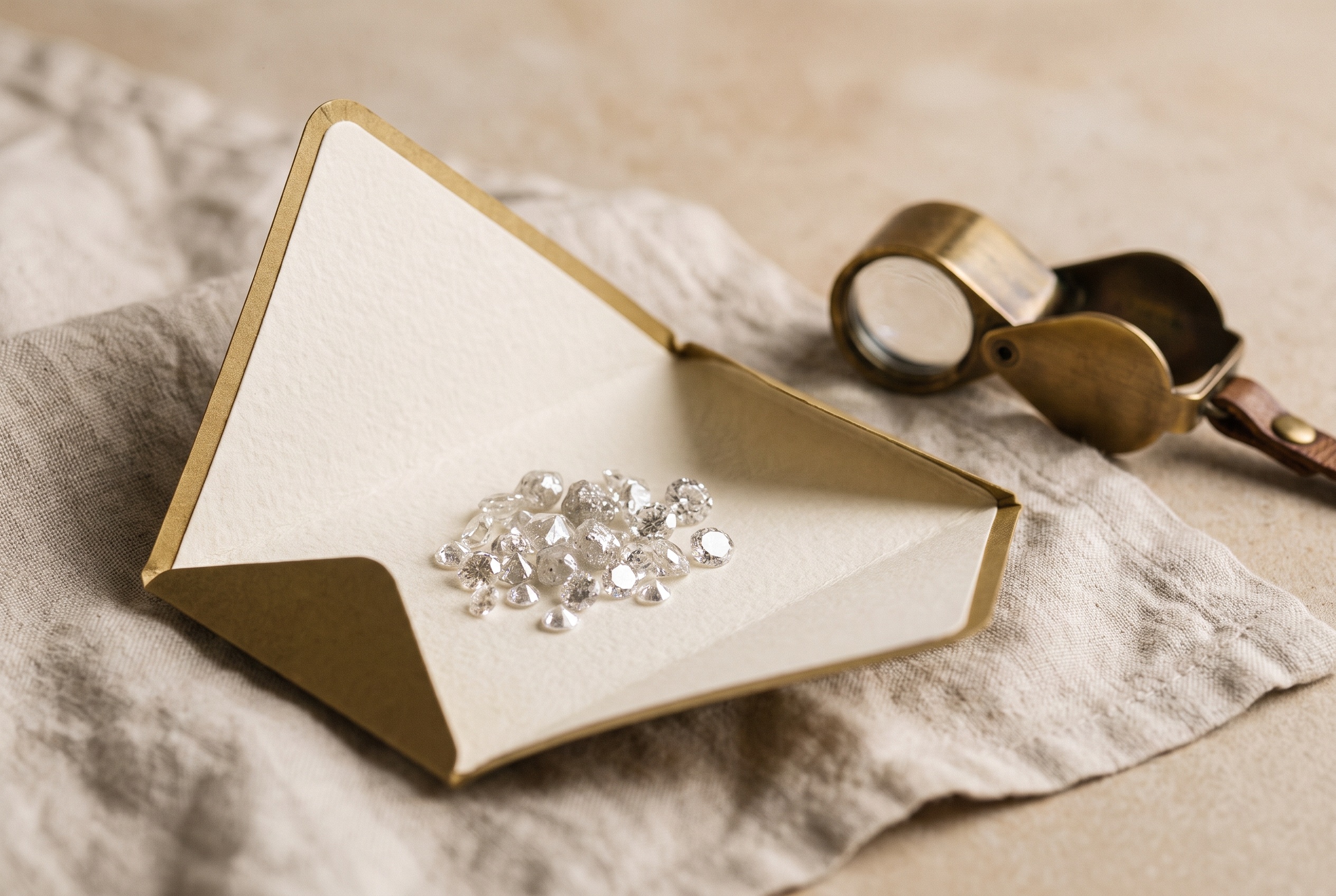
A loose lab-grown diamond is a lab-created (CVD) diamond that has been fully cut and polished but not yet set into a piece of jewelry — sold and evaluated as a standalone stone on its own 4Cs, exactly like a loose natural diamond, except that it was grown in a controlled chamber rather than mined. This guide covers what loose lab-grown diamonds actually are, how they're made, graded, and priced, how they differ from lab-grown melee, and what a wholesale buyer should check before sourcing loose CVD inventory.
"Loose lab diamonds" is searched by a wide mix of people — some comparing lab-grown against natural before a single purchase, others (jewelers, designers, manufacturers) trying to understand the category well enough to source it repeatedly and confidently. This piece is written for that second group: a category-level explainer on loose lab-grown diamonds specifically, rather than a general loose-diamond primer or a speed-of-shipping pitch. If you're comparing loose lab-grown against loose natural stones broadly, our loose diamonds wholesale guide covers that comparison directly; this one goes deeper on the lab-grown category itself.
What Makes a Diamond "Loose" and "Lab-Grown"
The two terms describe independent things about the same stone. "Loose" describes its physical state — cut, polished, and unmounted, as opposed to a diamond already fixed into a ring, pendant, or earring setting. "Lab-grown" describes its origin — grown above ground in a controlled environment rather than formed underground over geological time and mined. A stone can be loose and natural, loose and lab-grown, set and natural, or set and lab-grown; the two attributes are unrelated to each other and both need to be specified for a buyer to know exactly what they're evaluating.
Once cut and polished, a loose lab-grown diamond is physically, chemically, and optically identical to a natural diamond of the same specifications — same carbon crystal structure, same hardness, same brilliance and fire. The only meaningful difference between the two is where and how the crystal formed, which is precisely why grading reports for lab-grown stones explicitly state origin rather than leaving buyers to guess.
How Loose Lab-Grown Diamonds Are Made
Guru Diam's lab-grown catalog is CVD (chemical vapor deposition) exclusively. In CVD growth, a thin diamond seed plate is placed in a sealed chamber, carbon-rich gas is introduced, and the gas is broken down (typically using microwave energy) so that carbon atoms deposit onto the seed layer by layer, gradually building up a rough diamond crystal. The process is slow, closely monitored, and can take several weeks to a few months depending on the target size, after which the rough crystal goes through the same cutting and polishing steps as any diamond, natural or lab-grown, to become a finished loose stone.
CVD is one of two commercial lab-grown growth methods; the other is HPHT (high pressure, high temperature), which uses extreme pressure and heat rather than a vapor-deposition chamber. The two processes can produce stones with subtly different internal growth characteristics that a trained grader can sometimes distinguish under magnification, which is part of why grading reports specify not just "lab-grown" but the growth method behind a given stone.
Quality Factors: What to Evaluate in a Loose Lab-Grown Diamond
A loose lab-grown diamond is graded on the same 4Cs framework as any diamond — carat weight, cut, color, and clarity — but a few category-specific patterns are worth understanding before sourcing:
- Color. High color grades (D–F, near-colorless to colorless) are comparatively easier to produce consistently in lab-grown material than in natural rough, which is part of why high-color lab-grown inventory tends to be more readily available at volume than equivalent natural stones.
- Clarity. Lab-grown stones can be grown with very high clarity, and VS-and-above material is common in the wholesale lab-grown market. Inclusions in lab-grown diamonds are typically different in character from natural inclusions (often metallic flux inclusions in HPHT material, or specific growth-related features in CVD material) — a grader trained on lab-grown stones knows what to look for.
- Cut. Cut quality depends entirely on the polisher's work, not on growth method — a poorly cut lab-grown stone performs just as poorly optically as a poorly cut natural stone of the same proportions, so cut grade deserves the same scrutiny regardless of origin.
- Fluorescence. Lab-grown diamonds can exhibit fluorescence under UV light, reported the same way as for natural stones (none, faint, medium, strong). It's a documented characteristic, not a defect, though buyers with strong fluorescence preferences for natural stones often carry that same preference over to lab-grown sourcing.
Certification: How Loose Lab-Grown Diamonds Are Graded
Reputable labs — IGI, GIA, and GCAL among them — grade loose lab-grown diamonds using the same core 4Cs methodology used for natural stones, with one critical addition: the report explicitly states the diamond is laboratory-grown, and typically the growth method (CVD or HPHT). This origin statement isn't optional or buried in fine print on a legitimate report — it's a prominent, required field precisely so that no buyer downstream can mistake a lab-grown stone for natural, intentionally or otherwise.
Some labs also laser-inscribe the girdle of a certified lab-grown stone with the report number and an origin indicator, visible under magnification, giving a buyer a physical way to cross-check the stone against its paperwork. For a full walkthrough of how grading labs operate and how GIA, IGI, and GCAL compare, see our diamond graders guide.
Loose Lab-Grown Diamond Price Factors
Price on a loose lab-grown stone is driven by the same 4Cs interaction as any diamond — carat weight has the largest single effect, followed by clarity and color, with cut affecting both price and how large the stone visually reads for its weight. What differs from natural pricing is the underlying cost curve: lab-grown production costs have fallen substantially and consistently as growth technology has scaled, which is reflected in meaningfully lower per-carat pricing across nearly every quality tier compared to a natural stone of equivalent specifications. Certification lab also plays a role in perceived and resale value, as covered in our diamond graders guide.
Buyers pricing loose lab-grown inventory should expect the relationship between carat weight and price to be less steeply exponential than it is for natural stones — natural diamond pricing accelerates sharply at certain carat-weight thresholds due to rarity, while lab-grown supply doesn't face the same natural-scarcity constraint, so the price curve is comparatively smoother across carat sizes.
Loose Lab-Grown Diamonds vs. Lab-Grown Melee
"Loose lab-grown diamond" and "lab-grown melee" are often confused, but they're distinct product categories with different specifications, certification treatment, and buying logic:
| Factor | Loose Lab-Grown Center Stone | Lab-Grown Melee |
|---|---|---|
| Typical size range | 0.30ct and up | 0.8mm–9.0mm, sold and priced by weight/parcel |
| Certification | Individually IGI, GIA, or GCAL certified | Ships as uncertified parcel goods against a documented DEF+/VS+ quality baseline, not individually certified |
| Buying unit | Sold and evaluated stone by stone | Sold by parcel weight to a specified quality baseline, not stone by stone |
| Typical use | Center stones for rings, pendants, and solitaire pieces | Pavé, halo, and accent-stone work across a finished piece |
| Shapes commonly available | Full range — round, fancy, and antique shapes | Primarily round brilliant plus fancy calibrated shapes on request |
A buyer sourcing a single showcase stone for a client's ring is in loose-diamond territory; a buyer sourcing hundreds of small accent stones for a production run of pavé settings is in melee territory. Confusing the two when placing an order is one of the more common avoidable mistakes newer trade buyers make.
How Wholesale Buyers Source Loose Lab-Grown Inventory
Sourcing loose lab-grown diamonds at the wholesale level generally follows a pattern: a buyer specifies target shape, carat range, color and clarity minimums, and certification preference, then reviews available matching inventory from a supplier before committing. Buyers working on recurring orders — rather than a single one-off purchase — typically prioritize a supplier who can consistently match those specifications across repeat orders, since inconsistent sourcing is disruptive to a retailer's or manufacturer's own production or sales cadence.
Buyers building custom pieces around a loose center stone generally source the stone first, then build or select the setting around it, rather than the reverse — which is part of why loose-stone inventory depth and turnaround speed both matter independently of price.
What to Check Before Buying Loose Lab-Grown Diamonds Wholesale
- Confirm the growth method and origin statement are explicit on the certificate — a legitimate lab-grown report always states this clearly, never implies it.
- Match certification lab to the intended resale context — GIA for maximum resale liquidity and trust, IGI for speed and broad market acceptance, GCAL where verified cut/light-performance documentation matters most to the end buyer.
- Verify the report number against the issuing lab's public database rather than relying on a photo or PDF alone.
- Ask about inventory depth at your target specification — a supplier who can match your exact shape/color/clarity combination consistently across repeat orders is more valuable long-term than one offering a lower one-time price on a single stone.
- Clarify shipping and lead time on in-stock vs. special-order stones — in-stock loose inventory should ship same day; a special-cut or unusual specification will take longer and should be quoted honestly up front.
Common Uses for Loose Lab-Grown Diamonds in the Trade
Loose lab-grown stones move through the trade in a few recurring ways: as center stones for custom engagement rings and other bespoke pieces, as replacement stones for repair work, as inventory for retailers who stock loose diamonds for in-store selection, and as the starting point for matched-pair work (earrings, three-stone rings) where two or more stones need to be selected together for visual consistency. Each use case places slightly different weight on shape availability, size range, and certification lab, which is why a supplier carrying broad depth across shapes and certification options serves a wider range of buyer needs than one specializing narrowly.
Shape Availability in Loose Lab-Grown Diamonds
Round brilliant remains the single most requested shape in loose lab-grown inventory, largely because it's the most familiar shape to end consumers and offers the most predictable light performance across the widest range of cut-quality tiers. Fancy shapes — oval, cushion, emerald, pear, radiant, and princess among the more common ones — make up a growing share of demand as buyers look for a more distinctive look than round brilliant offers. Antique and exotic shapes (Old Mine, Old European, Kite, Rose, and others) are a smaller but meaningful slice of the loose lab-grown market, driven largely by designers and retailers building vintage-inspired pieces who want the antique silhouette without natural-diamond pricing.
A buyer who only checks round-brilliant availability before committing to a supplier risks discovering, mid-project, that the supplier's fancy-shape or antique-cut depth doesn't match what a specific client design calls for. It's worth confirming shape breadth — not just round-brilliant pricing — before treating a quoted price as representative of what a supplier can actually deliver across a full project.
Lead Time: In-Stock vs. Special-Order Loose Lab-Grown Stones
Loose lab-grown inventory generally falls into two buying situations with very different timelines. In-stock stones — already grown, cut, polished, and certified, sitting in a supplier's current inventory — can ship same day once an order is placed. Special-order stones, whether because a buyer needs an unusual size, an uncommon shape, or a specific combination of color and clarity not currently on hand, require new growth and cutting, which realistically takes weeks rather than days. A supplier who is upfront about which category a given request falls into, rather than quoting an optimistic timeline regardless of stock status, is far easier to plan production or client delivery dates around.
Buyers working against a hard client deadline — a wedding date, for instance — should always confirm in-stock status explicitly before promising a delivery date downstream, since the gap between an in-stock same-day ship and a special-order multi-week wait is large enough to matter to almost any client-facing timeline.
Loose Lab-Grown Diamonds and Resale Considerations
The secondary market for loose lab-grown diamonds is newer and less established than the natural-diamond resale market, which has decades of pricing history and appraisal precedent behind it. Lab-grown resale value is generally expected to track more closely as a percentage of original purchase price than natural stones do, though the category is still developing its own long-term resale norms as more lab-grown inventory moves through the market over time. Buyers and retailers should set client expectations about resale realistically — a lab-grown stone's primary value proposition is size and clarity per dollar at the point of purchase, not an investment thesis, and framing it that way avoids disappointing a client who assumes lab-grown appreciates the way natural rarity sometimes has historically.
Sourcing Loose Lab-Grown Diamonds from Guru Diam
Guru Diam is a trade-only wholesale supplier carrying CVD lab-grown loose diamonds across standard, antique, and exotic shapes, alongside natural diamonds, certified loose stones, and finished jewelry — never positioned narrowly as a lab-grown-only source. IGI, GIA, and GCAL certification are all available depending on the buyer's resale needs, and in-stock loose inventory ships same-day from our New York (before 6pm EST) and Los Angeles (before 4pm PST) locations. Browse current certified loose inventory in the certified diamonds category, source matched pairs for earrings and three-stone pieces through matching pairs, or explore fancy color loose stones in fancy color loose diamonds. Trade buyers can review current terms at the wholesale hub or apply for an account through trade partner; buyers building a custom piece around a loose center stone can start at custom jewelry.
Storing and Handling Loose Lab-Grown Diamonds
Loose stones — lab-grown or natural — should always be stored individually rather than loose together in a single container, since diamonds are hard enough to scratch each other on contact, and even minor surface abrasion can affect how a stone is perceived under close inspection later. Most trade buyers use individual stone papers (folded paper parcels designed specifically for this purpose) or divided storage cases, both of which also keep a stone's identifying paperwork physically attached to it, reducing the chance of mixing up inventory when handling multiple stones at once. Retailers displaying loose stones for in-person customer viewing should also handle each piece with tweezers rather than bare fingers, both to avoid transferring oils onto the stone's surface and to reduce the risk of dropping a small, easily lost item.
Returns and Exchanges on Loose Lab-Grown Diamond Orders
Because a loose diamond is a precisely specified item, wholesale return and exchange policies on loose lab-grown stock tend to be more structured than on less exactly-specified merchandise — most reputable suppliers will accept a return or exchange if a delivered stone doesn't match its stated certification within a defined window, but expect the certificate and any laser inscription to be verifiable and the stone to be returned in the condition it was shipped. Buyers should confirm a supplier's specific return policy before a first order, particularly for buyers who plan to show physical stones to end clients before finalizing a sale, since that workflow depends on a workable return path for stones the client ultimately doesn't choose.
Matching Loose Lab-Grown Stones for Earrings and Multi-Stone Pieces
Sourcing a single loose lab-grown diamond is straightforward compared to sourcing a matched set — earrings, a three-stone ring, or an eternity band all require two or more stones that read as visually consistent in size, color, and cut when viewed together, even if their individual grading numbers aren't identical. A skilled matched-pair sourcing process typically starts from a target look rather than a target certificate number, comparing candidate stones side by side under consistent lighting before finalizing a pair, since two stones with technically similar grades can still look mismatched to the eye if their face-up color or light performance diverges even slightly. Buyers sourcing matched sets should expect this to take somewhat longer than sourcing a single stone, and should work with a supplier who has genuine depth in the target specification, since matching requires selecting from a real pool of candidates rather than picking the first two stones that meet the stated grade.
Frequently Asked Questions
What is a loose lab-grown diamond?
A loose lab-grown diamond is a diamond grown in a controlled lab environment (CVD or HPHT), then cut and polished, but not yet set into any piece of jewelry — sold and graded as a standalone stone on the same 4Cs criteria used for natural diamonds.
Are loose lab-grown diamonds real diamonds?
Yes. A lab-grown diamond has the same carbon crystal structure, hardness, and optical properties as a natural diamond — the only difference is that it was grown above ground rather than formed underground and mined. Grading labs certify lab-grown stones on the same criteria as natural diamonds, with origin clearly stated on the report.
How much cheaper are loose lab-grown diamonds than natural?
Lab-grown loose diamonds are meaningfully lower cost per carat than comparable-grade natural stones at essentially every size and quality tier, reflecting lab-grown production's scaling cost curve versus the rarity-driven pricing of mined natural stones. The exact gap varies by size, quality, and shape rather than following one fixed percentage.
What's the difference between loose lab-grown diamonds and lab-grown melee?
Loose center stones (typically 0.30ct and up) are individually certified and evaluated stone by stone; melee (0.8mm–9.0mm) ships as uncertified parcel goods against a documented quality baseline and is sold by parcel weight rather than stone by stone. They serve different roles — center stones versus accent/pavé work.
Does IGI or GIA certify loose lab-grown diamonds?
Yes — IGI, GIA, and GCAL all grade loose lab-grown diamonds using the same 4Cs methodology applied to natural stones, with the report explicitly stating laboratory-grown origin and, typically, the growth method.
Where can jewelers source loose lab-grown diamonds wholesale?
Trade buyers should look for a supplier with consistent inventory depth at their target specifications, certification from a recognized lab matched to their resale context, and reliable shipping turnaround — rather than choosing purely on lowest one-time price, since consistency across repeat orders matters more for an ongoing sourcing relationship.
Guru Diam is a trade-only wholesale diamond supplier with locations in New York and Los Angeles, carrying CVD lab-grown and natural diamonds with IGI, GIA, and GCAL certification available across standard, antique, and fancy color shapes, alongside finished jewelry. Apply for a trade account through trade partner.