Round Natural Melee vs Fancy-Shape Melee: Sourcing Differences
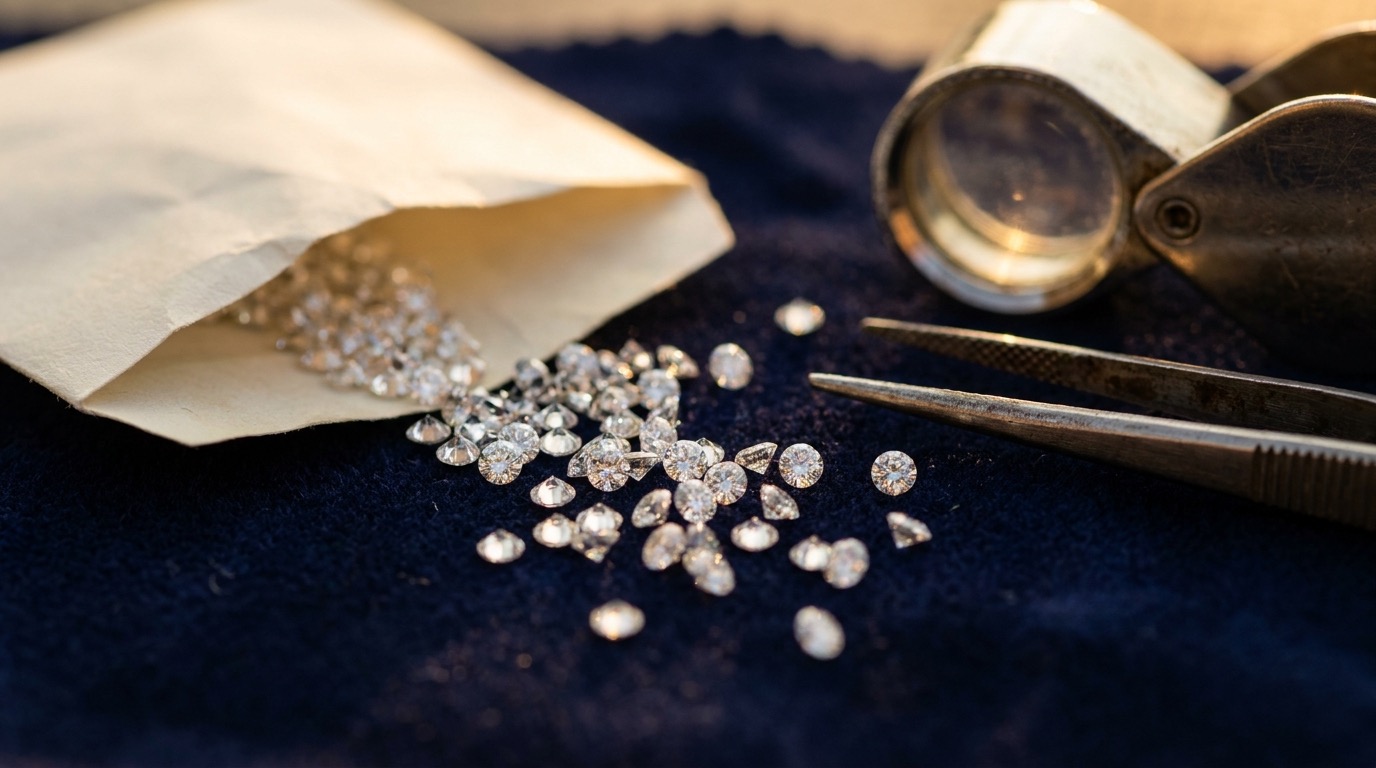
Round natural melee and fancy-shape natural melee (princess, baguette, marquise, pear at sub-1ct sizes) aren't sourced the same way. Round is the standardized, high-volume cut in the melee trade — cheaper and more consistent to source at scale. Fancy-shape melee is harder to source consistently: cutting a small non-round outline wastes more rough per stone, and matching corners, points, and length-to-width ratios across dozens or hundreds of tiny stones is a much tighter tolerance problem than matching round diameters. Guru Diam's natural melee program is round-only today; this guide covers why fancy-shape melee is the harder sourcing problem, and where it typically shows up in the trade.
What's the Difference Between Round and Fancy-Shape Melee?
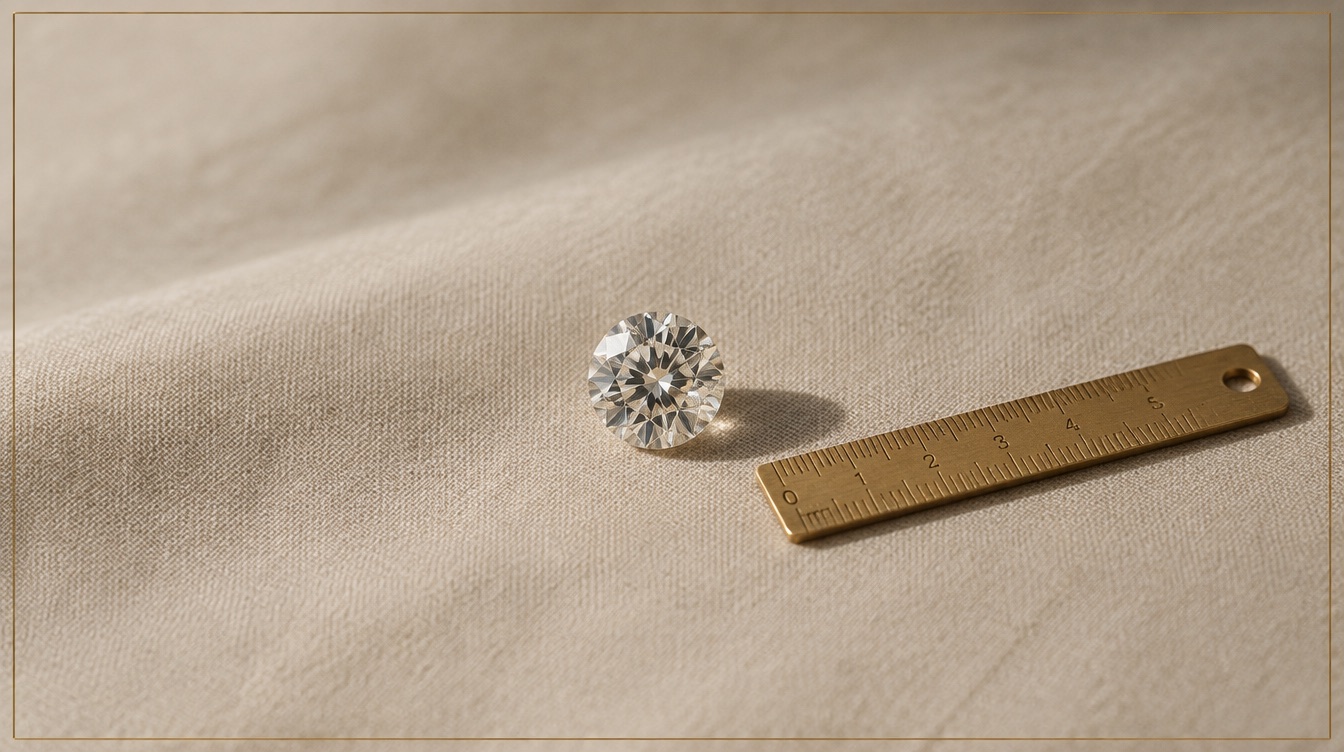
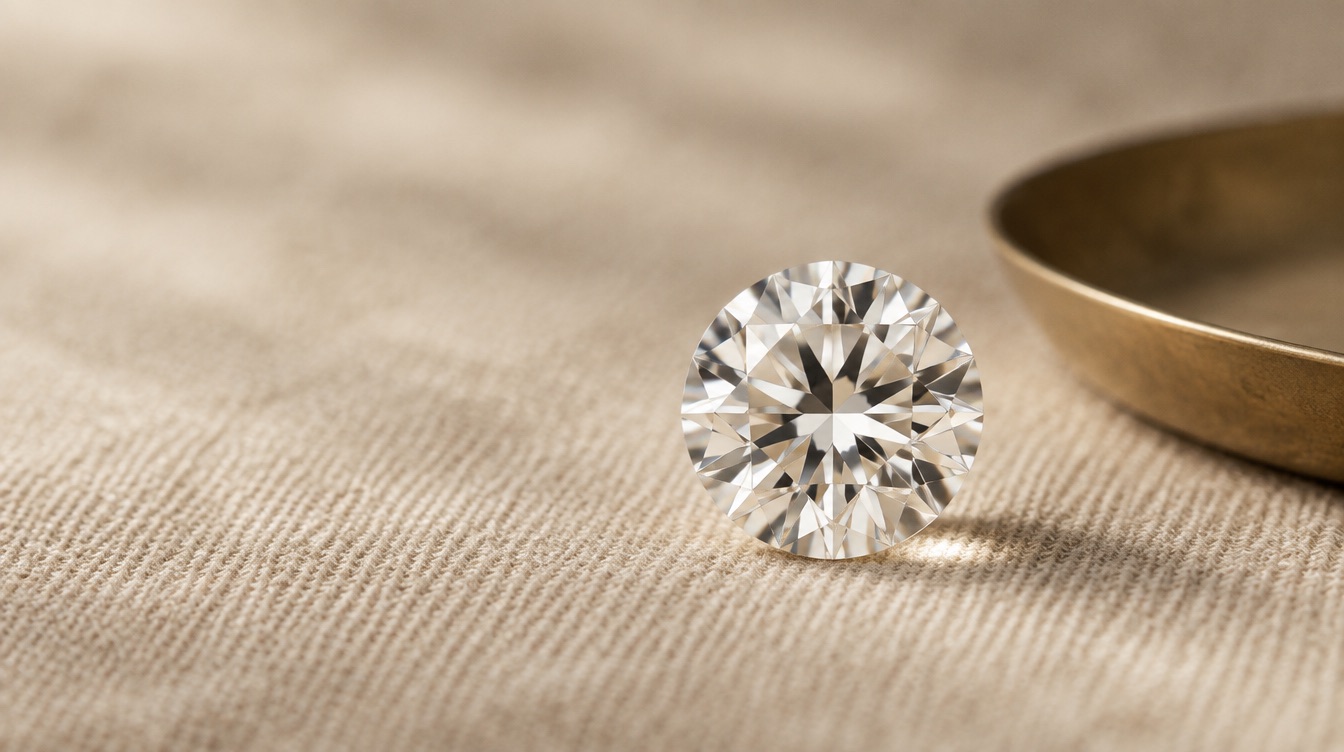
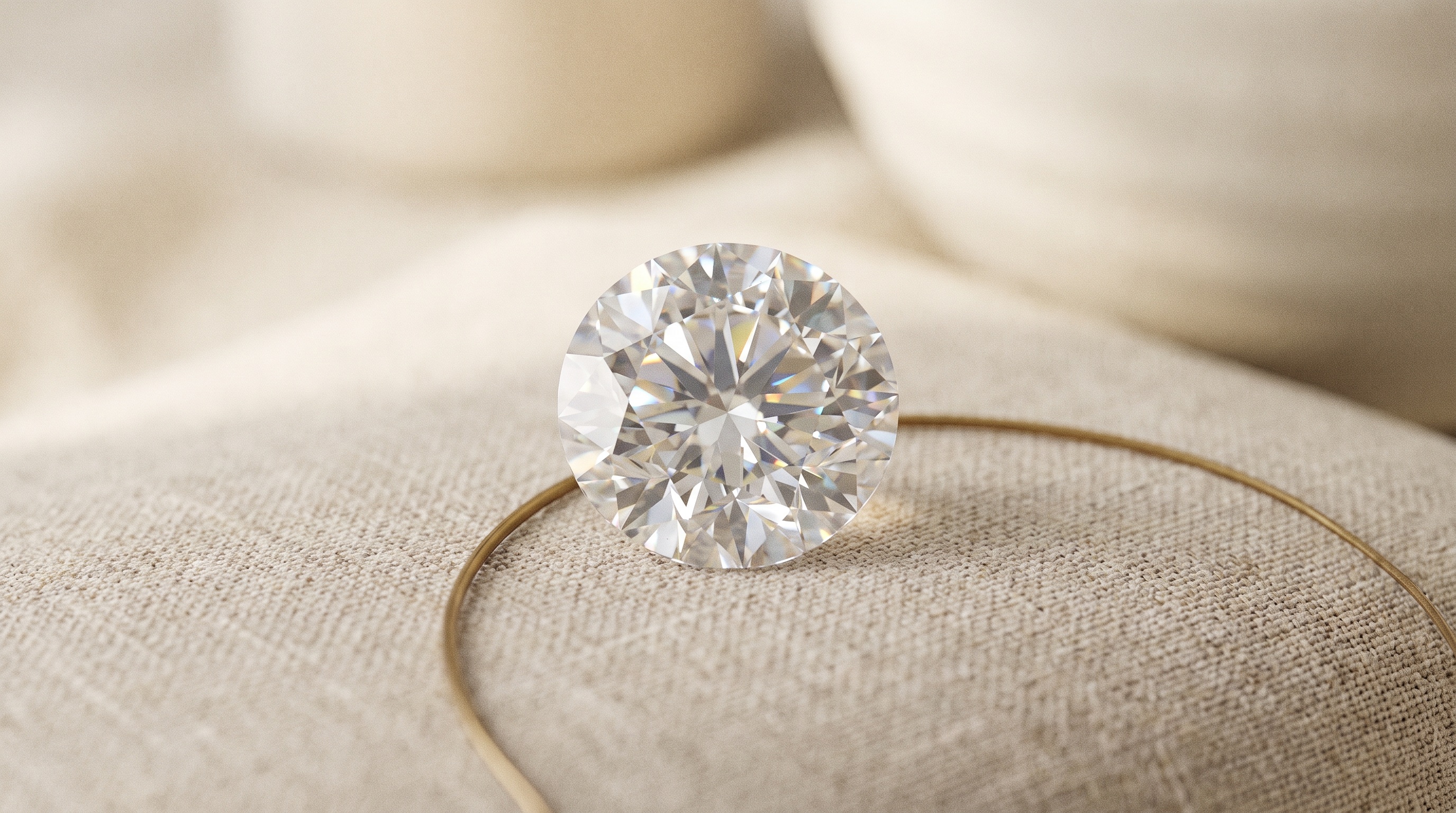
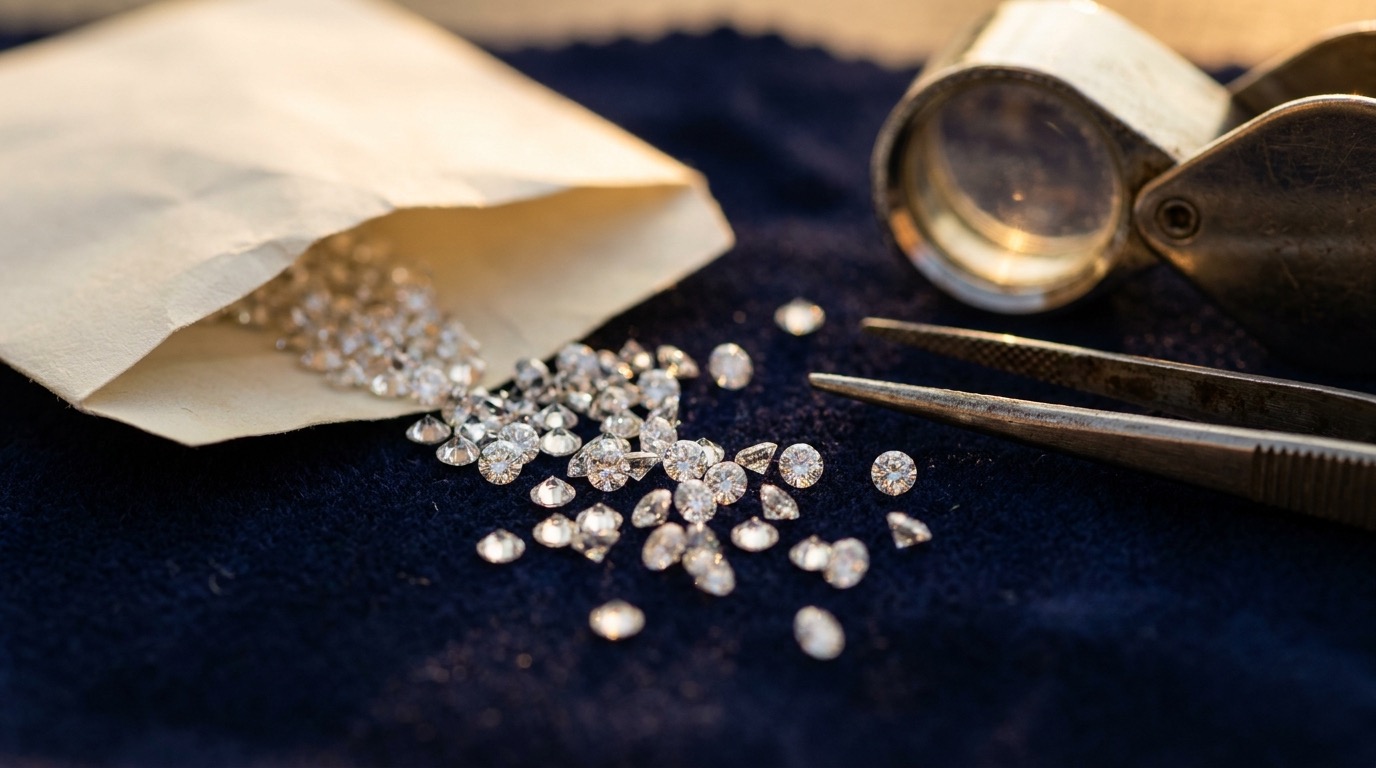
Round melee is the small round brilliant-cut diamond — the same facet pattern as a standard round center stone, scaled down to sub-1ct sizes. It's the default accent stone across pavé, halo, eternity, and tennis work, and it's what Guru Diam's natural melee line covers today, from 0.8mm to 4.0mm.
Fancy-shape melee means any non-round outline scaled down to melee size: princess (square, pointed corners), baguette (rectangular, step-cut facets), marquise (elongated with two points), pear (one point, one rounded end), and a handful of less common outlines like trillion or tapered baguette. Each of these exists at full carat sizes as a well-understood cut; the question this post answers is what changes when you shrink that same outline down to a few tenths of a millimeter across.
The two aren't interchangeable in a design, either. A pavé surface set with round melee reads as an even field of sparkle regardless of stone orientation. The same surface set with princess or baguette melee needs every stone's corners and edges aligned to its neighbors, or the visual line breaks. That difference in how the shape behaves once it's set is part of why the sourcing problem is different too — more on that below.
Why Is Fancy-Shape Melee Harder to Source Than Round?
Two things make fancy-shape melee a harder sourcing category than round, and both get worse as the stone gets smaller. First, cutting a small fancy outline wastes more rough per finished stone than cutting a small round — a non-round shape with corners or points has less tolerance for the natural irregularities in rough material, so more gets cut away or rejected to hit a clean outline. Second, round cutting at melee sizes is the most standardized, most mechanized process in the trade — bruting and faceting equipment built for round output runs at a scale and consistency that fancy-shape cutting, done at the same tiny sizes, generally can't match without more manual work per stone.
That combination — more waste per stone, less automation to offset it — is why fancy-shape melee tends to be a smaller, less consistently available category than round at any given moment, and why suppliers who carry it often carry it in narrower quantities or on a more limited size range than round.
There's also a demand-side factor that reinforces the same pattern. Round melee's demand is broad and steady — nearly every pavé, halo, eternity, and tennis job calls for it, which gives cutters and sorters a reliable, high-volume output to plan around. Fancy-shape melee demand is narrower and more design-specific, tied to particular styles like channel-set bands or art-deco reproductions. Lower, less predictable demand gives cutting operations less incentive to invest in the specialized, more labor-intensive processes fancy shapes require at melee scale — which keeps the category smaller and the supply less consistent, on top of the waste and calibration problems already stacked against it.
How Does Cutting Waste Differ Between Round and Fancy Melee Shapes?
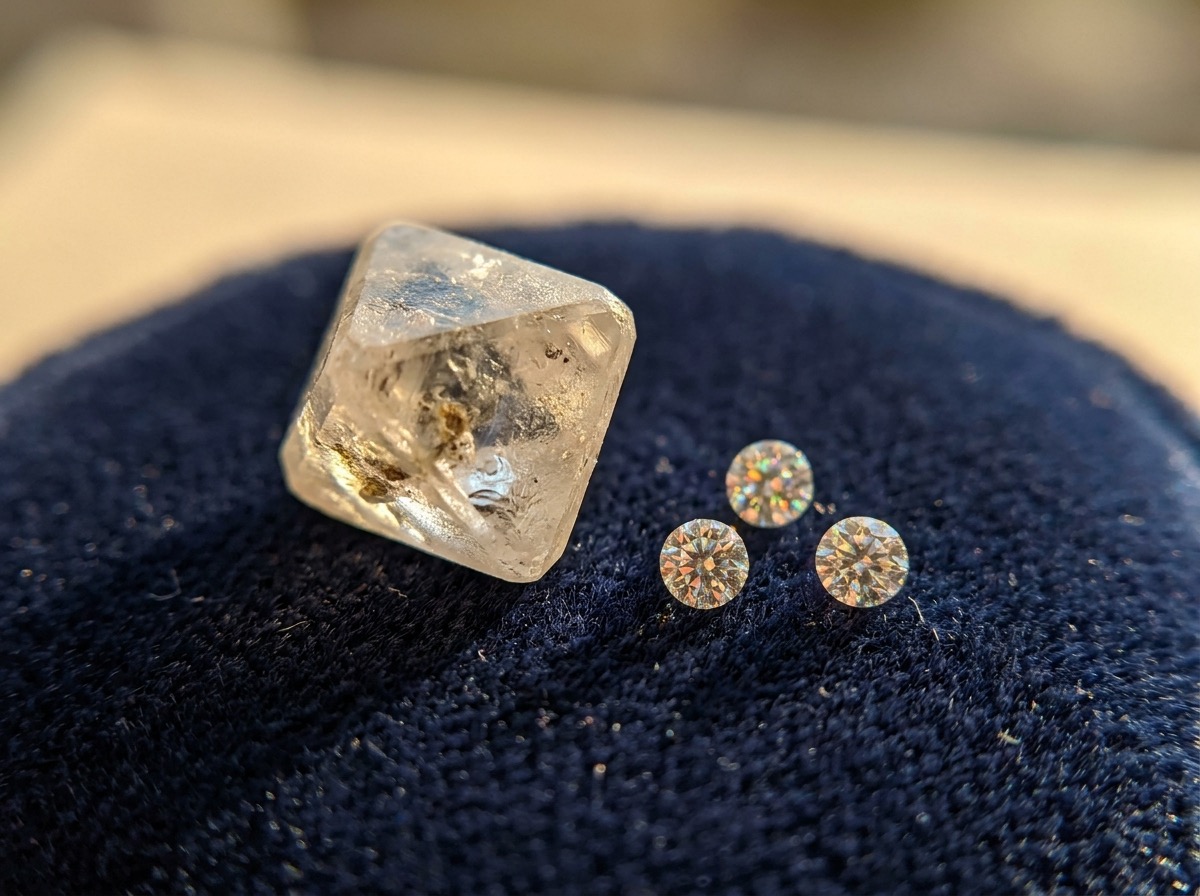
At full carat sizes, a cutter can plan a fancy shape around the natural form of a piece of rough and sometimes retain more weight than forcing that same rough into a round. Melee-size cutting doesn't work the same way. Melee is typically cut from small rough or from off-cuts and parcels that aren't large enough to plan around individually — there's no economical way to hand-select and orient each tiny piece of rough the way a cutter would for a larger stone.
Cut at that scale, a round outline is forgiving: it has no corners to line up and no elongation ratio to hit, so a wider range of small rough shapes yield an acceptable round with minimal waste. A fancy outline is not forgiving in the same way — a princess needs a genuine square with true right-angle corners, a marquise needs a symmetric point at both ends, a baguette needs straight parallel sides at a consistent width. Getting a clean version of any of those shapes out of the same small, unselected rough that round cutting handles easily means more rejected material and more stones that don't make the grade — which is the practical reason fancy-shape melee costs more to produce consistently at volume.
It's worth being precise about scale here, because the waste story at full carat sizes runs the other way: a cutter working a large, hand-selected piece of rough can often plan a fancy outline to retain more of the original crystal than forcing that same rough into a round, since round cutting on a big stone deliberately sacrifices corners of an octahedral crystal to achieve a symmetrical, light-optimized outline. That's a different problem than melee cutting. Melee rough generally isn't large or clean enough to plan around individually in the first place — it's processed in bulk, and a shape that's forgiving of irregular small rough (round) simply outperforms a shape that demands precision on stock too small to hand-select, which is the opposite dynamic from large-stone cutting.
Why Is Calibration Harder to Match Across Many Tiny Fancy-Shape Melee Stones?
Calibration is the second half of the problem, and it's arguably the bigger one for anyone actually setting the stones. Round melee only has one dimension that matters for matching: diameter. Two round stones of the same diameter sit identically in a setting no matter how they're rotated — there's no orientation to get wrong.
A fancy shape adds dimensions that all have to match across every stone in a parcel, not just one. A princess-cut parcel has to match on both length and width, and every stone's corners have to seat the same way relative to its neighbors in a pavé or channel line. A baguette parcel has to match length, width, and the parallel alignment of its sides — a baguette that's even slightly tapered where its neighbor is straight throws off a channel-set line visibly. A marquise or pear parcel has to match point-to-point length and the width at the widest point, and every stone has to be oriented the same direction when set, or the line looks inconsistent even if the individual stones are graded correctly.
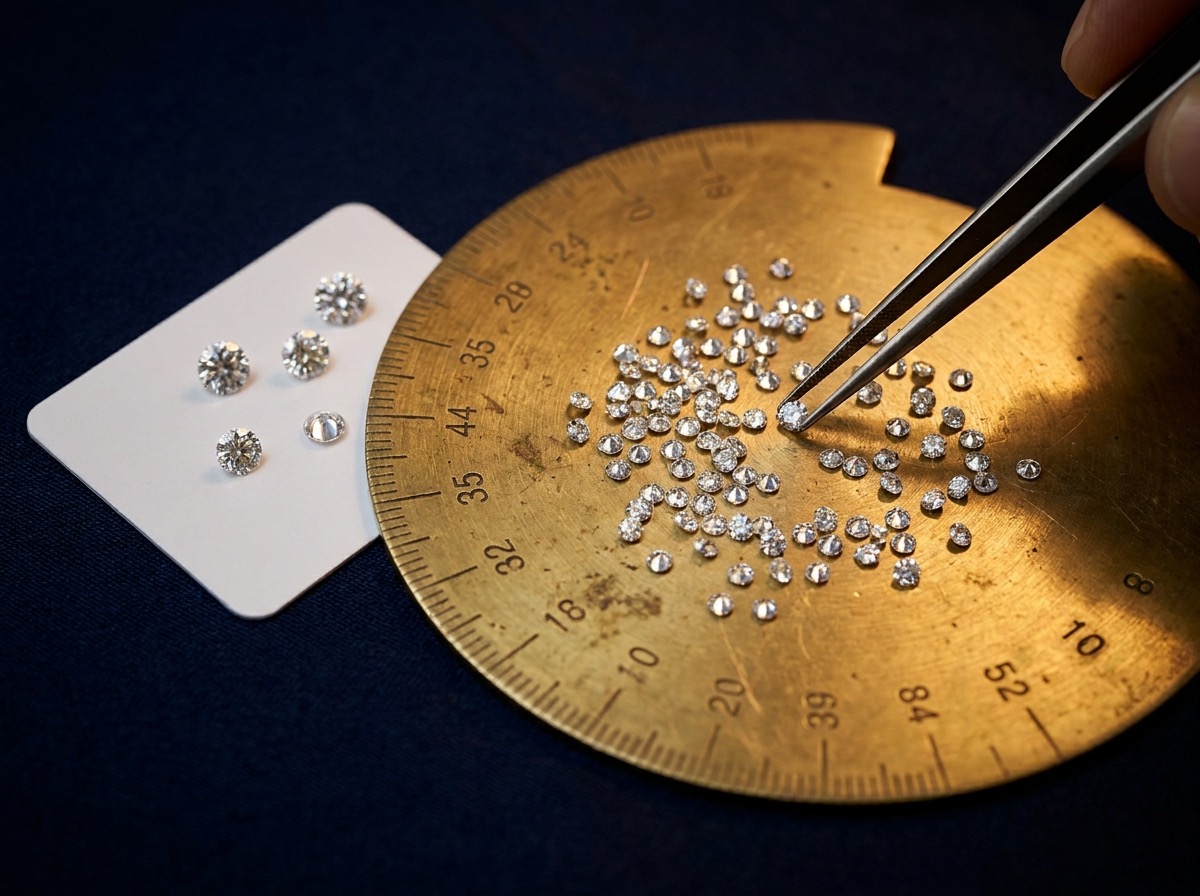
Multiply that across the dozens or hundreds of stones a single pavé, channel, or eternity job calls for, and the calibration tolerance problem on fancy-shape melee is a genuinely harder sorting job than on round — which is a second, compounding reason it's a harder category to source and supply consistently at the volumes wholesale buyers need.
Where Does Fancy-Shape Melee Typically Get Used in the Trade?
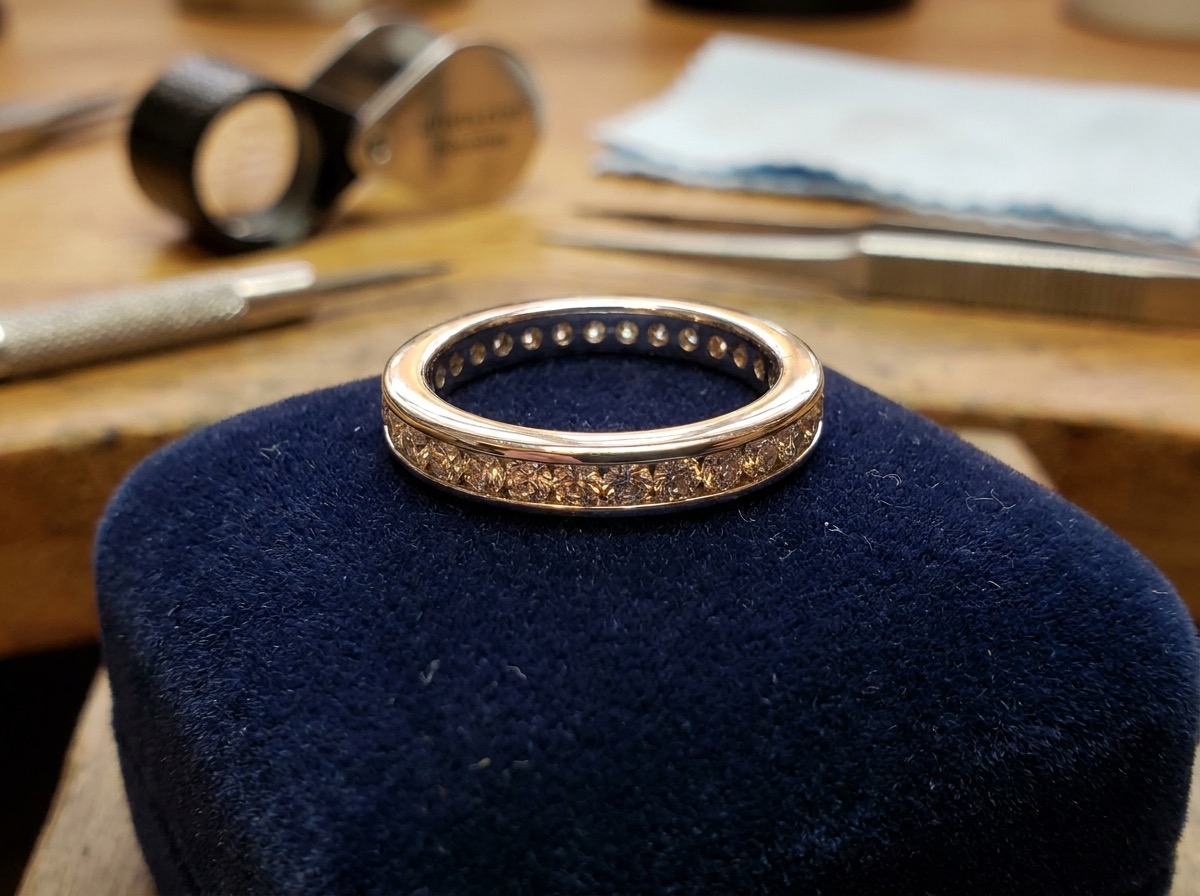
Fancy-shape melee shows up in the trade most often in a handful of recognizable design categories. Channel-set bands are the most common: a row of baguettes set edge to edge inside a channel, often flanking a center stone or running the full circumference of a band, is a classic look that specifically calls for the rectangular, step-cut baguette outline — round melee can't substitute without changing the design entirely.
Art-deco-style pieces are the other major category. That design language leans on geometric contrast — baguettes and marquise-cut accents paired with a round or emerald-cut center stone, straight lines and points used deliberately against a rounded silhouette. Reviving or replicating an art-deco piece generally means sourcing the fancy-shape accent stones the original design calls for.
Beyond those two, fancy-shape melee also turns up in three-stone and cluster settings (a pair of tapered baguettes or trillions flanking a center stone), in some fashion-forward pavé work where a designer wants princess-cut sparkle instead of round, and in restoration or repair work on vintage pieces that were originally set with fancy-shape accent stones and need a matching replacement.
Which Fancy Melee Shapes Are Most Common in the Trade?
Not every fancy outline shows up with the same frequency at melee sizes. A few are common enough that most wholesale melee sources carry them in some form; others are genuinely rare at sub-1ct sizes.
Baguette. The most common fancy melee shape by a wide margin, because channel-set bands and art-deco work create steady, recognizable demand for it. Available as straight or tapered baguette.
Princess. The second most common — a square, pointed-corner cut that shows up in fashion pavé and some channel work. Its four sharp corners make it one of the more calibration-sensitive shapes to set consistently.
Marquise. Common as an accent stone in three-stone settings and art-deco-style pieces, less common as a pavé field stone, since its elongated point-to-point shape is harder to set edge to edge in a continuous line.
Pear. Similar use case to marquise — an accent shape more than a field-pavé shape, and one of the harder shapes to source with tight calibration at melee sizes because it combines a point and a curve in one outline.
Trillion and other less common outlines. Occasionally called for on specific design work, but genuinely scarce at melee sizes across the trade — expect longer sourcing timelines and tighter minimums if a job calls for one of these.
How Does Round Melee Sourcing Compare in Consistency and Availability?
Round is the opposite case on every point above. It's the most mechanized cut at melee sizes, the most widely stocked shape across wholesale suppliers, and the shape with the widest size range genuinely available in the market — which is also why it's the shape every major quality grid and pricing table in this trade, including Guru Diam's, is built around.
That consistency compounds through the rest of the buying process too. A round melee parcel is graded on diameter alone, sorted through standardized sieve plates, and matched against a master stone with a single dimension to check. A reorder six months later is far more likely to match the original parcel exactly, because the entire supply chain behind round melee — cutting, calibration, grading — is built around the same standardized process every time.
Does Cost Differ Between Round and Fancy-Shape Melee?
Directionally, yes, and the reasons trace straight back to the sourcing differences above: more rough wasted per finished stone, less mechanized cutting, and a harder calibration-matching job all add cost that eventually shows up in the price. In general trade terms, fancy-shape melee tends to run at a premium over round at a comparable size and grade, and pricing on fancy shapes tends to be less standardized — quoted per job against whatever's actually available, rather than off a published grid the way round pricing often is.
The premium isn't uniform across shapes, either — it tends to track how far a shape's cutting and calibration demands sit from round. Baguette, being a relatively simple rectangular outline with fewer angles to get wrong than princess, marquise, or pear, tends to carry a smaller premium over round than the more complex fancy outlines do. That's a general trade pattern, not a specific number: exact premiums vary by supplier, size, and how tight a job's calibration spec is, which is exactly why fancy-shape melee is quoted job by job rather than off a published grid the way round pricing more often is.
Guru Diam doesn't have current pricing or availability data on fancy-shape natural melee to publish, since it's not a line the company sources today — see the next section for what that means in practice. For round natural melee, pricing starts around $370–450/ct in the smallest sizes and rises with size and grade; see the full pricing table in our natural melee buying guide, or message us on WhatsApp for a quote against your exact spec.
What Should You Ask a Supplier Claiming to Stock Fancy-Shape Melee?
Because fancy-shape melee is a genuinely harder category to source consistently, a supplier's claims about it are worth stress-testing more than a routine round-melee order would need. A few questions worth asking before committing to a fancy-shape parcel:
What's the actual size and quantity available, not just the shape? A supplier who says "yes, we carry baguette melee" without a specific millimeter range or total carat weight on hand may be quoting off a catalog listing rather than real stock — fancy-shape melee inventory tends to be thinner and more variable than round, so vague availability answers are a bigger red flag here than they'd be on a round order.
How is the parcel calibrated, and against what tolerance? Given how many dimensions a fancy shape has to match on — length, width, corner or point alignment — ask specifically how tight the tolerance is and whether it's been checked stone by stone or just sorted by eye. A vague answer here is a bigger risk on fancy shapes than on round, because the failure mode (a visibly mismatched line in a channel or pavé setting) is more obvious once the piece is finished.
What's the realistic lead time? Given the sourcing and calibration challenges above, a fancy-shape melee order that's quoted with the same turnaround as an in-stock round order is worth a second look — genuine fancy-shape sourcing at melee sizes usually takes longer precisely because it isn't a standardized, always-in-stock category the way round is.
Does Guru Diam Source Fancy-Shape Natural Melee?
Not today. Guru Diam's natural melee program covers round shapes only, in the 0.8mm–4.0mm size range and the EF/GH, VS/SI quality grid. Fancy natural melee shapes — princess, baguette, marquise, pear, and the rest — aren't currently priced or sourced on this line.
That's a straightforward scope statement, not a workaround to read between the lines of: if your job calls for fancy-shape natural melee, Guru Diam's current natural melee inventory isn't the source for it. Round is where the company's natural melee sourcing and pricing effort is focused right now, and there's no committed timeline here for if or when that expands to fancy shapes.
What Should You Do If Your Job Calls for Fancy-Shape Melee?
A few practical options if a design calls for fancy-shape melee specifically. First, confirm the design actually requires the fancy outline rather than defaulting to it — some channel and cluster designs that call for baguettes can be adapted to a round-melee treatment without losing the piece's overall look, especially on repair or reproduction work where matching isn't a hard requirement. Second, if the fancy shape is non-negotiable (matching an existing vintage piece, a specific art-deco commission), budget for a longer sourcing timeline and a per-job quote rather than an off-the-shelf parcel — that's standard for this category across the trade, not unique to any one supplier.
For any job where round natural melee is a fit — pavé, halo, eternity, tennis, or general repair and production restock — reach out to Guru Diam on WhatsApp or through Contact with your millimeter size, grade, and total carat weight, and we'll confirm a quote against current stock.
Frequently Asked Questions
Does Guru Diam sell fancy-shape natural melee diamonds?
No. Guru Diam's natural melee program is round shapes only today, covering 0.8mm–4.0mm in EF/GH color and VS/SI clarity. Fancy natural shapes like princess, baguette, marquise, and pear aren't currently priced or sourced on this line.
Why is fancy-shape melee harder to source than round melee?
Two compounding reasons: cutting a small non-round outline generally wastes more rough per finished stone than cutting a small round, and round cutting at melee sizes is the more mechanized, standardized process in the trade — fancy shapes typically need more manual work per stone to hit a clean outline at that size.
Why is calibration harder to match on fancy-shape melee?
Round melee only has to match on one dimension — diameter. A fancy shape adds length, width, corner alignment, or point orientation, all of which have to match across every stone in a parcel for a pavé or channel line to read as consistent once set.
Where is fancy-shape melee typically used in jewelry?
Most commonly in channel-set bands (usually baguettes) and art-deco-style pieces that pair geometric fancy-shape accents with a round or emerald-cut center stone. It also shows up in three-stone settings, some fashion pavé work, and vintage repair jobs matching an original fancy-shape accent stone.
Which fancy melee shapes are most common in the trade?
Baguette is the most common by a wide margin, followed by princess. Marquise and pear are more often used as accent stones than as field-pavé stones. Trillion and other less common outlines are genuinely scarce at melee sizes.
What should I do if my job calls for fancy-shape melee?
Confirm the design genuinely requires the fancy outline rather than defaulting to it — round can sometimes substitute on repair or reproduction work. If the fancy shape is non-negotiable, budget for a longer, per-job sourcing timeline. For any job where round natural melee fits, reach out to Guru Diam on WhatsApp or through Contact.