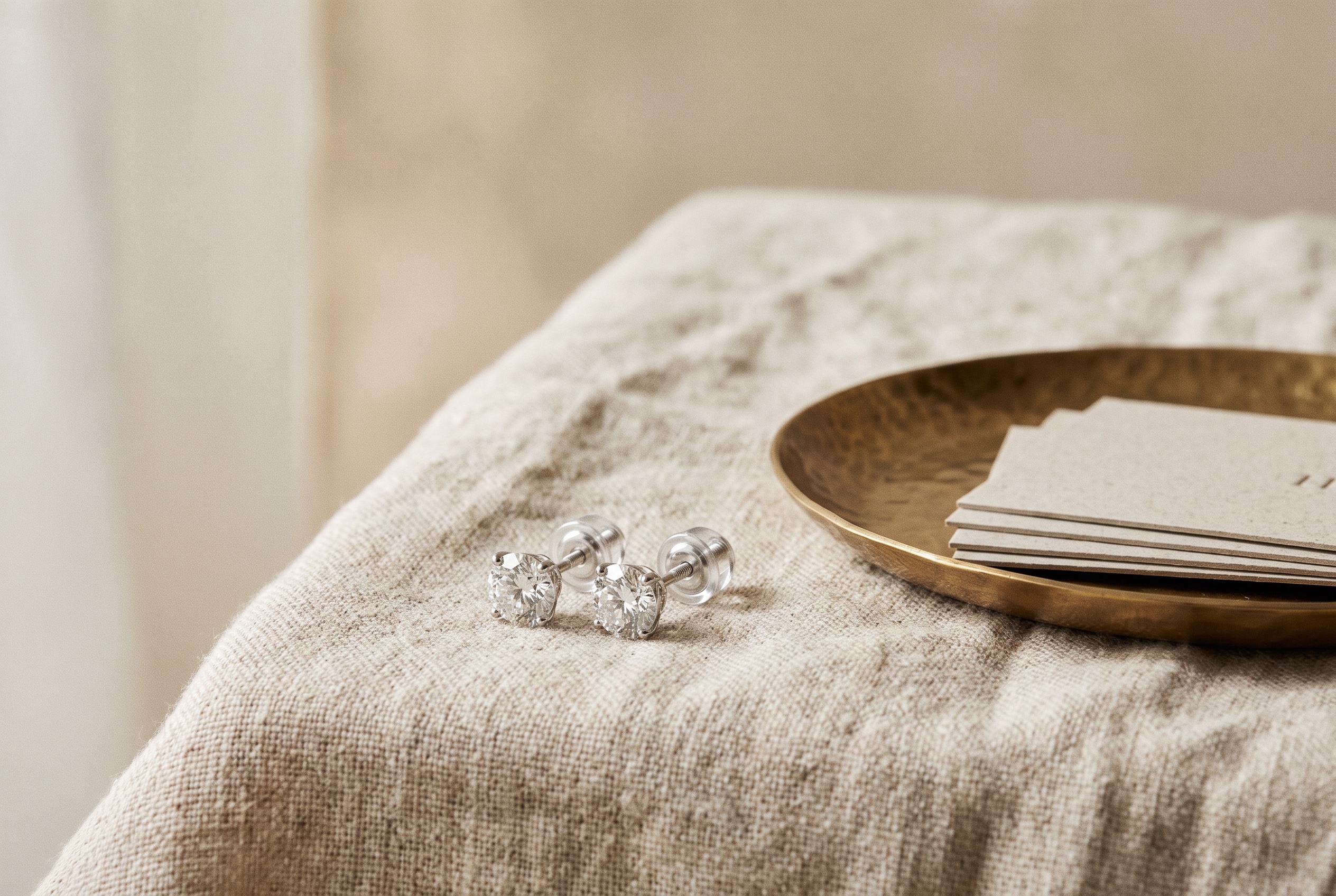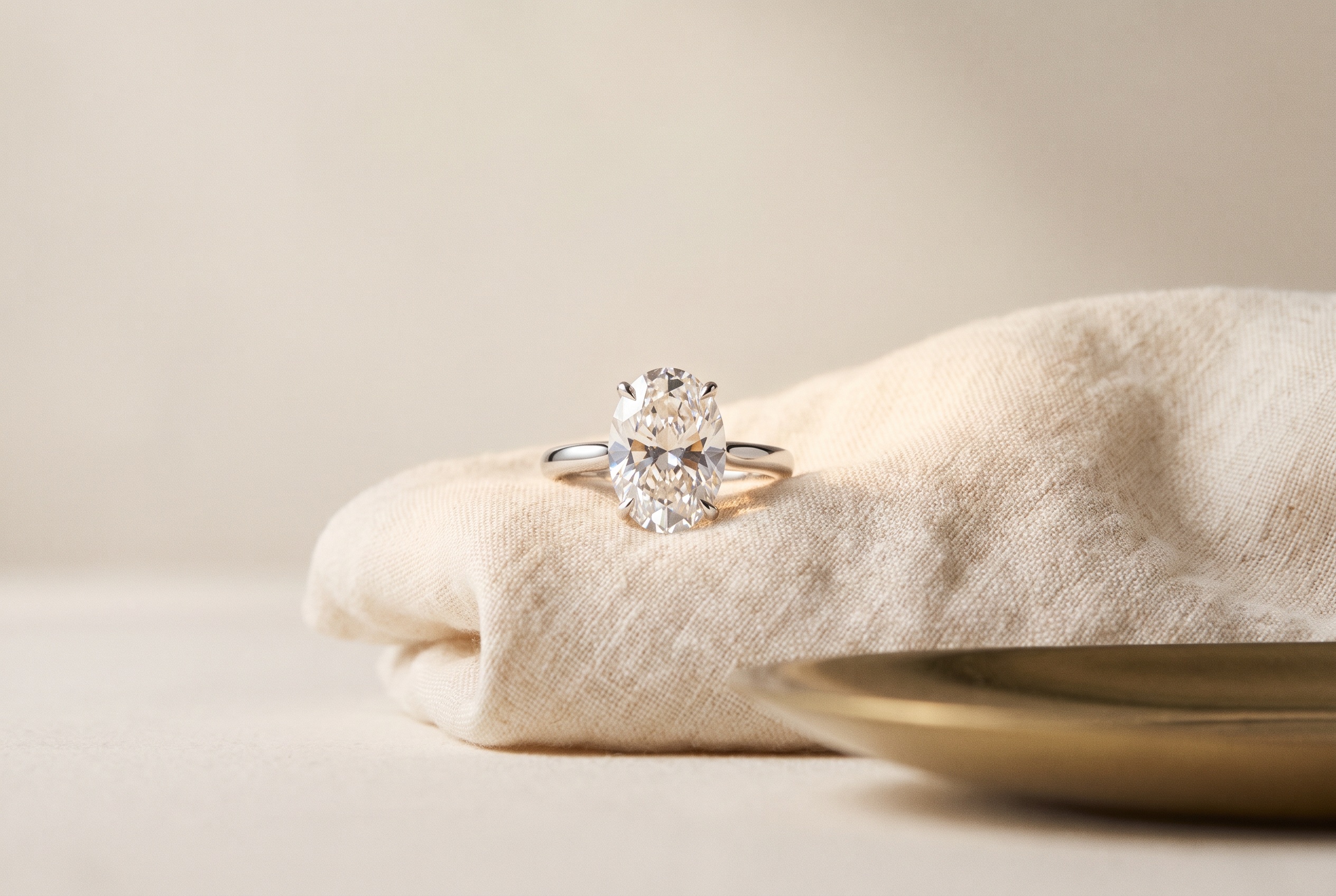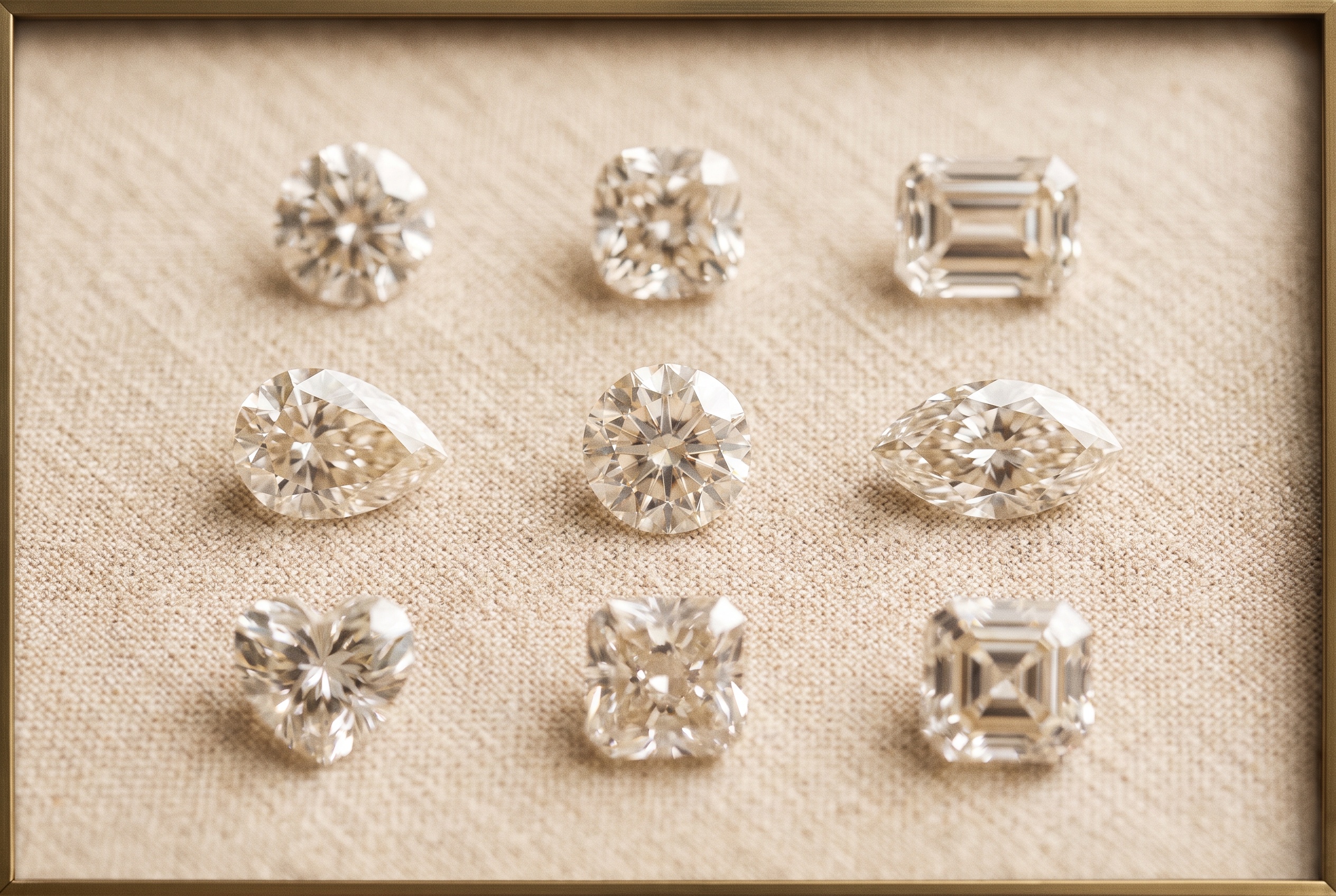

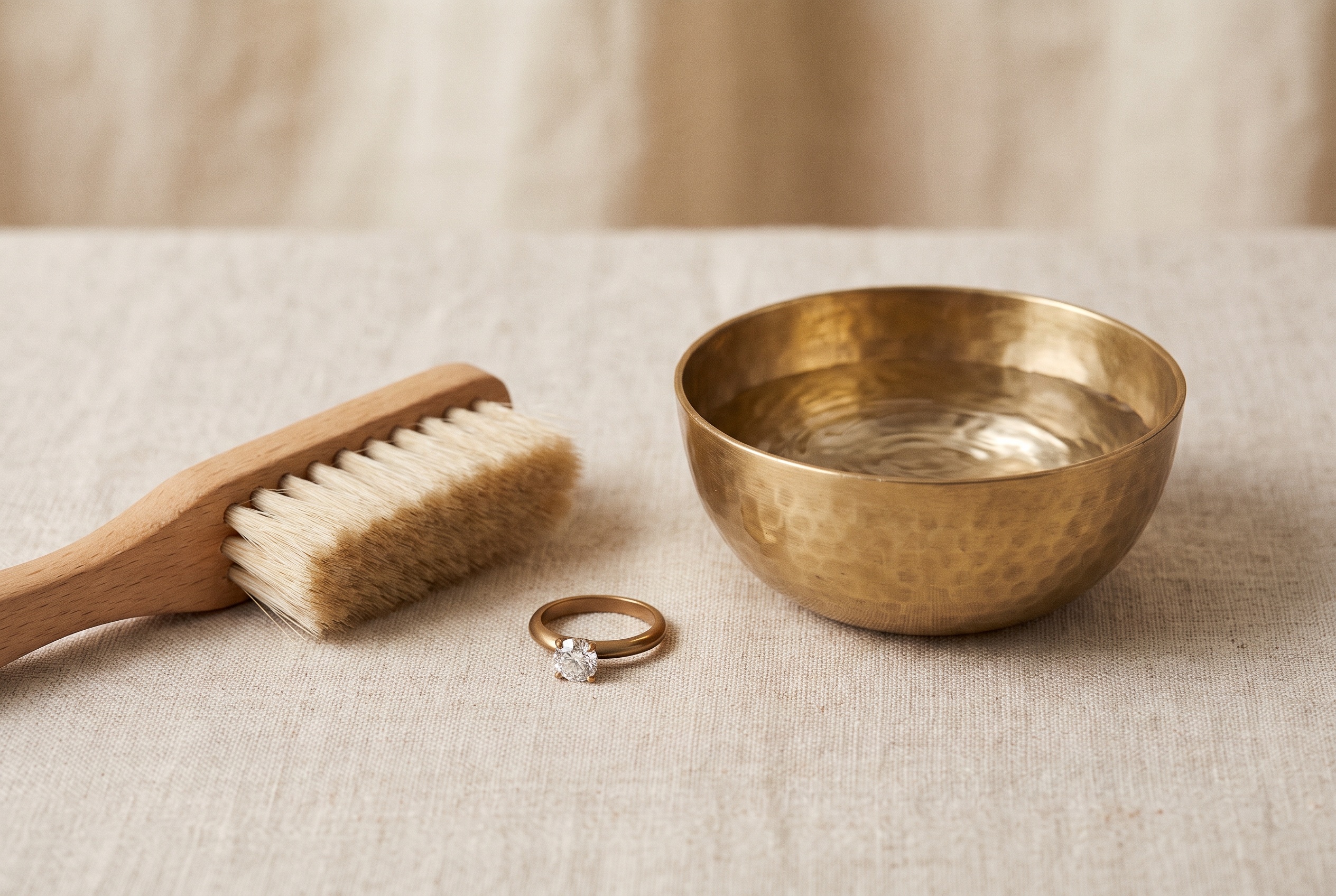
A diamond is cleaned by soaking it briefly in warm water with a small amount of mild dish soap, then gently brushing the stone and setting with a soft-bristled brush before rinsing and drying with a lint-free cloth — a simple routine that restores most of a diamond's brilliance by removing the oils, lotion, and everyday grime that dull its light performance far more often than any actual damage to the stone itself. Because diamonds attract oil readily, even a well-cared-for piece worn daily builds up enough residue within weeks to visibly reduce its sparkle, which is why regular cleaning — not just cleaning after a piece looks obviously dirty — is the single most effective, lowest-cost way to keep a diamond looking its best.
This guide covers the safest at-home cleaning method, methods and products to avoid, when professional cleaning is worth the trip, how cleaning needs differ by setting style, and how jewelers can build cleaning service into an effective repeat-visit and customer-retention practice.
Why Diamonds Need Regular Cleaning
Diamonds have a naturally oleophilic surface, meaning they attract and hold onto oils more readily than many other gemstones — a property that comes from the same crystal structure responsible for a diamond's brilliance. Everyday contact with skin oils, hand lotion, cooking residue, and soap scum builds up a thin film on the stone's surface and can settle in the tighter spaces underneath a setting, both of which interfere with how light enters and exits the stone. The effect is cumulative and gradual enough that most wearers don't notice the decline in sparkle day to day — cleaning at regular intervals, rather than waiting until a piece looks visibly dull, keeps a stone performing at its actual cut-and-clarity potential rather than a residue-dimmed version of it.
The Safe At-Home Cleaning Method
- Prepare a warm soapy soak. Mix a few drops of mild dish soap into a bowl of warm — not hot — water. Avoid harsh dish soaps with strong degreasing agents or added dyes/fragrances that can leave their own residue.
- Soak the piece for 20-30 minutes. This loosens built-up oil and grime without requiring aggressive scrubbing that could stress prongs or settings.
- Gently brush with a soft-bristled brush. A baby toothbrush or a dedicated jewelry cleaning brush works well — focus on the underside of the stone and the setting itself, where residue accumulates most.
- Rinse thoroughly under warm running water. Use a strainer or close the drain first, since a piece worked loose during cleaning is far more commonly lost down a drain than in any other single moment of everyday wear.
- Dry with a lint-free cloth. A microfiber cloth avoids leaving fibers caught in prongs or settings the way a paper towel or regular fabric can.
What to Avoid When Cleaning a Diamond
| Method or Product | Why to Avoid It |
|---|---|
| Toothpaste | A persistent home-remedy myth — toothpaste's mild abrasives are designed for enamel, not polished metal, and can dull a setting's finish over repeated use |
| Chlorine bleach or chlorine-based cleaners | Chlorine can pit, discolor, or weaken certain metal alloys, particularly some gold alloys, over repeated exposure |
| Harsh all-purpose household cleaners | Many contain chemicals that can damage metal finishes or, in pieces with other gemstones alongside the diamond, degrade more sensitive stones |
| Ultrasonic cleaners, used carelessly | Safe for most solid diamond settings but can worsen existing hairline fractures, loosen already-weakened prongs, or damage more fragile companion gemstones — better left to a professional who can assess the piece first |
| Abrasive cloths or paper towels | Can scratch soft metal finishes over repeated use, and paper towel fibers can catch in prong settings |
Professional Cleaning: When It's Worth the Trip
Professional jewelers typically offer two cleaning methods beyond the basic home soak-and-brush routine: ultrasonic cleaning, which uses high-frequency sound waves in a cleaning solution to dislodge grime from areas a brush can't reach, and steam cleaning, which uses pressurized steam to blast away residue without submerging the piece. Both methods are more thorough than home cleaning but come with the same caveats around fracture risk and companion gemstones — which is exactly why they're best performed by someone trained to visually assess a stone and setting first. Professional cleaning is particularly worth scheduling periodically (many jewelers recommend every six months) because a trained eye doing the cleaning will also typically catch early signs of a loosening prong or a developing setting issue well before it becomes a piece-threatening problem, turning a routine cleaning visit into informal preventive maintenance as well.
Cleaning Considerations by Setting Style
- Prong settings — generally the easiest to clean at home, since the open structure exposes most of the stone's underside directly to the soap-and-brush routine.
- Pavé and cluster settings — require more careful, gentler brushing given the number of small stones and prongs involved; aggressive scrubbing risks dislodging a small accent stone, so a lighter touch and more patience pays off here.
- Bezel settings — the metal fully surrounds the stone's edge, which protects it well but also traps more residue underneath than an open prong setting; a longer soak helps loosen grime before brushing.
- Invisible settings — the tightly fitted, groove-set construction that defines invisible-set pieces makes thorough home cleaning genuinely difficult, since a standard brush can't reach into the recessed channels; these pieces benefit disproportionately from periodic professional ultrasonic cleaning.
Does a CVD Lab-Grown Diamond Need Different Cleaning Care?
No — a CVD lab-grown diamond is chemically and physically identical to a natural diamond, sharing the same hardness, the same oleophilic surface behavior, and the same response to cleaning methods. Every cleaning recommendation in this guide applies identically regardless of a stone's origin; there is no separate lab-grown-specific cleaning protocol to follow.
How Often Should a Diamond Be Cleaned?
A piece worn daily benefits from a quick home soap-and-water soak roughly every one to two weeks to keep residue from building up meaningfully between deeper cleanings, with a more thorough professional cleaning and prong inspection every six months to a year. Pieces worn only occasionally can go longer between cleanings but still benefit from a check before each wear, since a piece sitting unworn in a jewelry box for months can still accumulate dust and tarnish, particularly in more intricate settings.
Cleaning Rings vs. Earrings, Necklaces, and Bracelets
The basic soap-and-water method applies across every jewelry category, but a few category-specific considerations are worth keeping in mind. Rings accumulate residue fastest of any category, given constant hand contact with lotion, soap, and everyday surfaces, and benefit most from the frequent light-cleaning schedule this guide recommends. Earrings, particularly stud and small hoop styles, are less prone to heavy residue buildup but their small clasps and posts are easy to lose track of during a soak — using a small mesh basket or a secured container during cleaning prevents a stray earring back from disappearing down a drain. Necklaces and bracelets, especially those with multiple linked segments or a clasp mechanism, benefit from a slightly longer soak to work loosened grime out of tight linkage points a brush alone can't fully reach, and clasps in particular should be checked for smooth operation during cleaning, since a stiff or sticking clasp is often an early sign it needs professional attention before it fails during wear.
Warning Signs to Check for During Cleaning
Routine cleaning is also a natural moment to visually check a piece for developing problems, since these are far cheaper and easier to address caught early than after they've caused actual damage or loss:
- A prong that looks bent, worn thin, or doesn't sit flush against the stone — the leading cause of a stone becoming loose or lost over time.
- Visible movement when gently pressing on the stone — any perceptible wobble warrants a professional inspection before continued wear.
- A setting that looks discolored or pitted — can indicate chemical exposure damage that's worth having assessed.
- A stone that looks persistently dull even immediately after cleaning — occasionally indicates a surface-level chip or scratch rather than residue, worth a professional look.
Handling a Piece That Sits Unworn for Extended Periods
A piece stored away for months or longer — an heirloom awaiting a future occasion, a seasonal piece, or simply jewelry set aside during a period of lighter wear — still benefits from a check and light cleaning before it goes back into rotation, even though it hasn't accumulated the everyday oil buildup a frequently worn piece develops. Dust and airborne residue settle on stored jewelry over time regardless of wear, and metal finishes can tarnish slowly even inside a closed box, particularly for alloys more prone to oxidation. A quick inspection and light clean before returning a long-stored piece to regular wear catches any tarnish or accumulated dust before it becomes a bigger cleaning task, and doubles as a natural moment to check that a prong or clasp hasn't weakened during the storage period.
Cleaning Service as a Retail Retention Tool
For jewelers, offering complimentary or low-cost basic cleaning service to customers who purchased a piece — or even to walk-ins who didn't — is one of the most effective low-cost tools available for driving repeat store visits and maintaining a long-term customer relationship well beyond the original sale. Each cleaning visit is also a natural, low-pressure opportunity to catch a loosening prong or a wear issue before it becomes a lost-stone insurance claim, to remind a customer of a piece's care needs, and to surface a natural conversation opening for a future upgrade or additional purchase without the visit feeling like a sales pitch. A jeweler running this program consistently builds meaningfully more customer touchpoints over a piece's lifetime than one that only interacts with a customer at the point of original sale and any subsequent repair.
Choosing the Right Dish Soap and Water Ratio
Not every dish soap is equally well suited to jewelry cleaning, even though the basic method is nearly universal. A mild, dye-free, fragrance-free dish soap works best, since heavily fragranced or dyed formulas can leave their own faint residue behind, partially undermining the cleaning they're meant to accomplish. A ratio of roughly one part dish soap to three parts warm water is generally sufficient — more concentrated soap doesn't clean meaningfully better and can be harder to rinse fully out of a more intricate setting. Water temperature matters as well: warm water helps loosen oil-based residue effectively, but water that's too hot can, in rare cases involving diamonds with pre-existing internal fractures, contribute to thermal stress; lukewarm-to-warm, not hot, is the safer standard to follow as a matter of routine.
Traveling With Diamond Jewelry: Cleaning and Storage Considerations
Travel introduces its own set of grime sources — sunscreen, airport security-line contact, hotel-room dust, and simply more hours of continuous wear than a typical day at home — that accelerate the residue buildup this guide's cleaning routine addresses. Packing a small travel-sized bottle of mild soap and a soft brush, or simply planning a cleaning session immediately before and after a trip, keeps a well-worn travel piece from arriving home looking noticeably duller than when it left. Storage matters just as much as cleaning frequency while traveling: a dedicated jewelry pouch or a hard case with separate compartments prevents pieces from scratching against each other in transit, since a diamond's hardness means it can scratch other jewelry, including other diamonds, if pieces are left loose together in a single bag or pocket.
Storage Between Cleanings
How a piece is stored between wears and cleanings has a real effect on how quickly it accumulates dust, tarnish, and surface grime. Storing pieces separately — in individual pouches or a compartmentalized jewelry box rather than loose in a single drawer or dish — reduces surface contact that can dull a polished metal finish over time and prevents harder stones from scratching softer metals or companion gemstones. Keeping jewelry away from direct sunlight and humidity when not in storage-specific packaging also helps preserve a metal finish, particularly for pieces that include other, more environmentally sensitive gemstones alongside the diamond. A simple habit of returning a piece to the same dedicated storage spot after each wear, rather than leaving it out on a countertop or nightstand, meaningfully reduces both dust accumulation and the more serious risk of a piece being misplaced entirely.
Common Diamond Cleaning Myths, Debunked
| Myth | Reality |
|---|---|
| "Toothpaste is a safe DIY cleaner" | Toothpaste's mild abrasives are designed for tooth enamel, not polished metal, and can dull a setting's finish over repeated use. |
| "Vinegar or ammonia-based cleaners are always safe for diamonds" | While the diamond itself is highly chemical-resistant, these can damage certain metal alloys or degrade more sensitive companion gemstones over repeated exposure. |
| "A diamond can't be damaged by cleaning since it's the hardest natural material" | Hardness protects against scratching, not against a pre-existing fracture being worsened by ultrasonic vibration or thermal shock from extreme temperature changes. |
| "Cleaning isn't necessary if a diamond still sparkles somewhat" | Oil buildup dulls brilliance gradually enough that most wearers don't notice the decline day to day, meaning a piece can look meaningfully duller than its actual cut-and-clarity potential without appearing obviously dirty. |
Cleaning Diamonds Alongside Other Gemstones
Many diamond pieces incorporate other gemstones as accents or center stones, and cleaning guidance shifts meaningfully once other materials enter the picture, since not every gemstone tolerates the same cleaning methods a diamond handles easily. Softer or more porous stones — opal, pearl, emerald, and turquoise among them — can be damaged by prolonged water exposure, ultrasonic vibration, or even the same mild dish soap solution recommended for a diamond-only piece. A mixed-gemstone piece should generally be cleaned according to the most sensitive stone present rather than the diamond's own tolerance, which often means a gentler, shorter cleaning approach, a professional consultation before any deep cleaning, or hand-wiping with a soft dry cloth rather than a soak for pieces containing particularly delicate materials. Buyers unsure which category their gemstone accents fall into are better served asking a jeweler directly than guessing, since the cost of damaging a sensitive stone during a routine cleaning attempt far outweighs the inconvenience of asking first.
When to Have a Piece Professionally Inspected Rather Than Just Cleaned
Routine cleaning and professional inspection serve related but distinct purposes, and conflating them can mean a developing problem goes unnoticed longer than it should. Cleaning addresses surface residue and restores brilliance; inspection specifically checks structural integrity — prong wear, setting stability, and any signs of metal fatigue that cleaning alone won't reveal or address. A piece that's been through a significant impact, has been worn continuously without a break for an extended period, or is simply due for its periodic six-month-to-annual check benefits from a dedicated inspection appointment, not just a cleaning visit folded in as an afterthought. Framing these as two related but separate services — and communicating that distinction clearly to customers — helps set the expectation that a cleaning visit isn't automatically a full structural check, even though a good jeweler will typically glance over a piece for obvious issues while cleaning it regardless.
Sourcing and Care Guidance for Wholesale Buyers
Guru Diam supplies certified loose diamonds and finished jewelry across standard, antique, and exotic cuts, with the same cleaning and care characteristics regardless of setting complexity or stone origin. Buyers building out a customer-facing care program can point customers to this guide directly, or adapt it for their own retail materials.
Browse certified loose stones through the certified diamonds category and coordinated stone sets through matching pairs, and build custom pieces — including more intricate invisible-set and pavé designs that benefit from professional cleaning guidance — through custom jewelry. Trade accounts can review terms at the wholesale hub or apply through trade partner. For related care and appraisal topics, see our diamond appraisal guide.
Frequently Asked Questions
What is the safest way to clean a diamond at home?
Soak the piece in warm water with a few drops of mild dish soap for 20-30 minutes, gently brush with a soft-bristled brush, rinse thoroughly over a closed drain, and dry with a lint-free cloth. This removes the oil and residue buildup responsible for most day-to-day dullness.
Can I clean a diamond with toothpaste?
No — this is a common home-remedy myth. Toothpaste's mild abrasives are formulated for tooth enamel, not polished metal, and can dull a setting's finish with repeated use.
Is it safe to use an ultrasonic cleaner on a diamond?
Usually, for a solid diamond in a sturdy setting with no other gemstones, but it's best left to a professional who can first check for existing fractures, loose prongs, or more fragile companion stones that ultrasonic vibration could worsen.
How often should I clean my diamond ring?
A quick home soak every one to two weeks for daily-worn pieces, with a professional cleaning and prong inspection every six months to a year. Occasionally worn pieces can go longer between cleanings but still benefit from a check before each wear.
Do lab-grown diamonds need different cleaning than natural diamonds?
No. CVD lab-grown diamonds are chemically and physically identical to natural diamonds, with the same hardness and surface characteristics, so every cleaning recommendation applies identically regardless of origin.
Why does my diamond look dull even though I haven't damaged it?
Dullness is most often caused by everyday oil and residue buildup rather than damage, since diamonds attract oils readily. Regular cleaning typically restores full brilliance; persistent dullness immediately after a thorough cleaning is worth a professional look for a possible surface chip or scratch.
What dish soap should I use to clean a diamond?
A mild, dye-free, fragrance-free dish soap works best, mixed roughly one part soap to three parts warm — not hot — water. Heavily fragranced or dyed soaps can leave a faint residue that partially undermines the cleaning.
How should I store diamond jewelry between wears?
Store pieces separately in individual pouches or a compartmentalized jewelry box rather than loose together, since a diamond's hardness can scratch other jewelry, including other diamonds, if pieces are left in direct contact.