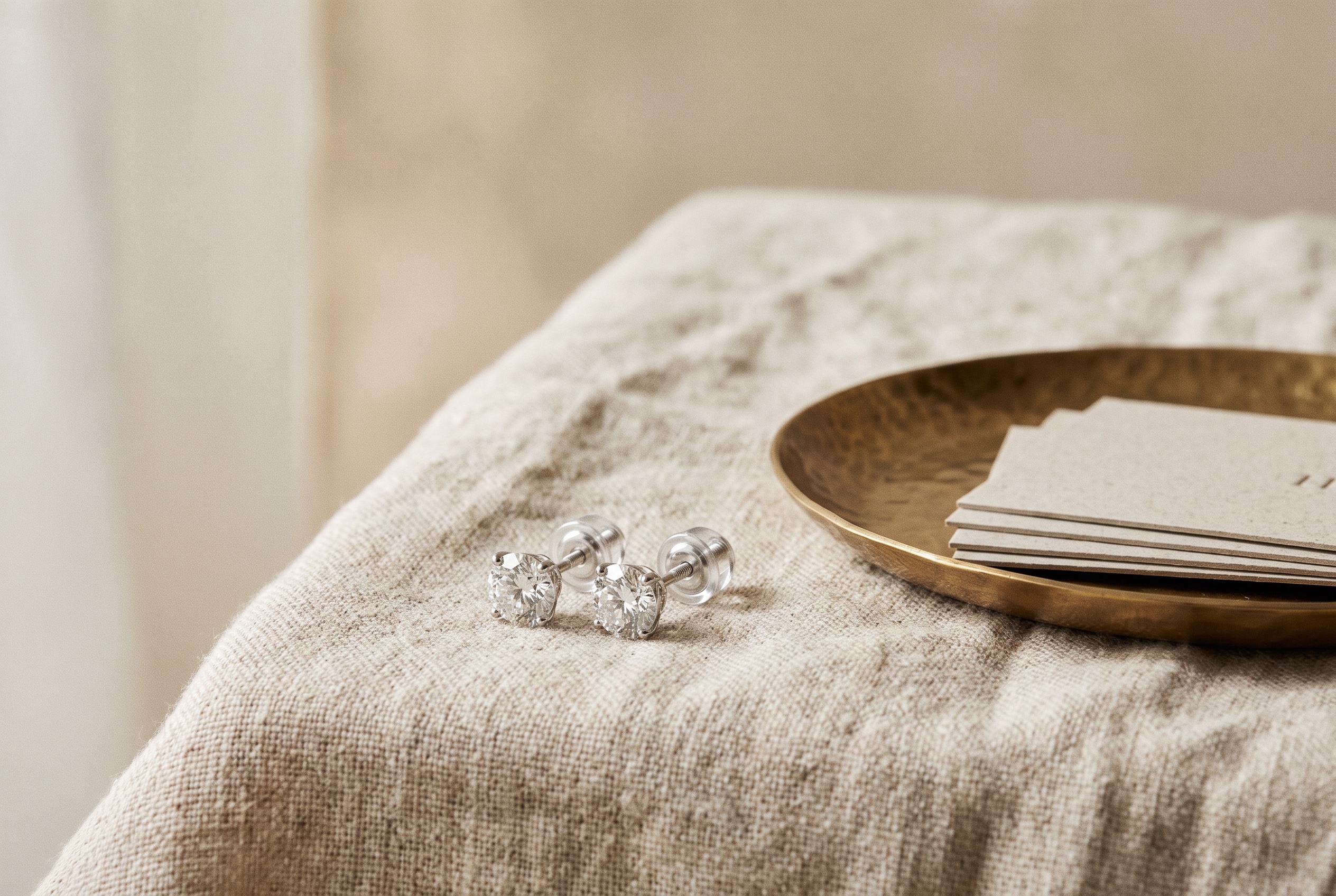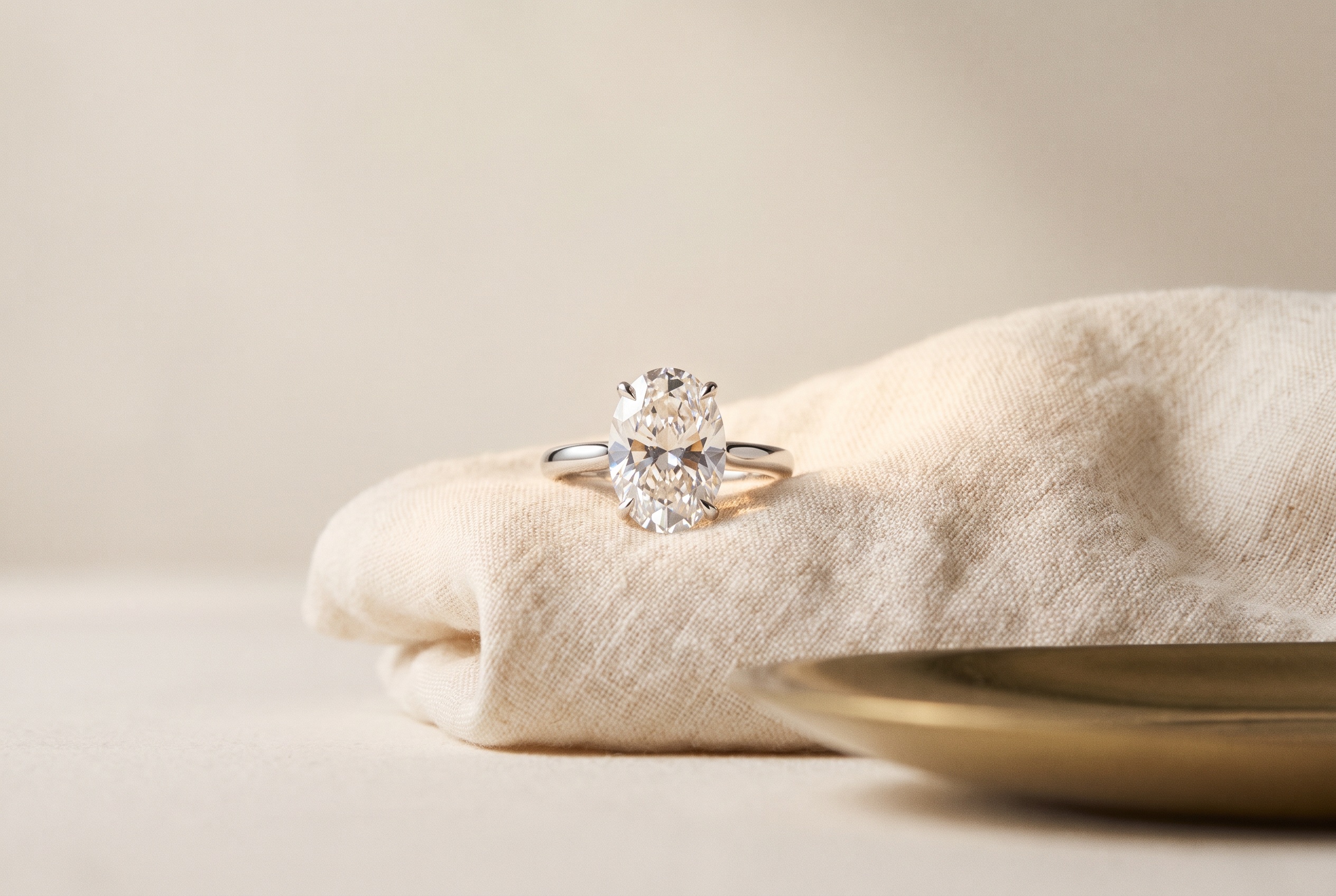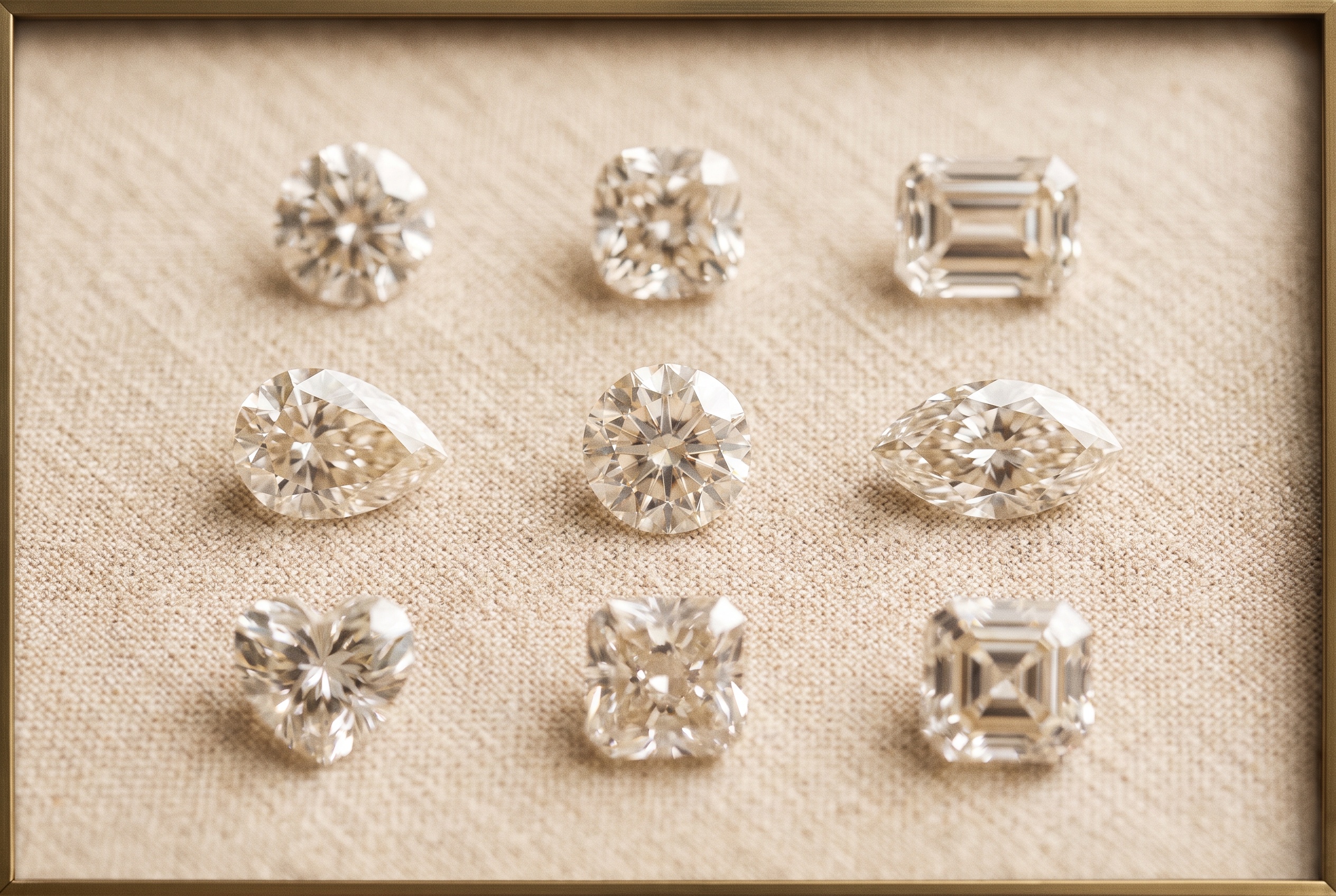

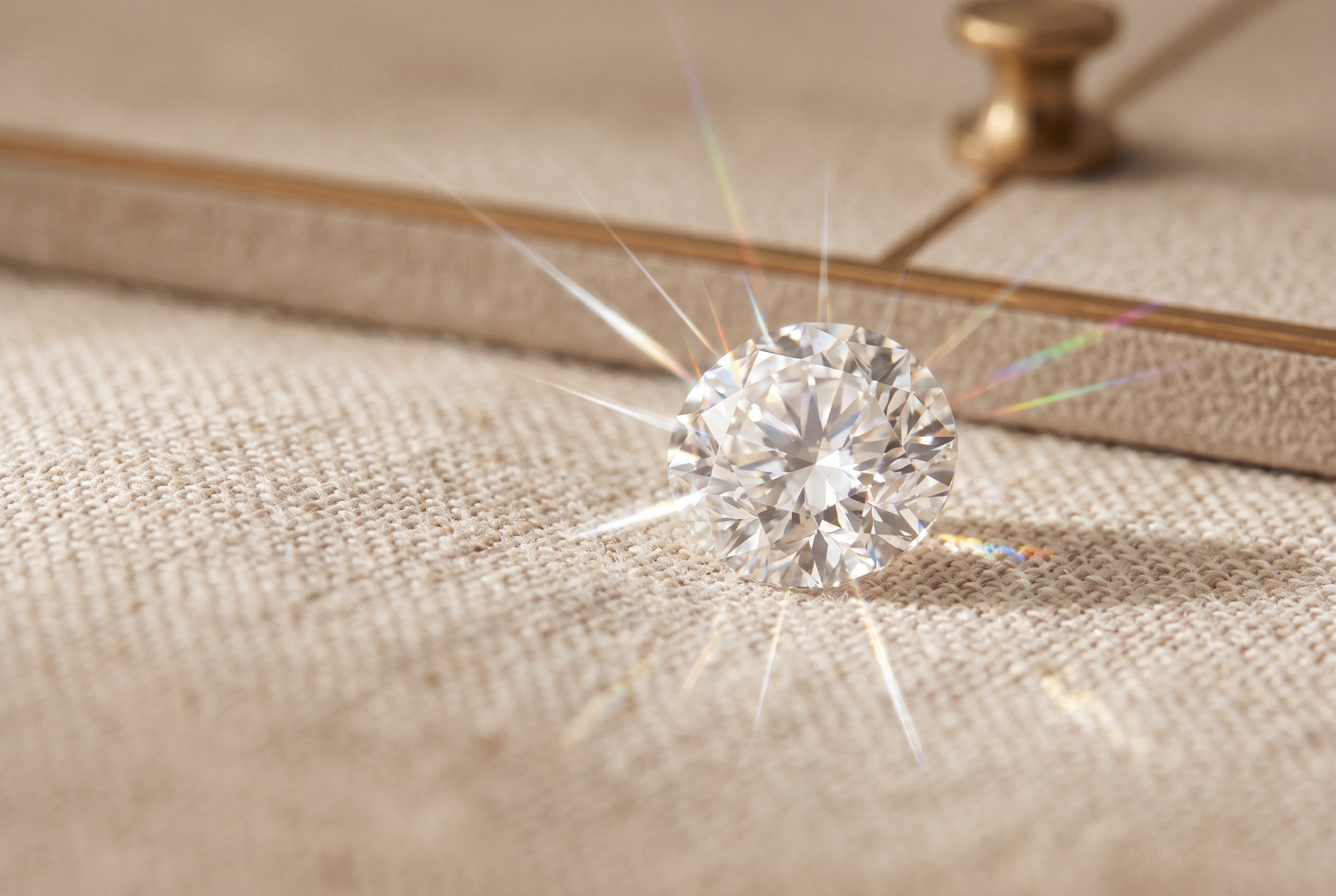
A diamond's sparkle is the combined result of three separate optical effects — brilliance (white light reflecting back to the eye), fire (light split into spectral color), and scintillation (the flash pattern created as the stone, light, or viewer moves) — and all three are governed primarily by how precisely the diamond was cut, not by its size or origin. A diamond can be large, flawless, and colorless and still sparkle poorly if its proportions are off; a smaller, more modestly graded stone cut to precise angles will often outperform it in person.
"Sparkle" gets used loosely in casual conversation, but it's actually a measurable, gradable characteristic with a real vocabulary behind it — one that matters just as much to a wholesale buyer sourcing inventory as it does to the retail customer eventually looking at the finished piece. This guide breaks sparkle down into its component parts, explains what drives each one, and covers what to actually check on a certificate or in person when sparkle is the priority.
What Is Diamond Sparkle, Technically?
When light enters a diamond, it does one of three things: reflects back out through the crown (contributing to brilliance), splits into spectral colors as it exits (contributing to fire), or bounces around internally in a shifting pattern of light and dark as the stone moves (contributing to scintillation). "Sparkle" as most people use the word is really the combined, moving effect of all three happening at once. Gemologists and cutters treat them as distinct, independently measurable properties, because a diamond can excel at one and underperform at another depending on how it was cut.
Brilliance: The White Light Return
Brilliance is the total white light a diamond reflects back to the eye — the overall brightness and liveliness of the stone under normal lighting. It's produced primarily by the relationship between the crown angle and pavilion angle: light entering through the crown facets needs to hit the pavilion facets at the correct angle to reflect back up and out through the table, rather than leaking out the bottom or sides of the stone. A diamond with a pavilion cut too deep or too shallow loses brilliance because light escapes instead of returning to the viewer's eye.
Fire: Light Split Into Color
Fire is the flashes of spectral color — red, orange, blue, green — visible as a diamond moves under a point light source like a spotlight or direct sun. It's caused by dispersion: white light bending by different amounts depending on wavelength as it passes through the diamond's facets, the same physical principle that splits light into a rainbow through a prism. Fire is influenced heavily by crown angle and facet count; diamonds with a shallower crown tend to show more fire, while proportions optimized purely for brilliance can sometimes trade off some fire in exchange for maximum brightness. Diamond has an unusually high dispersion value compared to most gemstones and diamond simulants, which is part of why well-cut diamonds show more fire than materials like cubic zirconia or moissanite at a glance, even though moissanite in particular is known for pronounced fire of its own.
Scintillation: The Flash Pattern in Motion
Scintillation is what you see when a diamond, the light source, or the viewer moves — the pattern of bright flashes and dark contrast areas shifting across the stone's surface. It's a function of facet count, facet size, and symmetry: more facets generally means a finer, more numerous flash pattern, while precise symmetry means those flashes appear as clean, distinct points rather than a blurred wash of light. A round brilliant's 57–58 facets are arranged specifically to maximize this effect, which is one reason round brilliant remains the most requested shape for stones meant to be looked at closely.
| Optical Effect | What It Looks Like | Primary Driver | Where It Shows Up on a Report |
|---|---|---|---|
| Brilliance | Overall brightness; white light return | Crown/pavilion angle relationship, table and depth % | Cut grade, proportions |
| Fire | Flashes of spectral color under point light | Crown angle, dispersion, facet arrangement | Cut grade (indirectly); not separately graded |
| Scintillation | Flash/contrast pattern as the stone moves | Facet count, facet size, symmetry | Symmetry grade, polish grade |
| Combined effect | What buyers describe as "sparkle" | All three together, plus clarity and polish | Overall cut grade is the closest single proxy |
Cut Is the Single Biggest Driver of Sparkle
Of the traditional 4Cs, cut has the most direct relationship to sparkle — more than carat, color, or even clarity in most cases. Two diamonds with identical carat weight, color, and clarity grades can look dramatically different face-up depending on how well the cutter executed the proportions. This is why cut grade (Excellent, Very Good, Good, Fair, Poor on a standard GIA-style scale) is the field most sparkle-focused buyers check first, and why a diamond's headline carat weight tells you almost nothing about how much it will actually sparkle in the setting.
Table percentage and depth percentage are the two measurements that most directly affect sparkle. A table cut too large lets light escape straight back out without bouncing internally, reducing fire and creating a flatter look. A stone cut too deep concentrates weight in the pavilion in a way that doesn't contribute to face-up brilliance, and can create a dark "nailhead" zone at the center of the table where light is absorbed rather than reflected. A stone cut too shallow produces the opposite problem — a washed-out "fisheye" ring where light passes straight through instead of reflecting.
Polish and Symmetry: The Finish That Sparkle Depends On
Proportions set the stage for sparkle, but polish and symmetry determine how cleanly that potential translates into what the eye actually sees. Polish refers to the smoothness of each facet surface — poor polish scatters and dulls light exiting the stone, even with otherwise excellent proportions. Symmetry refers to how precisely facets align with each other in size, shape, and placement; misaligned facets disrupt the even light patterns that produce clean scintillation, instead creating a blurred or uneven flash. A diamond graded Excellent on proportions but only Good on polish or symmetry will typically show visibly less sparkle than one graded Excellent across all three.
Does Clarity Affect Sparkle?
Clarity affects sparkle primarily when inclusions are large enough, dark enough, or positioned in a way that physically blocks or scatters light passing through the stone — a large, dark inclusion sitting directly under the table can visibly interrupt brilliance. For most clarity grades in the commercially common VS–SI range, inclusions are small enough and positioned in ways (thanks to cutters deliberately working around visible inclusions when planning facets) that they have little to no visible effect on sparkle to the naked eye. It's really only at the lower end of the clarity scale — heavily included stones — where clarity starts to meaningfully compete with cut as a driver of visible sparkle loss.
Does Color Affect Sparkle?
Color grade affects the perceived warmth or coolness of a diamond's light more than it affects sparkle itself. A diamond further down the color scale (more visible yellow or brown tint) can look slightly less bright specifically because body color competes with the white light being returned, but the underlying brilliance, fire, and scintillation mechanics are driven by cut, not color. This is part of why cut is often prioritized over color when the goal is maximum visible sparkle on a budget — a Very Good cut, G-color diamond will typically out-sparkle an Excellent color, Poor cut diamond of the same size.
Shape and Sparkle: Round Brilliant vs. Fancy Shapes
Round brilliant is engineered specifically to maximize all three sparkle components and remains the benchmark shape for light performance — its facet pattern was mathematically optimized (originally by Marcel Tolkowsky in 1919, refined many times since) precisely for this purpose. Step-cut shapes like emerald and Asscher trade sparkle for a different visual effect entirely: large, mirror-like flashes of light rather than the fine, scattered scintillation of a brilliant cut — commonly called a "hall of mirrors" look. Mixed cuts like radiant, cushion, and princess sit somewhere between the two, borrowing brilliant-style faceting on a step-cut-influenced outline to get more sparkle than a pure step cut while keeping a more geometric silhouette. Antique cuts like old mine and old European are a different case still — cut before modern proportion science existed, they were designed for candlelight and gas lighting rather than today's brighter, more directional lighting, producing a softer, broader flash pattern rather than the sharp, high-contrast sparkle of a modern round brilliant.
Hearts and Arrows: The Visual Proof of Precision Cutting
The clearest visual confirmation of exceptional cut precision in a round brilliant is the hearts and arrows effect — a symmetrical pattern of eight arrows visible face-up and eight hearts visible face-down through a specialized viewer, appearing only when facet alignment is precise well beyond a standard Excellent cut grade. It isn't a separate line item on a standard grading report, but it's a useful practical test for buyers who want visual confirmation that a stone's symmetry claims hold up. For a full breakdown of what the pattern means and how it's assessed, see our dedicated guide to hearts and arrows diamonds.
Lab-Grown vs. Natural: Does Origin Affect Sparkle?
No — sparkle is a function of how a diamond is cut, not how its rough crystal formed. A CVD lab-grown diamond and a mined diamond, cut to identical proportions, polish, and symmetry, produce identical brilliance, fire, and scintillation, because they are the same material (crystalline carbon) shaped by the same cutting process. IGI, GIA, and GCAL all grade lab-grown diamonds against the same cut-grading criteria used for natural stones. What differs is price per carat — lab-grown diamonds are typically available at a meaningful discount to natural diamonds at comparable cut, color, and clarity, which lets buyers access higher cut grades (and therefore more sparkle) at the same budget.
Sparkle Killers: What Actually Kills a Diamond's Light Performance
- Pavilion cut too deep or too shallow — the single biggest cause of a "dead" or washed-out diamond, producing the nailhead or fisheye effects described above.
- Poor polish — surface marks and rough facets scatter light rather than reflecting it cleanly, dulling brightness even on a well-proportioned stone.
- Poor symmetry — misaligned facets blur scintillation into an uneven, less defined flash pattern.
- Large culet — a culet facet cut too large can create a small dark or reflective spot visible at the center of the table.
- Dirt and oil buildup — even a well-cut diamond loses noticeable sparkle when the surface is coated in everyday oils and residue, which is why regular cleaning is part of maintaining light performance over time; see our diamond appraisal guide for related maintenance and valuation context.
How to Judge Sparkle When Sourcing or Buying
Because sparkle is hard to fully capture in a photo or a spec sheet, the most reliable way to judge it is a combination of report data and in-person or high-quality video review. On the report side: check the cut grade first, then verify table and depth percentage fall within ideal ranges, then check that polish and symmetry are graded Excellent or Very Good rather than lagging behind the overall cut grade. In person or on video: look for even, distinct flashes of light as the stone rotates, rather than a single static glare or a dull, flat face-up appearance. Viewing under mixed lighting — some direct, some diffuse — gives a more realistic read than a single spotlight, which can make even a mediocre cut look artificially bright.
For buyers sourcing at scale — jewelers stocking center stones, designers selecting diamonds for custom work — pulling the full proportion, polish, and symmetry data from an independent lab report (rather than relying on a supplier's summary description) is standard practice, since cut and its downstream effect on sparkle carry enough nuance to reward that extra scrutiny.
How Lighting Environment Changes Perceived Sparkle
The same diamond can look dramatically different depending on the lighting it's viewed under, which is a common source of confusion for buyers comparing stones in different settings. Direct, point-source lighting — a jeweler's spotlight, direct sunlight, a single overhead bulb — maximizes visible fire and creates the sharpest scintillation, because the concentrated light source produces clean, high-contrast flashes as the stone moves. Diffuse, ambient lighting — an overcast day, soft indoor lighting spread across a room — shows more of a diamond's brilliance and overall brightness, but with less dramatic fire, since there's no single strong point of light to split into color. Fluorescent lighting, common in retail environments, tends to flatten a diamond's appearance compared to daylight or halogen. This is why comparing two stones side by side under identical, mixed lighting conditions is a far more reliable evaluation method than viewing photos or videos shot under different setups, and why a diamond that photographed beautifully under a jeweler's spotlight can look noticeably more subdued once it's out in everyday light.
Sparkle in Fancy Color Diamonds
The same brilliance, fire, and scintillation mechanics apply to fancy color diamonds — yellow, pink, blue, and green — but cutters sometimes make different proportion trade-offs to maximize color saturation rather than pure white-light brilliance. A fancy color stone cut slightly deeper than the ideal range for a colorless diamond can actually intensify visible body color, since light travels a longer path through the stone and picks up more of the color along the way — a deliberate trade-off that would be considered a flaw in a colorless stone but is often a feature in a fancy color one. This is part of why fancy color cut grading is evaluated somewhat differently than colorless diamond cut grading, and why a fancy color stone's proportions shouldn't automatically be judged against the same ideal ranges used for a white round brilliant.
Maintaining Sparkle Over Time
Sparkle isn't a fixed, one-time characteristic set entirely at the point of cutting — it's also affected by ongoing care. Diamonds are naturally oleophilic (they attract and hold onto oils), which means everyday contact with skin, lotion, and soap residue gradually builds a thin film across the facets that scatters light rather than letting it reflect and refract cleanly. A simple soak in warm water with a small amount of mild dish soap, followed by gentle brushing with a soft toothbrush around the setting (especially behind the stone, where residue tends to collect), restores most of the original sparkle in stones that have simply dulled from everyday wear rather than sustained any damage. Professional ultrasonic and steam cleaning, available through most jewelers, goes further by dislodging buildup in areas a home cleaning can't reach — worth scheduling periodically for pieces worn daily, particularly rings, which pick up the most contact with skin, lotion, and household surfaces.
Sourcing High-Performance Diamonds at Guru Diam
Guru Diam is a trade-only wholesale diamond supplier with locations in New York and Los Angeles, carrying certified loose diamonds — CVD lab-grown and natural — across every standard, antique, and exotic shape, along with finished jewelry. Every certified loose stone ships with full proportion, polish, and symmetry data from IGI, GIA, or GCAL, so buyers sourcing for light performance can verify cut quality against a real independent report rather than a summary grade alone. Same-day shipping is available on in-stock loose diamond inventory from both locations, and custom pieces built around a high-performance center stone are finished in 4–6 days.
Frequently Asked Questions
What makes a diamond sparkle the most?
Cut quality is the single biggest driver of sparkle — specifically the relationship between crown angle, pavilion angle, table percentage, and depth percentage, along with polish and symmetry grades. A precisely cut diamond will outsparkle a larger or higher-clarity diamond with poor proportions.
Is brilliance the same thing as sparkle?
Brilliance is one of three components that make up what people casually call "sparkle" — the others being fire (flashes of spectral color) and scintillation (the moving flash pattern). Brilliance specifically refers to the white light a diamond reflects back to the eye.
Do lab-grown diamonds sparkle the same as natural diamonds?
Yes. Sparkle is determined by how a diamond is cut, not by whether it's lab-grown or natural. A CVD lab-grown diamond cut to the same proportions, polish, and symmetry as a natural diamond produces identical brilliance, fire, and scintillation, since both are the same crystalline carbon material.
Does a bigger diamond sparkle more?
Not necessarily. Carat weight measures size, not light performance. A smaller, precisely cut diamond will typically sparkle more than a larger diamond with poor proportions, since sparkle depends on cut quality rather than sheer size.
Why does my diamond look less sparkly than when I bought it?
Everyday oil, lotion, and dust buildup on the surface is the most common cause of reduced sparkle over time — it dulls the diamond's ability to reflect and refract light cleanly. Regular cleaning typically restores most or all of the original sparkle, assuming there's no underlying damage to the cut.
What shape of diamond sparkles the most?
Round brilliant is generally considered the highest-sparkle shape, since its 57–58 facet arrangement was specifically engineered to maximize brilliance, fire, and scintillation together. Step-cut shapes like emerald and Asscher trade sparkle for large, mirror-like flashes instead, while mixed cuts like cushion and radiant fall in between.
Why does my diamond sparkle more in some lighting than others?
Direct, point-source light (spotlights, direct sun) maximizes fire and produces sharp, high-contrast scintillation, while diffuse ambient light shows more overall brilliance with less dramatic color flash. Comparing diamonds under the same mixed lighting is more reliable than judging sparkle from a single lighting setup or a photo.
Does clarity affect how much a diamond sparkles?
Only meaningfully at lower clarity grades. In the commercially common VS–SI range, inclusions are typically small and positioned in ways that have little visible effect on sparkle. It's primarily large, dark, or poorly placed inclusions — more common at lower clarity grades — that physically interrupt light and visibly reduce brilliance.
Guru Diam is a trade-only wholesale diamond supplier with locations in New York and Los Angeles, carrying certified loose diamonds, CVD lab-grown and natural stones, and finished jewelry across every standard, antique, and exotic diamond shape. Browse certified inventory in the certified diamonds category, source calibrated pairs through matching pairs, or build a custom piece through custom jewelry. Trade accounts can review current inventory and terms at the wholesale hub or apply through trade partner. For more on how cut precision is measured and verified, see our round brilliant cut guide.