
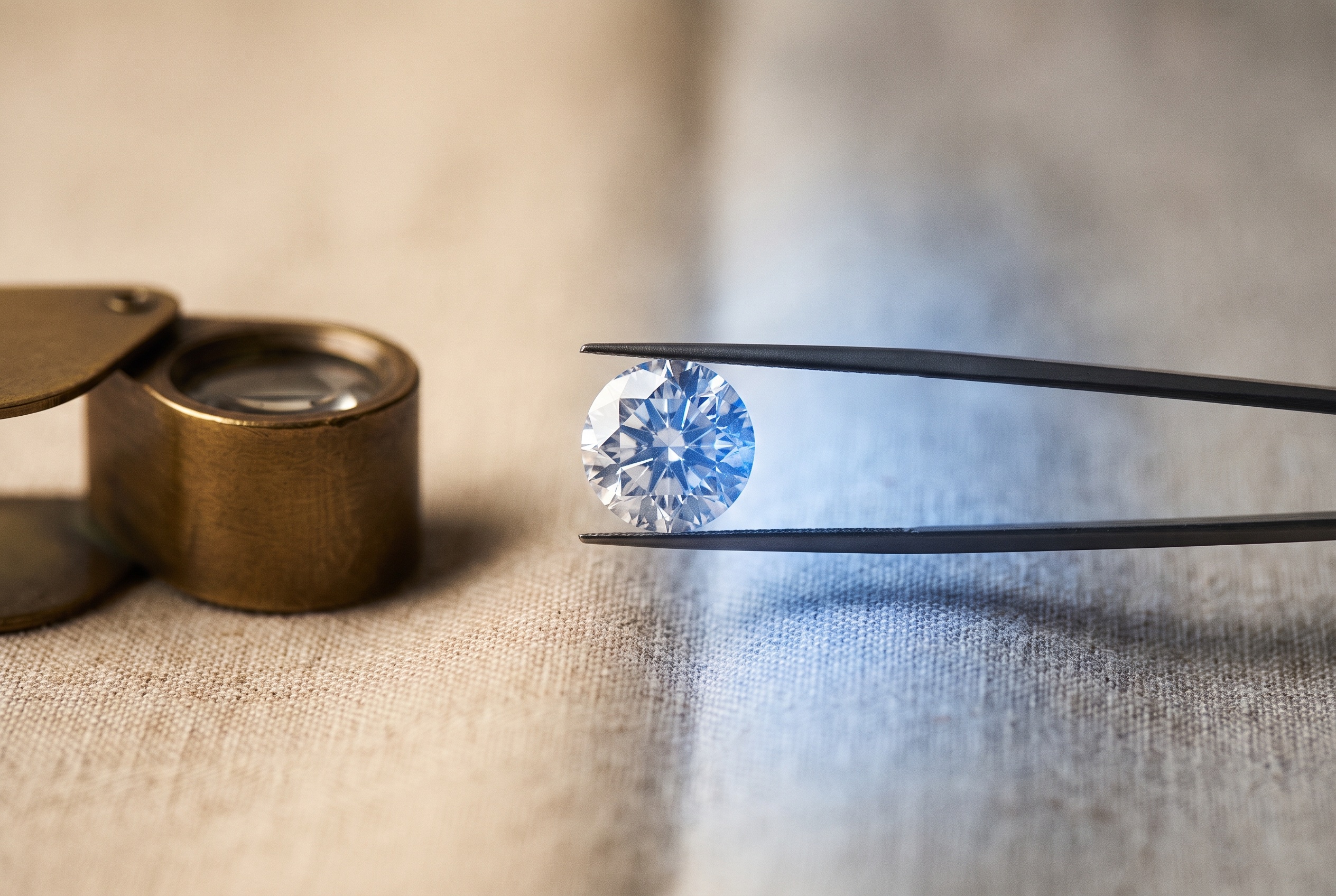
Diamond fluorescence is the visible glow — usually blue, though occasionally yellow, white, or another color — that some diamonds emit when exposed to ultraviolet light, caused by trace amounts of certain elements or structural features within the crystal reacting to UV wavelengths outside the range of ordinary visible light. Grading labs record fluorescence intensity on every certificate as None, Faint, Medium, Strong, or Very Strong, and while it has no bearing on a diamond's hardness or durability, it can visibly affect appearance under certain lighting and plays a real, sometimes counterintuitive role in wholesale pricing.
This guide covers what causes diamond fluorescence, how it's graded, how it affects visible appearance in both natural and lab-grown stones, why it moves price in different directions depending on color grade, and what wholesale buyers should actually check before treating fluorescence as a red flag or a bargain.
What Causes Diamond Fluorescence
Fluorescence in diamonds is most commonly caused by trace boron impurities or structural defects within the crystal lattice that absorb ultraviolet energy and re-emit it as visible light — the same underlying physical principle behind fluorescent minerals and materials generally, just occurring naturally within a small percentage of diamond crystals as they form. The phenomenon is entirely separate from a diamond's 4Cs: it doesn't originate from the same growth conditions that determine color, clarity, cut, or carat weight, and a diamond's fluorescence rating tells you nothing about its structural integrity or how well it will hold up to daily wear.
The Diamond Fluorescence Grading Scale
| Grade | Description | Visible Effect Under UV |
|---|---|---|
| None | No detectable glow under UV light | No visible reaction |
| Faint | Very slight glow, barely perceptible | Minimal, rarely noticeable even under UV |
| Medium | Moderate, clearly visible glow under UV | Noticeable blue (typically) glow under a UV lamp |
| Strong | Pronounced, easily visible glow | Strong glow; can occasionally introduce a slight haziness in daylight in a small percentage of stones |
| Very Strong | The most intense fluorescence rating | Most likely of any grade to show visible haze or oiliness in strong natural light |
The overwhelming majority of diamonds fall into the None-to-Faint range, where fluorescence has no visible effect at all in ordinary lighting conditions. Only a minority of stones — and only a subset of those at the Strong or Very Strong end of the scale — show any perceptible visual effect outside of a UV lamp specifically.
Does Fluorescence Affect How a Diamond Looks?
For the vast majority of diamonds, fluorescence has no visible effect on appearance in normal lighting — the glow only appears under concentrated ultraviolet light, which isn't present in typical indoor lighting, daylight, or jewelry-store lighting conditions in any meaningfully visible way. The exception is a small percentage of Strong and Very Strong fluorescent stones, which can occasionally display a subtle milky or oily haze in strong, UV-rich natural daylight — an effect gemologists call "over-blue" or milkiness. This effect is inconsistent even among stones sharing the same fluorescence grade, which is why a buyer evaluating a Strong or Very Strong fluorescent stone should always visually inspect it in daylight rather than relying on the certificate grade alone to predict whether haziness will actually be visible.
How Fluorescence Affects Price — and Why It Cuts Both Ways
Fluorescence's effect on wholesale pricing depends heavily on the diamond's color grade, and moves in genuinely different directions depending on where a stone sits on the color scale:
- Colorless stones (D-F): Strong or Very Strong fluorescence typically carries a modest price discount here, since any risk of visible haze is most noticeable — and most costly to a buyer's expectations — on a stone being sold specifically for exceptional colorlessness.
- Near-colorless stones (G-J): Fluorescence has a smaller, more neutral pricing effect in this range, since minor color variation is already part of the grade's expected appearance.
- Lower color grades (K and below): Blue fluorescence can actually work in a stone's favor here, since blue is complementary to the faint yellow tint present at these grades and can make the stone face up looking whiter than its color grade alone would suggest — some buyers specifically seek out fluorescent stones in this range for exactly that effect.
This is why a blanket rule like "always avoid fluorescence" or "always prefer fluorescence" misses the actual pricing dynamic — the right answer depends specifically on where the stone sits on the color scale, not on fluorescence intensity alone.
How Fluorescence Interacts With Clarity Grading
Fluorescence and clarity are graded entirely independently, but they're worth understanding together because certain rare clarity characteristics can occasionally be confused with fluorescence-related effects by an untrained observer. A fluorescent reaction under UV light is a temporary, light-dependent glow that disappears the moment the UV source is removed, while a clarity characteristic like an internal graining line or a cloud of pinpoint inclusions is a permanent structural feature visible under standard magnification regardless of lighting condition. A grading report keeps these assessments strictly separate for exactly this reason — conflating a temporary optical reaction with a permanent structural characteristic would undermine the precision the certificate is meant to provide. Buyers reviewing a certificate should treat the clarity grade and the fluorescence grade as answering two completely different questions about the stone, with no meaningful overlap between them.
Fluorescence Across Different Diamond Shapes
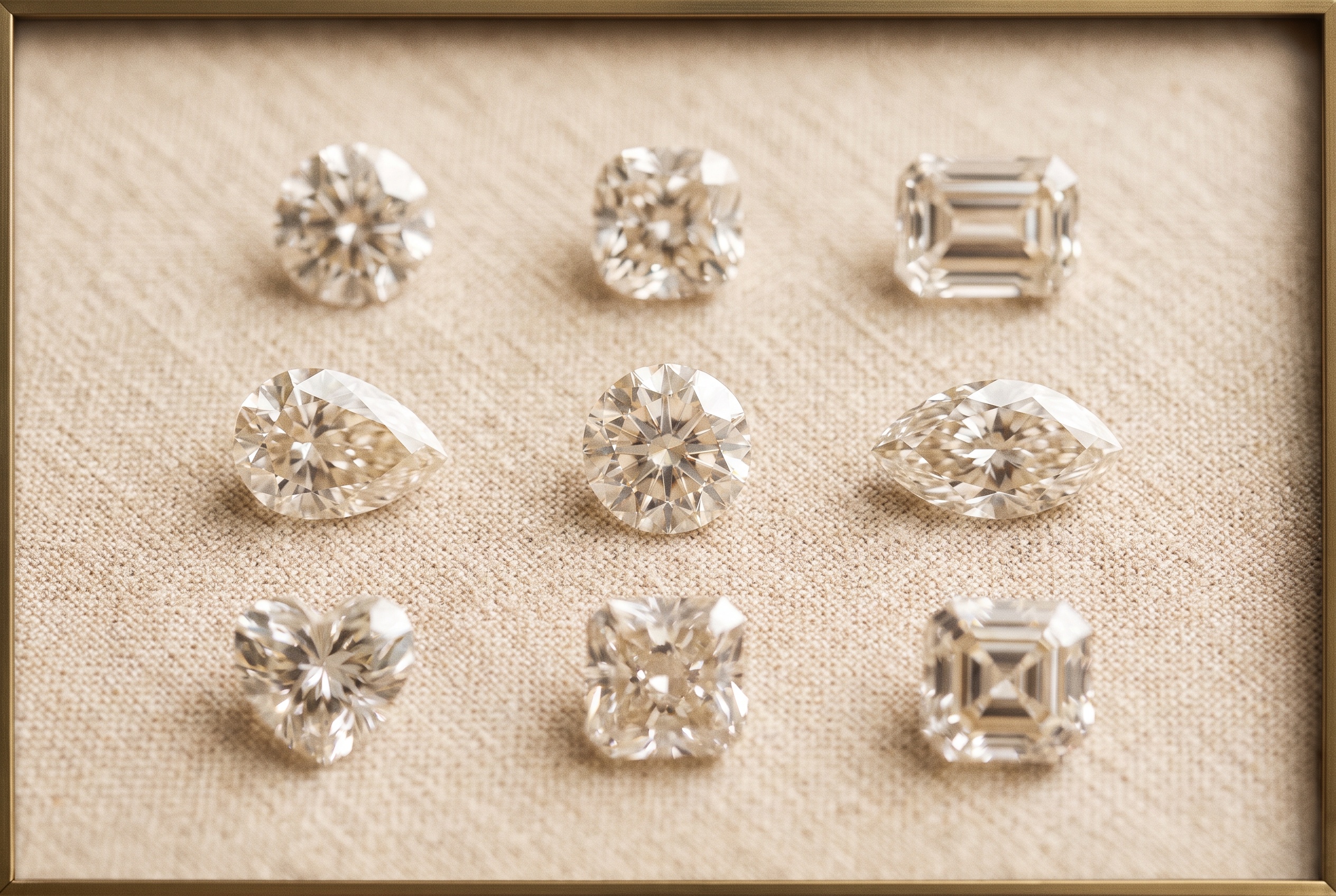
Fluorescence intensity and its visual effect can vary somewhat by shape, mainly because different cuts distribute light differently across the stone's face-up appearance. A step-cut shape like an emerald or Asscher cut, which relies on broad, flat facets and shows off clarity characteristics more prominently than a brilliant-style cut, can also make any visible fluorescence-related haze somewhat more noticeable if present, simply because the larger open facets provide a bigger uninterrupted viewing area. A round brilliant or cushion cut's more broken-up facet pattern tends to diffuse and disguise a similar effect more effectively. This isn't a reason to avoid fluorescent stones in step-cut shapes specifically, but it is one more reason physical inspection matters more for a Strong or Very Strong fluorescent stone in an emerald or Asscher cut than it would for the same fluorescence grade in a more brilliance-oriented shape.
Fluorescence in CVD Lab-Grown Diamonds
CVD lab-grown diamonds can exhibit fluorescence, though it's generally less common and, when present, often less intense than in natural diamonds, since the controlled growth environment doesn't typically introduce the same trace boron impurities at the same frequency as natural formation conditions over geological time. Grading labs apply the identical fluorescence scale and evaluation standard to lab-grown stones as to natural ones — fluorescence grading itself doesn't distinguish between a stone's origin, only its UV response.
How to Evaluate a Fluorescent Diamond Before Buying
- Always check the color grade alongside the fluorescence grade — the two factors interact, and neither tells the full story on its own.
- Physically inspect Strong or Very Strong fluorescent stones in daylight before finalizing a purchase, since haziness risk is inconsistent even within the same fluorescence grade and isn't something a certificate alone can fully predict.
- Don't automatically discount a fluorescent stone in the near-colorless or lower color range — the pricing advantage in these grades can represent genuine value rather than a defect to avoid.
- Treat fluorescence separately from clarity and cut — it has no bearing on either, and shouldn't be weighed as though it were a durability or structural concern.
Fluorescence vs. Related Grading Terms
| Term | What It Measures | Relationship to Fluorescence |
|---|---|---|
| Fluorescence | Visible glow under UV light | The subject of this guide |
| Color grade | Absence or presence of visible yellow/brown tint in normal light | Interacts with fluorescence's price and appearance effect, but is measured independently |
| Clarity grade | Presence of internal inclusions or surface blemishes | Entirely unrelated to fluorescence — a separate grading category on the certificate |
| Cut grade | Proportions and light-return performance | Entirely unrelated to fluorescence |
Why Fluorescence Grading Exists at All
Fluorescence earned a dedicated line on grading certificates specifically because it can, in a subset of stones, visibly affect appearance and because buyers and jewelers benefit from having that information documented alongside the other 4Cs rather than discovering it only through direct physical inspection after purchase. Grading labs treat full disclosure as a core principle of their certification role — reporting every characteristic that could plausibly matter to a buyer's evaluation, even one as situational and buyer-dependent in its actual effect as fluorescence, rather than omitting a documented physical characteristic because its practical impact varies. This is consistent with how labs treat other situational grading factors generally: the goal of a certificate is complete, standardized documentation of a stone's characteristics, leaving the buyer or their jeweler to weigh how much any individual factor should matter for their specific purchase decision.
Fluorescence Intensity and Wavelength: What "Long-Wave UV" Means
Grading labs specifically test fluorescence under long-wave ultraviolet light, generally in the 365-nanometer range, since this is the wavelength band that most reliably and consistently triggers a visible fluorescence response in diamonds that have the underlying trace elements or structural characteristics to fluoresce at all. Short-wave UV, a different band, can trigger a distinct and generally weaker fluorescence response in some stones, but long-wave UV response is the industry-standard measurement used for certificate grading specifically, which is why consistency in testing conditions across different grading labs matters for buyers comparing certificates from different sources. Direct sunlight contains only a relatively small proportion of UV wavelengths within the range that triggers a strong fluorescence response, which is part of why even Strong or Very Strong fluorescent stones show their most dramatic glow specifically under a dedicated UV lamp rather than in typical outdoor daylight, where the effect — when visible at all — is considerably more subtle.
How to Discuss Fluorescence With a Wholesale Buyer
Because fluorescence's effect on both appearance and price depends so heavily on a stone's specific color grade, a useful sourcing conversation treats the two characteristics together rather than addressing fluorescence in isolation. A buyer sourcing colorless-range stones for a client with exacting expectations should be walked through the discount dynamic and, for any Strong or Very Strong fluorescent option, offered a direct daylight comparison rather than asked to decide from the certificate alone. A buyer sourcing near-colorless or lower-color-grade stones for a more value-conscious client, on the other hand, may specifically benefit from being shown fluorescent options as a genuine value opportunity rather than having them screened out by a blanket "avoid fluorescence" sourcing rule that doesn't reflect the actual pricing dynamic at that color range.
Common Misconceptions About Fluorescence
- "Fluorescence means a lower-quality diamond" — false; it's an independent optical phenomenon unrelated to a stone's structural quality, hardness, or durability.
- "All fluorescent diamonds look hazy" — false; the vast majority of fluorescent stones, including many at the Medium grade, show no visible effect at all outside of a UV lamp.
- "Fluorescence always lowers value" — false in the near-colorless and lower color ranges, where it can be pricing-neutral or even a genuine advantage.
- "You can predict haziness risk from the certificate alone" — false; even among Strong and Very Strong fluorescent stones, visible haze is inconsistent enough that physical inspection remains the reliable check.
How Grading Labs Actually Test for Fluorescence
Grading labs assess fluorescence by examining a diamond under a controlled long-wave ultraviolet light source in a darkened viewing environment, comparing the intensity of the observed glow against a set of reference stones or calibrated standards representing each grade on the scale. This is a distinct testing step from the visual color and clarity grading performed under standard daylight-equivalent lighting, which is why fluorescence appears as its own separate line on a grading certificate rather than being folded into the color grade itself. Because the test specifically requires UV wavelengths well outside the range present in ordinary indoor lighting, a diamond's fluorescence rating has no bearing on how a jeweler or grader would evaluate its color under normal viewing conditions — the two assessments are performed under genuinely different lighting to isolate each characteristic independently.
Fluorescence Colors Beyond Blue
Blue is by far the most common fluorescence color observed in diamonds, but it isn't the only one. A smaller percentage of stones fluoresce yellow, white, green, or more rarely orange or red, each caused by different trace elements or structural characteristics reacting to UV exposure. Yellow fluorescence, in particular, tends to reinforce rather than offset a diamond's existing body color, which can make a yellow-fluorescing stone with a lower color grade look more saturated in its tint rather than whiter, essentially the opposite of blue fluorescence's potential whitening effect at lower color grades. Because non-blue fluorescence colors are less common and behave differently than blue, a buyer encountering a stone with reported yellow, white, or green fluorescence should ask specifically how that particular color has historically affected similar stones' appearance, rather than assuming the same blue-fluorescence pricing logic applies uniformly across every fluorescence color.
Understanding "Overblue": Why Some Fluorescent Stones Look Hazy
The rare visible haze effect associated with a small subset of Strong and Very Strong blue-fluorescent stones is sometimes called "overblue" in the trade, and it's worth understanding what actually causes it, since the mechanism explains why the effect is inconsistent even among stones sharing an identical fluorescence grade. The haze appears to result from an interaction between the fluorescence reaction and specific internal characteristics of an individual stone — not simply from fluorescence intensity alone — meaning two Very Strong fluorescent stones with otherwise similar grading can behave quite differently in strong daylight, with one showing no visible effect at all and another showing a faint milkiness. This is precisely why gemological guidance consistently recommends physical daylight inspection for any Strong or Very Strong fluorescent stone under serious consideration, rather than treating the fluorescence grade alone as a reliable predictor of whether haze will actually be present.
Fluorescence and Diamond Resale or Certification Considerations
Fluorescence is a permanent, certificate-documented characteristic of a diamond and doesn't change over the stone's lifetime, which means its pricing effects — whether a modest discount at the colorless end or a neutral-to-positive effect at lower color grades — remain relevant at any future point the stone might be resold, reset, or re-evaluated. Because the effect is well understood and consistently documented across grading reports, it doesn't introduce the kind of valuation uncertainty that a less standardized characteristic might; a buyer or appraiser reviewing a stone's certificate years after purchase will interpret its fluorescence grade using the same framework current buyers use today. This stability is one more reason fluorescence shouldn't be treated as a red flag on its own — it's a well-documented, consistently interpreted grading factor rather than an unpredictable variable.
Sourcing Diamonds With Fluorescence Considerations at Wholesale
Guru Diam supplies certified loose diamonds across the full color and fluorescence range, with IGI, GIA, and GCAL certification available so buyers can review fluorescence alongside every other grading factor on a single trusted report before purchase. In-stock certified inventory ships same-day from Guru Diam's New York and Los Angeles locations.
Buyers can browse certified loose stones and filter by grading specifics through the certified diamonds category, and review coordinated stone sets through matching pairs. For fancy color inventory, where fluorescence considerations differ meaningfully from colorless grading, see the fancy color loose diamonds category. Trade accounts can review terms at the wholesale hub or apply through trade partner. For related grading fundamentals, see our 4Cs of diamonds guide and diamond clarity chart guide.
A Final Note on Buying With Confidence
Fluorescence is one of the more misunderstood entries on a diamond certificate, largely because it gets discussed inconsistently across retail contexts — sometimes flagged as a defect to avoid, sometimes ignored entirely, rarely explained with the nuance the underlying science actually calls for. A buyer who understands that fluorescence's effect depends specifically on color grade, that only a minority of Strong or Very Strong fluorescent stones show any visible haze at all, and that the fluorescence grade itself has zero bearing on durability, is equipped to evaluate a specific stone on its actual merits rather than reacting to the word "fluorescence" on a certificate as an automatic red flag or an automatic bargain signal.
Frequently Asked Questions
What is diamond fluorescence?
Diamond fluorescence is a visible glow, usually blue, that some diamonds emit under ultraviolet light due to trace elements or structural features in the crystal reacting to UV wavelengths. It's graded on certificates as None, Faint, Medium, Strong, or Very Strong.
Is diamond fluorescence bad?
Not inherently. For the vast majority of stones it has no visible effect on appearance in normal lighting, and in near-colorless or lower color grades it can be pricing-neutral or even beneficial, since blue fluorescence can offset a faint yellow tint.
Does fluorescence make a diamond look cloudy or hazy?
Only occasionally, and only in a subset of stones with Strong or Very Strong fluorescence viewed in strong natural daylight. This effect is inconsistent even among stones sharing the same fluorescence grade, so physical inspection matters more than the certificate grade alone.
Does fluorescence affect a lab-grown diamond's durability?
No. Fluorescence has no relationship to a diamond's hardness or structural durability in either lab-grown or natural stones — it's a separate optical phenomenon entirely.
Should I buy a diamond with strong fluorescence?
It depends on the stone's color grade and a physical daylight inspection. In colorless grades, strong fluorescence typically carries a modest discount and a small haze risk worth checking visually; in near-colorless or lower color grades, it's often pricing-neutral or a genuine value opportunity.
How is fluorescence different from color grade?
Color grade measures the absence or presence of visible yellow or brown tint under normal light, while fluorescence measures a glow response specifically under ultraviolet light. They're graded independently but interact meaningfully in how a stone appears and prices.
Can fluorescence colors other than blue occur in diamonds?
Yes — yellow, white, and green fluorescence occur less commonly than blue. Yellow fluorescence in particular tends to reinforce a stone's existing body color rather than offset it, which is the opposite effect blue fluorescence can have at lower color grades.
Does fluorescence show up the same way on every stone with the same grade?
Not necessarily. Even among stones sharing an identical Strong or Very Strong fluorescence grade, the rare haze effect known as "overblue" appears inconsistently, which is why physical daylight inspection is the reliable way to check a specific stone rather than relying on the grade alone.