A colored (fancy color) diamond's price is set primarily by four interacting factors — color hue, saturation, and tone (summarized in a stone's intensity grade), carat weight, clarity, and shape — with natural fancy color stones commanding substantially more than CVD lab-grown fancy color diamonds of the same color, intensity, and size. Unlike white diamonds, where color absence drives value, a fancy color diamond's price rises as its color gets stronger, not weaker.
This guide covers each of those pricing drivers in detail, walks through an illustrative price chart by color and intensity tier for loose fancy color stones at 0.30ct and above, breaks out how yellow, pink, blue, and green diamonds behave differently at the same intensity grade, explains how natural and CVD lab-grown fancy color pricing compare, and covers where certification and clarity fit into the picture. It's built specifically around loose, larger fancy color diamonds — not calibrated fancy color melee, which is priced on an entirely different, per-lot basis covered in GD's separate melee pricing guide.
What Determines a Fancy Color Diamond's Price
Fancy color diamond pricing runs on a different logic than white diamond pricing. A white diamond's value climbs as it gets closer to colorless — D is the top grade, Z the bottom. A fancy color diamond works in reverse: value climbs as the color gets stronger, purer, and more saturated, up to a point. The core pricing drivers are the same handful of variables labs already grade for, but they interact differently than they do on a white stone, and one of them — color itself — carries far more pricing weight here than it does anywhere else in the diamond trade.
Color Hue, Saturation, and Tone
Every fancy color grade is really a combination of three separate visual properties: hue (the actual color family — yellow, pink, blue, green, and so on, including secondary modifiers like "brownish yellow" or "purplish pink"), tone (how light or dark the color reads), and saturation (how strong or concentrated the color is). Two stones can share a hue name and still price very differently once tone and saturation are factored in — a pale, washed-out yellow and a rich, saturated "canary" yellow are both technically yellow diamonds, but the market treats them as different products. A pure, strong primary hue with no muddying secondary color — a pink with no brown or grey undertone, a blue with no green cast — consistently commands a premium over a stone with the same nominal color name but a noticeable secondary tint.
Color Intensity Grade
Labs summarize hue, tone, and saturation into a single intensity grade, running from Faint and Very Light at the low end, through Light and Fancy Light, up to Fancy, Fancy Intense, and Fancy Vivid at the top, with Fancy Dark and Fancy Deep as tone-driven branches for darker, more muted color. Intensity grade is the single biggest lever on price within a given color: moving a stone from Fancy to Fancy Intense, or from Fancy Intense to Fancy Vivid, typically moves the price per carat by a wide margin, often more than a full clarity or carat-weight step would. This is the main reason two stones described as "pink diamonds" in the same size range can be priced multiples apart — the color name alone doesn't say enough; the intensity grade is what actually locates a stone on the price curve.
Carat Weight and Price Scaling in Fancy Color Diamonds
Carat weight matters in fancy color pricing the same basic way it does for white diamonds — price per carat rises with size, and rises faster across certain size thresholds (0.50ct, 1.00ct, 2.00ct, 3.00ct) than it does within a size band — but the effect is amplified for strongly colored, high-intensity stones. A larger stone doesn't just weigh more; it also shows more surface area of color, so a 2-carat Fancy Vivid stone reads visually far more saturated and dramatic than a 0.30ct stone of the identical grade, and the market prices that visual impact in on top of the raw carat-weight premium. This compounding effect is sharper in fancy color diamonds than in white diamonds, where cut and clarity do more of the visual work. Practically, this means carat-weight comparisons across fancy color stones need to control for intensity grade before they mean much — a 1-carat Fancy Light yellow and a 1-carat Fancy Vivid yellow are not comparable products despite sharing a size and a color name.
Clarity's Reduced (But Real) Role in Fancy Color Diamond Pricing
Clarity still matters for fancy color stones, but it carries less pricing weight than it does for white diamonds, and for a straightforward reason: strong body color visually masks small inclusions far more effectively than a colorless or near-colorless stone can. A VS-clarity fancy vivid pink and a SI-clarity fancy vivid pink of the same size can price much closer together than the equivalent clarity gap would produce in a white diamond, because the color itself is doing most of the visual work a buyer notices. That said, clarity isn't irrelevant — inclusions that reach the surface, affect durability, or are visible without magnification still reduce value and desirability regardless of color strength, and clarity still factors into a stone's overall grade and certification. The practical takeaway for buyers: don't assume clarity moves fancy color pricing the same amount, stone-for-stone, that it moves white diamond pricing — it moves it, just less, and less predictably across different colors and intensities.
Shape and Cut's Effect on Colored Diamond Pricing
Shape choice in fancy color diamonds is driven by color performance first, brilliance second — the opposite priority order from a white diamond, where cut precision and light return dominate. Certain shapes and cutting styles are known to intensify apparent color more effectively than others: cushion and radiant cuts, along with elongated shapes like pear and oval, are common choices for fancy color rough specifically because their facet patterns concentrate and deepen visible color more than a round brilliant's facet pattern does on the same rough. Round brilliants are comparatively rare among strongly colored fancy stones, partly because round cutting sacrifices more rough weight and partly because the round brilliant's facet structure doesn't concentrate color as effectively as a cushion or radiant cut does — when a round fancy color stone does appear, it can carry a premium simply for being unusual in that shape at that color and size. Antique and step-cut shapes (emerald, Asscher, old mine, old European) show up in fancy color goods too, though less consistently across colors than cushion and radiant do, and they tend to show color more evenly but with less overall sparkle than a brilliant-style cut.
Natural vs. Lab-Grown (CVD) Fancy Color Diamond Pricing
Origin is one of the largest single price variables in the fancy color category, larger in relative terms than it typically is for white diamonds. Natural fancy color diamonds of any real saturation are genuinely rare in nature — far rarer than natural white diamonds of comparable clarity and size — and that scarcity is priced in heavily, especially at the Fancy Intense and Fancy Vivid tiers, where natural supply is thin enough that pricing can move on a stone-by-stone basis rather than tracking a smooth curve. CVD lab-grown fancy color diamonds are graded on the same hue, tone, saturation, and intensity system as natural stones, and a well-cut CVD stone can be visually indistinguishable from a natural stone of the same grade without lab equipment — but because lab-grown color is produced through a controlled, repeatable growth process rather than the geological accident that produces natural color, CVD fancy color diamonds carry none of the natural-scarcity premium and price at a small fraction of what an equivalent natural stone commands at the same color, intensity, and size. This origin gap widens, not narrows, as intensity grade climbs — the pricing difference between a natural and CVD Fancy Light yellow is meaningfully smaller than the pricing difference between a natural and CVD Fancy Vivid pink or blue, precisely because natural scarcity is most extreme at the top of the intensity scale.
Illustrative Fancy Color Diamond Price Chart by Color and Intensity Tier
The table below is an illustrative trade-reference chart, not a live price quote — actual pricing on any specific stone depends on its exact hue, secondary color, tone, clarity, shape, cut quality, and certifying lab, and moves with market conditions. It's intended to show the relative shape of fancy color pricing — how much intensity grade and color both move price per carat — rather than to stand in for a quote on a particular stone. Ranges below are per-carat, natural-diamond trade reference figures for loose stones roughly in the 0.50ct–2.00ct range with reasonable clarity and a well-executed cut; smaller stones near the 0.30ct floor typically price toward the lower end of each range, and larger or exceptionally saturated stones can exceed the upper end substantially.
| Color | Fancy Light | Fancy | Fancy Intense | Fancy Vivid |
|---|---|---|---|---|
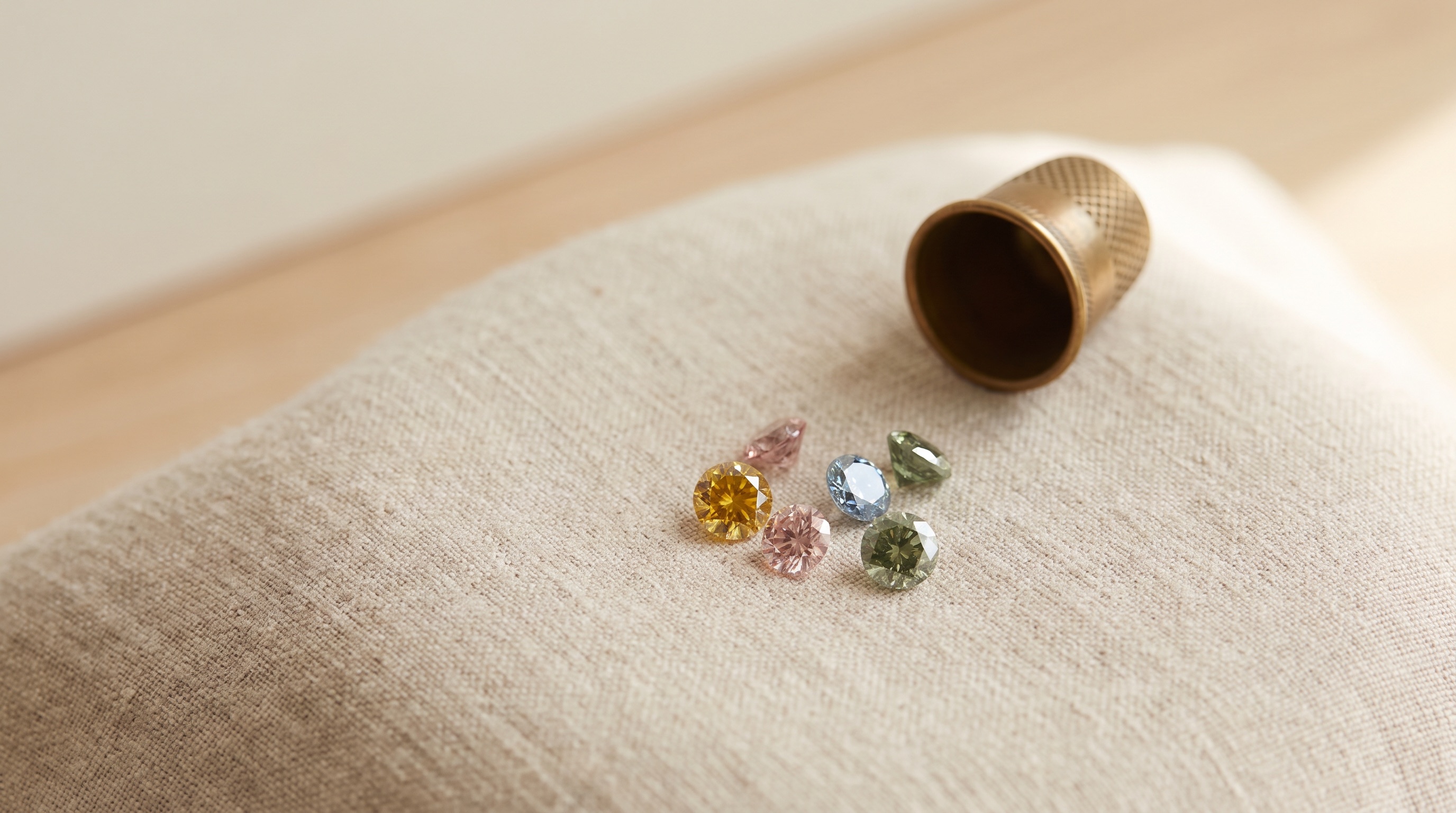
| Yellow | $800–$1,500/ct | $1,500–$3,000/ct | $3,000–$6,000/ct | $6,000–$12,000/ct |
| Pink | $3,000–$6,000/ct | $6,000–$15,000/ct | $15,000–$35,000/ct | $35,000–$90,000+/ct |
| Blue | $5,000–$10,000/ct | $10,000–$25,000/ct | $25,000–$60,000/ct | $60,000–$150,000+/ct |
| Green | $4,000–$8,000/ct | $8,000–$18,000/ct | $18,000–$40,000/ct | $40,000–$90,000+/ct |
Two patterns stand out. First, the gap between Fancy Light and Fancy Vivid within a single color is enormous — an order of magnitude or more in every color shown — which is the clearest illustration of how much weight intensity grade carries relative to other pricing factors. Second, the gap between colors at the same intensity tier is just as significant: yellow is consistently the most accessible fancy color at every tier, while blue commands the highest reference range, with pink and green sitting between the two. That ordering reflects relative natural scarcity across colors more than anything about visual quality — a Fancy Vivid yellow and a Fancy Vivid blue can both be genuinely striking stones, but natural blue is rarer at that saturation than natural yellow, and the reference ranges follow that scarcity. CVD lab-grown stones in every color and tier above price at a small fraction of the corresponding natural range, for the reasons covered in the origin section above.
Color-Specific Pricing Behavior: Yellow, Pink, Blue, and Green
Averaged reference ranges tell part of the story, but each color behaves a little differently in how price responds to intensity, secondary hue, and shape — worth knowing before comparing two stones that share a color name but not much else.
Yellow Diamonds
Yellow is the most commonially available fancy color at every intensity tier, both because it's the most common fancy color found in nature and because it's a well-established CVD lab-grown category with mature supply. Pricing climbs steadily and predictably from Fancy Light through Fancy Vivid, with cushion and radiant cuts (sometimes marketed as "canary" cuts in the trade) the most common shapes because they concentrate yellow's warm tone effectively. Secondary hue modifiers matter here too — a pure, saturated yellow with no brown or green secondary tone prices above a "brownish yellow" or "greenish yellow" of the same nominal intensity grade.
Pink Diamonds
Pink sits well above yellow at every intensity tier and is one of the more actively sought fancy colors in the current trade market, particularly at Fancy Intense and Fancy Vivid. Purplish-pink and pure pink (with no brown, grey, or orange secondary tone) tend to price highest; brownish-pink and orangey-pink stones, sometimes marketed separately, price meaningfully lower at the same nominal intensity grade. Cushion, oval, and pear shapes dominate the category for the same color-concentration reasons that apply to yellow.
Blue Diamonds
Blue commands the highest reference ranges of the four colors covered here, reflecting genuine rarity in natural supply — strongly saturated natural blue diamonds are scarce enough that pricing on individual Fancy Intense and Fancy Vivid stones can move on a case-by-case basis rather than following a smooth curve. Secondary hue matters heavily: a pure blue or a blue with a slight grey secondary tone prices well; a greenish-blue prices lower at the same intensity grade. Step cuts and cushion cuts are both common in blue, since blue's darker tone tolerates a wider range of cutting styles than lighter colors do without looking washed out.
Green Diamonds
Natural green diamonds are genuinely rare — rarer, in absolute terms, than blue in most natural sources — but the trade market for green is smaller than for pink or blue, which keeps green's reference ranges from climbing quite as high as blue's despite comparable or greater natural scarcity. Green diamonds also show unusually wide variation in how the color sits in the stone: some green coloring is a thin surface "skin" left deliberately during cutting to preserve color, which affects how a stone is valued relative to a stone with color distributed more evenly through its body. Buyers evaluating green stones specifically should ask how the color is distributed, not just what intensity grade it carries.
Fancy Color Diamonds vs. Fancy Color Melee: A Different Pricing Model
It's worth being precise about what this chart does and doesn't cover, since "colored diamond pricing" search intent often mixes two genuinely different products. Everything above applies to individually graded, loose fancy color diamonds at 0.30ct and above — stones large enough to be assessed and certified individually, with their own hue, saturation, tone, and clarity evaluation. Fancy color melee — small, calibrated colored stones typically under a few points each, used as accent stones in pavé, halos, and multi-stone settings — is priced on an entirely different basis: per-carat, per-lot pricing tied to millimeter size and a calibrated color/clarity band, the same way white melee is priced, rather than stone-by-stone intensity grading. A parcel of 1.3mm fancy pink melee and a single 1.00ct certified Fancy Intense pink diamond are not comparable products and shouldn't be priced or shopped against each other. Buyers sourcing melee-scale fancy color goods should reference GD's dedicated melee pricing guide rather than this chart, which is built specifically around loose, individually certifiable stones.
Certification's Role in Fancy Color Diamond Pricing
Because color grading fancy diamonds is more subjective and technically demanding than grading a white diamond's absence of color, certification from a recognized lab matters more for price confidence in this category than almost any other. A fancy color diamond's certificate states the origin (natural or laboratory-grown), the color grade (hue, and where applicable secondary hue, plus the intensity tier), clarity, carat weight, and measurements — and because intensity grade alone can move price by a wide multiple, an uncertified or inconsistently graded fancy color stone carries real pricing risk for a buyer who can't independently verify where it actually sits on the intensity scale. IGI, GIA, and GCAL are the three labs most active in certifying fancy color goods across both natural and CVD lab-grown stones, and buyers sourcing loose fancy color diamonds at wholesale should expect a certificate as standard on any 0.30ct+ stone, not as an optional upgrade.
How to Read and Use a Fancy Color Price Range When Sourcing
A reference range like the chart above is a starting point for evaluating a quote, not a substitute for one. When comparing an actual offered price against a reference range, check four things in order: the intensity grade as stated on the certificate (not just the color name), any secondary hue noted on the certificate, the clarity grade and whether inclusions are visible without magnification, and the shape and cut quality relative to how well that shape is known to concentrate that particular color. A quote that sits well outside a reference range isn't automatically wrong — an exceptional stone within a grade (unusually pure hue, unusually even color distribution, a shape rarely seen at that color) can justify pricing above the range, and a stone with a muddying secondary tone or uneven color distribution can reasonably price below it. The chart is most useful as a sanity check against quotes that are dramatically out of line, not as a fixed price list.
Sourcing Fancy Color Diamonds Through Guru Diam
Guru Diam supplies loose fancy color diamonds at 0.30ct and above in yellow, pink, blue, and green, available as natural stones and as CVD lab-grown stones, alongside certified white diamonds and finished jewelry — a single source for buyers who need to compare natural and lab-grown fancy color options side by side rather than sourcing each origin from a different vendor. Every fancy color stone ships with certification available from IGI, GIA, or GCAL, which matters more in this category than almost any other given how much intensity grade alone moves price. In-stock inventory ships same day from both US locations — New York before 6pm EST, Los Angeles before 4pm PST — and fancy color stones can also be built into a custom piece, finished unbranded for resale under a jeweler's own name.
Browse loose fancy color inventory under fancy color loose diamonds, and certified white stones for a mixed order under certified diamonds. Buyers building a fancy color piece with matched accent stones can source them under matching pairs, start a custom fancy color build through custom jewelry, browse the full wholesale catalog through the wholesale hub, and set up a trade account through trade partner.
Frequently Asked Questions
What determines a colored diamond's price?
A fancy color diamond's price is driven mainly by color hue, saturation, and tone (summarized in its intensity grade), carat weight, clarity, shape, and whether the stone is natural or lab-grown. Intensity grade and origin typically move price the most, often more than clarity or a single carat-weight step.
Why do fancy color diamonds get more expensive as the color gets stronger?
Unlike white diamonds, where value rises as color disappears, fancy color diamonds are valued for how strong and pure their color is. Stronger, purer saturation is both rarer in nature and more visually striking, so price climbs from Faint and Fancy Light up through Fancy Intense and Fancy Vivid.
How much cheaper are lab-grown colored diamonds than natural ones?
CVD lab-grown fancy color diamonds price at a small fraction of natural stones with the same color, intensity, and carat weight, and that gap widens at higher intensity tiers because natural scarcity is most extreme at Fancy Intense and Fancy Vivid. Both origins are graded on the same hue, tone, saturation, and intensity system, and a well-cut CVD stone can look visually identical to a natural stone of the same grade.
Which colored diamond is the most expensive per carat?
Among the colors most active in the wholesale trade, blue diamonds typically carry the highest reference pricing per carat at a given intensity tier, reflecting how rare strongly saturated natural blue is. Pink and green generally follow, with yellow the most accessible fancy color at every intensity grade.
Does clarity matter as much for colored diamonds as it does for white diamonds?
Clarity still affects a fancy color diamond's price and grade, but less than it does for white diamonds, because strong body color visually masks small inclusions more effectively than a colorless stone can. A clarity difference that would move a white diamond's price sharply often moves a fancy color diamond's price by a smaller margin.
Is a colored diamond price chart the same for loose stones and melee?
No. Loose fancy color diamonds at 0.30ct and above are individually graded and priced on intensity, clarity, shape, and carat weight, the way this chart is structured. Fancy color melee is priced per carat, per lot, against a calibrated size and color/clarity band rather than stone-by-stone intensity grading, and the two shouldn't be compared on the same scale.