
There's no independently audited "best supplier" ranking in this industry — pricing is private, most inventory sits behind gated B2B portals, and the trade doesn't publish comparative scorecards the way other wholesale categories do. What buyers actually need is a consistent set of criteria to evaluate any wholesale lab-grown diamond supplier against, and a real worked example of how one supplier scores. This guide gives you both: seven criteria that matter, and how Guru Diam — a CVD lab-grown diamond manufacturer based at 36 West 47th Street in the NYC Diamond District, with a second office in Los Angeles — scores against them.
If you're searching for "best wholesale lab-grown diamond suppliers," you're probably choosing a new vendor or vetting a second source, and you already know the trade doesn't make that comparison easy. There's no independent consumer-ratings body for diamond wholesalers. What follows is the evaluation framework we'd want a buyer to use on us, applied honestly, plus the general landscape of supplier types you'll run into while sourcing.
47th Street between Fifth and Sixth Avenues packs an unusual density of diamond trade into a single city block — dealers, cutters, setters, and certifying labs operating within a few floors of each other. That density helps a buyer who can walk it in person, but it's also exactly why comparison shopping breaks down: most of what happens on the block is private. Trade pricing isn't posted, inventory lists rarely leave a supplier's own portal, and two dealers standing twenty feet apart in the same building can be running completely different business models — one cutting stones in-house and holding real domestic stock, the other reselling brokered goods sourced overseas — with no outward sign of the difference. A buyer walking in cold has almost no way to tell which is which without asking the right questions, which is the actual problem this framework is built to solve.

The seven criteria that actually matter
Direct answer: quality consistency, manufacturing control, sourcing practice, inventory depth and location, pricing transparency, customization capability, and trade support. Every other factor buyers ask about — turnaround time, certification, minimum order size — rolls up into one of these seven. Here's what each one means in practice, not in marketing language.
- Quality. Consistency of cut, color, and clarity grading across repeat orders — not just the quality of a single showcase stone. A supplier that can't deliver the same grade profile order after order isn't a reliable wholesale partner regardless of how good any individual piece looks.
- Manufacturing / in-house cutting. Whether the supplier cuts stones themselves or brokers them from a third party. In-house cutting means direct control over facet precision, faster custom sizing, and no added markup from a middleman between rough and finished stone.
- Ethical sourcing. Lab-grown diamonds are grown in a controlled lab environment rather than mined, which is the baseline ethical argument for the category as a whole. Beyond that baseline, ask how the supplier handles growth method disclosure and certification — CVD vs. HPHT, and which lab does the grading.
- Supply chain / inventory location. Whether the supplier holds real, sellable inventory domestically, or operates as a pass-through for stock held overseas. Domestically held inventory is what makes same-day and next-day fulfillment possible; an import-on-demand model can't match that regardless of price.
- Pricing transparency. Whether pricing is published, quoted consistently, or negotiated case-by-case with no visible floor. Trade-only, no-retail-markup pricing is a meaningfully different commitment than "call for a quote" pricing that varies by buyer.
- Customization. Whether the supplier can go from a CAD design to a finished custom piece in-house, and how fast. This matters most for buyers building bridal or custom programs rather than just reselling loose stones.
- Trade support. Whether there's a real gemologist or account contact you can reach, versus a self-serve catalog with no one to call when a client has a specific, unusual request.
Criterion by criterion: what "good" actually looks like
The list above tells you what to check. This section tells you how to check it — the specific questions and small tells that separate a supplier who's good on paper from one who's actually good in practice.
Quality consistency: test it before you commit, not after
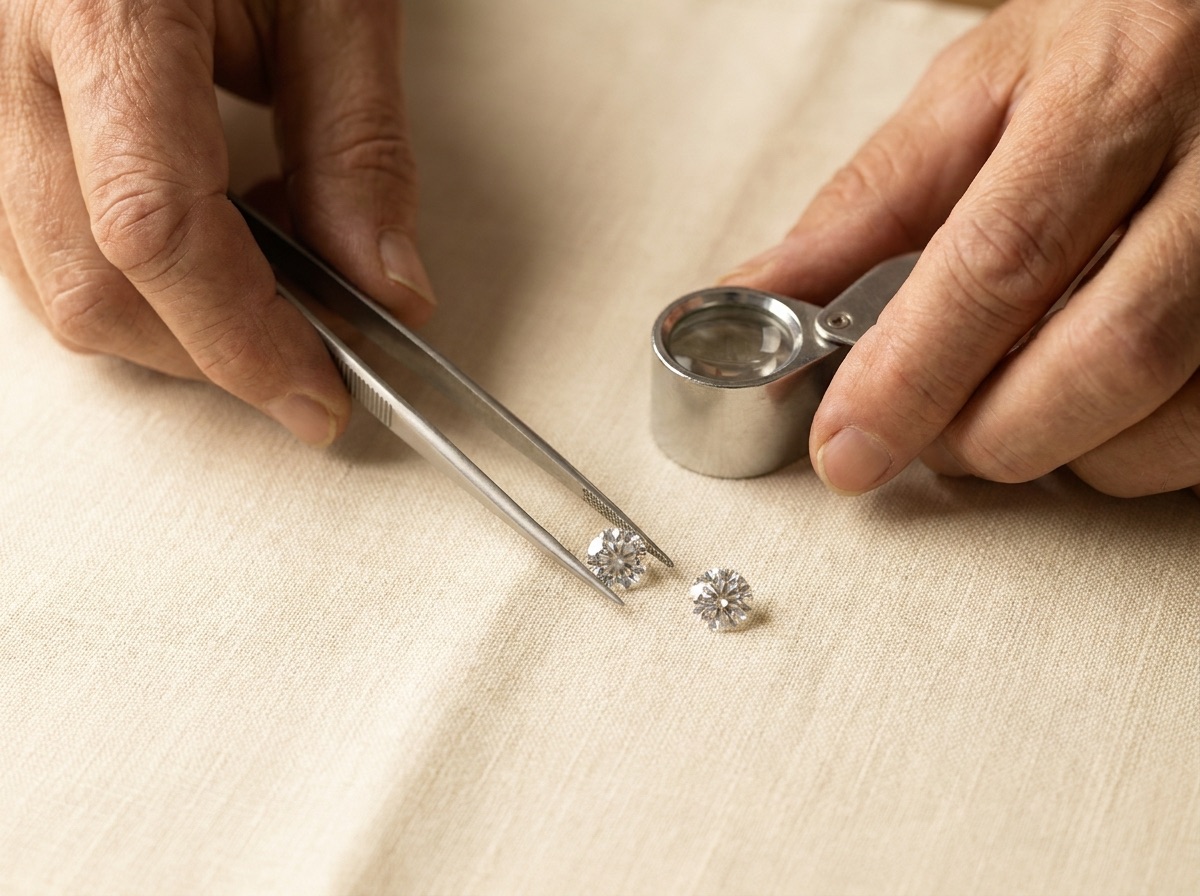
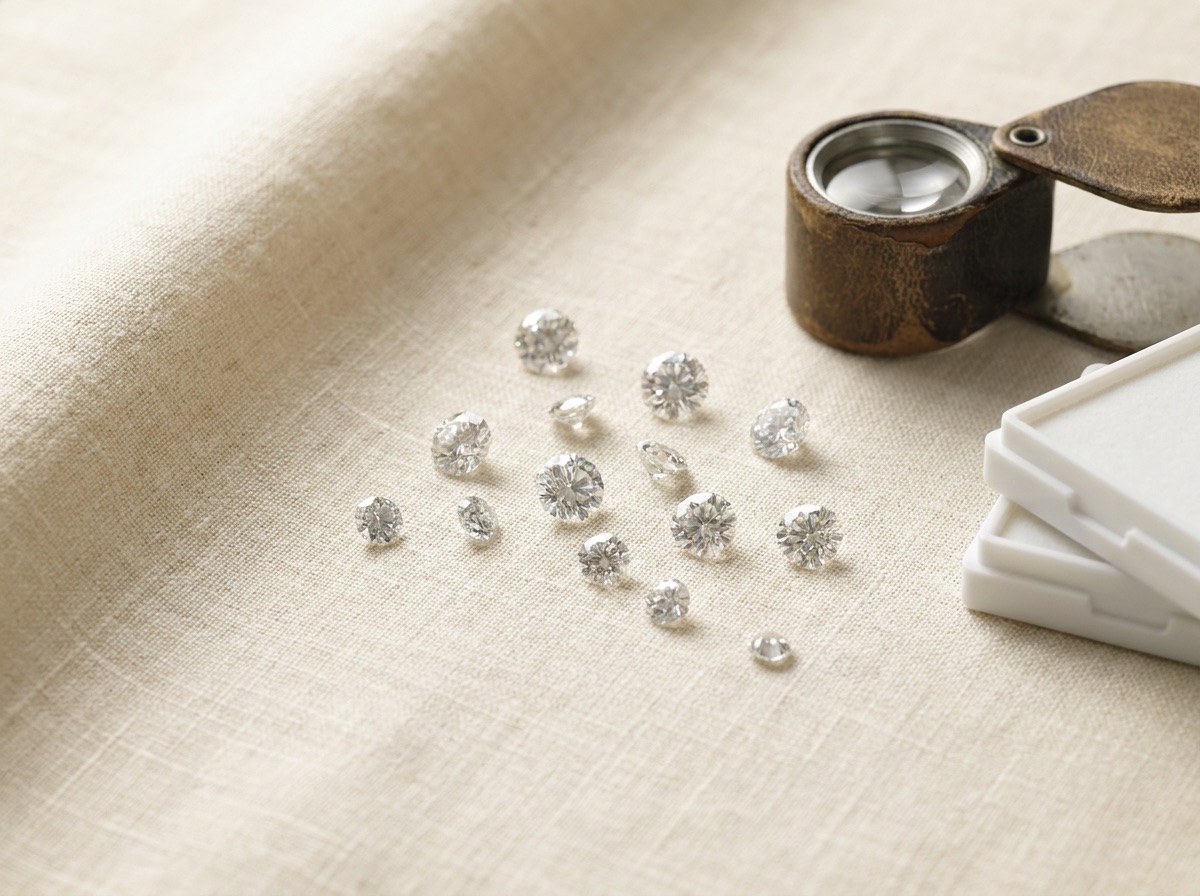
The single best test for quality consistency is a repeat-order comparison: place two small orders for the same shape and grade spec, a few weeks apart, and compare the stones side by side under a loupe rather than just checking that both certificates say the same numbers. Certification reports grade in ranges — two G/VS1 stones from the same lab can still look meaningfully different face-up. A supplier with tight, repeatable quality control will hand you two stones that read as a matched pair; a supplier reselling from whatever brokered lot happened to be available that week often won't. It's also worth asking whether the person quoting you has actually seen the stones or is relaying a spec sheet from further down the supply chain — that's usually the fastest tell of all. Over a longer relationship, the real test is whether that consistency holds across a full year of ordering, not just the first two batches — seasonal buying pushes some suppliers to source overflow inventory from wherever they can get it fastest, which is exactly when quality drift shows up. Ask a prospective supplier how they handle a busy stretch: whether the grading standard stays fixed or whether "close enough" starts creeping into the answer.

In-house cutting vs. brokered: why it changes everything downstream
This is the criterion that quietly determines your answer to almost every other one on the list. A supplier who cuts, sets, and polishes in-house controls facet precision directly — if a stone needs a slight re-cut to hit a specific carat weight or improve a proportion, that decision happens on their own bench, not through a round-trip to a third-party cutter with its own queue and its own markup. A brokered supplier is, functionally, a reseller: they're marking up someone else's finished goods and have limited ability to customize beyond what's already sitting in inventory. Neither model is dishonest on its own, but they're structurally different businesses, and it's worth asking directly — "do you cut these yourselves, or source them already cut?" — before assuming you're getting manufacturer pricing and manufacturer flexibility from a supplier who's actually a middle layer between the cutter and you.
Certification flexibility: IGI, GIA, and GCAL
Ask which labs a supplier can certify through, and whether that's a genuine option or a one-lab-only policy dressed up as flexibility. The trade generally recognizes IGI, GIA, and GCAL as the credible certifying bodies for lab-grown diamonds, and different retail buyers have different lab preferences — some clients specifically ask for a GIA report, others are indifferent as long as it's a recognized lab. A supplier who can only issue through one of the three is fine if that happens to match your client base, but it's a real constraint if it doesn't. Guru Diam certifies through IGI as the trade default and can issue GIA or GCAL on request, which matters most for buyers reselling to retail clients who have their own lab preference and don't want to be told a supplier only does one.
Inventory breadth and depth: shape, color, and melee coverage
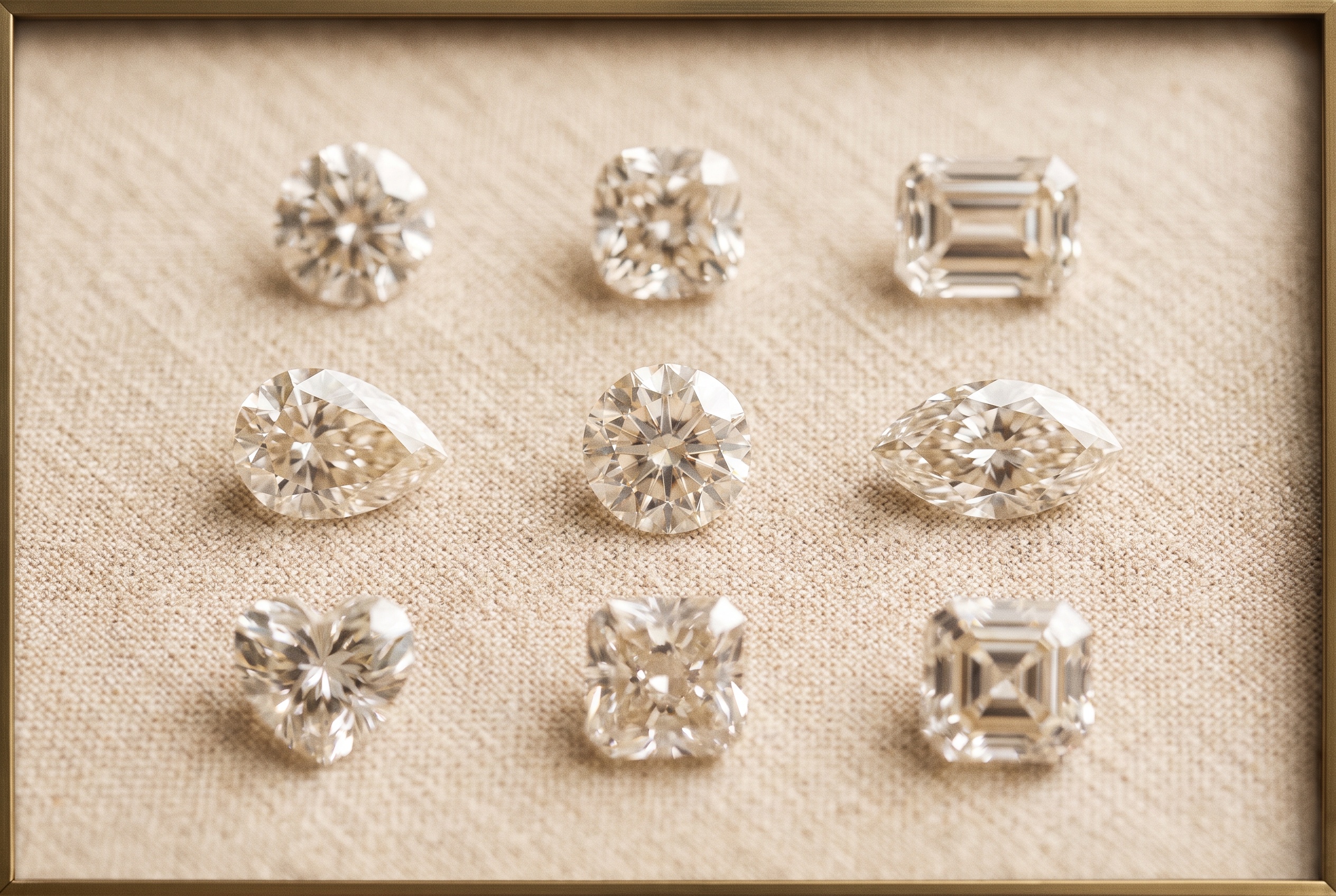
Inventory depth isn't just carat count — it's whether a supplier's stock actually covers what your business needs across shape and color, not just the commodity round-brilliant lane. Ask specifically about antique cuts (Old Mine, Old European, Kite, and similar), regular fancy shapes (cushion, oval, emerald, and the rest of the modern-cut family), and fancy color stones and melee, since these are the categories where a thin supplier runs out fastest. On fancy color specifically, the credible lab-grown lane is narrower than buyers sometimes expect — Guru Diam's certified fancy color inventory, in both loose stones and calibrated melee, runs Yellow, Pink, Blue, and Green. A supplier quoting shapes or colors well outside what the category actually supports is worth a second look. The other half of depth is location: stock sitting in a domestic office is sellable inventory you can ship same-day; stock quoted from an overseas supplier is a promise with a timeline attached to it.
Turnaround: loose stones and custom jewelry are different promises
These are two separate timelines, and a supplier who blurs them together is worth questioning. Loose, in-stock certified stones from domestic inventory should ship same-day or next-day — there's no manufacturing step left, just picking and shipping. Custom jewelry is a different process entirely: CAD design, casting, stone-setting, and polishing, all of which take real production time. The industry norm for custom bridal work commonly runs two to six weeks. Guru Diam runs custom engagement rings CAD-to-finished in four to six days, meaningfully faster than that norm because the CAD, casting, and setting all happen in-house rather than getting routed through separate vendors. If a supplier quotes a fast turnaround number without specifying whether it applies to stock already on the shelf or a piece that still needs to be built, ask which one they mean — the two aren't interchangeable.
Pricing transparency: trade-only vs. case-by-case
The test here is simple: can you get a consistent number for the same spec twice, or does the quote move depending on who's asking and how the conversation goes? Trade-only, no-retail-markup pricing with a live inventory list you can check yourself is a meaningfully different commitment than a supplier who insists every quote requires a phone call and produces a different number each time. Neither approach is automatically wrong — some categories genuinely need case-by-case pricing — but a buyer building a repeatable business needs to know which one they're dealing with before they build a margin model around it. Minimum order size is the other half of this conversation and it's worth asking about directly rather than assuming: some wholesale suppliers set a per-order dollar or carat floor to keep small quotes off their books, others will fill a single-stone request the same way they'd fill a large one. Neither policy is a red flag by itself, but a buyer who only orders in small batches needs to know the floor before they build a relationship around a supplier who can't actually serve that order size profitably.
Customization: CAD to finished, in-house, and who owns the brand
Beyond speed, ask two more questions: does the CAD-to-casting-to-setting process happen entirely in-house, or does the design get handed off to a separate shop partway through — and does the finished piece ship branded or unbranded? A supplier who produces custom jewelry unbranded by default lets a reselling jeweler put their own name on the piece, which matters a great deal to a buyer building their own house label rather than visibly reselling someone else's goods. That's a small detail that rarely comes up until the first order ships with someone else's stamp inside the band.
Trade support: who actually picks up the phone
The fastest way to test this one is to ask a slightly unusual question before you place an order — a specific carat-and-color combination, a custom sizing request, a certification-lab preference — and see whether you get a real answer from someone who knows the inventory, or a generic response that suggests you're talking to an order-intake form with a person attached. A supplier with real trade support offers dedicated gemologist appointments and a direct account contact, not just a catalog and a contact-us box. Guru Diam has exhibited at JCK for five consecutive years and maintains active wholesale relationships with more than 2,000 trade accounts — the kind of standing account base that only holds up if there's a real person on the other end when something unusual comes up. It's also worth timing the response, not just the content of it — a same-day answer to an odd request is a stronger signal than a polished answer that takes a week to arrive, especially if your own client is waiting on you for that answer.
How to score a supplier against these criteria
Use a simple 1–5 scale per criterion and weight the ones that matter most to your business — a buyer building a custom bridal program should weight manufacturing and customization heavily; a buyer reselling loose stones at volume should weight inventory depth and pricing transparency more. There's no universal weighting; the framework is the useful part, not a single composite score.
| Criterion | What to check | Weight (typical) |
|---|---|---|
| Quality consistency | Repeat-order grade consistency, not one showcase stone | High |
| Manufacturing / in-house cutting | Cut in-house vs. brokered from a third party | High |
| Ethical sourcing | Growth method disclosure, certifying lab | Medium |
| Supply chain / inventory location | Domestically held stock vs. import-on-demand | High |
| Pricing transparency | Published/consistent trade pricing vs. case-by-case quotes | Medium |
| Customization | In-house CAD-to-finished capability, and how fast | Medium-High |
| Trade support | Real gemologist/account contact vs. self-serve only | Medium |
Where Guru Diam scores, honestly
Applying our own framework to ourselves, scored 1–5:
| Criterion | Guru Diam | Why |
|---|---|---|
| Quality consistency | 5 | In-house cutting keeps grading consistent across repeat orders |
| Manufacturing / in-house cutting | 5 | Stones are cut in-house, not brokered from a third party |
| Ethical sourcing | 5 | CVD lab-grown; IGI trade-default certification, GIA available on request |
| Supply chain / inventory location | 5 | Real, sellable inventory held at our New York and Los Angeles offices |
| Pricing transparency | 5 | Trade-only, no-retail-markup pricing, live online inventory |
| Customization | 5 | CAD-to-finished custom jewelry produced in-house, 4–6 day turnaround |
| Trade support | 5 | Dedicated gemologist appointments, direct account access |
We're not publishing that table because we think every wholesaler scores worse across the board — we're publishing it because most of the market doesn't publish a scorecard on themselves at all, and a buyer evaluating any supplier deserves a concrete example of what a "5" actually looks like on each line, not just a claim.
The general landscape: what kind of supplier you'll run into
Without naming anyone, the NYC Diamond District wholesale market for lab-grown diamonds generally breaks into a few recognizable profiles, and it's worth knowing which one you're talking to before you evaluate them against the criteria above:
- Diamond District generalist wholesalers — carry lab-grown as one line among many categories (natural, jewelry findings, watches), usually brokered rather than cut in-house, with inventory depth that varies widely by shape and color.
- Single-category specialists — deep in one narrow lane (a single shape family, or fancy color exclusively), often strong on that one category and thin everywhere else.
- Overseas-only importers — competitive on price but hold no domestic inventory, so fulfillment timelines and same-day availability are structurally limited compared to a supplier with stateside stock.
- Vertically integrated manufacturers — cut in-house, hold domestic inventory, and typically offer the strongest combination of consistency, customization, and trade support, because there's no third party between growth, cutting, and the buyer. Guru Diam operates in this category.
None of these profiles is inherently disqualifying — a single-category specialist may be exactly right for a buyer who only needs that one category deep. The point of the framework above is that you can score any of them consistently, rather than relying on how confident their sales pitch sounds. This is especially useful for a buyer doing the rounds on 47th Street in a single afternoon — walking into three or four showrooms back to back makes suppliers start to blend together, and having a fixed set of questions to ask each one keeps the comparison honest instead of defaulting to whichever dealer had the friendliest counter manner.
A handful of patterns show up often enough across the trade to be worth flagging directly, regardless of which supplier profile you're dealing with: a quoted price that shifts materially between a phone call and an invoice with no clear reason; a supplier who can't answer a direct question about whether stones are cut in-house or sourced already finished; certification talk that gets vague when you ask specifically which lab, rather than naming IGI, GIA, or GCAL without hedging; and a turnaround promise that doesn't distinguish between stock on hand and a piece that still needs to be built. None of these is an automatic disqualifier on its own, but two or three together on the same call are worth treating as a signal to keep looking.
Working with a wholesale supplier
Guru Diam is a CVD lab-grown diamond manufacturer, trade-only, no retail markup, with cutting done in-house and inventory held at our New York Diamond District desk (36 West 47th Street, Suite 601A) and our Los Angeles office (607 South Hill Street). In-stock pieces ship same-day from New York; custom jewelry runs CAD-to-finished in 4–6 days. None of that requires an in-person visit — out-of-town buyers evaluate against the same seven criteria remotely, working off live inventory and shipped stones rather than a counter visit, which matters for jewelers and designers outside the New York and Los Angeles metro areas who still want a domestic manufacturer relationship instead of an overseas import queue.
Ready to evaluate us against the framework above yourself? Open a verified wholesale account at /signup and book time with a gemologist at /book-appointment.
FAQ
What should I look for in a wholesale lab-grown diamond supplier? Seven things: quality consistency across repeat orders, whether cutting is done in-house, sourcing and certification practices, whether inventory is held domestically, pricing transparency, in-house customization capability, and real trade support from a gemologist or account contact.
Is there an independent ranking of the best lab-grown diamond suppliers? No independently audited ranking exists for this category — pricing is largely private and most inventory sits behind gated trade portals. The most reliable approach is to evaluate any supplier against a consistent set of criteria rather than relying on marketing claims.
What's the difference between a lab-grown diamond manufacturer and a broker? A manufacturer cuts stones in-house, giving direct control over grading consistency and custom sizing. A broker resells stones cut by a third party, which typically adds a markup layer and reduces control over turnaround and customization.
Why does domestically held inventory matter for a wholesale buyer? Domestic inventory is what makes same-day and fast turnaround fulfillment possible. An import-on-demand supplier may offer competitive pricing but can't match the fulfillment speed of a supplier holding real, sellable stock in the country you're buying from.
Why does it matter whether a supplier offers more than one certification lab? Different retail buyers have different lab preferences, and a supplier limited to one certifying lab can't accommodate a client who specifically wants a report from a different one. The trade-recognized labs for lab-grown diamonds are IGI, GIA, and GCAL — a supplier who can issue through more than one gives a reselling jeweler more flexibility with their own clients.
Is Guru Diam a manufacturer or a broker? Guru Diam is a vertically integrated manufacturer — CVD lab-grown diamonds cut in-house, with inventory held at our New York and Los Angeles offices, trade-only pricing with no retail markup.