
Round Brilliant Diamonds Wholesale NYC
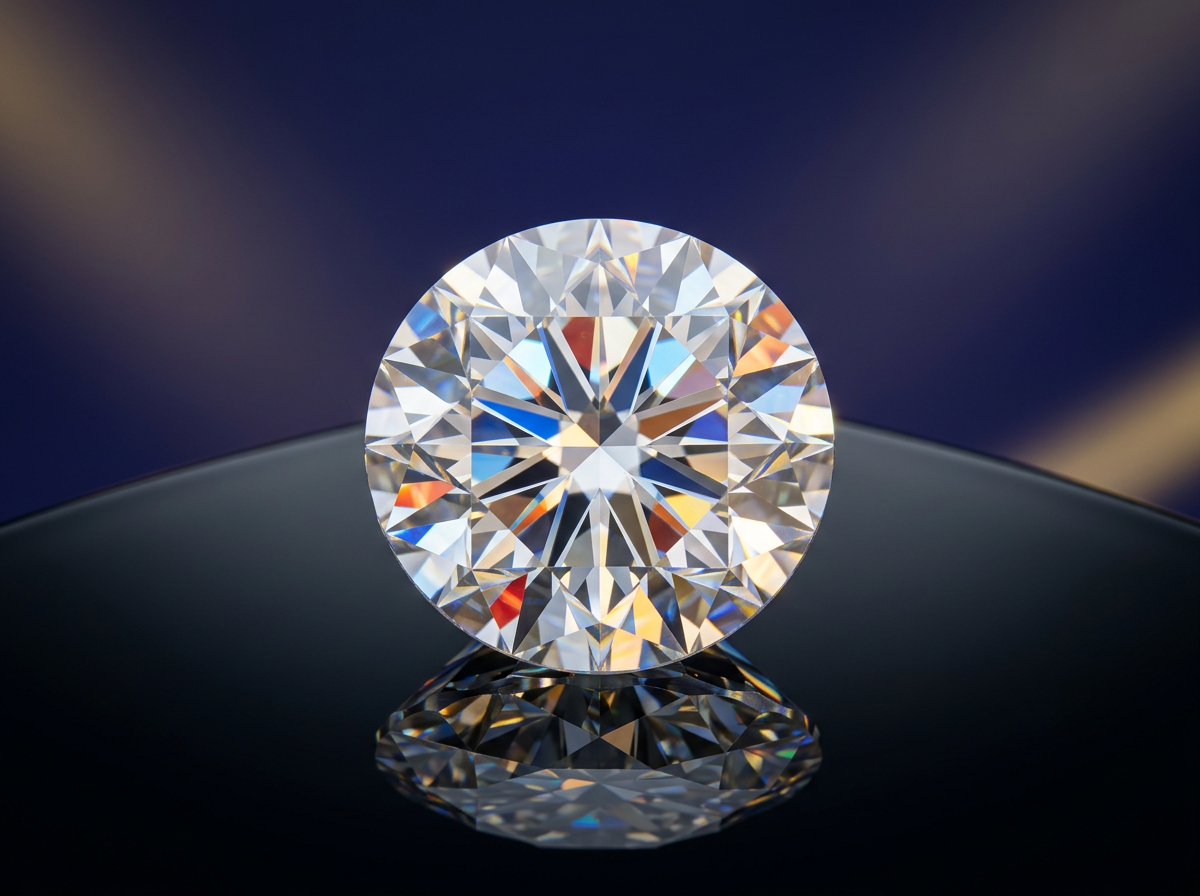
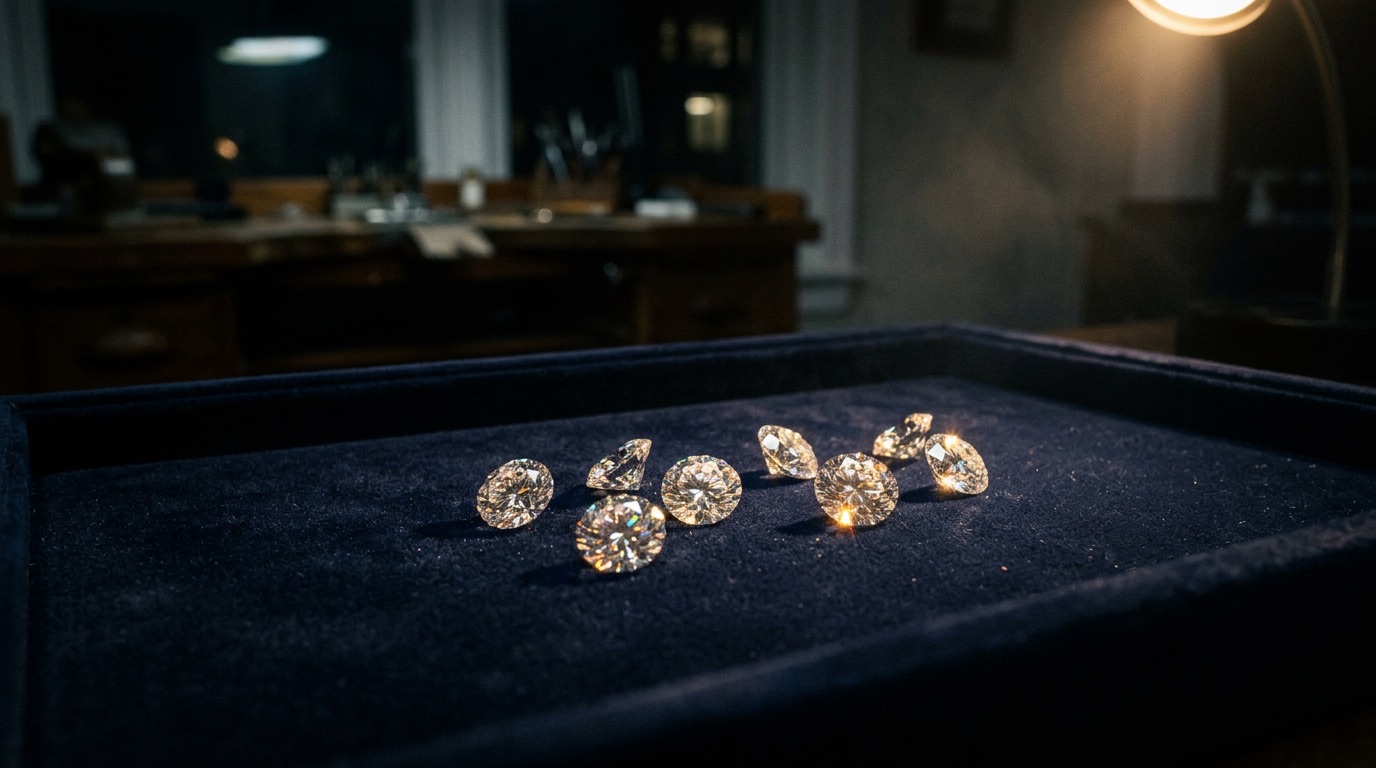
A round brilliant is the standard 57–58 facet diamond cut — a circular outline faceted specifically to maximize light return, producing the highest fire and brilliance of any diamond shape. Guru Diam stocks round brilliant as IGI-certified, CVD-grown lab-grown loose diamonds, cut in-house and shipped from our New York Diamond District desk, with 1,741 pieces currently on hand — our deepest inventory by a wide margin.
Round brilliant is the shape every other cut gets measured against, and the one where inventory depth matters most. If you're sourcing a shape and want proof of what a real, in-stock wholesale bench looks like rather than a made-to-order promise, round is the fastest way to see it — 1,741 stones on hand says more than any pitch would. Below is the full picture: how the cut is built, why it grades the way it does, what drives its price, and how NYC and LA trade buyers actually order it from us.
What Is a Round Brilliant Cut Diamond?
A round brilliant has 57 or 58 facets — 58 including the culet — arranged in a fixed, well-understood pattern. On the crown: a table, 8 star facets, 8 bezel (crown main) facets, and 16 upper-girdle facets, for 33 facets above the girdle. Below the girdle: 8 pavilion main facets and 16 lower-girdle facets, for 24 facets on the pavilion. Table plus crown plus pavilion adds up to 57; add the culet — a small flat facet, or sometimes a point, at the very bottom of the stone — and you get 58.
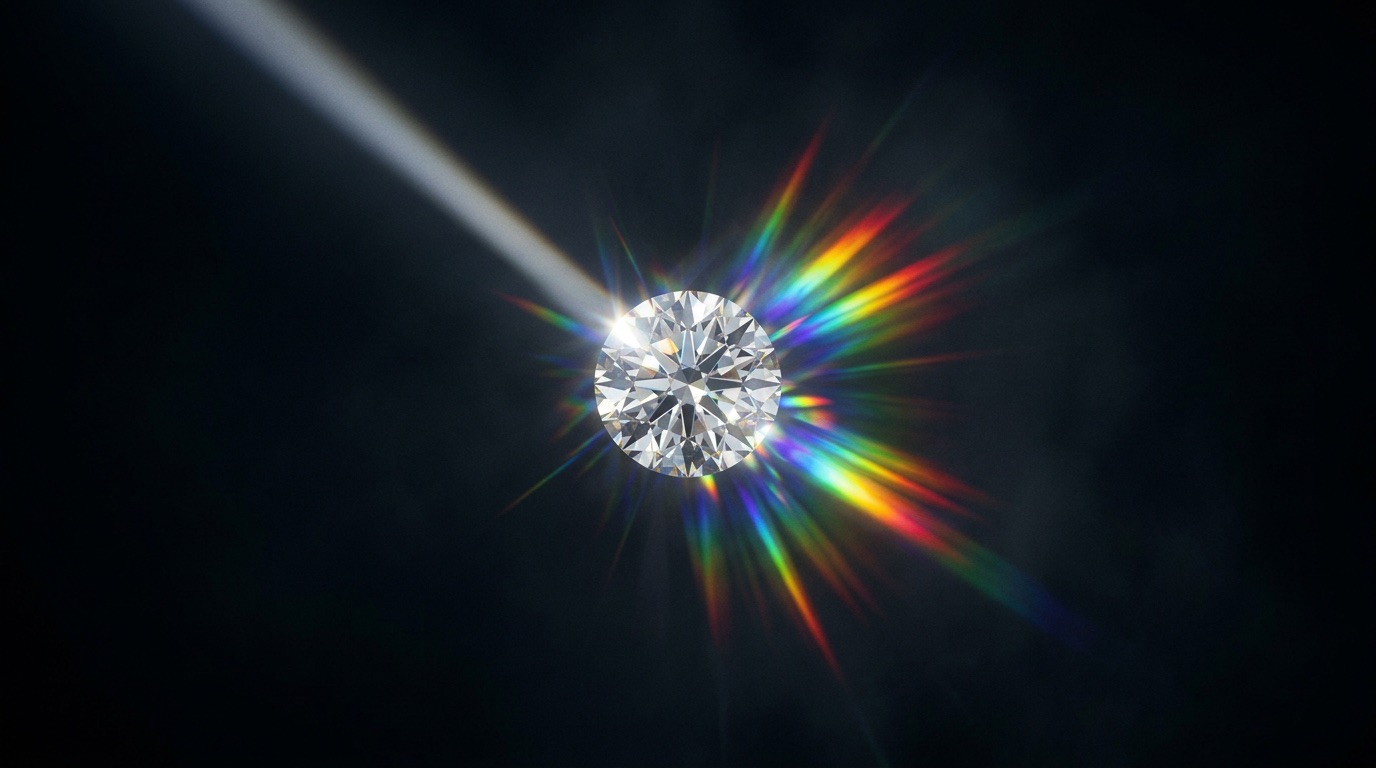
That geometry isn't arbitrary. Every facet angle exists to catch light entering through the crown, bounce it off the pavilion walls at close to total internal reflection, and send it back out through the table and crown facets as white light (brilliance) and spectral color (fire). Change any single angle by more than a degree or two and light starts leaking out the bottom of the stone instead of bouncing back — which is why round brilliant is graded on cut quality more strictly than any fancy shape. There's a known-correct answer for round; there isn't for a cushion or a pear.
The Tolkowsky Standard: A Century of Cut Engineering
The proportions behind the modern round brilliant trace back to Marcel Tolkowsky, a Belgian diamond-cutter's son and mathematician who, in his 1919 thesis Diamond Design, worked out the angles that balance brilliance against fire mathematically rather than by trial and error. His calculations — a table around half the stone's width, a crown angle in the mid-30s degrees, a pavilion angle in the low-40s, total depth close to 60% of diameter — became the reference point the entire trade still cuts against, even though the math has been refined since with computer ray-tracing that Tolkowsky didn't have access to.
What Tolkowsky actually solved was a trade-off. Cut a stone shallow and you get a bigger-looking face-up size for the same carat weight, but light exits through the pavilion instead of bouncing back — the stone looks glassy and dead. Cut it too deep and you get maximum fire, but the stone looks small for its weight and light gets trapped and absorbed rather than returned. His proportions sit at the point where a round brilliant returns the most light of any shape without sacrificing size-for-weight — which is exactly why, more than a century later, "round brilliant" and "ideal cut" are still used almost interchangeably in the trade. IGI and GIA cut grading (Excellent, Very Good, Good, and so on) is a modern, more granular formalization of the same Tolkowsky trade-off, now measured against thousands of ray-traced proportion combinations instead of hand calculation.
Why Round Brilliant Is the Default Wholesale Shape
Round brilliant is the highest-volume request in the trade — the default center stone for solitaires, halos, and three-stone settings, and the easiest shape to size-match for pavé, halo, and matched-pair work, because cut grade and proportions are standardized rather than shape-specific the way a fancy cut is. A well-cut round from one parcel and a well-cut round from another parcel, at the same carat weight, are functionally interchangeable in a way that two ovals or two cushions from different cutters usually aren't.
That standardization is also why round is the deepest category in Guru Diam's inventory. Cutting to a fixed, well-defined facet geometry scales more predictably than cutting to a variable outline, so stock stays deep across sizes, colors, and clarity grades instead of clustering around a few popular combinations the way fancy-shape inventory tends to. For a buyer, that translates directly to fill rate: when you need a specific size-color-clarity combination in round, the odds it's already sitting in inventory are meaningfully higher than for any other shape we carry.
How Guru Diam Sources and Cuts Round Brilliant at Scale
Every round brilliant in Guru Diam's inventory starts as CVD-grown rough, selected and planned specifically for round yield before it ever touches a cutting wheel. Round is unforgiving of rough that isn't planned correctly — because the finished proportions are so tightly constrained, a cutter has to map out table size, crown height, and pavilion depth against the rough's shape before the first facet goes on, not adjust on the fly the way a fancy-shape cutter sometimes can. We cut, polish, and grade round brilliant entirely in-house, which is what lets us hold 1,741 pieces on hand rather than quoting against a cutting queue: production runs continuously against demand instead of one order at a time.
Scale changes what "in stock" means. A supplier cutting round in small batches ends up with thin, uneven coverage — plenty of 0.50ct G/VS2 rounds, almost nothing at 1.20ct in a fancy color, for instance. Cutting round brilliant at volume is what lets an inventory spread evenly enough that a buyer asking for an unusual combination — a large carat weight in a lower color, or a specific clarity tier at a size most suppliers only stock near the popular round numbers — still finds it on the shelf instead of getting quoted a four-to-six-week special order.
Grading Round Brilliant: The 4Cs, Cut-First
The 4Cs apply to every diamond shape, but they don't carry equal weight on round brilliant. Because the facet geometry is fixed and standardized, cut is the variable that does the most work — arguably more than on any fancy shape, where "cut" partly just means "outline."
Cut. On round brilliant, cut grade (Excellent, Very Good, Good, and below) is a direct read on how close a stone's table percentage, depth percentage, crown angle, and pavilion angle sit to the Tolkowsky-derived ideal. This is the single spec most worth paying up for on round — two stones with identical color and clarity can look meaningfully different face-up if one is Excellent cut and the other is Good.
Color. Round brilliant's facet structure returns more white light than any other shape, which means color tint is easier to spot in a well-cut round than in a shape that scatters more color naturally (like a cushion or radiant). For buyers targeting the whitest possible face-up look, D–F grades hold their premium on round more than on fancy shapes; G–H remains the volume sweet spot for mainstream bridal work.
Clarity. The brilliant-cut facet pattern is also efficient at hiding minor inclusions — light scatters across more, smaller facets than a step-cut, so VS2 and even SI1 clarity in round often faces up eye-clean where the same clarity grade in an emerald or asscher cut would not. That makes clarity the C where round brilliant buyers usually have the most room to trade down without a visible cost.
Carat. Round brilliant's proportions are so standardized that carat weight and millimeter diameter track each other closely and predictably (roughly 6.5mm at 1.00ct, for example) — useful for buyers planning settings before the stone is finalized, since face-up size is far more predictable in round than in shapes where outline varies by cutter.
Certification: IGI, GIA, and GCAL on Round Brilliant
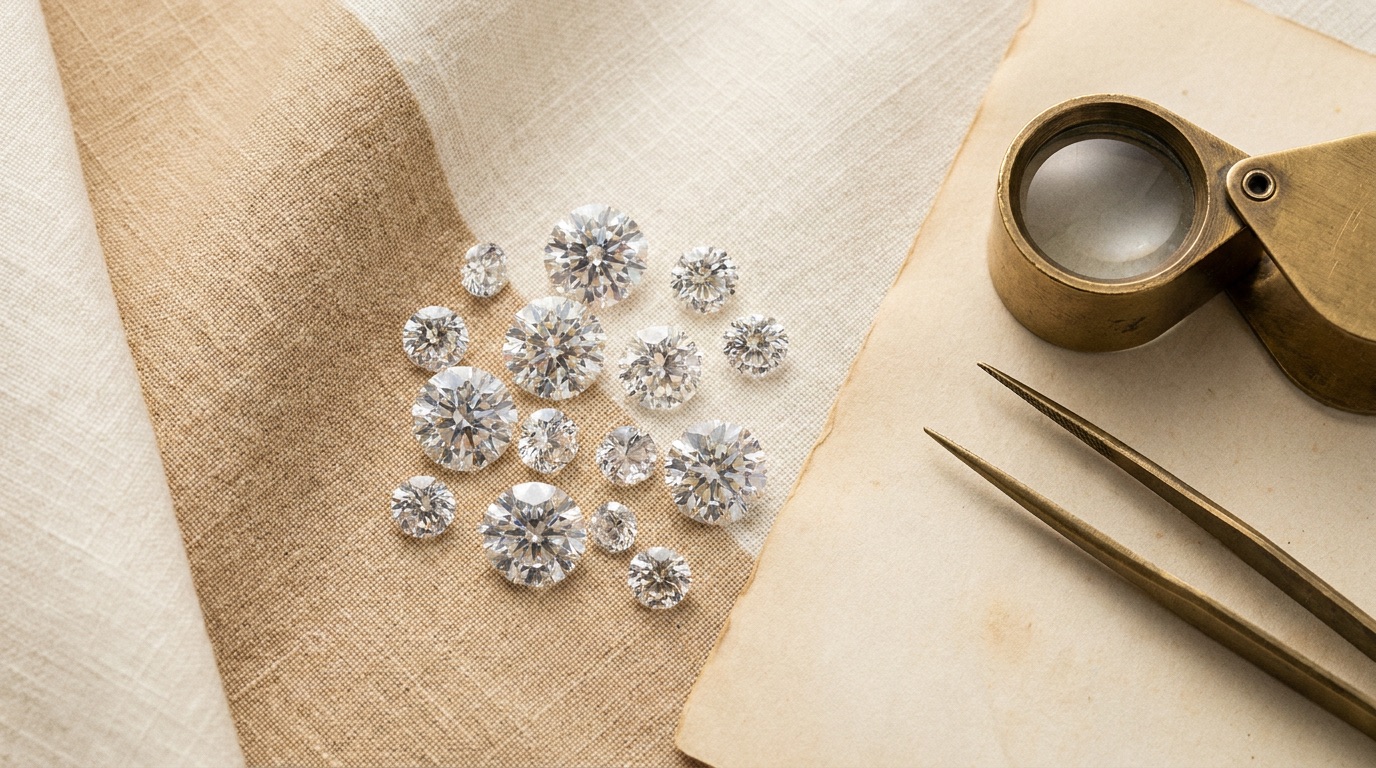
IGI is standard across Guru Diam's round brilliant inventory — it's the certification most of our stock ships against by default. GIA is available on request for buyers whose end customers specifically ask for it, and GCAL certification can also be arranged. All three are internationally recognized labs that grade lab-grown CVD diamonds against the same 4Cs framework used for cut, color, clarity, and carat, so the choice between them typically comes down to what your own buyers expect to see on the certificate rather than any difference in the stone itself.
For round specifically, the certificate's cut-grade line matters more than on any other shape — it's the fastest way to confirm a stone's proportions sit inside the range that returns maximum brilliance before you've seen it in person. Polish and symmetry grades on the same certificate are a second-order check: a stone can carry an Excellent cut grade and still lose some performance to below-par polish or symmetry, so buyers evaluating round brilliant against certificate data alone should check all three lines, not cut grade in isolation.
Round Brilliant Spec Checklist: What to Verify Before You Buy
Round brilliant is graded on cut quality more strictly than any other shape, because the standardized geometry makes deviation easy to measure against a known ideal. Before committing to a stone, check:
- Cut grade. Excellent or Ideal cut grade (IGI/GIA) confirms proportions — table %, depth %, crown angle, pavilion angle — fall within the range that maximizes light return.
- Polish and symmetry. Facet-to-facet precision affects how cleanly light exits the stone; look for Excellent or Very Good on both.
- Girdle thickness. An extremely thin girdle raises chip risk in setting; an extremely thick one hides weight without adding face-up size.
- Culet condition. A pointed or large culet can leak light or create a visible dark spot through the table on a well-lit stone; "none" to "very small" is the range to look for.
- Fluorescence. Usually a non-issue on round in D–H color, but strong fluorescence occasionally causes a hazy look at scale — worth a visual check on higher-color stones before committing to a large order.
| Spec | Detail |
|---|---|
| Outline | Round |
| Facet count | 57–58 (including culet) |
| Facet style | Full brilliant |
| Growth method | CVD-grown |
| Certification | IGI standard; GIA and GCAL available on request |
| Stone type | Certified single stones (not melee) |
| On-hand count | 1,741 pieces |
| Sourcing path | In-stock (deep) or made-to-order |
Pricing Round Brilliant: Commodity Market Dynamics
Round brilliant sits at the commodity end of the lab-grown diamond market, and that shapes how pricing actually moves. Because facet geometry is standardized, round is the shape with the most global cutting capacity behind it — which means round brilliant per-carat pricing has compressed faster over the past several years than fancy or antique cuts, where cutting skill and outline variation still create real differentiation between suppliers. For a wholesale buyer, that compression is mostly good news: round brilliant is the most price-transparent shape to source, with the least room for a supplier to hide a markup behind "custom cutting."
What still moves the needle on round brilliant pricing, in rough order of impact: carat weight (price per carat steps up at psychological size thresholds — 0.50ct, 1.00ct, 1.50ct, 2.00ct — more than it climbs linearly), cut grade (Excellent commands a real premium over Good at the same color and clarity), color (D–F stays a premium tier even as G–H volume pricing keeps falling), and clarity (the gap between VVS and SI has narrowed as production volume has grown, since eye-clean SI has become easy to source in quantity). Certification lab does not meaningfully move round brilliant pricing on its own — IGI, GIA, and GCAL are priced comparably for equivalent grades, since round is graded on the same objective proportion data across all three labs.
The practical takeaway for buyers: because round brilliant is the shape most exposed to this price compression, it's also the shape where a supplier's inventory depth and buying scale translate most directly into stable, competitive per-carat pricing — a thin-inventory supplier has to chase spot pricing order by order, while depth lets pricing stay consistent across a large reorder instead of drifting between quotes.
Sizing and Matched Pairs
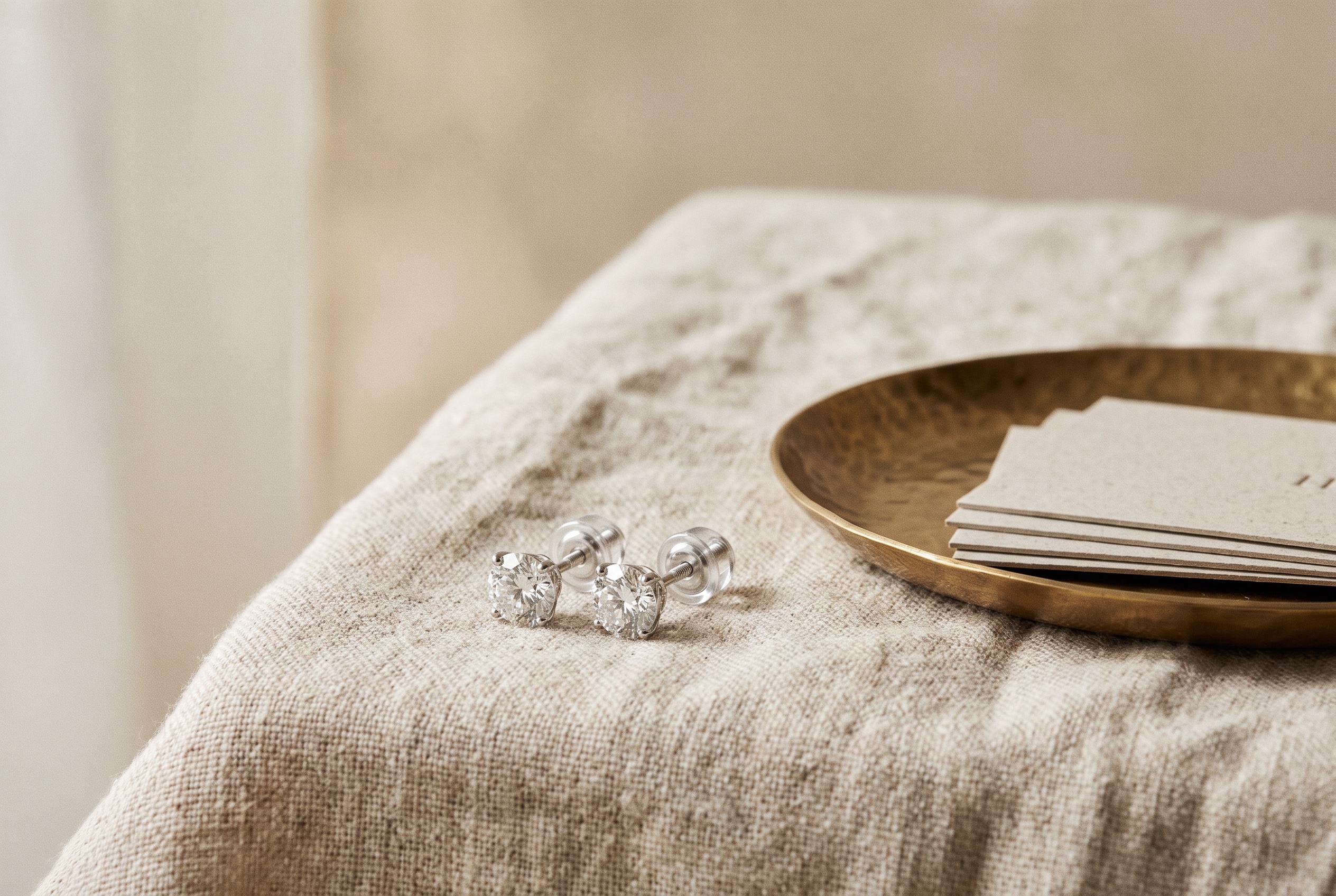
Because round brilliant is cut to a fixed, standardized geometry rather than a variable outline, it's also the easiest shape to match — two round brilliants of the same size, color, and clarity look identical in a way that's much harder to guarantee for a fancy shape, where facet count and proportions shift with the outline. That makes round the default choice for stud earrings, side stones, and any setting where two or more stones need to read as a true pair rather than a close approximation.
At 1,741 pieces on hand across a full carat-weight range, matching within the same lot is routine rather than a special request. For side-stone and pavé work below certified single-stone sizes, round is also the primary shape in Guru Diam's melee program — DEF+/VS+ calibrated round melee from 0.8mm up, shipped as uncertified parcel goods against a consistent quality baseline, is the standard way to source the smaller round accent stones that pair with a certified round-brilliant center.
Styling and Use-Case Guidance
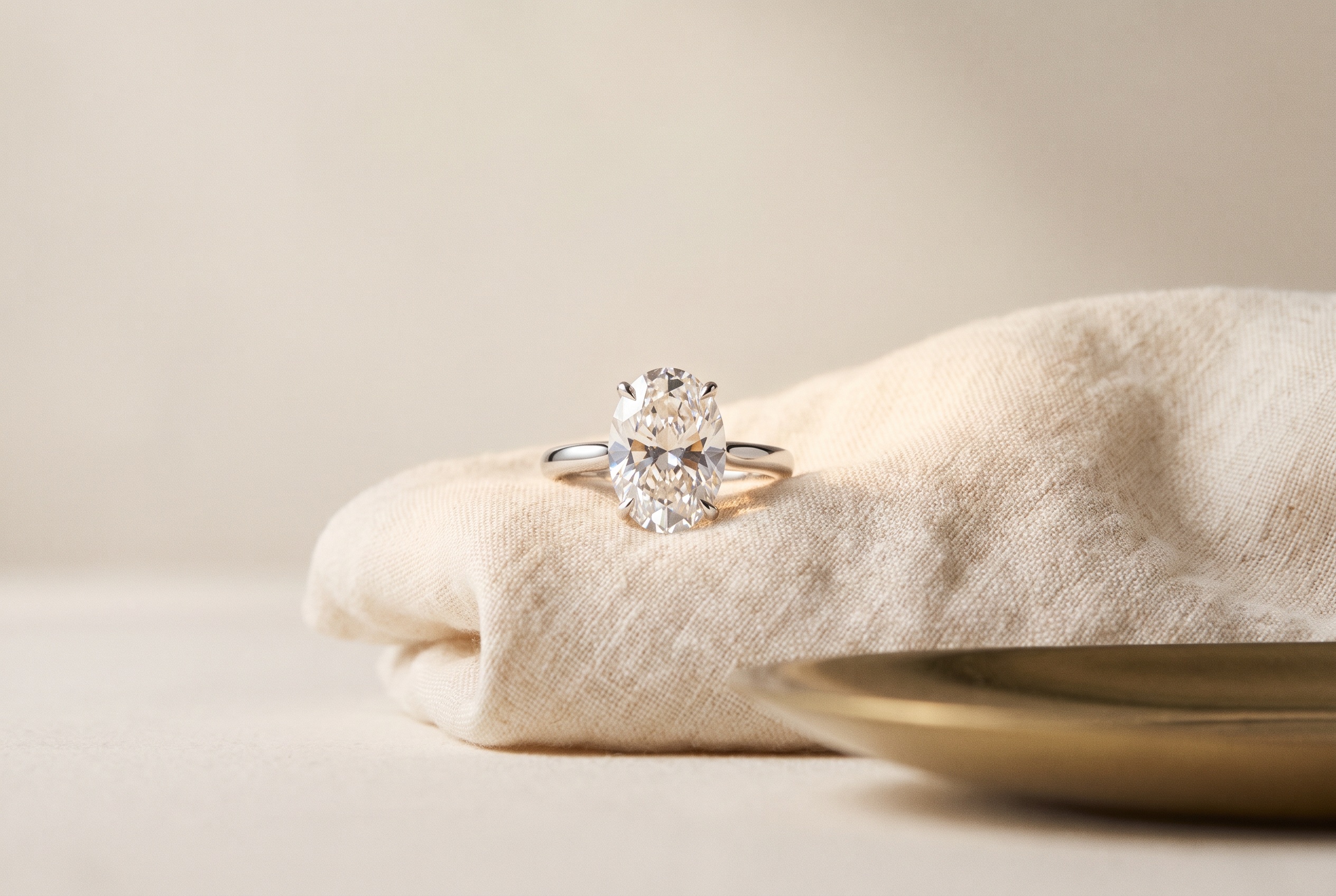
Solitaires. Round brilliant's symmetrical outline and maximum light return make it the most forgiving shape for a plain solitaire setting — there's no elongation or bow-tie effect to manage the way there is with an oval, pear, or marquise, so the stone reads as brilliant from every angle without a setting style doing extra work to flatter it.
Halo and three-stone. Round centers pair predictably with round melee halos and round side stones, since matching geometry across center and accents is exact rather than approximate. This is the highest-volume bridal configuration in the trade for a reason — it's the lowest-risk combination to spec, cast, and set consistently across a production run.
Pavé and eternity work. Round's standardized facet geometry is also why it dominates pavé and eternity band work — calibrated round melee sized to match a center stone's color and clarity keeps a continuous line of stones reading as one consistent surface rather than a visibly mixed set.
Stud earrings and side stones. Anywhere two or more stones need to match exactly — studs, three-stone side stones, cluster work — round brilliant is the default recommendation precisely because matching is a routine pull from deep inventory rather than a custom-cut special order.
How to Order Round Brilliant Wholesale from Guru Diam
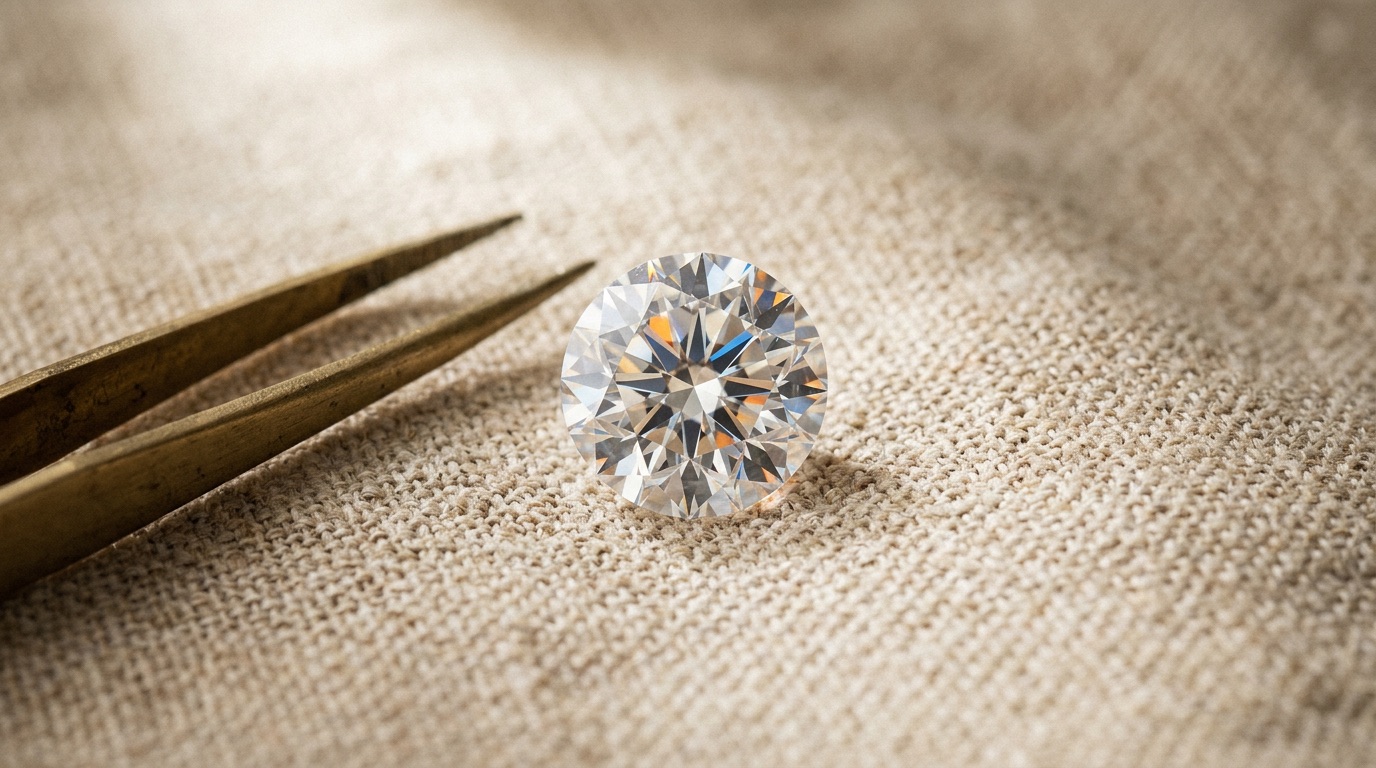
Guru Diam carries round brilliant as trade-only, wholesale inventory — no retail markup — from our New York Diamond District desk (36 West 47th Street, Suite 601A) and our Los Angeles office (607 South Hill Street). At 1,741 pieces on hand, round is the one shape where you can reliably ask for a specific size, color, and clarity combination and expect it on the shelf rather than on order.
The process is straightforward: open a verified wholesale account, then either pull directly from in-stock inventory or place a made-to-order request for a spec we don't currently have on the shelf. In-stock pieces ship same-day from New York; if you're building a custom piece around a round brilliant center — a solitaire, halo, or three-stone setting — the finished jewelry (CAD to completed ring) runs 4–6 days from our New York and Los Angeles desks. Loose stones ship against on-hand inventory rather than a fixed production timeline, which is exactly why depth matters more on round than on any other shape we carry.
Round brilliant is also available in fancy color — a genuinely rare specialty request, since round faceting is built for fire rather than color saturation, and fancy color round loose stones are limited to Yellow, Pink, Blue, and Green. See our fancy color round brilliant guide for that side of the category.
Ready to buy? Open a verified wholesale account at /signup and book time with a gemologist at /book-appointment.
Why Trade Buyers Source Round Brilliant From Guru Diam
Round brilliant is a commodity shape, which means the diamond itself isn't the differentiator — the supplier is. Buyers who reorder round brilliant from Guru Diam consistently point to a handful of operational reasons rather than anything about the stone:
- Inventory depth that actually fills orders. 1,741 pieces on hand means a specific size-color-clarity request is usually a same-day pull, not a multi-week wait behind a cutting queue.
- One vendor, one shipment, one relationship. Buyers who also source antique cuts, fancy colors, fancy color melee, custom engagement rings, and finished jewelry from Guru Diam consolidate round brilliant into the same account rather than running a separate relationship just for commodity stones.
- Certification flexibility. IGI, GIA, and GCAL are all available, so the certificate matches whatever your own buyers expect without forcing you to source round brilliant from a second supplier for a different lab.
- In-house control. Cutting, polishing, and grading happen in-house rather than being brokered through a third party, which is part of why inventory stays this deep and this consistent.
- Bi-coastal logistics. A New York Diamond District desk and a Los Angeles office mean same-day shipping windows on both coasts, plus in-person account visits for buyers who want to view stones before committing to a large reorder.
- A trade account base built on repeat orders. Guru Diam serves 2,000+ active wholesale accounts across independent jewelers, designers, and manufacturers — round brilliant is the shape most of them reorder most often, which is precisely why it's the deepest category in the house.
For a shape where every supplier is ultimately cutting to the same Tolkowsky-derived geometry, the differences that matter are depth, consistency, and how fast an order actually ships — not the stone.
Frequently Asked Questions
What is a round brilliant cut lab-grown diamond?
A round brilliant is a circular diamond cut with 57 or 58 facets arranged to maximize light return, producing the highest fire and brilliance of any standard shape. It's the default center-stone cut for solitaire, halo, and three-stone engagement ring settings, and the shape with the deepest wholesale inventory in the trade because its facet geometry is fixed rather than variable.
How many facets does a round brilliant diamond have?
57 facets without a culet, or 58 including it — a table, 8 star facets, 8 bezel facets, and 16 upper-girdle facets on the crown (33 total above the girdle), plus 8 pavilion main facets and 16 lower-girdle facets below (24 total on the pavilion).
Is IGI or GIA certification available for round brilliant lab-grown diamonds?
IGI is standard across Guru Diam's round brilliant inventory, with GIA and GCAL also available on request.
How many round brilliant diamonds does Guru Diam have in stock?
1,741 pieces as of this writing — Guru Diam's deepest inventory category by a wide margin, spanning a full range of sizes, colors, and clarity grades.
How fast can I get a round brilliant stone or a finished custom piece?
In-stock loose stones ship same-day from New York. If you're building a custom piece around a round brilliant center, the finished jewelry — CAD to completed ring — runs 4–6 days from our New York and Los Angeles desks.
Can I get a matched pair of round brilliant diamonds for earrings?
Yes. Round brilliant's standardized geometry makes it the easiest shape to match for size, color, and clarity — a normal request against 1,741 pieces of on-hand inventory rather than a special order.