
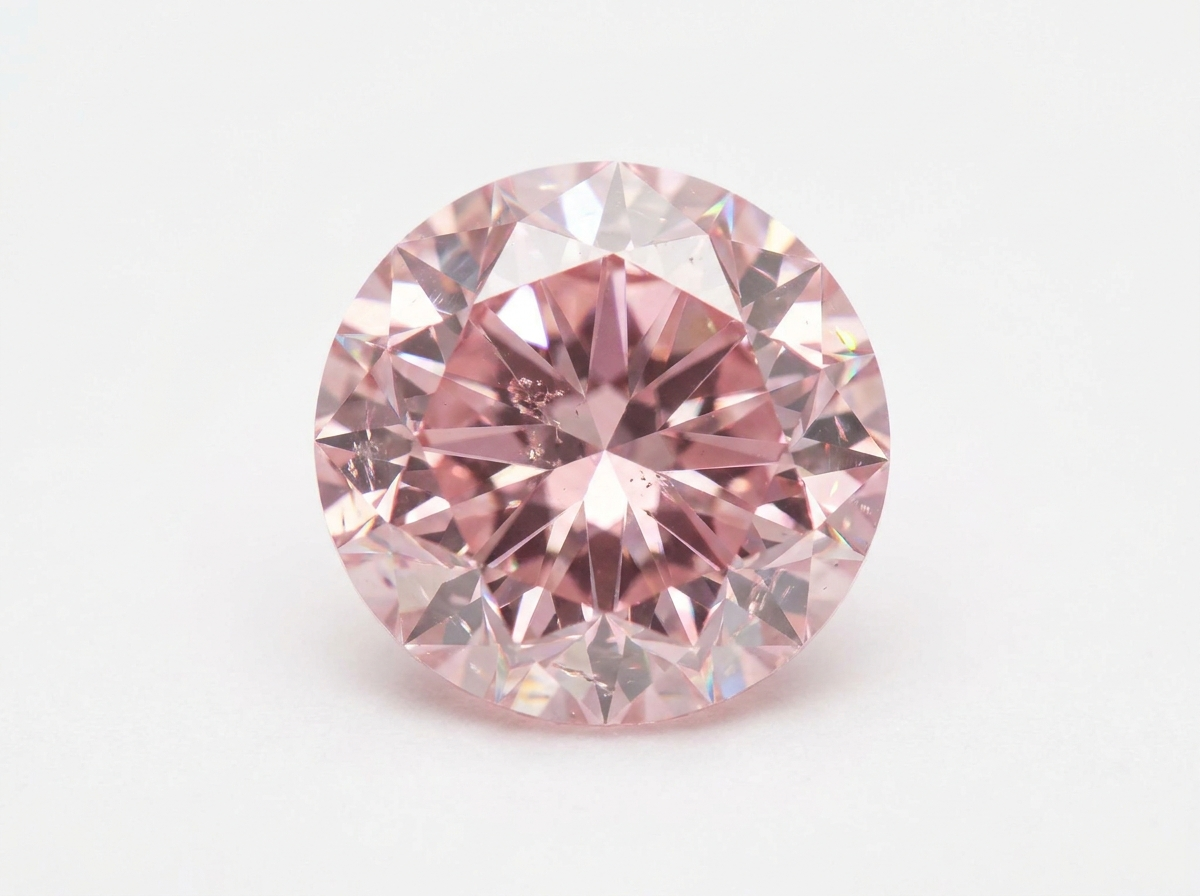
A fancy color round brilliant is a round-cut lab-grown diamond in an intentional hue rather than graded colorless. It's the rarest fancy color shape across the trade generally, not just in any one supplier's inventory — round brilliant faceting is built to maximize white-light fire, which scatters and dilutes color rather than holding it. Guru Diam has 9 IGI-certified, CVD-grown pieces on hand; request current inventory or made-to-order. Available hues span yellow, pink, blue, and green, and cut quality is graded to the same official standard GIA and IGI apply only to round brilliants.
What Makes a Round Brilliant Diamond "Fancy Color"?
A diamond earns the "fancy color" designation when its bodycolor falls outside the standard D-to-Z colorless-to-faint-yellow scale used to grade most white diamonds. Instead of being penalized for tint, a fancy color stone is graded on how strongly and evenly it expresses an intentional hue — yellow, pink, blue, green, and so on — using a separate scale built around hue, tone, and saturation rather than proximity to colorless.
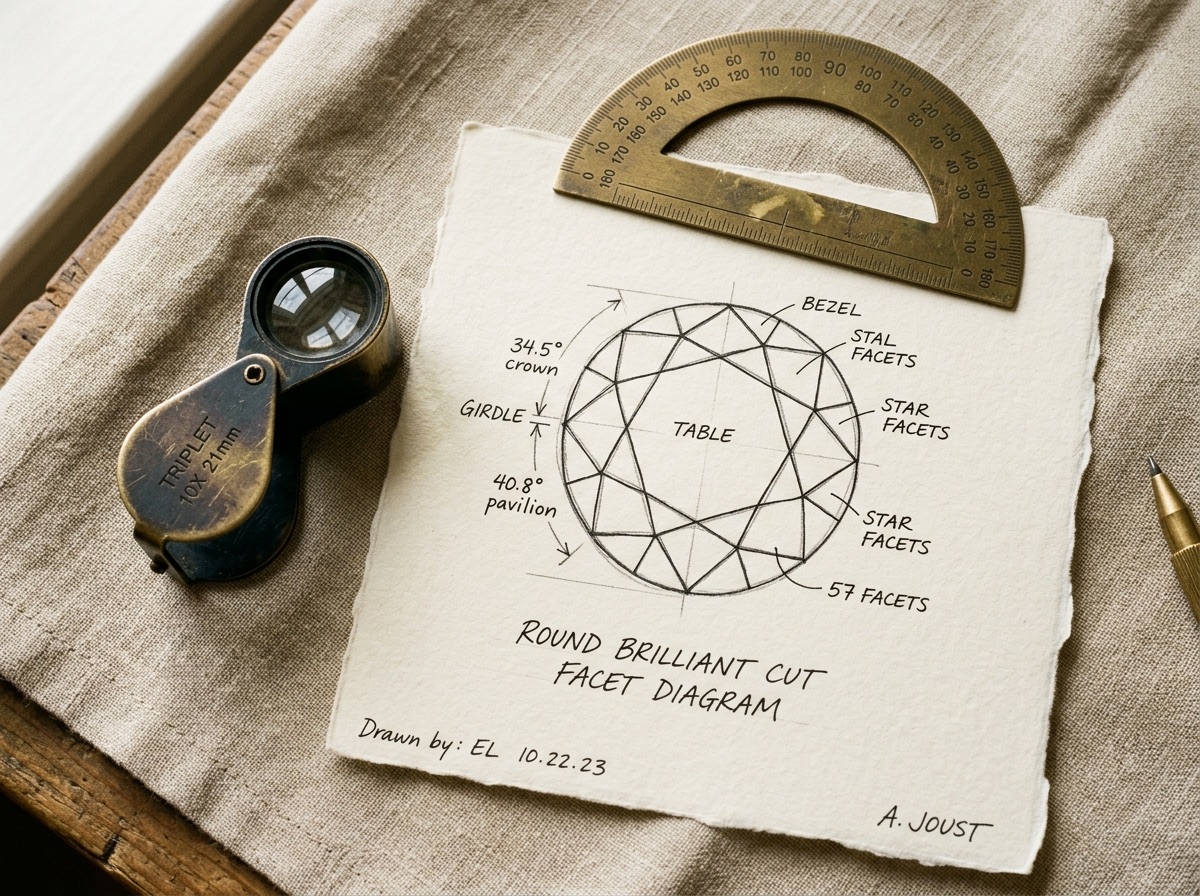
The round brilliant cut is the industry's most standardized shape: a full round brilliant carries 57 facets, or 58 if the culet — the small facet at the very bottom of the pavilion — is cut rather than left as a fine point. That facet count is arranged specifically to break incoming white light into as many small, quick flashes as possible, which is exactly what makes a colorless round brilliant so bright and fiery face-up.
That same engineering works against fancy color. Small facets kick light back out fast, before it has traveled far enough through the stone to pick up and carry a visible tint back to the eye. Cushion, radiant, and other broader mixed- or step-cut facet arrangements hold light longer and let color accumulate, which is why the trade routes most colored rough toward those shapes and only occasionally toward round. A round brilliant that shows clean, saturated color has to start from stronger bodycolor than an equivalent fancy shape would need — part of why fancy color round brilliants are the rarest fancy color shape across the wholesale trade generally, not a supply gap unique to any one desk.

How Fancy Color Develops in Lab-Grown Diamonds
Lab-grown diamonds are grown, not mined — chemical vapor deposition (CVD) builds a diamond crystal layer by layer inside a controlled growth chamber, starting from a thin diamond seed. Guru Diam's entire fancy color assortment, round brilliant included, is CVD-grown from start to finish, matching the growth method used across the full catalog.
Color develops in one of two ways during that process. The most direct route is doping: introducing a trace element into the growth chamber's gas chemistry at the atomic level. Nitrogen incorporated during growth produces yellow tones; boron produces blue. The element locks into the crystal lattice as the diamond forms, so the color is structural, not surface-level, and it will not fade, rub off, or shift with wear the way a coating could.
Other hues, including pink and green, typically require an additional controlled finishing step after growth to stabilize and refine the saturation the rough crystal shows. Guru Diam applies that finishing in-house as part of standard production, not as an aftermarket add-on — the goal on every stone is a stable, certifiable color that reads the same on a grading report as it does on the bench.
Because the color is built into the crystal rather than applied afterward, fancy color lab-grown diamonds carry the same durability and wear profile as colorless lab-grown stones. The variable a jeweler needs to plan around is how the finished cut displays that color face-up — which is where round brilliant and fancy shapes diverge.
Round Brilliant vs. Fancy Shapes: Why Color Performs Differently by Cut
Shape selection is the single biggest lever in how strongly a fancy color diamond reads face-up. Buyers used to sourcing fancy color in cushion or radiant sometimes assume round brilliant will behave the same way at a similar hue and saturation grade — it doesn't, and setting that expectation correctly with a client up front avoids disappointment at delivery.
| Shape | Facet style | Color face-up performance | Typical use case |
|---|---|---|---|
| Round brilliant | 57–58 facets, brilliant-cut | Diluted — needs strong bodycolor to read clearly | Solitaires, halo centers where cut fire matters as much as color |
| Cushion | Mixed cut, larger facets | Strong — holds and concentrates hue efficiently | Fancy color centerpieces, statement rings |
| Radiant | Cropped-corner mixed cut | Strong — among the best color-retention shapes | Fancy color engagement centers, three-stone centers |
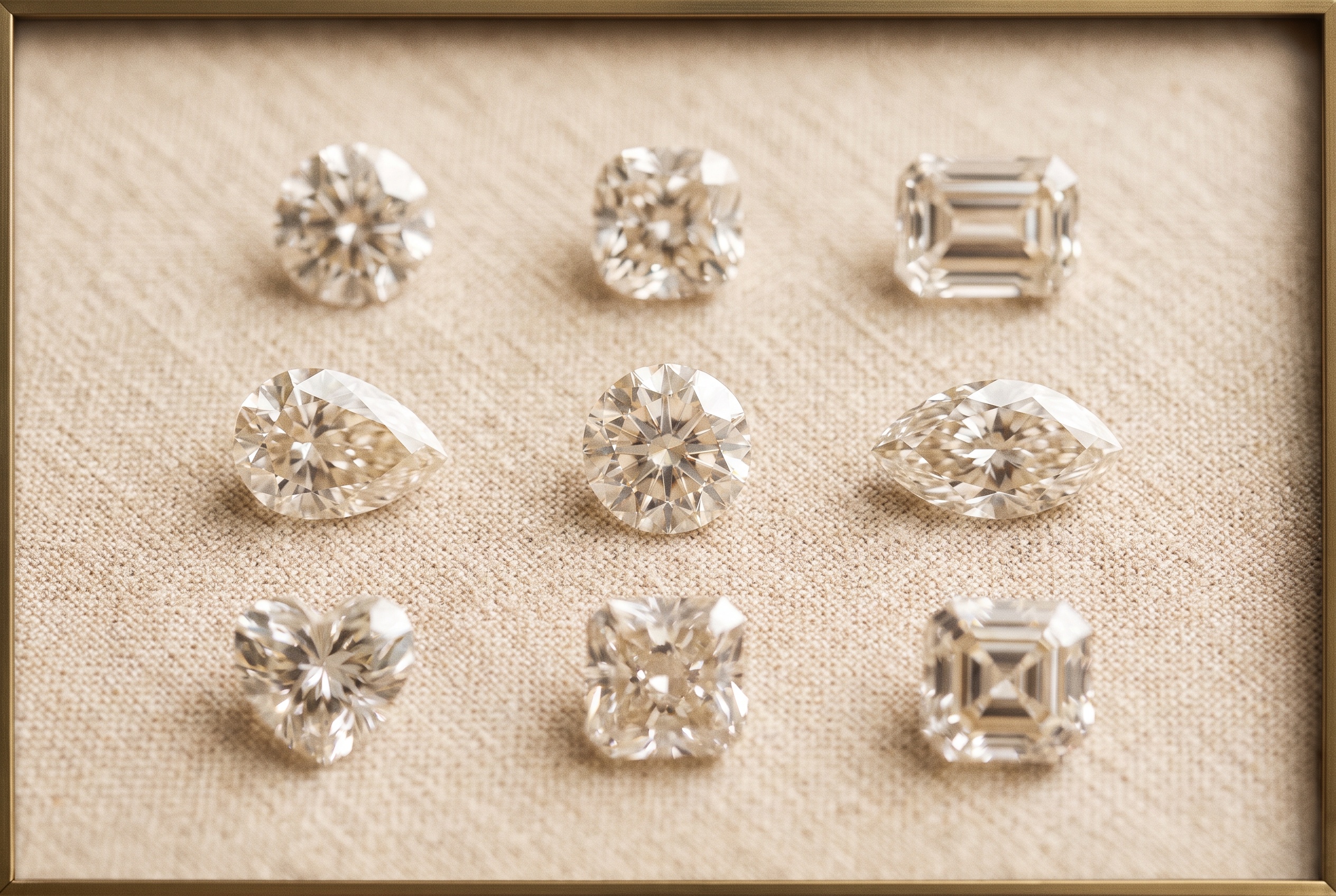
| Emerald / Asscher | Step cut, open table | Very strong — large flat planes showcase saturation | Deep-color statement pieces, geometric settings |
None of this makes round brilliant a lesser choice for fancy color — it makes it a different one. A buyer who wants maximum brilliance and a familiar silhouette, and is willing to source at the color intensity needed to read clearly through that facet pattern, is exactly who a fancy color round brilliant is built for.
Grading Fancy Color: Hue, Tone, and Saturation Explained
Fancy color diamonds are graded on three separate variables, and all three move independently — a buyer evaluating a fancy color round brilliant wholesale needs to read a report for all three, not just the headline color name.
Hue is the color family itself — yellow, pink, blue, green — plus any secondary modifier (a stone might be graded "Fancy Intense Yellow-Green," where the primary hue is yellow and green is the secondary tone).
Tone describes how light or dark the color reads, on a scale from very light to very dark, independent of how saturated it is.
Saturation is the intensity or strength of the color, and it's what most grading reports actually name: GIA and IGI both use a sequence that runs roughly from Faint and Very Light through Light, Fancy Light, Fancy, Fancy Intense, Fancy Vivid, and into the deeper Fancy Dark and Fancy Deep grades. Fancy Vivid and Fancy Intense are generally the most sought-after grades in the wholesale trade because they deliver the strongest, cleanest color face-up without going so dark the stone loses brightness.
For round brilliant specifically, because the facet pattern already works against color retention, buyers should expect to need a stone graded higher on the saturation scale than they would for the same visual impact in a cushion or radiant — a Fancy Light round brilliant will read noticeably weaker face-up than a Fancy Light cushion of the same hue. That's a cut-driven effect, not a grading inconsistency, and it's the main reason color grade alone isn't enough information to buy against; shape has to be factored in alongside the report.
Certification and Cut-Grade Standards for Wholesale Round Brilliant Buyers
A wholesale fancy color report needs to answer two separate questions: what is the color, and how well is the stone cut. Round brilliant is the only diamond shape with an official, standardized cut grade — GIA and IGI both issue a Cut grade (Excellent through Poor) exclusively for round brilliants, because it's the one shape cut to a consistent enough set of proportions to benchmark against. Fancy shapes, including cushion and radiant, don't receive that same standardized cut grade; buyers evaluate their proportions and symmetry more subjectively, stone by stone.
That makes cut grade a real, checkable data point specifically for round brilliant wholesale buying — something buyers sourcing fancy shapes don't get the benefit of. When reviewing a fancy color round brilliant report, check:
- Color origin note confirming the color is intrinsic to the stone, not a coating or foil back
- Full hue, tone, and saturation grade, not just the headline color name
- Cut grade — Excellent or Very Good preferred, since a lower cut grade compounds against an already color-diluting facet pattern
- Clarity grade — less critical to face-up appearance in strongly colored stones, but still relevant to durability
- Fluorescence rating, which can shift how a stone's color reads under different lighting
- Growth method and treatment disclosure spelled out on the report rather than left to be explained verbally
Guru Diam issues fancy color round brilliant stones with IGI certification as standard, with GIA available on request — both labs use the same hue/tone/saturation framework and both issue the round-specific cut grade, so either report gives a buyer the full picture needed to price and resell with confidence.
What Drives Pricing on Fancy Color Round Diamonds
Pricing on fancy color round brilliant diamonds compounds across three variables rather than adding them — a small move up the color-intensity scale changes price more than the same move in carat weight, and a strong cut grade multiplies the value of good color rather than sitting alongside it as a separate line item.
Color intensity carries the most weight. Moving from Fancy Light to Fancy or Fancy Intense typically moves price more than a comparable carat increase, because saturation is the rarer variable in a round brilliant specifically — strong color that survives the facet pattern's dilution effect is harder to source than a larger stone in a weaker grade.
Cut grade compounds on top of that. Since round brilliant is the one shape with an official cut grade, an Excellent-cut stone in a given color grade commands a real premium over a Good- or Fair-cut stone at the identical color and carat, because a better cut grade is doing more work to preserve what color the stone has rather than scattering it further.
Carat weight still matters, but it behaves differently in fancy color than in colorless goods — a jump in carat size is worth less if it comes with a weaker color grade, because the client is paying primarily for the hue, not the size. Secondary hue modifiers (a yellow-green versus a pure yellow, for example) and evenness of color across the table also factor into how a wholesale buyer should evaluate a quoted price, since two stones with the same headline grade can look different face-up. For a specific quote against current inventory, request pricing directly rather than assuming a rate — availability and grade mix shift stone by stone at this depth of category.
Best Jewelry Applications for Fancy Color Round Diamonds
Fancy color round brilliants show best in settings built to work with the color's natural dilution rather than fight it. Three placements consistently perform well in the wholesale-to-retail pipeline:
- Solitaires. A clean, minimal setting keeps all visual attention on the stone itself, which matters more for a round brilliant than for shapes that hold color more easily — there's no competing detail pulling the eye away from the hue that is there.
- Halo settings. A halo of white melee around a fancy color round brilliant does real optical work: the white stones frame and contrast the center color, making a lighter or more diluted hue read as noticeably stronger than it would alone. This is one of the most effective ways to retail a fancy color round brilliant that grades on the lighter end of the saturation scale.
- Three-stone settings. Pairing a fancy color round brilliant center with white side stones creates the same contrast benefit as a halo while giving the piece a more architectural, editorial silhouette — a strong option for buyers targeting a design-forward client rather than a classic solitaire look.
Bezel and low-profile settings are worth a caution rather than a recommendation: metal that wraps close to the stone's crown can visually compete with an already-diluted color, so they tend to work better on stronger Fancy Intense or Fancy Vivid grades than on lighter ones. Matching the setting style to where a given stone actually sits on the saturation scale — rather than defaulting to whatever setting is already popular — is where a wholesale buyer's product knowledge pays off directly in how well the finished piece sells.
Sourcing Fancy Color Round Brilliant Diamonds Wholesale from Guru Diam
Guru Diam carries 9 fancy color round brilliants in stock as of this writing, spanning part of a locked color palette — yellow, pink, blue, and green — CVD-grown and IGI-certified as standard, with GIA available on request. At that depth of inventory, round is a specialty request rather than a deep-bench category, a function of how the shape performs optically rather than a supply gap unique to this desk; availability shifts stone by stone, so confirm hue, saturation, and size against current stock rather than assuming a specific combination is on the shelf. Anything not currently on hand can be made to order.
| Spec | Detail |
|---|---|
| Outline | Round |
| Facet style | Full brilliant (57–58 facets) |
| Color palette (Guru Diam) | Yellow, Pink, Blue, Green |
| Growth method | CVD-grown |
| Certification | IGI standard; GIA available on request |
| Stone type | Certified single stones (not melee) |
| On-hand count | 9 pieces — request current inventory |
| Sourcing path | In-stock (limited) or made-to-order |
When you call in a request, come with as much specificity as you can — hue and secondary modifier, saturation grade range, carat range, and cut grade preference — since that's what determines whether a stone ships from current stock or goes to made-to-order cutting. Buyers sourcing at volume across multiple hues are often better served checking the broader fancy color lab-grown diamond assortment first, since fancy shapes carry deeper standing inventory across the palette, and reserving round requests for the specific pieces a client has asked for by name.
Guru Diam sources fancy color round brilliant diamonds as wholesale, trade-only inventory — no retail markup — from the New York Diamond District desk (36 West 47th Street, Suite 601A) and the Los Angeles office (607 South Hill Street). In-stock pieces ship same-day; a custom setting runs CAD-to-finished-piece in 4–6 days.
Buying Checklist: What to Verify Before You Order Wholesale
Before committing to a wholesale order of fancy color round brilliants, run the stone — and the supplier — through a short checklist. Round brilliant's color-diluting facet pattern makes verification more important here than it is for fancy shapes, where stronger color retention covers for more inconsistency.
- Color consistency across the order. If you're buying more than one stone, check that hue and saturation read consistently under the same lighting — round brilliant's facet pattern can make minor color variation more visually obvious than it would be in a shape that holds color more evenly.
- Cut-grade verification, not just a color grade. Since round brilliant is the one shape with an official cut grade, always confirm it's stated on the report — a quote with color grade alone and no cut grade on a round brilliant is missing the variable that determines how much of that color you'll actually see face-up.
- Fluorescence rating. Strong fluorescence can shift how color reads under different light sources, which matters more for a subtle or lighter-saturation round brilliant than for a deeply saturated fancy shape.
- Treatment and growth-method disclosure spelled out on the certificate, not left to be assumed or explained verbally.
- Made-to-order lead time and cutting confirmation in writing before committing a client's order against a stone that isn't currently in stock.
- A named contact who can speak to current inventory, given how frequently availability shifts at this depth of category — a generic catalog listing isn't enough to buy against for a specialty request like this one.
None of these checks are unique to round brilliant, but they matter more here because the shape gives a buyer less margin for error — a fancy color cushion with a slightly understated cut grade still reads as color; a fancy color round brilliant in the same position risks reading closer to colorless than intended.
Frequently Asked Questions
Why is fancy color round brilliant so hard to find?
Round brilliant faceting maximizes white-light fire by breaking light into many small, quick flashes, which scatters and dilutes color instead of holding it. Cutters generally steer colored rough toward shapes like cushion and radiant that show hue more efficiently, so fancy color rounds are scarce across the whole trade, not just at any one supplier.
Does Guru Diam have fancy color round brilliant diamonds in stock, and are they certified?
Yes, in limited numbers — 9 pieces on hand as of this writing, CVD-grown and IGI-certified as standard with GIA available on request, spanning yellow, pink, blue, and green. Availability shifts stone by stone, so request current inventory directly, or specify a made-to-order cut.
How fast can I get a fancy color round brilliant stone or a finished custom piece?
In-stock pieces ship same-day from New York. Made-to-order cutting plus a finished custom piece runs 4–6 days from the New York and Los Angeles desks.
What's the difference between buying a fancy color round brilliant and a fancy color cushion or radiant?
The stone itself is the same type of fancy color diamond either way — the difference is how much of that color reads face-up. Cushion and radiant hold and concentrate hue more efficiently, so a buyer can often source a lighter saturation grade in those shapes and still get a strong visual result, where round brilliant generally needs a stronger saturation grade to read the same way.
What should I check on a certification report before buying fancy color round brilliant wholesale?
Confirm the full hue, tone, and saturation grade rather than just the headline color name, and make sure a cut grade is listed — round brilliant is the one shape with an official GIA/IGI cut grade, and it directly affects how much color the stone shows. Also check fluorescence and treatment or growth-method disclosure, since both affect how color reads and should be spelled out on the report rather than assumed.
Does fancy color round brilliant cost more or less than fancy shapes at the same carat and color grade?
Not automatically — pricing depends more on where a stone falls on the saturation scale than on shape alone, and a strong cut grade adds a real premium on round brilliant specifically since it's the shape where cut quality is officially graded. In practice, sourcing a round brilliant with color as strong as a comparable cushion or radiant is harder, which shows up in availability more than in a flat price difference.