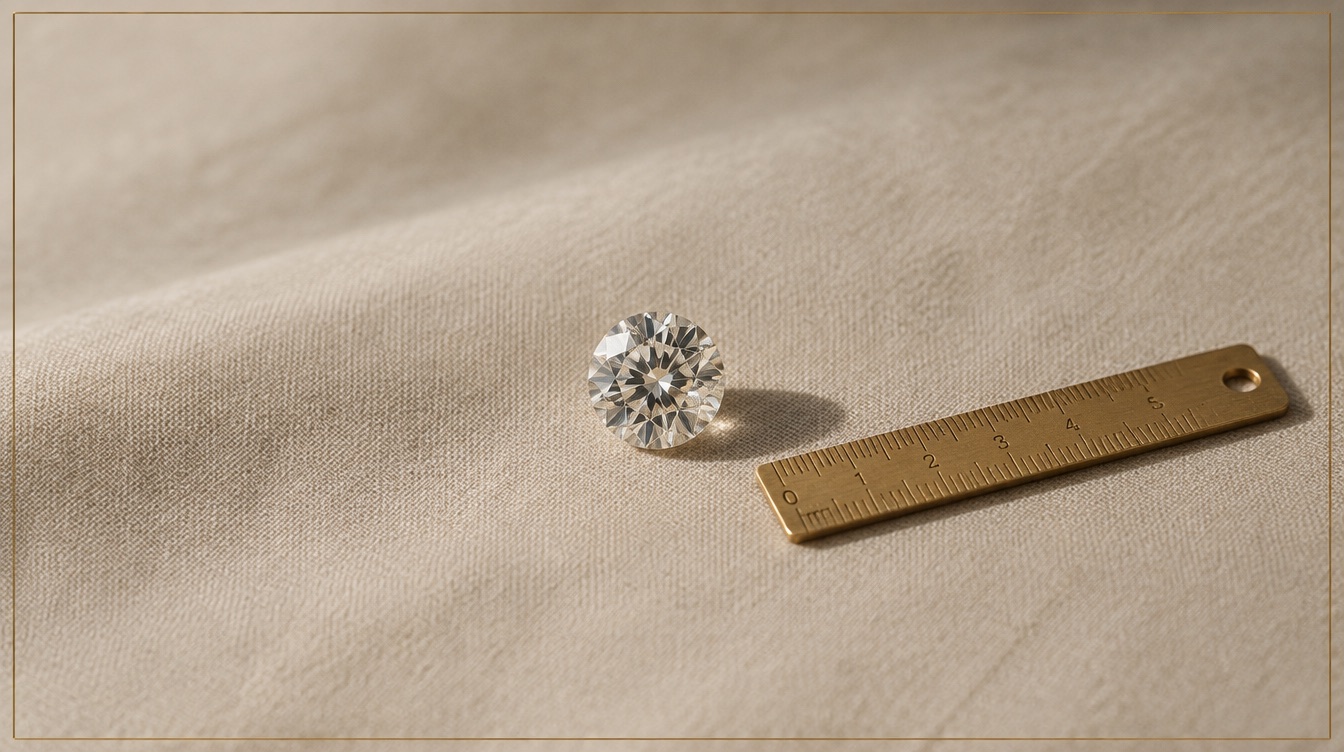
A lab-grown diamond color and clarity chart follows the same grading scales as natural diamonds: color runs D (colorless) to Z (light yellow), clarity runs FL (flawless) to I (included), and cut runs Excellent to Poor. For wholesale resale, most jewelers stock the colorless-to-near-colorless, eye-clean, Excellent-cut sweet spot, where value and visual quality meet.
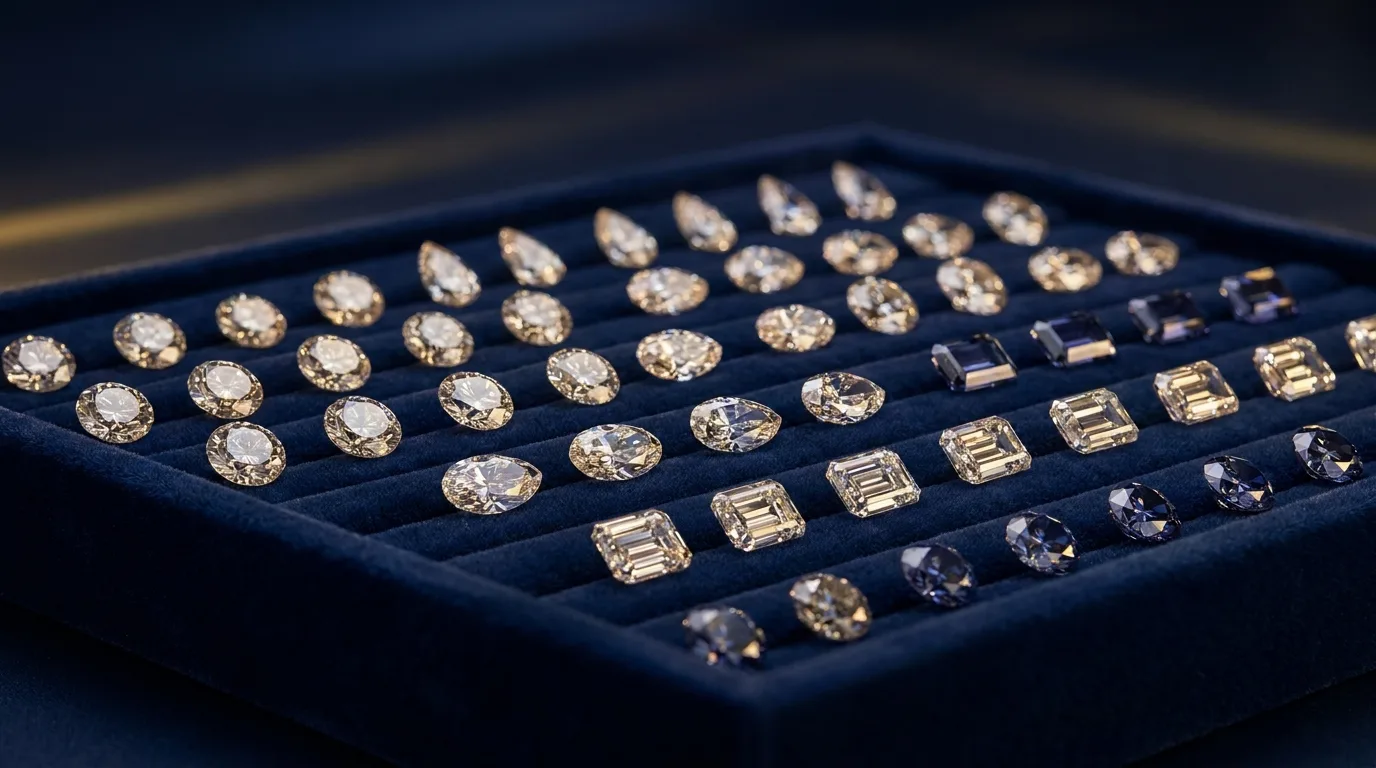
If you buy diamonds for resale, the 4Cs are not abstract gemology — they are your purchase order. Every stone you stock is a decision about which color, clarity, cut, and carat combination will sell at your price point and still leave margin. This is a buyer's reference: the standard GIA/IGI grading scales laid out as clean charts, plus practical notes on which grade combinations make sense to stock for resale and why.
Lab-grown diamonds are graded on exactly the same scales as mined diamonds — a lab report does not use a softer ruler. A G-color VS1 lab-grown stone is graded against the same criteria as a G VS1 natural. What follows is the chart a buying desk actually uses, written for a wholesale buyer choosing what to put in the case.
Reading a grade chart like a buying desk, not a consumer guide
Most 4Cs explainers are written for a first-time consumer standing at a counter, trying to decide if a stone "looks nice." That is not the problem a wholesale buyer has. You already know a diamond has four graded attributes. What you need is which combinations of those attributes clear a margin at your price point, which grades are cosmetically indistinguishable from the tier above them, and where a report's numbers stop correlating with what the stone looks like in a customer's hand under showroom light.
Three assumptions run through the rest of this chart, and they are worth stating up front because they change how you should read every table below:
- The report sets the floor, not the ceiling. Two stones with an identical color/clarity/cut combination on paper can still face up differently — inclusion placement, fluorescence, and cut precision inside a grade band all vary. The chart tells you what to expect on average, not what any single stone will do.
- Grades are a cost curve, not a quality cliff. Moving one grade rarely changes what the eye sees; it reliably changes what the invoice says. The buying skill is knowing exactly where that relationship breaks — where one more step actually does show up to the eye.
- Your customer's setting and metal choice are part of the spec. A grade that reads as a compromise in a platinum solitaire can read as a deliberate warm-tone choice in yellow gold. Grade selection is inseparable from what the stone is going into.
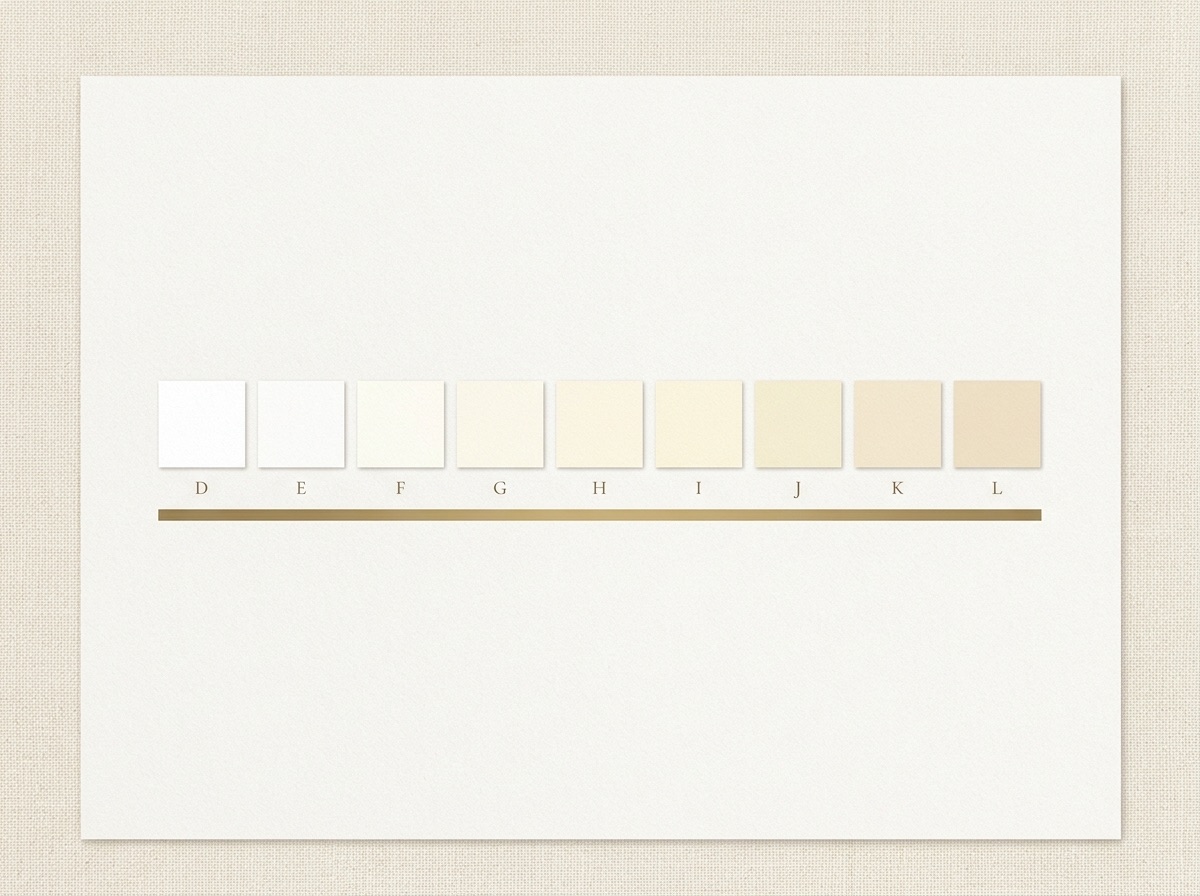
How is lab-grown diamond color graded?
Color grades a diamond by the absence of color. The scale starts at D — the most colorless — and runs down to Z, where a faint yellow or brown tint becomes visible to the eye. The less color, the rarer and (usually) the more expensive the stone. Grading is done face-down against a master set under controlled light.
| Color group | Grades | What the buyer sees |
|---|---|---|
| Colorless | D, E, F | No detectable color; the premium tier |
| Near-colorless | G, H, I, J | No color visible to the eye face-up; excellent value |
| Faint | K, L, M | Slight warmth, more noticeable in larger stones |
| Very light | N–R | Visible tint; niche / vintage-look demand |
| Light | S–Z | Obvious color; rarely stocked for white-diamond programs |
Practical read for the case: D–F carries a colorless premium most resale customers do not need; G–J (near-colorless) is where the bulk of wholesale demand sits, because the stone reads white to the eye at a lower cost. For platinum or white-gold settings, buyers often lean G–H to keep the stone visibly white against a white metal; in yellow or rose gold, I–J faces up beautifully and stretches the budget, since the warm metal masks the faint warmth.
Within near-colorless, the grade-to-grade step is not uniform. D to E to F is a distinction almost no unaided eye can make even side by side — the premium there is about the report, not the appearance. G to H is close to invisible in isolation and only shows in direct comparison under a loupe. The jump most buyers actually notice is I to J to K, where a faint body color starts to read as warmth rather than white, especially in stones over one carat where color concentrates visibly toward the pavilion. Size matters here: a 0.30 ct J can look perfectly white, while a 2.00 ct J in the same setting shows a hint of tint a trained eye will catch. That is why programs built around larger center stones tend to buy tighter on color than melee or accent-stone programs do.
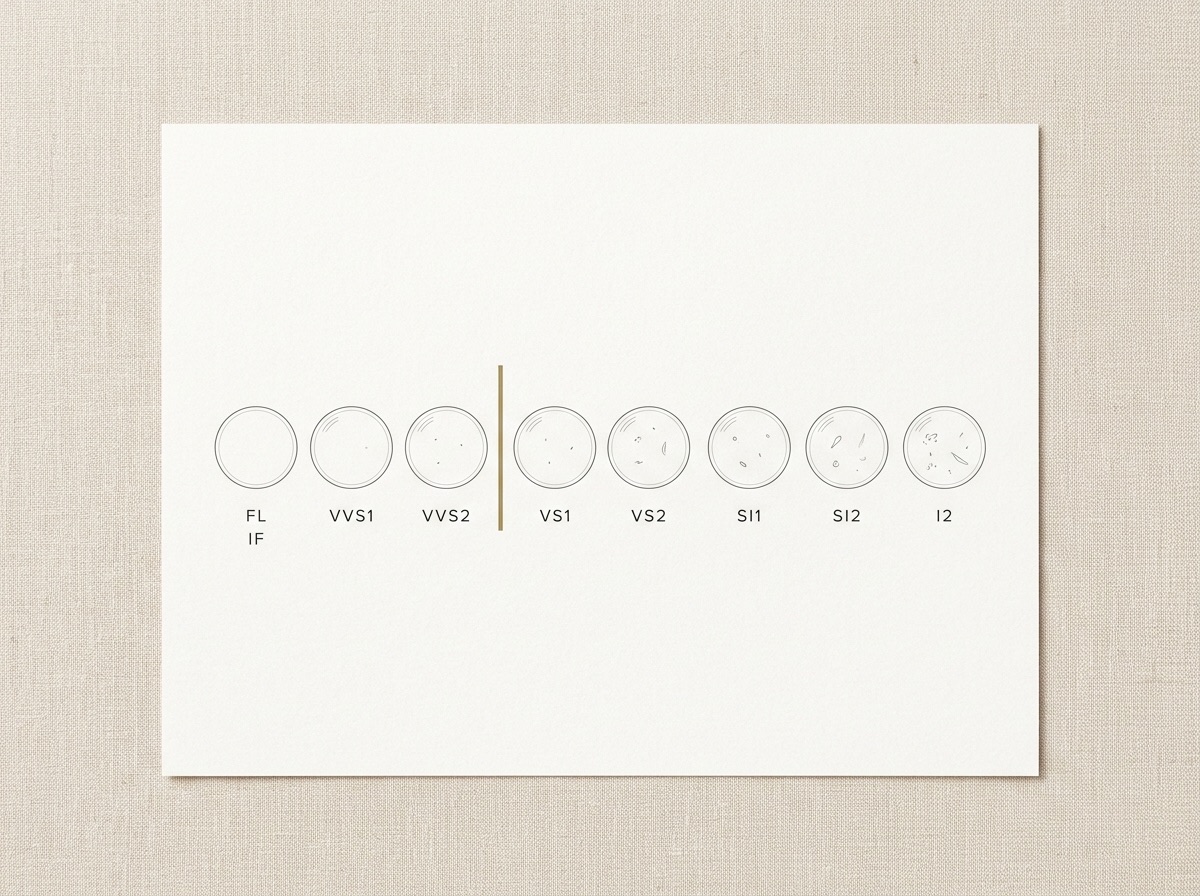
How is lab-grown diamond clarity graded?
Clarity grades the internal inclusions and surface blemishes in a stone, assessed under 10x magnification. The fewer and less visible the inclusions, the higher the grade. The scale below is the full GIA/IGI clarity ladder.
| Clarity grade | Meaning | Inclusions under 10x |
|---|---|---|
| FL | Flawless | None visible |
| IF | Internally Flawless | Surface blemishes only |
| VVS1 / VVS2 | Very, Very Slightly Included | Extremely hard to see, even for a grader |
| VS1 / VS2 | Very Slightly Included | Minor, difficult to see under 10x |
| SI1 / SI2 | Slightly Included | Noticeable under 10x; SI1 often still eye-clean |
| I1 / I2 / I3 | Included | Obvious, may be eye-visible and affect durability |
The term that matters most for resale is eye-clean — no inclusions visible to the naked eye at normal viewing distance. A buyer does not need to pay for FL/IF perfection to deliver an eye-clean stone. VS1–VS2 is reliably eye-clean across shapes and sizes, and many SI1 stones are eye-clean too, especially in smaller carats and brilliant cuts where inclusions hide in the faceting. The trap is at SI2 and below: clean for some stones, visibly included in others, which is why those grades have to be reviewed stone by stone rather than bought blind off a list.
Which clarity grades are commercially significant for resale comes down to which ones a customer will ever ask about. FL and IF exist almost entirely for the report — collectors and a narrow top-of-market segment pay for them, but the visual difference from VVS is undetectable without a loupe and a trained eye, and even then the grader is often looking for the type of inclusion (pinpoint versus feather versus included crystal) rather than whether it is visible at all. VVS1/VVS2 and VS1/VS2 are where "clean-looking, defensible on paper" lives — this is the band most retail customers are actually buying when they ask for "a clean stone." SI1 is the pivot grade: it is where price drops meaningfully but visibility risk starts, so it rewards actually looking at the stone rather than trusting the grade alone. Below SI2, treat clarity as a durability question as much as a cosmetic one — I1–I3 inclusions can reach the surface or sit near facet junctions in ways that affect a stone's structural integrity under repeated setting and re-setting, not just how it looks.
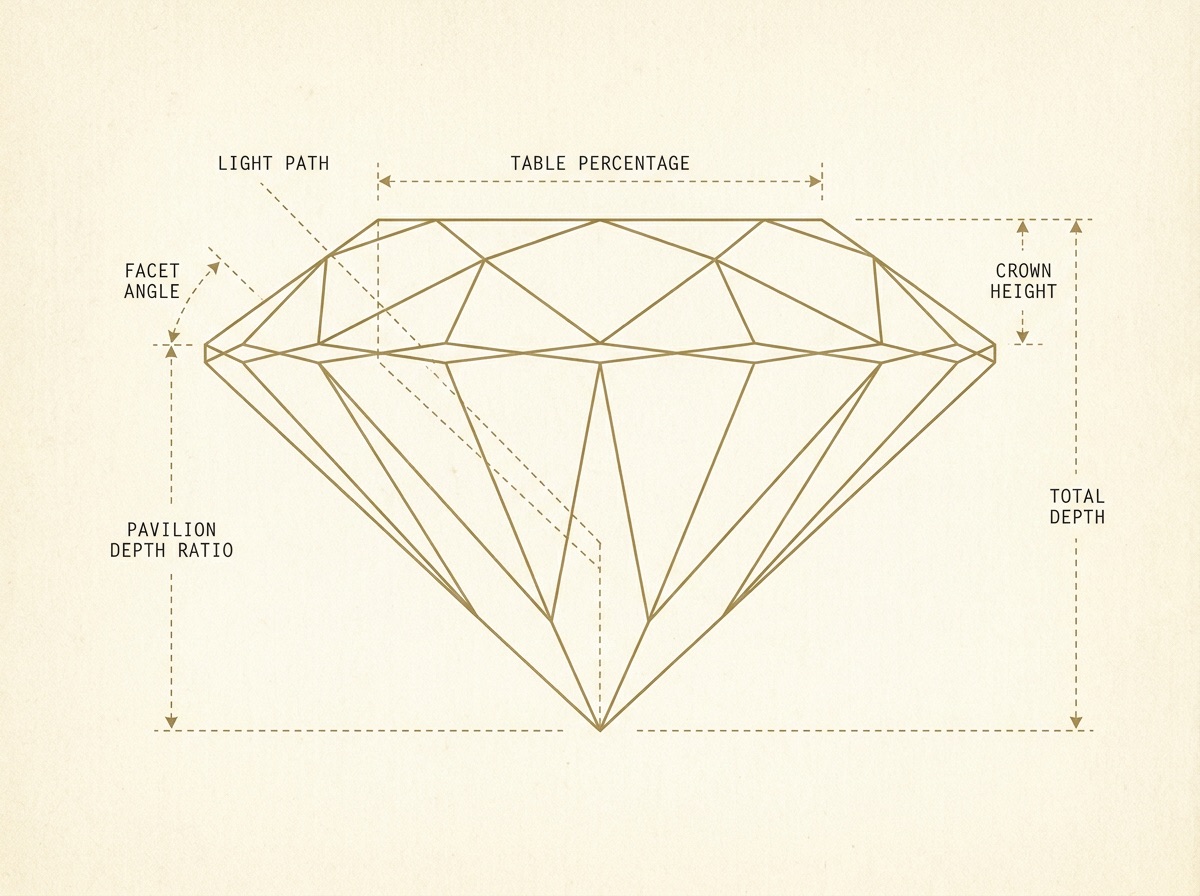
How is lab-grown diamond cut graded — and why fancy shapes work differently?
Cut is the C that does the most visible work and the one buyers most often underweight. It grades how well a stone's proportions, symmetry, and polish return light — its sparkle. A poorly cut D-Flawless stone can look duller than a well-cut G VS2. On round brilliants, cut is graded on a five-step scale; fancy shapes (oval, emerald, pear, etc.) are typically described by polish and symmetry rather than an overall cut grade, so those you judge by eye and proportion.
| Cut grade | Light return | Resale fit |
|---|---|---|
| Excellent / Ideal | Maximum brilliance and fire | The default for any premium round program |
| Very Good | Strong light return, slight trade-off | Solid value; near-Excellent appearance |
| Good | Acceptable, noticeably less lively | Budget tier; inspect before stocking |
| Fair | Light leaks; visibly flat | Rarely worth stocking for resale |
| Poor | Dull, significant light loss | Avoid for white-diamond programs |
For round brilliants, do not compromise on cut. Excellent (and where offered, Ideal) cut is the cheapest way to make a stone look more expensive than its color and clarity grades suggest. The overall grade is a composite of proportions (table percentage, crown angle, pavilion depth), symmetry (how precisely the facets align), and polish (surface finish on each facet) — a stone can be graded down on any one of the three even if the others are strong, which is why the report's individual polish and symmetry lines are worth reading, not just the headline cut grade.
On fancy shapes, there is no single overall cut grade on most reports — labs grade polish and symmetry but leave proportions to be judged by eye, because the "ideal" ratio varies by shape and by taste. That makes fancy-shape buying a proxy exercise rather than a single-number lookup:
- Oval and pear: check for bow-tie effect — a dark shadow bisecting the stone from a depth or length-to-width imbalance. A pronounced bow-tie is the fancy-shape equivalent of a Fair or Poor cut grade on a round.
- Emerald and Asscher: these are step cuts, so their large open facets show inclusions more readily than a brilliant's faceting hides them — clarity matters more here than the color/clarity chart alone would suggest, and buyers typically stock these one clarity grade tighter than they would a round of the same size.
- Cushion: comes in two facet styles — "crushed ice" (many small facets, a sparkly, broken-glass look) and "chunky" (fewer, larger facets, more traditional flash). Neither is graded better on a report; it is a look decision that belongs in your buying brief, not the cut grade.
- Radiant and princess: corner cropping and facet count vary by cutter, so length-to-width ratio and corner symmetry (checked by eye against the report's measurements) matter more than any single grade line.
The practical rule: on rounds, buy the cut grade off the report and trust it. On fancy shapes, buy the report's polish and symmetry grades plus your own eye on proportions, because two stones with identical 4Cs on paper can face up very differently.
The 4Cs compound, they don't add
Buyers who are new to grading a chart like this often price a stone by mentally averaging its grades — treating a step down in color and a step down in clarity as two small, separate discounts. That is not how the market prices a stone. The 4Cs compound rather than add, because value concentrates where all four grades clear a buyer's threshold at once, and a stone that misses on two dimensions loses more than the sum of two single-dimension misses.
Two stones illustrate why. A G-color, VS1-clarity, Excellent-cut round reads as a clean, white, lively stone with nothing to explain to a customer — every dimension clears the bar, so the stone sells itself. Drop that same stone to H color and VS2 clarity and it is still, for almost every practical purpose, the identical stone to the eye — the discount from G/VS1 outpaces any visible change, which is exactly the trade wholesale buyers should make. But drop it further to J color and SI2 clarity with only a Good cut, and now three variables are working against the stone at once: a warmer body color, inclusions that may reach eye-visibility, and a cut that leaks light rather than returning it. None of those three problems is disqualifying alone. Together, they compound into a stone that looks noticeably duller and warmer than its "two steps down on each C" price would suggest — and a customer will notice, even if they cannot articulate which C is responsible.
The buying implication: it is usually better to hold the line on one C and flex on another than to shave a little off all four. A well-cut, eye-clean I-color stone reads better than a middling-cut G-color stone with a borderline clarity grade, even though the second stone's grades look better on paper. Treat the four grades as a system that has to clear a combined bar, not four independent boxes to tick.
Where does carat fit in?
Carat is weight, not size, and it interacts with the other three Cs and with price more sharply than buyers expect. Prices step up at the round "magic" weights — 0.50, 1.00, 1.50, 2.00 ct — where demand clusters. A stone that grades 0.90 ct can cost meaningfully less per carat than a 1.00 ct of the same color, clarity, and cut, while facing up nearly as large. For a resale program, buying just under a magic weight (a 0.90 instead of a 1.00, a 1.90 instead of a 2.00) is a standard way to protect margin without a visible drop in size.
Carat also changes how forgiving the other three Cs are. A small stone — a melee accent or a sub-0.30 ct side stone — hides color and clarity flaws that would be obvious in a two-carat center stone, simply because there is less surface area for the eye to inspect and less material for an inclusion or tint to spread across. That is part of why programs built around large center stones buy tighter on color and clarity than accent-stone or melee programs do: the grade tolerance shrinks as the stone grows.
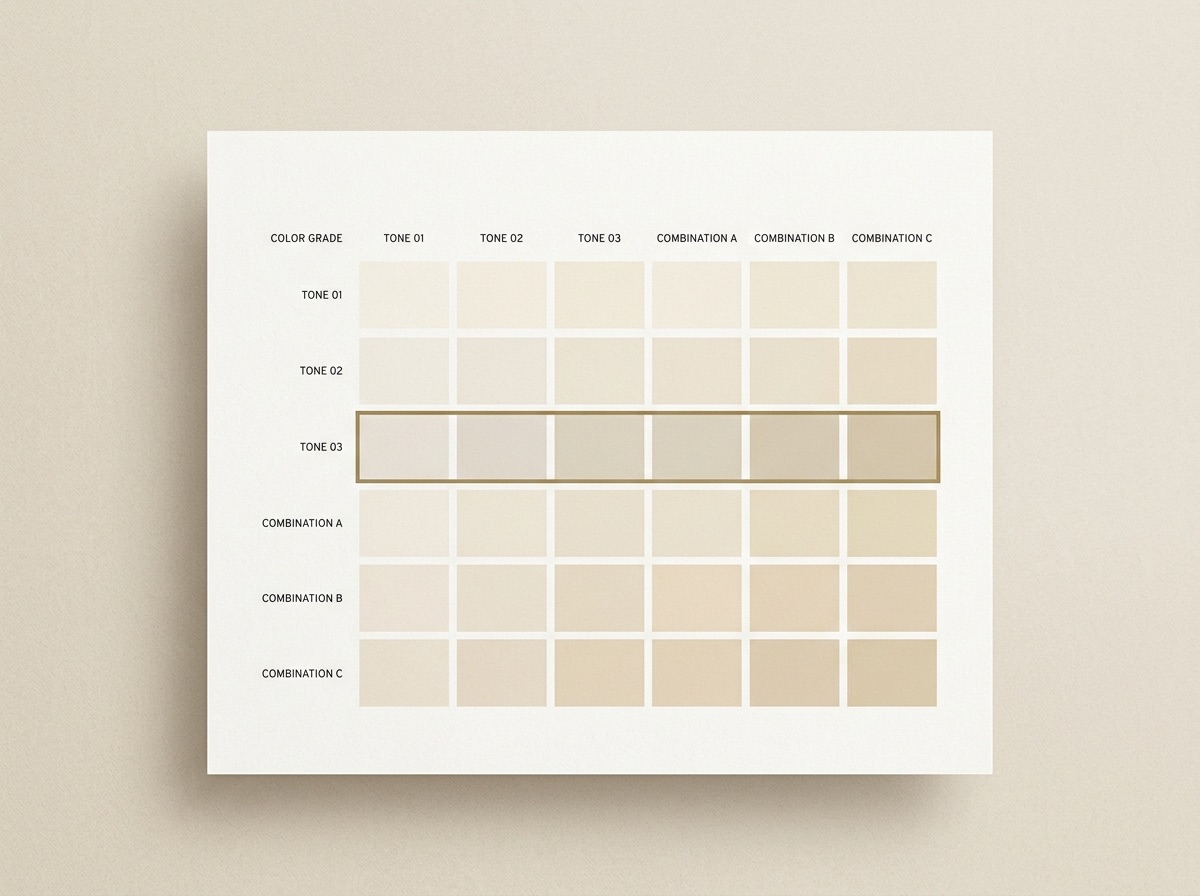
A sweet-spot framework for grade selection
"Buy the best you can afford" is not a buying strategy — it is an absence of one. A working framework starts from the customer and the price point, not the report, and works backward into a grade band. Four questions do most of the work:
- What is the stone going into? Platinum and white gold punish body color, so tighten the color floor. Yellow and rose gold mask it, so I–J becomes usable inventory instead of a compromise.
- What is the center-stone size? Above roughly one carat, color and clarity flaws have more surface area to show — buy tighter. Below that, especially in melee and accent stones, the same grade tolerates more without a visible penalty.
- What is the customer paying for? A report-driven buyer — someone comparing specs across suppliers — is paying for the grade itself, so hero and bridal-anchor stones should carry grades that read cleanly on paper. A look-driven buyer is paying for what they see, so spend the budget on cut and eye-clean clarity before spending it on color.
- Where does this stone sit in the case? A hero stone that anchors a customer's decision can justify a premium grade because it is the reason they walked in. A volume stone that fills out a line needs to protect margin first and grade second.
Layering those four questions produces three practical tiers rather than a single "right" grade:
| Program tier | Color | Clarity | Cut (round) | Why it works |
|---|---|---|---|---|
| Premium / bridal hero | D–F | VVS–VS | Excellent / Ideal | Top-of-case stone; commands a premium |
| Core resale (the volume) | G–H | VS1–VS2 | Excellent | Eye-clean, reads white, best value-to-look ratio |
| Value / budget | I–J | SI1 (eye-clean) | Very Good–Excellent | Stretches a price point; great in yellow/rose gold |
For most jewelers, the middle row is the workhorse: a G or H color, VS1–VS2 clarity, Excellent-cut round (or a well-cut fancy of the same grades) is eye-clean, faces up white, and lands at a price your retail customer can sell. Reserve D–F VVS for the top of the case where the customer is paying for the spec on the report, and use I–J SI1 — verified eye-clean — to hit aggressive price points, especially in warm metals. Whatever the tier, confirm color and clarity against an IGI (sometimes GIA) report, and verify the report number on the lab's database.
The margin math behind the middle tier is straightforward: cut never compromises there, because cut is the cheapest lever for perceived quality. Color and clarity flex within the near-colorless and eye-clean bands, because that is where the price curve is steepest relative to the visible change. A program that gets this framework right ends up with a case where every stone looks better than its price tag suggests — which is the actual goal of grade selection for resale, not chasing the highest grades a budget allows.
Common mistakes buyers make reading a grade chart
A grade chart is easy to misread even when every number on it is accurate. The mistakes below show up repeatedly on buying desks new to lab-grown grading:
- Chasing FL/IF because it sounds like "the best." Flawless is a report distinction, not a visible one in the near-colorless, eye-clean range most customers actually shop. Paying the FL/IF premium on volume inventory is money that would do more work spent on cut.
- Averaging grades instead of reading them as a system. As covered above, a stone that is mediocre on two or three dimensions at once looks worse than the "average" of its grades implies. Read the whole combination, not each C in isolation.
- Treating cut as optional on rounds. Buyers who are careful about color and clarity sometimes let cut slide because it feels like a secondary spec. On a round brilliant, cut is the spec that determines whether the stone sparkles at all — a Good-cut D-Flawless round can look flatter than a well-cut H VS2.
- Buying fancy shapes off the same checklist as rounds. Fancy shapes do not carry an overall cut grade on most reports. A buyer who only checks color and clarity on an oval or a cushion can end up with a stone that has a heavy bow-tie or crushed-ice sparkle the customer did not expect, even though every number on the report looked fine.
- Ignoring carat's effect on grade tolerance. The same clarity grade that is invisible in a 0.25 ct melee accent can be eye-visible in a 2.00 ct center stone. A grade that "worked" on a small stone does not automatically translate to a larger one.
- Buying SI2-and-below sight unseen. Above VS2, grade consistency within a grade is tight enough to buy off a list. At SI2 and below, individual stones vary enough — in both eye-visibility and inclusion type — that they need to be looked at, not just ordered by grade.
- Not checking the report says "Laboratory-Grown." A lab-grown stone graded on the same scale as a natural still needs its own report language. A report that omits the laboratory-grown disclosure, or an inscription that does not match the paperwork, is a red flag regardless of how good the grades look.
How do lab-grown grades affect wholesale pricing?
Within lab-grown, the grade ladder still drives price: a D VVS1 costs more than a G VS2, which costs more than a J SI1, all else equal. But because lab-grown diamonds are priced per supplier rather than off the Rapaport sheet, the spread between grades and the absolute level both move with manufacturing cost. A supplier that grows and cuts its own goods — Guru Diam runs CVD production — can price closer to cost across the grade range than a reseller adding a layer. The buying move is to compare like-for-like: same shape, carat, color, clarity, cut, and lab, then compare landed cost. See our guides on the best quality lab-grown diamonds to stock and how to buy lab-grown diamonds wholesale.
Reading the report: what to verify
The chart only helps if the grades on the report are real. Every certified stone ships with an independent lab report — most commonly IGI, sometimes GIA — that states the stone is laboratory-grown and lists its 4Cs. Match the report number to the lab's online database, confirm the report says "Laboratory-Grown" (or "Lab-Grown Diamond"), and check that the stone in hand matches the report's measurements and grades. For a walkthrough, see how to read an IGI/GIA diamond certificate and GIA vs IGI certified lab-grown diamonds.
A buyer's checklist before you commit to a grade combination
Before placing an order against a grade chart rather than a physical stone, run through this list:
- Confirm the report is from IGI or GIA and states the stone is laboratory-grown.
- Match the report number against the lab's online database before, not after, the invoice is paid.
- Decide the metal first (white versus yellow/rose) — it sets your realistic color floor.
- Decide the carat range — it sets how tightly color and clarity need to be bought.
- On rounds, do not go below Very Good cut for anything customer-facing.
- On fancy shapes, request length-to-width ratio and check for bow-tie or window effects by eye or photo, not just the report's polish/symmetry lines.
- Treat SI2 and below, and any fancy shape, as "inspect before you commit" rather than "order off the grade."
- Price like-for-like across suppliers: same shape, carat, color, clarity, cut, and lab before comparing cost.
Ready to put the chart to work? Open a trade account and we will send the current loose-diamond list the same day, or browse certified lab-grown diamonds by color, clarity, cut, and carat to build your program.
Frequently Asked Questions
Yes. Lab-grown diamonds are graded on the identical GIA/IGI scales used for natural diamonds: color from D (colorless) to Z (light), clarity from FL (flawless) to I (included), and cut from Excellent to Poor. A lab report does not apply a softer standard — a G VS1 lab-grown stone meets the same criteria as a G VS1 natural.
For most resale programs the value sweet spot is G–H color, VS1–VS2 clarity, with an Excellent cut on round brilliants. That combination is reliably eye-clean, reads white to the customer, and lands at a price point retail can sell. Reserve D–F VVS for premium hero stones and use verified eye-clean I–J SI1 to hit budget price points, especially in yellow or rose gold.
Eye-clean means no inclusions are visible to the naked eye at normal viewing distance. VS1–VS2 stones are reliably eye-clean across shapes and sizes, and many SI1 stones are eye-clean too, particularly in smaller carats and brilliant cuts. SI2 and below should be reviewed stone by stone, since they may be clean in one stone and visibly included in another.
Cut controls how much light a diamond returns — its sparkle — so it does the most visible work. A poorly cut, high-color stone can look duller than a well-cut stone a few color grades lower. On round brilliants, buying an Excellent or Ideal cut is the cheapest way to make a stone look more expensive than its other grades suggest, which is why most buyers do not compromise on cut.
Often, yes. Prices step up at the round "magic" weights — 0.50, 1.00, 1.50, 2.00 ct — where demand clusters. A 0.90 ct stone can cost meaningfully less per carat than a 1.00 ct of the same grades while facing up nearly as large. Buying just under a magic weight is a standard way to protect resale margin without a visible drop in size.
Yes. Certified lab-grown diamonds ship with an independent lab report — most commonly IGI, sometimes GIA — that states the stone is laboratory-grown and lists its color, clarity, cut, and carat. Always match the report number to the lab's online database and confirm the stone in hand matches the report's grades and measurements before stocking it.