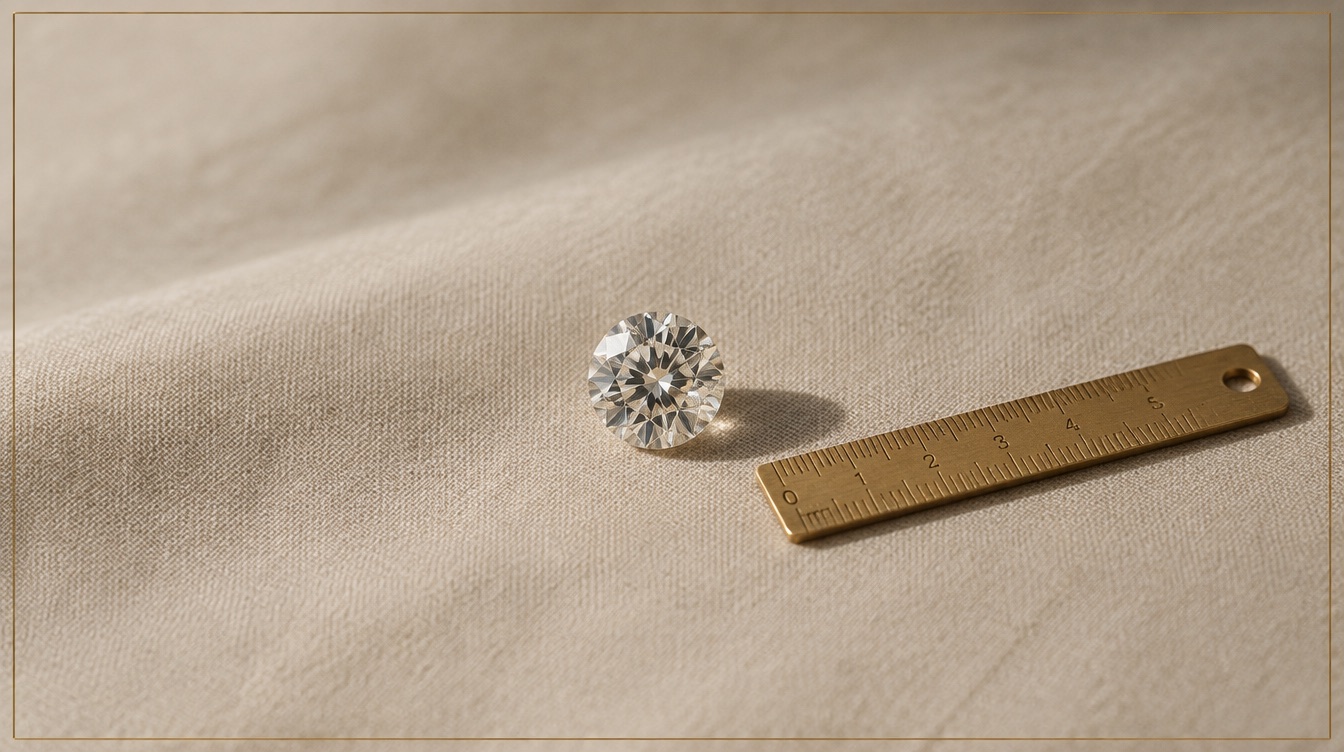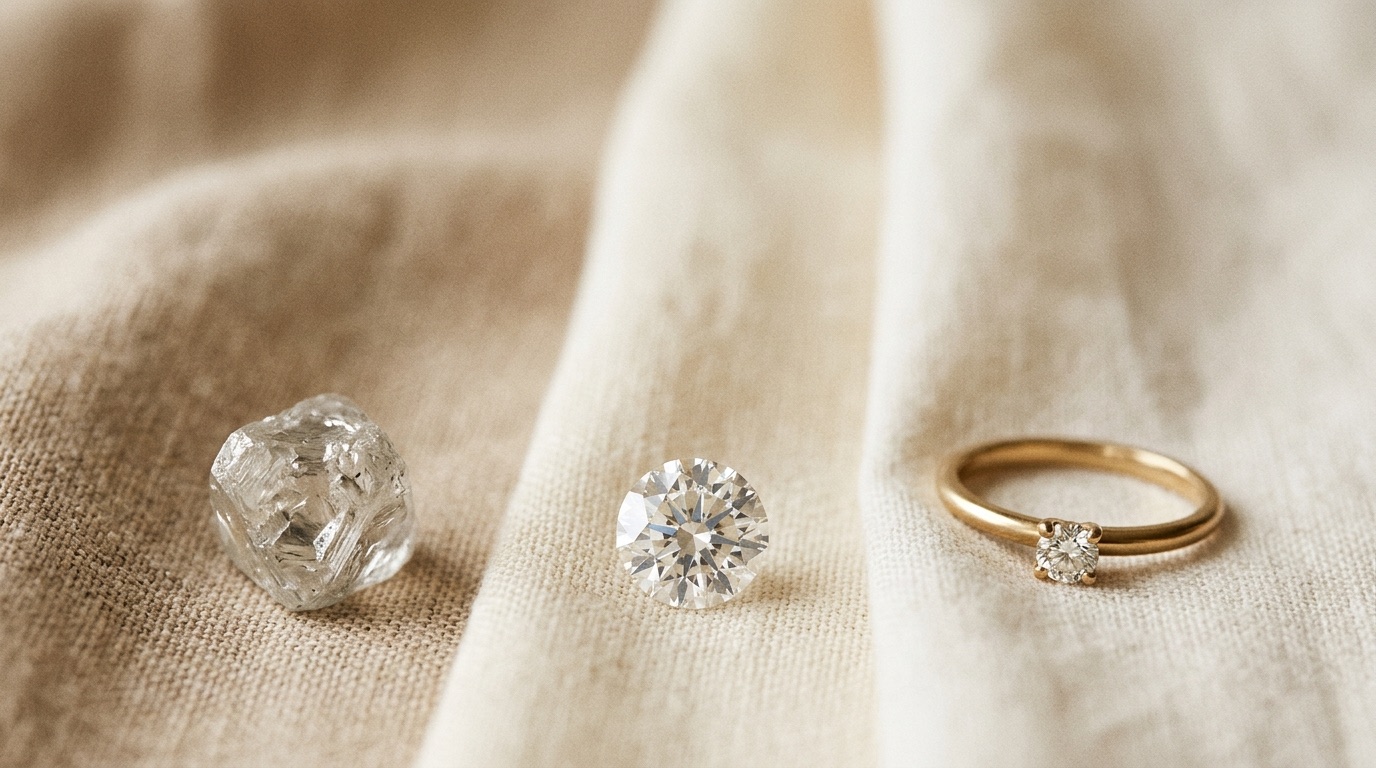
The jewelry supply chain is the sequence of businesses and processes that move a diamond or gemstone from raw material to a finished piece on a retail counter: mining or lab growth, cutting and polishing, grading and certification, wholesale distribution, manufacturing and setting, and finally retail sale. Each stage typically involves a different specialized business, which means a single finished ring can pass through five or more distinct companies before it reaches a jeweler's case — and understanding that structure helps a buyer see where cost, delay, and quality risk actually enter the process, rather than treating the finished price and delivery date as a black box handed down from a single supplier.
This guide walks through each stage of the jewelry supply chain in order, who typically operates at each stage, how the lab-grown and natural diamond supply chains differ, where consolidation is changing the traditional structure, and what a jeweler or designer buying into this chain should understand about where their own purchase sits within it and what that position actually costs them in price, turnaround, and control.
Stage One: Raw Material — Mining or Lab Growth
Natural diamonds begin as rough stone extracted through mining operations, concentrated in a handful of countries with significant diamond deposits, then sold through a rough-diamond trading system that channels stones toward cutting centers globally. Lab-grown diamonds begin instead in a growth facility, where CVD (chemical vapor deposition) reactors grow diamond crystal from a carbon-rich gas onto a diamond seed under controlled temperature and pressure conditions, producing rough crystal that then enters the same downstream cutting and polishing process as natural rough. Both paths produce genuine diamond material — chemically, optically, and physically identical to each other — but the raw-material stage itself is structurally very different: mining is a geological extraction process tied to specific deposits, while lab growth is a manufacturing process that can, in principle, scale wherever reactor capacity is built.
Stage Two: Cutting and Polishing
Rough diamond material, whether mined or lab-grown, moves next to a cutting center where skilled cutters plan and execute the faceting that transforms rough crystal into a finished, polished stone. Major global cutting centers include Surat, India (which handles a very large share of world diamond cutting volume across both natural and lab-grown material), Antwerp, Belgium, and Israel, each with deep specialized infrastructure and labor built up over decades. This stage is where a stone's final cut grade, and therefore much of its light performance, gets determined — a skilled cutter working from well-planned rough can produce a meaningfully better-performing finished stone than a rushed or poorly planned cut from otherwise similar rough material.
Stage Three: Grading and Certification
Once cut and polished, loose stones at 0.30ct and above typically go to an independent grading laboratory — GIA, IGI, or GCAL are the major labs recognized in the US trade — for an independent assessment of carat weight, color, clarity, and cut grade, resulting in a certificate that travels with the stone through the rest of the supply chain. Melee (small accent stones generally under 0.18ct) skips individual certification entirely and instead ships as sorted parcel goods against a documented quality baseline, since individually grading a fraction-of-a-carat stone isn't economically practical. Certification is the point in the supply chain where an independent, third-party check enters the process — everything before this stage relies on the cutter's and dealer's own representations, while a certificate provides a documented, verifiable record a buyer can check against the physical stone.
Stage Four: Wholesale Distribution
Certified and parcel-sorted stones move next through wholesale distribution — dealers and suppliers who buy in volume from cutting centers and sell to manufacturers, retailers, and designers at trade pricing. This stage is where breadth and consolidation matter most to a downstream buyer: a wholesaler carrying a wide range of shapes, sizes, and quality tiers, across both certified loose stones and melee, lets a manufacturer or retailer source most of what they need from one relationship rather than assembling small quantities from many narrow specialists. Wholesale distributors vary widely in scale, specialization (some focus narrowly on one category, like fancy color diamonds or antique cuts, while others carry a broad general assortment), and geographic reach.
Stage Five: Manufacturing and Setting
Loose stones destined for finished jewelry move to a manufacturer, who handles CAD design, casting the metal setting, setting the stone or stones, and finishing (polishing, rhodium plating on white gold, quality inspection) before the piece is ready for sale. This stage can happen in-house at a fully vertically integrated operation, or be split across several specialized subcontractors — a casting house, a separate setting shop, a separate finishing operation — coordinated by a manufacturer that doesn't itself perform every physical step. The degree of vertical integration at this stage significantly affects both turnaround time and quality-control visibility, which is why it's one of the first things worth asking about when evaluating a manufacturer relationship.
Stage Six: Retail
The finished piece finally reaches a retail jeweler, either as standing catalog inventory purchased at wholesale for resale, or as a custom piece built to a specific customer's order and design brief. Retail is the only stage in the chain that deals directly with the end consumer — every earlier stage is a business-to-business transaction, which is part of why pricing and terminology shift meaningfully once a stone or piece crosses into the retail stage, and why B2B buyers researching supply chain topics are typically looking for something quite different than a consumer researching the same general subject.
The Jewelry Supply Chain at a Glance
| Stage | Typical Business Type | Key Output |
|---|---|---|
| Raw material | Mining operation or CVD lab-growth facility | Rough diamond crystal |
| Cutting and polishing | Specialized cutting center (Surat, Antwerp, Israel, etc.) | Finished, polished loose stone |
| Grading and certification | Independent gemological lab (GIA, IGI, GCAL) | Certificate documenting carat, color, clarity, cut |
| Wholesale distribution | Diamond wholesaler/dealer | Trade-priced access to certified stones and melee |
| Manufacturing and setting | Jewelry manufacturer (in-house or subcontracted) | Finished jewelry piece |
| Retail | Independent jeweler, designer, or retail chain | Finished piece sold to end consumer |
How the Natural and Lab-Grown Supply Chains Diverge and Reconverge
Natural and CVD lab-grown diamonds enter the supply chain through entirely different raw-material processes — mining versus reactor growth — but reconverge almost immediately afterward: both types of rough go through the same cutting, polishing, and grading infrastructure, often at the very same cutting centers and sometimes even the same facilities, since cutting and polishing skill transfers directly between natural and lab-grown rough. This is a common point of confusion worth clarifying: the supply chains aren't fully separate end to end, only at the raw-material sourcing stage. From cutting onward, natural and lab-grown stones largely move through parallel versions of the same downstream infrastructure — wholesale distribution, manufacturing, and retail — which is part of why lab-grown diamonds integrated so quickly into existing trade infrastructure once demand grew, without requiring an entirely new supply chain to be built from scratch.
Where Supply Chain Consolidation Is Changing the Traditional Structure
Historically, each stage of this chain tended to be operated by a different, specialized business — a cutter, a separate wholesaler, a separate manufacturer, a separate retailer, each taking a margin at their stage. Increasingly, some businesses vertically integrate across two or more adjacent stages — a wholesaler that also operates in-house manufacturing capability, for example, or a manufacturer that also maintains its own certified loose-stone inventory rather than sourcing it fresh per order. For a buyer, working with a more vertically integrated supplier can mean fewer total relationships to manage, faster turnaround (since fewer handoffs between separate businesses means fewer opportunities for delay), and sometimes better pricing, since fewer separate margins are stacked into the final price.
Where Supply Chain Disruptions Actually Happen
- Cutting center capacity and labor availability. A concentration of global cutting capacity in a small number of centers means a labor disruption or capacity constraint at one major hub can affect availability and lead times more broadly across the trade.
- Certification lab turnaround. Grading lab processing times can extend during periods of high submission volume, which pushes back the point at which a stone becomes sellable as a certified piece.
- International shipping and customs. Stones and finished goods crossing international borders are exposed to shipping delays, customs holds, and changing duty and tariff policy, an exposure that grows with the number of border crossings a piece experiences across its supply chain journey.
- Manufacturing subcontractor coordination. A manufacturer relying on several separate subcontractors for casting, setting, and finishing introduces more coordination points where a delay or miscommunication at one stage can cascade into the overall timeline.
What a Shorter Supply Chain Means for a Buyer
A jeweler or designer sourcing from a supplier positioned further down this chain — one offering both certified loose stones and in-house manufacturing, for example — is effectively buying access to a shorter version of the full chain, with fewer separate businesses and handoffs between the raw material and the finished piece reaching them. This generally translates into faster turnaround, more direct quality-control accountability (fewer parties who can each point to another as the source of a problem), and often more competitive pricing, since fewer stacked margins sit between the buyer and the underlying material and labor cost. It's a meaningful factor to weigh when comparing a narrow specialist supplier against a more vertically integrated one for a given sourcing need, particularly for a buyer whose own order volume or design ambitions are large enough that the cumulative savings across many orders becomes a genuinely significant number rather than a marginal difference.
The Role of Trade Shows and Trade Platforms in Supply Chain Coordination
Industry trade shows and B2B trade platforms serve an important connective function across an otherwise fragmented supply chain, giving businesses at different stages — a wholesaler, a manufacturer, a retailer — a direct venue to find and vet each other without relying entirely on existing personal networks. Trade platforms like VDB and Polygon function as ongoing digital marketplaces connecting these different supply chain stages, letting a retailer or manufacturer search live inventory across many wholesale suppliers rather than contacting each one individually. This connective infrastructure has become increasingly important as the supply chain has both globalized (with cutting concentrated overseas while significant retail demand remains domestic) and, in some cases, consolidated (as some suppliers integrate across multiple stages), since buyers need efficient ways to find the right supplier for their specific position in that increasingly varied structure.
How Buyers Should Think About Their Own Position in the Chain
Understanding the full supply chain helps a buyer identify which stage or stages actually make sense to handle directly versus outsource to a specialized partner. A small independent jeweler generally has no reason to develop in-house cutting or grading capability — those stages benefit enormously from scale and specialized infrastructure that doesn't make sense to replicate at small volume. But the boundary between wholesale sourcing and manufacturing is more often a genuine strategic choice: a retailer or designer with enough volume and design ambition may benefit from developing a direct manufacturing relationship (even without owning the physical production themselves) rather than buying only finished catalog pieces, since that shifts them one stage earlier in the chain and gives them more control over design and, often, better economics. The right answer depends heavily on order volume, design ambition, and how much operational complexity a given business is equipped to manage directly.
Traceability and Documentation Through the Chain
Buyers and end consumers alike increasingly ask about traceability — being able to document a stone's path through the supply chain, particularly for natural diamonds given historical concerns about conflict-sourced material. The Kimberley Process addresses conflict-diamond concerns at the rough-diamond trading stage for natural stones, while grading certificates provide documentation from the cutting and grading stage onward for both natural and lab-grown material. A supplier able to speak clearly and specifically about their own sourcing and documentation practices at each stage they touch directly is generally a stronger, more transparent long-term partner than one who treats supply chain questions as immaterial to a wholesale transaction.
How Pricing Compounds Across the Supply Chain
Each stage in the traditional, non-integrated supply chain typically adds its own margin on top of the cost it received the material or piece at, which means a stone's or piece's price compounds meaningfully as it moves from cutter to wholesaler to manufacturer to retailer. Understanding this compounding effect helps explain why sourcing decisions further upstream — buying certified loose stones directly from a wholesaler rather than a piece already assembled by a manufacturer who themselves bought from that same wholesaler, for example — can produce meaningfully better economics for a buyer positioned to handle the additional stage themselves (in this case, arranging their own manufacturing relationship). It also explains why vertically integrated suppliers, who eliminate one or more of these margin-stacking handoffs internally, can often offer more competitive pricing without necessarily sacrificing quality or service.
Labor and Skill Distribution Across the Chain
Different stages of the jewelry supply chain draw on very different specialized skill sets, which is part of why the industry has historically organized around separate, specialized businesses at each stage rather than one generalist company handling everything. Cutting and polishing requires precision optical and mechanical skill honed over years of training, concentrated heavily in a handful of global centers with deep institutional knowledge built up over multiple generations of skilled cutters. Grading requires trained gemological expertise and adherence to standardized lab protocols. CAD design and metalsmithing for manufacturing draw on a different skill set again — 3D design software proficiency alongside traditional casting, setting, and finishing craft. A business attempting to build genuine, high-quality in-house capability across multiple stages needs to recruit and retain genuinely different specialist skill sets under one roof, which is a meaningful operational undertaking and part of why full vertical integration remains less common than partial integration across just one or two adjacent stages.
How Technology Has Changed Supply Chain Coordination
Digital certification lookup, CAD file sharing, and real-time production tracking have meaningfully shortened the communication lag that historically existed between supply chain stages, particularly across international handoffs. A certificate can now be verified against a lab's online database in moments rather than requiring physical document verification, and CAD files can move between a designer and a manufacturer on opposite sides of the world nearly instantly, compressing what used to be a multi-day physical mail or courier step into an immediate digital exchange. These changes haven't eliminated the fundamental structure of the supply chain's stages, but they have reduced friction and delay at the handoffs between them, which is part of why overall production timelines across the industry have compressed somewhat even where the underlying physical steps — cutting, setting, casting — haven't themselves gotten meaningfully faster.
Sourcing Across a Shorter, More Direct Supply Chain
Guru Diam operates across multiple stages of this chain directly rather than relying on a long series of external intermediaries: certified loose stones (CVD lab-grown and natural, with IGI, GIA, and GCAL certification available) alongside in-house custom jewelry manufacturing — casting, setting, and polishing all handled directly at its New York and Los Angeles locations. This shorter internal chain supports same-day shipping on in-stock inventory and custom engagement rings finished in 4-6 days from approved design.
Buyers can browse certified center-stone inventory in the certified diamonds category, start a custom build through custom jewelry, or apply for a trade account at trade partner. The wholesale hub and matching pairs category cover additional sourcing options across the supply chain stages Guru Diam operates in-house.
Frequently Asked Questions
What are the main stages of the jewelry supply chain?
Raw material sourcing (mining or CVD lab growth), cutting and polishing, grading and certification, wholesale distribution, manufacturing and setting, and finally retail sale to the end consumer.
Do natural and lab-grown diamonds go through the same supply chain?
They diverge only at the raw-material stage — mining versus reactor growth — then largely reconverge through the same cutting, polishing, grading, wholesale, and manufacturing infrastructure, often at the very same facilities.
Where do most diamonds get cut and polished?
Surat, India handles a very large share of global diamond cutting volume across both natural and lab-grown material, alongside significant cutting centers in Antwerp, Belgium and Israel.
Why does supply chain length matter to a jewelry buyer?
Fewer separate businesses and handoffs between raw material and finished piece generally means faster turnaround, more direct quality-control accountability, and often more competitive pricing, since fewer stacked margins sit between the buyer and the underlying cost.
Where do most jewelry supply chain disruptions actually occur?
Common disruption points include cutting center capacity constraints, grading lab processing delays during high-volume periods, international shipping and customs holds, and coordination breakdowns between multiple manufacturing subcontractors.
What is vertical integration in the jewelry supply chain?
Vertical integration means one business operates across two or more adjacent supply chain stages directly — for example, a company that maintains its own certified loose-stone inventory and also operates in-house manufacturing, rather than sourcing each stage from a separate external business.
How does compounding margin across supply chain stages affect final price?
Each non-integrated stage typically adds its own margin on top of the cost it received material at, so price compounds as a stone or piece moves from cutter to wholesaler to manufacturer to retailer. Sourcing further upstream, or working with a vertically integrated supplier, can reduce that compounding effect.
What role do trade platforms like VDB and Polygon play in the supply chain?
They function as digital marketplaces connecting different supply chain stages — letting a retailer or manufacturer search live inventory across many wholesale suppliers rather than contacting each one individually — which is especially useful given how globalized and varied the modern jewelry supply chain has become.