
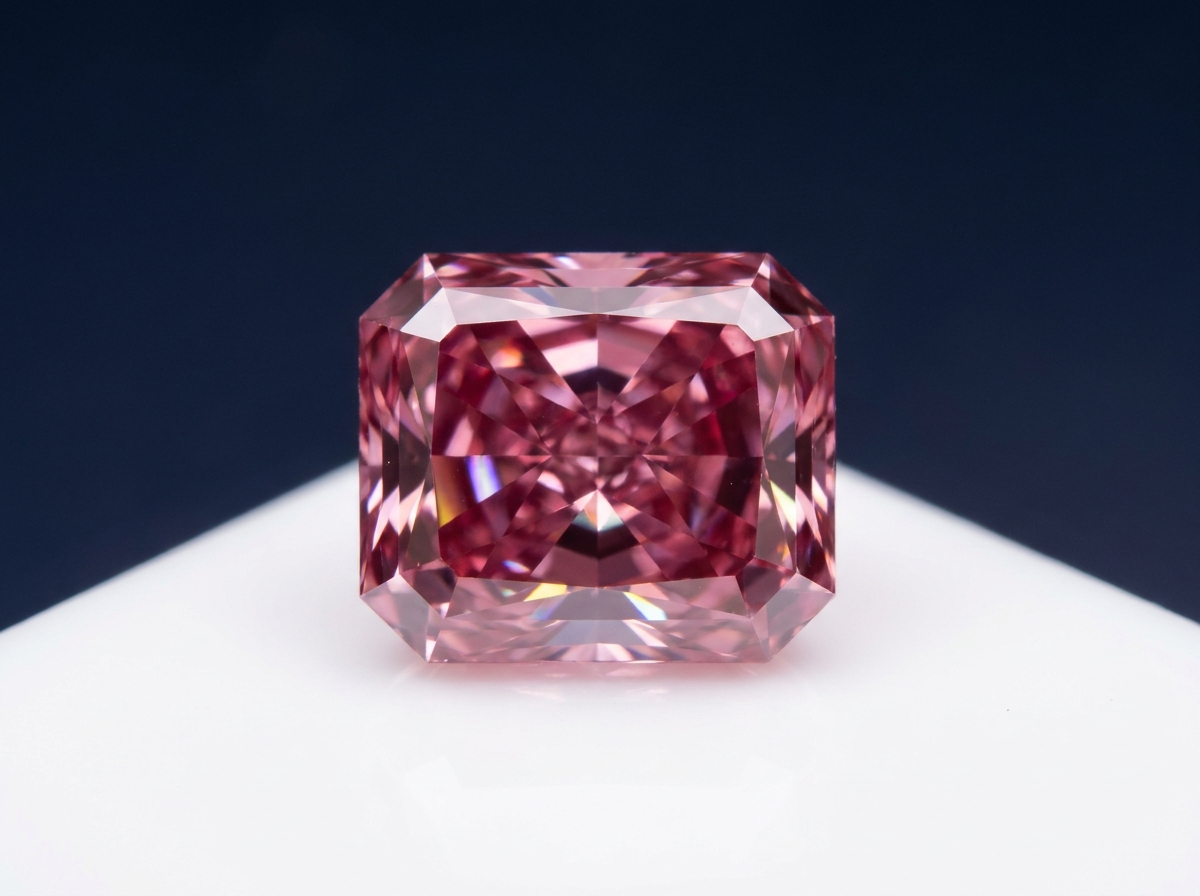
A fancy color radiant cut diamond is a rectangular or square stone with trimmed corners and a full brilliant facet pattern cut deep enough to trap and reflect color back through the crown. It's widely considered the strongest color-performing brilliant shape in the trade. Guru Diam carries a deep, regularly restocked bench of IGI-certified, CVD-grown fancy color radiants across yellow, pink, blue, and green.
Ask a colored-stone cutter which brilliant shape shows fancy color best, and radiant is usually the answer. That's by design — the cut wasn't developed to maximize white-diamond fire the way a round brilliant was. It was developed specifically to hold color. Understanding why takes a short detour through how fancy color itself gets graded, then into the facet geometry that makes radiant the shape colored-stone buyers reach for first.
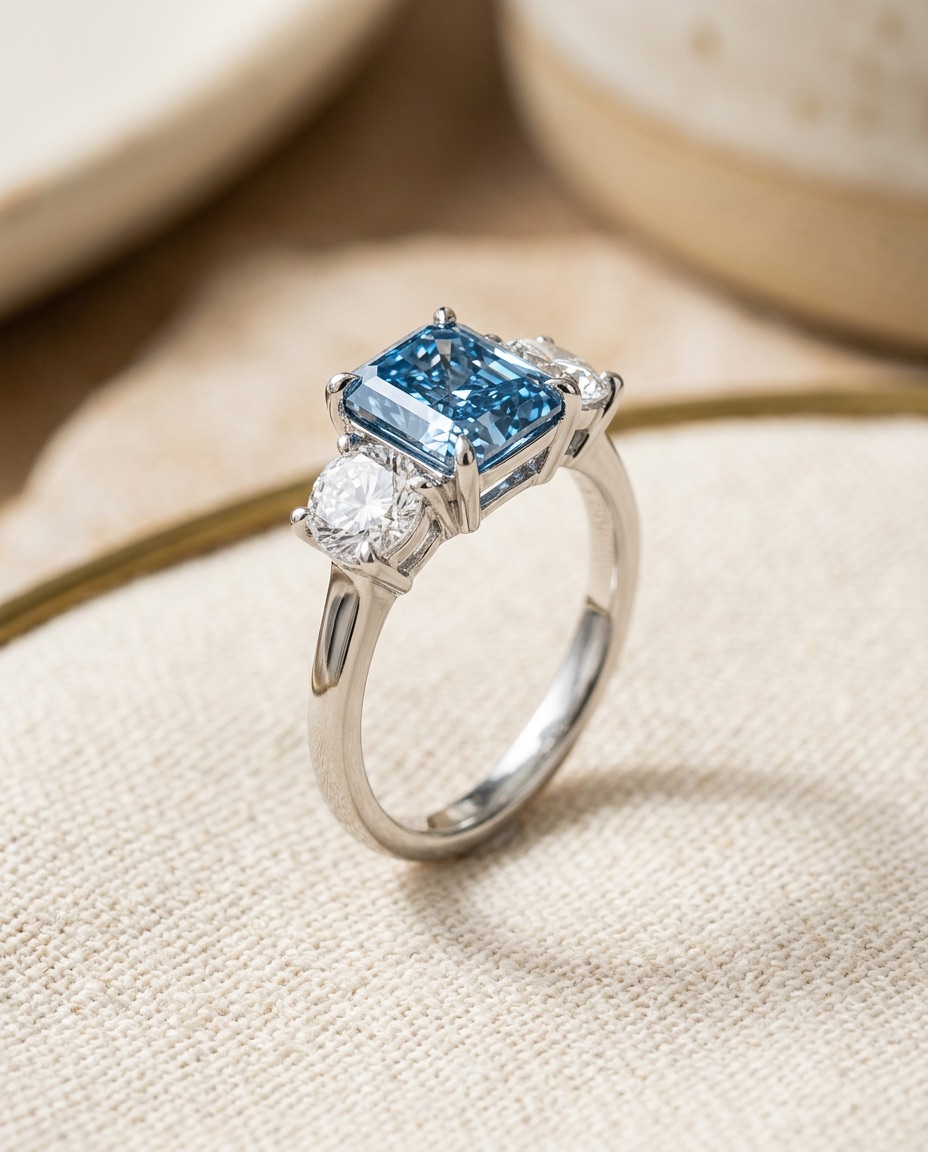
What is a fancy color radiant cut diamond?
A radiant cut is a rectangular or square outline with the corners trimmed off, similar to an emerald cut's silhouette, but faceted with a full brilliant pattern — around 70 facets — instead of the emerald's open step facets. That combination is what makes it distinctive: the trimmed corners give it durability closer to a step cut (fewer weak points than a pointed shape), while the brilliant faceting gives it the fire and sparkle of a round. For colorless diamonds that's a nice compromise. For fancy color diamonds, it's closer to ideal.
The shape was developed in the 1970s by cutter Henry Grossbard as a hybrid specifically meant to resolve the trade-off between step-cut elegance and brilliant-cut sparkle, and it was adopted quickly by colored-stone specialists once cutters noticed how well it performed on tinted rough. It has since become one of the standard reference shapes for fancy color rough — meaning a colored-stone cutter evaluating a new piece of CVD rough will often test-plan a radiant cut before anything else, specifically because the shape's geometry is the most reliable way to find out how much color the rough actually has to give.
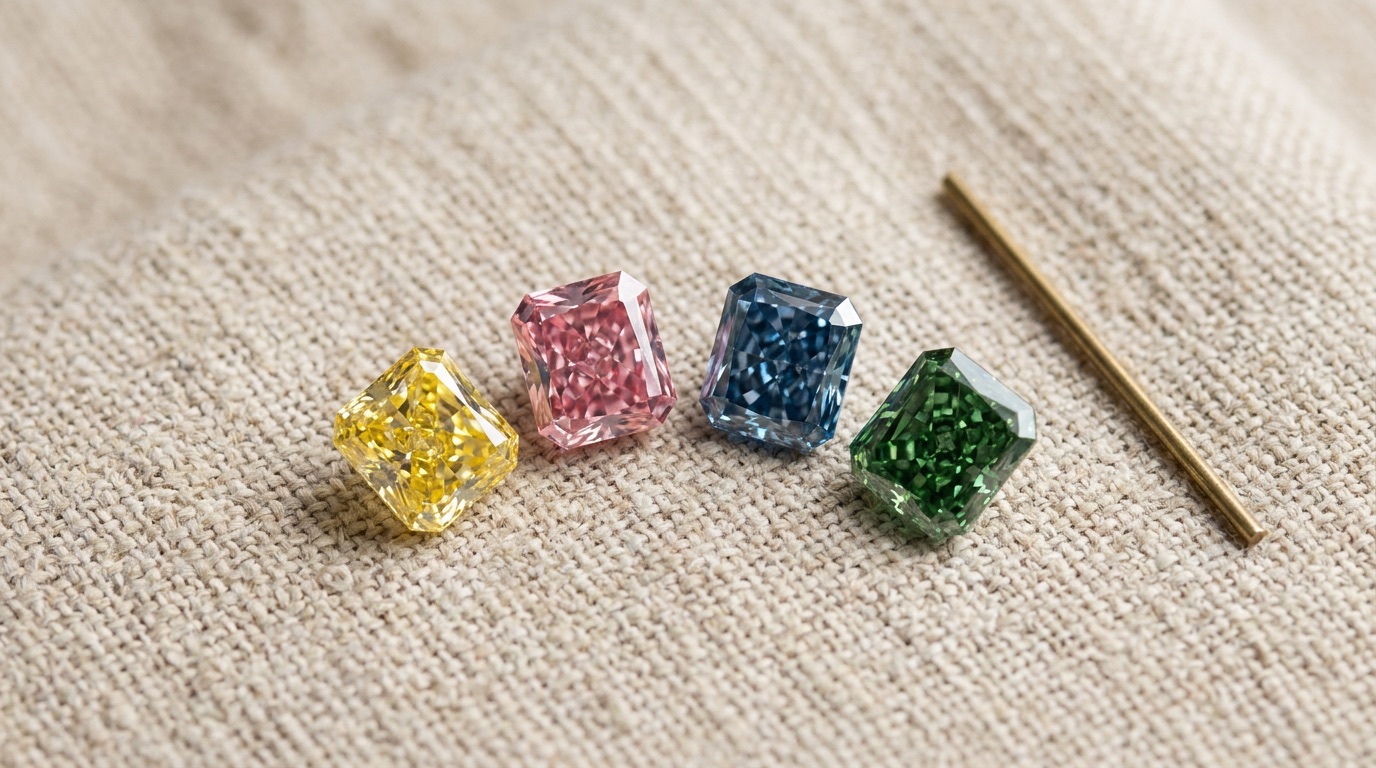
Radiant is typically cut closer to square than a comparably sized emerald cut — length-to-width ratios in the 1.00–1.05 range read as square, while anything above roughly 1.30 starts to read as a rectangular "radiant" silhouette more distinct from a square cushion. Both proportions show fancy color well; the choice mostly comes down to the buyer's preference for outline rather than any real difference in color performance between a square and rectangular radiant of the same depth. Guru Diam's fancy color radiant inventory covers the four core colors we stock in certified loose form — yellow, pink, blue, and green — cut CVD-grown and certified IGI as standard, with GIA available on request.
How fancy color diamonds are graded: hue, tone, and saturation
Fancy color diamonds don't use the D-to-Z scale that governs white diamonds. That scale measures how close a stone sits to colorless — it penalizes tint. Fancy color stones are graded on the opposite premise: how strongly, evenly, and attractively they express color. GIA and IGI both grade on three variables working together, and understanding each one explains why two radiants of the same carat weight can carry very different price tags.
Hue
Hue is the base color family — yellow, pink, blue, green, or a modifier combination like "brownish yellow" or "purplish pink." Pure, single-word hues generally command more than hues with a secondary modifier, because a secondary tint is read by buyers as diluting the primary color rather than adding to it. This is graded first because it sets which color family a stone belongs to before tone and saturation are even considered.
Tone
Tone is how light or dark the color reads, on a scale from very light to very dark. A stone can have excellent hue and saturation but read as too pale or too blackish if the tone sits at either extreme — the sweet spot for most fancy color buyers is a medium tone that reads clearly as the hue without going murky.
Saturation
Saturation is color intensity — how vivid the hue appears, independent of how light or dark it is. This is the variable that drives price the hardest. GIA's saturation ladder for fancy colors runs from Faint through Fancy Light, Fancy, Fancy Intense, Fancy Deep, and Fancy Vivid at the top. A Fancy Vivid stone at a given carat weight can be worth multiples of a Fancy Light stone in the same hue, because true vivid saturation in a diamond is genuinely rare — most colored rough, natural or lab-grown, lands in the lighter-to-medium saturation bands.
Cut plays directly into how these three variables read face-up. A well-cut radiant can push a borderline saturation grade to look more vivid than the lab report alone suggests, because the deep pavilion is doing real optical work — which is exactly why cut choice matters as much as rough color when a jeweler is buying for color performance rather than certificate numbers alone. Champagne and cognac diamonds are graded on this same hue/tone/saturation framework and are well known in the broader colored-diamond trade, but they sit outside Guru Diam's four core stocked colors for certified loose fancy color stones — our certified inventory is yellow, pink, blue, and green only.
Radiant cut facet anatomy: why cropped corners and brilliant faceting intensify color
The reason radiant shows fancy color better than most other brilliant shapes comes down to pavilion depth and angle. A radiant's pavilion is cut deeper and at steeper angles than a round brilliant's, which lengthens the path light travels inside the stone before it exits — more internal reflection means more opportunity for the diamond's own body color to be picked up and carried back out through the table. A round brilliant, by contrast, is cut for maximum brightness and white-light return, which means light exits faster and with less color absorption along the way.
Put simply: brilliant faceting scatters light into many small flashes, which is exactly what you want for a colorless stone chasing fire, but it also tends to dilute how saturated a fancy color reads face-up. Radiant keeps the brilliant faceting — so it doesn't sacrifice sparkle — but its deeper cut geometry means more of that light spends time inside the stone picking up color before it leaves. That's why two stones of the same rough color grade will often show visibly more saturated, more even color in a radiant cut than in a round brilliant.
The trimmed corners do more than soften the silhouette. Structurally, they remove the sharp 90-degree points that are the most vulnerable spots on a rectangular stone — a plain rectangle under everyday wear concentrates stress right at those corners, while a cropped corner spreads it across a small facet edge instead. Optically, the corner facets act as their own small brilliant clusters, catching light at angles the long sides can't reach and feeding it back into the same internal color-return system the pavilion is built around. A cutter working colored rough will typically orient the crop to work with, not against, any visible color zoning in the rough — which is one reason radiant cutting of colored stones is a more deliberate, judgment-heavy process than cutting a colorless round.
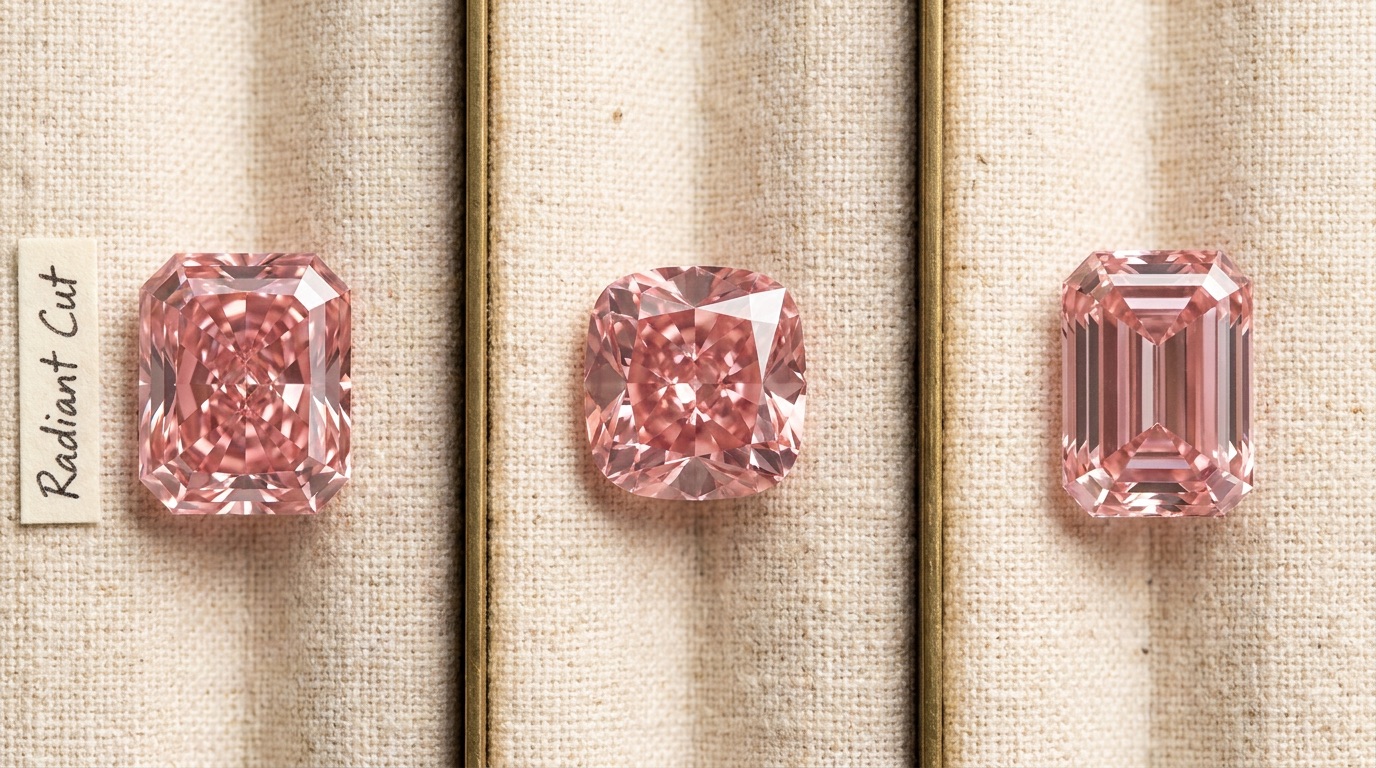
How Guru Diam sources and matches fancy color quality
Fancy color CVD rough doesn't grow uniform. Even within a single growth run targeting a specific hue, individual crystals come out across a range of tone and saturation, and some will carry visible color zoning that only shows up once the stone is faceted and polished. Sourcing consistent fancy color radiant inventory means grading rough and pre-forms before they're committed to a final cut, and routing anything with strong zoning or an off-target hue toward a different shape where the flaw is less visible, rather than cutting it into a radiant where the deep pavilion would show every inconsistency.
Once cut, each stone is reviewed in-house against a hue/tone/saturation target before it's certified and added to sellable inventory — the goal is a bench where a buyer can reliably order "a Fancy Intense yellow radiant" and get a stone that reads as consistently as the last one, rather than one-off pieces with wide internal variance. Matched-pair and multi-stone orders go through an additional side-by-side review under consistent lighting, since even a one-grade difference in saturation is far more visible when two stones sit next to each other in an earring or a three-stone ring than it is in a single center stone. Every piece carries an IGI certificate as standard, with GIA or GCAL available on request for buyers who prefer a specific lab.
Fancy color radiant: spec and availability
| Spec | Detail |
|---|---|
| Outline | Rectangular or square, trimmed corners |
| Facet style | Full brilliant (~70 facets), deep pavilion |
| Color palette (Guru Diam certified loose) | Yellow, Pink, Blue, Green |
| Growth method | CVD-grown |
| Certification | IGI standard; GIA or GCAL available on request |
| Stone type | Certified single stones (not melee) |
| Availability | In stock now — restocked regularly |
| Typical uses | Engagement ring center stones, three-stone settings, pendants, matched pairs |
Sourcing fancy color radiant diamonds wholesale
Fancy color radiant is one of Guru Diam's deeper fancy color inventories, second only to cushion in overall breadth — enough depth across yellow, pink, blue, and green to cover most standard size and color requests without a made-to-order wait. Because radiant's color performance is well understood in the trade, it's a common ask from clients who've already seen a competing color-focused cut and want the same saturation with more everyday chip resistance than a pointed shape offers.
Guru Diam sources fancy color radiant diamonds as wholesale, trade-only inventory — no retail markup — from our New York Diamond District desk (36 West 47th Street, Suite 601A) and our Los Angeles office (607 South Hill Street). In-stock pieces ship same-day from New York. For a custom setting, CAD-to-finished-piece turnaround runs 4–6 days. For the full fancy color category across every shape, see our fancy color lab-grown diamonds overview.
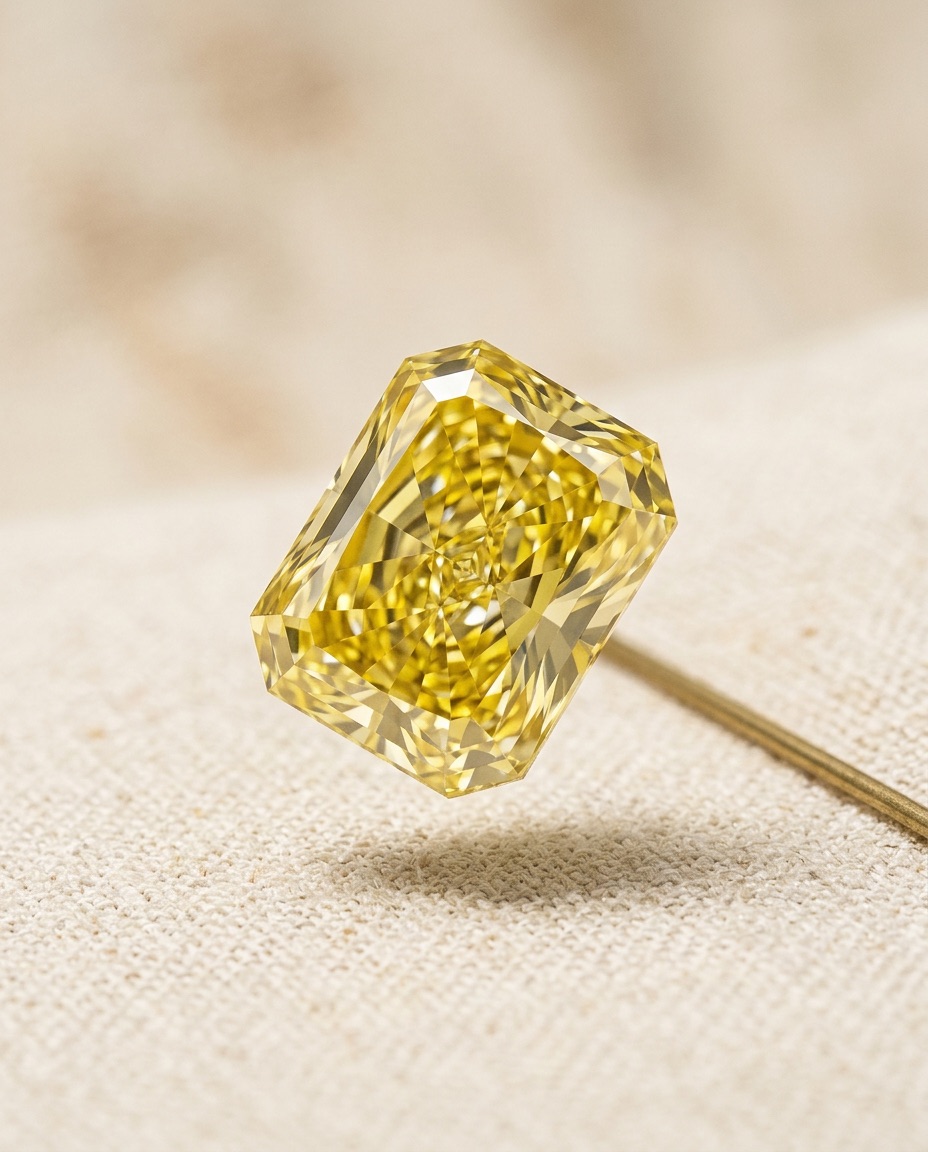
Quality considerations when buying fancy color radiant wholesale
Saturation evenness and windowing
Because a radiant's pavilion is deep, poor proportioning can create a "window" — a washed-out patch near the culet where light passes straight through instead of reflecting color back — that's harder to spot in a lab-grown fancy color stone than in a colorless one, since a buyer's eye is already scanning for hue rather than transparency. Check the stone face-up under neutral light for any pale patch breaking up the color field before ordering, particularly at larger carat weights where the pavilion has more surface area to go wrong.
Clarity and inclusions in fancy color stones
Clarity standards run looser for fancy color than for colorless diamonds in the trade generally — buyers are shopping for color performance first, and minor inclusions that would matter in a D-color round are often invisible against a saturated body color. That said, inclusions that sit directly under the table or interrupt the color field visibly still matter and should be checked stone-by-stone rather than assumed acceptable purely because the stone is fancy color.
Cut precision and symmetry
Radiant is a mixed cut with more facet junctions than a step cut, which means symmetry errors — misaligned facets, an off-center culet, uneven corner crops — are more visible on close inspection than they would be on an emerald cut. For fancy color specifically, symmetry errors also create uneven color return across the stone's face, so a radiant that's cut slightly off-symmetry can show visibly patchier color than a well-cut one even at the same certified saturation grade.
Pricing factors for fancy color radiant diamonds
Saturation is the single biggest price driver — a Fancy Vivid stone will command a meaningfully higher price per carat than a Fancy Light stone in the same hue and carat weight, because true vivid saturation is the rarest outcome of any given growth run. Hue rarity is the second factor: blue and pink generally price above yellow and green in the wholesale fancy color market, reflecting how much harder those hues are to produce consistently at strong saturation, whether the rough is natural or lab-grown.
Carat weight scales price non-linearly, the same way it does for colorless diamonds — larger fancy color radiants are disproportionately harder to source clean, since a bigger pavilion has more surface area for zoning or inclusions to show up. Clarity and cut precision layer on top of that: a clean, well-symmetrized radiant in a strong saturation grade sits at the top of the pricing band, while a stone with visible windowing or asymmetric corners prices below its certificate grade would suggest on paper. For jewelers pricing a piece for a client, it's worth remembering that lab-grown fancy color runs at a fraction of the per-carat cost of natural fancy color in equivalent hue and saturation, which is the core value proposition driving wholesale demand for this category.
Reading a fancy color radiant certificate
A fancy color lab report reads differently from a standard colorless certificate, and it's worth knowing the format before comparing stones across suppliers. Instead of a single color letter, the report lists an origin of color determination (natural or laboratory-grown), a color grade written as intensity plus hue — for example "Fancy Intense Yellow" or "Fancy Vivid Blue" — and, on some reports, a color distribution note flagging whether the hue reads evenly across the stone or is concentrated toward one end. Clarity, measurements, and proportions are listed the same way they are on a colorless report, but weigh less heavily in a fancy color buying decision than the color grade itself.
Guru Diam issues IGI certification as standard on every fancy color radiant, with GIA or GCAL available on request for buyers who want a specific lab's report to match existing inventory or a client's preference. When comparing two stones with the same stated hue, checking whether the intensity wording matches — Fancy versus Fancy Intense versus Fancy Vivid — is the fastest way to sanity-check a price difference before assuming one supplier is simply cheaper.
Styling and use-case guidance
Engagement ring center stones
Radiant's rectangular silhouette reads larger face-up than a round of equivalent carat weight, and the cropped corners make it far more wearable day-to-day than a pointed shape like marquise or pear. A four-prong or bezel setting that protects the corners is the standard recommendation — a plain claw setting on the long edges alone leaves the crop vulnerable to chipping over years of wear.
Three-stone and halo settings
Fancy color radiant pairs naturally with white diamond side stones in a three-stone layout, since the color contrast does the visual work a matching metal or halo would otherwise need to do. A halo in white diamonds around a saturated yellow or pink radiant center also amplifies apparent size and adds sparkle without competing with the center stone's color.
Earrings, pendants, and matched pairs
Because radiant holds color so consistently across a matched set, it's a strong choice for stud earrings and drop pendant pairs where two stones sit close together and any saturation mismatch would be obvious. Guru Diam's matched-pair review process (see sourcing above) is built specifically around this use case.
Radiant vs. cushion vs. emerald: comparing fancy color performance across shapes
Cushion is Guru Diam's deepest fancy color inventory and the trade's most common fancy color shape overall — its rounded corners and mixed faceting hold color even more forgivingly than radiant's crisper outline, which is part of why it outsells radiant in raw volume. The trade-off is a softer, less geometric silhouette; buyers who want the same strong color performance with a more architectural, modern outline tend to move to radiant instead.
Emerald cut is the step-cut sibling radiant borrowed its outline from, and it's a useful contrast case: emerald's open, wide facets create a "hall of mirrors" effect that shows clarity beautifully but is far less forgiving of color inconsistency, since there's less faceting to break up and mask uneven saturation. Emerald cut fancy color stones need cleaner, more even rough to look right, which is why radiant — with its brilliant faceting doing more of the visual work — is generally the easier, more forgiving choice when color performance is the priority over step-cut elegance.
In short: cushion for the deepest inventory and most forgiving color return, radiant for a cleaner geometric outline without sacrificing color performance, and emerald cut for buyers who specifically want the step-cut look and are willing to be pickier about rough quality to get it.
How to order fancy color radiant diamonds wholesale
Ordering starts with a verified trade account — Guru Diam sells wholesale only, so every buyer is confirmed as a jeweler, designer, or manufacturer before pricing is shared. Once an account is open, a gemologist reviews current fancy color radiant availability against your hue, saturation, and carat requirements, pulls matching certificates, and can arrange side-by-side comparison photos or a video call for stones being bought sight-unseen. For a custom setting built around the stone, the same desk manages CAD, in-house cutting, setting, and polishing through to a finished piece.
Ready to buy? Open a verified wholesale account at /signup and book time with a gemologist at /book-appointment.
Frequently Asked Questions
What is a fancy color radiant cut diamond? A fancy color radiant cut diamond is a colored diamond cut with a rectangular or square outline, trimmed corners, and a full brilliant facet pattern. Its deeper pavilion angles hold and reflect more color than a standard round brilliant, which is why it's considered one of the strongest color-performing shapes in the trade.
Why does radiant cut show fancy color better than round brilliant? Radiant's pavilion is cut deeper and at steeper angles, which lengthens the path light travels inside the stone before exiting — carrying more of the diamond's own color back out through the crown. A round brilliant is cut for maximum white-light brightness, which scatters light quickly and tends to dilute color saturation by comparison.
How is fancy color graded, and how does that affect price? Fancy color diamonds are graded on hue (the color family), tone (light to dark), and saturation (color intensity), rather than the D-to-Z colorless scale. Saturation is the biggest price driver — a Fancy Vivid stone commands significantly more per carat than a Fancy Light stone in the same hue, because vivid saturation is rare in any given growth run.
Are fancy color radiant diamonds lab-grown, and are they certified? Yes. Guru Diam's fancy color radiant inventory is CVD-grown and IGI-certified as standard, with GIA or GCAL certification available on request. All pieces are certified single stones, not melee.
What colors are available in fancy color radiant cut? Guru Diam's certified loose fancy color radiant inventory is yellow, pink, blue, and green.
How does radiant compare to fancy color cushion and emerald cuts? Cushion is Guru Diam's deepest fancy color inventory and the most forgiving shape for color return. Radiant offers similar color performance with a cleaner, more geometric outline. Emerald cut shows clarity beautifully but is less forgiving of uneven color, since its open step facets mask less inconsistency than radiant's brilliant faceting.