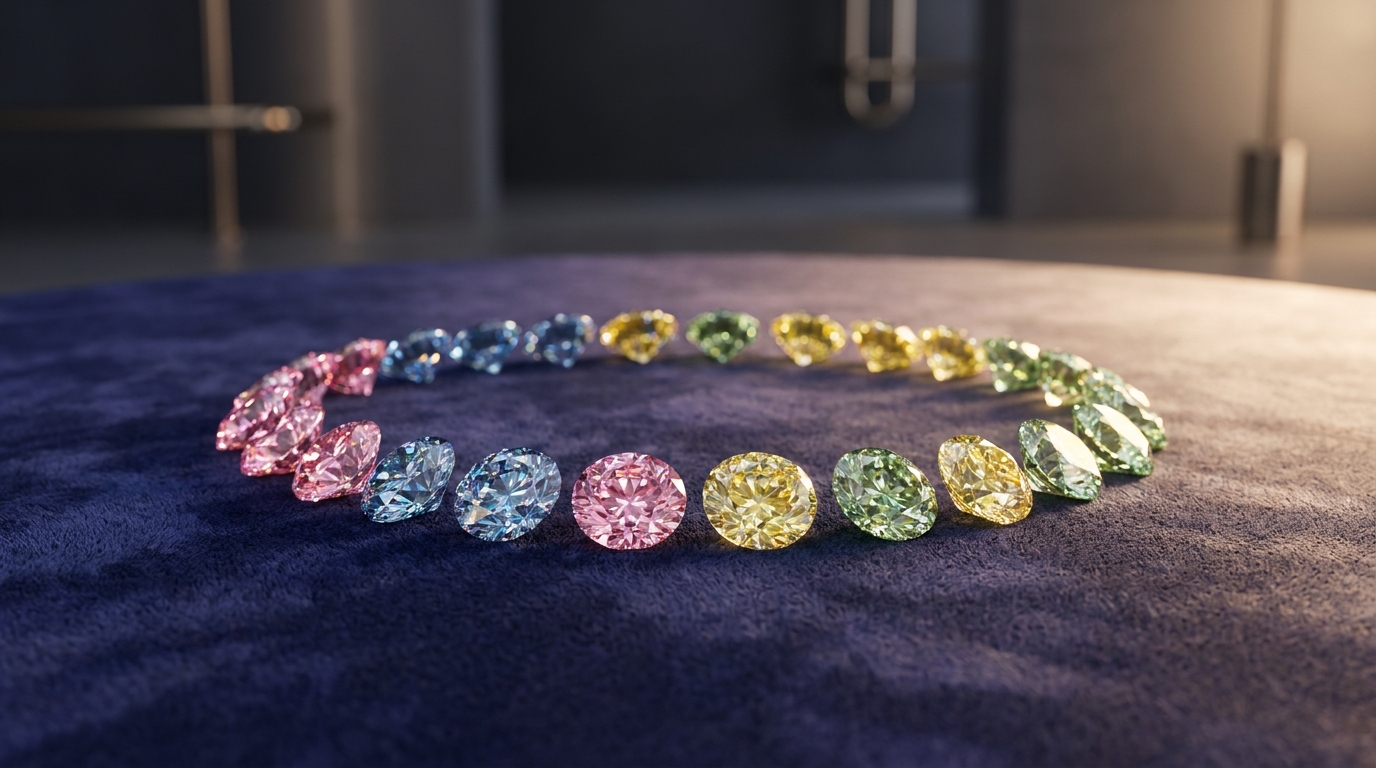
Fancy-color lab-grown diamonds have moved from novelty to standing category in the wholesale trade. Pink, blue, yellow, and green stones that would take a natural buyer years to source — if they ever surfaced at all — are now a spec a retailer can order against, reorder against, and build a program around. That shift changes how a buyer should approach the category. Sourcing fancy color used to mean chasing a single irreplaceable stone; sourcing it today means building an assortment, and an assortment needs a strategy.
This guide is the category-level playbook: how the color gets into the diamond, how grading actually works across hue, tone, and saturation, which shapes carry color best and why, how to build an assortment across colors and price points, what a certification report should show you, what actually drives price inside the category, how to merchandise color in a case so it sells, the mistakes that trip up first-time color buyers, and a working checklist for standing up a fancy-color program. If you're sourcing a specific shape — heart, marquise, or round brilliant — the dedicated shape guides linked throughout go deeper on cutting and performance for that shape. Consider this the map; those are the close-up views.
What "fancy color" means and how it's produced in lab-grown diamonds
In grading terms, "fancy color" is simply any diamond graded outside the normal colorless-to-light-yellow (D-to-Z) scale — a stone with a distinct, gradable hue rather than a trace of tint. In a natural diamond, that hue is an accident of geology: a structural quirk, a trace element that happened to be present, or exposure to radiation over geologic time, none of which the miner controls. That's why a natural fancy color is rare and priced accordingly — the color wasn't engineered, it was found.
A lab-grown fancy color gets its hue from a controlled version of the same underlying physics, applied deliberately during and after growth rather than left to chance. CVD (chemical vapor deposition) production builds a diamond layer by layer inside a growth chamber, and the gas chemistry in that chamber can be adjusted to introduce specific trace elements into the crystal lattice as it forms — a process the trade shorthand calls doping. Different elements bend light differently once they're locked into the structure, which is what produces a visible hue rather than a colorless stone. Some hues also involve a secondary treatment step after growth — controlled irradiation and annealing — to shift or intensify a color the way it would occur in nature, just on a production timeline instead of a geologic one.
The practical distinction for a buyer isn't the chemistry, it's the reliability. Because the hue is introduced as part of a controlled process rather than discovered in a rough stone, a manufacturer can target a specific color family and reproduce it across a working range of carat sizes. That's the entire commercial premise of fancy-color lab-grown: a hue that would be a once-in-a-career find in nature becomes a repeatable line item on a purchase order. Guru Diam produces its fancy-color inventory in-house through CVD, which is what makes reordering against a hue — not just buying it once — practical for a retail buyer building a collection around it.
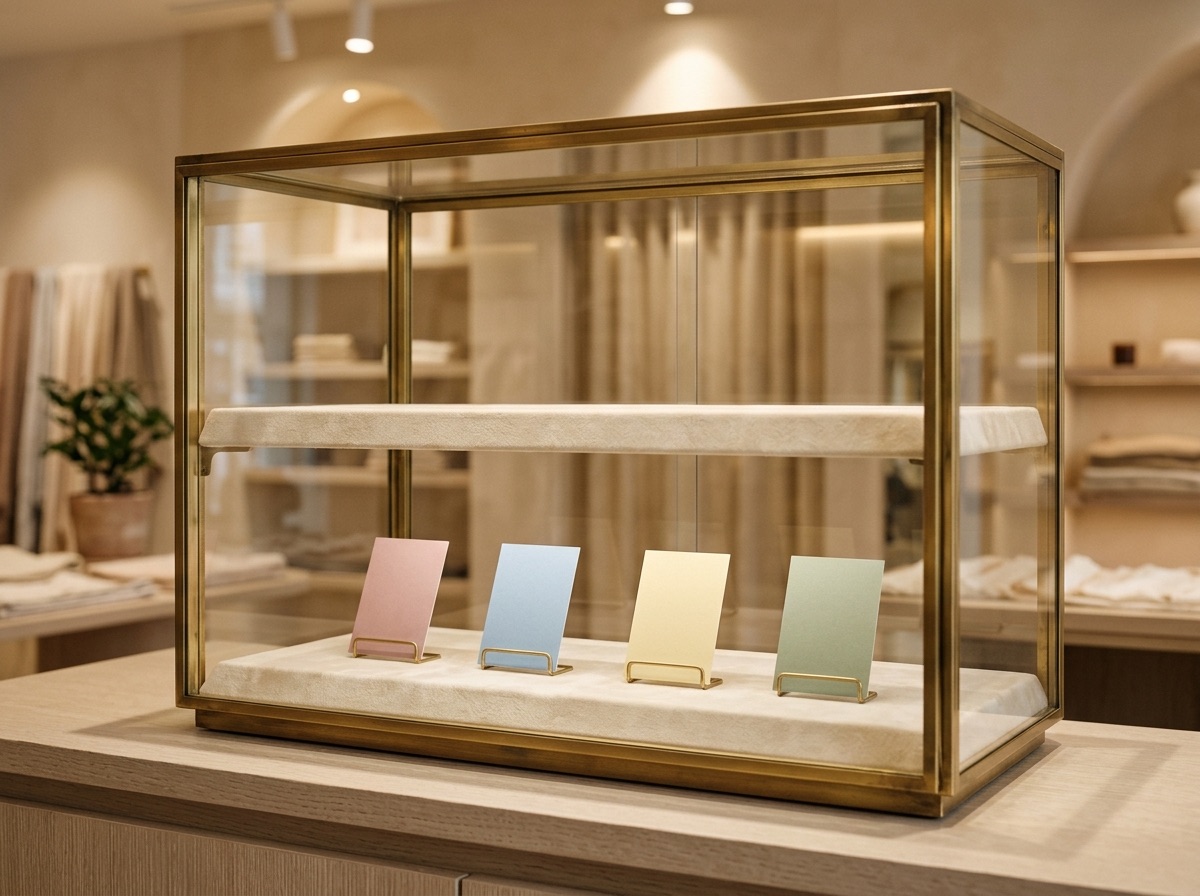
Hue, tone, and saturation: how fancy-color grading actually works
Fancy-color grading runs on three variables, and buyers who only ask about "the color" are missing two-thirds of what determines how a stone actually looks and what it should cost.
Hue is the color family itself — pink, blue, yellow, green — plus any modifying hue that rides alongside it. A stone is rarely a pure single hue; grading reports often note a dominant hue with a secondary modifier (a yellowish-green, a purplish-pink), and that modifier matters to how the stone reads in a piece.
Tone is how light or dark the color sits, independent of the hue itself — the same pink can run from very light to very dark, and tone is what separates those versions. A lighter tone reads as delicate and wears well as an everyday accent; a darker tone reads as dramatic and tends to anchor a statement piece.
Saturation is the intensity or purity of the color at a given tone — how vivid the hue is, as opposed to how much it's diluted toward gray or brown. This is the variable that does the most work in pricing. Grading scales typically move through a sequence such as Faint, Very Light, Light, Fancy Light, Fancy, Fancy Intense, Fancy Vivid, and Fancy Deep, with saturation climbing through that sequence. A Fancy Vivid pink and a Fancy Light pink can be the same hue and the same carat weight and sell at meaningfully different price points, because saturation is doing the pricing work, not hue alone.
For a wholesale buyer, the practical takeaway is to spec all three variables, not just the color name. "A pink diamond" is not a purchase order; "a Fancy Intense pink, medium-dark tone, no visible brown modifier" is. When you're sourcing to match an existing piece or build a matched set, hue-tone-saturation is the reference the desk holds every stone in the set to — not a color swatch held up and eyeballed.
Which shapes show color best, and why
Shape isn't a cosmetic choice in fancy color the way it often is in colorless stones — it's a lighting decision. Every faceting style is a trade-off between brilliance (white-light sparkle) and color saturation, because the same facets that scatter white light also scatter and dilute the diamond's own body color. Shapes built to maximize brilliance are, by the same mechanism, the hardest shapes to show color in; shapes with fewer, larger facets let more of the diamond's color reach the eye undiluted.
At one end of that spectrum sits the round brilliant — the shape engineered from the ground up for maximum white-light fire, which makes it the shape that shows fancy color least efficiently, and correspondingly the rarest and most commanding fancy-color shape in the trade. At the other end sit elongated and mixed-cut shapes, which concentrate color toward their points and centers and read noticeably more saturated than a round of the same hue and carat weight. Heart shapes add a third variable: the cleft and two lobes create a face-up outline that's inherently more visually complex, so color placement and cut symmetry both affect how the hue reads.
Rather than restate the shape-specific mechanics here, the category playbook is this: match shape to the design brief and the saturation you're paying for. If a client wants maximum color impact per carat, elongated shapes over rounds. If a client specifically wants the rarity story of a fancy-color round, price and lead time should reflect that it's the hardest version of the category to source. For the full breakdown of how each shape performs — cut proportions, saturation behavior, and current inventory — see the dedicated guides: Fancy Color Heart Diamonds Wholesale, Fancy Color Marquise Diamonds Wholesale, and Fancy Color Round Diamonds Wholesale.
Building a fancy-color retail assortment across colors and price points
A fancy-color case that works commercially isn't a random scatter of pretty stones — it's a ladder, with an entry point that gets a customer to say yes and a top end that gives the case a reason to be taken seriously.
Yellow is almost always the entry rung. It's the most accessible fancy color to produce and price, it pairs cleanly with both white and yellow metal, and it reads as approachable rather than rare — which makes it the color a retailer can put in front of a broad range of customers without a big price conversation. It's also the color that does the most work in fashion rings and halo accents, where the goal is a pop of color rather than a centerpiece statement.
Pink and blue sit in the middle of the ladder as the pieces that carry a collection. Pink reads as romantic and premium, which makes it a natural fit for engagement centers and milestone pieces where the color itself is part of the emotional pitch. Blue reads cooler and more modern, and tends to headline a design rather than sit inside one — a blue center stone is usually the whole reason a client is looking at that piece. Green sits at the top of the ladder less because of tone and more because of scarcity: it's the rarest hue family in nature by a wide margin, so a lab-grown green gives a retailer something to say a client genuinely cannot find elsewhere at a sane price. A single well-chosen green piece does more for a case's credibility than several more of any other color.
The assortment mistake to avoid is loading up on one color because it was available rather than building deliberately across the ladder. A case with ten yellows and nothing else has range in name only. A working assortment has a yellow entry point, at least one pink and one blue mid-tier piece, and a green anchor — across a spread of carat sizes and both loose stones and finished settings, so a customer at any budget has a reason to look twice.
Certification specifics for fancy-color reports
A fancy-color grading report is not the same document as a colorless-diamond certificate with a different color line. The report exists specifically to record and verify the hue-tone-saturation call, because that call is where the value sits, and it needs to hold up independent of the seller making it.
A fancy-color report should show a color origin statement (confirming the stone is lab-grown and, where relevant, how the color was produced), the graded color call itself — dominant hue, any secondary modifier, and saturation grade — along with the standard carat weight, clarity, and measurements. Because color grading has a subjective component that clarity and cut grading don't, the credibility of the lab doing the grading matters more here than almost anywhere else in the trade.
Guru Diam supplies fancy-color stones loose and IGI-certified as the standard, with GIA certification available on request when a brief calls for it. Buying loose — rather than already set — matters specifically in fancy color, because it keeps the stone and its report together and independently verifiable before the stone goes into a mounting. Once a fancy-color stone is set, verifying the exact hue and saturation against its paperwork gets meaningfully harder; loose sourcing is what lets a buyer confirm the call before it's locked into a finished piece.
Pricing factors across the fancy-color category
Fancy-color pricing doesn't move the way colorless pricing does, and a buyer who prices it by carat weight alone will misquote almost every piece. Four factors do most of the work, and they interact rather than stack cleanly.
Saturation is the dominant lever. Within the same hue and the same carat weight, moving up the saturation scale — from Fancy Light toward Fancy Vivid — has a larger effect on price than almost any other single variable. This is the opposite of how many buyers intuit color pricing; the hue name matters less than how intensely it's expressed.
Hue rarity sets the ceiling. Even engineered, green remains the hardest hue family to produce and source in volume, which keeps it priced above yellow at equivalent saturation and carat weight. Pink and blue sit between the two, with blue generally commanding a premium over pink at comparable saturation because deeply saturated blue is harder to hold consistently through production.
Shape compounds the first two factors rather than adding to them separately. Because round brilliant faceting dilutes color the most, achieving a given saturation grade in a round typically costs more than achieving the same grade in an elongated or mixed-cut shape of the same carat weight — the cutter has less margin to work with. That's why fancy-color round brilliants command the steepest per-carat premium in the category even before hue and saturation are factored in.
Carat weight still matters, but non-linearly — the same escalating-value curve that applies to colorless diamonds applies here, compounded by the fact that holding a target saturation gets harder as carat weight increases, because there's simply more material for the color to stay even across.
For a wholesale buyer, the pricing conversation with a client should walk through these factors in order — saturation, hue, shape, carat — rather than leading with carat weight the way a colorless quote would. It's also why sourcing loose and certified from a single manufacturer keeps pricing legible: every stone in inventory is priced against the same production cost basis, so a quote reflects the category's actual cost drivers rather than a resold markup stacked on top of them.
Merchandising fancy color in a retail case
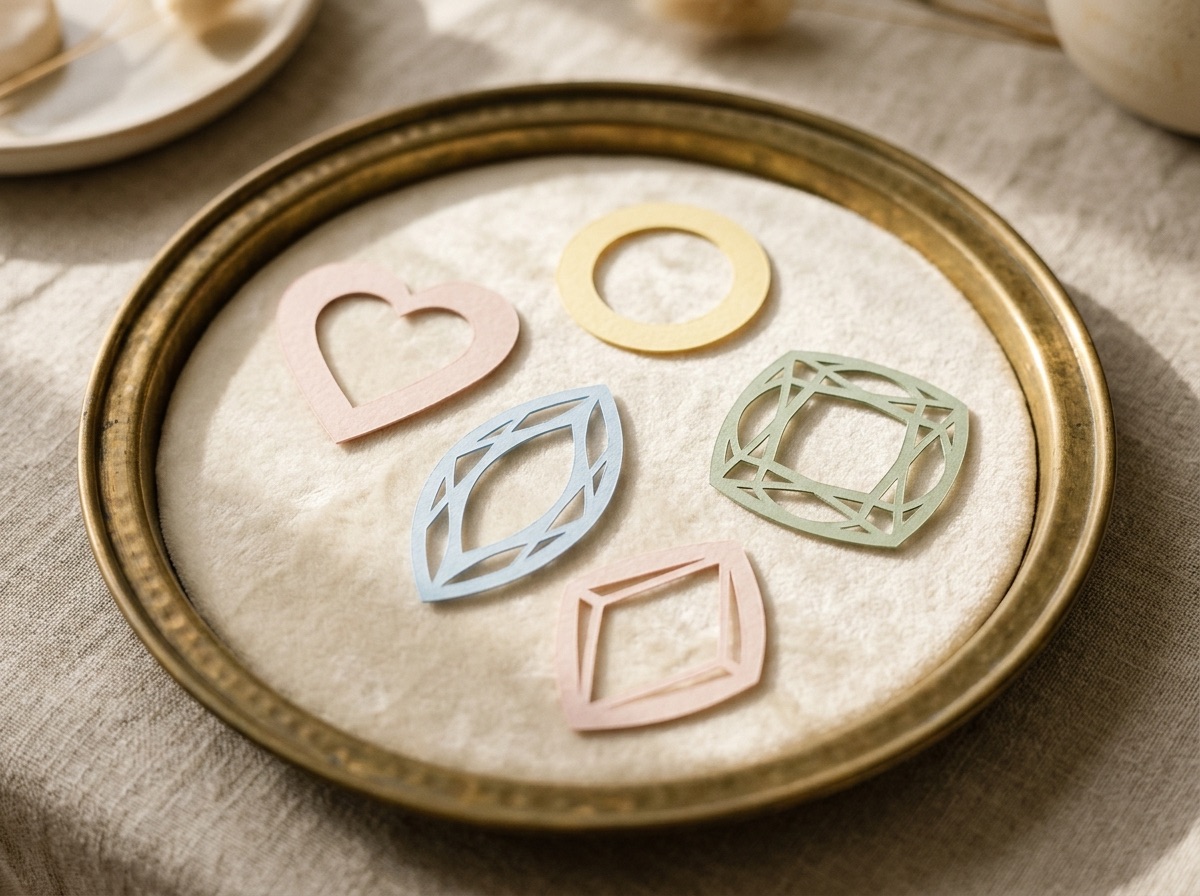
Fancy-color stones sell on a different mechanism than colorless diamonds — a colorless stone sells on clarity and fire under a loupe; a fancy-color stone sells on the immediate emotional read of the hue, which means the case has to let the color do the talking before a customer ever asks a technical question.
Neutral backing does more for color than any other single merchandising decision. A fancy-color stone shown against a warm gold tray or a busy patterned backdrop competes with its own setting; shown against a plain white, cream, or pale gray field, the hue reads immediately and accurately. If the case uses colored velvet inserts elsewhere, swap to neutral specifically for the fancy-color section.
Group by hue family rather than by carat size or price. A case that clusters all the pinks together, then all the blues, lets a customer self-select into the color story that appeals to them and compare saturation within a hue — which is exactly the comparison that sells a customer up from a lighter to a more saturated stone once they see them side by side. Mixing colors together in one tray makes every stone look like a one-off rather than part of a considered range.
Lighting temperature should stay neutral-to-warm and consistent across the case. Cool white LED lighting, common in jewelry cases built around colorless-diamond brilliance, can visibly shift how a fancy color reads — a blue can look flat, a pink can look washed out. A slightly warmer color temperature, tested against the actual stones rather than assumed, keeps the hue reading true rather than fighting the case's own lighting.
Finally, use the story, not just the stone. A one-line card noting that the hue is lab-grown and engineered — meaning the client is seeing a color that would be effectively unobtainable at this price point in nature — does more selling than the stone sitting silently in a tray. Fancy color is a category people don't fully understand yet; a sales team that can explain in one sentence why this pink or this green is accessible is doing merchandising work the case itself can't do alone.
Common buyer mistakes in fancy color
The category is forgiving of a lot, but a handful of mistakes show up repeatedly with buyers new to sourcing fancy color at wholesale.
Specifying hue and skipping tone and saturation. Ordering "a pink" without a saturation target means the desk is guessing at what you actually want, and what arrives may not match the mental image — or the client's — even though it's technically correct to the order. Always spec all three grading variables.
Assuming set jewelry photographs will match loose reality. Photography, especially under studio lighting, can shift how saturated a color reads. Sourcing loose and verifying the stone in hand against its report — rather than buying to match a photo — avoids a mismatch discovered after a piece is already built.
Trying to match a set from scattered inventory instead of specifying a single reference. Two color-matched stones sourced independently rarely land on an identical hue and saturation, and the eye catches even a slight drift immediately in a pair or a graduated band. The fix is specifying hue, saturation, shape, and size as a single reference before sourcing, not after.
Under-pricing round brilliants relative to other shapes. Because round is the hardest shape to show color in, a fancy-color round at a given saturation costs more to achieve than the same saturation in an elongated shape — buyers who price rounds like any other shape at the same carat weight will consistently underquote them.
Building an assortment around one color because it happened to be available. As covered above, an assortment that skips the ladder — entry-point yellow, mid-tier pink and blue, a green anchor — reads as thin even when the individual stones are strong.
Guru Diam's fancy-color sourcing
Guru Diam produces fancy-color lab-grown diamonds in-house through CVD, across the hues designers and retailers most often want: pinks, blues, yellows, and greens, in a working range of saturation. Because production happens in-house rather than through a resold supply chain, a hue can be targeted deliberately and reproduced — which is what makes reordering against a specific spec practical instead of a one-time stroke of luck.
Stones are supplied loose and IGI-certified as the standard, with GIA certification available on request, and they sit inside the same inventory of 10,000+ loose stones that covers certified centers, calibrated melee, matched pairs, and antique cuts — so a buyer building a fancy-color piece can source the surrounding white diamonds from the same desk in the same order. Matched pairs are a standing category, and because color is produced in-house, stones can be cut and selected to hold a consistent hue and saturation across a pair or a set. When a specific hue, saturation, shape, or size isn't currently in the loose inventory, it can be produced through custom, made-to-order cutting against that exact specification.
Guru Diam is a trade-only manufacturer operating from 36 West 47th Street, Suite 601A, New York, NY 10036, in the Diamond District, with an LA office at 607 South Hill Street, Suite #241, Los Angeles, CA 90014 for West Coast buyers. The desk can be reached directly at (212) 652-7108. Because color stones, white diamonds, and certification all come from one source, a buyer moves from a hue spec to a loose, IGI-certified fancy-color diamond without an intermediary markup layered on top of an already specialized stone.
Retailer checklist: building a fancy-color program
For a retailer standing up a fancy-color program from scratch, or expanding a case that's outgrown a handful of one-off pieces, the sequence below is the practical order to work through:
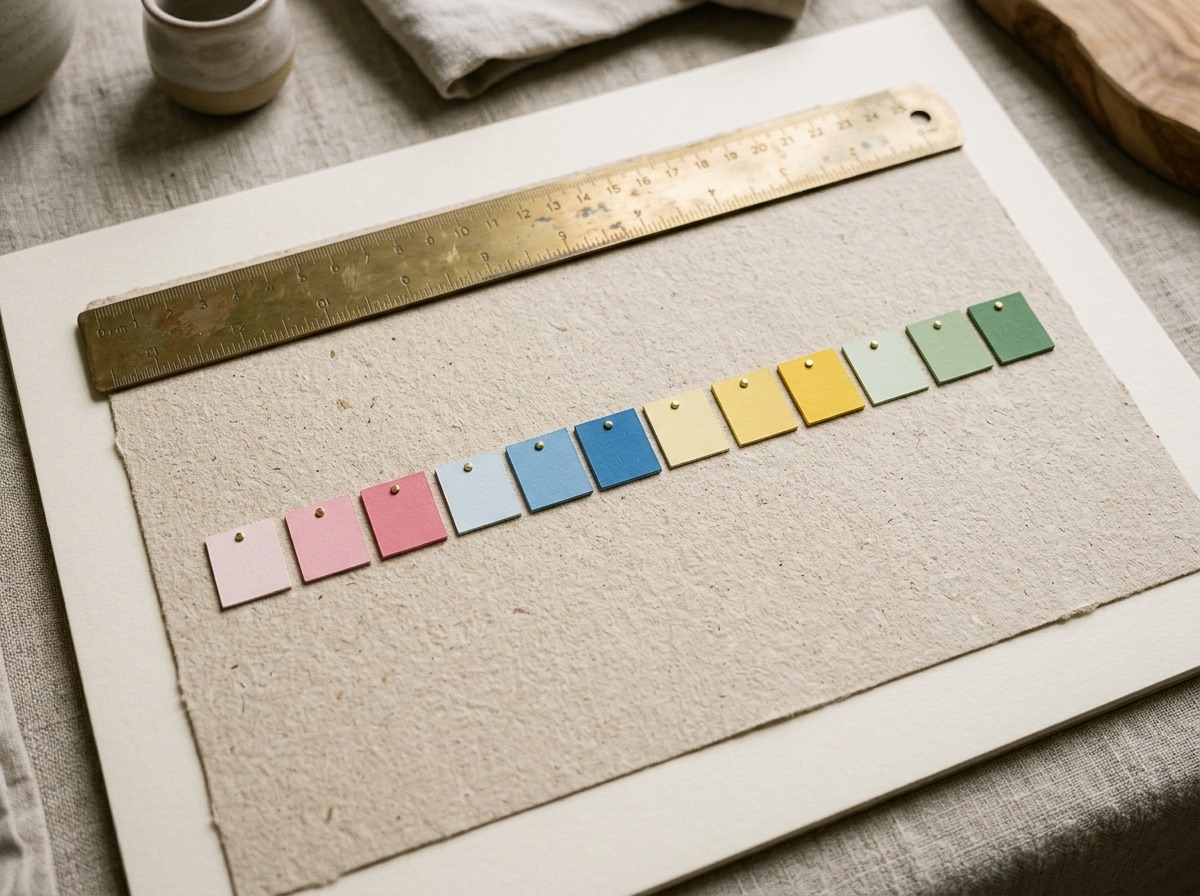
- Set the ladder first. Decide the entry color (almost always yellow), the mid-tier colors (pink and blue), and the anchor color (green) before sourcing a single stone, so purchasing has a target rather than reacting to whatever's available.
- Spec every order by hue, tone, and saturation — not by color name alone — so what arrives matches what was actually wanted.
- Match shape to the design brief — elongated shapes for maximum color-per-carat, round brilliant specifically when the rarity story is the point, and price the round accordingly.
- Source loose and certified so hue and saturation can be verified independently before any stone goes into a setting, and keep certification consistent (IGI standard, GIA on request) across the assortment so reports read the same way to every customer.
- Plan matched sets by spec, not by search. If a design calls for a pair or a graduated row, define the single hue-saturation reference up front and source against it.
- Merchandise by hue family under neutral, warm-consistent lighting so the case lets color do the selling instead of fighting the display around it.
- Build the reorder path before the first sale, not after. A color piece that sells needs to be repeatable — confirm with your source that a hue can be matched to a prior order, not just approximated, so a hit design becomes a standing SKU.
- Go deep on shape once the ladder is set. Once colors and price points are mapped, use the shape-specific guides to fine-tune which cuts to stock heaviest for each color family.
Working through that sequence in order — ladder, spec, shape, certification, matching, merchandising, reorder — turns fancy color from a handful of interesting one-offs into a category a store can actually build revenue around.
Frequently asked questions
What fancy colors does Guru Diam produce?
Guru Diam produces fancy-color lab-grown diamonds across the hues designers and retailers most often want: pinks, blues, yellows, and greens, in a working range of saturation. The colors are produced in-house through CVD and supplied loose and IGI-certified to the trade, with GIA available on request when a brief calls for it.
What's the difference between hue, tone, and saturation in fancy-color grading?
Hue is the color family itself (pink, blue, yellow, green, plus any secondary modifier). Tone is how light or dark that color sits. Saturation is how intense or vivid the color is at that tone. All three are graded separately, and saturation is typically the largest single driver of price within a given hue and carat weight — which is why a full spec, not just a color name, is what a purchase order should carry.
Which diamond shapes show fancy color best?
Elongated and mixed-cut shapes generally concentrate and display color more efficiently than round brilliant, because round faceting is built to maximize white-light brilliance, which dilutes body color in the process. That's also why fancy-color round brilliants are the rarest and most commanding version of the category. See the dedicated heart, marquise, and round brilliant guides for shape-specific detail.
Are Guru Diam's fancy-color diamonds certified?
Yes. Fancy-color stones are supplied loose and IGI-certified as the standard, and GIA certification is available on request. Buying loose keeps each color diamond and its grading report independently verifiable before the stone is set into a finished piece.
Can I source color-matched pairs and sets?
Yes. Matched pairs are a standing category, and because fancy colors are produced in-house, stones can be cut and selected to hold a consistent hue and saturation across a pair or set — built against a single spec rather than assembled from scattered inventory.
What if the hue, shape, or size I need isn't in stock?
A specific hue, saturation, shape, or carat size that isn't currently in the loose inventory can be produced through custom, made-to-order cutting to your specification, against the same in-house operation that supplies the 10,000+ loose stones already on hand.