The safest stocking strategy for 2026 is to build a deep core of round brilliants and the popular elongated shapes — oval, emerald, and cushion — in the 1 to 2 carat range, then layer in pear, radiant, and a few statement shapes as trend and special-order pieces. Carry calibrated melee for repairs and accents, and lean on memo plus US-held inventory so you stay lean.
Deciding what to stock is the hardest part of running a jewelry case. Tie up too much capital in slow shapes and your inventory ages; carry too little and you lose the sale to the store down the street. This guide is a practical stocking framework for jewelers, designers, and store buyers: which lab-grown diamond shapes to carry deep, which to carry shallow, which carat sizes turn fastest, and how to use melee, memo, and US-held inventory to keep your money working instead of sitting in the safe.
We have written it from the buying desk's point of view, in qualitative terms. We will not throw fabricated market-share numbers at you — demand shifts by region, clientele, and season, and your own sell-through is the only data that truly counts. What follows is the shape-and-size logic most trade buyers actually use.
Lab-grown price compression has changed the stocking math. When a customer's budget buys a materially larger stone than it did a few years ago, the center-stone conversation moves up in carat weight and toward cuts that show more face-up size per carat. That raises the stakes on allocation discipline: get the core-popular-trend split right and a lean case sells through consistently; get it wrong and you are carrying dead capital in the safe while losing walk-in sales to a shape you did not stock.
What lab-grown diamond shapes sell best in a jewelry store?
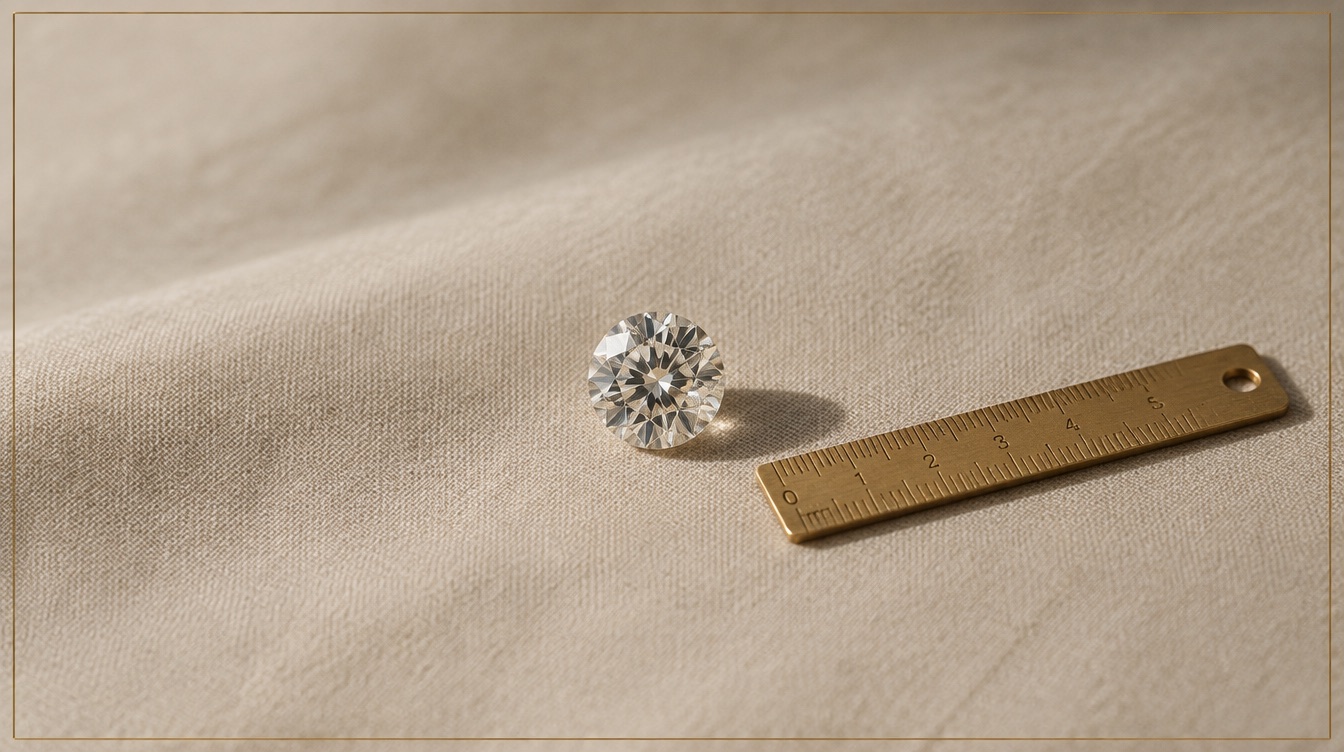
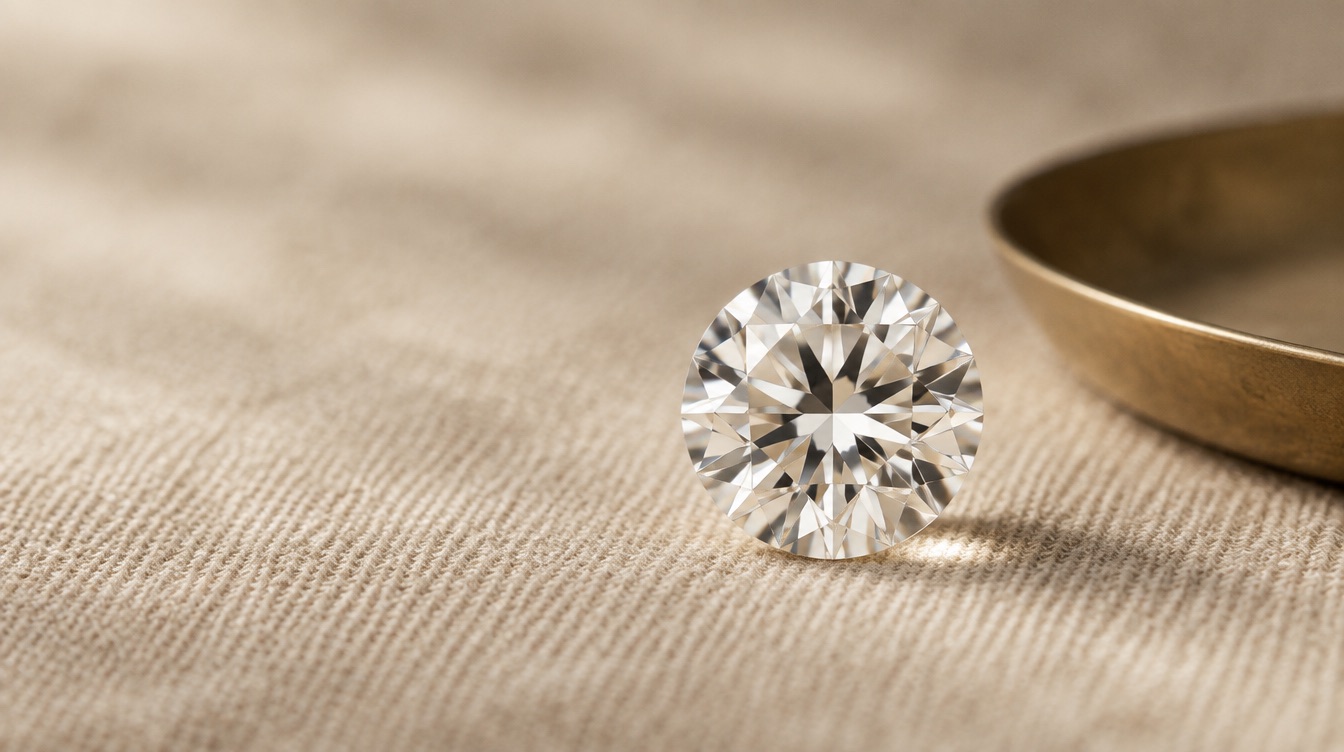
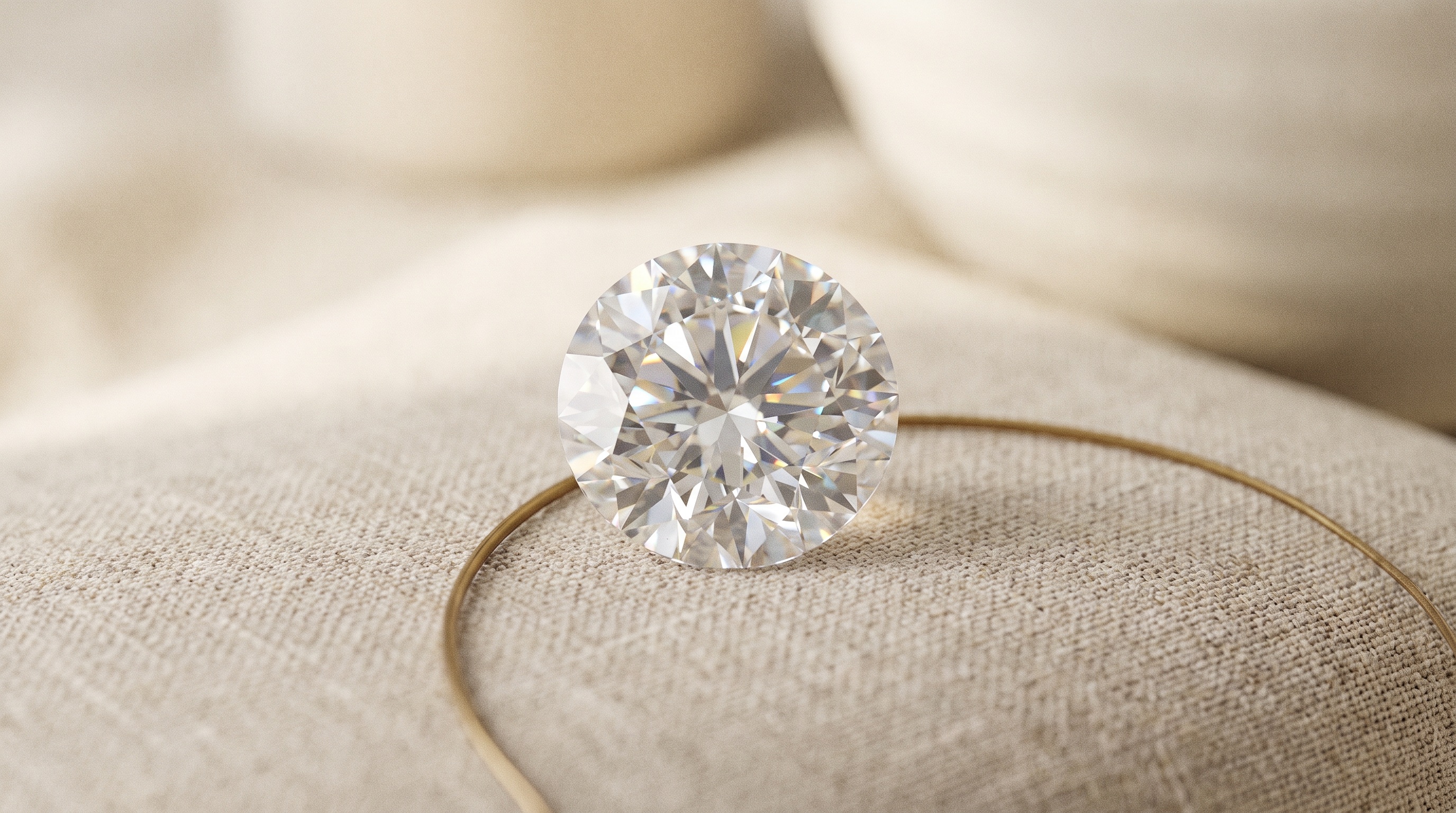
The round brilliant is still the default for engagement rings and the anchor of any case. It is the most recognizable cut, the most forgiving to sell, and the one a walk-in customer asks for by name. If you stock one shape deep, it is the round.
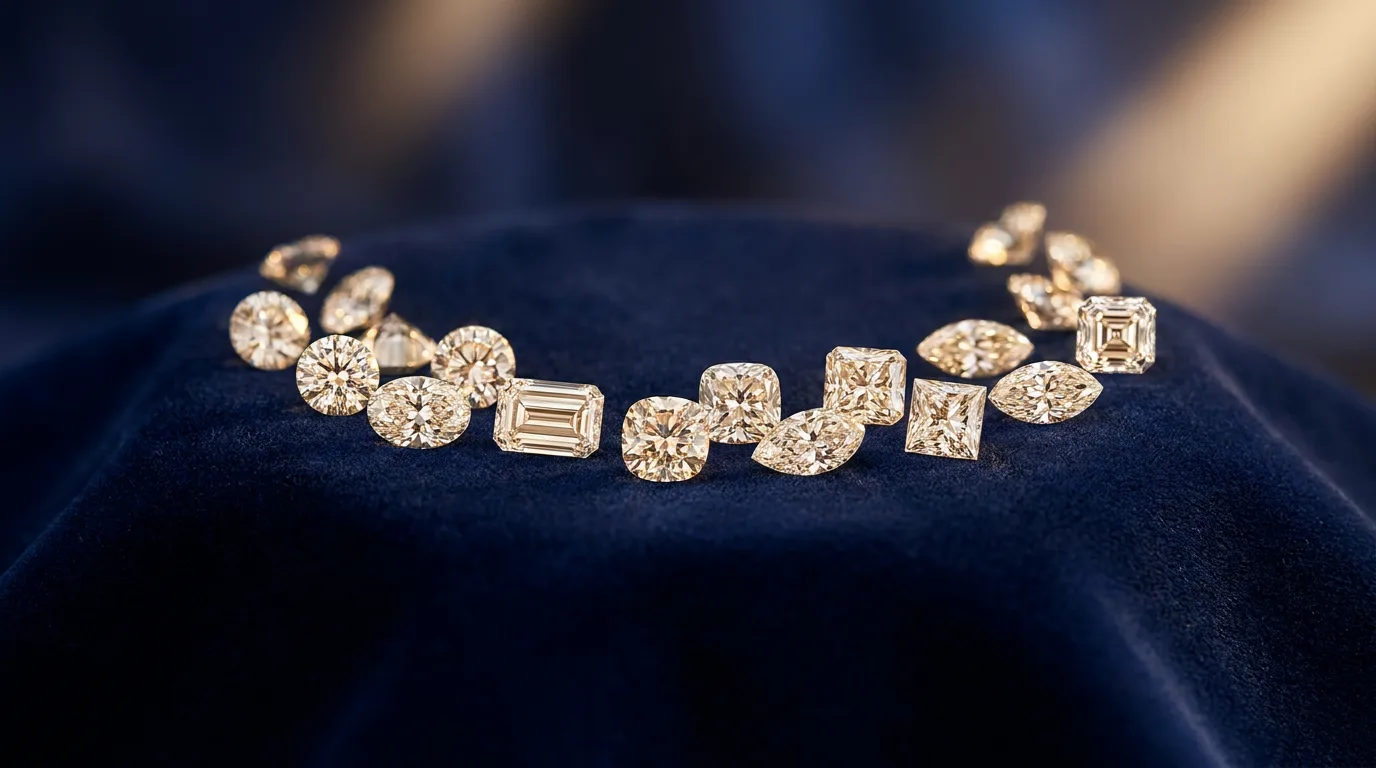
After the round, the biggest story of recent years has been the rise of elongated and fancy shapes. Ovals have grown steadily in popularity for their finger-flattering length and larger face-up look per carat. Emerald and elongated cushion cuts have followed, pulled along by a broader move toward vintage-leaning and understated-luxury styling. Pear and radiant round out the shapes a modern store should expect customers to request.
The remaining classics — princess, marquise, asscher, and heart — still sell, but more as deliberate choices than defaults. They are special-order and trend pieces, not the bread and butter of your case.
It helps to think about shape demand on two axes: how often a shape gets asked for, and how forgiving it is when the stone is not a perfect match to what the customer pictured. Round is forgiving on both. Elongated fancy shapes are higher demand than before but less forgiving — a cushion that reads too square, or an oval with a visible bow-tie, can lose a sale even when the certificate numbers look fine. See and handle stones in a shape before committing case depth to it, rather than buying purely off a spec sheet.
Shape-by-shape stocking guide
Here is how the major shapes break down by use, who tends to buy them, and how deep to stock. Treat "core" as shapes you keep in stock across sizes, "popular" as shapes to carry in the hero sizes, and "trend / special-order" as shapes you source per job or hold one or two of as showpieces.
| Shape | Primary use | Who buys it | Stocking note |
|---|---|---|---|
| Round brilliant | Engagement, studs, tennis | The default buyer; classic clientele | Core — stock deepest, across sizes |
| Oval | Engagement, halos | Trend-aware brides wanting size-per-carat | Popular — carry deep in hero sizes |
| Emerald | Engagement, three-stone | Understated-luxury and vintage tastes | Popular — stock the 1–2 ct range |
| Cushion | Engagement, halos | Soft-romantic and antique-leaning buyers | Popular — favor elongated cushions |
| Pear | Engagement, pendants, drops | Fashion-forward and individualist buyers | Trend — a few hero sizes, source the rest |
| Radiant | Engagement, halos | Buyers wanting emerald look with more sparkle | Trend — carry elongated, special-order rest |
| Princess | Engagement, studs | Budget-aware and classic-modern buyers | Special-order — source per job |
| Marquise | Engagement, statement | Vintage-revival and bold-style buyers | Special-order — one showpiece, source rest |
| Asscher | Engagement, art-deco | Deco and step-cut enthusiasts | Special-order — source per job |
| Heart | Pendants, gifts, novelty | Gift and romantic-occasion buyers | Special-order — rarely a stock item |
For the designer-led and statement end of this list, our overview of exotic fancy-shape lab-grown diamonds for designers goes deeper, and the renewed pull toward step cuts and old cuts is covered in our look at the antique-cut engagement ring trend.
Elongated, vintage-leaning, and antique-cut shapes shaping 2026 demand
Two related but distinct trends sit inside the "popular" tier of the table above, and it is worth separating them because they call for different sourcing habits. The first is the elongated silhouette: ovals, elongated cushions, and elongated radiants that maximize visual size for the carat weight. Your general clientele will ask for these by description ("longer," "bigger looking") even without knowing the shape name — worth stocking in genuine depth in the 1 to 2 carat hero range, because the demand is broad, not niche.
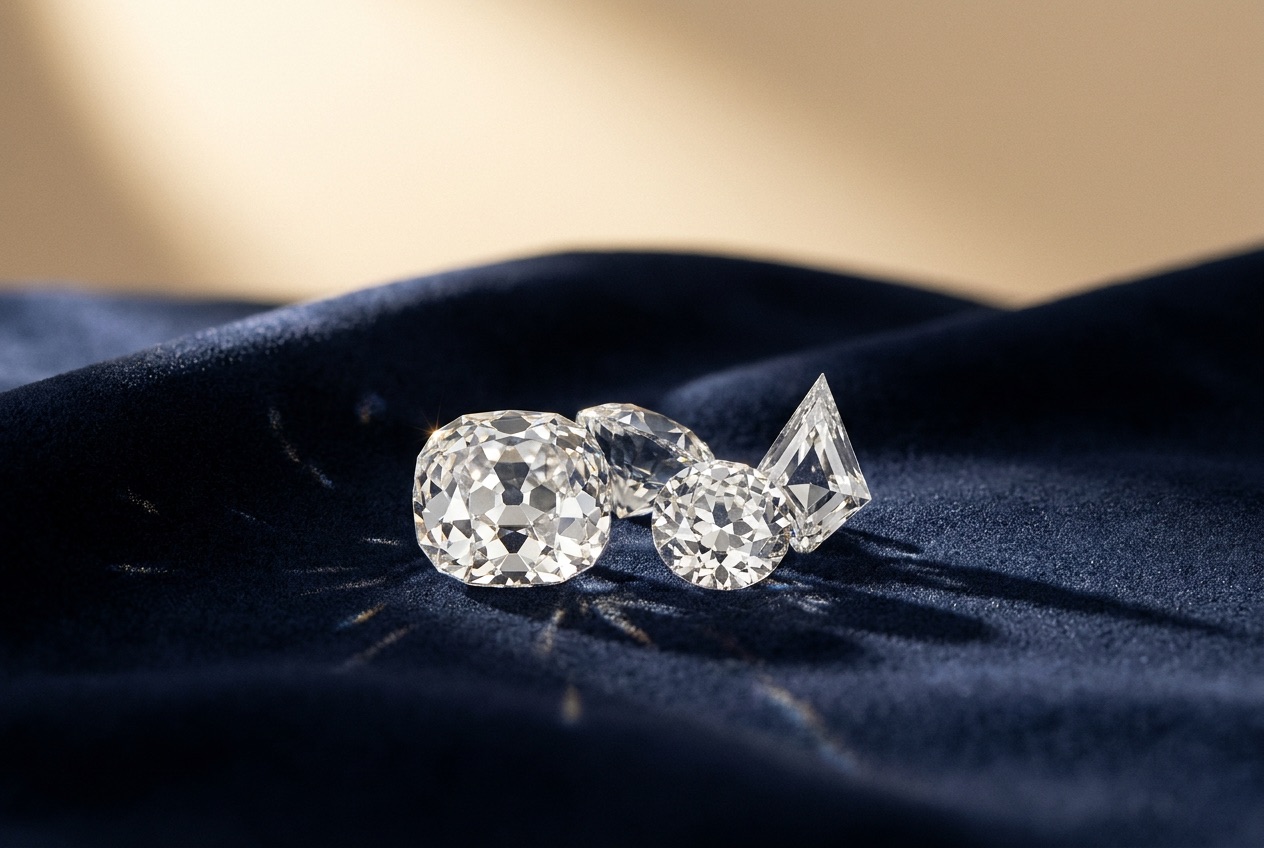
The second trend is narrower but growing: true antique and period cuts — Old Mine, Old European, Kite, Hexagonal, Moval, Lozenge, Trillion, and Criss-Cut — sought out by vintage-revival buyers, custom designers, and jewelers building an estate-style or Georgian-inspired collection. These are a specialty layer, not a substitute for your core case. A store that can source antique cuts on request, without carrying deep inventory in each one, differentiates itself without tying up capital in shapes only a fraction of customers ask for. If antique cuts are a growing part of your custom business, work with a supplier who cuts these in-house and can turn a one-off request around quickly rather than treating every order as a months-long hunt.
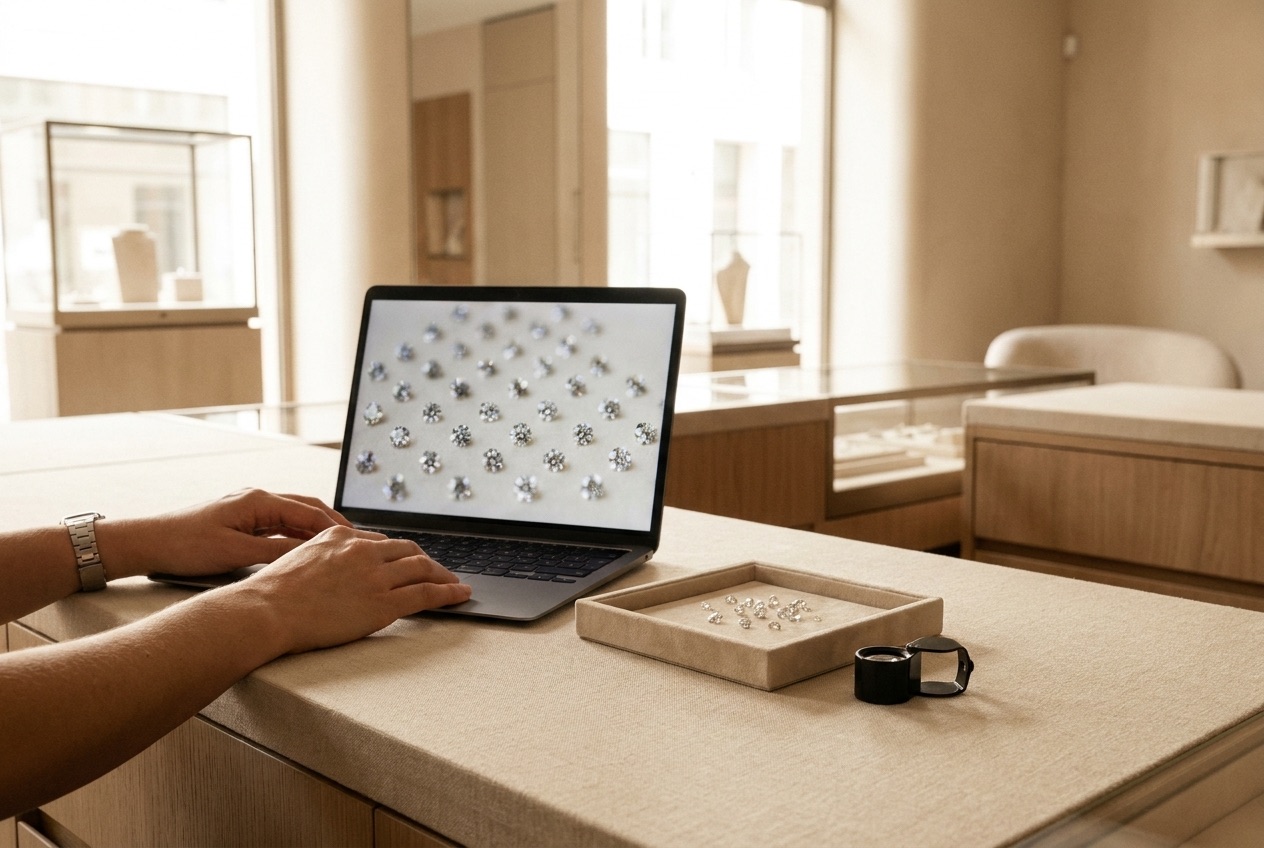
What carat sizes should a jewelry store stock — and why average sizes keep climbing
Shape gets the attention, but carat range is where stocking discipline lives. Lab-grown economics let a customer buy more size for the same budget than natural, which has pulled the center-stone conversation upward — but your stock should still concentrate where the bench work happens.
- Center stones (engagement): the 1 to 2 carat band is the workhorse range for engagement centers. Stock it deepest in round and your popular fancy shapes.
- Statement centers: 2 to 3 carat and above sell, but carry these shallow and lean on memo or special-order rather than locking up capital.
- Studs and pendants: matched pairs and singles in the roughly half-carat to 1.5-carat-each range cover the everyday gift and self-purchase market.
- Accents and melee: calibrated small goods for halos, side stones, channel and pavé work, and repairs — essential to keep on hand at the bench.
The pattern is the same for size as for shape: go deep where demand concentrates, go shallow on the extremes, and source the outliers per job.
Average center-stone size keeps drifting up because the price curve is different from natural. In natural diamonds, price per carat accelerates sharply past certain weight thresholds, training customers to think in fractions and half-carats. In lab-grown, that curve is far gentler, so the jump from 1.5 to 2 carats is a smaller budget decision than it used to be. That shifts real demand into the upper end of your "core" range and the lower end of your "statement" range — the 1.5 to 2.5 carat band is worth watching, since a case still stocked to the old natural-diamond curve will be under-inventoried there.
How should I balance core, popular, and trend shapes?
A useful mental model is to split your case capital into three buckets and resist the urge to chase every fashion shape into deep stock.
- Core (stock deep): round brilliant across sizes. This is the shape you can always sell and rarely regret owning.
- Popular (stock the hero sizes): oval, emerald, and cushion in the 1 to 2 carat range. Enough to show and close on the spot, not so much that aging hurts.
- Trend and special-order (source per job): pear, radiant, princess, marquise, asscher, heart. Hold a showpiece or two for the case, but pull the rest from your supplier as orders come in.
A simple way to apply this: weight your open-to-buy heaviest on core, moderate on popular, and lightest on trend — then let real sell-through move the split, not fashion coverage or a competitor's case. Two signals matter more than any outside benchmark: how fast a size-and-shape combination sells once it is in the case, and how often you turn down a request for a shape you do not stock. If you are frequently saying "let me order that for you" on a shape classified as trend, lean harder on fast sourcing rather than reclassifying it as core — speed solves that gap more cheaply than inventory does.
This is where a supplier's breadth matters. If you can source any shape, color, and size quickly, you do not need to own the long tail — you only need to own what turns. For the broader playbook on introducing lab-grown to a case for the first time, see how to add lab-grown diamonds to your jewelry store.
Should I stock melee and matched pairs, or order per job?
Treat melee differently from centers. Calibrated melee — the small calibrated goods used for halos, side stones, pavé, and channel settings — is consumable. You burn through it on nearly every custom job and repair, so a working stock of common sizes and qualities earns its keep on the bench and prevents a shortage from stalling a build. It runs roughly 0.8mm to 9.0mm, typically supplied round brilliant or in fancy calibrated shapes — emerald, radiant, pear, and marquise are the standard set, with others available on request. Melee is quality-controlled to a color-and-clarity baseline rather than individually certified; treat it as calibrated parcel goods for production, and reserve certification for your center stones.
Matched pairs for studs and drops are a middle case. A few well-matched pairs in popular round and fancy shapes let you close a stud or earring sale without delay, but you can source unusual sizes and exact matches per order. The center-stone end of the case is where you want to be leanest, since that is where dollars-per-stone and carrying cost are highest.
If your custom business includes fancy color work, the same consumable logic applies to fancy color melee — a category most general-line stores under-stock and worth building a reputation in if your bench does colored-stone halos and accents. Certified fancy color melee and loose fancy color centers are typically available in yellow, pink, blue, and green — plan accent stock around that palette rather than assuming every fancy color is a calibrated good.
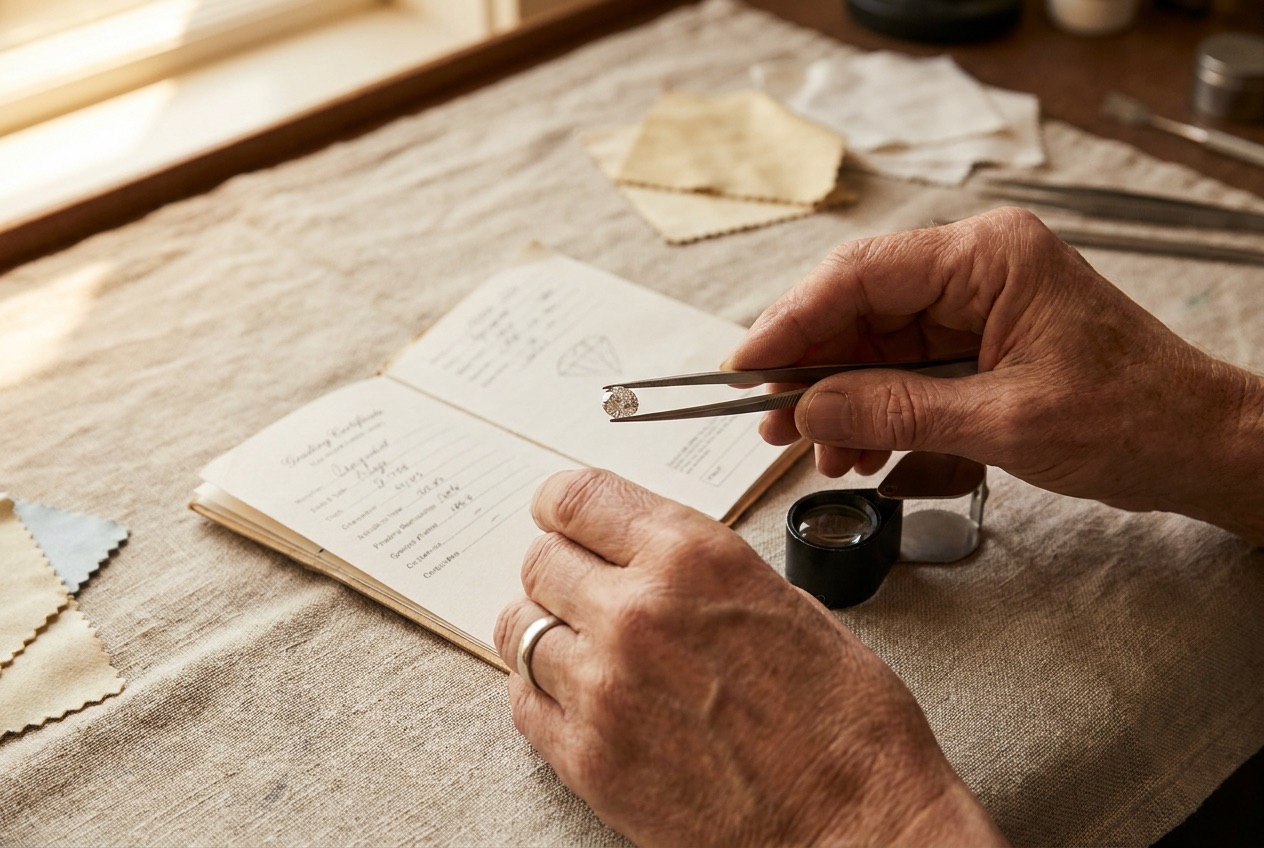
What IGI, GIA, and GCAL certification means for your stocking decisions
Certification is not just a paperwork question — it shapes what you can promise a customer and how confidently you can price against it. For lab-grown center stones, IGI, GIA, and GCAL are the three labs worth knowing, and it is worth stocking a mix rather than defaulting to one.
Different buyers have different lab preferences, often tracking region and clientele more than any real grading difference. Rather than betting your whole case on one lab, work with a supplier who can source certified stones across all three — IGI, GIA, and GCAL — so a customer's lab preference is never the reason you lose a sale on an otherwise perfect stone.
The practical stocking rule: certification applies to loose center stones, generally from around 0.30 carat and up. Melee, as covered above, is calibrated to a quality baseline rather than certified piece by piece, so do not present it to a customer as individually certified — it is sold and QC'd as calibrated parcel goods, the industry-standard way small accent stones are handled. Keeping that distinction clear protects your credibility with clients who ask detailed questions about how their stones were graded.
How do US-held inventory and memo let a store stay lean?
The whole point of this framework is to carry less while losing fewer sales, and two supplier capabilities make that possible.
The first is domestic inventory and speed. When stones are already cleared and held in the United States, you can source the shape or size you do not stock and still hit a customer's deadline. Guru Diam holds its active inventory in the US across New York and Los Angeles, so loose certified stones are clear-to-ship within 24 hours and finished custom pieces run roughly 4 to 6 working days. That speed is what lets you keep the long tail off your shelf — you order it the moment a customer commits, not months ahead on a guess.
The second is memo. Memo (consignment) lets you bring in a stone or a small selection to show a client and pay only if it sells, within an agreed window. For a 3-carat oval a customer wants to see but you would never speculatively buy, memo turns a missed appointment into a closed sale without tying up your capital. Combine memo for the statement pieces with deep ownership of your core, and your money stays in the fast-turning part of the case.
Speed and memo work best together: let a customer handle a statement stone on memo, then use fast domestic shipping to backfill your own stock once that category proves itself with real sell-through, instead of guessing up front how deep to go.
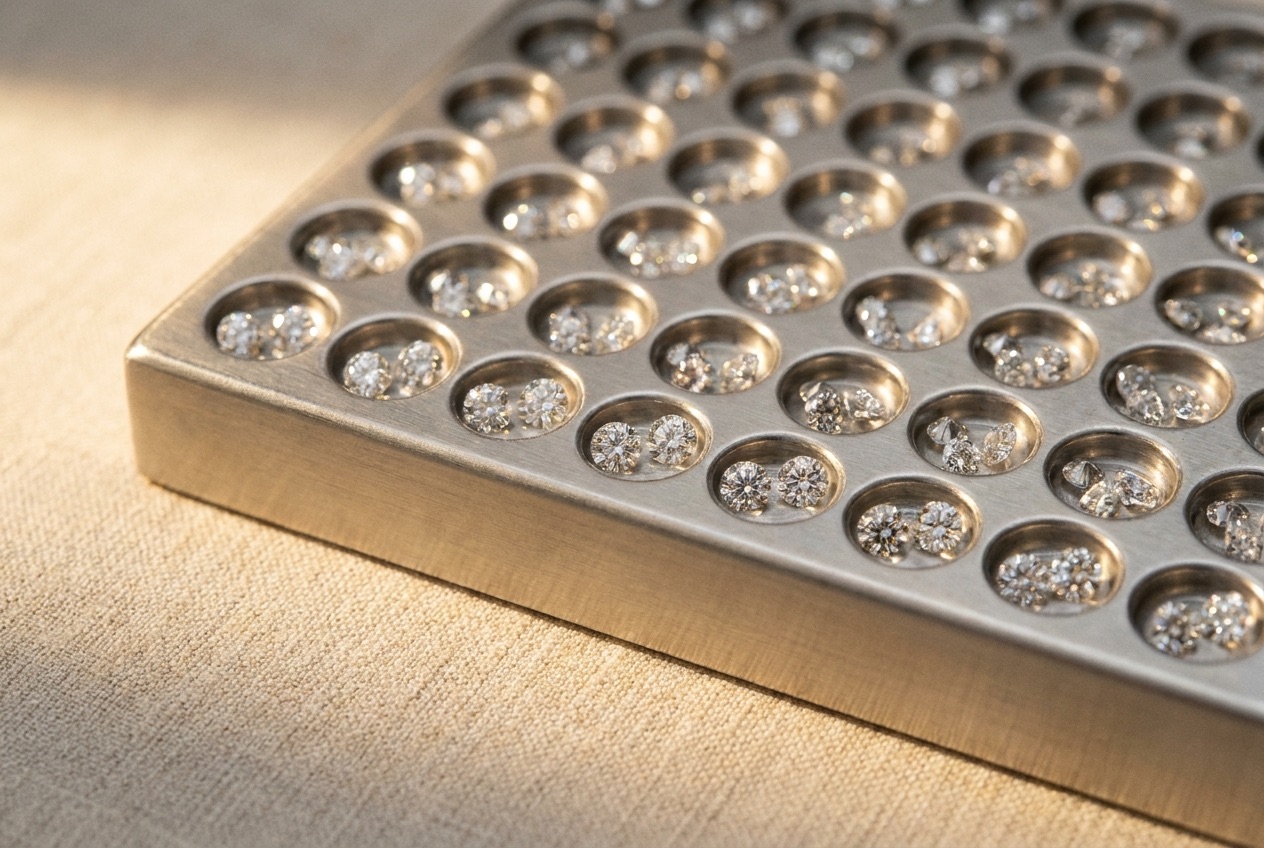
Working with Guru Diam's shape and size catalog
This framework only works if your supplier's catalog is organized the way you actually buy — by shape and carat weight, not as one long list. On Guru Diam's certified lab-grown diamonds, you can filter straight to the shape-and-size cells this guide talks about: round in your core size run, oval, emerald, and cushion in the 1 to 2 carat hero range, and pear, radiant, and the special-order shapes when a job calls for them. Certification spans IGI, GIA, and GCAL, so you are never boxed into one lab's paperwork.
For the consumable side of the case, calibrated melee is available across the 0.8mm to 9.0mm range in round brilliant and fancy calibrated shapes, so a bench mid-build on a halo or pavé piece is not waiting on a custom cut for common sizes. For the specialty layer — antique cuts, exotic fancy shapes, one-off requests — cutting, setting, and polishing all happen in-house, so a request that would take a general supplier weeks to source can move as a single job, with custom jewelry built around those stones typically finishing in about 4 to 6 working days once the design is confirmed.
The account side fits the lean-case model: open a trade account and current availability across every shape and size is sent the same day, so you can check your open-to-buy plan against real stock before committing capital. Combine that with memo on statement pieces, and the goal of this whole framework — one vendor, one shipment, one relationship — becomes a day-to-day workflow rather than a plan on paper.
Common lab-grown stocking mistakes to avoid in 2026
A few patterns show up again and again in stores that carry too much of the wrong thing or run out of the right thing at the worst moment.
- Buying statement carats speculatively. A 3-carat-plus stone is expensive to carry and slow to turn. Show it on memo before you own it, and add depth only once a size and shape proves itself with your clientele.
- Letting melee run down mid-season. A stockout does not just delay one sale — it can stall several builds at once. Reorder before you are down to your last few parcels, not after.
- Treating cushion as one shape. Square and elongated cushions serve different customers. Stocking only one silhouette is a common way to miss a sale on a shape you technically carry.
- Single-sourcing without a memo option. If your only path to a statement stone is a straight purchase order, you will either overbuy out of caution or lose sales you could have closed on memo.
- Ignoring certification preference. A customer who wants a GIA or GCAL certificate will walk if your case is IGI-only, even when the stone is a perfect match. Source across all three labs.
- Copying a competitor's case instead of your own sell-through. Shape and carat demand vary by clientele and region — another store's mix is a data point, not a template.
A simple 2026 stocking shortlist
If you want a starting point to build or rebalance a case, this is a sensible default for a general-line store:
- Round brilliant — deepest stock, full size run from studs through 2 ct centers.
- Oval, emerald, cushion — your popular fancy shapes, concentrated in 1 to 2 ct centers.
- Pear and radiant — one or two hero pieces each, source the rest per job.
- Matched pairs — a handful in round plus a fancy shape, for studs and drops.
- Calibrated melee — a working bench stock of common sizes and qualities, 0.8mm to 9.0mm.
- Antique and exotic cuts — sourced per job for vintage-revival and custom-design clients, not held as deep stock.
- Everything else — princess, marquise, asscher, heart, and the larger statement sizes — sourced on demand or shown on memo.
Adjust the mix to your clientele, then let your own sell-through reshape it over the next two seasons. The framework is a starting hypothesis, not a rule.
The bottom line for jewelers
Stocking lab-grown in 2026 comes down to discipline: own your core round deep, carry the popular ovals, emeralds, and cushions in the hero sizes, and source trend shapes, antique cuts, and statement carats per job. Lean on calibrated melee at the bench, use memo for pieces you would never speculate on, keep certification flexible across IGI, GIA, and GCAL, and let US-held inventory cover the long tail at speed. Browse certified lab-grown diamonds or open a trade account and we will send the current list — across every shape and size — the same day. For the mechanics of buying at trade pricing, see how to buy lab-grown diamonds wholesale.
Frequently Asked Questions
The round brilliant remains the default for engagement rings and the anchor of any case, so it is the shape to stock deepest and across the most sizes. After the round, ovals have grown notably in popularity, followed by emerald and cushion cuts. A core of round plus those popular fancy shapes covers most walk-in demand.
Concentrate engagement center stock in the 1 to 2 carat range, where most bench work happens, and stock larger 2-to-3-carat-plus statement stones shallow using memo or special-order. For studs and pendants, carry matched pairs and singles in roughly the half-carat to 1.5-carat-each range, and keep calibrated melee on hand for accents and repairs.
Oval, emerald, and cushion are popular enough to carry in your hero sizes. Pear and radiant are best held as one or two showpieces with the rest sourced per job. Princess, marquise, asscher, and heart are typically special-order — sell them, but do not lock up capital in deep stock. True antique cuts like Old Mine and Old European belong in the same source-per-job category unless vintage-revival work is core to your business.
Keep a working bench stock of calibrated melee. It is consumed on nearly every custom job and repair — halos, side stones, pavé, and channel work — so running out can stall a build. Keep common sizes and qualities on hand across the 0.8mm to 9.0mm range, and source unusual specs per order. Melee is quality-controlled to a color-and-clarity baseline rather than individually certified, unlike your loose center stones.
Yes, to your customer even when it does not change the stone itself. Different buyers have preferences for IGI, GIA, or GCAL, often shaped by region or by what a previous jeweler showed them. Rather than committing your whole case to one lab, work with a supplier who can source certified stones across all three so a customer's certificate preference is never the reason you lose a sale.
Own your core round deep, carry the popular fancy shapes in hero sizes, and source the long tail on demand. With a supplier holding US inventory that ships loose stones within 24 hours, you can order any shape or size the moment a customer commits. Memo lets you show statement pieces you would never speculatively buy and pay only if they sell.