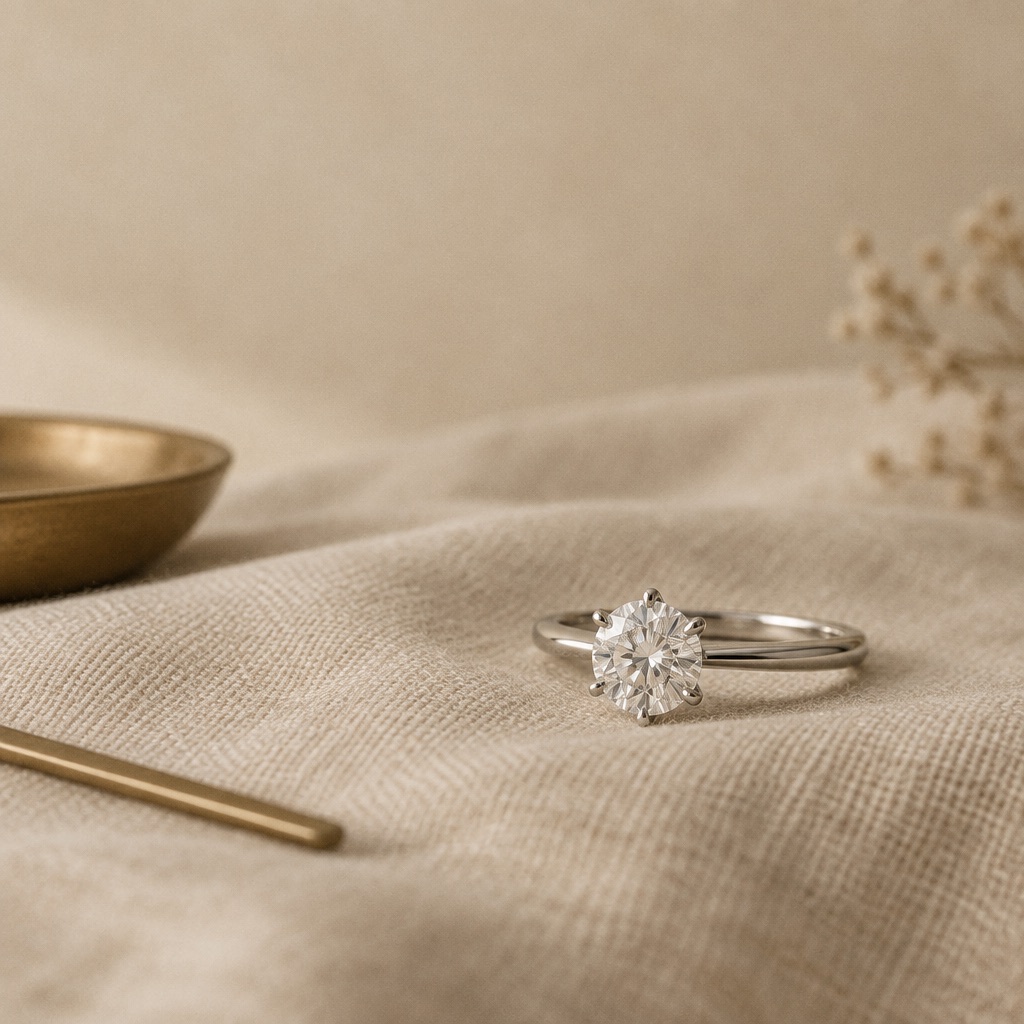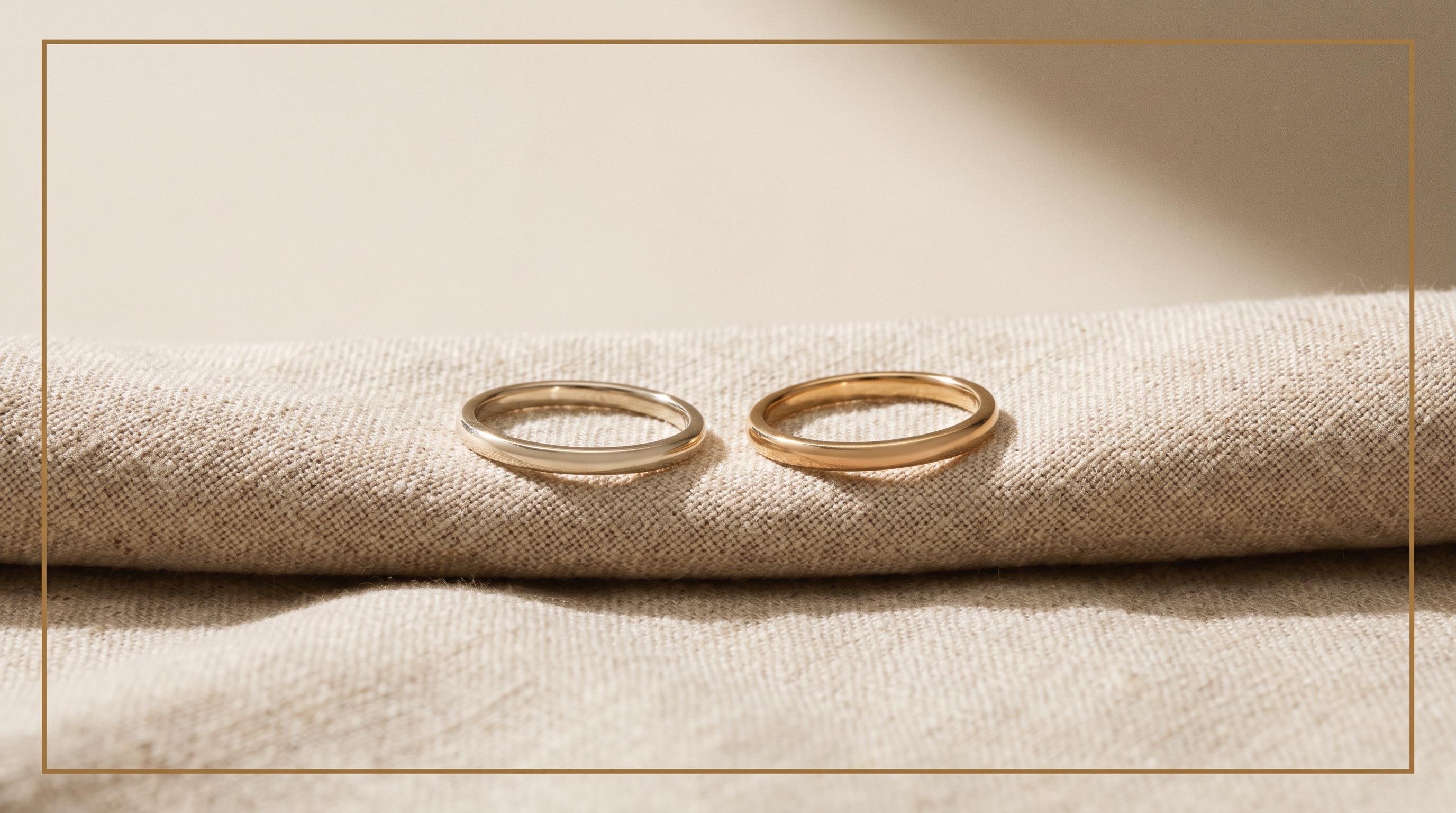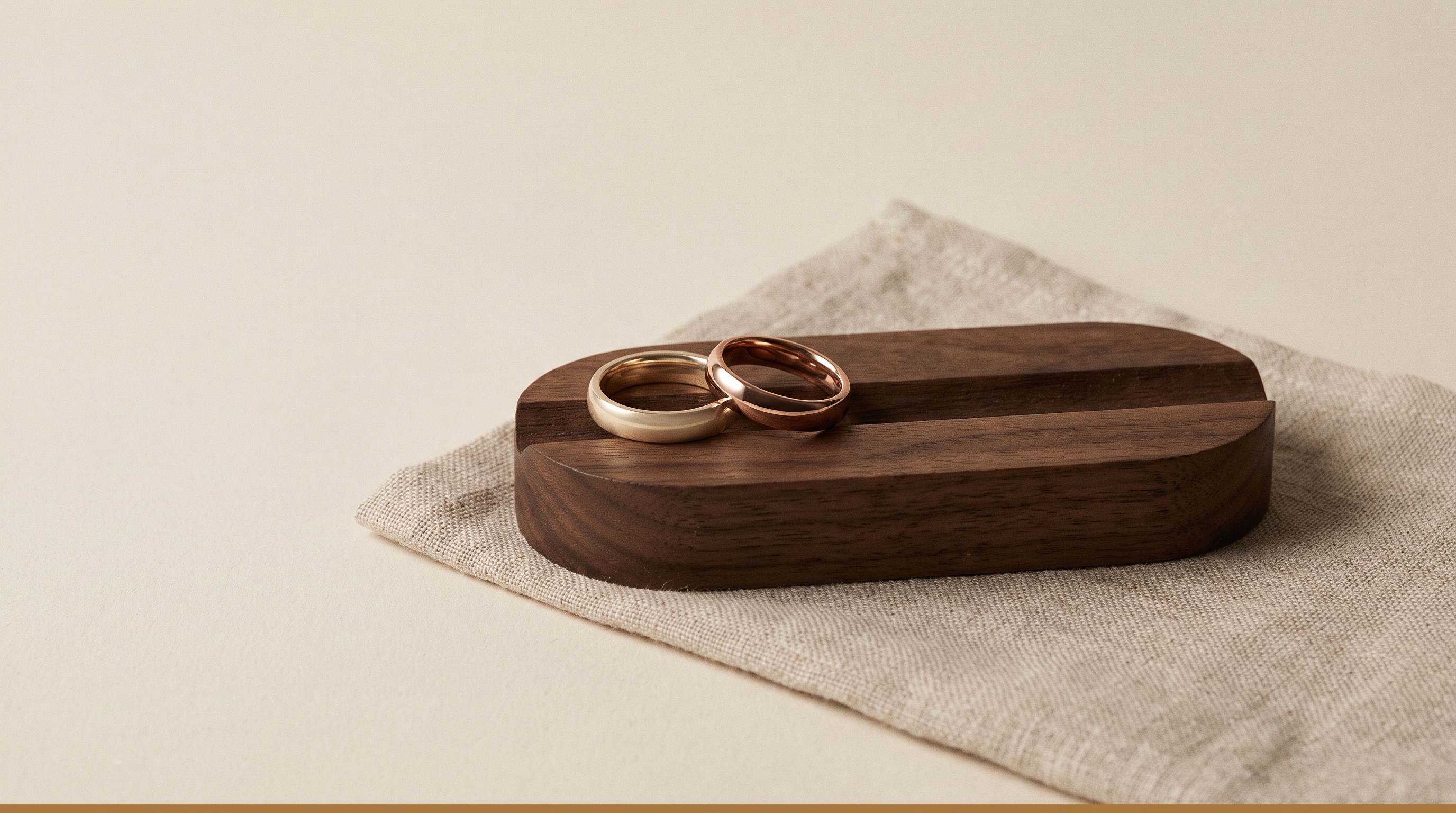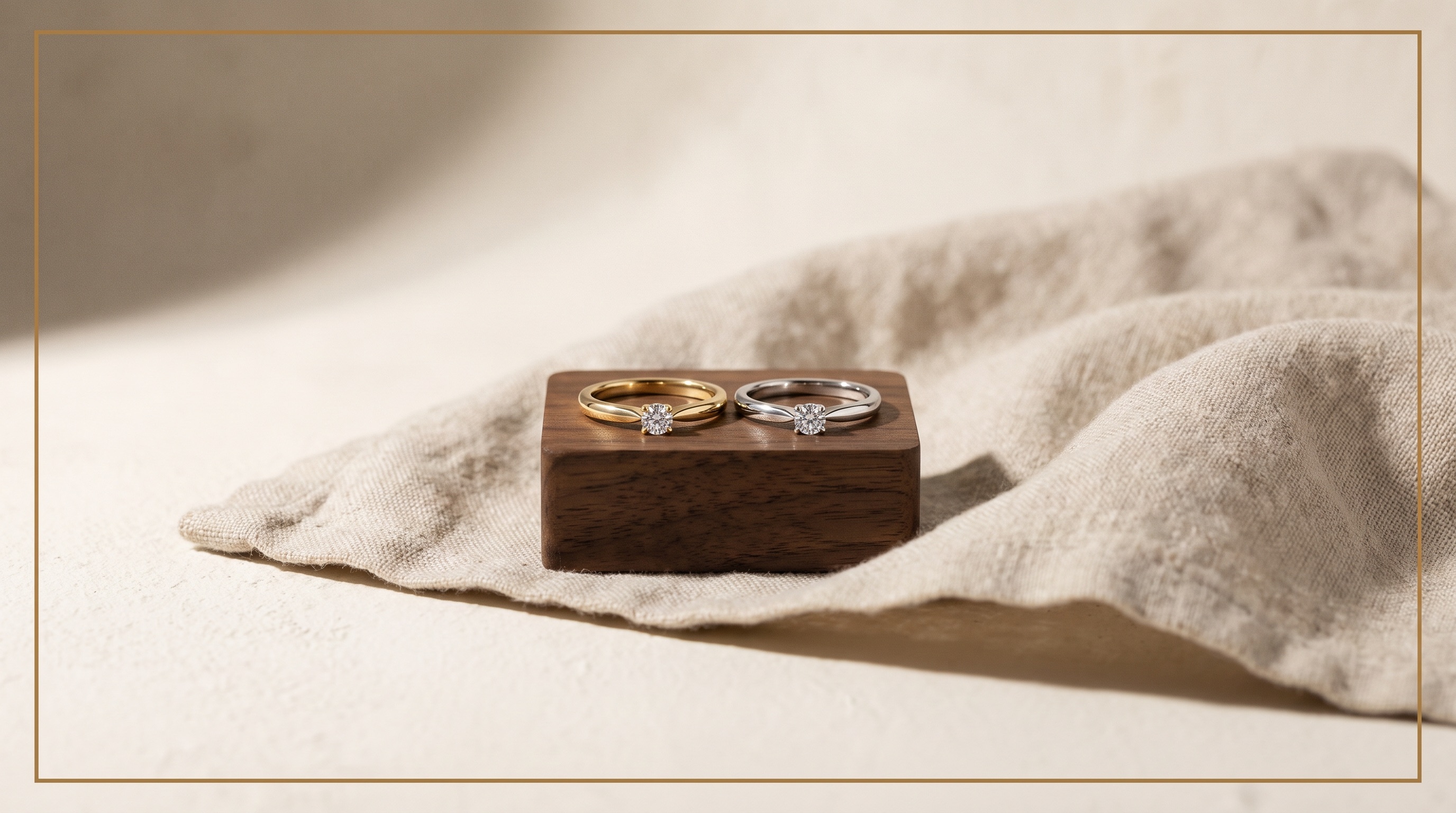
Yellow gold is gold alloyed with metals like copper and silver that keep its natural golden hue, requiring no surface treatment, while white gold is a yellow-gold alloy blended with white metals like palladium or nickel and then plated with rhodium to achieve a bright white finish. That plating is the single biggest practical difference: white gold needs periodic replating to stay white, while yellow gold's color never needs to be renewed.
Beyond that core distinction, the two metals differ in durability, allergy risk, cost of ownership over time, and how they interact with different skin tones and diamond color grades. Neither is objectively better — yellow gold has seen a strong resurgence in bridal and fine jewelry after years of white metal dominance, while white gold remains the most popular choice for modern minimalist engagement rings. This guide covers the real differences a jeweler or buyer should actually weigh before choosing.
What Each Metal Actually Is
Yellow gold starts as pure 24k gold and is alloyed down to a workable purity — typically 14k (58.3% pure) or 18k (75% pure) — with copper and silver added to improve hardness while preserving the metal's natural warm yellow tone. No plating or surface treatment is involved; the color you see is the color of the alloy itself, all the way through.
White gold begins the same way, as a yellow-gold alloy, but the whitening metals used in its blend — palladium, nickel, manganese, or a combination — lighten the alloy's color substantially. Even at the best achievable dilution, the result is a pale, slightly warm-toned gray-white, not a true bright white, which is why nearly all white gold jewelry receives a thin rhodium plating on top to reach the crisp white look customers actually expect. That plating is a separate surface layer, not part of the underlying metal, and it wears down with handling over time.
The Maintenance Difference: Rhodium Plating
This is the single most important practical difference between the two metals, and the one most likely to surprise a first-time white gold buyer. White gold's bright white surface comes from a rhodium plating over its warmer-toned base alloy, and that plating wears thin with ordinary handling — typically needing replating every 12-18 months for a ring worn daily, sooner for people with more abrasive routines like frequent hand-washing, manual work, or regular gym use. Once the plating wears through, the ring's underlying pale, slightly warm-gray tone becomes visible until it's replated.
Yellow gold requires no equivalent recurring treatment. It can lose some of its factory-fresh shine to light surface scratching over years of wear, which professional polishing restores, but it never needs a chemical replating step to keep its color — the color is simply the metal, not a coating on top of it. Over a ring's full ownership lifetime, this maintenance gap is a real, recurring cost difference that's easy to underweight at the point of sale.
Durability and Everyday Wear
At the same karat, yellow gold and white gold have broadly similar base hardness, since both start from the same underlying gold-alloy structure — the meaningful durability difference isn't in the metal's resistance to denting or scratching so much as it is in how visible that wear becomes. A scratch on yellow gold simply shows as a scratch in a consistent-colored metal; a scratch or general wear pattern on white gold can, over time, reveal the warmer base tone underneath a thinning plating layer, which reads as a bigger visual problem even if the actual metal wear is comparable.
For high-stress settings — full bezels, tension settings, and channel-set bands under continuous mechanical load — karat and alloy hardness matter more than the yellow-versus-white choice itself. Either metal, at 14k or 18k, performs adequately in these settings; the practical difference buyers notice day to day comes down almost entirely to the plating-maintenance question above rather than any structural durability gap between the two colors.
Cost Comparison
At the same karat and design, yellow gold and white gold cost roughly the same upfront, since the core gold content driving most of the metal cost is identical — the whitening alloy metals and rhodium plating add only a modest amount to production cost, not a significant price premium. Where the real cost difference emerges is over the ownership period: white gold's recurring rhodium replating (typically $50-150 per treatment depending on the jeweler and ring complexity) adds an ongoing expense that yellow gold simply doesn't have.
A retailer quoting a custom piece should mention this total-cost-of-ownership difference directly rather than only comparing sticker prices, since a customer choosing white gold purely because it looks similarly priced to yellow gold at checkout should understand that some of that apparent parity gets spent back over the years in replating visits.
Color, Style, and Current Trends
Yellow gold has a warm, rich, traditional look that has swung strongly back into favor in bridal and fine jewelry after a long stretch of white-metal dominance, particularly for vintage-inspired, antique-cut, and colored-gemstone designs where a warm metal complements the stone rather than competing with it for visual attention. White gold offers a cooler, more modern, minimalist look that pairs naturally with colorless diamonds and clean, contemporary settings, and remains the highest-volume choice for engagement rings overall even as yellow gold gains ground.
Neither color is inherently more "classic" or more "trendy" in a fixed sense — both have moved in and out of dominant fashion across decades, and current demand data shows real, simultaneous strength in both rather than one clearly displacing the other. The more useful frame for a retailer is matching metal color to the specific design language a customer is going for: warm, vintage, and colored-stone-forward designs lean yellow; cool, minimal, and colorless-diamond-forward designs lean white.
How Metal Color Affects a Diamond's Apparent Color Grade
Metal choice has a real, if secondary, visual effect on how a diamond's color grade reads to the eye. White gold and platinum's neutral, cool-white tone tends to make a diamond's actual color grade appear more accurately — a near-colorless stone (G-H range) looks close to colorless, while a lower grade becomes more visible by contrast against the bright white metal. Yellow gold's warm tone has the opposite effect: it can make a lower-color-grade diamond (K and below) look warmer and more intentional by blending with the metal's own hue, effectively masking some of the yellow tint that would stand out more starkly in a white setting.
This is genuinely useful, practical information for a jeweler helping a customer choose a stone-and-metal pairing on a budget: a customer working with a lower-color-grade stone to save money is often better served by a yellow gold setting, where the color grade reads less noticeably, than by a white gold or platinum setting that would make the same stone's tint more apparent.
Hypoallergenic and Skin-Sensitivity Considerations
This is one of the more consequential practical differences between the two metals. Some white gold formulations use nickel as part of the whitening alloy, and nickel is one of the most common metal allergens — a real concern for the meaningful share of the population with a nickel sensitivity, whether previously diagnosed or not. Palladium-alloyed white gold avoids nickel entirely and is a safer default for sensitive customers who still want a white metal look.
Yellow gold at typical jewelry karats (14k, 18k) is generally lower-risk for triggering reactions, simply because its traditional copper-and-silver alloy doesn't rely on nickel the way some white gold formulations do — though any alloy, including yellow gold's, can theoretically contain trace amounts of a sensitizing metal depending on the specific formulation. A retailer working with any customer who mentions a known or suspected metal sensitivity should confirm the exact alloy composition with their metal supplier rather than assuming either color is automatically safe.
Skin Tone and Personal Coloring
Metal color interacts visibly with skin undertone, and this is a legitimate, commonly cited factor in how customers choose between the two. Warmer skin undertones (typically with more visible gold or peachy tones in the skin, and a preference for gold jewelry that customers often already notice in their own wardrobe) tend to be flattered by yellow gold's warm tone, which harmonizes with rather than contrasts against the skin. Cooler skin undertones (more pink, red, or blue-based) tend to be flattered by white gold's cool, neutral tone for the same reason in reverse.
This is a helpful, low-pressure way to open a metal-color conversation with an undecided customer — asking what metal tones they already gravitate toward in their existing jewelry wardrobe often surfaces a clear preference faster than discussing durability or maintenance tradeoffs first.
Resale and Melt Value
Resale and scrap value for both metals is based on actual gold content by weight at the underlying karat, which is essentially identical between yellow and white gold at the same karat — the whitening alloy metals and rhodium plating don't meaningfully change the piece's gold-based melt value. The practical resale difference that does exist is presentation: a white gold piece with significantly worn plating can look less impressive at resale or appraisal time than its actual gold content warrants, simply because the visible surface looks duller or slightly discolored, while a yellow gold piece's appearance stays consistent with its actual condition throughout its ownership life.
Yellow Gold vs. White Gold at a Glance
| Factor | Yellow Gold | White Gold |
|---|---|---|
| Color source | Natural alloy color, no plating | Pale base alloy, plated white with rhodium |
| Ongoing maintenance | Occasional polish only | Rhodium replating every 12-18 months |
| Upfront cost (same karat) | Comparable | Comparable, modest premium for plating |
| Total cost of ownership | Lower (no recurring plating cost) | Higher over time due to replating |
| Effect on diamond color appearance | Can mask lower color grades slightly | Shows a stone's true color grade more accurately |
| Allergy risk | Generally lower | Depends on alloy — nickel vs. palladium |
| Best skin undertone match | Warm undertones | Cool undertones |
| Current style association | Vintage, antique-cut, colored-stone designs | Modern, minimalist, colorless-diamond designs |
A Decision Checklist for Jewelers and Buyers
- Customer dislikes recurring maintenance appointments: yellow gold avoids the rhodium replating cycle entirely.
- Customer working with a lower-color-grade diamond on a budget: yellow gold's warm tone masks tint more effectively than white gold.
- Known or suspected nickel sensitivity: yellow gold or a confirmed palladium-alloyed (nickel-free) white gold.
- Warm skin undertone or an existing gold-jewelry wardrobe: yellow gold tends to flatter and match best.
- Cool skin undertone or a modern, minimalist design brief: white gold tends to flatter and match best.
- Customer wants the highest-contrast bright white look and doesn't mind maintenance: white gold, freshly plated.
Common Misconceptions Worth Correcting
A common misconception is that white gold is a distinct type of gold, separate from yellow gold, the way platinum is a separate metal entirely — it isn't. White gold is standard yellow gold, alloyed and plated to look white; the underlying gold content and karat work identically to yellow gold's. Another misconception is that once plated, white gold stays white permanently — the plating is a maintenance item that wears with normal handling, not a one-time treatment, and budgeting for replating should be part of any honest white gold purchase conversation. Finally, some customers assume yellow gold is inherently "more valuable" because its color is unaltered, or that white gold is inherently "more valuable" because it looks more like platinum — neither assumption holds up, since value comes from karat and total gold weight, which don't differ meaningfully between the two colors at the same karat.
Two-Tone and Mixed-Metal Designs
Combining yellow and white gold within a single piece — a two-tone band, a white gold setting on a yellow gold shank, or vice versa — has grown as a way to get both looks without fully committing to one, and lets a customer echo an existing mixed-metal jewelry wardrobe rather than needing every piece to match a single metal color exactly. These builds require a bench jeweler comfortable soldering or fusing the two alloys together cleanly, which isn't every shop's standard capability, so it's worth confirming before quoting a two-tone custom piece to a customer who wants that specific look.
Talking Customers Through the Choice
Most customers arrive with a color preference already loosely formed, so the most productive use of a consultation is filling in the practical tradeoffs they likely haven't considered — specifically the rhodium replating cycle for white gold, and the way metal color interacts with the specific diamond's color grade. A customer set on white gold who's shown the actual replating schedule and cost up front rarely feels ambushed by it later, and a customer torn between the two often finds the decision easier once shown how their chosen stone will actually look in each metal side by side, rather than deciding on color preference in the abstract.
Caring for Yellow vs. White Gold Long-Term
Both metals benefit from the same baseline care: periodic professional cleaning, an annual prong inspection for rings holding a center stone, and avoiding prolonged exposure to chlorine and harsh household chemicals that can degrade certain alloy metals over time. Beyond that shared baseline, the routines diverge meaningfully. White gold needs its rhodium plating renewed on a schedule — waiting too long between replatings doesn't damage the ring, but it does mean living with a visibly duller, warmer-toned surface in the interim, which is worth explaining clearly so customers don't mistake it for the ring being damaged. Yellow gold needs no equivalent scheduled treatment; a light professional polish every year or two, timed around a normal cleaning and inspection visit, is generally sufficient to keep it looking its best indefinitely.
For customers deciding between the two partly on maintenance grounds, it's worth being specific about what "maintenance" actually means in practice: white gold's maintenance is a scheduled service appointment with a real, recurring cost, while yellow gold's maintenance is closer to routine upkeep any fine jewelry piece benefits from regardless of metal color.
How This Choice Plays Out Across a Jewelry Collection
Beyond a single engagement ring or wedding band, metal color choice has knock-on effects for how a customer builds out a broader jewelry collection over time. Committing to yellow gold for an engagement ring generally steers a customer toward yellow gold wedding bands, stacking rings, and complementary pieces to keep a cohesive look, and the same holds in reverse for white gold. Customers who already own a substantial yellow or white gold jewelry wardrobe — family pieces, everyday jewelry, a watch — often have a strong practical reason to match a new fine jewelry purchase to what they already wear daily, since mismatched metal tones worn together are visibly inconsistent in a way many people find bothers them once pointed out. Asking a customer what they already wear daily, before showing options, often shortens the metal-color conversation considerably.
Sourcing Yellow and White Gold Jewelry Through Guru Diam
Guru Diam builds custom engagement rings and fine jewelry in both yellow and white gold (along with rose gold and platinum), finished in 4-6 days and unbranded by default so retail partners can resell as their own. Because metal color, karat, setting style, and diamond sourcing all happen through the same account, jewelers can spec a yellow gold antique-cut build or a white gold minimalist solitaire — or a two-tone combination — without coordinating a separate metal supplier and stone vendor.
Loose diamonds for a custom build, including CVD lab-grown stones with the buyer's choice of IGI, GIA, or GCAL certification, are sourced through the same order, and in-stock certified inventory ships same-day when ordered before 6pm EST from New York or 4pm PST from Los Angeles. Start a custom build through custom jewelry, or browse certified loose stones under certified diamonds. The full catalog, including antique-cut and fancy color inventory, is accessible through the wholesale hub, and accounts wanting a standing relationship with regularly refreshed pricing can apply through trade partner.
Frequently Asked Questions
Is yellow gold or white gold better for an engagement ring?
Neither is objectively better — the choice comes down to maintenance tolerance, skin tone, style preference, and how the metal will interact with the specific diamond's color grade. Yellow gold needs no plating maintenance and can flatter lower-color-grade stones; white gold offers a bright, modern look but needs periodic rhodium replating.
How often does white gold need to be replated?
Roughly every 12-18 months for a ring worn daily, sooner for more abrasive daily routines like frequent hand-washing or manual work. Once the rhodium plating wears through, the ring's underlying pale, warm-toned alloy becomes visible until it's replated.
Does yellow gold ever need to be replated like white gold does?
No. Yellow gold's color comes from the alloy itself, not a surface coating, so it never needs replating. It can lose some shine to light surface wear over years, which a professional polish restores, but the underlying color never changes or needs renewing.
Which metal is better for someone with sensitive skin?
It depends on the specific alloy. Some white gold uses nickel, a common allergen, while palladium-alloyed white gold avoids it. Yellow gold's traditional copper-and-silver alloy is generally lower-risk, but any alloy can vary — customers with a known sensitivity should confirm the exact composition before choosing.
Does metal color affect how a diamond looks?
Yes, to a real degree. White gold's neutral, cool tone shows a diamond's true color grade more accurately, while yellow gold's warm tone can mask a lower color grade by blending with it. This makes yellow gold a practical choice for buyers pairing a more affordable, lower-color-grade stone with a warm setting.
Is white gold the same as platinum?
No. White gold is a yellow-gold alloy blended with white metals and plated with rhodium to look white; platinum is naturally white all the way through and needs no plating. Platinum is also denser, generally more durable in high-stress settings, and more expensive than white gold, and it's worth clarifying this distinction explicitly with customers who use the terms interchangeably, since choosing between white gold and platinum involves a different set of tradeoffs than choosing between white gold and yellow gold.