
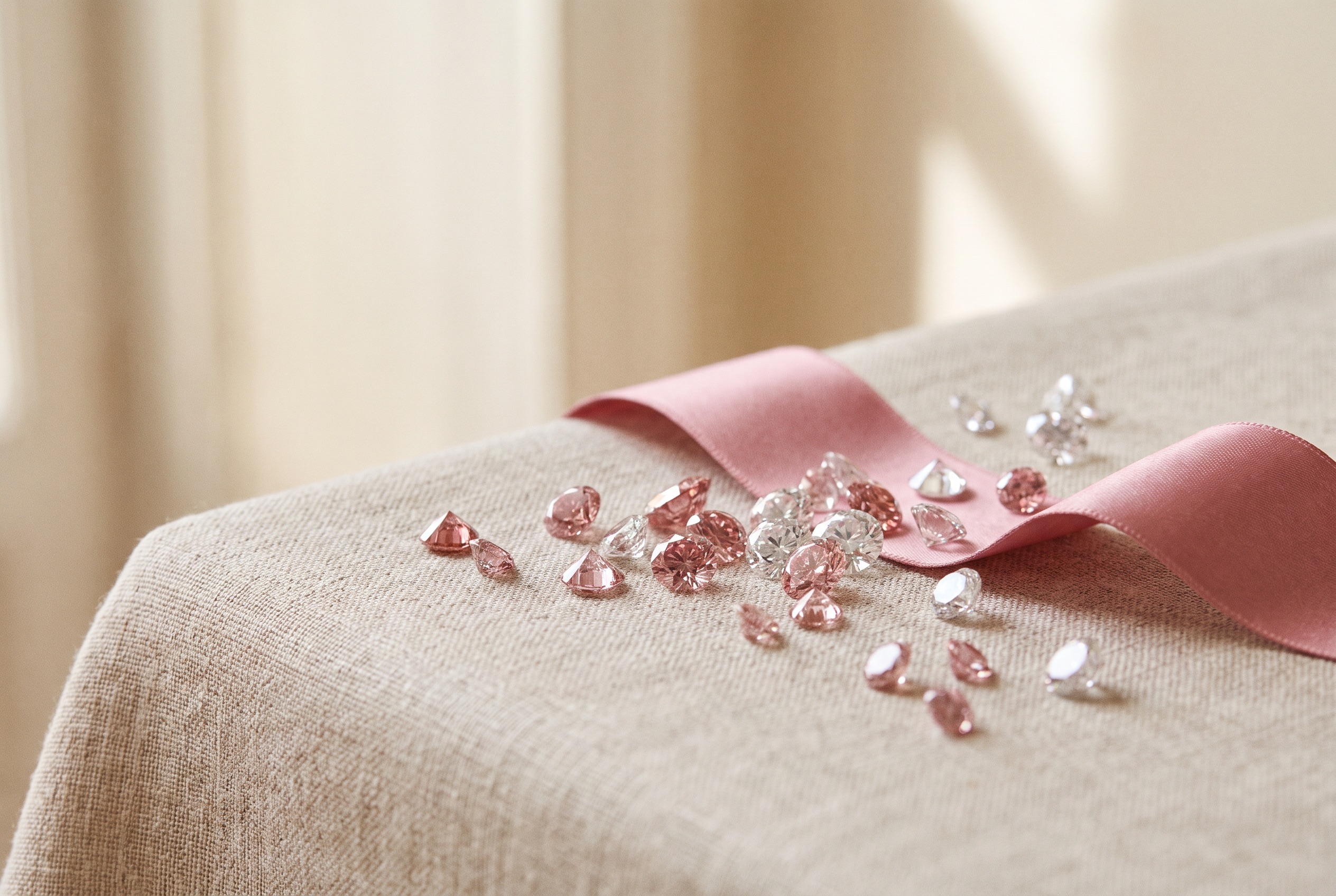
The Williamson diamond mine, located near Mwadui in Tanzania's Shinyanga Region, is one of the longest continuously operating diamond mines in the world, in production since its discovery in 1940. It sits on one of the largest kimberlite pipes ever found, and it is best known in the trade for a distinction few other mines can claim: a genuine, historical track record of producing fine pink diamonds, including the famous 54.5-carat rough stone that became the Williamson Pink.
This guide covers the mine's discovery, its unusual ownership history spanning a colonial-era geologist, a Tanzanian government partnership, and a modern mining company, why it's remembered for pink diamonds specifically, and what a mine with this kind of longevity means for a wholesale buyer thinking about natural diamond sourcing today.
Who Discovered the Williamson Mine
The mine takes its name from Dr. John Williamson, a Canadian geologist who discovered the kimberlite pipe near Mwadui in 1940 after years of independent prospecting across what was then the British colonial territory of Tanganyika. Williamson's discovery was significant not just for its eventual output but for its scale: the kimberlite pipe he found is among the largest ever identified anywhere in the world by surface area, a genuinely unusual geological formation compared to the narrower, more typical pipes that host most other major diamond mines. Williamson developed the mine himself in the years following discovery, building an operation that would remain in continuous production for decades under his direct ownership before later transitioning to joint state and corporate control.
Williamson's personal story became part of the mine's broader lore in the trade — an independent prospector who found and built one of the diamond industry's most distinctive mines outside the era's dominant corporate mining structures, at a time when large-scale diamond discoveries by an individual geologist working alone were already becoming rare.
The Scale of the Kimberlite Pipe
| Detail | Figure |
|---|---|
| Discovery year | 1940 |
| Discoverer | Dr. John Williamson, Canadian geologist |
| Location | Near Mwadui, Shinyanga Region, Tanzania |
| Pipe classification | One of the largest kimberlite pipes by surface area found anywhere in the world |
| Mining method | Open-pit |
| Years in continuous production | Since 1940, making it one of the longest continuously operating diamond mines globally |
| Best-known output | A genuine, verifiable history of fine pink diamond production |
A kimberlite pipe's surface footprint matters because it roughly determines how much ore is available to mine over the operation's lifetime before the pipe narrows at depth or open-pit extraction becomes impractical relative to the value of what remains. A pipe as large as Williamson's gives an operator a genuinely long runway compared with a typical, more modestly sized kimberlite discovery, which is a meaningful part of why the mine has remained productive across more than eight decades under several different ownership structures.
Why Williamson Is Famous for Pink Diamonds
Fancy-color diamonds of any kind are geological rarities, and pink diamonds specifically are among the rarest colors a natural diamond can display, tied historically to a small handful of source deposits worldwide. Williamson is one of those recognized historical sources, and its reputation for producing fine pink material — alongside its broader output across the color range — is a genuine, verifiable distinction rather than trade marketing. The mine's most famous single stone, a 54.5-carat rough pink diamond recovered in the 1940s, became the centerpiece of what is now known as the Williamson Pink, one of the most celebrated pink diamonds in the world.
Dr. Williamson himself gifted the rough pink stone to Princess Elizabeth (the future Queen Elizabeth II) as a wedding gift in 1947. The stone was subsequently cut down to a 23.6-carat round brilliant and set by Cartier into a floral brooch commissioned by the Queen in 1953, now known as the Williamson Diamond Brooch and part of the British Royal Collection. That single stone did more to put Williamson's name into wider public awareness than any amount of the mine's ordinary commercial-grade production, but it also reflects a genuine underlying reality: the deposit has a documented history of yielding exceptional fancy pink material, which is what gives the mine its lasting reputation in trade circles specifically, separate from its royal-history fame with the general public.
From Individual Ownership to a Government Joint Venture
Williamson operated the mine independently for years after its 1940 discovery, an unusually long stretch of individual ownership for an operation of this scale by the standards of large-scale diamond mining, which had already consolidated heavily around major corporate players elsewhere in Africa by the mid-20th century. Following Williamson's death in 1958, the mine's ownership structure evolved into a joint venture between De Beers and the government of what became independent Tanzania, a partnership model that gave the newly independent state a direct ownership stake in one of its most significant natural resource assets rather than leaving the mine entirely under foreign corporate control.
That state-and-corporate joint-venture model persisted for decades and became a recognizable template used at other diamond-producing nations navigating the same post-colonial transition, alongside Williamson's own continued production through changes in Tanzania's broader political and economic environment across the second half of the 20th century.
Petra Diamonds' Acquisition and Modern Ownership
Petra Diamonds, a mid-sized mining company that built a strategy around acquiring mature, already-developed diamond mines from larger operators rather than pursuing new greenfield exploration, acquired a majority stake in Williamson in the late 2000s, with the government of Tanzania retaining a minority ownership interest in the operation. This ownership structure — a specialized mid-sized operator holding the majority position alongside a state minority stake — reflects a broader pattern that has played out at several of Africa's historic diamond mines as some of the sector's largest legacy operators have periodically divested mature assets, allowing smaller specialists to take on continued investment in mines that no longer fit a larger conglomerate's strategic portfolio.
Petra has operated Williamson alongside other established assets acquired under the same strategy, including South Africa's historic Cullinan and Finsch mines, building a portfolio specifically around extending the productive life of already-proven kimberlite deposits through continued investment in mature, de-risked assets rather than the exploration risk of hunting for entirely new discoveries.
Williamson's Place Among the World's Longest-Running Mines
| Mine | Country | In Production Since | Notable Distinction |
|---|---|---|---|
| Williamson | Tanzania | 1940 | One of the longest continuously operating diamond mines globally; historic fine pink diamond production |
| Cullinan | South Africa | 1903 | Source of the largest gem-quality rough diamond ever found |
| Golconda mines | India | Historic, no longer active | Source of legendary historic diamonds, largely depleted centuries ago |
| Orapa | Botswana | 1971 | Botswana's founding large-scale mine |
| Venetia | South Africa | 1992 | South Africa's largest producer by value today |
Very few mines anywhere in the world can claim eight-plus decades of continuous production the way Williamson can, a distinction that separates it from even many of the industry's other historically significant operations. That kind of longevity generally requires both an exceptionally large underlying deposit and a series of owners across the decades willing to keep investing in the operation rather than winding it down once initial, easily accessible reserves were exhausted — both conditions Williamson has met across its history.
Kimberley Process and Sourcing Standing
As a mine operating in Tanzania, Williamson's rough diamond production falls under Tanzania's Kimberley Process Certification Scheme compliance, the international framework certifying rough diamond exports as conflict-free. Tanzania has participated in the Kimberley Process since the scheme's establishment in the early 2000s, and Williamson's production, moving through an established joint corporate-and-government ownership structure with decades of formal operating history, is consistent with standard major-producer participation in the certification framework.
How Williamson's Rough Diamonds Reach the Market
Rough diamonds recovered at Williamson move into the international diamond trade through Petra Diamonds' standard sales channels, which include structured tender sales to approved buyers, a model broadly consistent with how most mid-sized independent mining operators (as distinct from De Beers' historic long-term contract "sight" system) typically bring rough production to market. From there, purchased rough moves into the international cutting and manufacturing pipeline, with the large majority of global rough diamond cutting volume, including material originating from African mines like Williamson, handled in Surat, India, before graded and certified finished stones enter wholesale markets through labs including GIA, IGI, and GCAL.
Williamson's Everyday Production vs. Its Headline Reputation
It's worth separating Williamson's day-to-day commercial output from the exceptional stones that built its public reputation. Like any large kimberlite mine, the overwhelming majority of Williamson's production across its history has been ordinary commercial-grade rough — a mix of colors and qualities destined for standard cutting and grading, not headline-worthy fancy colored material. The mine's fame for pink diamonds specifically reflects a genuine, documented pattern in its output rather than routine production, but pink and other fancy-color stones represent a small fraction of overall volume even at a mine with Williamson's specific reputation, consistent with how rare fancy colors are across the natural diamond supply generally, at any producing mine worldwide.
Why Individual Mine History Matters to a Fancy-Color Buyer
For a jeweler or designer working with fancy-color natural diamonds specifically, knowing which mines have a genuine documented history of producing a particular color is more useful than treating fancy-color sourcing as generic. A small number of deposits worldwide account for the overwhelming majority of historically significant pink diamond production, and Williamson is one of the handful of mines a specialist in natural fancy-color stones would recognize by name for that specific reason, distinct from mines known primarily for volume or for other fancy colors like yellow or blue.
Tanzania's Broader Role in African Diamond Production
Tanzania is a smaller producer by total volume compared with Africa's largest diamond-producing nations — Botswana, South Africa, Angola, the Democratic Republic of Congo, and others — with Williamson representing the overwhelming majority of the country's formal diamond mining activity. That concentration means Williamson's operational status carries outsized significance for Tanzania's diamond sector specifically, even though the mine's overall output is modest on a global scale relative to giants like Jwaneng or Orapa in neighboring Botswana.
Natural Diamonds From a Mine Like Williamson vs. Lab-Grown CVD Diamonds
| Aspect | Williamson Natural Diamonds | Lab-Grown CVD Diamonds |
|---|---|---|
| Origin | Mined from an exceptionally large kimberlite pipe formed over geologic time | Grown in a lab reactor over weeks using chemical vapor deposition |
| Fancy color availability | Genuine, documented historical source for fine pink diamonds; rare even within Williamson's own output | Fancy colors including pink can be produced through post-growth treatment, generally at lower cost than natural fancy pinks |
| Certification | Graded by GIA, IGI, GCAL, and others under standard natural-diamond reporting, including origin and color-grading for fancy stones | Graded by the same labs, with growth method clearly disclosed on the report |
| Supply dynamics | Tied to one large but finite kimberlite deposit and Petra's ongoing operating decisions | Scales with manufacturing capacity rather than geological constraints |
A natural pink diamond with genuine mine-level provenance from a source like Williamson commands a fundamentally different price and rarity position than a lab-grown pink stone, since natural fancy pink material is constrained by an exceptionally scarce geological occurrence while lab-grown color options are a function of manufacturing process rather than deposit-level scarcity. Neither is inherently the "right" choice — the decision comes down to what a customer is actually looking for: natural rarity and provenance, or a lower price point with broader color availability.
Why Longevity at a Mine Signals Something Different Than New Discovery
A mine still producing after more than 80 years under three distinct ownership eras — an individual founder, a state-and-corporate joint venture, and now a specialized mid-sized operator — demonstrates something different than a newly developed deposit: sustained economic viability validated repeatedly across very different corporate structures, political environments, and market conditions. That kind of track record is a meaningful signal for how a trade professional should think about a mine's remaining reserves and operating outlook, distinct from newer mines whose long-term viability hasn't yet been tested across multiple ownership transitions and market cycles the way Williamson's has.
Sourcing Natural and Lab-Grown Diamonds From One Supplier
Guru Diam is a trade-only wholesale supplier carrying both certified natural diamonds and CVD lab-grown diamonds, along with certified loose stones and finished and custom jewelry — antique cuts, standard fancy shapes, round brilliant, and fancy color stones all included, with IGI, GIA, and GCAL certification available for either origin. In-stock inventory ships same-day from New York (before 6pm EST) and Los Angeles (before 4pm PST), giving jewelers a single sourcing relationship for both natural stones with documented mine-level history and lab-grown alternatives.
Buyers can browse certified loose diamond inventory through the certified diamonds category, source matched pairs through matching pairs, and review fancy color stones through fancy color loose diamonds. Trade accounts can review terms at the wholesale hub or apply through trade partner, and jewelers building a full piece can work through custom jewelry for a setting finished in 4-6 days.
What Williamson's Story Means for Understanding Diamond Provenance
Williamson illustrates why mine-level knowledge matters even for buyers who never handle rough diamonds directly: a natural pink diamond described only as "African origin" tells a customer far less than knowing it traces to one of the small number of deposits with a genuine, documented history of producing that specific color. A jeweler fielding a customer's provenance question about a natural fancy-color stone is better equipped with that level of specificity than with country-level generalities alone, and Williamson's combination of extreme longevity and a verifiable pink-diamond legacy makes it one of the more useful individual mine names to recognize in that context.
Diamond Colors Found at Williamson Beyond Pink
While pink diamonds built Williamson's public reputation, the mine's overall output spans the full range of colors typical of a large kimberlite pipe — predominantly colorless-to-near-colorless white diamonds across a range of clarities, alongside smaller quantities of brown and yellow stones, which is the standard color distribution seen at most large-scale kimberlite operations worldwide. Fancy pink material represents a distinct and much smaller fraction of that broader output, which is precisely what makes a documented pink-diamond source like Williamson valuable to specialists: the mine reliably produces ordinary commercial-grade material at volume while periodically yielding the rare fancy-color stones that built its trade reputation, rather than being a niche operation focused solely on fancy colors. This dual character — high-volume commercial production alongside a genuine track record of rare fancy-color output — is itself a distinguishing feature relative to many other historically significant mines that are known for one or the other, but rarely both at meaningful scale.
Community and Economic Impact in Shinyanga Region
Williamson has operated as a major employer and economic anchor for the surrounding Shinyanga Region for more than eight decades, a span long enough that the mine has shaped multiple generations of local economic life in a part of Tanzania that would otherwise have limited large-scale formal employment opportunities. Mines with this kind of multi-generational operating history typically become deeply integrated into their host region's infrastructure and local economy in ways that newer mines haven't yet had time to develop, from direct employment and contractor relationships to the broader town and regional infrastructure that grew up specifically to support decades of continuous mining activity. Petra Diamonds, as the mine's current majority operator, inherits both the opportunity and the responsibility that comes with operating a site this embedded in its local community and economy, a dynamic distinct from a newly developed mine without the same decades of accumulated local dependence on the operation's continued success.
How Williamson's Story Compares to Other Independent Discoveries
Large-scale diamond mine discoveries made and initially developed by a single independent geologist, rather than a major mining corporation from the outset, are unusual in the modern history of the industry, where most significant 20th-century discoveries were made through corporate or state-sponsored exploration programs with substantial institutional backing from the start. Williamson's original discovery and early independent development stand out against that broader pattern, giving the mine a specific origin story that distinguishes it from peer mines like Venetia or Orapa, both developed from the outset as large corporate or joint state-corporate projects rather than an individual prospector's personal venture that only later evolved into a joint venture structure.
What Trade Professionals Should Know Before Discussing Williamson With a Customer
A jeweler fielding a customer question about a natural pink diamond's origin benefits from being able to speak to Williamson specifically rather than defaulting to generic "African origin" language, since the mine's genuine, documented pink-diamond history and its royal-connection provenance (via the Williamson Pink and the Cartier-set brooch in the British Royal Collection) give a customer conversation real substance and verifiable detail. That level of specificity — knowing not just that a stone is natural and African, but that a documented historical source like Williamson exists with a genuine track record of producing exactly the color in question — is the kind of trade knowledge that separates a well-informed jeweler's provenance conversation from a vague, unverifiable sourcing claim.
Frequently Asked Questions
Is the Williamson diamond mine still operating?
Yes. Williamson has been in continuous production since its discovery in 1940, making it one of the longest continuously operating diamond mines in the world, and it remains an active open-pit operation in Tanzania's Shinyanga Region.
Who owns the Williamson diamond mine?
Petra Diamonds holds the majority ownership stake, with the government of Tanzania retaining a minority interest, following Petra's acquisition of the mine from its earlier De Beers-and-government joint venture structure in the late 2000s.
Why is Williamson famous for pink diamonds?
Williamson has a genuine, documented history of producing fine pink diamonds, most famously a 54.5-carat rough stone recovered in the 1940s that founder Dr. John Williamson gifted to Princess Elizabeth in 1947. It was later cut and set by Cartier into the Williamson Diamond Brooch, part of the British Royal Collection.
Where is the Williamson mine located?
Near the town of Mwadui in Tanzania's Shinyanga Region, on one of the largest kimberlite pipes ever discovered by surface area.
Are Williamson's diamonds ethically sourced?
Williamson's rough diamond production falls under Tanzania's Kimberley Process Certification Scheme compliance, the international framework certifying rough diamond exports as conflict-free.
How does a mine like Williamson compare to lab-grown pink diamonds?
Natural pink diamonds from a documented source like Williamson are constrained by extreme geological rarity and command a corresponding price premium, while lab-grown pink diamonds are produced through manufacturing and treatment processes that scale with production capacity, generally at a significantly lower price point.