
Wholesale Lab-Grown Diamonds in Los Angeles
Sourcing Wholesale Lab-Grown Diamonds in Los Angeles: The Landscape
Los Angeles runs on a jewelry economy that most of the country never sees from the outside: custom engagement ring studios in Beverly Hills and the Arts District, bridal and fine jewelry retailers across the Westside and the Valley, independent designers building direct-to-client brands out of small studios, and a working Jewelry District downtown that still moves real volume every day. Every one of those businesses needs a diamond source they can call more than once — not a single stone here and there from a marketplace, but a working supply relationship that holds up order after order.
That's a different problem than sourcing a diamond for one ring. It means predictable calibration across repeat melee orders, certification that actually matches the stone in hand, category breadth so a single phone call covers an antique cushion, a fancy pink melee parcel, and a finished engagement ring mount, and a supplier who understands that a West Coast reorder shouldn't have to wait on East Coast shipping schedules. For lab-grown diamonds specifically, LA's trade buyers are also newer to sourcing at scale than their counterparts in New York's diamond district — which means the supplier relationship carries more weight, not less.
This page is built for that buyer: the LA jeweler, retailer, designer, or custom studio owner evaluating wholesale lab-grown diamond sourcing for the first time, or looking to add a second reliable source to what they already have. Guru Diam operates a West Coast presence out of Los Angeles alongside its New York office, with same-day shipping for local orders and full category coverage across loose stones, melee, and finished jewelry.
What "Wholesale" Actually Means for an LA Trade Buyer

"Wholesale" gets used loosely in consumer-facing diamond marketing, so it's worth being precise about what it means for a trade buyer. Wholesale sourcing is business-to-business: a jeweler, retailer, or designer buying diamonds to resell, set, or use in production, at trade pricing that reflects volume and a standing account relationship rather than a one-off retail transaction. It assumes a resale certificate or business credentials, a purchasing pattern that repeats, and pricing structured around parcels and standing inventory rather than single-stone markups.
That's different from how a consumer sources a diamond — browsing a retail site or showroom for one stone at retail margin, with no expectation of reordering. A wholesale relationship is built around consistency: the same DEF+ color range showing up parcel after parcel, the same VS+ clarity standard holding across reorders, and a supplier who treats a repeat buyer differently than a first-time one. For an LA jeweler building a bridal case or a custom studio quoting client work, that consistency is the entire value of going wholesale in the first place — it's what lets a business quote a client with confidence before the stone is even in hand.
Guru Diam works exclusively on this model: trade accounts, standing inventory, and pricing built for jewelers and retailers who need to buy more than once.
What to Look For in a Wholesale Lab-Grown Diamond Supplier
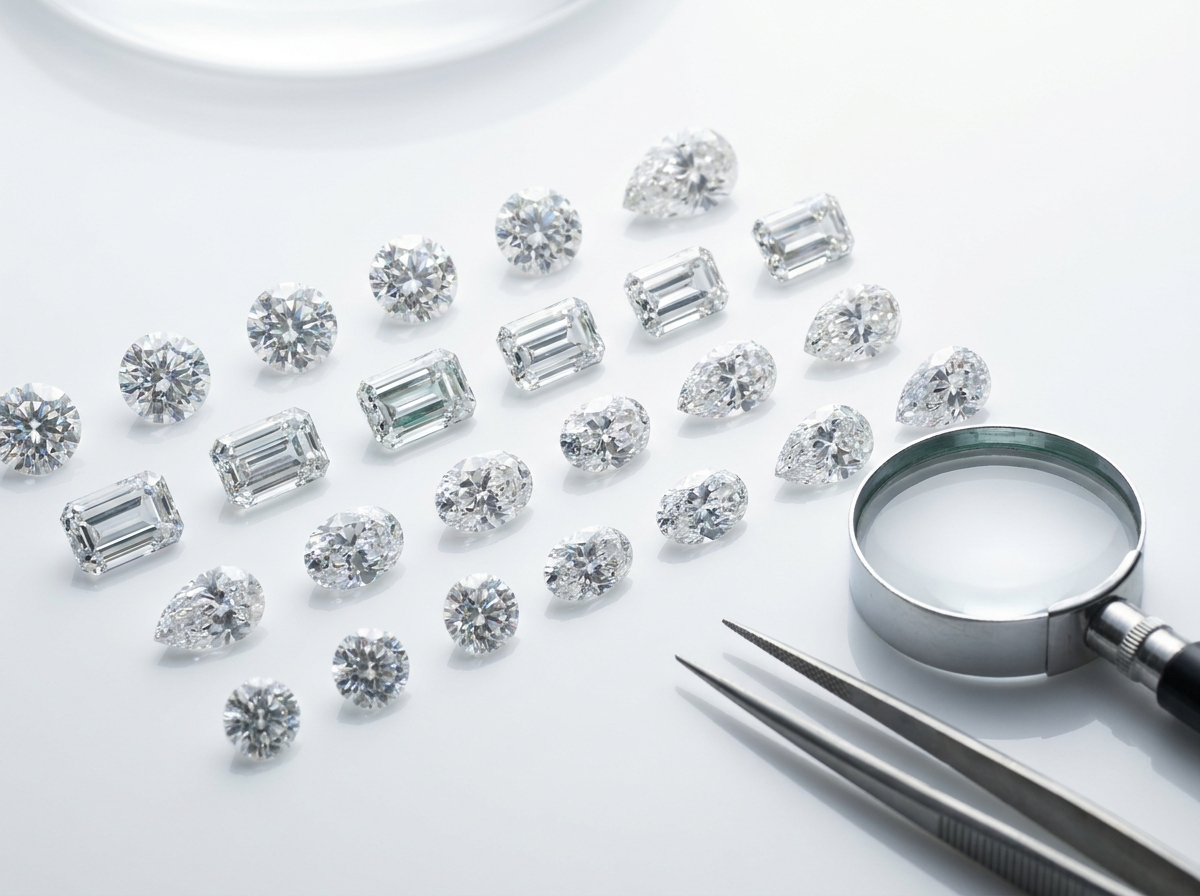
Not every wholesale supplier is built the same way, and the differences show up fast once a business is placing repeat orders. The first thing to evaluate is category breadth — can this supplier cover round brilliants, fancy shapes, antique and exotic cuts, fancy color stones, and melee, or does a buyer need three or four separate accounts to fill out a single collection? Most suppliers in this space specialize narrowly: strong on rounds, thin on fancy colors, or vice versa. That forces a jeweler into juggling multiple vendors just to source one finished piece.
The second is certification flexibility — clarity on which tier of stone is actually certified and which isn't, stated plainly rather than blurred in marketing copy. The third is calibration control on melee specifically, since a mismatched parcel is one of the most common ways a finished piece gets delayed or rejected at final QC. And the fourth is consistency over time: does color and clarity on a reorder actually match what shipped six months ago, or does quality drift parcel to parcel?
A supplier that can speak clearly to all four — without vague language or evasive answers about certification — is worth building a standing relationship with. A supplier that can't is worth testing carefully before committing real volume to them.
Category Breadth: One Supplier for Antique Cuts, Fancy Colors, and Custom Rings
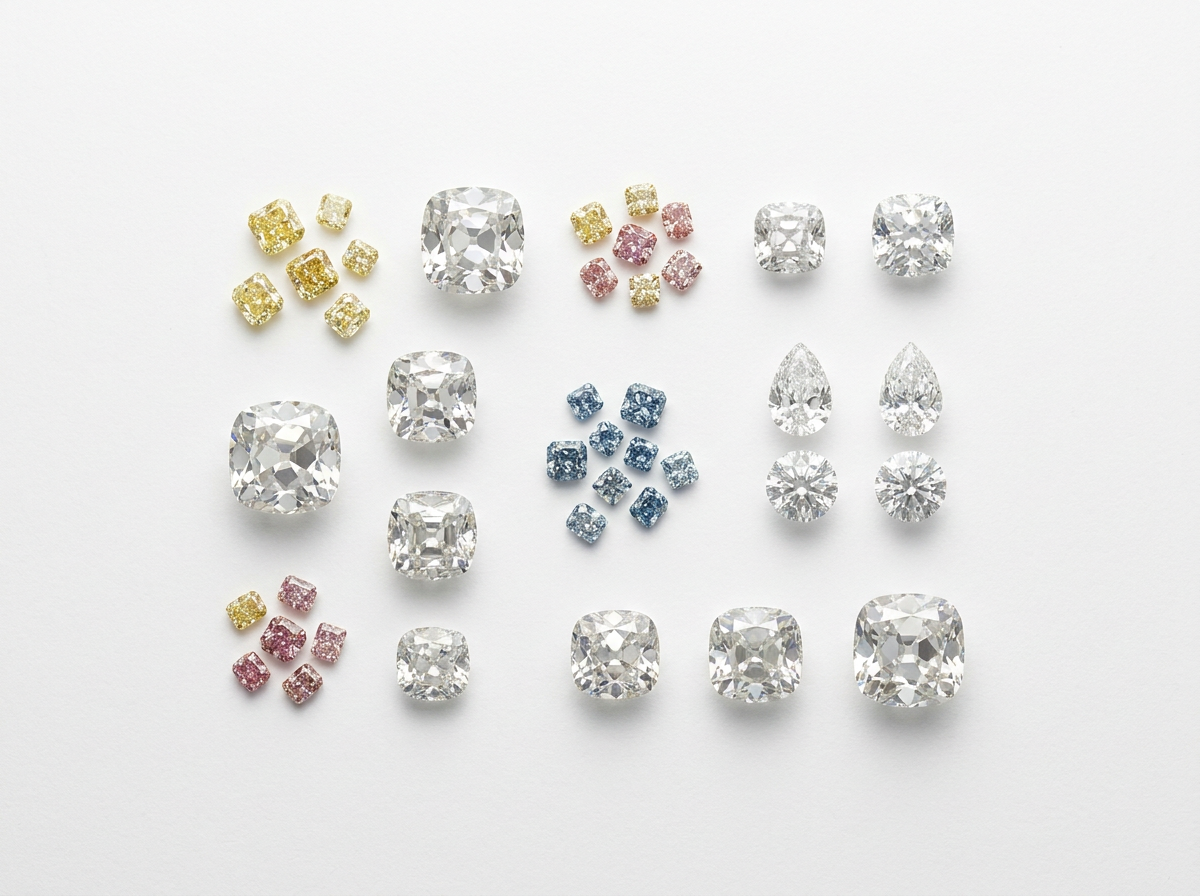
Most wholesale lab-grown diamond suppliers specialize in one category and stay there — a rounds-only house, a fancy-color specialist, a melee-only operation. That works fine until a jeweler needs to source outside that lane, at which point it's a new vendor relationship, a new account application, and a new set of quality standards to learn.
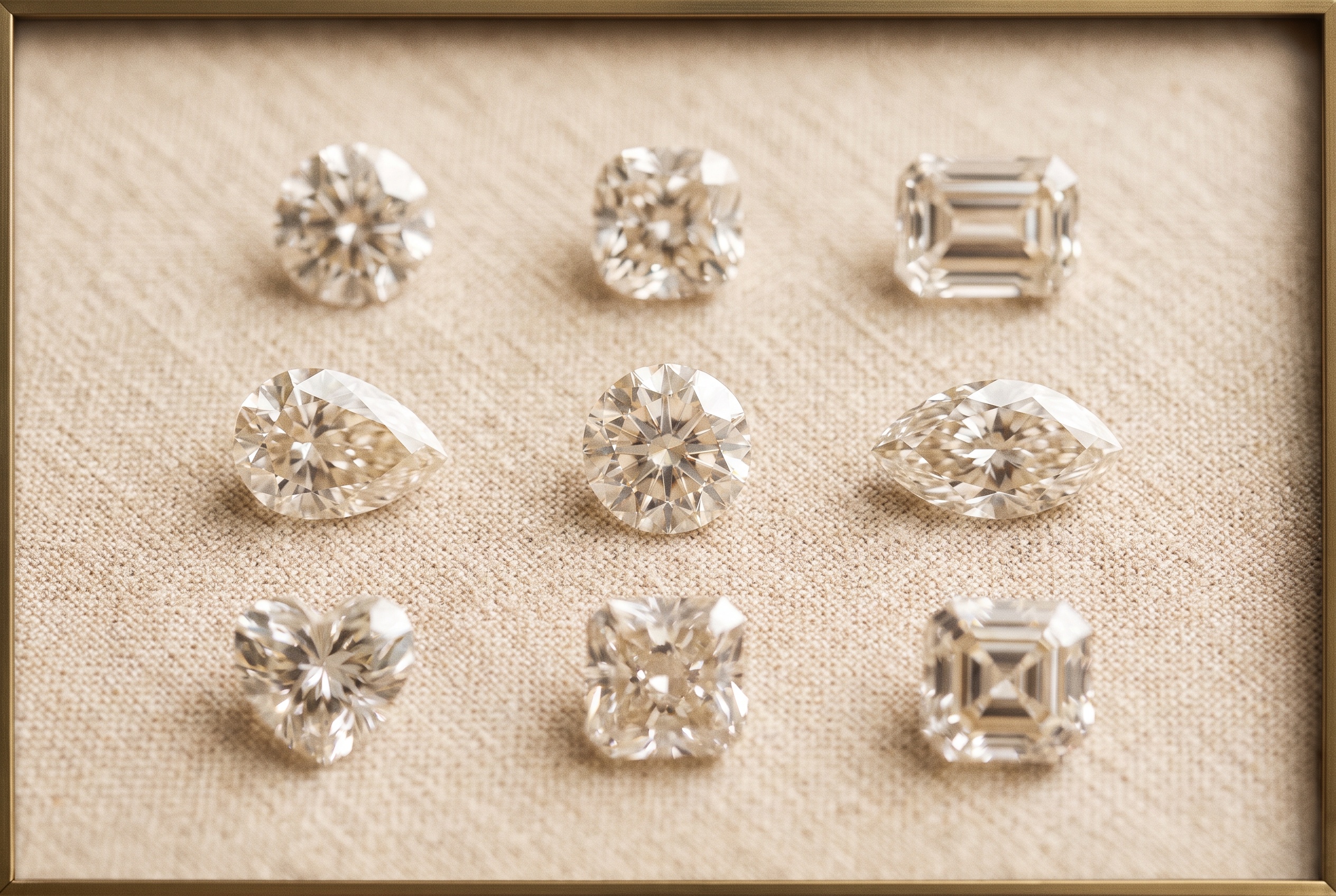
Guru Diam runs category breadth as the core of the catalog rather than an afterthought: antique and exotic cuts for buyers building vintage-inspired or estate-style pieces, fancy color loose stones across yellow, pink, blue, green, and champagne, fancy color melee in both round and fancy shapes, matching pairs for earrings and symmetrical settings, and full support for custom engagement ring builds from loose stone through finished mount. A jeweler quoting a client on a fancy pink cushion center stone with a matching melee halo doesn't need two vendors and two shipping timelines — it's one account, one order, one point of contact.
That breadth matters most for LA's custom and bridal segment specifically, where a single client commission can call for three or four different product categories in one build. Consolidating that sourcing into one relationship is a real operational simplification, not just a convenience.
Certification Explained for Trade Buyers: IGI, GIA, and "Parcel Goods"
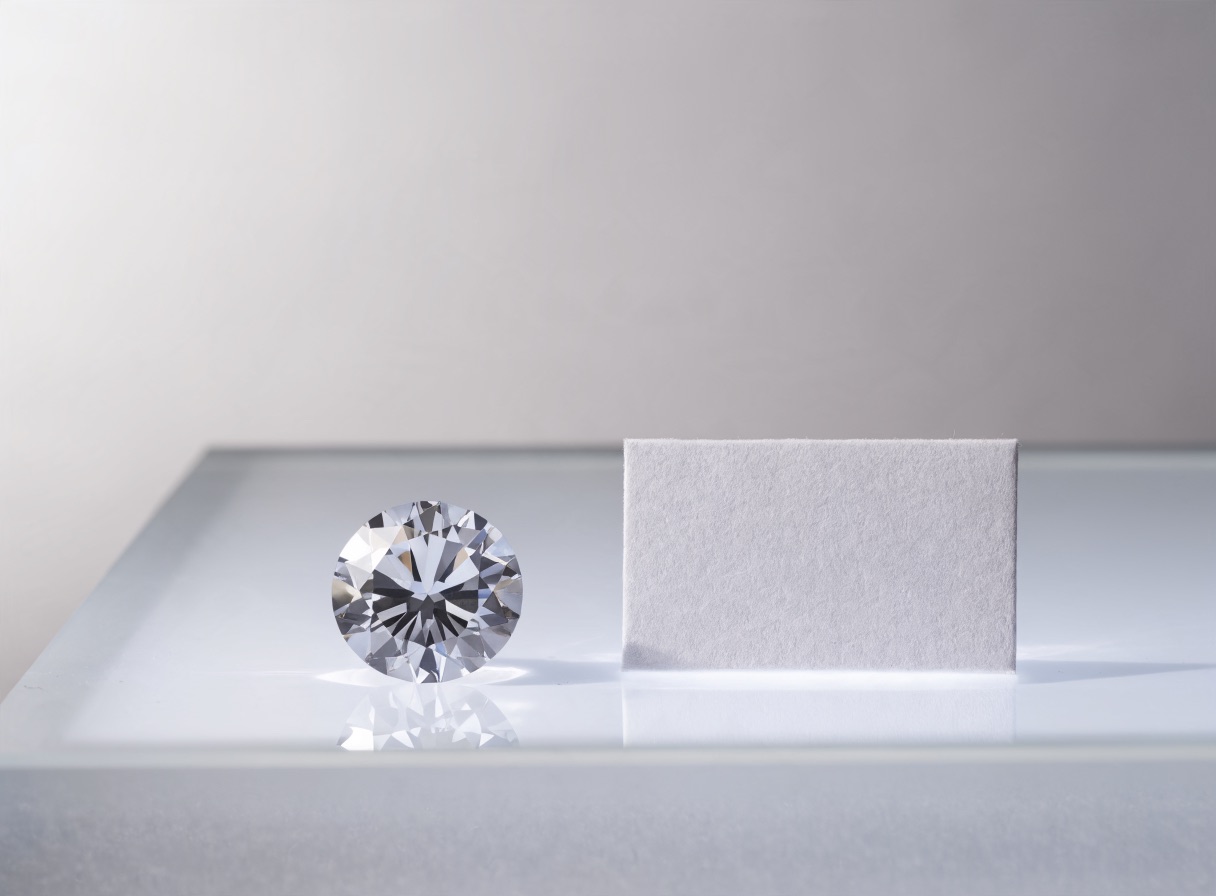
Certification is where a lot of confusion creeps into lab-grown diamond sourcing, and it's worth being direct about it. Loose stones at 0.30 carat and above are graded and certified by an independent lab — IGI or GIA — with a report documenting cut, color, clarity, and carat weight specific to that individual stone. That certificate travels with the stone and is what a jeweler hands a client, or references in a custom quote, as third-party verification of what they're buying.
Melee — the small calibrated stones used in pavé, halos, and accent settings — works differently, and any supplier that tells a buyer otherwise isn't being straight with them. Melee is not individually certified and not certified at the parcel level. It's sold as parcel goods: quality-controlled in-house against a stated color and clarity standard, but without a per-stone or per-parcel lab report. That's standard across the industry for melee-scale stones — certifying every 1mm accent stone individually isn't commercially practical anywhere — but it means the QC standard the supplier applies in-house is what a buyer is actually trusting, since there's no external report to fall back on.
The practical takeaway for an LA trade buyer: ask specifically which tier a quote applies to. "Certified" should mean an IGI or GIA report in hand for that stone. "Parcel goods" or "QC'd in-house" means melee, sold against a stated in-house standard rather than a lab certificate. A supplier who keeps that distinction clear from the first conversation is one worth trusting with a growing order size.
CVD Lab-Grown Diamonds 101 for the Trade Buyer
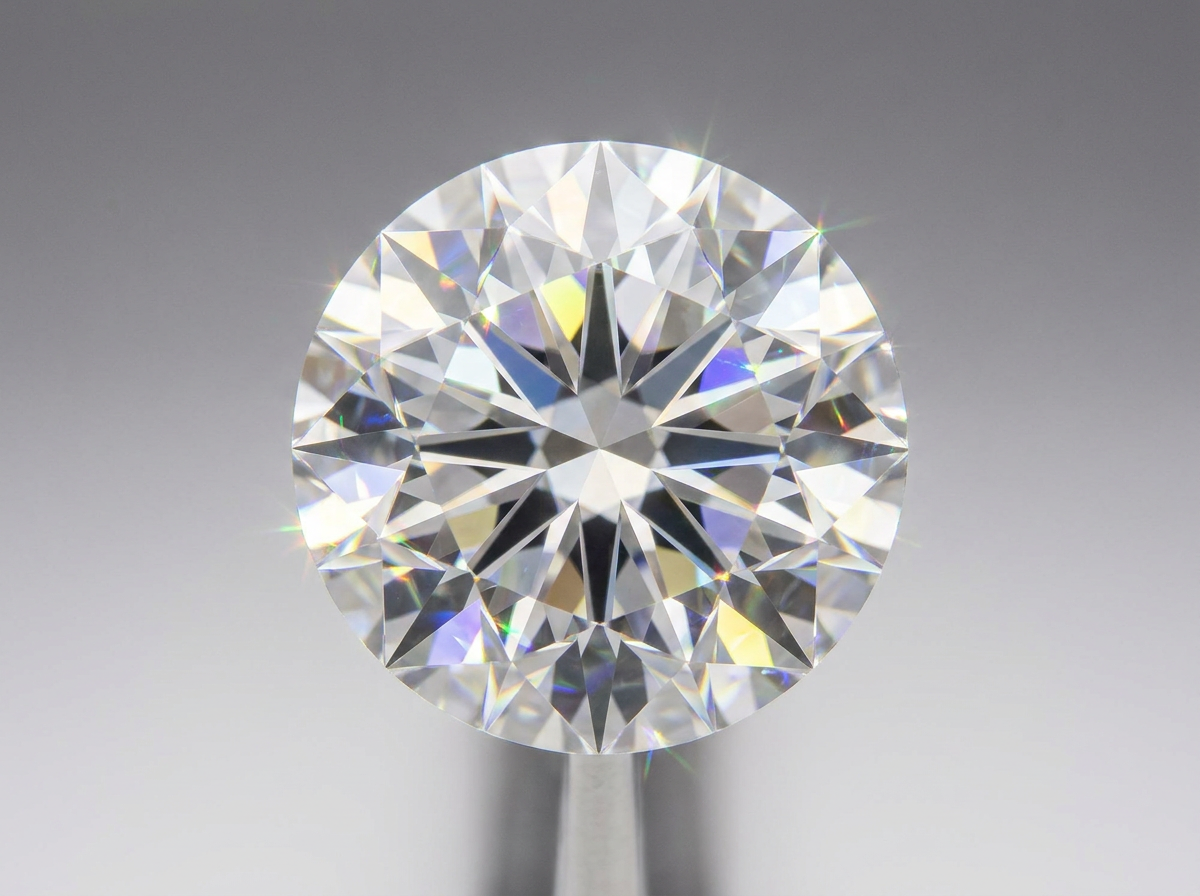
Lab-grown diamonds are chemically, physically, and optically identical to mined diamonds — same crystal structure, same hardness, same fire and brilliance. The difference is entirely about origin: a mined diamond formed underground over geologic time, a lab-grown diamond is grown in a controlled lab environment over a period of weeks. Grading labs verify this and note it clearly on any certificate, but the diamond itself, once polished, does not differ from its mined counterpart in any way a jeweler, appraiser, or client can see or measure without lab equipment designed specifically to detect growth method.
Guru Diam's catalog is CVD (chemical vapor deposition) across the entire assortment, from loose certified stones through melee. CVD growth produces the consistent, high-clarity material that supports the tight color and clarity standards trade buyers expect on reorders — DEF+ color and VS+ clarity as the baseline across the catalog, whether the piece in question is a loose 2-carat center stone or a parcel of 1.3mm round melee. Every stone is cut and finished in-house, giving direct control over consistency from one order to the next rather than relying on a patchwork of outside cutting sources.
For an LA buyer newer to lab-grown sourcing, the short version is this: the growth method affects origin and price, not quality or appearance. A well-cut CVD diamond graded DEF+/VS+ looks, wears, and performs identically to a mined stone in the same grade range — which is exactly why lab-grown has become standard inventory rather than a niche category for most bridal and fine jewelry retailers.
Melee Calibration and QC Standards Buyers Should Demand
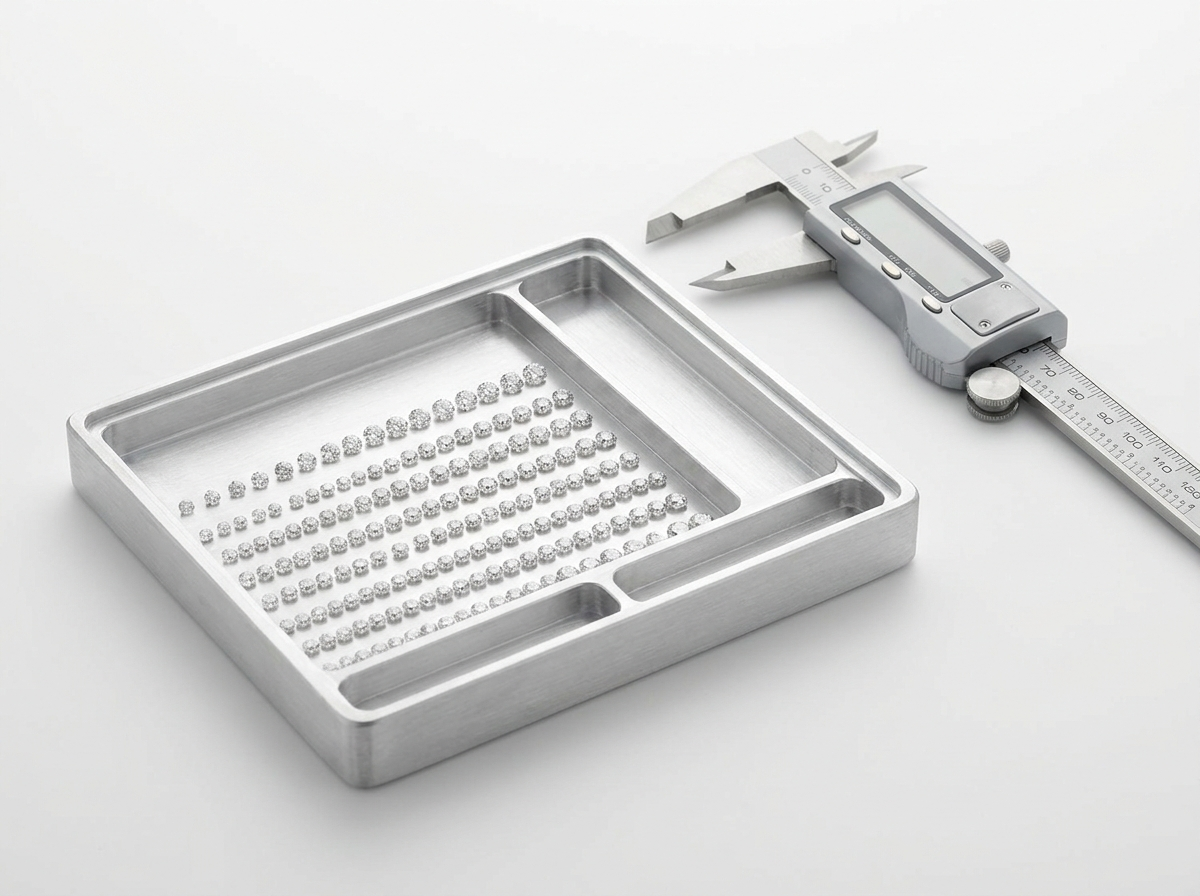
Melee is where sourcing quality gets tested the hardest, because a single mismatched parcel can hold up a finished piece at final assembly — a pavé band that won't sit flush, a halo with visibly inconsistent stones, a client delivery date that slips because a reorder didn't match the original. Any wholesale buyer sourcing melee at volume should know exactly what calibration standard they're being sold against, not just trust that "calibrated" means what they assume it means.
Guru Diam's melee runs a size range from 0.8mm to 9.0mm. Round brilliant melee is DEF+ color, VS+ clarity, CVD only. Fancy calibrated shapes — emerald, radiant, pear, marquise, and others available on request — hold to the same DEF+ color and VS+ clarity standard, also CVD only. Fancy color melee is available in yellow, pink, blue, and green, in both round and fancy shapes, CVD only across the board.
The calibration tolerance is tight and enforced before anything ships: plus or minus 0.10mm on dimension, plus or minus 0.10 carat on weight, one grade of color match and one grade of clarity match within a parcel. A parcel that falls outside that tolerance gets recut before it goes out the door — it's never shipped off-spec and left for the buyer to catch at bench. That matters more for a repeat wholesale relationship than almost any other single spec, because it's the difference between a reorder that drops into an existing setting without a second thought and one that requires re-sorting at the buyer's own bench.
Custom Engagement Rings and Finished Jewelry for LA's Design Scene
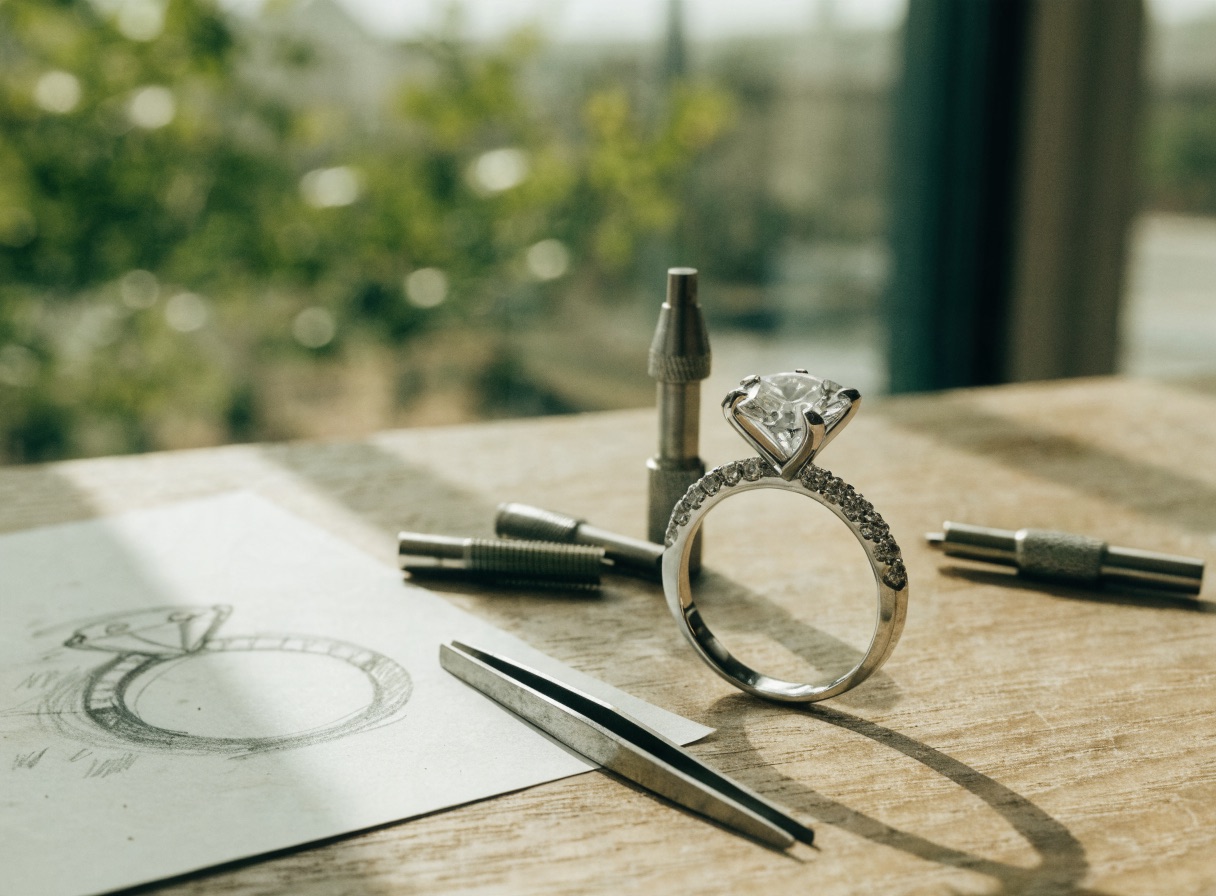
Los Angeles has one of the strongest independent custom and bespoke jewelry design scenes in the country — small studios and solo designers building direct client relationships, often working from a sketch or a Pinterest reference through to a finished commission, frequently on a tighter timeline than a traditional retail buying cycle allows. That business model puts different demands on a wholesale diamond supplier than a big-box retail account does: the ability to source a center stone and matching melee together, quote a custom mount alongside the stones, and turn a finished piece around fast enough to keep a client engaged through the process.
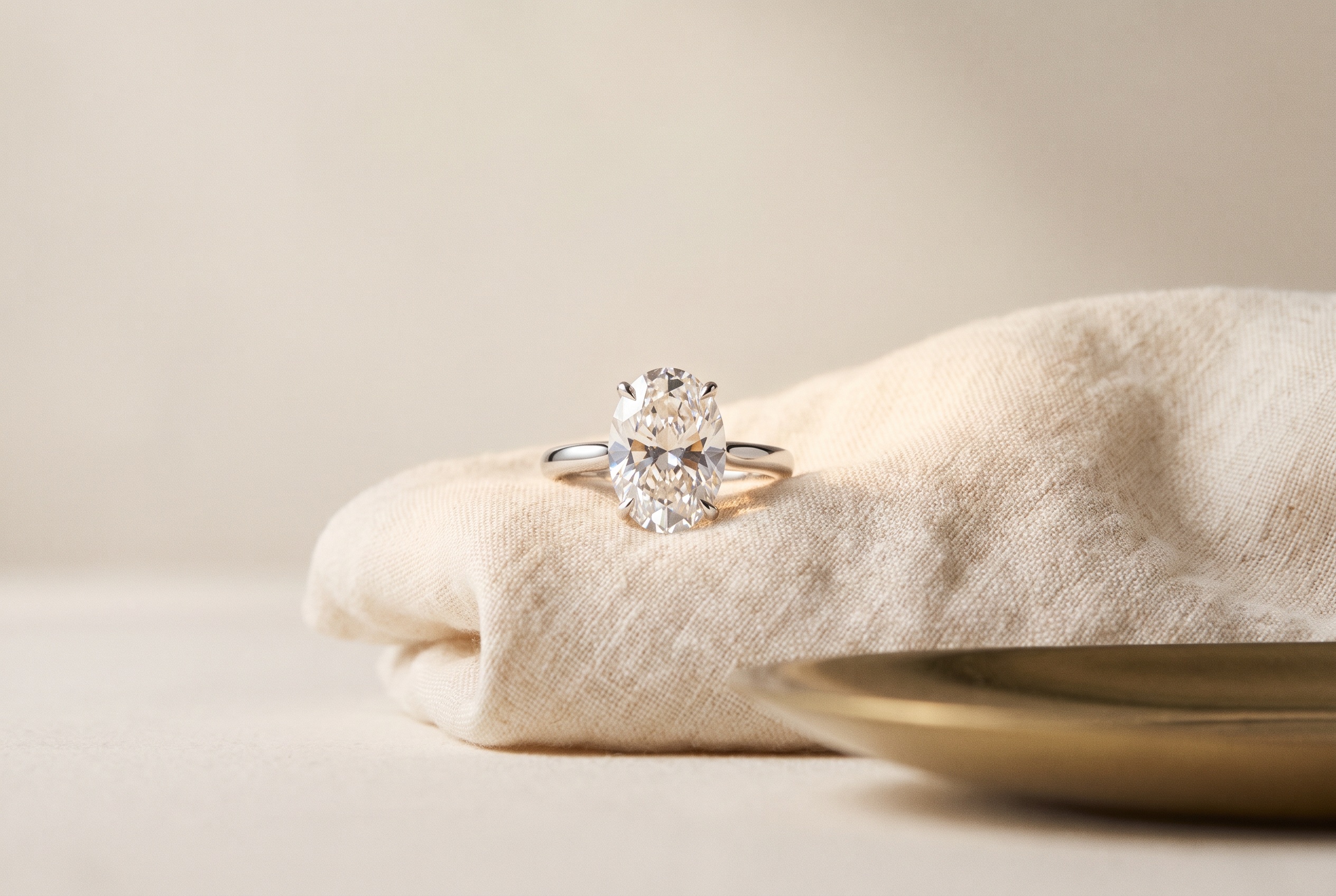
Guru Diam supports that workflow directly — sourcing loose stones and melee for a custom build, and producing finished engagement rings and jewelry in-house from design through completion. Finished jewelry and custom engagement ring orders run a 4–6 day turnaround from confirmed design to completion, which is fast enough to keep pace with an LA custom studio's typical client timeline without the studio having to hold excess finished inventory on hand.
For a designer or retailer building a custom program, that combination — loose-stone sourcing and finished-piece production under one account — removes a coordination problem that otherwise falls entirely on the studio: matching a center stone from one vendor to a mount and setting from another, and hoping the timelines line up.
Local Logistics: Same-Day LA Shipping and Why It Matters

Shipping speed sounds like a minor operational detail until a reorder is genuinely holding up a client delivery. Most of the wholesale lab-grown diamond trade is still concentrated on the East Coast, which means a West Coast buyer sourcing from an East Coast-only supplier is routinely adding a full extra shipping day — or more — onto every reorder, simply because of where the warehouse sits relative to where the order needs to land.
Guru Diam ships LA orders placed before 4pm PST the same day, out of its Los Angeles operation. For a jeweler or studio reordering melee to finish a piece already in progress, or restocking a bridal case ahead of a weekend, that same-day cutoff is the difference between a next-day arrival and a multi-day wait that pushes a client delivery date. It's a straightforward logistics point, but it's one of the clearest practical reasons a West Coast buyer benefits from sourcing through a supplier with an actual West Coast operation rather than routing every order through the other coast.
The bi-coastal structure — Los Angeles and New York both operating as full order-fulfillment locations — means a buyer isn't choosing between fast shipping and full catalog access. Both offices carry the same category breadth and the same calibration standards; the LA operation just means West Coast buyers aren't paying a shipping-time tax to access it.
The LA Trade Relationship: Showroom Access and JCK
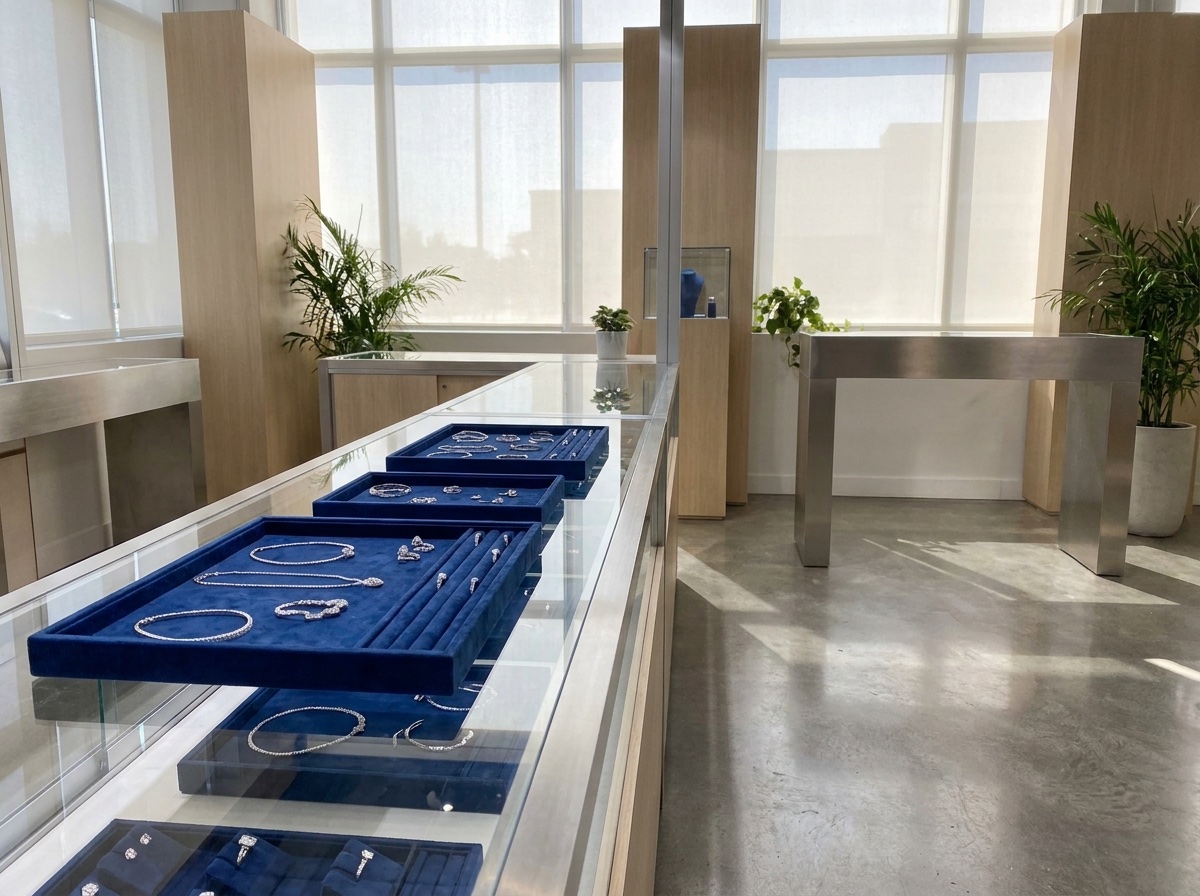
Wholesale sourcing works better in person, at least some of the time — seeing calibration consistency across a parcel firsthand, comparing color grades side by side under controlled light, or walking a custom build through with someone who can source the stones and the mount in the same conversation. Guru Diam maintains an LA showroom available by appointment for trade buyers who want to review inventory directly before committing to a standing account or a larger order.
Beyond the showroom, Guru Diam maintains a presence at JCK, the trade show most wholesale jewelry buyers already treat as a standing fixture on the calendar. For an LA-based jeweler or designer, that overlap — a supplier who shows up at the same industry events and also runs a local West Coast operation — makes it easier to build the kind of ongoing relationship that wholesale sourcing depends on, rather than a purely transactional vendor connection managed entirely over email.
None of this replaces the fundamentals — category breadth, honest certification language, tight calibration, and reliable shipping — but for a buyer weighing a handful of supplier options, the ability to actually sit down with someone and look at stones in person is a real differentiator, not a nice-to-have.
Common Myths About Lab-Grown Diamonds, Debunked
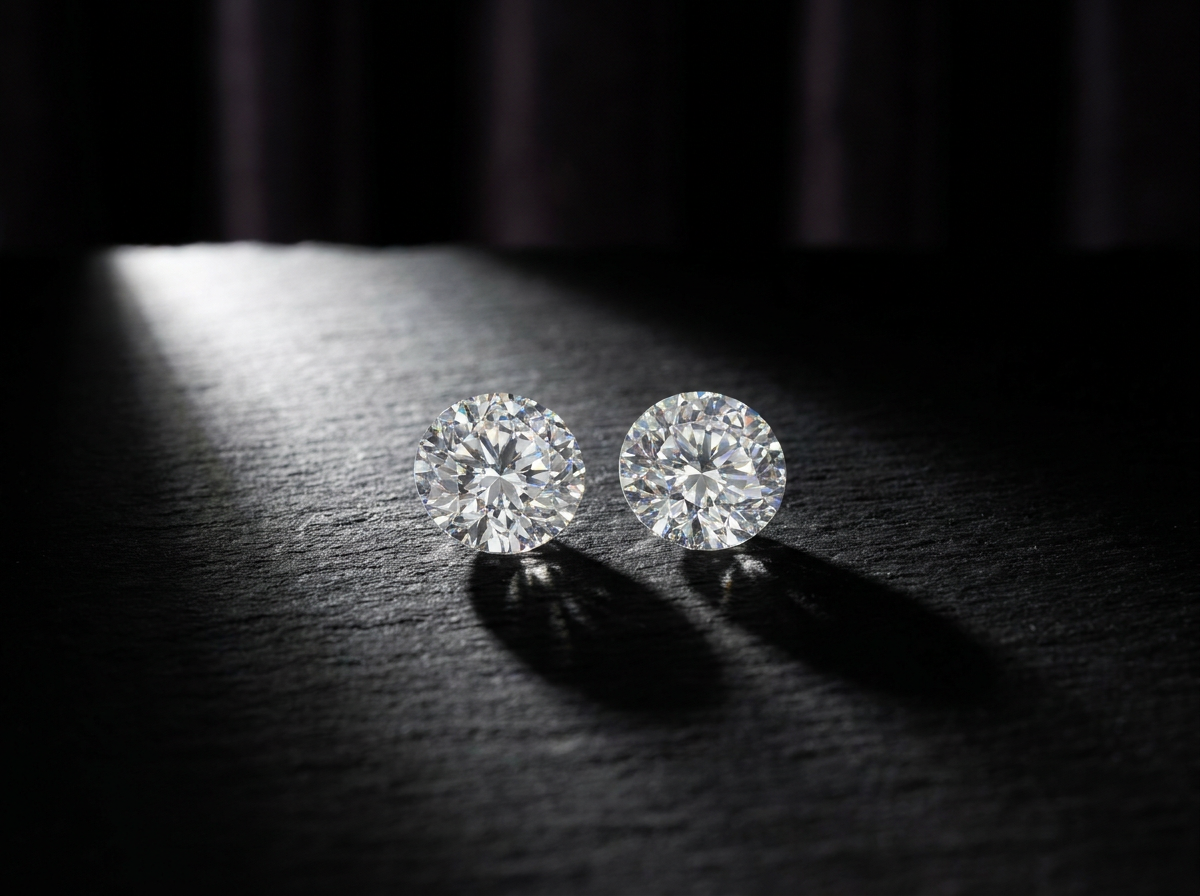
A handful of myths still circulate around lab-grown diamonds, and they're worth addressing directly since they occasionally come up in client-facing conversations that jewelers have to field themselves. The first is that lab-grown diamonds are somehow "fake" — they're not. A lab-grown diamond has the identical chemical composition, crystal structure, and physical properties as a mined diamond; the only difference is where and how it formed. Grading labs like IGI and GIA certify lab-grown diamonds using the same 4Cs framework they use for mined stones, just with the growth method noted on the report.
The second myth is that lab-grown diamonds are visibly different or lower quality than mined stones. They're not — a well-cut lab-grown diamond at DEF+ color and VS+ clarity is visually indistinguishable from a mined diamond in the same grade range to the naked eye, and to most standard jeweler's tools. Detecting growth method requires specialized lab equipment, not a loupe.
The third myth is that lab-grown diamond quality is inconsistent or unpredictable from supplier to supplier. Quality consistency is a function of the individual supplier's cutting and QC standards, not an inherent property of lab-grown material — which is exactly why calibration tolerance and in-house QC standards matter so much when evaluating a wholesale source, as covered above. A buyer evaluating suppliers should judge each one on its own stated standards, not on outdated assumptions about the category as a whole.
How to Start a Wholesale Account with Guru Diam

Opening a wholesale account is a straightforward first step, not a lengthy onboarding process. Guru Diam works with jewelers, retailers, designers, and custom studios across the country, with dedicated support for LA and West Coast buyers through the local office and showroom. The trade partner page walks through account requirements and next steps for businesses ready to set up standing wholesale access, and the wholesale hub covers the full catalog — loose certified stones, calibrated melee across all shapes and colors, fancy color stones, and finished jewelry and custom engagement ring production.
Guru Diam currently supports more than 2,000 active customer accounts across its wholesale business, a base built on the same fundamentals covered throughout this page: honest certification language, tight melee calibration, full category breadth, and logistics that don't punish West Coast buyers for being on the West Coast. For an LA jeweler, retailer, or designer evaluating a new or additional wholesale diamond source, starting a conversation costs nothing — reach out through the trade partner page to discuss account setup, or the wholesale hub to review catalog and pricing structure directly.
Frequently Asked Questions
What does "wholesale" mean when buying lab-grown diamonds in Los Angeles?
Wholesale sourcing means buying as a business — a jeweler, retailer, designer, or custom studio — at trade pricing structured around a standing account and repeat orders, rather than buying a single stone at retail markup the way a consumer would. It typically requires business credentials or a resale certificate and assumes an ongoing purchasing relationship rather than a one-time transaction. For LA trade buyers specifically, going wholesale also means gaining access to parcel-level melee pricing and category breadth that isn't available through consumer-facing retail channels at all.
Are Guru Diam's lab-grown diamonds certified?
It depends on the tier. Loose stones at 0.30 carat and above are independently graded and certified by IGI or GIA, with a report specific to that individual stone documenting cut, color, clarity, and carat weight. Melee — the small calibrated stones used in pavé and accent settings — is not individually or parcel-level certified; it's sold as parcel goods, quality-controlled in-house against a stated color and clarity standard. That distinction is standard across the wholesale diamond trade, since certifying every small accent stone individually isn't commercially practical, but it's worth confirming with any supplier which tier a given quote applies to.
Does Guru Diam ship same-day from Los Angeles?
Yes. Orders placed before 4pm PST from the Los Angeles operation ship the same day. That local cutoff is specifically valuable to West Coast trade buyers, since sourcing from an East Coast-only supplier typically adds extra shipping time to every reorder simply due to warehouse location relative to the West Coast. Finished jewelry and custom engagement ring orders run on a separate production timeline of 4–6 days from confirmed design to completion, since those pieces are made to order rather than pulled from standing inventory. Loose stones ship same-day from on-hand inventory and don't carry a production timeline at all.
What's the difference between IGI and GIA certification for lab-grown diamonds?
Both IGI and GIA are independent gemological grading laboratories that certify diamonds — mined and lab-grown alike — using the same 4Cs framework: cut, color, clarity, and carat weight, with growth method clearly noted on the report for lab-grown stones. Both are widely recognized and accepted across the wholesale and retail jewelry trade. Which lab a given stone is certified through depends on the specific stone and order; trade buyers sourcing loose certified stones at 0.30 carat and above should confirm which lab's report accompanies a particular piece before finalizing a purchase or client quote.
Can I get custom engagement rings made through a wholesale account?
Yes. Wholesale accounts can source loose center stones and matching melee, and have finished engagement rings and custom jewelry produced in-house from design through completion, all under one account rather than coordinating separate vendors for stones and setting. This is especially relevant for LA's independent custom and bespoke jewelry design studios, which often need to move a client commission from concept sketch to finished piece on a tighter timeline than a standard retail buying cycle allows. Finished custom pieces run a 4–6 day turnaround from confirmed design.
How do I open a wholesale account with Guru Diam?
Start through the trade partner page, which covers account requirements and next steps for jewelers, retailers, designers, and custom studios setting up standing wholesale access. The wholesale hub covers the full catalog available once an account is active — loose certified stones, calibrated melee across all shapes and fancy colors, and finished jewelry production. LA and West Coast buyers can also request a showroom visit by appointment to review inventory in person before committing to an account or a larger first order.