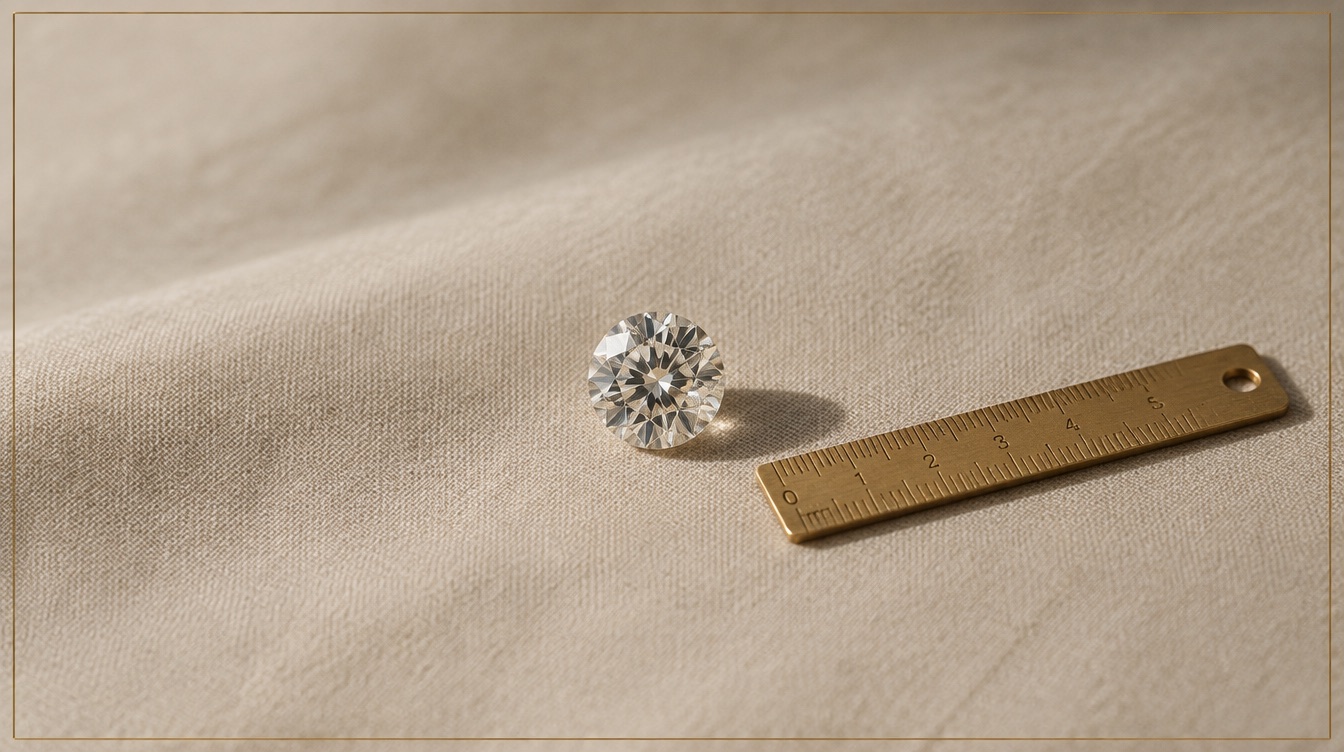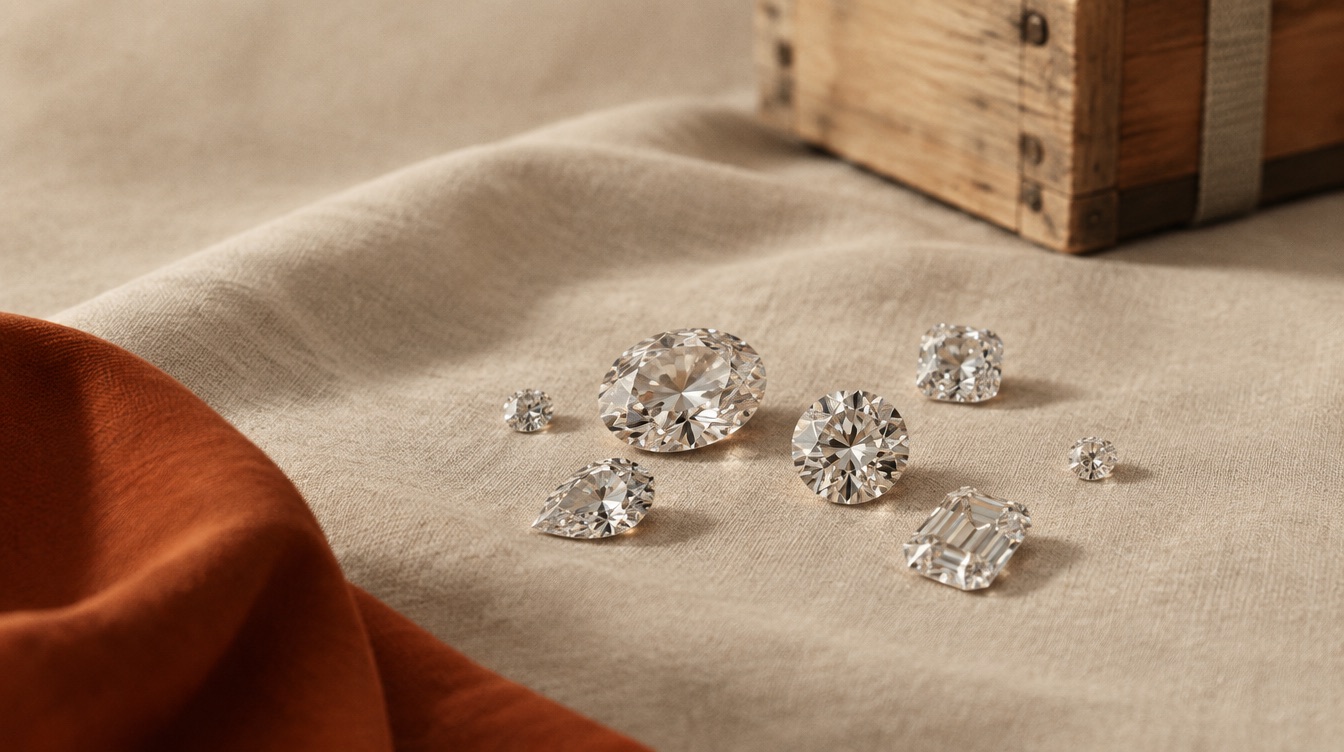
Wholesale diamonds in Houston aren't sourced from a local diamond district the way they are in New York or Los Angeles — Houston has no comparable trade-district concentration, so independent jewelers, designers, and manufacturers in the city source primarily through national wholesale suppliers who ship certified loose stones and finished jewelry directly, rather than through in-person trade-floor buying.
This guide covers why Houston doesn't have its own diamond district, how national wholesale sourcing actually works for a Texas-based buyer, what to evaluate in a supplier when you can't inspect inventory in person before ordering, natural versus lab-grown options, certification standards, and how shipping turnaround compares to a local trade-district purchase.
Why Houston Doesn't Have Its Own Diamond District
Unlike New York's 47th Street, Los Angeles's downtown jewelry district, or Chicago's Jewelers Row, Houston never developed a comparably dense, historically rooted concentration of diamond dealers, cutters, and wholesalers in one physical corridor. Those older districts formed in the late 19th and early 20th centuries around port access, immigrant trade networks, and early jewelry-manufacturing clusters that predate Houston's modern growth as an energy and logistics hub rather than a historic jewelry-trade center. Houston does have jewelry retail concentrations and a meaningful independent-jeweler community, but nothing resembling a wholesale trade district where a buyer can walk building to building comparing loose-diamond inventory from dozens of dealers in a single afternoon.
That absence isn't a disadvantage the way it might have been a generation ago. Wholesale diamond sourcing has shifted heavily toward phone, email, and online ordering industry-wide, even in cities that do have a physical trade district — a national supplier with strong certified inventory and fast shipping increasingly matters more to a jeweler's day-to-day sourcing than proximity to a trade floor.
What "Wholesale Diamonds" Actually Means for a Trade Buyer
Wholesale, in this context, means buying at trade pricing as a business — an independent jeweler, designer, or manufacturer placing orders to resell, set into custom pieces, or hold as inventory — rather than as a one-off consumer purchase. Wholesale suppliers typically require a verified trade account (a resale certificate, business license, or equivalent), price by carat and quality grade rather than fixed retail tags, and offer volume-friendly terms that a retail storefront wouldn't extend to an individual walk-in customer. For a Houston-based buyer with no local wholesale floor to visit, establishing this kind of trade account with a national supplier is the practical equivalent of the relationship a jeweler in a trade-district city would build with an in-person dealer.
Setting Up a Trade Account as a Texas-Based Buyer
Opening a wholesale account with a national supplier typically requires the same basic documentation a Houston jeweler would need to open any B2B trade account: a Texas sales tax permit or resale certificate, proof of business registration, and often a jewelry-industry-specific credential or reference, since suppliers generally restrict wholesale pricing to verified trade buyers rather than the general public. This verification step exists on both sides of the relationship for good reason — it protects a supplier's trade pricing from being extended to non-trade buyers, and it protects a genuine trade buyer from being lumped in with retail-priced inventory. Most suppliers process this verification quickly, often within a business day or two, and a Houston jeweler with existing business licensing in hand can typically move from application to placing a first order within the same week.
How National Wholesale Sourcing Works Without a Local Trade Floor
A national wholesale supplier typically maintains inventory online or through a sales team, with certified stones searchable by shape, carat, color, clarity, and cut grade, and with certificates verifiable directly through the issuing lab before an order is placed. Instead of physically inspecting a stone on a trade floor, a remote buyer relies on high-resolution imagery, independently verifiable certification, and a supplier's return or exchange policy as the substitute for hands-on inspection. This model has matured considerably over the past decade — reputable wholesale suppliers now provide enough documentation and imagery that a buyer several states away from a supplier's physical location can order with real confidence, provided the supplier's certification and return terms are solid.
Local Trade-District Buying vs. National Wholesale Sourcing
| Factor | Local Trade District (e.g. NYC, LA) | National Wholesale Supplier (Houston buyer) |
|---|---|---|
| Inventory breadth | Limited to what dealers in the district happen to stock that day | Full catalog inventory searchable by spec, not limited to one location's floor stock |
| Inspection | In-person, hands-on before purchase | High-resolution imagery plus independently verifiable certification |
| Turnaround | Same-day if the right stone is in stock locally | Same-day shipping from a well-stocked national supplier, arriving in 1-2 business days by ground or overnight for urgent orders |
| Relationship building | In-person, over repeated visits | Phone, email, and account-manager based, built over repeat orders |
| Travel cost | None if local; a trip if not | None — sourcing happens from the jeweler's own location |
Neither model is strictly better — a trade-district relationship offers real advantages for hands-on inspection of unusual or high-value stones, while a national wholesale supplier offers breadth and convenience that no single trade-district dealer's floor stock can match on any given day. For a Houston-based buyer without a local trade floor as an option, the national-supplier model isn't a compromise; it's simply the standard way sourcing works.
What to Look for in a Wholesale Diamond Supplier When You Can't Inspect in Person
- Independently verifiable certification. A certificate number should be directly look-up-able on the issuing lab's own website (IGI, GIA, or GCAL), not just presented as a printed document.
- High-resolution, accurate imagery. Photos and, ideally, video should reflect the actual stone being sold, not a stock or representative image of "similar" inventory.
- Clear return or exchange terms. Since a remote buyer can't inspect before purchase, a fair return window matters more than it would for an in-person trade-floor sale.
- Responsive account support. A dedicated trade contact who can answer spec questions quickly closes much of the gap that in-person inspection would otherwise fill.
- Consistent inventory depth. A supplier who can reliably fill repeat orders across shapes and quality tiers reduces the need to juggle multiple vendor relationships.
Comparison Shopping Without a Physical Trade Floor
A Houston buyer used to hearing about trade-district comparison shopping should know that the remote equivalent — requesting quotes on identically specified stones from two or three national suppliers before committing — works just as effectively, and arguably more efficiently, since it doesn't require a physical trip between locations to gather comparable quotes. The key discipline is holding the specification constant across every quote requested (same shape, carat, color, clarity, and cut grade) so the resulting price comparison is actually meaningful, rather than comparing quotes on stones that only look similar on paper.
Natural vs. Lab-Grown Wholesale Options
Houston-area jewelers sourcing wholesale diamonds today typically have both natural and CVD lab-grown options available from a national supplier, and demand for both has grown across the Texas market as it has nationally. Natural diamonds carry a geological origin and, for many customers, a provenance appeal that lab-grown stones don't replicate, while lab-grown CVD diamonds offer a materially lower price per carat for equivalent grades, letting a jeweler serve price-conscious customers or offer larger center stones at a given budget. A supplier carrying both from one relationship — rather than requiring separate vendor accounts for natural and lab-grown inventory — simplifies sourcing considerably for a jeweler managing a mixed product mix.
Certification Standards for Remote Wholesale Buying
| Lab | What It Certifies | Why It Matters for a Remote Buyer |
|---|---|---|
| GIA | Natural and lab-grown diamonds, widely regarded as the strictest grading standard | Broadest customer recognition and trust, useful for higher-value stones |
| IGI | Natural and lab-grown diamonds, especially prevalent on lab-grown inventory | Strong global recognition, particularly common in the lab-grown wholesale market |
| GCAL | Natural and lab-grown diamonds, with cut-grade precision as a specialty | Useful when cut quality is a primary selling point for a piece |
Whichever lab issued a certificate, a Houston-based buyer should verify the report number directly through that lab's own lookup tool before completing a purchase — this single step does more to protect a remote buyer than any other part of the sourcing process, since it confirms the certificate actually matches the specific stone being sold rather than relying on a supplier's representation alone.
Shipping and Turnaround for Texas-Based Buyers
Same-day shipping from a supplier's warehouse doesn't mean same-day arrival for a Houston buyer, but it does mean an order placed before a supplier's cutoff time typically ships that day rather than sitting for processing — the difference between a one-to-two-day wait and a much longer one. A supplier shipping from both US coasts gives a Texas-based buyer a practical middle-ground transit time either way, and overnight shipping options generally close the remaining gap for time-sensitive custom orders, such as a ring needed ahead of a specific customer appointment or event.
Custom and Private-Label Jewelry Sourcing From Houston
Beyond loose stones, many Houston-area independent jewelers also source finished and custom jewelry wholesale rather than manufacturing in-house, particularly for engagement rings and other center-stone pieces where CAD design and setting work benefit from a specialized manufacturer's turnaround speed and consistency. A wholesale supplier offering custom engagement rings finished in 4-6 days, unbranded by default so the jeweler can resell it as their own, lets a Houston retailer offer a genuinely custom product without carrying manufacturing overhead in-house — a model that has become increasingly common as independent jewelers focus their own operations on design, sales, and customer relationships rather than production.
Common Pitfalls When Sourcing Wholesale Diamonds Remotely
Most sourcing mistakes a remote buyer makes aren't about the supplier being dishonest — they're about skipping a verification step that an in-person trade-floor purchase would have made automatic. A buyer standing at a dealer's counter naturally inspects a stone and asks questions before paying; a buyer ordering online has to build those same habits deliberately into a remote purchasing process, since nothing about the transaction forces that scrutiny the way physical presence does.
- Not verifying certification independently. Trusting a printed or emailed certificate without checking it against the issuing lab's own database.
- Comparing quotes on inconsistent specs. A meaningful price comparison requires identical shape, carat, color, clarity, and cut across suppliers — not just a similar-looking stone.
- Underestimating return-policy fine print. Restocking fees, narrow return windows, or exclusions for certain shapes can turn an apparently competitive price into a worse deal.
- Splitting orders across too many vendors. Juggling several suppliers for different categories (natural, lab-grown, custom) adds administrative overhead that a single broader-catalog supplier avoids.
- Ignoring account-manager responsiveness during evaluation. How quickly and accurately a supplier answers pre-purchase questions is a reasonable proxy for how they'll handle a problem after the sale.
Building a Long-Term Sourcing Relationship Without a Local Trade Floor
A Houston jeweler without a local trade district to build relationships in person can still develop the kind of trusted, responsive vendor relationship that trade-district buyers get from repeat in-person visits — it just happens through consistent ordering, direct communication with a dedicated account contact, and a track record of accurate, on-time fulfillment over time. Many independent jewelers nationally, not just in cities without a trade district, now conduct the bulk of their routine wholesale purchasing this way, reserving any in-person trade-show or trade-district visits (JCK and similar shows draw exactly this kind of buyer) for relationship-building and unusual or high-value sourcing rather than routine restocking.
This shift has, in a sense, leveled the playing field between jewelers in trade-district cities and jewelers in cities like Houston that never had one — a well-run national wholesale relationship increasingly delivers comparable selection, pricing, and turnaround regardless of a buyer's physical proximity to a historic trade floor. What used to be a genuine geographic disadvantage for a Houston-based jeweler has narrowed considerably as remote sourcing infrastructure — verified certification lookups, high-resolution imagery, fast nationwide shipping — has matured across the wholesale diamond trade.
Sourcing Wholesale Diamonds and Custom Jewelry From Guru Diam
Guru Diam is a trade-only wholesale supplier carrying certified CVD lab-grown diamonds, natural diamonds, certified loose stones, and finished and custom jewelry — antique cuts, standard fancy shapes, and round brilliant all included, with IGI, GIA, and GCAL certification available. In-stock inventory ships same-day nationwide from two US locations, New York (before 6pm EST) and Los Angeles (before 4pm PST), giving a Houston-based buyer fast turnaround without needing a local trade floor at all. Custom engagement rings are finished in 4-6 days, unbranded by default for jewelers reselling as their own.
Buyers can browse certified loose diamond inventory through the certified diamonds category, source matched pairs through matching pairs, and review fancy color stones through fancy color loose diamonds. Trade accounts can review terms at the wholesale hub or apply through trade partner, and jewelers building a full piece can work through custom jewelry for a setting finished in 4-6 days.
Houston's Broader Jewelry Trade Ecosystem
Even without a dedicated diamond district, Houston supports a genuine independent-jeweler community — regional jewelers' association chapters, local guild and networking events, and a steady flow of Houston-based retailers attending national trade shows like JCK in Las Vegas each year specifically to build supplier relationships and see new inventory in person. That annual or semi-annual trade-show cadence often functions as the relationship-building substitute for what a trade-district visit would otherwise provide: a chance to meet supplier representatives face to face, review physical samples, and negotiate account terms directly, before returning to remote ordering for the bulk of routine purchasing throughout the rest of the year. A Houston jeweler who treats trade shows this way — as periodic relationship touchpoints rather than a primary sourcing channel — tends to get the best of both models without needing a local trade floor at all.
Houston's Logistics Position and Why It Helps Remote Sourcing
Houston's status as a major national logistics and distribution hub, anchored by its port and extensive air-freight infrastructure, works in a Houston jeweler's favor when sourcing from remote wholesale suppliers rather than against it. Ground and air shipping routes into Houston are well established and reliable, since the city functions as a distribution point for a wide range of industries well beyond jewelry — meaning a wholesale diamond shipment faces none of the transit unpredictability that a genuinely remote or poorly connected market might. In practice, this means a Houston buyer's shipping experience from a national supplier tends to be as fast and reliable as a buyer's in most major coastal cities, despite Houston sitting a considerable distance from either coast.
Seasonal Demand Patterns for a Houston-Area Jeweler
Houston jewelers see the same broad bridal-industry seasonality that drives demand nationally — a run-up in engagement-ring orders heading into the November-December holiday season, a second smaller peak ahead of spring and early-summer wedding season, and steadier custom and repair volume through the rest of the year. Texas's own cultural calendar adds some regional texture on top of that national pattern, with quinceañera and other milestone-celebration jewelry demand contributing meaningfully to a Houston jeweler's business in ways that don't show up the same way in every US market. Planning wholesale ordering around these patterns — building slightly deeper inventory ahead of known seasonal peaks rather than ordering reactively — matters more for a remote-sourcing jeweler than it would for one who can restock same-day from a local trade floor, since national shipping, however fast, still isn't instantaneous.
What a Growing Houston Jewelry Business Should Prioritize in a Supplier
As a Houston-area independent jeweler's business grows past occasional one-off sourcing into a steady flow of custom and repeat orders, consistency starts to matter more than any single transaction's price — a supplier who reliably has the right grade and shape in stock, ships on the timeline promised, and answers questions accurately becomes more valuable than chasing the lowest quoted price on any individual stone. That consistency is exactly what a national wholesale relationship, built over time the same way an in-person trade-district relationship would be, is meant to deliver for a buyer who never had a local trade floor to rely on in the first place.
Evaluating Pricing Transparency Across Suppliers
Because a Houston buyer can't walk a trade floor comparing prices side by side in person, pricing transparency from a remote supplier matters more than it might in a trade-district city. A supplier who provides clear, itemized pricing by carat and grade — rather than requiring a phone call or quote request for every stone — lets a buyer compare options efficiently across multiple suppliers before committing. That said, the lowest listed price on a spec sheet isn't always the best real deal once shipping terms, return policy, and certification quality are factored in; a slightly higher price from a supplier with a stronger return policy and faster verified turnaround is often the better value for a buyer who has no way to inspect the stone before it ships.
Frequently Asked Questions
Does Houston have a diamond district like New York or Los Angeles?
No. Houston has jewelry retail concentrations and an active independent-jeweler community, but no comparably dense, historic wholesale trade district. Houston-area jewelers source primarily through national wholesale suppliers rather than an in-person trade floor.
How do Houston jewelers verify a diamond's quality without inspecting it in person?
Through independently verifiable certification (checking the report number directly on the issuing lab's website), high-resolution imagery from the supplier, and a supplier's return or exchange policy as a safeguard against any mismatch.
Is it more expensive to source diamonds without a local trade district?
Not inherently. National wholesale suppliers price at trade rates the same way an in-person dealer would, and remote sourcing removes travel costs and time that a local trade-district visit would otherwise require.
Can Houston jewelers get same-day shipped diamonds?
Yes, from suppliers who ship same-day on in-stock inventory. An order placed before a supplier's cutoff time typically ships that day, arriving in one to two business days depending on shipping method.
What's the difference between natural and lab-grown wholesale diamonds for a Houston jeweler?
Natural diamonds are mined and carry geological origin and provenance appeal; CVD lab-grown diamonds are manufactured and priced materially lower per carat for equivalent grades. Many suppliers carry both, letting a jeweler serve either customer preference from one account.
Can I get custom engagement rings made without a local manufacturer?
Yes. National wholesale suppliers offering custom engagement ring programs typically finish a piece in 4-6 days from CAD approval, shipped directly to the jeweler, unbranded for resale.