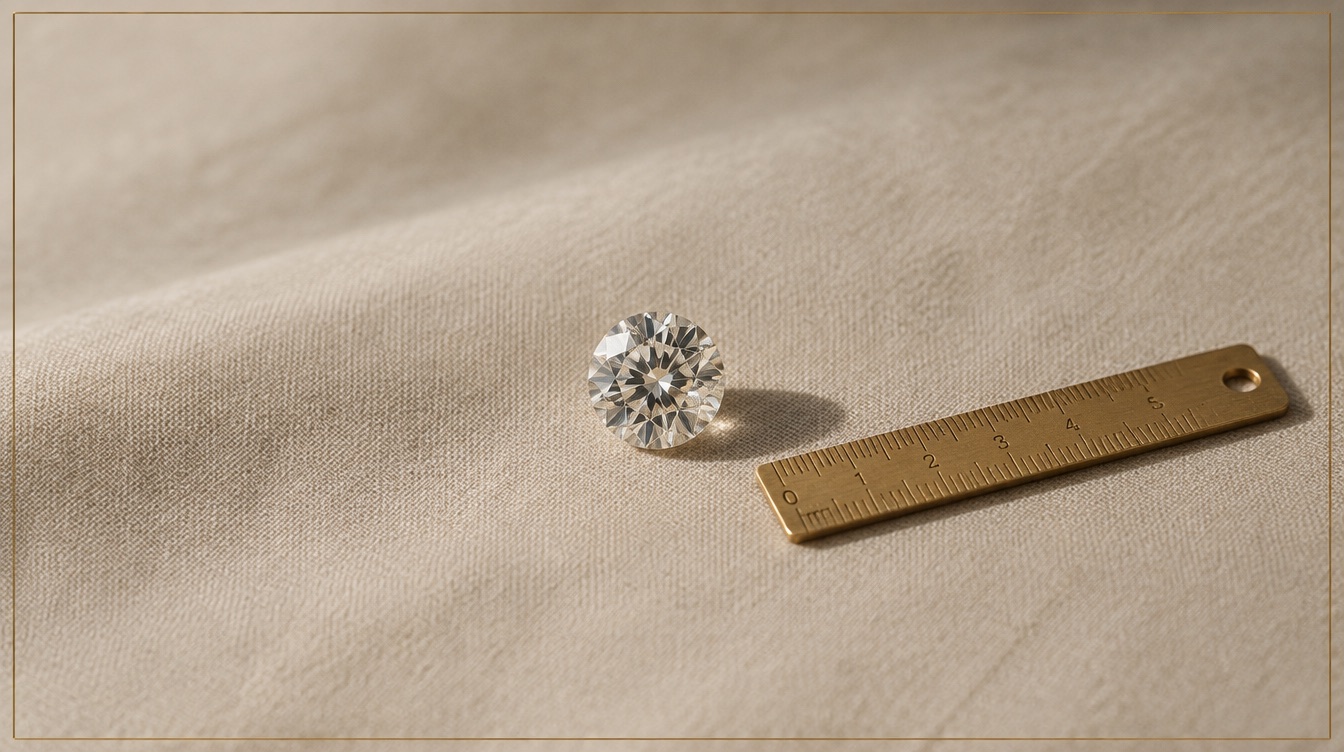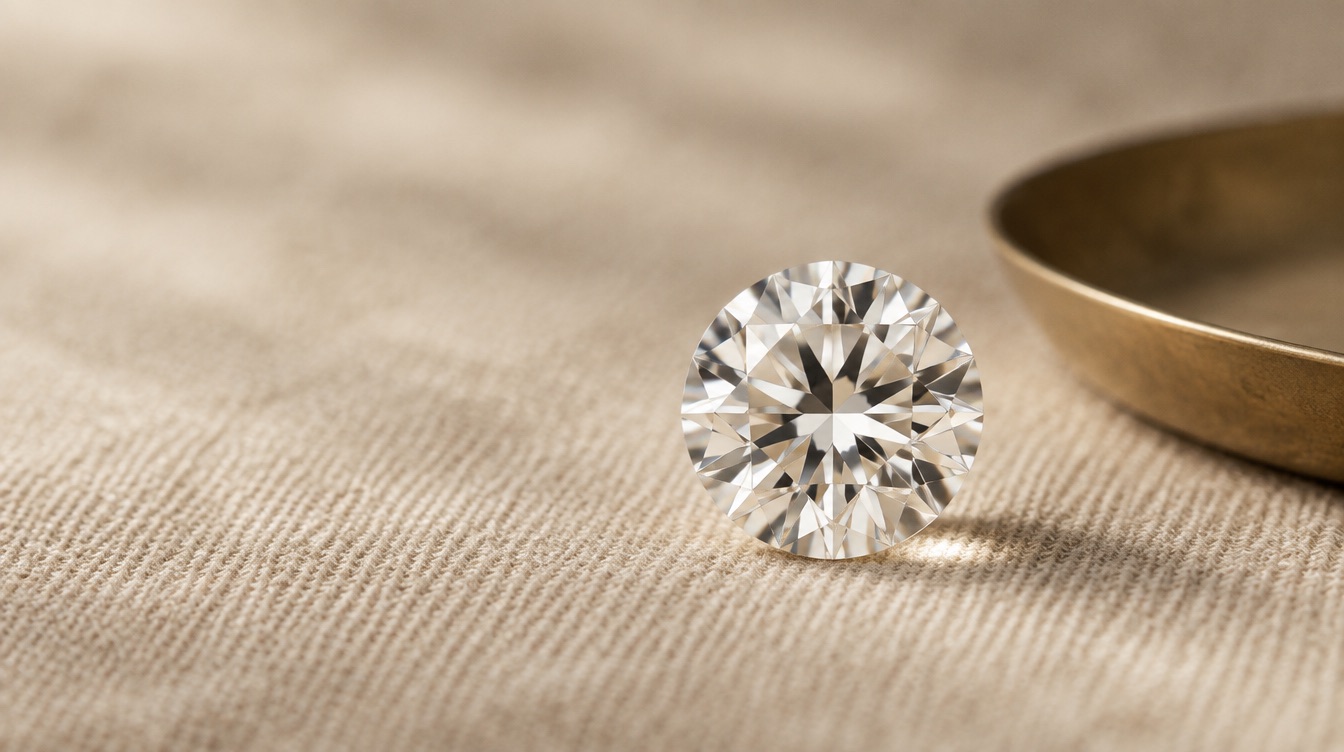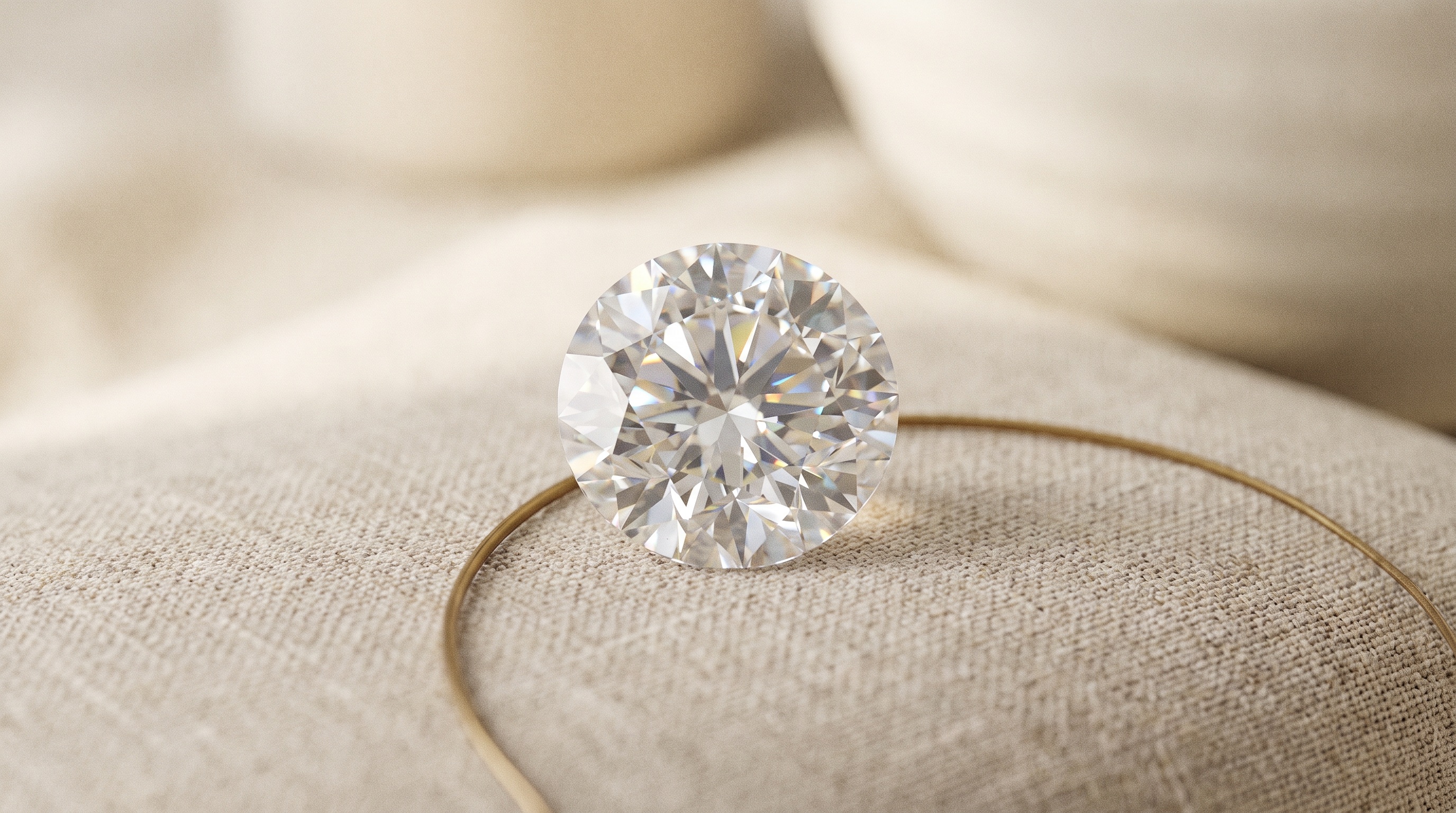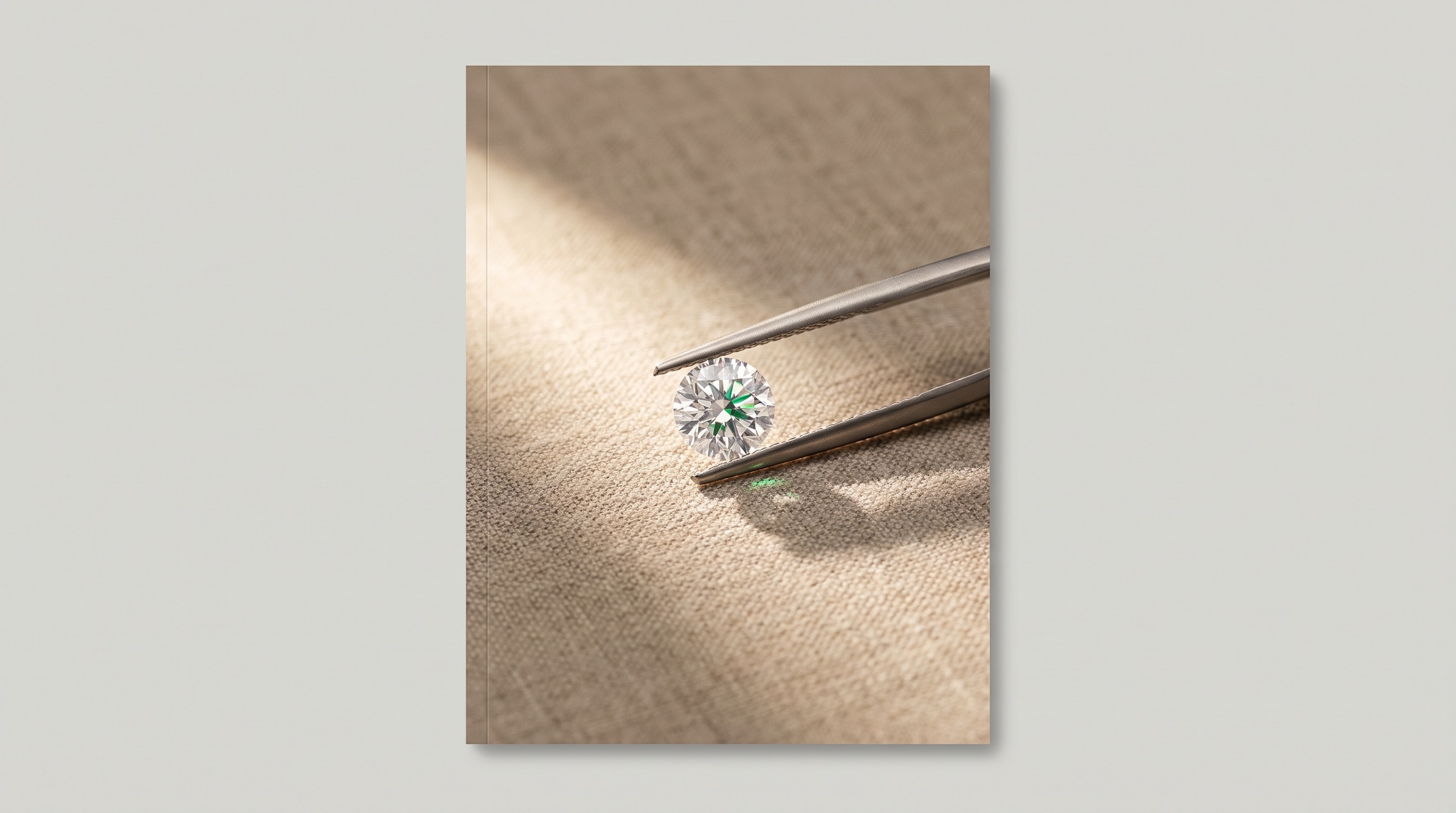
A CVD diamond is a real diamond grown inside a laboratory reactor using Chemical Vapor Deposition — a process that deposits carbon atoms, one layer at a time, onto a thin diamond seed plate until a full diamond crystal has formed. It is not a simulant or a diamond substitute: a CVD diamond has the same carbon crystal structure, hardness, and optical properties as a mined diamond. The difference is entirely in how and where it formed, not what it's made of.
"CVD" is one of the most frequently searched terms in the lab-grown diamond category, and also one of the most misunderstood — buyers often aren't sure whether it refers to a diamond quality tier, a brand, or something fundamentally different from a "regular" diamond. It isn't any of those. It's a manufacturing method, one of two used to grow gem-quality diamond in a controlled environment. This guide breaks down what CVD actually stands for, how the growth process works mechanically, how a CVD diamond differs from an HPHT-grown diamond and from a natural, mined diamond, and what buyers and trade partners should understand about identifying and sourcing CVD material.
What Does "CVD" Actually Mean?
CVD stands for Chemical Vapor Deposition — a term borrowed from materials science generally, not invented for diamonds. Chemical vapor deposition as a category of manufacturing process is used to grow thin films and crystalline layers of all kinds of materials, from semiconductor coatings to protective industrial films; growing diamond is one specific application of a broader technique. In the diamond context, CVD describes a process where carbon atoms are separated out of a hydrocarbon gas mixture and deposited, atom by atom, onto a substrate — in this case, a thin slice of diamond called a seed plate — building up a diamond crystal in layers over time.
That's the entire definition. CVD is not a grade, not a brand, and not a different material from diamond — it's the name of a growth method, the same way "cast" or "forged" describes how a metal part was made without implying anything about what metal it is.
How CVD Diamond Growth Works
At a mechanical level, growing a CVD diamond follows a consistent sequence, even though the specific equipment and process tuning vary by producer:
1. Starting with a Diamond Seed
Every CVD diamond starts from a thin seed plate — typically a slice cut from an existing diamond, whether natural or previously lab-grown. The seed provides the crystal lattice pattern that the new diamond will follow as it grows, similar to how a template guides the structure of what's built on top of it.
2. Loading the Reactor Chamber
The seed plate is placed inside a sealed vacuum chamber — the reactor. The chamber is filled with a carefully controlled gas mixture, typically dominated by methane and hydrogen, which supplies the carbon that will eventually become the diamond.
3. Igniting the Plasma
Energy is applied to the gas mixture — commonly using microwave energy — until it ionizes into a plasma. Inside that plasma, carbon atoms are freed from the hydrocarbon gas molecules and become available to bond onto the exposed surface of the seed plate.
4. Layer-by-Layer Growth
Carbon atoms deposit onto the seed's crystal surface and bond in the same lattice pattern as the seed itself, extending the diamond crystal structure outward one atomic layer at a time. This is the step that gives the process its name: material is deposited from a vapor phase, rather than compressed or melted into shape.
5. Weeks of Continuous Growth
The chamber runs continuously, often for several weeks, as the crystal thickens. Growth rate, gas composition, and chamber conditions are monitored throughout, since inconsistent conditions during growth can affect the clarity and color of the finished rough crystal.
6. Post-Growth Processing
Once growth is complete, the rough CVD crystal is removed from the chamber. Many CVD crystals undergo a secondary HPHT treatment step at this stage specifically to improve color — not to grow the diamond further, but to correct brownish or grayish tint that can occur during CVD growth — before the rough is cut, polished, and submitted for grading.
Is a CVD Diamond a Real Diamond?
Yes, without qualification. A CVD diamond is pure carbon arranged in a diamond crystal lattice — chemically, physically, and optically identical to a mined diamond of equivalent quality. It registers a 10 on the Mohs hardness scale, the same as any other diamond, and it interacts with light the same way a natural diamond does, producing the same brilliance, fire, and scintillation for an equivalent cut. Gemological grading labs — GIA, IGI, and GCAL among them — grade CVD diamonds on the identical 4Cs framework (carat, cut, color, clarity) used for natural diamonds, using the same scales and terminology, because the material itself meets the same definition of diamond either way.
What a CVD diamond is not is a diamond simulant. Materials like moissanite (silicon carbide) or cubic zirconia (a synthetic zirconium oxide) are visually similar to diamond but are chemically different minerals altogether. A CVD diamond shares no such distinction from a mined diamond — the term "CVD diamond" describes how a genuine diamond was produced, not a category of diamond look-alike. Readers wanting the fuller version of that distinction can see our lab-grown diamond overview or our dedicated guide on simulated diamonds versus lab-grown diamonds.
CVD vs. HPHT: The Two Ways Lab Diamonds Are Grown
CVD is one of exactly two production methods used to grow gem-quality diamond in a laboratory. The other is HPHT — High Pressure, High Temperature — which takes a different approach entirely: instead of building a crystal from a gas phase, HPHT recreates the extreme pressure and heat conditions under which natural diamonds form underground, compressing a carbon source around a diamond seed inside a mechanical press until it crystallizes into diamond.
The two methods produce genuine diamond material either way, and once a stone is cut and polished, distinguishing a CVD-grown diamond from an HPHT-grown diamond — or either from a natural diamond — requires specialized lab equipment rather than anything visible to the eye or a standard loupe. HPHT was the original lab-grown method, developed decades before CVD reached commercial viability for gem-quality jewelry stones, and it's still used today, particularly for smaller diamonds and for post-growth color treatment of CVD rough. CVD has become the dominant method specifically for gem-quality jewelry diamonds because the growth environment is easier to control precisely and scale across multiple reactors at once, generally yielding more consistent clarity outcomes across a production run.
A full side-by-side comparison of buying considerations between CVD and HPHT stones — pricing patterns, sourcing availability, and trade perception — is outside the scope of a pure definitional guide like this one; the point to take from this section is simply that both are legitimate, real-diamond production methods, and CVD's growth mechanism (vapor deposition) is fundamentally different from HPHT's (pressure and heat).
CVD vs. Natural (Mined) Diamonds
The comparison that actually matters most to buyers is CVD versus natural, mined diamond — and the honest answer is that the material itself doesn't differ. A natural diamond forms over roughly one billion to three billion years deep in the earth's mantle, under naturally occurring heat and pressure, and is eventually carried to the surface by volcanic activity. A CVD diamond forms over a period of weeks inside a reactor, replicating the carbon-bonding process through vapor deposition rather than geological time and pressure. Both processes result in the same end product: solid carbon crystallized into a diamond lattice.
Because the atomic structure is identical, a CVD diamond has the same hardness, the same refractive index, and the same light performance as a natural diamond of equivalent cut quality. The meaningful difference between the two is origin — where and how the stone came to exist — and origin is exactly what a certified grading report exists to document, since it isn't something a buyer can determine by looking at the stone itself.
CVD vs. HPHT vs. Natural: A Side-by-Side Comparison
| Factor | CVD Lab-Grown | HPHT Lab-Grown | Natural (Mined) |
|---|---|---|---|
| Growth method | Carbon deposited from a heated hydrocarbon gas plasma onto a seed plate, layer by layer | Carbon source compressed around a seed under extreme pressure and heat in a mechanical press | Carbon crystallizes deep in the earth's mantle under natural heat and pressure |
| Typical timeframe | Several weeks per crystal | Days to a few weeks per crystal | Roughly 1 to 3 billion years |
| Common clarity characteristics | Can show strain patterns visible under polarized light; often needs post-growth HPHT color treatment for tint | Can show small metallic flux inclusions from the growth press | Inclusion patterns vary widely by formation conditions and geologic history |
| Chemical composition | Pure carbon, diamond crystal lattice | Pure carbon, diamond crystal lattice | Pure carbon, diamond crystal lattice |
| Cost basis at wholesale | Lowest, scales with production capacity | Comparable to CVD, sometimes lower for smaller sizes | Highest, driven by finite, depleting natural supply |
| Common trade perception | The dominant lab-grown method for gem-quality jewelry stones today | The original lab-grown method; still widely used, especially for smaller stones and treatment | The traditional standard; commands a scarcity premium independent of visual quality |
| Certification | GIA, IGI, GCAL all certify, clearly labeled lab-grown | GIA, IGI, GCAL all certify, clearly labeled lab-grown | GIA, IGI, GCAL all certify, clearly labeled natural |
Nothing in that comparison represents a quality hierarchy — it's a difference in production method and origin, not in whether the resulting material is "more" or "less" diamond.
Typical Clarity and Color Characteristics of CVD Diamonds
Because CVD growth happens through vapor deposition rather than geological pressure, the inclusions and internal characteristics a CVD diamond tends to show are different from what shows up in a natural stone, even though both are graded on the same Flawless-to-Included clarity scale. CVD-grown crystals can develop strain patterns — visible under polarized light and cross-filters used in gemological labs — related to how the crystal lattice built up during growth. As-grown CVD rough can also carry a light brownish or grayish cast from trace structural characteristics introduced during deposition, which is a primary reason many CVD stones go through a secondary HPHT annealing step after growth specifically to improve color before cutting.
None of these characteristics make a CVD diamond less durable or lower quality in a way that matters for everyday wear — they're identification markers a trained grader can use, not defects visible to the eye in a finished, polished stone. A well-cut CVD diamond in a high color and clarity grade looks, to any observer without lab equipment, exactly like a well-cut diamond of any other origin.
How to Verify Whether a Diamond Is CVD-Grown
Because CVD diamonds are visually indistinguishable from HPHT-grown and natural diamonds to the naked eye, the reliable way to confirm a stone's growth method is through its certification, not observation. A GIA, IGI, or GCAL grading report for a lab-grown diamond states the stone's origin as laboratory-grown, and in many cases the report will specify the growth method (CVD or HPHT) directly, since gemological labs use spectroscopic and other lab-based methods capable of detecting growth-specific characteristics that aren't visible otherwise. Lab-grown stones are also frequently laser-inscribed on the girdle with a report number and, often, the words "Laboratory-Grown," visible under magnification.
For trade buyers building out inventory around specific certification requirements, verifying that a supplier's paperwork consistently documents growth method — not just "lab-grown" as a catch-all — is worth confirming up front rather than assuming after the fact.
Common Misconceptions About CVD Diamonds
- "CVD diamonds are fake diamonds." They're genuine diamond material — pure carbon in a diamond crystal lattice — produced through a different growth process than natural formation, not a substitute or imitation.
- "CVD is a quality grade, like a certification tier." No — CVD describes how the diamond was grown, not how good it is. A CVD diamond is graded on the same 4Cs scale as any other diamond, and quality varies across CVD production the same way it does across natural mining yield.
- "You can spot a CVD diamond by eye." You can't, and neither can a trained jeweler without specialized equipment. Distinguishing CVD from HPHT or from natural diamond requires lab-grade spectroscopic testing.
- "CVD and HPHT diamonds are the same thing with two names." They're two genuinely different growth processes — vapor deposition versus pressure-and-heat — that happen to produce the same end material.
- "CVD diamonds are lower quality than natural diamonds." Quality is a function of the individual stone's cut, color, clarity, and carat — not its growth method. A high-clarity, well-cut CVD diamond outperforms a low-clarity, poorly cut natural diamond on every visible measure.
Why CVD Has Become the Dominant Lab-Grown Method
CVD wasn't the first lab-grown diamond process — HPHT was, dating back to General Electric's original breakthrough in the 1950s, and HPHT remained the primary method for decades, mostly producing small, industrial-grade diamond used in cutting tools rather than gem-quality jewelry stones. CVD technology developed through the 1980s and 1990s and reached commercial viability for larger, higher-clarity gem-quality crystals in the 2000s, and that shift — CVD's ability to produce bigger, cleaner crystals with more predictable results — is what moved lab-grown diamonds from an industrial curiosity into a legitimate jewelry category. GIA began issuing grading reports for lab-grown diamonds in 2007, widely treated as the point when the category became mainstream in the trade.
Today, CVD is the primary method behind most gem-quality lab-grown diamonds sold for jewelry, precisely because the reactor environment can be tuned and monitored with a level of precision that scales more consistently across production runs than a mechanical press does. That doesn't make HPHT obsolete — it's still a meaningful part of the lab-grown diamond supply chain, both for growing smaller stones directly and for the color-treatment step many CVD crystals go through after growth — but the majority of gem-quality lab-grown loose stones and melee sold into fine jewelry today trace back to CVD reactors.
CVD Diamonds in Melee and Fancy Colors
CVD growth conditions can be tuned to introduce specific trace elements into the gas mixture during deposition — nitrogen for yellow tones, boron for blue, for example — giving producers a level of control over color outcomes that isn't available with natural diamond formation, where color depends entirely on whatever trace elements happened to be present underground. This is part of why fancy color CVD diamonds, in shades like yellow, pink, blue, and green, have become far more accessible than their natural fancy color counterparts, which are exceptionally rare and priced accordingly. The same growth method scales down to melee sizes as well: small CVD stones, generally under a carat, are commonly produced and sold as calibrated parcel goods for pavé and accent work rather than individually certified, since certifying each small stone on its own isn't practical at that scale. Buyers sourcing melee or fancy color CVD material in volume typically work with a supplier who stocks both categories as a standing part of their catalog rather than a special order, given how differently they're sourced and priced compared to certified center stones. Our melee diamonds guide covers how melee sourcing and quality baselines work in more detail.
Sourcing CVD Diamonds Wholesale
Guru Diam is a trade-only wholesale supplier, and our lab-grown catalog is CVD exclusively — we don't carry HPHT material anywhere in that line. Alongside CVD lab-grown, we also carry natural diamonds as a separate catalog, certified loose stones, and finished jewelry, across standard, antique, and exotic diamond shapes, so trade buyers can source a full range from one supplier rather than working around a narrow specialization. Every CVD stone we carry is available with IGI, GIA, or GCAL certification, documenting origin and growth method clearly for resale confidence. In-stock inventory ships same-day from both our New York and Los Angeles locations, and custom pieces built around a CVD center stone are finished in 4–6 days.
Buyers building a certified order around CVD material may find our certified diamonds category and fancy color loose diamonds useful starting points, and buyers sourcing matched sets for pavé or side-stone work can browse our matching pairs inventory. Trade accounts can review current terms at the wholesale hub or apply through trade partner, and buyers designing a custom piece around a CVD center stone can start through custom jewelry. For the fuller picture of how lab-grown diamonds generally compare to natural stones and to simulants, our what is a lab-grown diamond guide covers that ground in more depth than this CVD-specific explainer.
Frequently Asked Questions
What does CVD stand for in diamonds?
CVD stands for Chemical Vapor Deposition — a process that grows a diamond crystal by depositing carbon atoms from a heated hydrocarbon gas onto a diamond seed plate, layer by layer, inside a sealed reactor chamber.
Is a CVD diamond a real diamond?
Yes. A CVD diamond has the same chemical composition, crystal structure, hardness, and optical properties as a mined diamond. It's genuine diamond material produced through a different growth process, not a substitute or imitation.
What is the difference between a CVD diamond and an HPHT diamond?
Both are lab-grown diamonds, but they're grown differently. CVD builds a crystal from a carbon-rich gas plasma deposited onto a seed plate; HPHT recreates extreme pressure and heat conditions to crystallize carbon around a seed inside a mechanical press. Both produce genuine diamond material.
How can you tell if a diamond is CVD-grown?
Not by looking at it — CVD diamonds are visually identical to HPHT-grown and natural diamonds to the naked eye and even under a standard loupe. A GIA, IGI, or GCAL grading report is the reliable way to confirm both lab-grown origin and, in many cases, the specific growth method.
Are CVD diamonds cheaper because they're lower quality?
No. The price difference between CVD and natural diamonds comes from supply economics, not material quality. Natural diamond supply is fixed by geology, while CVD production scales with reactor capacity, which is what drives the cost gap between diamonds of equivalent cut, color, clarity, and carat weight.
Can CVD diamonds be certified?
Yes. GIA, IGI, and GCAL all grade and certify CVD diamonds using the same 4Cs framework applied to natural diamonds, issuing a clearly labeled lab-grown report so origin and growth method are documented rather than left ambiguous.
Guru Diam is a trade-only wholesale diamond supplier with locations in New York and Los Angeles, carrying a CVD-only lab-grown catalog alongside natural diamonds, certified loose stones, and finished jewelry across standard, antique, and exotic cuts. Browse certified inventory in the certified diamonds category, explore fancy color options through fancy color loose diamonds, or build a custom piece through custom jewelry. Trade accounts can review current inventory and terms at the wholesale hub or apply through trade partner.