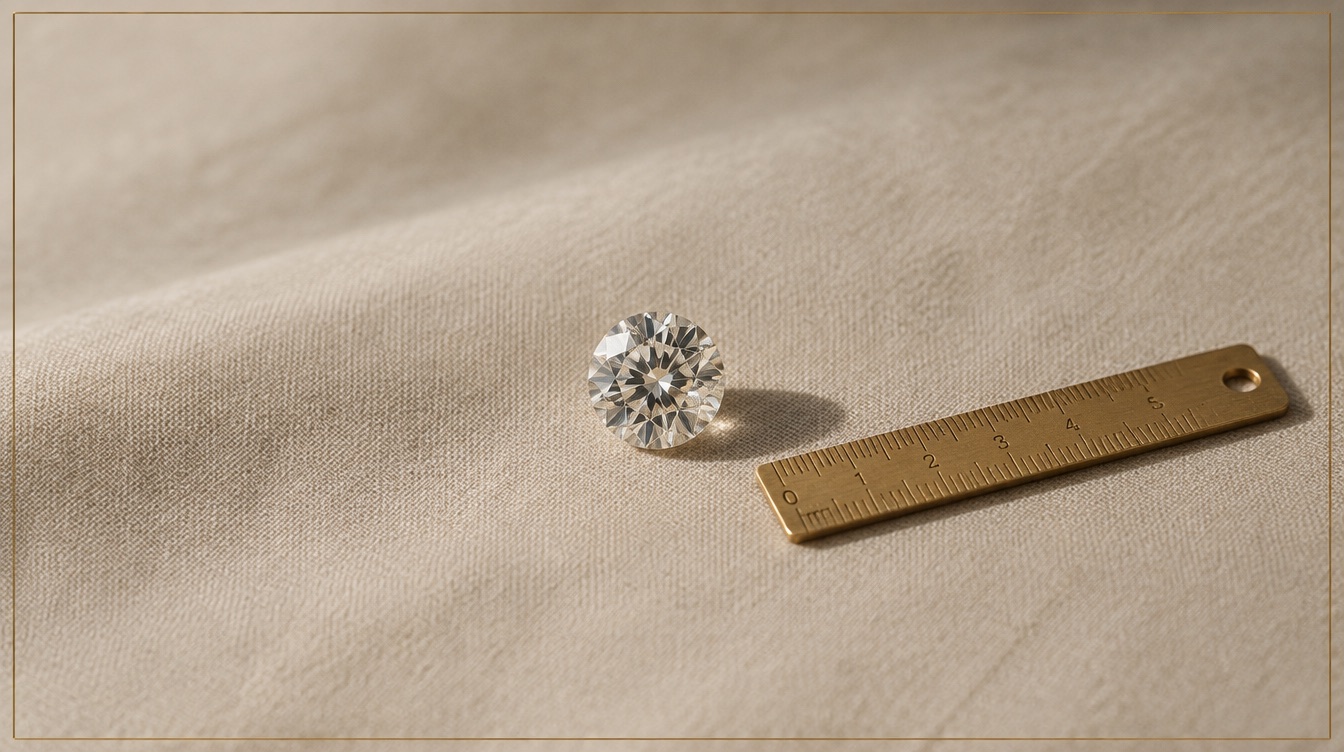
LGD stands for lab-grown diamond — a diamond grown in a controlled laboratory environment rather than formed naturally underground, chemically and optically identical to a natural diamond but produced through a manufacturing process instead of geological formation. The abbreviation shows up across diamond certificates, jewelry hallmark stamps, online listings, and trade conversation, and this guide walks through exactly what it means in each of those contexts, how it relates to other lab-grown terminology, and what a jeweler or shopper should understand when they see it stamped or listed.
Written for jewelers, sales staff, and their retail customers who need a clear, accurate explanation of LGD terminology, this guide covers where the abbreviation appears, how it differs from related terms, what it means for grading and certification, and common points of confusion worth clearing up at the point of sale.
What LGD Stands For
LGD is a straightforward abbreviation for "lab-grown diamond." It carries no meaning beyond that — it isn't a grade, a quality tier, or a certification standard, simply shorthand for the diamond's origin (grown in a lab) as opposed to "natural" or "mined," which describes a diamond formed underground over geologic time. The abbreviation is used interchangeably with other shorthand for the same category, including "lab diamond," "man-made diamond," "created diamond," and "cultured diamond," though LGD has become the most common short-form abbreviation in trade and hallmark contexts specifically because of its compactness — useful where stamped space or listing character counts are limited.
Where LGD Appears
On Jewelry Hallmark Stamps
Most jurisdictions require lab-grown diamond jewelry to be marked in a way that discloses its origin, and "LGD" is one of the common short-form stamps used for this purpose — often paired with a metal purity stamp on the same piece, such as "14K LGD" indicating 14-karat gold set with lab-grown diamonds. This disclosure requirement exists specifically so a consumer examining a piece of jewelry, even without the original sales paperwork, can identify that the diamonds are lab-grown rather than natural.
On Diamond Certificates
Certification reports from IGI, GIA, and GCAL clearly state a diamond's growth method on the report itself — typically spelled out as "Laboratory-Grown Diamond" or similar full-text language on the certificate's header, rather than abbreviated as "LGD" the way it might be on a hallmark stamp or a casual listing. The abbreviation is more common in everyday trade and retail language than on the certificate document itself, though the certificate's full disclosure and the abbreviation refer to the same underlying fact about the stone's origin.
In Online Listings and Trade Conversation
LGD appears frequently in wholesale price lists, online marketplace listings, and everyday trade conversation as quick shorthand — "LGD round 1ct VS1" being a compact way to communicate a stone's origin, shape, size, and clarity without spelling out "lab-grown diamond" every time. Buyers should treat this shorthand the same as the full term for pricing and sourcing purposes; it carries no different meaning or implication about quality.
LGD vs. Related Abbreviations and Terms
| Term | Meaning | Common Context |
|---|---|---|
| LGD | Lab-grown diamond | Hallmark stamps, trade listings, casual conversation |
| CVD | Chemical Vapor Deposition — a specific lab-growth method | Production/manufacturing context, certificate growth-method field |
| HPHT | High Pressure High Temperature — a different lab-growth method | Production/manufacturing context, certificate growth-method field |
| Natural | Formed underground through geological processes | Hallmark stamps, certificates, trade listings for mined diamonds |
| Synthetic | An older, now less-favored term for lab-grown | Older certificates and listings; largely phased out in favor of "lab-grown" |
LGD is a category-level term describing origin (lab-grown vs. natural), while CVD and HPHT describe the specific growth method used to produce a lab-grown stone. A diamond can be accurately described as both "LGD" and "CVD" at the same time — LGD tells you it was grown in a lab rather than mined, and CVD tells you specifically which of the two major lab-growth technologies produced it. Guru Diam's own lab-grown catalog is CVD-only, meaning every LGD stone sourced through Guru Diam was produced using the Chemical Vapor Deposition method specifically, not HPHT.
Why the Abbreviation Matters for Disclosure
Clear origin disclosure — whether through the full term, the LGD abbreviation, or an equivalent hallmark stamp — exists to make sure a buyer, whether a trade purchaser or an eventual retail consumer, always knows exactly what kind of diamond they're looking at. This matters because lab-grown and natural diamonds, while chemically and optically identical, carry different market pricing and different consumer expectations, and misrepresenting one as the other (deliberately or through careless omission) is both an ethical problem and, in most jurisdictions, a regulatory one. A jeweler stamping or listing lab-grown inventory should use LGD or an equivalent clear disclosure consistently, and should train sales staff to explain the abbreviation plainly to any customer who asks rather than assuming familiarity with trade shorthand.
Does LGD Affect a Diamond's Grading?
No — a lab-grown diamond is graded on the exact same 4Cs scale (color, clarity, cut, carat weight) as a natural diamond, using the same D-to-Z color range and the same Flawless-to-Included clarity scale. The "LGD" designation describes origin only; it has no bearing on how a specific stone is graded once submitted to a certification lab. A D color, VVS1 clarity LGD stone and a D color, VVS1 clarity natural stone are graded to the identical standard and look identical to the eye — the certificate's growth-method disclosure is the only place the distinction is documented.
Common Points of Confusion at the Point of Sale
- "Does LGD mean lower quality?" No — LGD describes origin, not quality. A lab-grown diamond can be graded anywhere across the same quality spectrum a natural diamond can, from heavily included commercial grades to flawless, top-color stones.
- "Is LGD the same as moissanite or cubic zirconia?" No — moissanite and cubic zirconia are diamond simulants, different minerals entirely that only resemble diamond visually. LGD is genuine diamond — the same carbon crystal structure as a natural diamond — simply grown rather than mined.
- "Does a 14K LGD stamp mean the gold is lower quality?" No — the "14K" and "LGD" portions of a combined stamp refer to two entirely separate things: the metal's purity (14-karat gold) and the diamond's origin (lab-grown). Neither element affects the other.
- "Is LGD a brand or a specific company's product?" No — LGD is a generic, industry-wide abbreviation used across the entire lab-grown diamond trade, not a proprietary term belonging to any single supplier or manufacturer.
How Guru Diam Uses LGD Terminology
Guru Diam's lab-grown catalog is CVD-only — no HPHT material anywhere in the line — and every certificate issued for Guru Diam's lab-grown inventory (through IGI, GIA, or GCAL) clearly discloses the stone's growth method in full, with LGD or "lab-grown diamond" used consistently as shorthand across trade communication, pricing, and product listings. Jewelers reselling Guru Diam's lab-grown inventory should maintain the same disclosure standard on their own hallmark stamps and customer-facing listings, both as a matter of good trade practice and to stay aligned with disclosure regulations that apply regardless of which supplier originally sourced the stone.
LGD Pricing Context
Because LGD stones are produced rather than mined, per-carat pricing for lab-grown material runs meaningfully below natural diamond pricing at an equivalent grade — a gap that has been a major driver of lab-grown adoption across the trade over the past several years. This pricing difference is purely a function of production economics and supply availability, not a reflection of any difference in the stone's physical, chemical, or optical properties relative to a natural stone of the same grade. Buyers comparing LGD to natural pricing should compare like-for-like grades (same color, clarity, cut, and carat weight) to get an accurate sense of the price gap for their specific sourcing needs, since the gap varies by grade tier and carat size rather than being a single fixed percentage across the board, and can also shift over time as production capacity and demand evolve.
Glossary: Related Terms Worth Knowing
- CVD (Chemical Vapor Deposition): The lab-growth method that deposits carbon atoms layer by layer onto a diamond seed in a heated gas chamber. Guru Diam's lab-grown catalog uses this method exclusively.
- HPHT (High Pressure High Temperature): A different lab-growth method that recreates the pressure and heat conditions of natural diamond formation. Not used in Guru Diam's catalog.
- 4Cs: The standard grading framework (color, clarity, cut, carat weight) applied identically to both LGD and natural diamonds.
- IGI, GIA, GCAL: The three certification labs whose reports disclose a diamond's growth method, including for LGD stones.
How LGD Terminology Evolved
Lab-grown diamond terminology has shifted noticeably over the roughly two decades that gem-quality lab-grown material has been commercially viable. Early industry and consumer language leaned heavily on "synthetic diamond" — technically accurate in a scientific sense, but a term that consumer research consistently found created confusion with diamond simulants like cubic zirconia, since "synthetic" in everyday language often implies "fake" or "artificial" rather than "grown from real carbon." The trade progressively shifted toward "lab-grown," "lab-created," and "cultured" as more accurate, less confusing alternatives, with "lab-grown" ultimately becoming the dominant standard term across major certification labs, trade associations, and retailers over the course of the past decade. LGD, as the shorthand abbreviation of "lab-grown diamond," rode that same shift and has become the most common compact form used in hallmark stamps and trade listings specifically because it maps directly onto the now-standard full term rather than an older, phased-out alternative like "synthetic," which retailers today generally avoid using in customer-facing material.
Regulatory Context for LGD Disclosure
In the United States, the Federal Trade Commission's Jewelry Guides govern how diamond origin must be disclosed to consumers, requiring that lab-grown diamonds be clearly identified as such rather than sold or marketed as "diamonds" without qualification in a way that could mislead a buyer into assuming natural origin. This regulatory backdrop is a large part of why hallmark stamps like "LGD" exist in the first place — a physical, permanent disclosure on the piece itself gives a layer of protection beyond a sales receipt or verbal disclosure that could be lost, misplaced, or simply forgotten over the many years a piece of fine jewelry tends to stay in circulation. Jewelers selling lab-grown inventory should treat LGD disclosure (whether the abbreviation, the full term, or an equivalent marking) as a compliance requirement rather than an optional marketing choice, and should apply it consistently across hallmark stamps, certificates, receipts, and any online or in-store product listing, checking periodically that internal practice hasn't drifted from current guidance as regulations and industry norms continue to evolve.
LGD in Daily Trade Pricing and Inventory Sheets
Beyond consumer-facing disclosure, LGD functions as practical shorthand in the everyday mechanics of the wholesale trade — price lists, inventory spreadsheets, and quote sheets exchanged between dealers, wholesalers, and jewelers routinely use "LGD" as a column header or inline tag to separate lab-grown stock from natural stock at a glance, since the two categories carry meaningfully different pricing structures and are rarely mixed together in the same inventory listing without clear separation. A buyer reviewing a supplier's price sheet should confirm early whether "LGD" and "natural" are clearly separated as distinct sections or columns, since a poorly organized sheet that mixes the two without clear labeling is a common source of costly ordering mistakes, particularly for a buyer working across a large volume of SKUs at once across multiple shapes, sizes, and grade tiers in a single order cycle.
International Terminology Variations
While LGD and "lab-grown diamond" have become the dominant terms in the US trade specifically, other markets and certification bodies internationally sometimes use different preferred terminology for the same underlying category — "cultured diamond," "created diamond," and "man-made diamond" all appear in various markets and older certificate language, generally referring to the identical concept as LGD. A buyer sourcing internationally, or working with certificates issued outside the US market, should confirm which specific term a given lab or region uses, since the underlying meaning is consistent even where the preferred terminology differs, and shouldn't assume a certificate using different language is describing a fundamentally different category of stone rather than the same lab-grown origin under a different label.
Explaining LGD to a Retail Customer
For sales staff fielding a customer's question about an LGD stamp or listing, the most effective explanation keeps to the core facts without over-complicating the answer: the diamond is real diamond, chemically and optically identical to a natural diamond, simply grown in a controlled lab setting rather than formed underground over geologic time, and priced lower as a direct result of that different, more efficient production process rather than any difference in quality. Avoiding jargon-heavy explanations involving specific growth methods (CVD versus HPHT) unless a customer asks a more technical follow-up question tends to keep the conversation clear and unintimidating for a shopper who may be encountering the terminology for the first time while standing at the counter making a purchase decision.
LGD Stamps on Resized or Reworked Jewelry
A practical wrinkle worth understanding: an LGD hallmark stamp is applied to the metal of a finished piece at the time of manufacture, not to the stone itself, which means the stamp can be affected by later resizing, repair, or rework that alters or removes the stamped section of metal. A jeweler performing significant repair or resizing work on a piece originally stamped LGD should confirm the stamp remains legible afterward, or re-stamp it if the original marking was removed or damaged during the work, since the disclosure obligation attaches to the finished piece as sold to the consumer, not just to its original manufacturing run. This is a detail worth building into a repair shop's standard workflow checklist for any piece known or suspected to contain lab-grown stones, rather than treating hallmark integrity as an afterthought during rework — a missing or illegible stamp after a repair can create real compliance exposure for the retailer who eventually resells or services the piece again.
Why the Abbreviation Doesn't Appear on Loose Stone Certificates
It's worth being precise about one detail that sometimes causes confusion: while "LGD" is common shorthand in trade conversation, price sheets, and jewelry hallmark stamps, the certification reports issued by IGI, GIA, and GCAL for loose diamonds typically spell out the full growth-method disclosure in formal report language rather than using the LGD abbreviation directly on the document. A buyer reviewing a certificate should look for language like "Laboratory-Grown Diamond Grading Report" in the report's title or header, and a growth-method field specifying CVD or HPHT, rather than searching for the literal letters "LGD" on the certificate itself. This doesn't change the underlying meaning — a certificate using full formal language and a hallmark stamp using the LGD abbreviation are disclosing the identical fact about the stone's origin — but it's a useful thing for sales staff to know so they can correctly and confidently guide a customer comparing a certificate against a hallmark stamp and wondering why the terminology looks different between the two documents in front of them.
Sourcing LGD Diamonds Wholesale
Guru Diam supplies CVD-only lab-grown diamonds across standard, antique, and fancy shapes, certified through IGI, GIA, or GCAL with growth method clearly disclosed on every report, alongside natural diamonds and fancy color loose stones in yellow, pink, blue, and green. Cutting, setting, and polishing are all handled in-house, and in-stock inventory ships same-day (before 6pm EST from New York, before 4pm PST from Los Angeles). Trade buyers can browse certified LGD inventory through certified diamonds, review terms at the wholesale hub, or apply for a trade account through trade partner. For a deeper look at how lab-grown diamonds are produced, see our what is a CVD diamond guide and what is a lab-grown diamond guide.
Frequently Asked Questions
What does LGD stand for?
LGD stands for "lab-grown diamond" — a diamond grown in a controlled laboratory environment rather than formed naturally underground, chemically and optically identical to a natural diamond.
What does 14K LGD mean on a ring stamp?
It's a combined disclosure stamp: "14K" refers to the metal's purity (14-karat gold) and "LGD" refers to the diamond's origin (lab-grown). The two elements describe entirely separate aspects of the piece.
Does LGD mean the diamond is lower quality than a natural diamond?
No — LGD describes origin only, not quality. Lab-grown diamonds are graded on the same 4Cs scale as natural diamonds and can range across the full same quality spectrum, from commercial grades to top color and clarity.
Is LGD the same thing as CVD?
No, though the two are related. LGD is the general category (lab-grown, as opposed to natural), while CVD is one of two specific lab-growth methods (the other being HPHT) used to produce lab-grown diamonds.
Is LGD the same as moissanite or cubic zirconia?
No — moissanite and cubic zirconia are diamond simulants made from different minerals that only resemble diamond visually. LGD is genuine diamond, chemically identical to natural diamond, simply grown rather than mined.
Do LGD diamonds come with a certificate?
Yes — LGD diamonds are certified through the same labs as natural diamonds (IGI, GIA, GCAL), with the certificate clearly disclosing the stone's lab-grown origin and growth method alongside its standard 4Cs grading.
Why does the LGD abbreviation appear on jewelry stamps but not on loose stone certificates?
Hallmark stamps use compact abbreviations like LGD because of limited physical space on the metal, while formal certification reports from IGI, GIA, and GCAL spell out the growth-method disclosure in full report language instead. Both disclose the identical fact about the stone's origin, just in different formats suited to their respective contexts.
Is "LGD" the same thing everywhere in the world?
The underlying concept is consistent, but other markets sometimes use different preferred terms — "cultured," "created," or "man-made" diamond — for the same category. Buyers sourcing internationally should confirm the specific terminology a given lab or region uses rather than assuming different language describes a different type of stone.