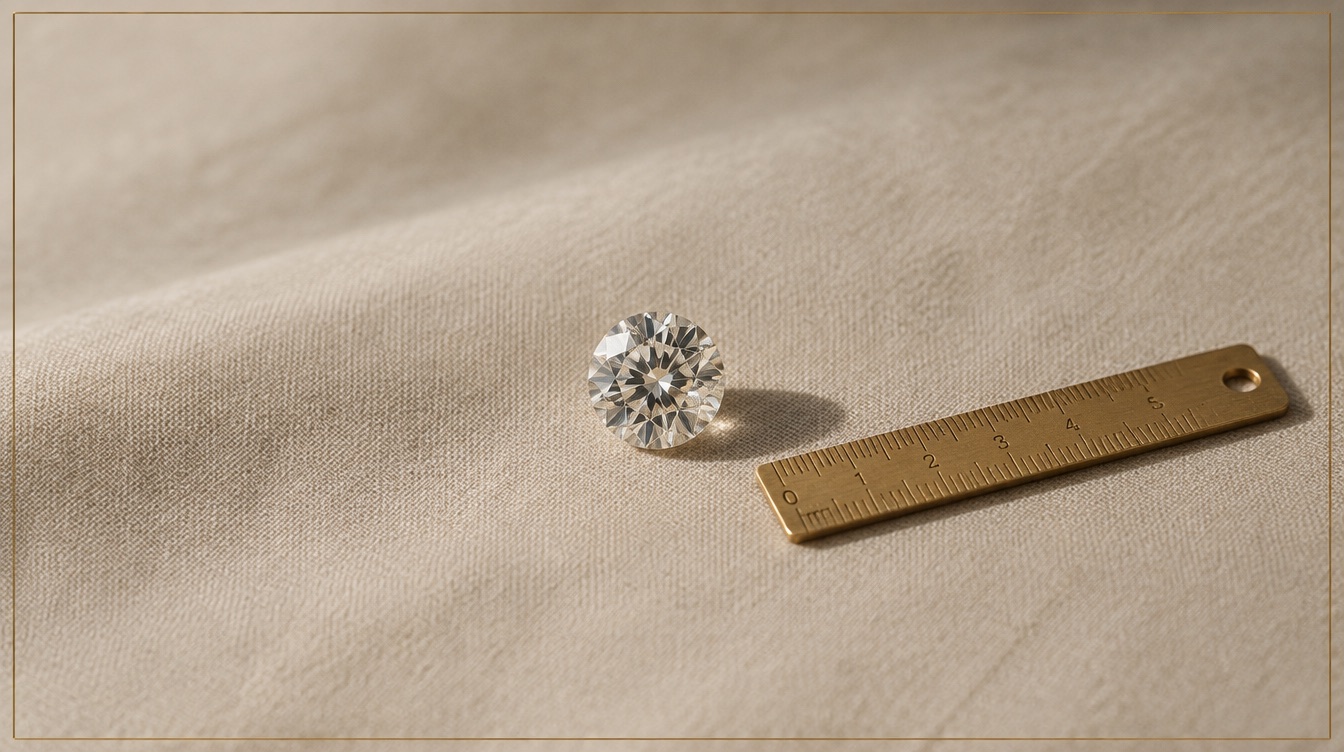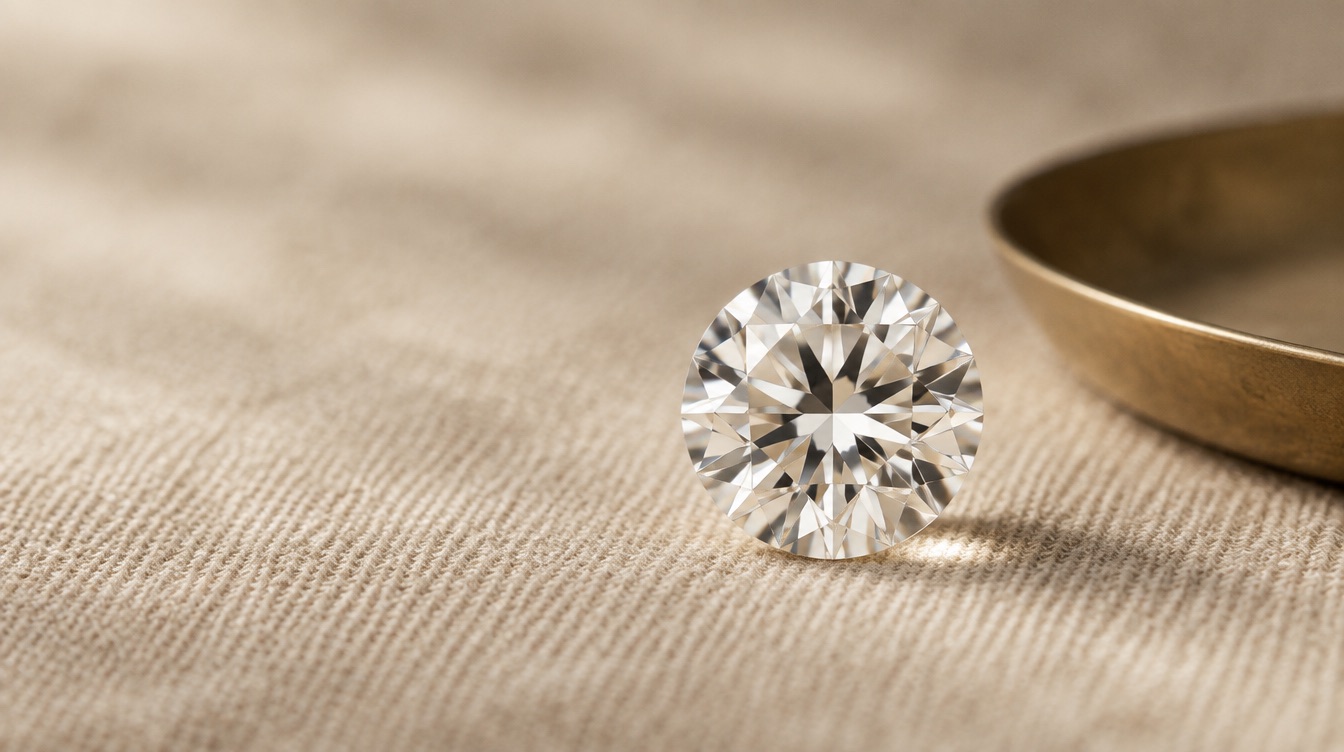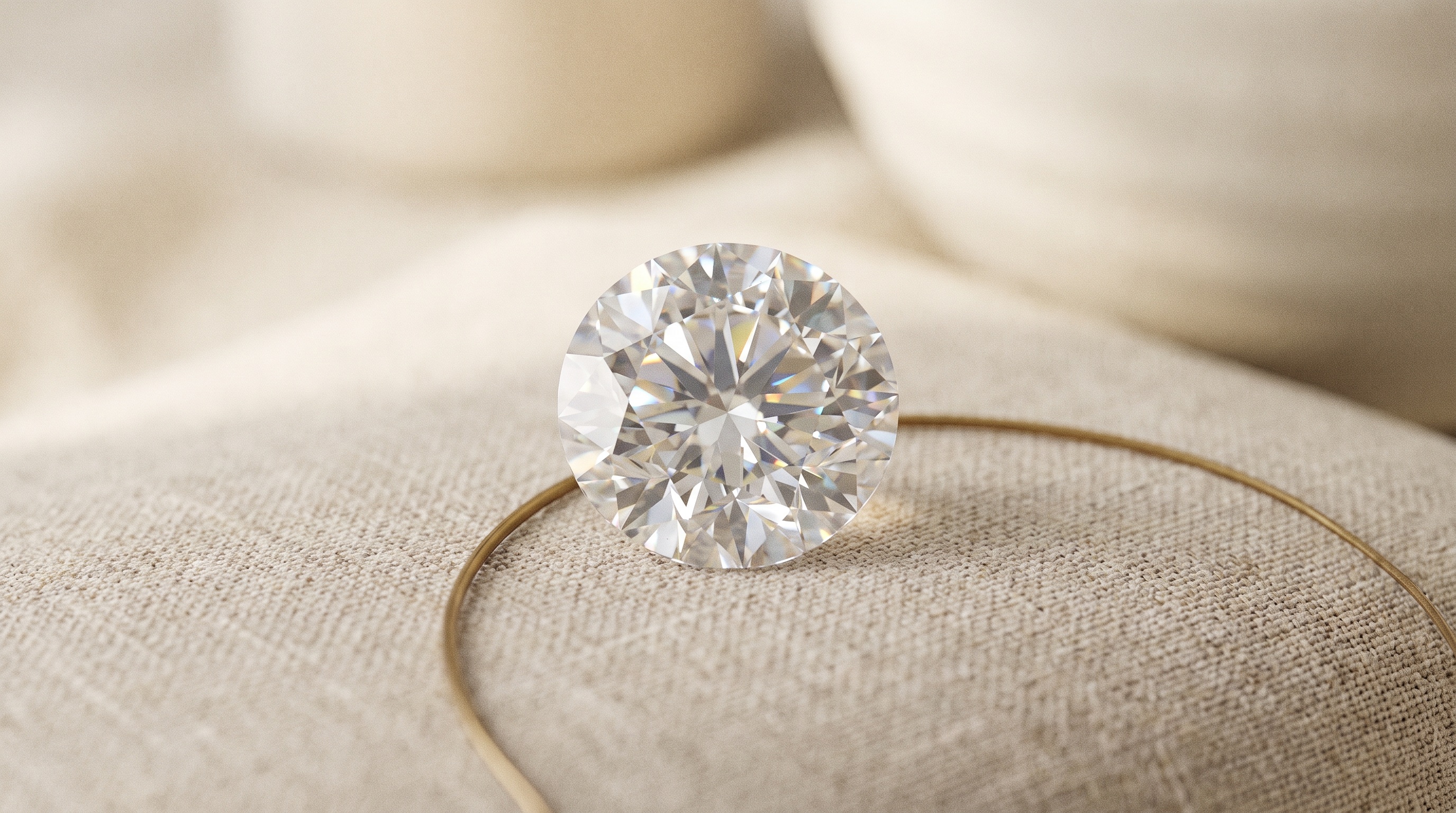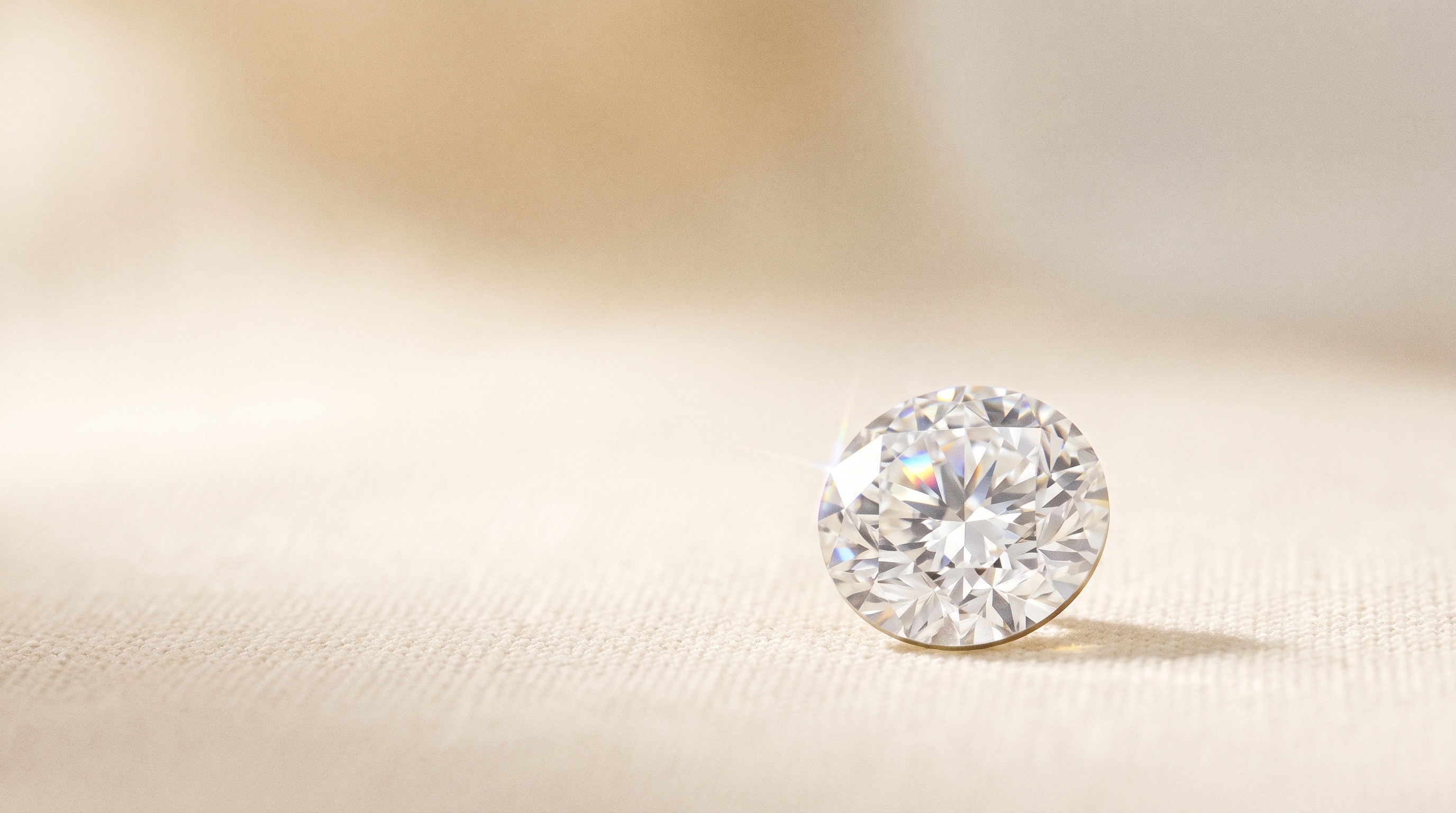
A triple excellent diamond is trade and consumer shorthand for a diamond whose grading report shows the top grade in all three cut-related categories a lab evaluates separately: cut, polish, and symmetry. On a GIA report, that means "Excellent" listed for all three lines rather than just one or two. No lab actually prints the words "Triple Excellent" on a certificate — it's a buyer- and retailer-coined label for reading three separate grade lines together, and it applies specifically to round brilliant diamonds, since GIA's overall cut grade doesn't extend to fancy shapes.
This guide explains what each of the three grades actually measures, why "triple excellent" only fully applies to round brilliants, how the term compares to AGS's historical "Ideal" designation and to "Hearts and Arrows," what a triple excellent grade does and doesn't guarantee about how a diamond looks in person, and what it typically costs relative to a stone with a lower grade in one or more of the three categories.
The Three Grades Behind the Term
GIA's diamond grading report lists cut, polish, and symmetry as three distinct lines, each graded on the same word scale: Excellent, Very Good, Good, Fair, and Poor. They measure different things about the same stone, and a diamond can score differently on each one even though all three are influenced by how carefully the stone was faceted.
Cut
Cut grade evaluates how a diamond's proportions — table size, depth, crown and pavilion angles, girdle thickness — work together to control how light enters, bounces around inside, and exits the stone. It's the grade most directly tied to a diamond's brightness, fire, and scintillation, and the one most buyers mean when they casually say a diamond is "well cut."
Polish
Polish grades the smoothness of the diamond's facet surfaces. A stone with lower polish shows fine surface marks — faint lines, tiny nicks, or a slightly hazy finish on individual facets — left over from the cutting and polishing process. These marks can very slightly reduce how cleanly light reflects off the surface, though at Good grade and above the visual effect is minimal to the naked eye.
Symmetry
Symmetry grades how precisely the facets align with each other — whether the table is centered, facets meet at clean points, and the overall shape is even rather than lopsided. Poor symmetry can cause light leakage or dark, uneven zones (sometimes visible as a faint "bowtie" effect in certain shapes) even in a diamond with otherwise strong proportions.
Why "Triple Excellent" Really Means "Round Brilliant"
GIA issues an overall cut grade — the "cut" line that combines proportion analysis into a single Excellent-through-Poor rating — only for standard round brilliant diamonds. Fancy shapes (oval, cushion, emerald, pear, marquise, and the rest) receive polish and symmetry grades, but no single overall cut grade, because GIA's cut-grading model was built and validated specifically around round brilliant proportions and hasn't been extended the same way to shapes with far more variable proportion combinations. That means a "triple excellent" fancy-shape diamond isn't really a documented category on a GIA report the way it is for round brilliants — a fancy-shape stone can carry Excellent polish and Excellent symmetry, but there's no third "Excellent" cut line to complete the trio. Buyers shopping fancy shapes who want a proxy for cut quality typically look instead at proportion ranges specific to that shape, a "very good" or better rating from the specific lab or retailer's own proprietary cut analysis, or a physical viewing under a loupe or ideal-scope tool.
Does Triple Excellent Actually Look Different?
A round brilliant with Excellent cut, polish, and symmetry generally does show visibly stronger, more even light performance than a stone with a lower grade in any one of the three — more brightness (white light return), more fire (colored light flashes), and cleaner scintillation (the sparkle pattern as the stone or viewer moves) — though the difference between Excellent and Very Good in any single category is often subtle enough that side-by-side comparison under controlled lighting is needed to reliably see it. The gap becomes more visually obvious once a stone drops to Good or below in cut specifically, since that's the grade most directly tied to how efficiently light is returned to the eye rather than lost out the bottom or sides of the stone. Polish and symmetry issues at the Good level and above are rarely visible without magnification; it's cut grade, and specifically a Fair or Poor cut grade, that a buyer is most likely to actually notice by eye.
Triple Excellent vs. AGS's Historical "Ideal" Grade
Before its 2022 acquisition by GIA, AGS Laboratories used its own 0-to-10 scale for cut, polish, and symmetry, with 0 representing the top grade rather than Excellent. A stone graded 0 across all three AGS categories was commonly marketed as "AGS Ideal" or "Triple Ideal," conceptually the same idea as GIA's triple excellent but built on a light-performance modeling approach that AGS had developed and refined for years before GIA's own cut-grading system incorporated similar thinking. AGS is no longer issuing new stand-alone reports today, so a buyer encountering an "AGS Ideal" or "Triple Ideal" stone in current inventory is most likely looking at a previously graded stone from the secondary or estate market rather than a newly certified one.
| Grading Term | Lab | What It Requires | Currently Issued? |
|---|---|---|---|
| Triple Excellent | GIA | Excellent cut, polish, and symmetry (round brilliant only) | Yes |
| AGS Ideal / Triple Ideal | AGS (historical) | Grade 0 across cut, polish, and symmetry | No — legacy reports only, AGS absorbed into GIA in 2022 |
| Hearts and Arrows | Not lab-issued; a viewing pattern | Exceptionally precise, symmetrical faceting visible under a special viewer | N/A — assessed with a viewing tool, not printed as a report grade |
| GCAL Cut Grade | GCAL | Proprietary light-performance-based cut evaluation | Yes |
Triple Excellent vs. Hearts and Arrows: Related but Different Claims
Hearts and Arrows describes a specific optical pattern — eight symmetrical hearts visible from the pavilion side and eight symmetrical arrows visible from the crown side — that shows up only in a round brilliant cut to an exceptionally high standard of proportion and symmetry precision, viewed through a specialized Hearts and Arrows viewer rather than read off a certificate line. A diamond needs excellent-level proportions and symmetry to show a clean Hearts and Arrows pattern, so the two claims correlate strongly, but they aren't the same thing: a stone can be triple excellent on its GIA report without ever having been checked for a Hearts and Arrows pattern, and "Hearts and Arrows" isn't a grade GIA prints on a report at all — it's a separate, optional viewing claim some retailers make about specific inventory, usually accompanied by their own viewer photos rather than lab documentation.
What Drives Price at the Triple Excellent Level
A triple excellent grade adds a real, measurable premium over the same carat, color, and clarity combination graded Very Good or lower in cut specifically, since cut grade has the most direct, well-documented effect on visible performance among the three categories retailers use to build the "triple" label. The premium is generally smaller for moving polish or symmetry alone from Very Good to Excellent, since those two categories affect appearance more subtly. For lab-grown diamonds specifically, achieving triple excellent grading is increasingly routine at commercial wholesale scale, since CVD growth combined with modern cutting technology produces consistent rough that cutters can facet to top proportions without the yield tradeoffs that sometimes push a cutter to prioritize carat weight retention over proportion precision in natural rough.
Is Triple Excellent Worth Paying For?
For a round brilliant center stone, most buyers get meaningfully better visible performance per dollar spent by prioritizing cut grade specifically — Excellent cut is worth insisting on — while treating polish and symmetry at Very Good or better as sufficient rather than chasing Excellent in every single category if budget is a genuine constraint. Since polish and symmetry differences are the hardest of the three to see without magnification, a buyer choosing between a triple excellent stone and one that's Excellent cut with Very Good polish and symmetry, at a meaningful price difference, is generally trading real money for a difference they're unlikely to ever notice by eye. Buyers who want the strongest possible performance and can afford the premium should still prioritize triple excellent, since it removes any question about whether a lower polish or symmetry grade is quietly costing the stone some light performance.
How to Read a Certificate for This
On a GIA report, look for three separate lines: Cut, Polish, and Symmetry, each with its own word grade. All three need to read "Excellent" for the stone to genuinely qualify as triple excellent — a stone with Excellent cut and polish but Very Good symmetry is not triple excellent, even though it's still a strong stone overall. Buyers should confirm this directly from the report rather than relying on a seller's description alone, since "excellent cut" used loosely in a product listing sometimes refers only to the cut line and omits whether polish and symmetry also cleared the top grade.
Triple Excellent Across Certifying Labs
IGI and GCAL both use comparable Excellent-through-Poor cut, polish, and symmetry scales to GIA's, so a triple excellent designation carries the same underlying meaning regardless of which of the three currently active labs issued the report, though buyers sourcing across multiple labs should still confirm each lab's own published grading criteria rather than assuming identical thresholds produce identical stones. GIA remains the most globally recognized reference for cut grading specifically, which is part of why "triple excellent" as a marketing term is most commonly associated with GIA reports even though the underlying three-category structure isn't unique to GIA.
Triple Excellent and Diamond Size: Does It Get Harder at Larger Carats?
Achieving triple excellent grading generally doesn't get mechanically harder as carat weight increases — the proportion ranges that qualify for Excellent cut, polish, and symmetry are the same regardless of a stone's size, since they're expressed as percentages and angles rather than absolute measurements. What does change at larger carat weights is the cost of the carat-weight-retention tradeoff discussed earlier: sacrificing rough to hit ideal proportions is a much larger dollar cost on a 3-carat stone than on a 0.30-carat stone, since each percentage point of retained weight is worth substantially more at larger sizes. This is part of why triple excellent grading is sometimes perceived as rarer or more expensive to find at larger carat weights — not because the cutting itself is more technically difficult, but because the economic incentive to compromise proportions in favor of weight retention grows stronger as the stone gets larger.
Common Misconceptions About Triple Excellent
- "Triple excellent applies to any diamond shape." The overall cut grade behind the "triple" in triple excellent is issued by GIA only for round brilliant diamonds; fancy shapes receive polish and symmetry grades but not an overall cut grade from GIA.
- "Triple excellent guarantees a Hearts and Arrows pattern." The two correlate, since both require very precise proportions and symmetry, but Hearts and Arrows is a separate viewing-tool claim, not something printed on a triple excellent certificate.
- "A non-triple-excellent diamond looks noticeably worse." Below the cut category specifically, the visible difference between Excellent and Very Good polish or symmetry is usually subtle enough that most buyers can't reliably spot it without magnification and side-by-side comparison.
How Cutters Actually Achieve Triple Excellent Grading
Reaching triple excellent isn't purely a matter of a cutter aiming carefully at a fixed target — it starts with the rough material itself. A cutter planning a round brilliant works from the rough crystal's natural shape, and the decision about final proportions is always a balance between maximizing carat weight retained from the rough and hitting the proportion ranges associated with top cut, polish, and symmetry grades. Rough that happens to suit a well-proportioned round brilliant without much weight sacrifice makes triple excellent an easier, more economical target; rough that would require sacrificing significant carat weight to hit ideal proportions sometimes gets cut to a slightly less aggressive proportion target instead, trading a small amount of light performance for a meaningfully larger finished carat weight, since carat weight has such a direct effect on per-stone value.
This tradeoff is a large part of why triple excellent grading is more consistently available in some size and shape combinations than others. It's also why lab-grown rough, which can be grown with a final shape more deliberately anticipated from the start of the growth process, tends to make hitting triple excellent proportions a less costly compromise than it can be for a natural cutter working with whatever irregular rough crystal nature produced.
Triple Excellent and Resale or Appraisal Value
A triple excellent grade on a certificate is a genuinely useful, verifiable data point for resale and insurance appraisal purposes, since it documents a specific, lab-confirmed quality standard rather than relying on a seller's own description of "excellent cut" without backing documentation. That said, cut, polish, and symmetry grades are only three of the many factors — carat weight, color, clarity, and market demand for the specific combination among them — that determine what a diamond is actually worth on resale. A triple excellent grade supports a stone's value and makes it easier to describe and market accurately, but it doesn't override the effect of color and clarity on price the way some marketing materials can imply when they lead heavily with the cut grade alone.
How Retailers Use "Triple Excellent" as a Marketing Term
Because "triple excellent" isn't an official phrase GIA prints on its reports, retailers and online diamond sellers apply it with varying degrees of precision. Some use it exactly as intended — confirming and disclosing that all three lines (cut, polish, symmetry) read Excellent on the accompanying certificate. Others use "excellent cut" or "triple excellent" more loosely in marketing copy without necessarily confirming all three lines independently, sometimes highlighting only the cut grade specifically since it's the one most directly tied to visible performance. Buyers evaluating a listing that uses the term should always ask to see the actual certificate rather than taking a product description at face value, since verifying all three lines takes only a moment and avoids any ambiguity about what's actually being claimed.
A Buyer's Checklist Before Purchasing a Triple Excellent Diamond
- Confirm all three lines independently. Look for Excellent listed separately for cut, polish, and symmetry — not just a general "excellent cut" claim in a product description.
- Confirm the stone is a round brilliant. The overall cut grade behind the "triple" claim only exists for round brilliants on a GIA report; a fancy shape can't carry the same complete three-line designation from GIA.
- Check which lab issued the report. GIA, IGI, and GCAL all use comparable Excellent-through-Poor scales, but confirming the issuing lab avoids any confusion if comparing against an older AGS-graded stone using a different numeric scale.
- Weigh the premium against your actual priorities. If budget is a real constraint, prioritizing Excellent cut specifically while accepting Very Good polish and symmetry is a reasonable way to capture most of the visible benefit without paying for every incremental grade.
- View the stone in person when possible, even with a strong certificate. A certificate confirms grading criteria were met; it doesn't replace actually seeing how a specific stone performs under real lighting before committing to a significant purchase.
Sourcing Triple Excellent Diamonds Wholesale
Guru Diam sources CVD lab-grown round brilliant diamonds cut to consistent proportions across its wholesale catalog, with GIA, IGI, and GCAL certification available so a buyer can confirm cut, polish, and symmetry grades directly on the report before ordering. Modern CVD rough combined with precision cutting makes triple excellent grading routine at commercial volume rather than a rare upcharge tier, which matters for a retailer building a case of consistently high-performing round brilliants rather than sourcing one-off showpiece stones. Trade buyers can browse current certified inventory in the certified diamonds category, source matched pairs for earrings or side-stone work through matching pairs, or apply for a wholesale account through trade partner. Full current terms and in-stock cutoffs are posted at the wholesale hub, and buyers building a custom piece around a triple excellent center stone can start the process at custom jewelry.
Frequently Asked Questions
What does "triple excellent" mean on a diamond certificate?
It means the diamond's GIA report shows Excellent grades for cut, polish, and symmetry — three separate lines on the report — rather than just one or two. The term itself isn't printed on the certificate; it's a buyer- and retailer-coined shorthand for reading all three lines together.
Does triple excellent apply to fancy-shape diamonds like ovals or cushions?
Not fully. GIA issues an overall cut grade only for round brilliant diamonds. Fancy shapes get polish and symmetry grades but no single overall cut grade from GIA, so there's no complete "triple" to check on a fancy-shape GIA report.
Is a triple excellent diamond the same as a Hearts and Arrows diamond?
No. Triple excellent is a certificate-based grading claim (Excellent cut, polish, and symmetry). Hearts and Arrows is a separate optical pattern checked with a specialized viewer, not printed as a grade on a GIA report, though both require very precise proportions and tend to correlate.
What's the difference between GIA's "triple excellent" and AGS's old "Triple Ideal"?
They describe the same underlying idea — top marks in cut, polish, and symmetry — using different scales. GIA uses word grades (Excellent being the top), while AGS historically used a 0-to-10 numeric scale where 0 was the top grade. AGS no longer issues new stand-alone reports since its 2022 acquisition by GIA.
Is it worth paying extra for a triple excellent diamond?
Cut grade specifically is worth prioritizing, since it has the most visible effect on brightness and sparkle. Polish and symmetry differences between Excellent and Very Good are harder to see without magnification, so buyers on a tighter budget can reasonably accept Very Good in those two categories while still insisting on Excellent cut.
Are lab-grown diamonds commonly triple excellent?
Yes. Consistent CVD rough combined with modern precision cutting makes triple excellent grading routine at commercial wholesale scale for lab-grown round brilliants, rather than a rare or hard-to-source upgrade.
Guru Diam is a trade-only wholesale diamond supplier with locations in New York and Los Angeles, sourcing CVD lab-grown diamonds — including triple excellent round brilliants — alongside natural diamonds, antique and fancy cuts, and finished jewelry, with IGI, GIA, and GCAL certification available. Browse certified inventory in the certified diamonds category or apply for a trade account through trade partner.