Traveling with jewelry safely comes down to three habits: carry valuable pieces in your carry-on rather than checked luggage, document each item with photos and appraisal or certification paperwork before you leave, and confirm your insurance actually covers jewelry away from home before you pack it. Beyond those basics, the right approach shifts depending on whether you're traveling domestically or internationally, by plane or car, and whether the jewelry is for everyday wear, a special occasion, or business inventory — this guide covers the specifics for each situation.
The Core Rule: Jewelry Belongs in Your Carry-On, Never Checked Luggage
Checked luggage is handled by more people, sits unattended for longer stretches, and is statistically far more likely to be lost, delayed, or opened than a bag that stays with you. Airlines' own contracts of carriage typically exclude jewelry, cash, and other high-value items from liability coverage in checked bags entirely — meaning if a checked bag with jewelry inside is lost, the airline's standard liability limit almost never comes close to covering the actual value of the piece, and in many cases the airline will deny the claim outright once jewelry is identified as the lost item. Any jewelry worth insuring is worth keeping on your person or in a carry-on that never leaves your side.
Packing Jewelry for a Flight: What Actually Works
A few practical packing choices make a meaningful difference in both security and damage prevention:
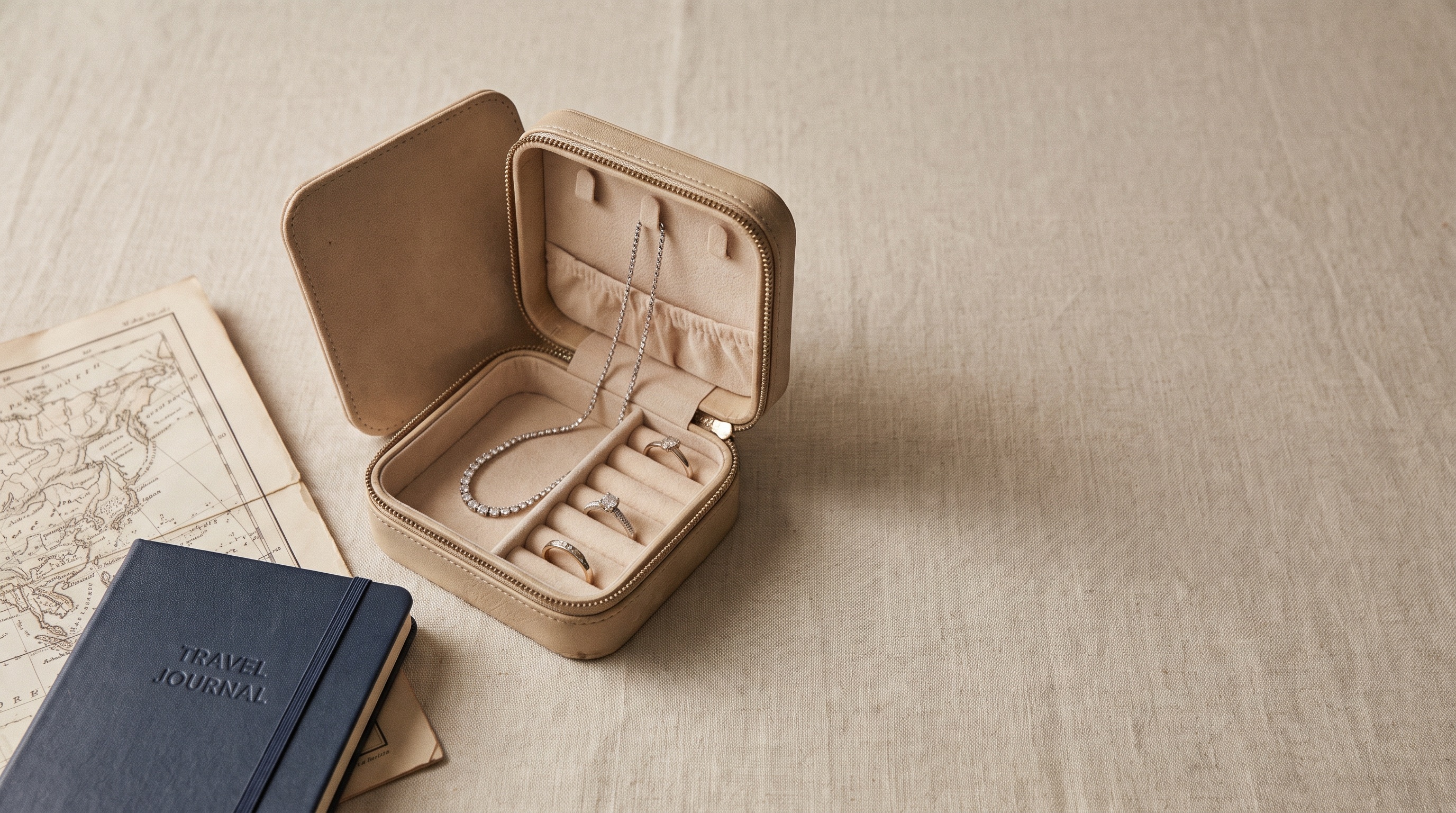
- Use a dedicated jewelry roll or hard case, not a plastic bag or loose pouch tossed into a larger bag. Separated compartments prevent pieces from tangling, scratching each other, or getting lost among other items during a security search.
- Wear your most valuable piece rather than packing it, when practical — a ring or a pair of stud earrings worn through security and the flight is inherently harder to lose than the same piece stored in a bag.
- Keep jewelry in your personal item, not your larger carry-on, if you're checking a bag that will go in the overhead bin out of reach for parts of the flight. A bag that stays under the seat in front of you is easier to keep an eye on throughout the flight.
- Separate loose stones from mounted jewelry if you're carrying both — loose stones are easiest to lose and benefit from their own small, zippered pouch inside a larger case.
Going Through TSA Security with Jewelry
Jewelry generally does not need to be removed for TSA screening in the United States, with a few practical exceptions. Large statement pieces, heavy metal cuffs, or anything that might trigger the metal detector are worth removing proactively to avoid a secondary pat-down and the delay that comes with it. Small, everyday pieces — rings, stud earrings, thin chains — almost never need to come off. For jewelry packed rather than worn, keeping it in a clear pouch or its own case makes the X-ray image easier for a screener to interpret quickly, which in practice speeds up the process rather than triggering additional inspection.
| Situation | Recommendation |
|---|---|
| Small rings, stud earrings, thin chains worn on the body | Usually no need to remove; keep on through screening |
| Large statement necklaces, heavy cuffs, layered pieces | Remove proactively before the metal detector to avoid a pat-down |
| Loose stones or unmounted jewelry in carry-on | Pack in a clear pouch, declare if asked, keep bag within reach for the X-ray check |
| High-value pieces you're especially concerned about | Consider requesting a private screening area, available at most major checkpoints on request |
Documenting Jewelry Before You Travel
Documentation is the single most useful thing you can do before a trip, both for insurance purposes and for practical recovery if something is lost or stolen:
- Photograph every piece you're bringing, ideally against a plain background with good lighting, showing any identifying marks, engravings, or distinctive settings.
- Carry a digital copy of appraisal and certification documents — a photo or PDF on your phone of the GIA, IGI, or GCAL report for any certified stone, and a current appraisal for insurance purposes. This is useful both for a customs declaration and for filing an insurance claim quickly if something happens.
- Keep a simple written inventory — item description, approximate value, and where the documentation for each piece is stored — separate from the jewelry itself, so it survives even if the jewelry doesn't.
- Note serial numbers or laser inscriptions where they exist, since many certified diamonds carry a laser-inscribed certificate number on the girdle that can help confirm identity if a piece is ever recovered after a loss.
Insurance: What to Check Before You Pack
Homeowners' or renters' insurance policies frequently cap jewelry coverage far below actual replacement value — often a few thousand dollars total regardless of what's actually being carried — and some policies exclude jewelry loss away from home entirely or apply different terms while traveling. Before a trip involving valuable pieces, it's worth confirming three things directly with your insurer or agent: whether jewelry is covered while traveling at all, what the per-item and aggregate limits are, and whether you need a separate rider or a standalone jewelry insurance policy to cover the actual value of what you're bringing. A standalone jewelry policy (sometimes called a floater) is usually inexpensive relative to the value it protects and is the more reliable option for anyone regularly traveling with pieces worth more than a policy's standard cap.
International Travel: Customs and Declaration Considerations
Crossing an international border with valuable jewelry introduces a few additional considerations beyond domestic travel. Personal jewelry being worn or carried for personal use generally does not require formal declaration in most countries, but rules vary, and for genuinely high-value pieces it's worth checking the specific destination country's customs guidance in advance. Carrying your documentation (appraisal, purchase receipt, or certification) is useful here too — it's the fastest way to establish that a piece is personal property being brought back out again, not a new purchase subject to import duty, if a customs officer asks. For business travelers carrying jewelry inventory or samples rather than personal pieces, formal declaration and, in some cases, an ATA Carnet (a temporary export/import document used for commercial samples) may be required — a meaningfully different process from personal travel that's worth confirming ahead of a trade show or buying trip.
Hotel Safes: Useful, But Not a Substitute for Good Judgment
An in-room hotel safe is a reasonable place to store jewelry you're not currently wearing, but it's worth understanding its real limits. In-room safes vary widely in build quality, and some hotels' safes are more of a deterrent against casual opportunistic theft than a serious security device. For genuinely valuable pieces, the hotel's main safe deposit box at the front desk — typically bolted, monitored, and covered by a different tier of the property's liability policy — offers meaningfully more protection than an in-room unit. It's also worth avoiding leaving jewelry visibly out on a dresser or nightstand even briefly, since housekeeping staff and other guests do pass through rooms during a stay.
What to Bring vs. What to Leave at Home
The safest jewelry to travel with is the jewelry you don't bring at all — a genuinely useful first filter for any trip. A few practical questions help decide what makes the cut:
- Does the occasion actually require it? A formal event or a specific planned use is a legitimate reason to bring a valuable piece; "just in case" generally isn't.
- Could a lower-value or costume alternative serve the same purpose? For destinations or situations with elevated theft risk, a well-made alternative can deliver the look without the exposure.
- Is the piece irreplaceable? Sentimental or one-of-a-kind pieces (an heirloom, a custom design) carry a loss risk that no insurance payout fully addresses — these are often better left secured at home unless there's a specific, compelling reason to bring them.
Traveling with Jewelry by Car vs. by Air
Road trips introduce a different risk profile than flying. A parked car, even briefly, is one of the more common settings for theft of visible valuables — jewelry left in a glove compartment, center console, or visible bag is a real risk during any stop, from a gas station to an overnight hotel stay. The same core rule applies as with air travel: keep jewelry on your person or in a bag that comes inside with you at every stop, rather than leaving it in the vehicle "just for a few minutes." For longer road trips, the documentation and insurance steps covered above apply identically to car travel — loss or theft risk doesn't change based on the mode of transport, only the specific situations that create exposure.
Special Considerations for Business and Trade Travel
Jewelers, designers, and trade buyers traveling with inventory or sample pieces — to a trade show, a client meeting, or a buying trip — face a higher-stakes version of these same principles. Beyond personal carry-on best practices, business travelers carrying meaningful inventory value should consider a dedicated business jewelry transit policy (distinct from personal travel insurance), a locking, tamper-evident case rather than a standard jewelry roll, and a documented chain-of-custody log for higher-value pieces changing hands during the trip. Many trade shows also have security recommendations specific to the venue and dates, worth checking directly with show organizers ahead of travel.
What to Do If Jewelry Is Lost or Stolen While Traveling
Acting quickly improves the odds of recovery and makes any insurance claim more straightforward:
- Report it immediately — to hotel security or management if the loss happened at a property, to local police for a formal report (often required for an insurance claim regardless of recovery odds), and to the airline promptly if the loss occurred with checked or carry-on luggage.
- Contact your insurer as soon as possible, providing your pre-trip documentation (photos, appraisal, receipt) — the faster a claim is filed with complete documentation, the smoother the process tends to be.
- Flag any laser-inscribed certificate numbers to local authorities and, where relevant, to the certifying lab — this can help establish provenance if the piece is ever recovered and resold.
- Cancel or freeze any linked accounts if the jewelry was part of a larger theft involving other valuables, as a general precaution.
Traveling with Jewelry for a Proposal or Special Occasion
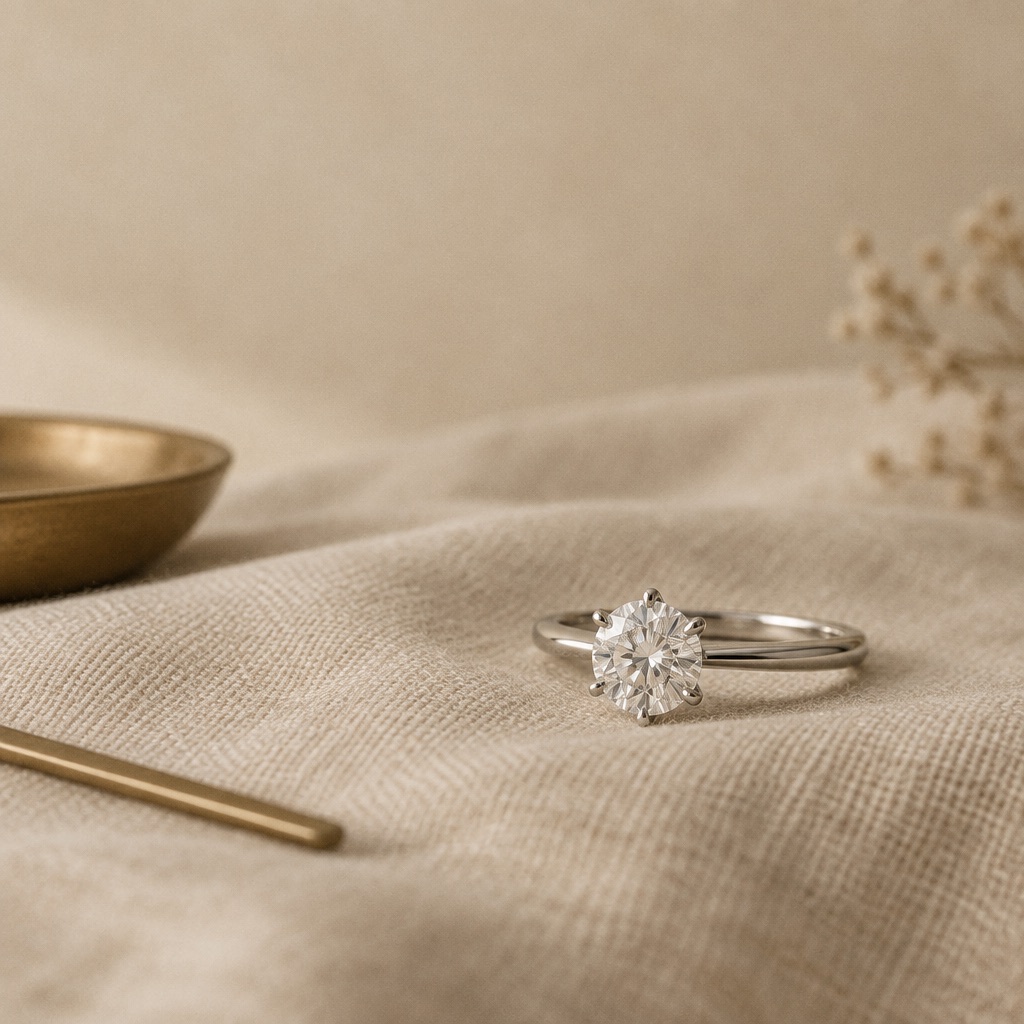
Bringing an engagement ring on a proposal trip adds an extra layer of planning, since the piece is often both irreplaceable and meant to stay a surprise. Keeping the ring on your person at all times — a zippered interior jacket pocket or a small, secure travel case worn under clothing works better than a bag that might be set down or handed off during the trip — reduces the odds of an accidental discovery as well as loss. It's also worth having the ring appraised and insured before the trip specifically, not after, since a loss during the proposal trip itself is exactly the scenario travel-specific coverage is meant to address. Confirming with airport security in advance is rarely necessary, but travelers who are especially anxious about screening can request a private area at most checkpoints, which keeps the moment discreet.
Cleaning and Maintenance Checks Before a Trip
A quick pre-trip check catches small problems before they become travel disasters. Loose stones, worn prongs, or a weakened clasp are far more likely to result in an actual loss during travel — with its extra handling, temperature changes, and activity — than during normal daily wear at home. A jeweler can check prong tightness and clasp security in a few minutes, and it's worth doing this specifically before a trip involving jewelry you plan to wear regularly, rather than assuming a piece that's been fine for months will stay that way through a week of travel.
Packing Jewelry for a Cruise
Cruise travel introduces a few specific wrinkles worth planning around. Formal nights on most cruise lines mean guests often bring more jewelry than a typical trip, concentrated into a single suitcase or bag for the whole voyage — which makes the carry-on rule even more important for embarkation day, when luggage is often separated from passengers for several hours before being delivered to the cabin. Cabin safes on cruise ships vary in quality similarly to hotel room safes, and it's worth using the ship's more secure options (a purser's safe or guest services deposit) for the most valuable pieces rather than relying solely on the in-cabin unit. Shore excursions are also worth planning around: leaving valuable jewelry not needed for a specific excursion locked in the safe, rather than wearing it off the ship into unfamiliar port towns, reduces exposure meaningfully without giving up the ability to dress up for formal nights back on board.
Destination-Specific Risk: What Changes Abroad
Theft risk for visible jewelry varies meaningfully by destination, and it's worth doing a small amount of research specific to where you're headed rather than applying one blanket approach everywhere. Some destinations have well-documented patterns of tourist-targeted theft (crowded markets, public transit, popular photo spots) where visibly worn jewelry draws more attention than it would at home. In those settings, a more conservative approach — wearing less, keeping valuable pieces secured and only worn for specific planned occasions, and being deliberate about when jewelry comes out of a bag — reduces risk without requiring leaving everything at home. Government travel advisories and destination-specific travel forums are reasonable places to check for current, specific guidance beyond general common sense.
Jewelry and Airport Security Scanners: A Closer Look
Modern airport body scanners and X-ray equipment do not damage jewelry, including diamonds and other gemstones — a common but unfounded traveler concern. Metal detectors and millimeter-wave body scanners work by detecting shape and density anomalies, not by emitting anything that affects a stone's structure or a metal setting's integrity. The main practical airport-security consideration for jewelry isn't damage, it's simply the logistics of screening smoothly: removing large metal pieces proactively, keeping loose stones or unmounted jewelry visible and easy to identify in a carry-on's X-ray image, and allowing a little extra time at security when traveling with a meaningful number of pieces, since additional visual inspection is more likely with a bag that reads as unusually dense or complex on the X-ray.
Layering Security: Combining Strategies for High-Value Trips
For a trip involving genuinely significant jewelry value — a major event, an extended trip with multiple special occasions, or business travel with substantial inventory — no single precaution from this guide is sufficient on its own. The strongest approach layers several together: carry-on transport, complete documentation, confirmed and adequate insurance, a secure storage plan at the destination, and a conservative decision about what actually needs to travel versus what can stay secured at home. Each layer covers a different failure mode — documentation doesn't prevent theft but speeds recovery and claims; insurance doesn't prevent loss but limits the financial impact; and careful carrying reduces the odds of theft or loss happening in the first place. Treating these as a connected system, rather than picking just one, is what meaningfully reduces risk on a high-stakes trip.
Common Misconceptions About Traveling with Jewelry
- "Checked bags are locked, so they're safe." TSA-approved locks can be opened by security for inspection, and checked bags pass through far more hands and holding areas than carry-on luggage — locked doesn't mean secure for high-value items.
- "My homeowners policy covers my jewelry anywhere I go." Many policies cap jewelry coverage well below actual value and some limit or exclude coverage away from home — this needs to be confirmed directly, not assumed.
- "Hotel in-room safes are always secure." Quality varies significantly by property, and the front-desk safe deposit box is generally a stronger option for genuinely valuable pieces.
Frequently Asked Questions
Can I bring jewelry in my carry-on bag?
Yes, and it's the recommended way to travel with valuable jewelry — carry-on stays with you, while checked luggage is handled by more people and typically excluded from airline liability coverage for high-value items.
Do I need to declare jewelry at customs?
Personal jewelry for personal use generally doesn't require formal declaration in most countries, though rules vary by destination. Carrying documentation (receipt, appraisal, or certificate) helps establish it as personal property if asked.
Does my homeowners insurance cover jewelry while traveling?
It depends on the policy — many cap jewelry coverage below actual value or limit coverage away from home. Confirm directly with your insurer, and consider a standalone jewelry floater for higher-value pieces.
Is it safe to leave jewelry in a hotel room safe?
In-room safes are reasonable for everyday pieces but vary in build quality. For genuinely valuable jewelry, the hotel's front-desk safe deposit box typically offers stronger security.
What's the best way to pack jewelry for a flight?
A dedicated jewelry roll or hard case with separated compartments, kept in your personal item rather than checked luggage or an overhead-bin bag you can't easily monitor.
Should I photograph my jewelry before traveling?
Yes — photos, along with appraisal or certification paperwork saved to your phone, speed up any insurance claim and help establish ownership if a piece is lost, stolen, or questioned at customs.
Will airport X-ray scanners damage my jewelry?
No — modern airport scanners and metal detectors don't affect a diamond's structure or a metal setting's integrity. They detect shape and density, not anything that could damage the piece.
What's the biggest mistake travelers make with jewelry?
Packing valuable pieces in checked luggage. Checked bags are handled by more people, sit unattended longer, and are typically excluded from airline liability coverage for high-value items entirely.
A Note for Jewelers Advising Clients on Travel
Clients regularly ask jewelers for guidance on how to safely travel with a recent purchase, whether it's a new engagement ring before a proposal trip or a custom piece heading to a destination event. Providing a digital copy of the grading report and appraisal at the time of purchase — something Guru Diam includes with every stone shipped, whether GIA, IGI, or GCAL certified — gives clients exactly the documentation this guide recommends carrying while traveling, without needing to track it down separately later. For trade buyers and jewelers themselves traveling with inventory between our New York and Los Angeles locations or to industry events, our team can help package and document higher-value shipments appropriately, and our wholesale hub and trade partner resources cover the logistics side of moving inventory between locations securely. Whether it's a single certified stone or a full selection for a show, having complete documentation in hand before it leaves our facility is the same principle this guide recommends for any traveler.