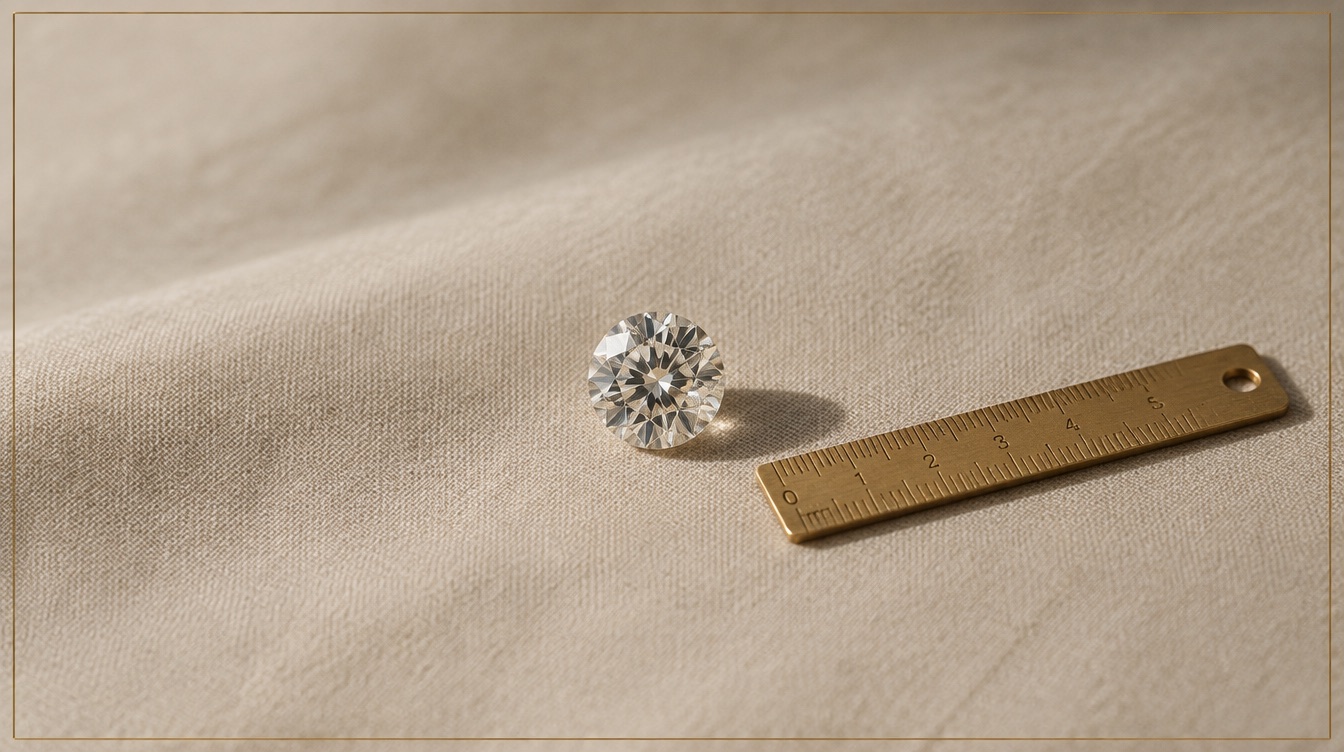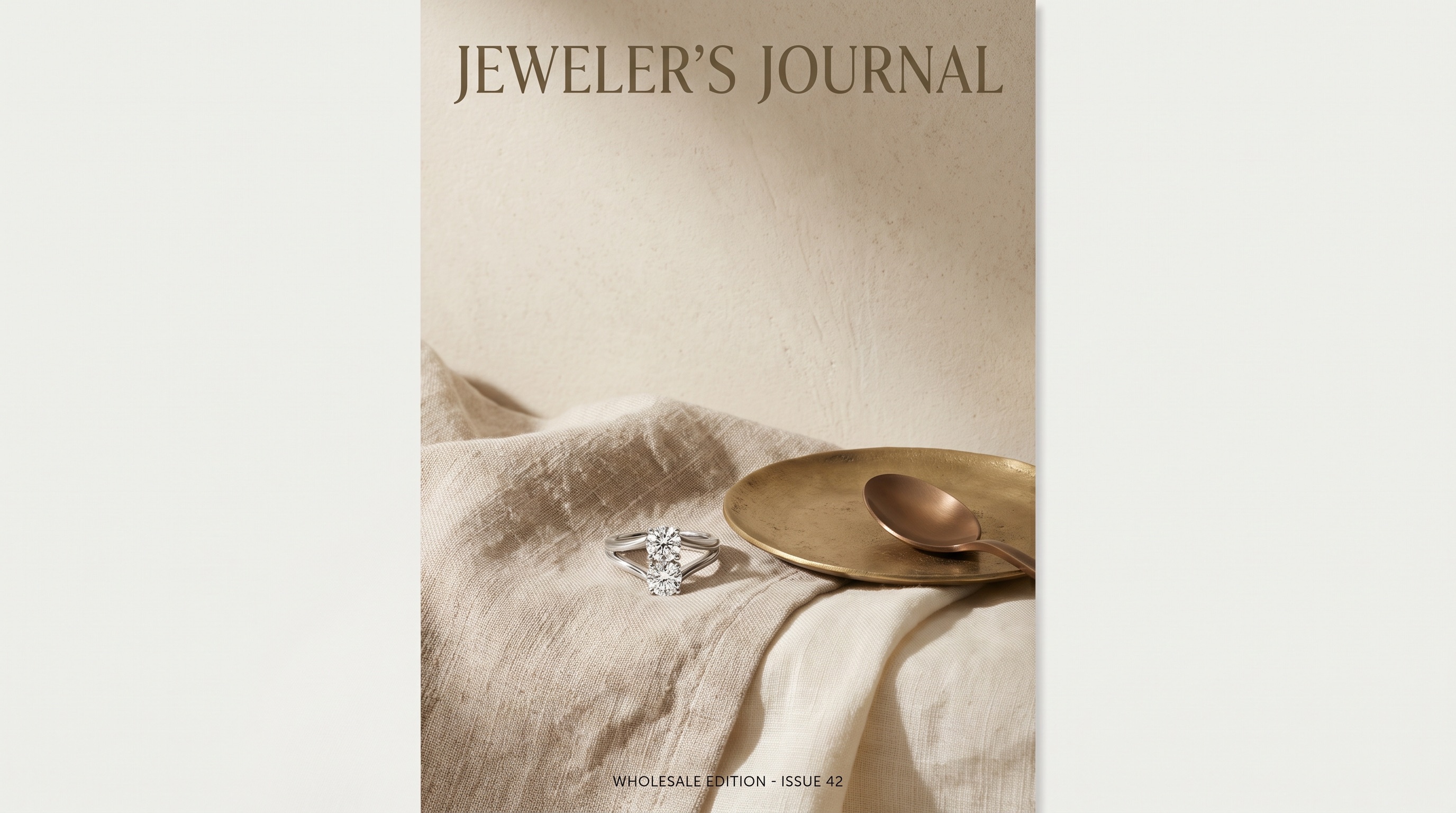
A toi et moi ring setting mounts two gemstones — most often two diamonds, or a diamond paired with a colored stone — side by side or slightly crossed on a single shared shank, rather than each stone getting its own band. Because both stones sit on one ring that gets knocked, flexed, and worn daily, the setting has to solve structural problems a two-stone pendant never has to face.
This guide is written for jewelers, designers, and manufacturers sourcing and building toi et moi rings for retail or private-label lines. It focuses specifically on what changes when the two-stone concept moves from a pendant format (already covered in a separate necklace-focused guide) to a ring: shank engineering, prong and bezel choices per stone, daily-wear durability, sizing, and how the sourcing conversation with a wholesale supplier differs for a ring build versus a pendant build.
Why a Ring Is a Different Engineering Problem Than a Pendant
A toi et moi necklace only has to survive gravity and the occasional light snag on a chain. A toi et moi ring has to survive a hand — desk edges, car doors, gym bags, dishwashing, handshakes, and thousands of small impacts over years of daily wear, all while the two stones sit exposed on top of the finger rather than tucked flat against the chest. That changes almost every design decision: the shank has to carry structural load that a pendant's bail never does, the prongs have to resist snagging and bending in a way a floating pendant setting doesn't, and the two stones' relative height and spacing have to account for how a hand actually moves and makes contact with surfaces all day. A setting style that looks identical to a necklace's shared-connection pendant setting can behave completely differently once it's built onto a ring shank that has to flex slightly with the finger and absorb real impact.
Shank Architecture: Solid Shank vs. Split Shank
The shank is the band itself, and for a two-stone ring it has to do more work than a single-stone shank because it's supporting two settings instead of one, often at slightly different heights or angles.
Solid Shank
A solid, continuous shank runs unbroken under both stones, with the two settings built directly onto the same uninterrupted band. This is the structurally strongest option — there's no seam or split to weaken under stress — and it's generally the easier, lower-labor build. The tradeoff is design flexibility: a solid shank reads as one continuous piece, which can make the two stones look more like they're sitting on a shared platform than existing as two independent, symbolically distinct elements, which matters for a design category whose whole point is two separate things joined together.
Split Shank
A split shank divides into two thinner bands that each lead into one of the two stone settings, physically separating the two stones' visual "stems" even though the shank is one piece of metal. This is the more common choice for toi et moi rings specifically, because it reinforces the "two things, one ring" symbolism at the structural level, not just the stone-setting level. The tradeoff is that a split shank has two thinner metal sections instead of one thicker one, which means each half has to be sized and alloyed carefully to avoid becoming a weak point — a split shank built too thin is a genuine, not theoretical, breakage risk under years of daily wear, particularly at the point where the split rejoins into a full band at the bottom of the ring.
Setting Style Options for a Toi et Moi Ring
Beyond the shank question, the two stones themselves can be mounted in several distinct configurations. These aren't cosmetic choices — each one changes durability, labor cost, and how much flexibility a jeweler has in pairing two stones that aren't identical.
Shared-Prong Setting
The two stones sit close enough together that they share one or two prongs at the point where they meet, rather than each stone getting a fully independent prong set. This is a compact, clean look and uses less metal, but it also means the two stones are more structurally linked to each other — damage or wear at the shared prong affects both stones' security at once, not just one.
Split-Shank Setting
Covered above as a shank style, but worth noting again here as a setting approach: each stone gets its own full, independent prong or bezel set at the end of its own shank branch, so the two stones are mechanically independent of each other even though they're on one ring. This is generally the most repair-friendly option — if one stone's setting needs work, a jeweler can address it without disturbing the other stone's mount.
Crossover Setting
The two stones' settings are built at an angle so they visually cross or overlap, echoing the crossover styling sometimes used in toi et moi pendants but with a materially harder engineering problem on a ring: the crossing point has to be reinforced enough to survive impact from any angle, since a ring's crossing point sits exposed on top of the hand rather than lying flat against fabric or skin the way a pendant's crossover does.
Bypass Setting
The shank splits and the two ends pass by each other without fully rejoining, each leading to its own stone, so the two settings appear to wrap around each other rather than sit side by side on a shared base. This is a popular toi et moi ring interpretation because the bypass itself echoes the "two things coming together" symbolism, but the open bypass point where the metal doesn't fully connect is a genuine snag and impact-vulnerability point that needs deliberate reinforcement, typically a thicker gauge at the bypass junction than the rest of the shank.
Comparing Toi et Moi Ring Setting Styles
| Setting Style | Durability | Relative Labor Cost | Stone-Pairing Flexibility |
|---|---|---|---|
| Shared-prong | Good — but a shared point links both stones' security | Lower — less metal, fewer separate prong sets | Lower — stones need similar size/height to share a prong cleanly |
| Split-shank (independent settings) | Best for repairability — each stone's mount is independent | Higher — two full prong or bezel sets | Highest — each stone can be set to its own ideal height/angle |
| Crossover | Lower — exposed crossing point takes direct impact | Higher — precise alignment work at the bench | Moderate — angle has to suit both stones' shapes |
| Bypass | Moderate — open junction needs reinforced gauge | Highest — most complex metalwork of the four | Moderate to high — stones can differ in size more than shared-prong allows |
Prong vs. Bezel Choices Per Stone
A toi et moi ring doesn't have to use the same setting type for both stones, and in practice many builds deliberately don't. Prong settings expose more of the stone to light and are the standard choice for maximizing brilliance, but they're also the more snag-prone and chip-vulnerable option for daily-wear jewelry — a real consideration for a two-stone ring where both settings sit at the top of the hand and take impact constantly. Bezel settings wrap a metal rim fully or partially around the stone's girdle, trading some light performance and visible stone size for meaningfully better chip protection, which is why bezel or half-bezel mounts show up often in toi et moi rings specifically, even when a jeweler wouldn't default to a bezel on a standard solitaire. A common practical approach is mixing the two: a full-bezel or half-bezel on the stone more exposed to impact (often the one closer to the hand's outer edge) and a prong setting on the better-protected stone, which lets a jeweler balance brilliance against durability across the two stones rather than making one blanket setting choice for both.
Durability and Daily-Wear Considerations Specific to a Ring
Every consideration in this section is one a toi et moi necklace simply doesn't have to deal with, because a pendant hangs away from the body and doesn't take direct mechanical impact the way a ring worn on an active hand does.
Prong Height and Profile
Prongs set too high catch on fabric, hair, and other jewelry constantly, and a two-stone ring has twice the prong exposure of a single-stone ring in the same footprint. Lower-profile prong work, or a half-bezel on the more exposed stone, reduces this meaningfully without eliminating the brilliance the stones are there to show off.
Metal Gauge at Stress Points
Any point where the shank narrows, splits, or crosses is a stress concentration point, and these need thicker metal gauge than a plain, unbroken band would require at the same location. This is the single most common place a poorly engineered two-stone ring fails in the field — not at the stone settings themselves, but at a split or crossover point that was built to the same gauge as a standard solitaire shank without accounting for the extra stress two settings and a split geometry put on that section.
Wearability Testing Before Production
Because a two-stone ring's failure points are structural rather than purely cosmetic, it's worth stress-testing a new toi et moi ring design — flexing the shank, checking for movement at the split or crossover point, confirming both stones sit securely under mild pressure — before committing to a production run, rather than only reviewing the finished piece for appearance. A pendant design rarely needs this step; a ring design built for daily wear should never skip it.
Stone Pairing Considerations Specific to a Ring Mount
The stone-pairing logic that matters for a toi et moi pendant — matching color, cut, and proportion for a matched diamond pair, or balancing visual weight for a diamond-and-colored-stone pairing — still applies to a ring, but a ring adds constraints a pendant doesn't have. The two stones on a ring are viewed from directly above at a much closer range than a pendant typically is, which makes small mismatches in table size or crown height more visible than they'd be on a chest-level pendant. A ring also has a hard footprint limit — the two stones and their settings have to fit within a width that still sits comfortably across the top of a finger, which caps how large or how mismatched in scale the two stones can practically be, a constraint a pendant's larger available surface doesn't impose nearly as strictly. Shape pairing also interacts with the shank differently on a ring: two round stones sit naturally on a symmetric split or shared-prong shank, while an asymmetric shape pairing (an oval next to a round, for example) generally needs a bypass or independent split-shank build to give each stone's setting the freedom to angle correctly for its shape, rather than forcing both stones onto a symmetric shared mount.
Ring Sizing and Resizing Complications
Sizing is a genuine engineering constraint on a two-stone ring in a way it simply isn't on a pendant. A shared-prong or crossover setting that sits low and close to the shank can make standard resizing (cutting and rejoining the shank at the back) more difficult without disturbing the stones' alignment at the front, since the metal at the join point may need to match a specific taper the two-stone geometry created. Split-shank and bypass designs generally resize more predictably, since the split or bypass point is usually positioned away from the back of the ring where standard resizing work happens. A jeweler quoting a custom toi et moi ring should flag sizing limitations up front — a design with an unusually low shared-prong setting, for example, may only be reliably resizable within a narrow range, which is worth disclosing before a customer expects the same open-ended resizing flexibility a single-stone ring typically offers.
Matched Diamond Pair vs. Diamond-and-Colored-Stone Pairing in a Ring Setting
Both pairing approaches that apply to a toi et moi necklace apply to a ring as well, but the ring format changes which one dominates the category. A matched diamond pair — two diamonds of near-identical size, cut, and color, set beside each other — remains the more demanding sourcing task, and on a ring the close-range, top-down viewing angle makes mismatches even more noticeable than on a pendant. A diamond-and-colored-stone pairing, historically the more iconic toi et moi ring format (a diamond beside a sapphire being the best-known historical example), is generally the more common choice for engagement-adjacent toi et moi rings specifically, since the format's original popularity came from exactly this kind of contrast pairing in a ring context rather than a necklace one. For a jeweler building a toi et moi ring line, this means colored-stone availability and hardness matter more here than in a necklace build: a colored stone set into a ring needs enough hardness to survive daily-wear impact at the same rate as its diamond partner, which rules out or deprioritizes softer stones that would be perfectly fine in a pendant that never takes a direct knock.
Certification for Ring-Mounted Stones
Diamonds at 0.30ct and above going into a toi et moi ring are typically individually certified through IGI, GIA, or GCAL before setting, with each stone in the pair carrying its own certificate even once mounted together. This matters slightly more in a ring context than a necklace one for one practical reason: a ring's stones are more likely to need to come out of their setting at some point for a repair, resize, or insurance re-appraisal, so a jeweler and end customer both benefit from clear paperwork tying each certificate to a specific stone's position in the mount (typically documented at the time of setting) so there's no ambiguity later about which certificate belongs to which stone.
Common Engineering Mistakes in Two-Stone Ring Builds
The most frequent structural mistake is treating a two-stone ring's shank like a wider version of a single-stone shank rather than re-engineering the gauge and support at the split, crossover, or bypass point specifically — a two-stone design genuinely needs more reinforcement at its junction points than a simple width increase provides. The second common mistake is finalizing stone selection after the mount is already built, which on a ring is a bigger problem than on a pendant because a ring's tight footprint gives much less room to compensate for a stone that turns out to be slightly the wrong proportion once it's in hand. The third is skipping wearability testing on a new two-stone design and only catching a weak junction point after customer wear has already caused a failure — a preventable outcome given how consistently these failure points show up at the same structural locations across different two-stone ring designs.
How Sourcing a Two-Stone Ring Differs From Sourcing a Two-Stone Necklace
The stone-matching conversation with a supplier is similar across both formats — asking whether stones are matched specifically to each other rather than independently meeting the same general spec, confirming certification is documented per stone, and confirming a supplier can reliably reorder to the same specification for a standing retail item. Where the ring conversation genuinely diverges is around the mount itself: a ring sourcing conversation needs to cover shank gauge and alloy hardness at the stress points discussed above, whether the supplier's bench can execute a split-shank, crossover, or bypass build to the tolerance a two-stone ring needs, and — for a colored-stone pairing specifically — whether the colored stone's hardness is suitable for daily-wear ring use rather than only for a lower-impact pendant setting. A pendant sourcing conversation rarely needs to touch metalwork tolerances at all, since a pendant's bail and connection points don't carry the same structural load; a ring conversation has to, every time.
Sourcing and Building a Toi et Moi Ring Setting
Guru Diam supplies certified loose diamonds suited to toi et moi ring pairings — matched diamond pairs and individually certified stones for diamond-and-colored-stone builds — across CVD lab-grown material, with IGI, GIA, and GCAL certification available. Trade accounts can source matched pairs directly at matching pairs, browse certified loose stones at certified diamonds, or look at fancy color options for a contrast pairing at fancy color loose diamonds. For a fully custom toi et moi ring mount — split-shank, crossover, or bypass — Guru Diam's custom jewelry team finishes custom rings in 4-6 days, working from stone selection through to a finished, ready-to-ship setting; jewelers can start a custom build at custom jewelry. In-stock inventory ships same-day (before 6pm EST from New York, before 4pm PST from Los Angeles), and current wholesale program terms are available at the wholesale hub for jewelers applying for a trade account at trade partner.
Frequently Asked Questions
What is a toi et moi ring setting?
A toi et moi ring setting mounts two gemstones — most often two diamonds, or a diamond paired with a colored stone — side by side or slightly crossed on a single shared shank. It's a two-stone ring design, distinct from a toi et moi necklace, which faces different structural demands because a ring is worn on an active hand rather than hanging away from the body.
What's the difference between a split shank and a shared-prong setting on a toi et moi ring?
A split shank divides into two bands, each leading independently to one stone's own prong or bezel set, making the two mounts mechanically independent of each other. A shared-prong setting has the two stones close enough together to share one or two prongs where they meet, which is more compact but links both stones' security to that shared point.
Is a bezel or prong setting better for a toi et moi ring?
Prong settings show off more brilliance but are more prone to snagging and chipping under daily wear. Bezel or half-bezel settings sacrifice some light performance for meaningfully better impact protection, which is why many toi et moi ring builds use a bezel or half-bezel on at least the more exposed of the two stones.
Can a toi et moi ring use lab-grown diamonds?
Yes — CVD lab-grown diamonds are identical to natural stones once set and give a jeweler more flexibility to size up a diamond in the pairing without proportionally increasing total cost, which helps keep two stones visually balanced within a ring's tight footprint.
Are the stones in a toi et moi ring individually certified?
Diamonds at 0.30ct and above are typically individually certified through IGI, GIA, or GCAL, with each stone in the pair carrying its own certificate even once set together. Clear per-stone documentation matters especially for a ring, since ring-mounted stones are more likely to be removed later for resizing, repair, or re-appraisal.
Why do toi et moi rings need different engineering than a toi et moi necklace?
A ring is worn on an active hand and takes constant mechanical impact — desk edges, daily tasks, incidental knocks — that a pendant hanging away from the body never experiences. That means the shank, prong height, and junction points at a split, crossover, or bypass all need reinforcement a pendant's connection points don't require.
Guru Diam is a trade-only wholesale diamond supplier with locations in New York and Los Angeles, supplying certified CVD lab-grown diamonds and matched pairs for jewelers building toi et moi and other two-stone ring settings. Browse matched-pair inventory at matching pairs or start a custom ring build at custom jewelry.