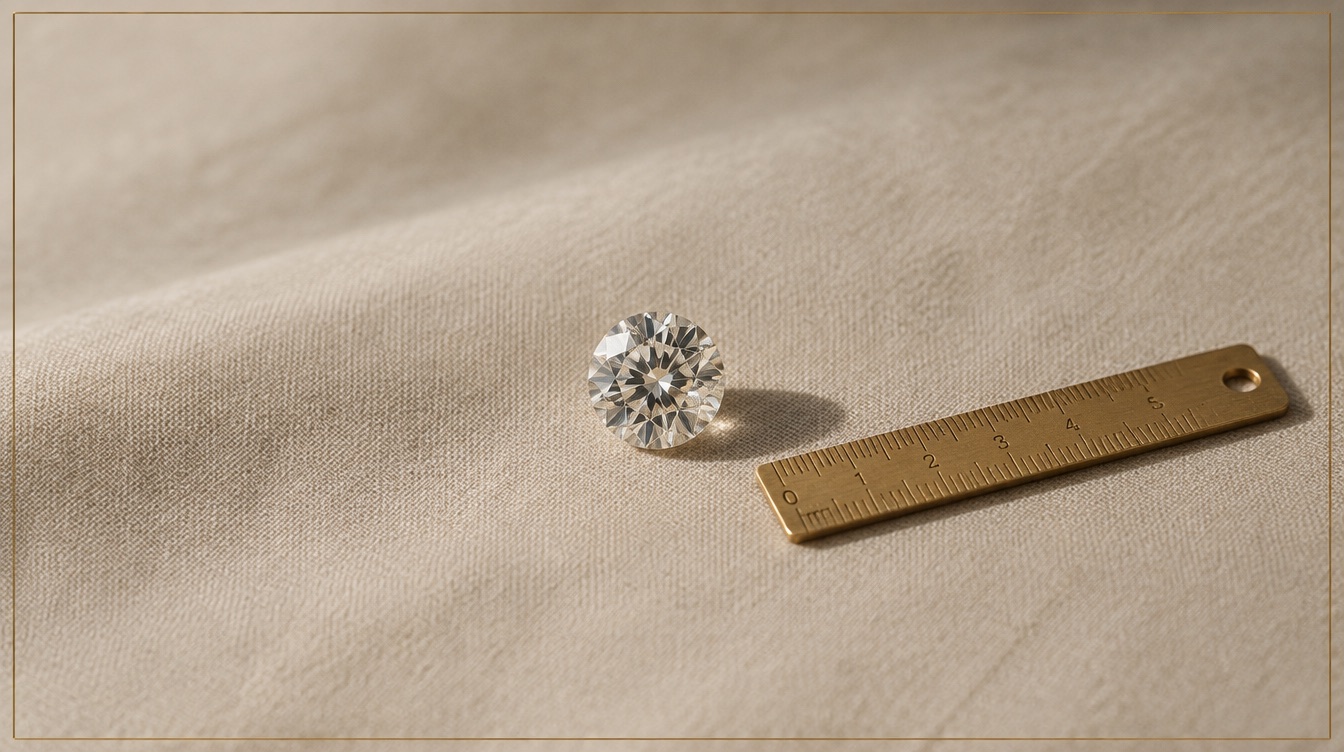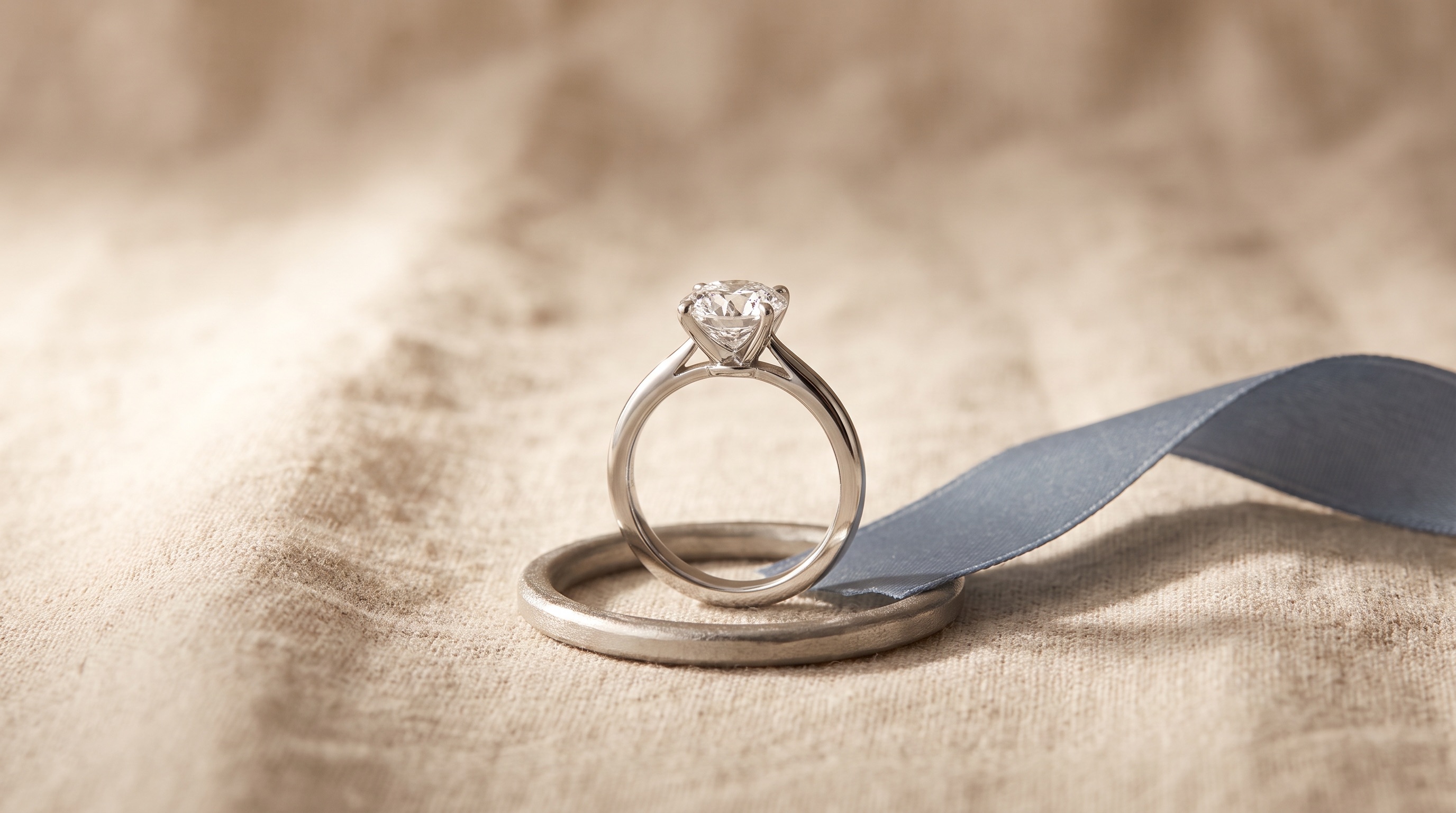
A Tiffany setting is a six-prong solitaire ring setting that lifts the center diamond high above the band on a slender, tapered basket, maximizing light entry from every angle and giving the stone a distinctly elevated, exposed appearance compared to lower-profile solitaire styles. It's one of the most recognized and widely reproduced setting styles in fine jewelry, named for Tiffany & Co., which introduced the design in 1886.
This guide covers how the Tiffany setting is built, how it compares to related solitaire and cathedral setting styles, the practical tradeoffs jewelers and buyers should weigh, and what to look for when sourcing or specifying this setting for a custom or wholesale build.
What Defines a Tiffany Setting
The defining features of a Tiffany setting are its six slender prongs (occasionally four on smaller stones) and its raised, tapered basket, which together hold the stone well above the band's shoulders rather than nestling it close to the finger. This elevation is deliberate: by lifting the diamond and using minimal metal to hold it, the design allows light to enter the stone from the sides and underneath, not just from directly above, which was a genuinely novel approach to solitaire setting when it debuted and remains a large part of why the style is still considered a benchmark for showcasing a diamond's brilliance.
How the Tiffany Setting Was Developed
Charles Lewis Tiffany introduced the six-prong setting in 1886, breaking from the prevailing Victorian convention of bezel-setting diamonds low and fully encircled in metal, which protected the stone but blocked significant light from entering through the sides. The new setting's minimal-metal, high-profile approach was considered a genuine engineering and design departure at the time, and it became so widely copied across the trade that "Tiffany setting" evolved into a generic industry term for any six-prong solitaire in this raised style — much like "princess cut" describes a shape rather than a single company's proprietary product today.
Tiffany Setting vs. Cathedral Setting
| Feature | Tiffany Setting | Cathedral Setting |
|---|---|---|
| Prong count | Typically six, sometimes four | Varies; often four or six, similar to Tiffany |
| Support structure | Slender individual prongs only | Arched metal "shoulders" rise from the band to support the head |
| Visual profile | Airy, minimal metal, stone appears to float | More substantial, architectural look from the arched shoulders |
| Stone security | Good, but prongs alone bear all the stress | Slightly more reinforced due to the arched shoulder support |
| Light performance | Excellent — minimal metal blocks light | Very good, though the arches block marginally more side light |
The core distinction is structural: a Tiffany setting's basket rises directly from the shank with no additional support, while a cathedral setting adds arched metal "shoulders" that visually and physically bridge the band to the raised head. Buyers who like the height of a Tiffany setting but want a bit more visual substance and reinforcement in the design often gravitate toward cathedral as the natural alternative.
Tiffany Setting vs. Standard Prong Setting
Every Tiffany setting is a prong setting, but not every prong setting is a Tiffany setting — the term "Tiffany setting" specifically describes the tall, six-prong, minimal-basket profile, while "prong setting" is the broader category that also includes lower-profile four-prong and six-prong designs that sit much closer to the band. A standard low-profile prong setting sacrifices some of the light-maximizing height of a true Tiffany setting in exchange for a less exposed, more snag-resistant stone — a relevant tradeoff for anyone concerned about catching the setting on clothing or activities.
Advantages of the Tiffany Setting
The style's minimal metal coverage lets more light reach the diamond from more angles than almost any other solitaire setting, which is the main reason it remains a top recommendation for buyers prioritizing maximum brilliance in a solitaire stone. It also puts the diamond visually front and center with no competing design elements, which suits buyers who want a classic, undecorated presentation that lets the stone's own cut and clarity do all the visual work.
Tradeoffs to Consider
The setting's height and minimal metal, while good for light performance, mean the stone sits more exposed to everyday knocks than a lower-set or bezel-style mounting, and the six slender prongs need periodic inspection to confirm none have loosened or worn thin from repeated contact with hard surfaces. Buyers with active hands-on lifestyles or manual occupations sometimes choose a lower-profile prong or bezel setting specifically to reduce this exposure, even at some cost to the setting's light performance.
Prong Count: Four vs. Six
A four-prong Tiffany-style setting shows slightly more of the diamond's girdle and can look a touch more modern and minimal, while the traditional six-prong version offers more contact points and marginally more security, which matters more on larger center stones where added prong support has a real practical benefit. Round and princess-cut stones most commonly appear in four-prong Tiffany-style settings, while six-prong remains the more traditional and most commonly requested configuration across shapes generally.
Metal Choices for Tiffany Settings
Tiffany settings are produced across the full standard range of ring metals — 14k and 18k white, yellow, and rose gold, and platinum — with platinum historically the most associated metal for the style given its strength-to-thinness ratio, which lets a setter form genuinely slender prongs without sacrificing durability. White gold is a common, more budget-accessible alternative that achieves a similar look to platinum, though it requires rhodium plating maintenance over time that platinum does not.
Which Diamond Shapes Suit a Tiffany Setting
Round brilliant diamonds are the setting's most traditional and common pairing, since the style was originally developed specifically around the round shape, but princess, cushion, and oval cuts are also frequently set in a Tiffany-style basket today, with the prong configuration adjusted to properly secure each shape's specific girdle profile and corner points. Elongated shapes (pear, marquise, oval) sometimes use a modified Tiffany-style setting with additional small prongs at the shape's more vulnerable points (the tips of a marquise or pear, for instance) rather than a strict six-prong-only configuration, since those pointed tips are otherwise the most likely spot for chipping under everyday impact.
Setting Height and Ring Profile
A Tiffany setting typically sits noticeably higher off the band than most other solitaire styles, which is worth factoring into how the ring pairs with a wedding band — a very high setting can leave a visible gap under the stone when a plain wedding band is worn flush beside it, and some buyers choose a contoured or notched wedding band specifically designed to nest against a high Tiffany-style setting for a cleaner combined look.
Certification Considerations When Sourcing a Center Stone
Because a Tiffany setting exposes the stone from more angles than almost any other style, inclusions and minor color variation are somewhat more visible than they would be in a more concealing setting, which makes an accurate, independently verifiable grading report especially useful when selecting a stone for this style. Loose diamonds at 0.30ct and above intended for a Tiffany-style solitaire are typically individually certified through IGI, GIA, or GCAL, letting a buyer confirm the exact clarity and color grade before committing to a setting that will show the stone with minimal concealment. Any of the three major labs works well for a stone destined for this style, since the setting itself doesn't favor one lab's reporting format over another — the priority is simply confirming the grade with a verifiable report before the stone is set.
Custom vs. Ready-Made Tiffany Setting Rings
Jewelers and manufacturers can source a Tiffany-style setting either as a pre-made mounting ready to receive a center stone, or as a fully custom build specified to an exact prong height, taper, and metal weight for a particular stone's proportions. A custom build is generally worth the added production time for larger or non-standard center stones, since a pre-made mounting's fixed prong spacing may not perfectly secure a stone that falls outside common size ranges, while a custom setting can be engineered around the specific stone from the start.
Why "Tiffany Setting" Is a Generic Industry Term
Despite the name, "Tiffany setting" functions today as a generic descriptive term for the style rather than a trademark-protected design exclusive to Tiffany & Co. — comparable to how "princess cut" or "solitaire" describe widely used industry categories rather than any single company's proprietary product. Any jeweler or manufacturer can produce and market a Tiffany-style setting under that name, and the term is understood across the trade to refer to the six-prong, raised-basket profile regardless of who manufactured the specific ring.
Tiffany Settings in Engagement Ring vs. Other Jewelry Contexts
While the Tiffany setting is most closely associated with solitaire engagement rings, the same raised-basket, minimal-prong construction principle appears in pendant and earring settings as well, wherever a designer wants to maximize light entry around a single featured stone. In a pendant, a Tiffany-style basket serves a similar purpose to a ring — lifting the stone away from a flat backing surface so light reaches it from underneath, not just from the front, which is exactly the same optical logic driving the setting's original ring application.
Manufacturing Considerations for Tiffany-Style Baskets
Because the prongs on a Tiffany setting are intentionally slender, casting and finishing this style requires more precision than a bulkier prong design — a prong cast even slightly too thin risks bending or breaking during the setting process itself, before the ring ever reaches a customer, while one cast too thick undermines the airy, minimal look the style is meant to achieve. Manufacturers producing Tiffany-style settings at volume typically hold tighter tolerances on prong thickness specifically for this reason, and many hand-finish the taper on each prong individually rather than relying purely on the as-cast dimension, since a hand-finished taper reads as more refined under close inspection than a purely cast surface.
How the Tiffany Setting Influenced Later Solitaire Designs
The 1886 introduction of the Tiffany setting is widely credited with shifting the entire jewelry trade's default approach to solitaire mounting, away from the low, fully-encircling bezel styles that had dominated Victorian-era engagement and solitaire jewelry, toward the raised, light-maximizing prong approach that's now the default expectation for a classic solitaire ring. Nearly every raised prong-based solitaire style developed since — including the cathedral setting, the six-prong low-profile setting, and various contemporary minimalist basket designs — builds directly on the core insight the Tiffany setting introduced: that removing metal from around a stone, not adding more, is what lets a diamond perform at its visual best.
Choosing Between a Tiffany Setting and a Halo Setting
A halo setting surrounds the center stone with a ring of small pavé diamonds, adding perceived size and sparkle around the center stone, while a Tiffany setting keeps all visual attention purely on the center stone itself with no surrounding accent stones. Buyers drawn to maximum brilliance from the center stone specifically, without added visual elements competing for attention, tend to prefer a Tiffany setting, while buyers wanting a larger overall visual footprint from a smaller or moderate center stone often lean toward a halo instead. The two styles can also be combined — a Tiffany-style raised basket surrounded by a separate halo of pavé stones — for buyers wanting both the elevation and light performance of the classic style along with a halo's added visual size.
Regional and Retail Naming Variations
While "Tiffany setting" is the standard trade term across the US wholesale and retail jewelry market, some retailers market the identical style under alternate names — "classic six-prong setting," "solitaire basket setting," or simply "solitaire setting" with a note on prong count — either to avoid any implied brand association or simply as a house naming convention. Buyers and jewelers should confirm the specific prong count and basket height being described when a listing uses a generic "solitaire" label without the word "Tiffany," since "solitaire" alone covers a broader range of profile heights than the specific raised style the Tiffany name typically implies, and a mismatch between what a customer expects from the name and what the physical ring actually delivers is an easily avoidable source of post-sale disappointment.
Maintenance and Care for Tiffany Setting Rings
Because the setting's prongs are slender by design, periodic inspection (roughly every six months for a ring worn daily) is worth recommending to customers, checking specifically that no prong has thinned, bent, or loosened enough to risk the stone shifting or falling out. A jeweler performing a routine cleaning or inspection should check prong tip condition under magnification, since visible wear at this style's thin prong tips is the most common maintenance issue that surfaces over years of daily wear.
Comparing Tiffany Setting Ring Heights to Other Popular Styles
| Setting Style | Relative Height | Best For |
|---|---|---|
| Tiffany setting | High | Maximum light performance, classic solitaire look |
| Cathedral setting | High | Similar height with added visual/structural support |
| Low profile setting | Low | Active lifestyles, minimal snagging risk |
| Bezel setting | Low to moderate | Maximum stone protection, modern minimal look |
Common Mistakes When Selecting a Tiffany Setting
A common mistake buyers make is choosing a Tiffany setting purely for its classic look without considering the exposure tradeoff, then finding the prongs need more frequent maintenance than expected for an active lifestyle — a conversation worth having with a customer at the point of sale rather than after a prong issue arises later. A second common mistake among jewelers sourcing pre-made Tiffany-style mountings is assuming standard prong spacing will accommodate any stone within a broad carat range, when in practice a stone at the small or large edge of that range may sit slightly loose or strained in prongs sized for a more typical carat weight — checking actual fit against the specific stone before final setting avoids this problem.
What to Ask When Sourcing Tiffany-Style Mountings Wholesale
- What prong height and taper options are available, since even small variations affect both the look and the light performance of the finished ring?
- Is the mounting sized to a specific stone or offered as a general-fit setting, and if general-fit, what carat range does the prong spacing actually accommodate well?
- What metal options are available, particularly whether platinum is offered alongside gold given the style's historical association with platinum's strength-to-thinness advantage?
- Can the basket height be adjusted for a specific customer preference, for buyers who want the classic look but slightly less exposure than a maximum-height traditional build?
Sourcing Tiffany Setting Mountings and Center Stones
Guru Diam's custom jewelry team builds Tiffany-style settings to order, sized and engineered around a specific center stone's proportions, alongside its solitaire, cathedral, and low-profile setting offerings, with custom rings finished in 4-6 days. Trade accounts sourcing a certified center stone for a Tiffany-style build can browse loose diamonds in certified diamonds, with IGI, GIA, and GCAL certification available across the catalog. In-stock inventory ships same-day (before 6pm EST from New York, before 4pm PST from Los Angeles). Jewelers and designers can start a custom Tiffany-style commission at custom jewelry, and new trade accounts can apply through trade partner, with current program terms at the wholesale hub. For a broader look at solitaire mounting styles, see our solitaire setting guide.
Frequently Asked Questions
What is a Tiffany setting?
A Tiffany setting is a six-prong solitaire ring setting that lifts the center diamond high above the band on a slender, tapered basket, maximizing light entry and giving the stone an elevated, exposed look. It was introduced by Tiffany & Co. in 1886 and is now a generic term for this style used across the trade.
What's the difference between a Tiffany setting and a cathedral setting?
A Tiffany setting's basket rises directly from the shank with no additional support, while a cathedral setting adds arched metal "shoulders" that visually and physically bridge the band to the raised head, giving it a more architectural look and slightly more reinforcement.
Is a Tiffany setting the same as a prong setting?
A Tiffany setting is a specific type of prong setting — tall, typically six-pronged, with a minimal raised basket. "Prong setting" is the broader category that also includes lower-profile designs that sit closer to the band.
Are Tiffany setting rings less secure than other settings?
They're generally secure but more exposed than lower-profile or bezel settings, since the stone sits higher and relies on slender prongs alone for support. Periodic inspection of the prongs is worth recommending for rings worn daily.
Can any jeweler make a Tiffany setting ring?
Yes — "Tiffany setting" is a generic industry term describing the six-prong, raised-basket style, not a trademark-protected design exclusive to Tiffany & Co. Any jeweler or manufacturer can produce a ring in this style.
What diamond shapes work best in a Tiffany setting?
Round brilliant is the most traditional pairing, but princess, cushion, and oval cuts are also commonly set in a Tiffany-style basket, with prong placement adjusted to properly secure each shape's specific proportions.
Does a Tiffany setting work with a wedding band?
Yes, but its typically high profile can leave a visible gap under a plain wedding band worn flush beside it. Some buyers choose a contoured or notched wedding band designed specifically to nest against a high Tiffany-style setting for a cleaner combined look.
How is a Tiffany setting different from a halo setting?
A halo setting surrounds the center stone with a ring of small pavé diamonds for added visual size, while a Tiffany setting keeps all visual focus on the center stone alone with no surrounding accent stones. The two can also be combined for buyers wanting both effects.
Guru Diam is a trade-only wholesale diamond supplier with locations in New York and Los Angeles, offering custom Tiffany-style and other solitaire setting builds alongside certified loose diamonds — natural and CVD lab-grown — with IGI, GIA, and GCAL certification available. Start a custom build at custom jewelry or apply for a trade account through trade partner.